CBS’s “Blue Bloods”: Endorsing the Saint’s Excuse and Polk County Justice


Time for the department ethics training, Chief. You should sit in on it too...

Time for the department ethics training, Chief. You should sit in on it too…

“Blue Bloods,” Tom Selleck’s New York police family drama on CBS, began as a paean to the core values of public service, nobility, justice, courage and honesty as it chronicled the work and lives of three generations of the Reagan family. The Reagan men are all cops, the one female is a DA, and Selleck is the paternal Chief of Police. Based on last night’s episode, “The Truth About Lying,” series creators Mitchell Burgess and Robin Green have permitted the show’s writing staff to be infiltrated by the Dark Side in its fourth season, and now its calling cards will include the enthusiastic promotion of the abuse of power and the celebration of lying as long as it’s all for a good cause. That’s the Saint’s Excuse, one of the most deadly of the rationalizations, in which “good” people decide that they are empowered to do unethical things in the pursuit of what they believe are worthy goals. The Saint’s Excuse is something of a theme in the United States these days. Now “Blue Bloods” is making sure popular culture spreads the word.

The episode, which you can watch here, was ostensibly about Selleck’s Chief’s efforts to foil the city’s newly appointed “inspector general,” installed in the wake of a “ripped from the headlines” court rejection of an effective “stop and frisk” program by New York’s finest. Continue reading

What’s Wrong With The Florida Cyber-Bullying Arrests? Everything.

“Bullying, as they are supposed to teach you in school, is when someone uses their superior power to subordinate and humiliate someone weaker than themselves. This is wrong, and it is always wrong.”

The Sheriff of Polk County...wait, no, that's Tom Cruise, searching for pre-criminals in "Minority Report." Well, close enough.

The Sheriff of Polk County…wait, no, that’s Tom Cruise, searching for pre-criminals in “Minority Report.” Well, close enough.

This is a quote from an Ethics Alarms post earlier this year, about a school that forced students to do embarrassing things in a warped effort to discourage bullying. There is a disturbing societal consensus brewing that opposition to bullying justifies all sorts of extra-legal, unethical, excessive, abusive and unconstitutional measures, and there are a dearth of persuasive voices point out that this consensus is dangerous and wrong. Those potential voices are being stilled by a kind of cultural bullying. How can you defend bullies! Look at the victims! Think of the children! What a horrible, unfeeling person you are!

This is the only explanation I can generate for the fact that none of the commentary and media coverage regarding the Florida arrests of a 14-year-old girl and a 12-year-old girl on trumped-up charges of “stalking” following the suicide of Rebecca Ann Sedwick pointed out that the arrests were a travesty of the justice system, an abuse of power, child abuse, legally and constitutionally offensive, and, yes, bullying of a different kind. Continue reading

War, Syria, Leadership and Ethics

Indecisiveness and narcissism makes great drama, bad leaders, and gets people killed , too.

Indecisiveness and narcissism makes great drama, bad leaders, and gets people killed , too.

I try to think about the ethics of war as little as possible, much less write about it. It is too frustrating, and ultimately a waste of time: the same debates and philosophical arguments have been made, eloquently and passionately, for not just hundreds but thousands of years, and only the mechanics of warfare have changed.

My father, a war hero and a man who would have loved to have devoted his life to the military if his wounds hadn’t prevented it, used to say that war was the stupidest of all human activities. “There is nothing good about war,” Dad said. “Yet it is sometimes necessary and unavoidable. And don’t ask me to reconcile those statements: I can’t. Nobody can.” I remember asking him about General Patton, who led my father and his comrades during the Battle of the Bulge. “Patton supposedly loved war,” I said. “He did,” my father replied. “He was insane.” He loathed Patton.

The Syria crisis has triggered all the same arguments again, and I want no part of them. Ethical analysis doesn’t work where warfare is concerned. The conduct of ritualized killing combatants and innocents is, at best, an extreme utilitarian act that always creeps into  ethically indefensible “the ends justify the means” territory before the end of hostilities. So many invalid rationalizations are used to justify killing—“It’s for a good cause,” or the Saint’s Excuse, prime among them, with “They started it!” following close behind—that it is useless to tote them up. The war most often cited as a “moral war,” World War II, still involved the killing of innocent non-combatants by the Allies. ( My father remained amazed at the efforts at “limited war” in Iraq, noting that Allied soldiers were expected to accept civilian deaths as unavoidable and not a matter of concern. He also felt that the current dedication to half-measures just guaranteed longer wars, more deaths, and less satisfactory results. “It’s war,” he said. “You can’t make it humane or sensible; you can only make it shorter. Telling the military that it has to waste time and military personnel to avoid civilian deaths makes no sense. There is no such thing as a humane war.” Naturally, he approved of Truman’s decision to drop the atom bomb, in part, he admitted, because he was slated to be in the Japanese mainland invasion force that was likely to sustain up to a million casualties.) The Allies engaged in atrocities too, such as the fire-bombing of Dresden.

You want to talk about the problem of supporting terrible people and factions to defeat another? World War II is the champion on that score. The U.S. partnered with Stalin, who was a greater mass murderer than Hitler, and defeated Japan, the enemy of China, allowing Mao, a greater mass murderer than Stalin and Hitler combined, to enslave a billion people. The peace negotiated after the Second World War was only slightly less destructive than the one that ended the First World War (and led directly to the Second): The U.S. handed over half of Europe to Communism, laying the seeds of the Cold War that only avoided ending humanity in a nuclear holocaust by pure moral luck. The fact that WWII is the “best” war powerfully makes the case: ethics and war have nothing to do with each other. Each renders the other useless and incoherent. Continue reading

The Case Of The Extorted Critic: THIS Is A Good Ending?

"You want to give my store a bad review? Huh? You do? Ok, you do that! And Just wait until you see what I am going to do to YOU!!!"

“You want to give my store a bad review? Huh? You do? OK, you DO that! And just wait until you see what I am going to do to YOU!!!”

Washington Post writer Ron Charles sure has some funny ideas about what constitutes a happy ending, which is especially strange, since his is the Post’s fiction editor. (Insert joke about the role of such an editor at the Post here.)

He tells the story of a Brooklyn writer named D. Foy, who was awaiting the publication of his first novel and also  preparing to be married. He contacted a New York tailor shop, with the intention of having a custom suit made for the big day. The men’s shop wouldn’t accommodate his efforts to make an appointment, and in frustration, he left the following complaint on the consumer site, Yelp, quoting the shop’s promotional boasts:

“This is not ’24-7 white glove service.’ This is not ‘unparalleled service,’ nor anything close. Contract this ‘business’ at your own risk, ladies and gentlemen.”

This aroused the torpid tailor, who sent Foy a ominous e-mail: “I was just made aware of your Yelp review. We wanted to answer your questions but felt you were more interested in a fray. When your book comes out on Amazon, I will personally make sure our entire staff reviews in kind.”

Translation: “You dared to criticize our lousy service, and now we’re going to hurt you!”

Continue reading

Comment of the Day: Unethical Website of the Month: Chimpmania, And The Unethical Petition Opposing It

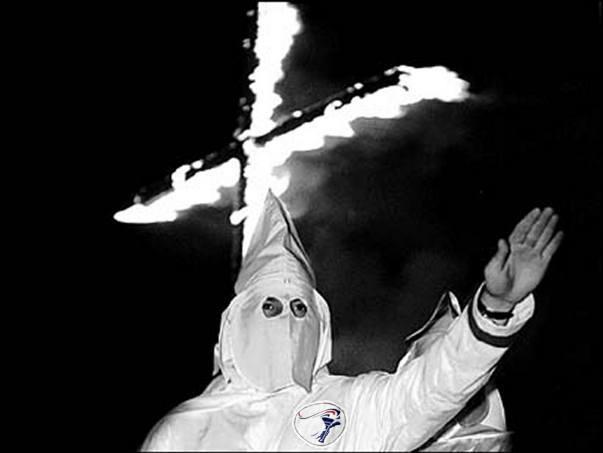
ku klux klan

The post defending the right of the racist website Chimpmania to stay on the web despite its offenses to decency, civility and fairness predictably attracted racists to this blog—very articulate racists, I must say, but racists nonetheless. One of them, Paddy Roller, who operates his own, slightly less crude racist website, attracted this response from one of Ethics Alarms’ most thoughtful and passionate readers, known here as fattymoon. It is a deserving Comment of the Day, an open letter sparked by a racist screed posted here by Paddy, itself sparked by the post, Unethical Website of the Month: Chimpmania…And The Unethical Petition Opposing It.

[ Paddy and about six of his compatriots in hate have been banned here after violating my warning to eschew racist epithets rhetoric after I had granted them one reprieve. No more reprieves…if one of the Klan wannabes has a comment to this post he wants to have read, there had better be no uses of “nigger” in it.]

Here’s Fattymoon: Continue reading

The Teacher, The Ex, and Zero Sum Ethics

"Carie? Your ex-husband is hear to see you!"

“Carie? Your ex-husband is here to see you!”

Domestic violence victims advocates are outraged over an incident in which second-grade teacher Carie Charlesworth, a teacher at San Diego’s Holy Trinity School, lost her job because of threatening conduct by her ex-husband.  After an incident where the school was placed on lock-down because Charlesworth’s ex, undeterred by a restraining order, came to the school to confront her, the school district decided that her continued employment was a risk to the safety of the school and its students.

In a termination letter, the district informed Charlesworth that her ex-husband’s “threatening and menacing behavior” made it impossible for her to continue teaching at the Holy Trinity School. Predictably, Charlesworth is angry, and suing. “They’ve taken away my ability to care for my kids,” she says.  She has four. “It’s not like I can go out and find a teaching job anywhere.”  Now she is publicizing her dilemma to dramatize the plight of domestic violence victims.

She is focusing her resources and anger on the wrong parties. Continue reading

Self-Webshaming At Dunkin’ Donuts

(Watch this after you’ve read the post. Kind of like dessert..)

The ethical considerations one should review when pondering whether to engage in webshaming nicely evaporate when the subject has chosen, though unwittingly, to webshame herself. Thus Ethics Alarms has no qualms about presenting for your consideration, revulsion, and rejection if she ever applies for a job from you, one Taylor Chapman, a 27-year-old woman who lives in the vicinity of Fort Lauderdale. She eagerly and proudly posted to her Facebook page the phone-video above, of her abusing an impeccable Dunkin’ Donuts employee, annoying a customer, and making serial statements with signature significance—no decent human being would utter even one of these appalling comments in public unless suffering from a brain trauma or extreme intoxication.

Chapman was angry because she and her friends had not received a receipt along with their large drive-thru order, and angrily (and abusively, based on Chapman’s manner, but we can only guess) demanded to receive their order free of charge, as Dunkin’ Donuts now promises as part of a service pledge. The employee handling the order apparently did not know how to proceed, and told the group that they would have to come by the store and see her manager the next day.

[An aside: That’s not good customer service, DD. If you make a guarantee that is supposed to mean anything, you have an obligation to train employees how to deliver on it. Telling customers who have not received the promised service that they have to come back to the establishment another day to receive what they are owed is unreasonable and a bait-and switch. I would have said to forget it. I would have written a letter. I would not have done what Chapman did, and I don’t know anyone who would.]

What Chapman did was to return the next day and demand her free order, tossing obscenities at the extraordinarily polite and unflappable employee (his name is Abid Adar, and you should send him flowers) on duty while she recorded the encounter as if it were a health department sting. Continue reading

Resolving An Ethics Alarms Ethics Conflict

poof-smallI just took down a post, something I have only done four times previously. This decision, unlike the others, was the resolution of a genuine ethics conflict, created in part by the recent discussions here.

Tonight I received a terse demand, phrased as a request but with a time deadline,* from a former commentary subject insisting that I remove a critical post here from nearly a year ago. The post was not factually incorrect, nor  did it make any factual assertions that could support a credible defamation claim. My commentary was pure opinion, though a fairly harsh one. I have pledged, following the inspirational example of Ken at Popehat and also attorney/blogger Marc Randazza, not to countenance web censorship involving bogus legal threats, and thus drafted and came within a finger-stroke of sending a rejection of the demand, and a strongly worded one.

Then I re-read the post at issue. It was a criticism of a tweet from a professional that I believed, and believe, had the effect of unfairly impugning an entire workplace and the identifiable colleagues of the tweeter. The tweet was wrong, but I realized that I was also wrong to highlight it here. I have been writing quite a lot lately about the inherent Golden Rule violation of web-shaming individuals for single and isolated unethical acts that fall short of illegality or such outrageous callousness or cruelty that there is a duty to warn others. I think there is a toxic cultural trend, fed by the power of the internet, that will soon make web bullies and assassins of us all, and potential victims as well. I want to fight that trend, not contribute to it. I think, in the case of that post, I was on the side that I now believe is the wrong one. It was a stupid and thoughtless tweet. It did not justify a web-shaming on Ethics Alarms. Continue reading

Now THIS Is Incivility!

DormRoom1950sThe Delta Gamma sorority chapter at the University of Maryland has received some unwelcome publicity as a result of a leaked e-mail from one of the sorority’s executive board members, reprimanding the Gammas’ for not sufficiently participating in Greek Week activities with their “matchup” fraternity, Sigma Nu. The admonition was delivered in a vulgar, threatening and verbally violent rant containing, among its over 800 words, 4 stupids, 3 variations of ass–, as in “ass-wipe” and “ass-hat,” 5 shits, 2 cocks, 2 sucks, 3 goddamns, and no less than 42 variations of fuck. Gawker, which received the text of the rant, mercifully did not release the young woman’s name when it posted the thing, which is as it should be. No reason to destroy her reputation now. The odds are she’ll do it herself eventually.

I’ll post the whole message at the end, to spare your having to go to Gawker, but here are some brief observations: Continue reading

In Connecticut, A Surrogate Mother Triggers An Epic Ethics Train Wreck

Crystal Kelley and...somebody's baby

Crystal Kelley and…somebody’s baby

There is no field of ethics more murky or subject to conflicting interpretations than bioethics, and few issues in bioethics are as confusing as those involving surrogate mothers who decide that they should have some say regarding the fate of the child that grows in their bodies. CNN has reported on the most perplexing such scenario I’ve every encountered, so perplexing that I can’t unravel the ethical rights and wrongs of it.  I wonder if anyone can with confidence. I’ll just summarize the main features and some of the issues raised; you will need to read the whole, stunning story to fully appreciate this train wreck’s sweep and carnage.

I. Crystal Kelley, a single mother who had endured two miscarriages, wanted to help another couple conceive, but mostly wanted the $22,000 fee since she was out of a job. She contracted with a couple seeking their fourth child, and was implanted with two previously frozen embryos. One survived. Ethics issue: Did Kelley tell the parents about her miscarriages?

2. Five months into her pregnancy, tests showed the baby Kelley was carrying had serious medical problems, though the child had a chance at survival. The couple said that they wanted Kelley’s pregnancy terminated because they didn’t want the baby to suffer. Ethics issues: Is that a valid reason to take an unborn child’s life? Was it the real reason? Was the real reason that they were unwilling to pay for and endure all the necessary medical treatmenst, or that they wanted nothing less than a “perfect” baby? Does it matter what the real reason was? Continue reading