A Brief, Depressing Follow-Up On The Iran Deal

mushroom-cloud

I have been reading a lot about the Iran deal, hoping against hope that I just don’t understand it, and that it might be more responsible than it seems, because it seems to be astoundingly irresponsible.

Comes the Washington Post editorial board, reliably supportive of the President—any Democratic President, really–and a good bet to find the silver lining in any cloud. Surely, if this agreement isn’t the crowning, most dangerous incompetence on the mountain of incompetence that is the Obama Presidency, the Washington Post will move that mountain aside to show why.

Here are some direct quotes from this pro Obama, pro-Iran deal editorial by a liberal media standard bearer:

If the transformation of Iranian behavior the president hopes for does not occur, the deal on its nuclear program may ultimately prove to be a poor one — a temporary curb that, when it lapses, will enable a dangerous threshold nuclear state that poses a major threat to the United States and its allies.

In other words, the deal does not ensure this “transformation” will occur, the U.S. has no control overwhwether the “transformation” does occur, and the treaty doesn’t have anything in it that will compel such a transformation. Keep your fingers crossed.

 Its most immediate effect will be to provide Tehran with up to $150 billion in fresh assets from sanctions relief over the next year, funds that its leaders will probably use to revive the domestic economy but also to finance wars and terrorist groups in Iraq, Syria, the Gaza Strip, Yemen and elsewhere.

Gee, what a great deal.

Though Mr. Obama has promised to mitigate that outcome with new support for Israel and U.S. Arab allies, one effect of the deal may be an increase in the sectarian bloodshed wracking the region, as well as the conventional threat to Israel. When embargoes on arms and missile sales to Iran expire in five and eight years, that threat could further escalate, and Tehran could seek missiles capable of striking U.S. warships in the Persian Gulf or reaching the U.S. homeland.

That’s what the treaty allows, mind you.

These strictures, according to the administration’s experts, will keep Iran a year away from producing a weapon during that time — provided that it does not cheat by secretly conducting nuclear work elsewhere.Because Iran twice has been caught in such clandestine work, that is a critical concern — and the provisions for deterring and detecting violations are the areas in which Tehran fought for, and won, some troubling compromises. International inspectors seeking access to a suspected Iranian site could be delayed by a 24-day, multi-step process ultimately requiring five votes on an eight-member committee; at a minimum, the United States and four European representatives would have to concur. While a U.S. president could, in theory, unilaterally determine that Iran was cheating and force the reimposition of U.N. sanctions, it could take 65 days and might prove politically unworkable.

Wow! I see another Peace Prize!

 Mr. Obama settled for terms far short of those he originally aimed for.

This is what happens when you want a deal of any kind, and don’t have the guts to walk away.

Whether he is right in claiming that his successor in 10 or 15 years “will be in a far stronger position” with Iran will depend on whether his hopeful theory about its political future proves correct.

No, we can only judge the competence and reasonableness of an agreement at the time it is made. “We might get lucky” is no defense.

I’m convinced, and by The Washington Post: this was a craven, inept, dangerous agreement made by a foolish, desperate, deluded man and an tragically incompetent leader. The American people have an obligation to the entire world, and their children and grandchildren, to insist that Democrats join Republicans in killing it.

Later they can explain why they would again hand the nation over to a party that placed the fate of civilization in the unqualified hands of a President like this.

Ethics Observations On The Iran Deal And Its Media Coverage

treaty1. Throughout the negotiations for the apparently now completed Iran nuclear deal, all I could think about is how it would have made my old negotiation professor, the late Adrian Fisher  (who negotiated the SALT treaty) throw up. He taught his negotiation class at Georgetown Law Center, where he was the Dean, that no advantageous negotiation can occur unless your side is willing to walk away from the table. It has been clear from the beginning that the Obama Administration was desperate for this deal for political purposes, not national security, which the treaty does not assist in any way.

Dean Fisher—and his frequent guests, like Averill Harriman— taught his class that deadlines were essential in the negotiation process, both as a tool to force the other side to make tough decisions, and as a demonstration of resolve.  In this negotiation, the U.S. repeatedly allowed “deadlines” to pass, with no consequences. That tells the Iranians all they need to know about the U.S.’s likely response when they violate the terms of the agreement, as they are certain to do, at least as long as this weak, feckless, posturing and irresolute President is in office.

Of course, to be fair, the Iranians had plenty of evidence on that score already, as did we all.  “Red line,” you know.

2. The administration admits that it does not trust Iran. GOP Senator Lindsey Graham, who opposes the treaty, stated that Iran has never kept any international agreement or promise,, and thus cannot be trusted to keep this one. Nobody is seriously disputing that. Under such conditions, the whole concept of the deal is irresponsible. Who signs a treaty that it seriously doubts the other side will obey? Graham called this is the equivalent of making a deal with “religious Nazis.” The comparison is apt, except that the Obama arrangement with Iran is in some ways even more reckless than the one Neville Chamberlain made with Hitler. At least Chamberlain believed—stupidly, naively—that Hitler wanted peace. The Iran deal is what the Munich treaty would have been if Chamberlain was pretty sure Germany would invade Czechoslovakia and Poland anyway.

Chamberlain’s “peace in our time” was a pathetic hope. Obama’s is more like a lie. Continue reading

“You Know I Can’t Hear You With All Those Ethics Alarms Ringing”: Hillary Clinton’s CNN Interview

Hillary_Clinton_2016

The frightening thing—it should frighten Democrats more than anyone, but if they have let Hillary get this far, they may be beyond frightening—is that Hillary Clinton had a long time to prep for this interview—her first substantive one since announcing her candidacy, about five or six scandals ago—had a hand-picked, friendly interviewer, was not pressed to clarify any of her non-answers, obfuscations or incomprehensible blather, and she still came off looking defensive, evasive, and basically like Tommy Flanagan in drag.

Ethics Alarms were ringing so loudly that the interview was almost inaudible. My observations in bold….

BRIANNA KEILAR, CNN SR. WHITE HOUSE CORRESPONDENT:  Secretary Clinton, thank you so much for talking to us today.  You’re here in Iowa for a couple of events.  You’re the front-runner in this state but we’re also seeing Bernie Sanders attract a lot of attention.  He has had big crowds here, 10,000 people in Wisconsin last week, 7,500 people in Maine last night. Why is it, do you think, that someone who is a self-described Democratic socialist is really attracting this organic interest that your campaign seems to be struggling a little bit with?

HILLARY CLINTON, FORMER SECRETARY OF STATE:  Well, first of all, I always thought this would be a competitive race.  So I am happy to have a chance to get out and run my campaign as I see fit and let other candidates do exactly the same.

Non-responsive. Also a lie: Clinton has always assumed she could get the nomination by just showing up.

I feel very good about where we are in Iowa.  We are signing up thousands of volunteers, people committed to caucus for us.  We have a committed supporter in every one of the 1,600 precincts.  And one of the things that I learned last time is it’s organize, organize, organize.  And you’ve got to get people committed.  And then they will follow through and then you bring more people.

Non-responsive.

So I feel very good about where my campaign is.  It’ll be three months and a few days that we’ve been at this.  I think I’ve learned a lot from listening to people in Iowa.  And it’s actually affected what I say and what I talk about on the campaign trail.

Non-responsive.

So I couldn’t be happier about my campaign.

Non-responsive. Pretending to open yourself to a candid question and answer session and then refusing to answer the very first question while pretending you did: Dishonest. Disrespectful.

KEILAR:  Senator Sanders  has talked about how, if he’s president, he would raise taxes.  In fact, he said to CNN’s Jake Tapper, he would raise them substantially higher than they are today, on big corporations, on wealthy Americans. Would you?

CLINTON:  I will be laying out my own economic policies.  Again, everybody has to run his or her own campaign.  And I’m going to be telling the American people what propose and how I think it will work and then we’ll let voters make up their minds.

“I refuse to answer on the grounds that I might incriminate myself actually let voters know what I stand for. After all, I’m a vagina. That’s what really matters.”

KEILAR:  Is raising taxes on the table?

CLINTON:  I’m going to put out my policies and I’ll other people speak to their policies because I think we have to both grow the economy faster and fairer so we have to do what will actually work in the short term, the medium term and the long term.  I will be making a speech about my economic proposals on Monday.  And then I look forward to the debate about them.

If Clinton made a speech Monday (July 7) about specific economic proposals, she did it in her closet, because all anyone actually heard was this.

KEILAR:  I’m wondering if you can address a vulnerability that we’ve seen you dealing with recently.  We see in our recent poll that nearly six in 10 Americans say they don’t believe that you’re honest and trustworthy. Do you understand why they feel that way?

CLINTON:  Well, I think when you are subjected to the kind of constant barrage of attacks that are largely fomented by and coming from the Right and –

The vast right wing conspiracy again! Ironic, because one very good reason people shouldn’t, and  many sane people actually do not, trust Hillary is when she made teh same accusation on the Today Show to Matt Lauer, claiming that the Monica Lewinsky scandal had been “largely fomented by and coming from the Right,” when in fact she knew otherwise and was lying for her husband.

KEILAR:  But do you bear any responsibility for that?

CLINTON:  – well, I – you know, I can only tell you that I was elected twice in New York against the same kind of onslaught.

“I got away with it before, didn’t I?” Continue reading

Scott Brown And The Slippery Slope To Distrust

Stay classy, Senator...

Stay classy, Senator…

Who started our elected officials down the slippery slope to the point where the public viewed them as indistinguishable from any other celebrity? Was it when  Richard Nixon appeared on “Laugh-In” in 1968? Was it when ex-Speaker Tip O’Neill allowed himself the be shown in a commercial for Quality International Budget Hotels, popping out of a suitcase? Was it a decade earlier, when washed up song and dance man George Murphy won a U.S. Senate seat for California? There were critics who sounded the alarms loud and early about the dangers of our leaders trading on their visibility and power like any pop singer, athlete or actress; such critics were inevitably told to “lighten up.” We assumed, did we not, that our leaders, being responsible and respectful of our institutions,  would know what lines not to cross, and when their self-mockery, playing around and hucksterism would risk harming the credibility of democracy and the public trust.

Why would we assume that, especially as cynical politicians increasingly sought to win the votes of even more cynical young voters?

Ronald Reagan explained to an interviewer that while it would be fun to return to acting—playing a Bond villain, maybe—after leaving the Presidency, it would be unseemly. Is anything unseemly now? Arnold Schwarzenegger stepped out of a Governor’s mansion back into cyborgdom without blinking. Rudy Giuliani appeared in drag on Saturday Night Live while he was still mayor. Senators and House members eagerly grabbed cameos in sitcoms and dramas. Some were even good at it: Senator John Glenn’s guest appearance on “Frazier” is one of the highlights of the whole series. Did any of these eager publicity hounds consider that the more our leaders behaved like every other celebrity, the less reason the public had to believe they were any better, smarter, or more honest than the politically vocal and usually ignorant celebrities who supported them?

A public office is a public trust, and therefore the honor of that office is a gift that the temporary occupant should not trade upon for crass commercial gain and ego fulfillment.  It is bad, and corrupting, enough that the simple fact that they held high office is usually enough to guarantee former officials private sector employment in lobbying firms, universities, law firms and other lucrative enterprises. Still, the institution and positions a former elected leader leaves behind are still deeply affected by the conduct and the reputation of former occupants.

When I first studied Presidential leadership, the consensus among political scientists was that the public perceived the office of the Presidency according to the conduct, reputation, image  and character of George Washington.  Today, thanks to constantly sinking precedents, the public expects lies, excuses incompetence, and shrugs off greed, with the ugly example of the Clintons now reaching depths never envisioned even when Gerald Ford became the star client of the William Morris agency.

Yet somehow I didn’t think it would come to this. I didn’t foresee a former U.S. Senator following the lead of Marie Osmond and Kirstie Alley, and becoming a shill for a diet supplement.  I am so damn naive sometimes. I assumed that an ex-Massachusetts Republican Senator would no more follow that seedy path, no matter how much he needed the money,  then Sarah Palin would pose nude for Playboy. Yet here is Scott Brown, serving as spokesperson for AdvoCare products, which resemble Herbalife in their marketing plan and likely legitimacy.

His acceptance of such an undignified and dubious role harms every U.S. Senator, the institution of the Senate, and the republic itself. It further obliterates all pretense of superior character and respect for the institutions they serve from our politicians, and makes every single one of them appear less worthy of office, respectable or dignified in the eyes of citizens and voters. There are essays all over the web right now asking why slimy Donald Trump is polling so well, given that he is boor, a bully, a clod, a huckster and a self-promoting fool.

Scott Brown and the trend he represents is a big reason. “How is Trump any worse that the rest?” Trumps fans will ask. “At least he doesn’t pretend to be something he’s not.”  Dignity and respect for the privilege of public service have always been vital tools of leadership, and prerequisites for attaining it. This was understood for so long that our leaders forgot why those qualities were important.  Now they have neglected both for their own selfish, short-term gains in money, celebrity and ego-gratification, leaving a distrustful public that can no longer distinguish between statesmen and con artists….perhaps because there is no distinction left.

Playing Dangerous Cognitive Dissonance Games With U.S. The Supreme Court

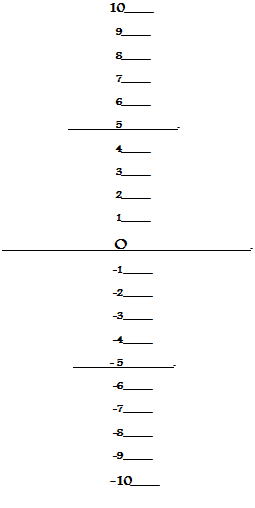
The cognitive dissonance scale, now being used to weaken a crucial U.S. institution for political gain.

The cognitive dissonance scale, now being used to weaken a crucial U.S. institution for political gain.

Of all government institutions, the U.S. Supreme Court has traditionally only trailed the Presidency in public trust and esteem. There are several good reasons for this. One is that being appointed for life, the Justices are presumed to be less subject to the personal and political agendas that make the positions of politicians suspect. Another is that the Court has often taken heroic stances that made the United States a better nation and more just culture. A third is that unlike elected political offices, that of a judge requires an education and technical expertise that the average citizen does not possess. The Justices are traditionally accorded the deference given to experts. Perhaps the most important reason we trust the Court is because we need to do so. It was made the third branch to protect the Constitution against violations of core rights, as well as to be an objective mediator when the other branches, or states, or courts, reach an impasse. Of the many ingenious devices the Founders put in place, the U.S. Supreme Court is one of the wisest.

That the Court is accorded inherent respect and trust is essential to the stability of our government. What the Court says, goes, and the culture and society, including the most furious dissenters in political parties and interest groups, must follow a ruling and constrain its efforts within those boundaries. There have been times when the Court recognized that its unique credibility obligated it to intercede in dangerous conflicts that might otherwise escalate to social unrest or worse. The 2000 Presidential election was a potentially dangerous situation because the result in Florida rested on a margin of error that the available technology was incapable of resolving with certainty.  Unlike the similarly dubious results in the 1960 election, the initial losing candidate and his party decided to plunge the nation into an electoral morass, in this case one complicated by politicized state courts, vague local statutes, confusing ballots, partisan media reports and varying standards of what constituted a vote, with the rotten cherry on top being a rare situation (it had happened only three times before)  in which a popular vote loser was  the apparent electoral vote winner. The Supreme Court stepped up and stopped it from spinning out of control, in essence declaring a winner. It was a courageous and responsible act, one that many (including me) predicted, and though it came at a high cost, one that exemplified why the Court’s public acceptance must be high—so it has some room to fall when it has to take a controversial stand.

This crisis was not the beginning of the effort by parties and activists to discredit the Court by impugning its motives and undermining the public’s trust, but it caused a permanent escalation. It was when the insinuation that a Justices nominated by Republican Presidents (or Democratic ones, depending on who’s leading the chorus of critics) see their job as bolstering that party’s policies and interests became routine. Continue reading

Women And Education, Part One: The Professor Hunt Affair

This happens all the time to Tim Hunt, and he just hates it...

This happens all the time to Tim Hunt, and he just hates it…

I confess that I initially took little notice of the Tim Hunt episode because I thought it turned out right, and that few would disagree. I think the ethics issues are obvious and unambiguous. Apparently not, as some commentators argue that he was dismissed for “political correctness.”

 Prof. Hunt, who is 72, and this is a major factor in his downfall, is a renowned biochemist who was awarded the Nobel Prize in Physiology or Medicine in 2001 for his work on cell division.  He was also knighted in 2006. He was addressing an audience  at the World Conference of Science Journalists in South Korea this month, and for some reason was inspired to say this:

“Let me tell you about my trouble with girls. Three things happen when they are in the lab: You fall in love with them, they fall in love with you, and when you criticize them they cry.”

This was, as the professor would have known if he were n0t 72 and unaccustomed to the ways of social media, immediately tweeted around the world, making him the target of scientists, educators, students, feminists and almost everyone else but Rush Limbaugh. Horrified and still clueless, Hunt went on the radio to “clarify,”  saying that his remarks were “intended as a light-hearted, ironic comment.” This is known as the futile “It’s just a joke!” excuse here at Ethics Alarms, but knights don’t read Ethics Alarms. Continue reading

Ethics Dunces: The 21 Republicans Who Voted Against The Torture Ban

torture

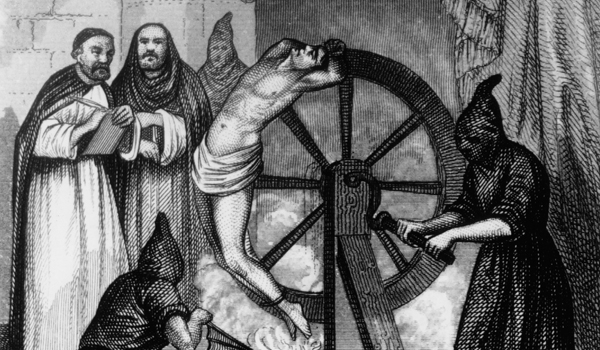
As I explained long ago, torture is already a human rights abomination forbidden by U.S. principles, values, tradition and culture. That does not mean, and has never meant, that the nation’s official and sincere opposition to torture as an ethical absolute must not be subject to a genuine existential exception.  It does mean that an official policy that allows torture degrades the very reason for the nation’s existence.

This vital reason doesn’t even reach the fact that the United States has signed international treaties that state, unequivocally, that it deplores and rejects torture. That one is less complex; as I wrote about the Bush Administration’s doubletalk at the time…

Typically, the Administration is trying to finesse this uncomfortable fact by playing legalistic word games, requesting a “clarification” of what constitutes torture. This is intellectually dishonest, and blatantly so. The methods it wants to define as “something other than torture”…threatened drowning, cold room interrogations with subjects doused with water, beatings and other forms of assault and battery, obviously violate provisions of the Geneva Convention such as those requiring prisoners of war to be treated with “personal dignity” and “humanely,” and that they should not be subjected to “hardships and sufferings.” Meanwhile, torture is defined in Article 1 of the 1984 Convention as “any act by which severe pain or suffering, whether physical or mental, is intentionally inflicted on a person for such purposes as obtaining from him or a third person information or a confession.” Simulated drowning, by this definition, is torture, and passing some official “clarification” that declares otherwise won’t change that. Depriving prisoners of sleep and making them stand wet in 50 degree temperatures aren’t going to suddenly become “humane” either, nor will such treatment suddenly cease to cause “hardship” and “suffering.”

The United States exists on the ideal that it, unique among nations past and present, asserts and acts upon its original dedication to the values of human life, liberty and pursuit of happiness above all else. The United States’ identity is that of the Good Citizen, the hero, the trustworthy one. Of course that’s a high aspiration; of course we will fall short of it sometimes, of course such an aspiration appears arrogant and superior to others, and so what? Continue reading

Give Credit Where It’s Due: Bill Clinton’s Mastery Of Deceit Is Awe Inspiring And Unequalled

best-of-the-best-award_MCSAsked by CNN’s Jake Tapper about Hillary Clinton’s lack of trustworthiness according to a recent poll, Bill Clinton replied, solemnly, “I’d trust her with my life.”

Brilliant deceit. His response is completely irrelevant to the question, misleads the audience, bolsters Hillary and may even be true, but it in no way either refutes the proposition that Hillary can’t be trusted, nor contributes any useful information for those who would like to examine the issue.

Whether Bill trusts Hillary is as useless to those not engaged in mutually beneficial enterprises with her as the fact that Clyde trusted Bonnie, Wyatt Earp trusted Doc Holiday or the Godfather trusted Luca Brasi. There are very few people whom nobody can trust, even such trusted Clinton henchmen as Dick Morris and Paul Begala. The public wants to be able to trust a leader to do the right thing even when it doesn’t benefit his or her interests, to tell the truth, and to have integrity. None of these character traits apply to Hillary Clinton, or Bill, for that matter. Sure he probably trusts her “with his life,” because he knows his life is useful to Hillary. “I’d trust her with my life” sounds like a ringing endorsement to the easily misled and confused voter, which is the Clinton base. As Bill knows well, the statement doesn’t mean anyone else can or should trust her.

You just have to tip your hat to him. Nobody makes the truth dance like Bill Clinton. He can even make an endorsement from someone more untrustworthy than Hillary—him–sound persuasive.

Wow.

Thoughts Upon Watching George Stephanopoulos Interview Another Hillary Clinton Advisor This Morning

george

1. Why is George Stephanopoulos still being allowed to interview anyone connected to, critical of or opposing the campaign of Hillary Clinton? He has an irreparable conflict of interest and the appearance of impropriety. He was deceptive regarding his continued support for the Clintons, by not reporting serial large contributions to their foundation/political slush fund. ABC is essentially ignoring basic journalism ethics.

2. Interviewing another one of Hillary’s paid liars--I didn’t catch his name, and frankly, they are fungible: let’s call him :Lanny Davis 2016″—George asked the same question about trade that Jake Tapper did, but barely pressed on after receiving the same evasive answer. Why? Because Tapper is a real journalist and George isn’t? Or because George was attempting to show he is objective by asking the question, but is still essentially an undercover, though not so covered, Clinton booster?

3. George then asked another tough question, asking Lanny 2016 about what he said about Clinton in 2008 when he was working for candidate Barack Obama against Hillary, saying that Clinton couldn’t be believed and that she adopted positions according to political calculus rather than sincere beliefs. The honest answer would have been, “Well, you understand this, George: Obama was paying me then, Hillary’s paying me know, just as the Clintons paid you once, and now ABC does.” Instead, Lanny II replied with a canned statement that didn’t address George’s question at all, and George let him get away with it. Why? Because he’s a hack? Because he’s dumb? Or because he’s in the tank for Hillary Clinton?

The Unethical Job Of Hillary’s Paid Public Deceiver

liarWe were definitively introduced to Karen Finney when she delivered a vile concoction of deceit, misrepresentations, rationalizations and double-talk as Hillary Clinton’s surrogate to respond to the then emerging State Department e-mail scandal. Prepare to see and hear a lot of her, and since everything about Hillary involves deception, pretense and sleight-of-word, prepare to bang your head on the floor…that is, prepare if you care about ethics and transparency, or if you are not gullible, ignorant, or already a victim of Clinton Corruption.

Yesterday, CNN’s Jake Tapper tried to ask her a direct question regarding her position on the Pacific Partnership bill, a reasonable question since Congress just delivered a blow to its prospects of passage by voting down President Obama’s bid for fast track authority to negotiate its terms.

JAKE TAPPER: First I want to ask you about this breaking news in Washington D.C. today and about Secretary Clinton’s position on the President’s trade bill. In a 2012 speech in Australia, Clinton who was a big proponent of the Pacific Partnership bill said quote, “It sets the gold standard in trade agreements to open free transparent fair trade. The kind of environment that has the rule of law and a level playing field.” It sounds to me like she is a big supporter of it but as a candidate she said nothing about it.

KAREN FINNEY: Well, but what you just read, that was from 2012 and we are now in 2015 and this deal has gone back and forth between the House and the Senate and then it sounds like we are going back and forth again another couple of times so that is part of why as you played earlier on your show, Hillary has made it very clear that she has her two kind of standards. Any trade deal has to meet those two tests and she has voted for trade agreements that she thought were good and she has voted against those that she thought were bad.

TAPPER: Okay so she opposes this one?

FINNEY: Well, no, that is why she has said that though that she really believes what’s really important from a policy perspective, not the political conversation, she really believes that the final language is really what is important. Because we can talk about currency manipulation but how do we get there? How do we accomplish that?

TAPPER: But Karen I am talking about policy because Democrats in the House and Senate have now voted on this. This is an issue that every single Democrat who has announced that they are running for the presidency has taken a position on except for the one who helped push it and did she even help write it? I believe she helped write it.

FINNEY: I can’t speak to that because I wasn’t at the State Department. But again I just go back to the bigger picture and that is what she has really been focused on. And I hear what you are saying and I know that there are people who, you know, they have things that they want her to say about this but she and, you know, you played her own words. This is how she has laid out her position on this issue in terms of does it protect American workers, does it keep America safe, what is the final language? I mean again you have seen the ping-pong back and forth…

TAPPER: But Obama says it does. Pelosi says it doesn’t. I don’t think. I’m not asking her about her personal life…

FINNEY: Do you really think we are at final language at this point? I don’t think we’re done at this point given the game.

TAPPER: Karen, isn’t this exactly what people hate about politicians? That they won’t take a position because as soon as they take a position they are so fearful what the response is going to be from voters? Like she was part of this administration. This administration supports this trade bill. Okay, what I don’t understand is why you just won’t say we oppose it now in its current form. We oppose it. We don’t support it anymore.

FINNEY: You know what Jake, I hear you. And again my point is I think when she has talked to voters what they have wanted to talk to her about is the economy and jobs and college affordability so…

TAPPER: This IS about the economy and jobs! This is the little switcheroo people do sometimes. Like as if I am asking about her hair or her clothes. I’m not. I’m asking about a trade deal.

FINNEY: I didn’t say that you were saying that. My point is she has made it very clear where she is broadly on ths deal. I don’t think we are at the final language…

TAPPER: So generally speaking she supports it?

FINNEY: Generally speaking any trade deal has to meet her two tests and that is where she is at.

TAPPER: I can see I am getting nowhere..

Continue reading