Comment of the Day: “Ethics Quiz: The Case of the Fake But Accurate Social Security Card”

My ethics conundrum regarding the fake but accurate Social Security card solution—the Dan Rather approach, if you will— continued to garner a wide range of responses. Rick, as usual, has delivered one of the most thoughtful and provocative, and it is a worthy Comment of the Day.

Here is his comment on “Ethics Quiz: The Case of the Fake But Accurate Social Security Card”:

It strikes me that sometimes—not always, but sometimes—ethics is on a continuum. There’s the truly ethical, the not unethical, and the unethical, with many finer distinctions to be made.

I don’t running screaming into the night at the idea of faking a card, under the circumstances. Still, the truly ethical thing to do in this situation is to tell the prospective employer the truth. And the availability of all those other possible means of identification is indeed relevant. Provide one of the non-Social Security card alternatives and whatever other documentation is available. Importantly, if the employer, for whatever reason, is unwilling to accept this legally sufficient documentation, you don’t want to work for this person, no matter how much you need a job. Continue reading

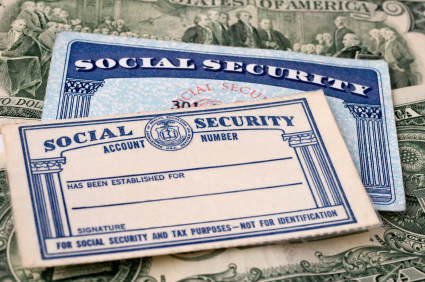
Ethics Quiz: The Case of the Fake But Accurate Social Security Card

A conundrum I have been asked to solve:

A mother is working to get her foreign adopted child a new copy of his Social Security card, which was lost. The child is a citizen since infancy, and a SS number has been assigned to him, but the process for a naturalized alien to get another is long and fraught with red tape, delays and frustration. So far, replacing the card has taken ten months, though it was supposed to take three. Now the son is waiting for the card to be issued. Social Security says it is waiting for final approval from Immigration, and Immigration says that there is a bottle neck, but not to worry.

Meanwhile, the boy has a standing job offer for a job that he is excited about and that would help family finances considerably. He cannot be processed without a Social Security card, however. And the job will not be held open forever.

For $250, a friend of the mother’s can get a counterfeit Social Security card with the son’s real number on it. He can have it in a week,

Your Question, in the last Ethics Quiz of 2011:

Granted that getting such a fake card is illegal, is it unethical?

None of the agencies involved dispute his citizenship, that he is enrolled in Social Security or that his number is valid. He has a document from Social Security that lists his number. The fake card would not assert anything that wasn’t true, except that he actually had the official card. He would be offering fake proof, but fake proof of something that is undisputed and true.

Is this one of the rare cases when conduct would be both illegal and ethical?

I’ll take your responses and update this with commentary later.

Distracted Driving, Pot, and “The Great Debate”

As balm for Christiane Amanpour’s bruises from being kicked off her ABC Sunday show back to CNN, the network honchos let her try a different format this weekend (since nobody was watching anyway.) Styled “the Great Debate,” it pitted conservatives Paul Ryan, the GOP House intellectual, and columnist George Will against soon-to-be-retired Democratic Congressman Barney Frank and Clinton’s former Labor Secretary and perpetual Munchkin Robert Reich for the full hour, exchanging familiar talking points on the usual suspect national issues. The debate wasn’t so great, for several reasons, prime among them being the natural motor-mouth tendencies of Reich and Frank, who, I would guess, took up approximately twice the air time as the conservative pair. The teams were similarly unbalanced in cheer, with Reich as perky as his Lollipop Guild training would suggest, and Frank full of his trademark wisecracks, while Will was dour as ever (when faced with liberal cant, the columnist always looks like my high school Latin teacher did when I was botching the day’s translation) and Ryan radiated the charisma of a certified public accountant.

The most interesting exchange was when George Will derided proposed federal regulations against “distracted driving” as the latest installment of the nanny state encroachment on personal rights, saying that individual freedom should trump the government’s concern for public safety except in the most extreme circumstances. One of the good uses of absolutist reasoning is that it raises a very high bar before breaching a valid principle can even be considered, since it has to be considered as an exception if it is to be contemplated at all. Barring unsafe conduct that increases the likelihood of automobile accidents, however, is not the place for absolutism, but for utilitarianism—rational balancing. Continue reading

Penn State Primer: 15 Ethics Alarms on the Duty to Rescue and the Bystander Problem

Tiring of the smug and remarkably vicious Paterno defenders who have designated Mike McQueary for infamy because he failed to stop the Penn State child rapist in action, and who have accused me of supporting such inaction in rescue situations when my position, record, writings, belief and life experience proves the opposite, I offer these previous Ethics Alarms posts on the topics of rescue and bystander inaction. It is a useful, if sometimes disturbing review of various aspects in a complex issue. I don’t really expect the commenters previously referenced to allow rational thought to interfere with their certitude and vendetta, but most visitors here are not so wired.

A new post, focusing especially on McQueary, will be along soon, but today is Veterans Day, and I have my own duty to attend to: honoring Maj. Jack Marshall, Sr., 1920-2009, WWII veteran, Silver Star, Bronze Star and Purple Heart veteran, a true hero his entire life, in every way imaginable.

I am quite confident that he would not only have stopped Jerry Sandusky from molesting the boy, he might well have shot him.

Here are the 15 selected essays: Continue reading

Hitler’s Paintings, Dirty Money, and an Ethics Quiz

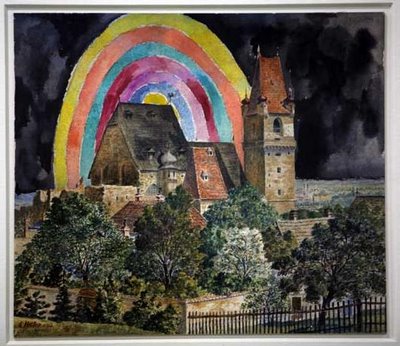
A Hitler masterpiece during the artist's controversial "Care Bears" period

As readers here probably know, I don’t do much commentary on Swedish ethics, but this intriguing story touches on a couple of Ethics Alarms topics of continuing interest: so-called dirty money and political correctness.

Sweden’s debt collection agency had planned to sell seven paintings by that noted 20th Century artist Adolf Hitler to bring the government some extra cash to pay off debts. A genuine Hitler can fetch $40,000 or more on the global art market. The intended sale never happened, because the agency concluded that the paintings were fakes, but never mind: what is ethically provocative is that Stockholm’s Jewish association protested that it would be morally offensive for the government to make money off of Hitler’s artistic labors. “It is symbolically unfortunate that people earn money on these items,” said the group’s spokesperson. Continue reading

Scott Olsen, The “Occupy” Movement and The Protest Dilemma

The critics of the various Occupy Wall Street demonstrations are hustling to defuse the backlash from an incident that took place this week in Oakland, where a confrontation between police and Occupy Oakland protesters not only led to many arrests, but also a severely injured protestor. Iraq war veteran Scott Olsen is hospitalized with a fractured skull as a result of being hit by a projectile directed by police, probably a tear gas canister.

In the age of YouTube, the various images of Olsen’s injury were quickly exploited by protest organizers, as should be expected and is entirely fair. All demonstrations and protests are ultimately about public relations: if the protesters manage to be viewed more sympathetically than the group they are protesting against, then they attract sympathy and support. They win. If the protesters become unsympathetic, then they lose. All intense demonstrations eventually become a game of chicken between demonstrators and the government’s law enforcement force, be it police or National Guard. The demonstrators refuse to clear out of an area where they do not have a right to be, either because of the lack of a permit, or because they are disrupting the public peace, safety and welfare. They will try to provoke police without appearing so violent, unruly or scary that they lose public support. The police (or National Guard) have a job to do—they also have their own physical safety to protect—and yet they have to avoid making martyrs out of the demonstrators by appearing too militaristic, and also to make sure that their efforts don’t evoke images of police state oppression. Continue reading

Genome Sequences, Consent, and Scientist Ethics

What...you don't trust this guy???

Few things are scarier than when scientists start debating ethics.

A current debate in the scientific community involves whether it is ethical to publish your genome sequence without asking permission from family members. It is increasingly common for people to pay to have their genome scanned for the presence of traits, including genetic diseases. Scientists agree that releasing this information without the permission of the individual whose genes are described would be a clear ethical breach. The controversy involves whether an individual is ethically obligated to get consent from family members before publishing his or her own genome sequence, since to some extent that means publishing theirs as well.

The argument proceeds from the unauthorized release of someone’s genome sequence by a third party to the plight of an identical twin whose sibling wants to publish his own sequence, which, of course, also describes his twin’s.  This is ethically clear too: it would be wrong not to seek permission. But what about the rest of the family? Continue reading

Scent Branding, Mind-Control, and Ethics

Agreed: this is scary. We're not there yet. We don't even know if "there" exists.

A recent article on the web that purported to explore the ethics of “scent branding” was fascinating for two reasons.

First, “scent branding” is a term I had never encountered before, for a practice that I had not focused on. About five seconds of thought, however, made me realize that indeed I was aware of the phenomenon, and had been for quite a while. “Scent branding”—using fragrances in a commercial environment to create a desired atmosphere and to prompt positive feelings, recollections and emotions from patrons—has been around a long, long time, though not under that label. When funeral parlors made sure that their premises smelled of flowers rather than formaldehyde, that was a form of scent branding. Progress in the science of scent allowed other businesses to get into the act: I was first conscious of the intentional use of smell when I spent a vacation at the Walt Disney World Polynesian Villages Resort. The lobby and the rooms had a powerful “tropical paradise” scent, a mixture of beach smells, torches and exotic fauna. It was obviously fake, like much in Disney World; also like much in Disney World, I found it effective, pleasant, and fun. I certainly didn’t think of it as unethical. I was normal in those days, however.

Well, more normal.

The second aspect of the article, entitled “Is it Ethical to Scent Brand Public Places?”, that caught my attention was that it had an obvious agenda. The piece was opposed to scent branding, and set out to find the practice unethical in order to justify condemning it. Continue reading

More Than a Fool: Bachmann, John Quincy Adams, and Wikipedia

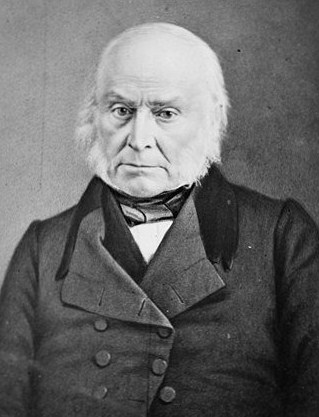
John Quincy Adams, Sixth President, slavery foe, and time-traveling Founding Father

I will strive a bit longer to avoid concluding that Michele Bachmann is as irresponsible, dishonest and dangerous as I strongly suspect that she is, though my determination may not last the time it takes to write this post. I won’t wait any longer to conclude that she is a fool.

In one short week since the controversy erupted over Fox News anchor Chris Wallace daring to ask her on the air, “Are you a flake?” and her subsequent botching of both her answer and the question’s fevered aftermath, she has stumbled into two flaky episodes. One—her mixing up Western movie star icon John Wayne with serial child killer John Wayne Gacy—was at least funny. The other, far less forgivable—her claim that the Founding Fathers “worked tirelessly until slavery was no more in the United States”—has signature significance. Continue reading

Strauss-Kahn and His Accuser, Victims of The Postman

The accuser of Dominique Strauss-Kahn, the former IMF head who has been devastated by her sensational rape charge, now admits that parts of her original account of the incident and an earlier accusation of rape she made to seek asylum in the U.S. were false.

The Altantic’s Megan McArdle sums up the Ethics Train Wreck thusly:

“There are two possibilities here, neither of them good:

1) A woman with an unsavory past, who has done desperate things to get out of terrible economic conditions, was raped by a prominent figure, and he’s going to get away with it because of her history.
2) A serial cad had consensual sex with a chambermaid, and she attempted to destroy him with a false rape allegation for personal gain. And because of the presumption that women don’t lie about rape, she has succeeded in destroying him . . . though not so much in the personal gain part. To quote Ray Donovan, ‘Where do I go to get my reputation back?'” Continue reading