“When Will They Ever Learn?” Department: “Baby Emma” Déjà Vu

Preston and Baby Wyatt

Preston and Baby Wyatt

Once again, an unmarried father is trying to get the courts to award him custody of his child after the mother handed the child off to adoptive parents. This issue was recently examined by the U.S. Supreme Court in the case of Adoptive Couple v. Baby Girl, and on Ethics Alarms two years ago in its examination of the “Baby Emma” drama. Now it is in the news again, as Preston King, the 19-year-old father of “Baby Wyatt” fights for his child in the California courts

The details of these cases vary, as do the state laws governing them. In the Baby Emma case, for example, among the complexities were the fact that the state of the couple’s residence, Virginia, recognizes an unmarried father’s right to custody, while the state where the adoption took place, Utah, does not. All the cases have  in common a conflict between rights, law and ethics. Continue reading

Ethics Dunce: Virginia Democratic Lieutenant Governor Candidate Ralph Northam

Democratic Party candidate Ralph Northam cannot possibly lose the Virginia Lieutenant Governor race today; in fact, he should win by a landslide. His Republican opponent, African-American minister E. W. Jackson, is so conservative he makes his running mate, gubernatorial candidate Ken Cuccinelli, look like Saul Alinsky, and I’m only exaggerating a little bit. From the pulpit, he has made statements that sound like they were ghosted by Pat Robertson in one of his crazy moods, like when he seemed to be suggesting that children with birth defects were being punished for their parents sins. Jackson doesn’t believe in evolution, thinks that government programs have done more harm to blacks than slavery, and could fairly be described as homophobic.

Still, he is a citizen, a candidate and a human being, so when he offered his hand to his soon-to-be victorious opponent Northam following a TV debate, there was only one decent, civil, ethical, statesmanlike response for Northam: take it, and shake it. That is traditional, civilized, and polite, and for Northam to do what he chose to do instead—ignore Jackson and his hand and snub the Republican, refusing even to look him in the eye—on live TV, no less!— shows him to be an arrogant, unmannered, uncivil jerk of the breed that has brought American politics, government and discourse to a new low. Continue reading

Wanetta Gibson, Elizabeth Paige Coast, Chaneya Kelly, Cassandra Kennedy and the Alkon Formula: How Should We Punish False Rape Victims?

Coast: How much compassion does she deserve?

Coast: How much compassion does she deserve?

Commenting on the case of Elizabeth Paige Coast, a Virginia woman who finally came forward last year to confess that in 2008 she had falsely accused Johnathan C. Montgomery, a former neighbor, of raping her in 2000 when she was 10 years old and he was 14, advice columnist and blogger Amy Alkorn proposes this sentencing formula:

“I feel strongly that those who falsely accuse someone of rape should spend the amount of time incarcerated that the person they falsely accused would have.”

Coast’s victim was convicted of rape and  spent four years in jail as a result of her lies. As for Coast, she was recently sentenced by Hampton Circuit Court Judge Bonnie L. Jones to only two months in jail, plus being required to pay Montgomery $90,000 in restitution for de-railing his life. The judge suspended the rest of a five-year sentence, and is allowing Coast to serve the remainder on weekends so not to unduly disrupt her life.

Coast’s lawyer had argued any jailing would send the wrong message to others who lie about false rapes. The prosecutor, agreeing with Alkon, asked for a 10-year sentence with six years suspended so she would serve the same length of time as Montgomery. It seems the judge agreed with the defense more than Alkon. I think Alkon is closer to the mark, but if we make the punishment for recanting rape accusers too severe, it is probably going to mean that some in Coast’s position will choose to let their victim rot and just live with a guilty conscience. Continue reading

Virginia Governor Bob McDonnell On How To Sound Like A Crook

Why is this man smiling?

Why is this man smiling?

I posted earlier on the blatant violation of basic conflict of interest principles (not to mention de facto bribery) by Virginia Governor Bob McDonnell (R). Following increased criticism and talk of forcing him to resign, McDonnell announced on his weekly radio show (“Ask the Unethical Governor,” or something like that) that he was returning the many gifts and repaying the loans that came to him and members of his family from Star Scientific chief executive Jonnie William.

His comments read like a primer on how to sound like a slippery and dishonest politician, which, it seems clear, he is. Here are  some highlights, with my comments in bold: Continue reading

Gov. Bob McDonnell And The Compliance Dodge

GiftsThe bottom line is that Virginia Governor Bob McDonnell accepted what looks to any objective observer like a bribe–several bribes, in fact—and whether he is in technical compliance with his states laws and ethics rules doesn’t change the fact that he is, by definition, corrupt and untrustworthy.

McDonnell, once considered a rising star in the national GOP firmament–and who knows? Considering the competition, he may be still!—has been steadily soiled and diminished by  revelations of dubious gifts and payments to his family and a corporation jointly owned by him and his wife by wealthy businessman Jonnie R. Williams Sr, chief executive of dietary supplement manufacturer Star Scientific Inc. So far, the gifts and payments appear to include, Continue reading

More Ethics Of Terrible Secrets : Falling Bullets, Moral Luck, And The Accountability Check Of A Lifetime

Somebody's happy!

Somebody’s happy!

Seven year-old Brendon Mackey was walking with his father in the parking lot of the Boathouse Restaurant in Midlothian, Virginia at around 9 p.m. last Thursday when a bullet, apparently shot into the air by a Fourth of July celebrant, fell through his skull, killing him.

“We don’t think this was an intentional shooting. We think that somebody in or around the area was celebrating the Fourth of July. Unfortunately we think they were shooting a gun in a reckless manner and this young boy is a victim,” a police spokesman told the media. The bullet, experts say, may have been fired as far as five miles away.

There is an investigation ongoing, but if history is any indication, Brendon’s killer will remain a mystery. Last Independence Day, a Michigan State student, engaged to be married, was killed the same way, by a bullet believed to have been launched into the sky by a celebrating stranger. Michelle Packard was 34. This spring, her still grieving  fiancé committed suicide.

Has a reckless celebrant with a gun  ever stepped forward voluntarily to accept responsibility for causing such a tragedy? I cannot find any news accounts that suggest it. Deaths from stray bullets fired into the air are rare: most fall to earth harmlessly, and even when they hit someone, the result is seldom a fatality. Still, firing a gun skyward is illegal, and truly reckless and stupid. My father told me that during World War II, he warned the men under his command that he would see that anyone firing a weapon into the air without good reason would be court martialed. “They really seemed surprised when I told them that the bullets came down,” he said. Continue reading

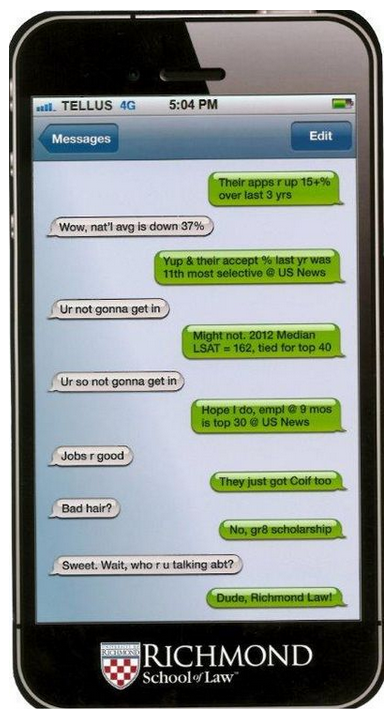
Ethics Quiz! Richmond Law School’s “Cool” Ad: Lame, Deceitful…Or Just Advertising?

Richmond ad Richmond-Law-ad

So, what do you think? Such esteemed legal commentators as TaxProf Blog and Above the Law have mocked and condemned the above Richmond Law School ad directed at law school applicants deciding where to plant their hopes. “The clubhouse leader for the lamest law school ad of 2013” snarked the former. “Calling it “lame” or “uncool” or “hackneyed” or any of the other words in the English language that denote a distinct inability to appear genuine or interesting doesn’t do the ad justice,” declared the latter. Then there is the little matter of puffery, which usually means deceit, spin, or exaggeration, except that in advertising such lies (for that is what they are) are mostly accepted as part of standard practice. That employment within nine months stat cited is dubious in the judgment of those who feel only legal jobs should count–apparently Richmond Law includes jobs where a JD is considered an asset, but the graduates are not working as lawyers. (On the other hand, almost every  job I’ve had since I graduated from laws school has been in the “JD advantage” category, and I’m satisfied with the results.) Continue reading

Gov. McDonnell And The Wedding: When Ethics Hypotheticals Come True

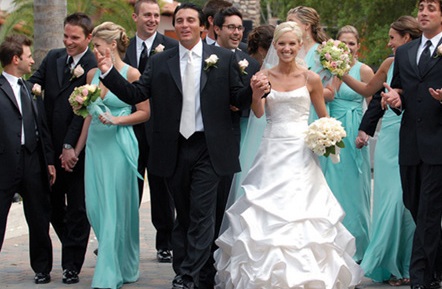
Reception

I thought I was dreaming when I read this in the Washington Post this morning:

Virginia Gov. Robert F. McDonnell (R) has said his daughter and her husband paid for their own wedding. So a $15,000 check from a major campaign donor to pay for the food at the affair was a gift to the bride and groom and not to him and therefore did not have to be publicly disclosed under the law, the governor says. But documents obtained by The Washington Post show that McDonnell signed the catering contract, making him financially responsible for the 2011 event. The governor made handwritten notes to the caterer in the margins. In addition, the governor paid nearly $8,000 in deposits for the catering. When the combination of the governor’s deposit and the gift from the donor resulted in an overpayment to the caterer, the refund check of more than $3,500 went to McDonnell’s wife and not to his daughter, her husband or the donor….The question of who was responsible for paying the catering bill is a key one because Virginia law requires that elected officials publicly report gifts of more than $50. But the law does not require the disclosure of gifts to the official’s family members. McDonnell has cited the statute in explaining why he did not disclose the payment in annual forms he has filed with the state.

I have taught an ethics hypothetical very similar to this in several contexts, including government, business, and legislative ethics. The lesson is that regardless of the laws, and whether a particular set of regulations designates gifts to a direct family member as creating a conflict of interest and appearance of impropriety, this kind of transaction is suspicious, probably corrupt, looks terrible, undermines trust, and should be rejected by the official whose family member is getting married. Continue reading

The $500,000 Dead Baby: Signature Sign Of An Unethical Industry

Why certainly, we'll be happy to paint a target on your baby's back, no questions asked---just keep up with the premiums!"

“Why certainly, we’ll be happy to paint a target on your baby’s back, no questions asked—just keep up with the premiums!”

Three insurance companies allowed a Manassas, Virginia father with a suspicious history of violent family deaths to take out life insurance on his 15-month-old son in the astounding amount of more than $500,000. Now the boy, Prince McLeod Ram, is dead, allegedly drowned by the beneficiary of those policies, his dad, Joaquin Rams. He’s under arrest; the companies are unlikely to have to pay out a cent.

I suppose that makes this a good business deal for them.

For the dead kid, not so much. Continue reading

Ethics Dunces: Republicans

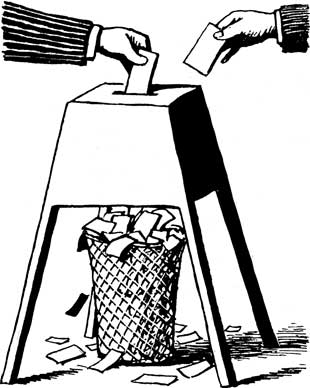
election-fraudIn government, the appearance of impropriety can be as damaging as the reality, and what a terrific, tone-deaf, stupid example Republicans are giving the nation by trying to change the Electoral College system, already highly unpopular (I like it, by the way), by making it worse. The GOP is pursuing a strategy of trying to get the states where it has control of the legislature to change the way those states’ electoral votes are allocated in a Presidential election from winner-take-all (the current system in place in all but two states) to allocation by Congressional district. Such a system would have, just coincidentally I’m sure, given a narrow victory to Mitt Romney if it were in place in all the states that Mitt Romney lost (but none that he won.)

Screams from Democrats that the Republicans are trying to “fix” the election system are a bit disingenuous: an essentially identical system was installed in Maine by a Democratic legislature (as well as in Nebraska by Republicans), and no alarms were sounded then. There is nothing illegal or unconstitutional about it, for state legislatures are charged by Mr. Madison’s masterpiece with deciding how allocating electoral votes should be done. Democrats also did something similar in the wake of the baroque 2000 election result, concocting a scheme, the National Popular Vote Interstate Compact, to undermine the Electoral College by persuading several states to agree to direct electors to vote not for whoever wins the popular vote in the state itself, but for whoever wins the popular vote nationally. Well, waddya know! THAT method would have given Al Gore the Presidency—and what a fun ride it would have been!—from 2000-2004. This is as much an example of trying to rig the results of the previous election as what the Republicans are trying, though it is much, much fairer and ethically defensible on it merits. (Still a bad idea, though.) Continue reading