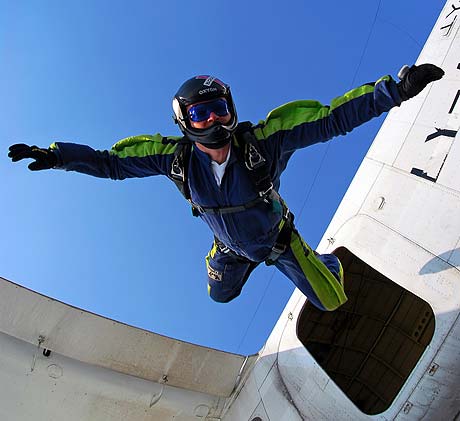
"GERONI-"--no, I'm sorry. Let's see...uh..."
Somewhere, I sometimes suspect, there is a mega-computer that scans all news, media, films, TV, video games and pop music offerings, alerting various minority groups to fresh new opportunities to manufacture complaints based on victim-posturing and absurd political correctness. The thought has passed through my brain once again, as I see reports such as the one that appeared in the Washington Post this morning, describing how Native American advocates are offended that the codename for the military operation that killed Osama bin Laden was “Geronimo,” named after the iconic Apache warrior.
A codename, as the term implies, is a word or name intended to stand for something other than its actual meaning and historical significance. Ergo, the Manhattan Project was not a plan to drop New York City on Japan. Many codenames have had absolutely no relationship to their military meanings; what is important is that they not be too hard to remember or too easy for enemies to figure out. The mission to get bin Laden could have been named “Meat Loaf,” “Lindsay” or “Charlie Sheen,” all of whom would have been honored and amused, presumably. The military picked “Geronimo.”
It is a pattern of professional grievance-mongering that groups seeking to use majority guilt and trumped-up offenses to gain power and influence will regard conduct as insulting that in every other context is regarded as benign or even complimentary. Native Americans have refined this inside-out tactic to an art form in their successful bullying of colleges, universities and minor league professional sports teams to abandon Native American team names. Minnesotans honor their ancestors by calling their beloved NFL team “Vikings,” Boston honors its Irish population by calling its storied basketball team “Celtics,” but Atlanta calling its baseball team the Braves is somehow an insult, as if cities name their sports teams after people and things they dislike. Now the activists are turning their ire on…military codenames?
The spinning and illogic used to support this complaint is breathtaking. “I was celebrating that we had gotten this guy and feeling so much a part of America,” Tom Holm, a former Marine, a member of the Creek/Cherokee Nations and a retired professor of American Indian studies at the University of Arizona, told the Post. “And then this ‘Geronimo EKIA’ thing comes up. I just said, ‘Why pick on us?’ Robert E. Lee killed more Americans than Geronimo ever did, and Hitler would seem to be evil personified, but the code name for bin Laden is Geronimo?”
No, the code name for the American operation to dispatch a mass murderer and international terrorist is Geronimo. See, the operation was a good thing. Geronimo’s name is being attached to a successful military plan, and that neither denigrates nor diminishes Geronimo’s memory or legacy in any way…not to mention that fact that in this case his name is just a series of sounds and letters, having nothing whatsoever to do with the real historical figure.* There was no legitimate offense created or intended.
Ah, but there was an opportunity. By feigning offense, or by willing indignation without just cause, Native American advocates get publicity in the Washington Post. They get interviewed; they get to remind everyone how badly their people were treated by the European invaders and a succession of American leaders. Eventually, they will probably get some grovelling apology, possible even from President Obama, who seems to enjoy making them. And although the use of the legendary Apache warrior’s name by the military both burnishes it and increases public knowledge and cultural recall about the figure behind it through stories like this one, professional grievance-manipulators are willing to guarantee the eventual obliteration of all figures, images, and events Native American from the national memory in order to be able to flex their political muscles.
The military did nothing wrong by using the codename “Geronimo.” Claiming that it did, however, is unfair and dishonest.
___________________
* Much is being made of the fact that Geronimo was a fugitive for more than a decade, and that he led raids on Americans, suggesting that the use of his name was intended as a statement of moral equivalency between Osama bin Laden and the Apache hero. Since there is no equivalency, and nobody has argued that there is equivalency, there can be no justification to be offended at an implied equivalency that wasn’t implied, and that doesn’t exist.
 Ethics Alarms
Sometimes I am reminded of Al Capp’s creation “S.W.I.N.E.”, ie. “Students Wildly Indignant about Nearly Everything.”
Al Capp? You must be almost as old as I am!
Only if you, as am I, are slightly less than 2/3 of a century.
I seem to recall that I dredged up the old S.W.I.N.E. thing a while back! Or was that on another site?? I remember that Joan Baez was furious about it, given that Capp’s “swinish” leader was called Little Joanie Phonie. The best scene was where a smiling policeman, watching yet another protest, gives Joanie a little pat on the bottom and tells her, “Now run along home, dear” (!)… to which she immediately screeches “Police Brutality”! It was an incapsulation of the times.
The raid’s code name was “Operation Neptune Spear” also known as the “Abbotabad Operation.” “Geronimo” was the code to let the higher ups know it was UBL.
Jack – I agree just about 100% on this issue. If we’re all to come to the table and coexist together, we kneed to put this kind of ‘sensitivity’ of which I have been guilty of in the past into the cosmic wastebin and move forward with a sense of humor and not taking this reality so seriously.
The Cosmos has a delicious sense of irony and is constantly putting paradox and mystery into our existence – most of the time without we as individuals even being aware of it. If we are all to get along, we humans need to make this happen, and sooner than later.
You mispelled “Geronimo” as “Geronomo” in the second paragraph.
I foxed it. Thanks.
heh.
Well I’m glad SOMEBODY noticed…
No arguments, Jack. I think a lot of people these days are aware of how professional race politicians will seize on any excuse to advance their agendas, no matter how hackneyed. I’m also reminded of how McMurray College here in Texas was forced by the NCAA to give up their nickname of “the Indians”. They still don’t have another one. And why? One would reasonably consider that using such names would be an honor. Schools don’t normally choose a motif with the idea of denigrating, but choose one of virtue to reflect on their spirit. This carries over to the naming of military operations, often enough. That former Marine should be ashamed of his words.
“Charlie Sheen” would be a terrible name for a military operation, given the possibility that a soldier could die. Can you imagine some widow saying “I lost my husband in Charlie Sheen” or a veteran saying “This scar is from Charlie Sheen”?
On a more serious note, I do think that the way some sports teams are named and promoted is somewhat offensive. While I understand the argument that the naming could be an homage to an admired group, often the name used is a somewhat derogatory term (hello Washington Redskins) or the team mascot is an unflattering caricature (see the Cleveland Indians).
Then again, as a Caucasian, I do like the Fighting Whites.
My link didn’t work. Go to http://en.wikipedia.org/wiki/Fighting_Whites.
Dear Eric: I was going to comment on that. It’s strange that American Indians give little notice to a term like “Redskins” (which has dubious overtones!), yet are enraged by Atlanta (Milwaukee, Boston) BRAVES. Doesn’t that name, epitomized by the laughing Mohawk warrior, signify a complement to them? They weren’t called “braves” for nothing. And how about “warriors” or names of individual Indian tribes and nations? Contrary to the PC hype, Americans give honor to our “Red American” fellow citizens in many ways. They’re part of our heritage. E Pluribus Unum. Now (and as you allude) how many teams are named “Saxons” (who were renowned warriors themselves) or the “Normans” (my ancestors!)? Crass descrimination!
There’s always the Cleveland Cavaliers. The name seems to honour the martial (and chivalrous) history of medieval and renaissance Europe, of which the Normans were a part.
I believe that the period of Norman dominance in western Europe had pretty well passed by the time of the Renaissance, Eric. The term “cavalier” derived from the French “chevalier” and the Spanish “caballero”- originally describing a high born warrior who fought on horseback. A knight, in other words. The term “cavalryman” also derives from this. However, the English term of cavalier was first widely used to describe the Royalist cavalrymen (in their rich attire and plumed hats!) who fought for King Charles I in the English Civil War. Although they were ultimately defeated, their name ultimately came to define any dashing mounted officer in later times. This term was also used a lot by the Confederate cavalry, many of whom saw themselves modern incarnations of the originals… and the Yankees as the despised Roundheads of Cromwell. It’s remembered that, at their last parting, Jeb Stuart’s wife told him, “Come back to me, my gallant cavalier”. From all this has come a romantic image of speed and courage. Cleveland, however, is anything but romantic! I can only assume that they chose the name because it rolled off the tongue easily.
Very interesting.
Are the Cleveland Cavaliers named the same as the Virginia Cavaliers? That isn’t he Normans (except distant relations), it would be the Royalist as opposed to the Roundheads.
That’s why the Virginia Cavaliers were named what they were, Michael. During the English Civil War, the Cavaliers were the leaders of the Royalist Army in opposition to the Puritan-lead Parliamentary Army, whose mounted troops were often called Roundheads (because they cut their hair shorter) or the Ironsides (because of their standardized cuirass, or breastplate armor). Because the South was largely settled by Celtic people (King Charles was of the Stuart Dynasty) and because there were large plantations run by neo-aristocratic families, many Southerners came to associate themselves with the Cavaliers. New England, on the other hand, was initially settled by Puritans, who had become a persecuted minority after the Restoration. This old culture gap revived itself during the War Between the States. The Normans, who conquered England in 1066, had long since assimilated with the native Saxons; the result being a blend of the Norse/French dialect with the Germanic Saxon tongue into the modern English language.
The Redskins back story is complex (They began in Boston, linked to the then Boston Braves baseball team and named the Braves…then the team moved to Fenway Park, hone of the ared Sox, and someone had the bright idea of going to Red SKINS instead of Braves.
Chief Wahoo should have been ditched, but “Indians” is a perfectly good team name.
I don’t have any disagreement with your main point , but can you honestly say you don’t understand the issue with team names? Many people of Celtic ancestry live around Boston, and the descendants of Vikings populate Minnesota, but the last of the “Braves” were (illegally) expelled from Georgia, many dying on the forced march to Oklahoma. And native groups have complained about “Redskins” before, so I don’t know where that came from.
Surely you don’t think the appropriateness of a team name depends on the number of distant ancestors around, do you? The Celtic logo is a characterize every bit as exaggerated as Chief Wahoo—why aren’t the Irish up in arms? Besides—you know there are Native Americans in Georgia today. I understand the issue with team names just fine: political manipulation based on trumped-up offense and political correctness. How else to explain banning “The Spartans” and “The Trojans” as team nicknames? I am Spartan—how did that name insult me? Most Native Americans not raised at Berkeley U. or Yale (the also managed to kill the “Indian” name at Dartmouth, which began as a school for Native-Americans. Make sense? Not to me.
Polls show that most Native Americans not running victims groups don’t care about team names, because they are rationale and fair, and have a life.
I recall how that also occurred at Stanford University in the 1970’s. They were also once known as the Indians. In fact, they had a local Red American who made a good living by performing an authentic war dance on the sidelines. Naturally, the faculty had to fire him. All in the name of “sensitivity”, of course!
BTW: I actually met a guy from Sparta… which still exists as a small Greek city today. Espartikos. They may not be a warrior nation anymore, but they take great pride in their “unique” heritage. And that was before “300” was produced!
My Sparta-born grandmother was tougher that all 300 of them.
“Can I have a cookie, Grandma?”
“Come and take it, Jack!!”
I was waiting for that. When the news announce that the signal to the president that they had gotten Bin Laden was “Geronimo is dead”, I cringed. Since the U.S. military spent almost 30 years hunting Geronimo as an enemy of the United States because of his attacks on both military and civilian targets, the parallel is not really that much of a stretch.
I agree that much of the hoopla over the Atlanta Braves, FSU Seminoles, etc is overblown and silly when Notre Dames’ “Fighting Irish” mascot is considered innocuous. However, this one was obviously going to cause some complaints, especially from the Apache.
Personally, I don’t regard Geronimo as much of a hero. He was a pretty murderous character in real life. For true heroes, the Apaches should look to men like Cochise and Coloradus Magus who were honorable chiefs and warriors… and were respected on both sides for it. It’s just pure irony that Geronimo not only survived his depredations, but eventually wound up in Buffalo Bill’s Wild West Show!