You cannot fight for the truth with lies. Why is this so hard to learn?
This is a big ethics story, with general ethics lessons and serious public policy repercussions in an area already muddled with ethical misconduct on all sides. I’m going to restrict Ethics Alarms to the purely ethical analysis. and, at the end, point out some of the excellent articles that the incident has inspired regarding the policy implications of it all.
Last week, leaked documents prepared for a board meeting of the libertarian think tank, the Heartland Institute, were published on various blogs and websites. The Institute is a major player in the effort to disprove, debunk or discredit scientific studies showing man-made climate change, and block the adoption of anti-climate change policies while undermining public support for them. One of the most provocative documents was a “Climate Strategy” memorandum laying out Heartland’s secret efforts in sinister terms. The source of the documents, and the one who made them available to global-warming promoting bloggers, was a mysterious individual calling himself “Heartland Insider.”
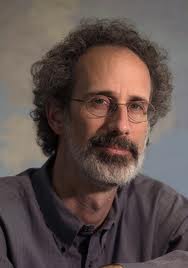
Now the source has revealed himself, and it is a prominent climatologist on the front lines of the climate change battle, scientist Peter Gleick of the Pacific Institute. Gleick explained what occurred in a column at the Huffington Post:
“At the beginning of 2012, I received an anonymous document in the mail describing what appeared to be details of the Heartland Institute’s climate program strategy. It contained information about their funders and the Institute’s apparent efforts to muddy public understanding about climate science and policy. I do not know the source of that original document but assumed it was sent to me because of my past exchanges with Heartland and because I was named in it. Given the potential impact however, I attempted to confirm the accuracy of the information in this document. In an effort to do so, and in a serious lapse of my own and professional judgment and ethics, I solicited and received additional materials directly from the Heartland Institute under someone else’s name. The materials the Heartland “Institute sent to me confirmed many of the facts in the original document, including especially their 2012 fundraising strategy and budget. I forwarded, anonymously, the documents I had received to a set of journalists and experts working on climate issues. I can explicitly confirm, as can the Heartland Institute, that the documents they emailed to me are identical to the documents that have been made public. I made no changes or alterations of any kind to any of the Heartland Institute documents or to the original anonymous communication.”
Heartland denies the authenticity of the original “Strategy” memorandum, and says it is a forgery. Gleick denies that he wrote it. I am not especially interested in that part of the controversy; I presume we will find out the truth eventually. What troubles me is this: Gleick until recently had been the chair of the American Geophysical Union’s Task Force on Scientific Ethics. He has written extensively on scientific integrity. Yet he chose to lie, and to use a fake name, to illicitly gain possession of materials he had no right to acquire.
The supporters of climate change are overwhelmingly flocking to a “they did it first!” rationalization, arguing that Gleick’s fraud was no worse than 2010’s “Cimategate,” when the server of East Anglia University was hacked revealing thousands of e-mails containing unprofessional and arguably unethical banter among climate change scientists, some of whom seemed more interested in suppressing minority scientific studies than finding the truth. Indeed, Gleick’s defenders say, his act was far better, because—well, Gleick is right. One global warming warrior wrote, “For his courage, his honor, and for performing a selfless act of public service, he deserves our gratitude and applause.”
Astounding. This is the purest “ends justify the means” reasoning, and it is frankly shocking. Gleick’s fraud is worse than that of the anonymous hackers at East Anglia. They were political operatives and zealots—also criminals. He is not only a scientist, but one who was regarded as a paragon of ethics in his field. If he is willing to lie to defeat his critics and foes, then what else is he willing to lie to accomplish? Gleick is not a “whistleblower”—the blogger, Richard Littlemore, betrays his own dishonesty by designating him so, I suppose because “whistleblower” has a positive, heroic connotation, while “lying thief” does not. Gleick dishonestly posed as a whistleblower when he called himself “Heartland Insider.” Whistleblowers are members of an organization that “blow the whistle” on corruption where they work. What Gleick did is corruption.
Other defenders, including some journalists, argue that his deception was justified because some of the documents thus obtained , as Gleick wrote, “confirmed many of the facts in the original document.” And if they didn’t? Then would Gleick be just a lying thief? This is the fallacy of consequentialism–supposing an unethical act becomes more ethical because of what happens subsequent to it. No. That is nothing but moral luck. We assess the ethical nature of what Gleick did—relying on an anonymous, possibly forged document that had credibility for Gleick because of confirmation bias only, to justify his using dishonest means to acquire proprietary documents and then making sure that they were published for all to see—based on its nature when he did it. Whether he uncovered smoking guns or not doesn’t change the ethics verdict: dishonest, unfair, irresponsible. Unethical.
His actions show that he, at very least, is willing to lie to make sure that climate science “wins,” and thus he has destroyed both his own credibility and seriously damaged that of his colleagues—especially those who continue to defend him.
As Megan McArdle writes at the Atlantic—in one of the best pieces about the scandal:
“After you have convinced people that you fervently believe your cause to be more important than telling the truth, you’ve lost the power to convince them of anything else.“
Exactly. And that is why in science, which is the quest for the truth, honesty and integrity are indispensable. Without them, there can be no trust, and trust is what Peter Gleick has destroyed.
[In addition to McArdle’s first piece, I recommend her second here, Judith Curry, Jonathan Adler, an anti-global warming slant from Powerline, and Andrew Revkin at the New York Times.]
 Ethics Alarms
Fraud on fraud on fraud. It should be no wonder, then, that I am not alone in being in more dread of whatever policy implementation may follow regarding climate change than of the actual, raw impacts of the natural environment on myself, my species, and our biosphere. But then, the ethical value is courage, not dread. So…
I will make and keep one promise. I am sure that to some, it will be taken as a threat, though I don’t intend that. Others may take it with gratitude and drooling anticipation, as vultures hungry to prey on another. Still others will blow it off as idle, paranoid rage, even as I concede that I am projecting, and am pitching a puny, pre-emptive, passive-aggressive, misanthropic snit-fit.
Nevertheless, when the climate change-related policy implementation gets its inevitable ballyhooed “launch,” I am, by whatever means necessary, resolved to be “one of the other, other people.” I promise that. I will have no money. No property. I will have only what is left of my mortal flesh to experience the changing world, and to impact upon it. Therefore, I will have no money to spend on violating policy, and no money to be taken from me to implement policy. That money will have to come from other, other, other people. I shall keep, and keep exercising without apology, whatever power I shall manage to keep in the absence of the property (money) that I refuse to have a conflict of interest with. Shame on me (that is sarcasm). Shame on humanity (that is not sarcasm).
Nicely put. The real tragedy of all this is that no matter what is true or who you believe, this derails any shot at fair, balanced, reasoned inquiry. All that matters now is political influence, media bias, and emotion.
Yours is put better. Your observation is more relevant than my reaction.
Jack, I disagree with your blanket analysis of the situation because there are “many layers of grey” to this issue (and I’m not even going to address the subject of climate) and would even posit that this could be an ethics quiz.
Science is and should be about forming a hypothesis, designing a test, collecting evidence, and finally confirming or refuting your original hypothesis. If the evidence is strong to support your ideas you present it. Conversely, if the data discredits your ideas you still must present it. You accept the good with the bad–that’s how good science is supposed to work (there’s a whole related ethical dilemma about deliberately unpublished research).
I don’t think you can overlook the original “Strategy” memo. If, in that memo, the Heartland Institute outlined how they would publicly discredit Gleick or wrongfully attack his ideas he’s going to respond in the normal humanistic trait of fight (defensive). And I believe he proceeded in the fashion in which he had been trained: to collect evidence.
Perhaps he became misguided along the way and lost use of his own moral compass as the supporting docs began to stack up in his favor. His actions are understandable though not inexcusable. Most scientists would prefer to have a rational argument about a contentious issue based solely on the evidence.
I just don’t believe that the original catalyst can be ignored.
This argument is ethically inert, Gregory. You’re talking tactics. not ethics. there is NO “catalyst” for fraud. Fraud isn’t an option, especially a scientist, and especially one lecturing his profession on ethics. Your argument is one of the ratioanlizations: “they had it coming.” Lies life this—intended to deceive and facilitate criminal conduct, can’t be justified as you’re proposing. When you receive an anonymous memo, you authenticate it, or you don’t act on it. Using an unauthenticated memo as the spur to fraud is indefensible. He could have publicize the memo–why didn’t he? (of course, if the memo was stolen,that’s unethical too.)
“And I believe he proceeded in the fashion in which he had been trained: to collect evidence.” To collect evidence by lying, you mean. Is THAT how he’s been trained? Good to know. Why should we trust him then?
“Perhaps he became misguided along the way and lost use of his own moral compass as the supporting docs began to stack up in his favor.” PERHAPS??? Starting the process was misguided; in fact, it was dishonest. “His actions are understandable though not inexcusable.” so what? I understand most unethical conduct; professionals are trained to and must avoid it like the plague. OK—I understand—doing something the dishonest way was easier that the honest way. That’s true of research, hitting a fastball out of the park and winning elections. That’s no defense.
“Most scientists would prefer to have a rational argument about a contentious issue based solely on the evidence.” Really? Well, THIS scientist can no longer be trusted to present what he calls evidence, because he has proven that he considers lying a legitimate tool.
Do you? because you can’t defend Gleick and claim otherwise.
1) “Your argument is one of the ratioanlizations” – No, it’s not. I’m trying to understand his original motivation that you weren’t interested in.
2) “you authenticate it” – in Gleik’s own words he “attempted to confirm the accuracy of [it].”
3) “by lying” – No, that’s not what I typed or inferred.
4) “doing something the dishonest way was easier that the honest way” – I didn’t defend his actions just tried to present some context.
5) “can no longer be trusted to present what he calls evidence” – actually that’s incorrect and the beauty about science. Your ideas are not accepted until others can replicate your experiments. I don’t doubt that this will stain his reputation. However if he still has intelligent ideas they can be tested.
6) “he considers lying a legitimate tool” – I don’t think so. He admits to a lapse.
7) Again, I didn’t defend Gleick–I called it inexcusable. I just don’t find the issue completely black and white.
1. Gregory, the motivations for lying to obtain proprietary documents are irrelevant—in law and in ethics.
2. He didn’t authenticate it! He attempted to authenticate its claims, but nobody has authenticated the memo itself. It may yet be shown the Gleick himself wrote it.
3. But by lying is how he did it, whether you typed it or not.
4. That kind of context is called “ratioanalizing.” I’m not trying to be difficult, but really: whta else is it? You are spinning to justify what you yourself say is inexcusable.
5. They can be tested, perhaps, but his own data is suspect, and the data of everyone in his field is more suspect than it was before, because he is a representative of their culture.
6. Gregory, if I don’t consider something a legitimate tool, I don’t use it. What does “lapse” mean in this context? That for a moment he mistakenly thought it was a legitimate tool? No. It means that given enough motivation, he’s willing to use illegitimate tools. Lapse my foot.
7. Lying is half right? No. Lying is justified if your cause is important enough or if you’re just sure you’re right and the other guy isn’t? No. What’s not black and white? The Golden Rules says this is clear. Kant would say it’s clear. Mill would say that it fails utilitarian standards. What, then?
1) Motivations do matter. What about a clandestine group such as the CIA? Are all of their actions both legal and ethical?
2) I don’t see any difference between authenticating the memo itself apart from its content. Rather than publicize an unsubstantiated document he chose to collect data that would support its authenticity.
3) I responded to your question about how he was trained. Irrespective of this issue, he was educated to objectively analyze facts. To a fault in this case.
4) I don’t want to debate something unless I know we are talking about the same word. You’ve used “ratioanalyzing” twice now. Is this a Jackism specific to Ethics Alarms or a typo?
5) Perfect! That’s how it’s supposed to work. Einstein’s theories weren’t accepted when he first proposed them. Rigorous testing confirmed them. I would hope that Gleik’s colleagues have previously meticulously examined his studies to confirm them. Any published research is scrutinized.
How about just plain honesty in your dealings, Greg? Isn’t this also the basis of scientific inquiry? If a researcher (and an ethicist as well!) cannot manage his affairs in good faith in regard to his researches, how can those researches themselves be accepted at face value? The integrity of the researcher is a consideration on par or greater than his ability to do that research. Without it, the entire system breaks down, as it not only casts disrepute on the individual, but the research, the sponsoring institution and all other researchers in that sector of inquiry.
-Stephen, I’m not sure how you concluded that I advocate dishonesty—please elaborate.
-In terms of scientific inquiry, I’ve stated that one must present both the good and the bad evidence whether they like it or not.
-The system doesn’t break down when researchers are caught forging or falsifying their data. On the contrary, that is proof (no pun intended) that peer review works. Wouldn’t it be beautiful if professional athletes subjected themselves to the same voluntary screening for steroids?
-I agree that scientists caught cheating stain their reputation. But the actions of one individual do not automatically discount others in the field.
I was just making a blanket statement, Greg. No offense to you was intended. My big concern is the rash of scientific scandals that have been sweeping through the academic and research arenas; fuelled, it seems, by the usual source… money over morality. Science isn’t by any means the only human endeavor of our times to suffer a degradation of standards. But it has and, as in those other fields, it needs to be acknowledged and addressed.
I follow the emotionally and politically charge climate debate. The first thought I had when I saw Gleick’s admission was: “I wonder when Jack Marshall is going to comment on this one”
Thanks for your post!
What Gleck did was inexcusable in the light that he was a supposed paragon of ethics.
It would be inexcusable if anyone did this….and I can’t help but think….where would I have to be mentally to do what this guy did? What would cause me to be so dishonest? I can not see the place where Dr Gleick had to be in order to do this. Finding his motivation fails me.
Beyond that, it galls me that my tax dollars are going to support unethical, and illegal
behavior from a scientist who is held up as a leader in ethics standards in his own professional community.
My 5 year old knows better.
I fell sorry for Dr Peter Gleick, for all his training and school and title….he does not have the ethics of a 5 year old.
Jack, I’m really impressed by your flagrant double standards, comparing your reaction to Climategate — in which you may have criticized the ethics of the hackers in an brief aside somewhere, but overwhelmingly used it as an opportunity to criticize climate scientists with falsehoods (not that you were lying; you’re just too ignorant to know that your comments were false.).
Regarding this current story, for me the most serious issue here is the allegation of forgery. It seem very possible that Gleicks forged a document in order to smear people with lies. If he did that, that would be unbelievably low, and deserving of all kinds of condemnations (and a lawsuit as well). Of course, forgery hasn’t been proven yet, and maybe it’s not true; but unfortunately, it won’t surprise me if it is true.
Absent the forgery, however, Gleck did nothing that the Climategate hackers didn’t do. Since you just barely considered the Climategate hackers worth criticizing, it’s partisan hypocrisy that you’re being so over-the-top in attacking Gleck. For instance, where did you write, in response to Climategate, that “the data of all” climate skeptics is now “more suspect than it was before, because [the hackers] is a representative of their culture”?
I think that’s more than a little unfair, Barry. First of all, I did indeed state unequivocally that the East Anglia hacking was unethical and the results didn’t justify it. And if you showed me that MarK Levin or Rick Santorum or Charles Kruathammer did the hacking, I would hold them to a standard at least approaching what Gleick should be held to. He’s a scientist, a leader in the field, and, unbelievably, supposedly an ethical authority. You can’t seriously suggest that his conduct isn’t objectively worse, because of his obligations in those roles, than hackers who might be grad students or Matthew Broderick! Are you? Is so, that seems to be a desperate effort to duck the issue by deflection.
I saw this line of defense coming: wait a minute! Opponants cheat to expose us, and we’re criticize; we expose them, and we’re citicized? Sure. Global warmists have the burden of proof, and its a high one. To make it, their methods, objectivity and integrity have to be beyond reproach—which the East Anglia breach showed is far from the case—and their leadership, professionalism and honesty have to be reliable, which Gleick’s stunt throws into question. I know hackers are unethical. The double standard, if you want one, is the dsiconnect between the left’s embrace of Julian Assange and his traitorous buddy.
Also, your distinction between forgery and fraud is puzzling. Gleick definitely used a fake identify to acquire material he had no right to have. That’s every bit as wrong as a forgery.
I think you’re focusing on a bloodless technicality while ignoring the actual content. If Joe Democrat lies, and I say “ho-hum, it’s certainly wrong of Joe to lie,” and then Sam Republican lies, and I say “DAMN THAT SAM REPUBLICAN! HE IS THE WORSE HIVE OF SCUM AND VILLAINY YOU’LL EVER FIND!,” then I’m displaying a very clear, partisan double-standard. And that’s exactly what you’ve done in these two extremely similar cases.
This makes sense if you’re anti-science and want to grasp onto any excuse, however slim, to deny climate science. Otherwise, it doesn’t make sense. Science isn’t done by saints; it’s done by ordinary humans. There are literally thousands of climate scientists worldwide; some of them are great people, some are awful, most are just ordinary.
How could it ever be possible that all of them will always be “beyond reproach”? If that’s the standard for judging science, then all science is false.
Are YOU beyond reproach, Jack – are you someone who has NEVER done anything that could possibly be questionable? If so, you’re a rare duck indeed. (For the record, I’m not beyond all reproach myself.)
The standards for global warming science are the standards for science — replication, peer review, consensus among experts over time, etc.. Made-up standards beyond that (“a climate scientist used a false name! Therefore climate science is more suspect than it was before! It’s about culture!” etc) are just denialist nonsense. Judge science based on the science, not based on if you think the scientists are good people or not.
I honestly don’t know what Assange’s “traitorous buddy” is a reference to.
I suspect you’ll roast me for saying this, but — left or right — I don’t really think it’s a major sin when someone uses a fake name on a request for information. It’s not the sort of wrongdoing that gets me heated up and angry, whether it’s done on the left or the right.
(Is it wrong when reporters used false names to go undercover? How about when Harry Houdini used to use a fake name to investigate con artists pretending to contact the dead? I’m worried that you’ll react to these questions with withering scorn and contempt, but I honestly don’t see where the huge difference lies, and if you could explain it without yelling at me I’d appreciate it).
To tell you the truth, I don’t even see the Clmategate hacking as being an especially terrible thing, in and of itself. It was wrong, but again, it doesn’t make me all that angry in and of itself. (The dishonest and out-of-context quoting of the emails does make me angry, but that’s a separate act.)
You seem to be saying that how wrong something is depends not one what one does, but on who one is. So when a climate scientist is voluntarily given information but used a fake name, that’s a zillion times worse than an anonymous person hacking into a computer system and stealing files, not because their actions were objectively worse but because of who they are.
On the face, that seems like an obvious excuse for you to use unfairly harsher standards on people you have a political beef with (like climate scientists).
I do think there are some people who have special obligations because of who they are. Eliot Spitzer, for example. It’s ten times as scummy for a former prosecutor who had put people on trial for prostitution to hire a prostitute, then for any other person to hire a prostitute.
But I’m not convinced that scientists in particular have a special obligation not to use false names when asking for non-scientific information, compared to other people.
1. Yes, who someone is, what their duty is, and what the professional standards are, does change the magnitude of the wrong. I will get disbarred for doing what Gleick did, for example, and would deserve it.
2. Using a false identity to obtain something that doesn’t belong to you is theft as well as fraud.Your shrugging it off is interesting, peculiar and convenient.
3. Yes, it IS wrong for reporters to use false names to go undercover, and all the ethics codes for journalists say so. There are exceptions for especially important information that can’t be acquired any other way, but even those rules don’t permit using fake names to acquire proprietary materials. Police investigating crimes can’t do this either, without prior judicial approval. 4th Amendment.
4. The hacking at East Anglia was serious, and if caught, those responsible should go to jail.
5. If scientists lie about one thing, there is no reason to trust their data. Scientists always have a temptation to lie—getting grants and making their reputation, most of all. I can’t see your difficulty with the concept. It’s Trustworthiness 101.
2. There are so many serious harms in the world, it’s hard for me to get worked up about stuff that’s relatively harmless. (i.e., I get far more angry at someone stealing money from a poor person than someone downloading a comic book off the internet, although I understand that both of those things are legally stealing.)
3. I didn’t realize it was unethical for journalists to go undercover with false names (assuming that their reporting is honest and that whatever they’re investigating is genuinely a matter of public concern, and not just salacious spying). But what I genuinely don’t understand is why it’s unethical. Could you please spell it out for me?
4. This is off-topic, but I don’t agree. Frankly, I’m not sure that any nonviolent crime should be punished with jail (or prison); other methods of punishment seem both more proportionate to the crime and more affordable for taxpayers.
5. Very nearly 100% of human beings have told a lie at some point in their lives; but many people are nonetheless ethical and honest in their professional lives.
I guess that’s my “difficulty with the concept.” You seem to be saying that unless a scientist has been a perfect saint for his or her entire life, we should mistrust their professional work. To me, that seems too extreme to be workable.
Is the data available for examination by other scientists? Have the results been replicated by other scientists? Do the results seem unique or unlikely in the context of other published results? Were the data-gathering procedures fully and usefully described? Do the numbers add up? The answers to these and similar questions are a more practical way of deciding to to trust (or distrust) a scientist’s data and reported results.