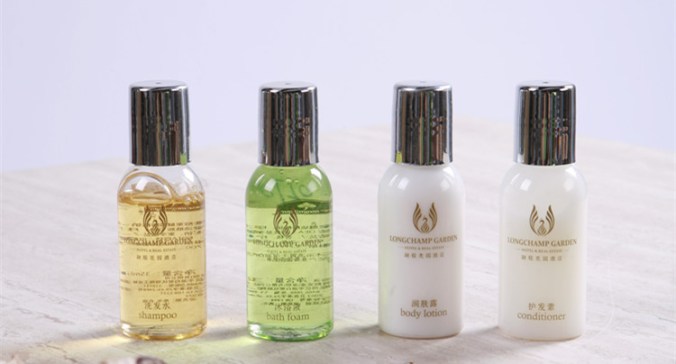
When pop star Halsey took to Twitter to complain that the shampoo and conditioner typically made available to guests in hotel bathrooms are useful, if at all, only to women with “white people hair,” the immediate reaction in many quarters was that the race-victimization industry must be running out of outrages. “I’ve been traveling for years now and it’s been so frustrating that the hotel toiletry industry entirely alienates people of color,” she tweeted. (No, I never heard of her before either.) “I can’t use this perfumed watered down white people shampoo. Neither can 50% of ur customers. Annoying.” First she was accused of being white—she isn’t, believe it or not—

—then she was mocked for being ridiculous: surely the rich celebrity can afford to travel with her own hair products! But when one ponders a bit, Halsey has raised an interesting ethics dilemma.
After the commentary got rolling on social media, black women and women who were of mixed race genetic make-up spoke up to say that the singer was right: unless a woman had generic Caucasian hair, those little bottles make a mess of her coiffure. “We’re not all millionaires, yet we all do stay at hotels and would appreciate if the shampoo didn’t turn our hair into Brillo pads,” wrote a Twitter user.
“Who knew me acknowledging that white hair care products are the national standard (while POC are confined to a tiny aisle) would piss so many people off. Not sorry,”Halsey persisted. “If white ppl can enjoy the luxury/convenience, there should be an option for everyone to. It’s an ‘insignificant’ example of a bigger problem. That’s all!”
Another fan wrote: “You need to remember this is one of the many small things that POC go through that makes them feel like we don’t matter enough to be catered to. It’s a microaggression.”
Is it really a microaggression? Or is it it just one of those realities of not being the majority that minorities have decided they should protest to bend society to their will? Is the fact that so many tools, appliances and other daily necessities are made for right-handed people a sign of hostility, or just a rational business decision? Hotel shampoo isn’t great (being bald, I find it makes good bubble bath, however), but it’s provided for those who want to use it. The “we’re not all millionaires” argument for the average person staying in a luxury hotel like the ones Halsey stays in is a stretch, but nonetheless, is it fair that hotels cater to the needs of the majority of women while ignoring the special needs of a minority? On the other hand, is it reasonable to expect hotels to spend the extra money to make multiple varieties of conditioners and shampoos available so no one feels discriminated against? Should I have to pay extra so Halsey isn’t offended?
Coincidentally, this week also brought the news that many hotels, as a cost saving initiative, were eliminating the small bottled entirely in favor of wall dispensers. I could easily see enough social justice warrior indignation being raised over racist shampoo that hotels decide, “Oh the hell with it. Let’s just stop stocking the stuff.” Would minority activists consider this a victory? Jack can’t enjoy his bubble bath any more because hotels had to choose between providing a tiny amenity to the vast majority of its guests and getting accused of “microaggression,” or spending a fortune to stock their bathrooms with sufficient varieties of hair products that nobody could complain of discrimination?
The controversy is really a smaller and more trivial version of the wheelchair-accessible transportation problem that I last wrote about here. I concluded then,
There are now 655 wheelchair accessible taxis in the New York city area. I’d love to see statistics on how often they are used by the passengers they are designed to serve. My guess: not that often. As much as anything else, this is an interest group power-play. It is discrimination, they insist, if handicapped passengers have to wait longer than non-handicapped. New York’s Taxi and Limousine Commission has proposed broad new requirements for wheelchair-accessible service for the entire for-hire industry including Uber and the other ride-hail companies. Naturally: they want to put ride-sharing companies out of business, and this could do it.
Government has a legitimate interest in making basic public accommodations reasonably and sufficiently accessible to citizens with handicaps, to the extent this is possible and financially feasible without reducing reasonable access for the non-handicapped majority, or putting companies out of business that can’t reasonably be expected to make expensive mandated adjustments. The government does not have an obligation to spend taxpayer dollars and to bully businesses so the handicapped can avoid all of the inconveniences attendant to their misfortune. Nor is it the government’s function to ensure that handicapped citizens don’t have to plan their days.
Or that people with frizzy hair don’t have to carry their own shampoo and conditioner when they travel.
I can’t see without my glasses, and can’t wear contacts. If I go to a 3-D movie, I am very uncomfortable wearing the 3-D specs over my own glasses. Isn’t that unfair? Isn’t that a microaggression against my handicap? Shouldn’t the theaters be forced to provide 3-D glasses that I can use as comfortably as anyone else? How is that argument any different from the protests of the Frizzy Hair Activists?
Halsey put her Twitter-finger on an ancient questions that divides nations, religions and ideologies. Is fairness possible, when everyone’s needs and expectations are different?
TO THE POLL!!!
 Ethics Alarms
Hotel hygiene products make my screen dry, stupidly dry. After a three day stay (if I don’t bring my own soap or buy one) I will go through a medium sized jar of body lotion in a couple of days. Guess what? I bring my own shampoo and soap, or I buy where I’m going. Is this because I’m a minority? I don’t know and I don’t care. I appreciate being provided toiletries in case I forget mine and had never thought for a second that I should complain that they are not the ones I usually use.
Your (autocorrect?) error in your first sentence produced a laugh. There should be a warning on soap and shampoo bottles–“Not for topical use on electronics”
Darn, now you’ll figure out I’m actually a cyborg.
Oh – no comments yet. Well, I feel obligated now to make the first comment (or, one of the earliest), since I am, so far, the one vote for “Hotels should stop offering any hair products if they can’t accommodate everyone.”
Passive aggression helps to ensure “equality in microaggression.” Offend EVERYBODY. Inconvenience EVERYBODY. Put into all marketing materials, website literature etc., “WARNING: Amenities provided by this hotel DO NOT INCLUDE: [Make the list as long as the prevailing pathological pettiness and insistence on not being offended require.]”
Maybe the hotels who publish such a warning should also include a “hold-harmless” statement or disclaimer, too, such as, “[Hotel X] hereby makes no implied representation, warranty, or other promise regarding hotel staff’s knowledge of accessibility of amenities which are not provided by this hotel but may be accessible at retail or other sources in the hotel’s surrounding community. Staff might know the answer to a guest’s question, or, they might not know the answer. Staff are permitted to answer (or not answer) guests’ questions, according the employee’s personal discretion.”
So if I want Jeri-Curl, or “white people’s shampoo,” I’ll have to tip one of the staff at least a fraction of the price of what I will have to buy out of my own pocket, just to have someone tell me where in the hell I can get SHAMPOO.
“…according to the employee’s personal discretion.”
Couldn’t answer – the poll left off the obvious solution that a number of rooms should be set aside and outfitted for people who might prefer these different products.
No. Someone would challenge that as discriminatory such that it is separate but equal.
There’s an easier solution, one that the Marriott I stay at every year for five days, and four, yes, four relatively luxurious nights, provides just about everything, I didn’t find that out until after I’d been doing this for nine years and, after all that time, forgot my ditty bag at home.
They replaced all the basic-basics at the Front Desk. I had written out a list of what I could recall was missing, plus their brand names, feeling unkempt and ungracious. As I started to leave, forgetting to ask the location of the nearest drugstore, the clerk who had brought the basics, all in multiples, slipped the list out of my hand and began to go through it, checking items off as she went. “There’s a Hilton and ….” she named two or three other hotels that were nearby. [disclosure: okay. This was a convention enclave outside a major city; not a stand-alone.] Apparently they all carried different sorts of stock, either free or in small sizes, for barter with the Marriott items, or for sale in their closet-sized “stores”. She then asked another clerk taking a check-out if he wanted to “run a trade” and he nodded.
“You’re lucky,” she said. “He’s good.” He would, she went on, go on break with one of the hotel’s roundabout shuttles that visited all the hotels nearby, make the best deals, and if I looked at the items she had checked off earlier that were probably available for sale would I mind circling the check marks she’d made on the items that would probably have to be paid for and initialing the total, and stop back by the Front Desk around two o’clock.
The “trader” clerk was there at the Desk at two, proudly laying out a row of every item I’d asked for, but one — stick of deodorant, sunscreen, three over-the-counter meds just in case, and and so on, even a good substitute for one of the Body Shop’s tough foot creams. Two of the originally priced items turned out to be trade-able. Everything worked. The only thing missing was this new hair restorer I hadn’t tried yet . . . .
When I asked how this was possible the answer was that if at least three different people (or one “regular”) ask for the same kind of product, and it’s available wholesale, they’ll often get it, or its equivalent. And that most hotels do the same.
I’m ashamed to have forgotten the name of the First Clerk, but I did send a major thank you note to the hotel with their names, and top ratings for the Mariott on all the major sites (without mentioning the barter or trading of course but everything else about the hotel was good to above par anyway). Both of them had refused a tip: “company policy”). I didn’t mention that either, just in case they might change their minds next year. I don’t have to worry about “Trader” being around though. He just moved to the San Francisco Bay Area to manage a B&B and I … helped him settle in.
The poll is missing an option:
I don’t care. You are responsible for your own hygiene, a bottle of shampoo is less than $3 if you do not like what the hotel has.
My annoyance is with the TSA who will only allow 3oz bottles so I have to bring several for a long trip.
I think it opens a need side-bar into what exactly does “Hotel” mean and are there any assumptions one can make about a hotel and what the word already advertises about itself before any particular hotel begins actively advertising for itself.
I mean, at a minimum a hotel offers a bed and a roof. But as time went on, it also came to mean a personal toilet and a shower. Any more it means coffee maker and an in room refrigerator.
So you can see lots of accommodations are gradually added to what we all assume “hotel” means and therefore will provide.
*Convenience* of not having to pack every last item from your house you need goes along way towards the inherent needs of *comfort* we gain from the connotation of “hotel”.
Sure, I’m responsible for my own hygiene, but part of my booking pays for shampoo, though we’re arguing pennies…if I’m already paying for shampoo as an assumed component of the “accommodation”, do I have a right to complain if it isn’t shampoo that I can use?
Probably not, because we all know that the assumed component is that generic, exactly the same across the board shampoo…
Or is it?
Hey, I am offended, as a person with less hair than I would like, that hotels would be so insensitive. I mean, every time I stay at a hotel, I am callously reminded of that fact when I see the hair products they lay out for their guests. Outrage!
[snickering sardonically]
I challenge anyone to find any shampoo brand that does not contain the same basic formula. The only differentiating characterstics are those that change how the product smells.
I don’t think there’s an ethical obligation to ensure everyone is perfectly accommodated, I think if you offer amenities that seek to accommodate people in general, then there is an ethical obligation to *try* to maximize (or optimize) that accommodation, so there is no ethical failure or unethical aspect of not doing so.
I don’t see how the modern hotel industry couldn’t easily crunch the numbers and determine the break down by percentage of “hair types” found in society (or at least in their user community), then get with the logistics guys to make sure those percentage of needs are provided for across their hotels, then get with their marketing guys to make the options available when booking a hotel.
But I don’t think it’s unethical for them not to. But the first hotel to “mass produce” a “custom experience” (I know that sounds oxymoronic) for it’s guests will make all the others look really unaccommodating when they don’t and therefore, ethical or not, it would be really stupid for them not to get on board.
That being said, I voted for:
“Hotels should have a variety of hair products available.”
But, this:
“Minorities of all kinds should accept that certain inconveniences are inevitable.”
is still a valid principle as well, especially when a particular minority is a fleetingly small percentage of the greater population. But I think that specific statement merely falls under the more abstract and generalized:
“Don’t assume the world owes you anything, sometimes things are a little bit more difficult for you and no one is actively causing that, so do the best you can with what you have”
“Hotels should ignore Halsey’s complaint and continue the current practice.”
But as a follow-up to the abstract rule I provided above, you absolutely can make a suggestion (with no presumption that it must be followed) and if someone makes a suggestion in your life to improve how you interact with others and it is reasonably within your ability to do so without sacrificing other things, then you should try to do it.
“Hotels should stop offering any hair products if they can’t accommodate everyone.”
No one should be happy if everyone can’t be happy? Groan. I don’t think a hotel is ethically obligated to ensure everyone is accommodated by these marginal niceties, but I wouldn’t fault a hotel to take away those niceties from an ethical angle. They’d just be really stupid to do so.
“They’d just be really stupid to do so.”
They might be more out-in-the-lead and visionary than any other hotel on the market, instead. If you’re gonna survive in today’s market, you gotta figure out how to avoid all the slings and arrows before they’re even shot.
Ha! “Halsey’s dilemma” initially stirred anticipation of a WW2 event involving the good admiral.
I went with the “minorities should accept certain inconveniences…” option, or in short form “deal with it”. If one’s personal situation is such that run-of-the-mill hygiene products don’t work for you then you should bring your own along. I cannot believe that self-sufficiency has gone out of style.
An alternative would be that the hotel have “grooming packs” at the check-in desk so guests can select the one that fits their needs. Of course, there will always be those who will complain because…. anyway. Asking about anything race related when booking the room will only generate more grief for the innkeeper.
Last week, I stayed in an Air-BNB in the Finger Lakes. As far as I could tell, it was at most a small partnership that owned single unit for rent. Every bathroom was stocked with shampoo, soup, lotion, make up remover, and assorted other items (most of which did not apply to me). I still brought my own shampoo, as I have greasy hair, although I appreciated a less than ideal backup being available. Major national chains might reasonably be expected to stock items for minorities. Small players would be driven out of business if every possible tenant had to be accommodated (the house itself was built in 1797!) As it was, the house was for sale, showing how difficult the industry is for small players already.
I think that minorities of all kinds should accept certain inconvienences — this is not a microagression (or if it is, microagressions are BS) — but I also don’t have a problem with minorities voicing annoyance like this. If a hotel chain finds the products they would prefer are the same price and wants to attract their business, they can offer whatever options are economically beneficial.
The purpose of the freebies is to get and keep customers. How the hotel goes about that is completely up to the hotel.
Label it all Bubble Bath.
If you have enough money to stay at a proper hotel you can have your personal assistant specify the amenities that should be provided. The rest of us should be prepared to dodge the bus. But, cynicism aside we are making progress: the current Green Book lists places to avoid rather then places the welcome.
My first reaction is that a hotel (at least a fancy, expensive one) shouldn’t have a complimentary hospitality service that a perfectly healthy person who belongs to an ethnic minority can’t use. It may make economic sense, but it makes a terrible impression. Shampoo is one of those little touches that makes people feel at home, and not being able to use it would understandably reduce the feeling of being welcome. However, there’s a simple solution: Don’t put shampoo in the rooms, and instead have guests pick up toiletries from the front desk or some other designated location, as Another Mike has already suggested. Michael West points out they could optimize for what products to carry based on statistics.
Of course, it’s up to the business what they offer and what they charge, but my sense of reputation mindset tells me that in order to strategically make good impressions, it’s important to make everyone feel welcome as much as feasible. It’s just good business sense, and customers will make their desires known, as is their prerogative.
Well said, and makes me want to change my vote from “I don’t know” to ”
Hotels should have a variety of hair products available.”
You can vote more than once, you know.
WHAT? Is that ethical?
Maybe not. But it IS fun to screw with the numbers.
Can black people not use the shampoo, or does it just not work well for them?
When you go to the shampoo aisle at your local store, there are roughly 7438 different varieties of shampoo, all ostensibly for people with different needs — dyed hair, dry hair, flaky scalp, sensitive scalp, oily hair, chemically treated hair, red hair, swimmer’s hair, etc etc. Does it really make economic sense for a hotel to try to cater to the hypothetical needs of each demographic.
I wasn’t entirely sure what the special needs were for black hair, so I tried googling it. According to this article https://www.ranker.com/list/best-shampoo-for-black-hair/makeup-tips the thing to look for is “deeply moisturizing formulas designed to help tresses stay healthy and sleek”. I took the number 24 shampoo from that list, and it was listed at $24 per 16 oz bottle. Contrast that to a more generic bottle of shampoo and you will see that you can get a 30 oz bottle for $9, which my bad math tells me is about 5 times more expensive. https://pantene.com/en-us/product/daily-moisture-renewal-shampoo.
Generic hotel shampoo does not work great for anyone, it is merely a passable commodity designed to increase your marginal comfort by ensuring that, if you forget or run out of your own shampoo, or just don’t want to worry about it, you have something. If you are someone who “passable” doesn’t work for; whether it’s because you have a special type of hair, have an allergy, or just refuse to let anything touch your hair that isn’t sold in a salon, then bring your own shampoo. If enough people start complaining, trying to force the hotel to start buying expensive shampoo and other products, either the price will be driven up for everybody or nobody will get the marginal comfort afforded by the amenity.
You don’t go to the continental breakfast and expect eggs benedict. Don’t try to make them provide it, because I enjoy my free bisquick waffles and concentrated orange drink.
That’s why I specified “perfectly healthy”, though there may not really be such a thing. This isn’t really a matter of fairness. It’s a matter of “do the people who end up getting less convenience out of the arrangement coincide with well-known cultural groups?” If the hotel isn’t paying attention to the needs of cultural groups who are prominent and relevant enough–not just economically or politically, but in public awareness–it would make sense to be more accommodating of their needs so that there isn’t an impression of bias towards a majority ethnicity.
A prominent hotel that doesn’t demonstrate hospitality towards all groups may seem a bit off to people in general, who would be less likely to go there as a result. That’s the power of reputation mindset, which deals with cognitive dissonance. That’s why hospitality and customer service people are always trying to go the extra mile to make people feel valued. Does that make more sense?
“We’re not all millionaires, yet we all do stay at hotels and would appreciate if the shampoo didn’t turn our hair into Brillo pads,”
THAT’s the problem? People who are using various products to straighten their hair and make it look like “white people” hair rather than “people of color hair” can’t use the free shampoos hotels offer? People use this stuff and they end up looking like a young Angela Davis? That’s a problem? Hmm.
I think nice hotels should stock different products — they are in the hospitality business after all. I stay in nice hotels fairly frequently due to work, and I love the shampoo, conditioner, body lotion, razors, tampons, etc. It’s not as if these products go bad — and housekeeping will just replace what has been used. So why not do this? As for mid-range and low end hotels, I guess they can do what they want, but people don’t tend to stay at these places because of their awesome freebies.
Maybe I’m crazy, but I think shampoos carries by hotels are pretty awful for the hair on white folk too. If I use hotel shampoo and conditioner, I get dandruff really bad and dried out ends. So I have a simple solution. If I drove there, I bring my own shampoo. If I fly there, I bring my shampoo in my carry on or buy it there. I’m getting really tired of all the whining. If you don’t buy specialty stuff like I do, you can just go to “Walmart.com” and get your stuff delivered/reserves for you to pick up at your destination. Specialty stuff if usually found at the nearest mall hair stylist, especially if you call up in advance and reserve it. It takes less time to do that than it takes to vacuum your bedroom before you leave. My vote was minorities of all sorts need to expect a certain inconvenience.
If there’s a market for an organization to provide additional value to the community and no one in the organization recognizes that market, there’s no problem for a user of that organization’s product to point out how they can improve.
There’s no ethical *obligation* for the organization to provide that additional value though. And if the organization decides not to, then the users at that point can make their own economic decisions.
A recommendation is one thing, especially since most hotels have a form to fill out (or at least a postcard) for those kind of suggestions. A Twitter storm though, that’s nothing to respond to. Response cards are meant for that, and if things don’t change then someone must have thought it wasn’t worth it. However this is more of a tantrum. I suggest it be handled the way I handle my kids tantrums. Ignore it. (The hospitality business can’t really give correction though.)
No doubt there’s an ethical way to go about improving the market.
It is called ‘voting with your feet’ or directing discretionary funds to the vendor of your choice.
I mean, switching suppliers signals at a minimum approval of the new suppliers value. But it doesn’t specifically indicate what the old supplier could have done to improve.
There is a risk in engaging these days, especially with SJWs involved on social issues. I try to tell a vendor why I left, but do not feel obligated to do so if I deem the risk to be substantial.
I think hotels should continue to do what they are doing, whatever that is. I’m done letting the perfect be the enemy of the good.
You are missing the opportunity to be offended. You could state that the presence of the shampoo is an unwanted reminder that you have lost your hair. This caused you mental anguish and they need to apologize profusely and give you money.
Yes!
I didn’t vote. Again. Same reason I often set teachers’ backs up by pointing out how useless all multiple choice tests were. Something just as valid was always falling through the cracks. Same with polls and sociology questionnaires: my answers are almost always missing from the list. In the case of the minority product availability, as per my story (somewhere above), I think they do a good job, though I think the products are more geared toward women’s than mens use, especially when they’re scented. In the case of the larger chains, like the Marriott (which I’ve been misspelling!) if there is a call for minority products, they can do what they usually do, first put a few up for sale and see how it goes, then if it does go, find the best generic form in that “hotel size” wholesale and keep a supply in Housekeeping. The information that “alternative” products are available “Ask at the Front Desk” or Housekeeping could be placed online.
What happens when I (and guys taller than me, I notice), need a chair that isn’t too low or too padded (which I’ll be able to get up out of without an assist)? Even my doctors’ offices have none in the waiting room among the -height cushioned seats. I ask for a higher, firmer chair. They listen (except one who said “Sorry, it’s just how the decor goes.”). None of “decors” have changed. Except at first one, now three, of the offices have found chairs somewhere that they bring out when have more than 15 minutes to wait for exams, or treatments or test results. I keep asking, quietly, each time. Slowly, they’re coming around. Soon someone is going to tell the head of the Group what’s happening. Not that I asked . . . but because every time I get up out of that chair, someone else in the room practically jumps for it. Or someone else is sitting on it when I come out, in spite of a roomful of other seating choices. It won’t be long now . . . .
Time was, there wasn’t a ramp to save climbing two flights of steep stairs at the old library, or a hearing device free at the cinema, or a “handicapped” parking space in any of the lots or on any streets that my friend and his partner could use to pick up and deliver the appliances they repaired, despite of crippling painful rheumatism of one and the polio-shortened leg of the other. Okay, we take a lot for granted these days. But we are a minority who has stopped asking for anything (except a chair, once in a while) while others keep grasping higher for more — with the backing of the Left that is oh so generous with other folk’s money. The Bicycle Coalition who blocked rush-hour traffic with hundreds of bikes for a dozen years until the city painted their bike lanes, carving them out of the high traffic streets instead of saying hey we’ll give you safe passage on less busy, less dangerous streets, all the way downtown. Some agreed. The leaders wanted the visibility, the power of it all, and so today it’s tricky for the bikers and the drivers, but mainly dangerous for the pedestrians. Recently, some streets have announced in loud white paint that Bicycle Takes Full Lane. Ah,. but here come the motorized scooters! They are coming by the thousands, leaving them anywhere on the sidewalk, much more popular than pedaling. Invasions: like Uber. Like kudzu.
We know nobody is going to win now. We sit in the bus, laughing. This is what happens when you ask for too much. Too much = more than you need.
Well written, and worth meditation
If Halsey is indeed not Caucasian, is she then guilty of “cultural appropriation” for seemingly making herself appear so (at least from the photo used above)?
I wondered that too, when I read my first article on cultural appropriation. The whole world seems to be populated with people in jeans, T-shirts, ball caps, suits and ties, which were not part of these cultures originally. However, that’s not how the logic works; evidently you cannot appropriate the ‘dominant’ culture, so while a white college student wearing a sombrero, a white kid wearing a Moana costume, and a white girl wearing a Chinese prom dress are all appropriation, a black Annie, a black Hermione, a black little girl in an Elsa costume, are not (I don’t think they are, I’m just outlining the logic people use to claim appropriation).
I wonder if Jeremy Lam wears traditional Chinese clothing, ever. I’m guessing not….’what’s mine is mine, what’s yours is mine’…in my personal experience, those who say they don’t want anyone wearing their traditional clothing have already shunned it themselves. Don’t understand it, but there it is…
Your comment is a big reason why the left is losing support in the country. Hypocrisy has never played well to common Americans, and these are the ones being told they are ‘bad’ just because they exist.