Morning Ethics Warm-Up: 2/26/2019: Horribles

GRRRRRRR!

I have to get my reply brief to that %$#@!#&%! Ethics Alarms defamation suit in today, and I just KNOW the online filing system isn’t going to work..

1. College basketball ethics. See? Baseball isn’t the only sport I follow! Zion Williamson, one of college basketball’s biggest stars and a potential NBA star as well, injured his knee after one of his Nike shoes split less than a minute into Duke’s game against North Carolina last week. Not only does Nike have a likely product liability lawsuit on its hands, while Williamson’s bright career is suddenly in limbo, the freak accident raised—AGAIN–issues of the propriety of the way universities like Duke handle big money sports. The New York Times asked:

“Here were all the issues of big-time college sports laid bare: Should amateurism be curbed in college sports, allowing athletes a cut of the money they help produce? Should a prodigious talent like Williamson, who is good enough to play professionally right now, have to risk his future competing for free because of an N.B.A. rule prohibiting him from leaping to the league from high school? Do the sneaker companies, which were at the heart of a federal fraud trial near the start of the season, do more harm than good in college sports?”

Answers: No, No, and Yes. Big time sports are a source of corruption in all colleges that feature them. Nobody should be admitted to college to play basketball or football. If they don’t want to learn, then there should be no place for athletes in college. Allowing universities to be participants in the business of sports to the extent that universities like Duke are is a travesty of education, and guarantees misconduct.

2. The shadow of Harvey Weinstein and Hollywood’s hypocrisy hung over the 2019 Oscars, but few noted it.
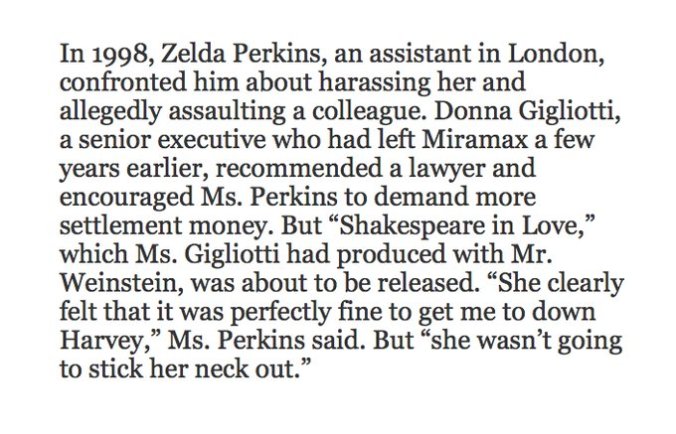
Donna Gigliotti produced the Oscars telecast. There has been no accountability for the many, many stars and Hollywood figures of both genders who enabled Weinstein’s crimes for years, then became #MeToo activists as soon as he no longer had the power to enrich them. [Pointer: Victory Girls]

3. Hasn’t this been obvious all along? Bloggress Ann Althouse does a terrific job deconstructing a New York Times article, a “Trump is Epic,” a conversation between columnists  Gail Collins and alleged conservative (who wants to repeal the second Amendment) Bret Stephens,  that could have been a parody of mainstream media bias and “resistance” false reasoning, but wasn’t. I didn’t have the heart or the stomach to fisk it, the thing is such self-evident crap: Thanks, Ann! She writes in part… Continue reading
A Visit To “The Ethicist”

I haven’t opined on posts by the current holder of The New York Times Magazine “The Ethicist” title as often as I used to, in part because Kwame Anthony Appiah, unlike his predecessors, is a real ethicist, and usually answers the questions to his ethics advice column competently. The February 18 column was especially interesting, however, because Appiah seemed to be ducking some issues. I don’t blame him; two of the three questions he received have no clearly right ethical answer.

The one out of the three that was relatively easy was the anonymous inquirer who discovered that his company was willfully violating labor wage laws and under-reporting wages for workers’ compensation purposes. “Should I report this company to the authorities?” The Ethicist was asked. My answer? YES. 1) Get a lawyer. 2) Document what you know and how you found out about it. 3) Quit. 4) Blow the whistle. “I hope you proceed. Obligations of confidentiality to your employer don’t include the duty to conceal fraud,” was Appiah’s conclusion.

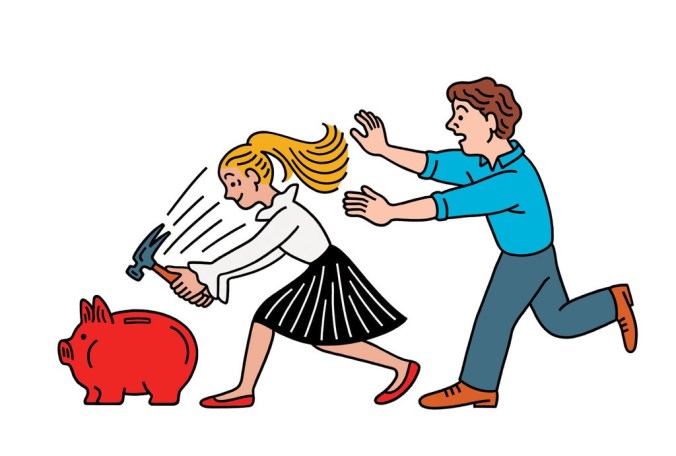
The other two questions are more problematical, especially the first: A correspondent asks what she should do with relatives in desperate financial straits who are begging for her money to bail them out. “I love my family, and it is extremely painful to see them suffer, but at the same time it is difficult for me to fund their lifestyles when they seem like a bottomless pit. I feel guilty and uncomfortable, but also angry and annoyed. Yet how can I watch my sister be thrown out of her house and potentially end up homeless if I have the resources to help her?”

The Ethicist ducks. First he says that the woman should try to train her relatives in financial management, even to the extent of actively managing their budgets. Right: THAT’s going to work. His conclusion: “So the most important thing you and your brother can do is to be clear with her about what you are and are not willing to do if her grasshopper behavior brings her into financial difficulties. And that means first being clear about this matter yourself. Bear in mind that you owe more to family members than you do to strangers, but you don’t owe it to them to abandon all your hard-earned plans in order to pay for their mistakes.”

But that wasn’t the question. Of course family members can’t demand that you fix their financial mistakes. It isn’t a matter of “owing” them, either. The Ethicist also cheats by resorting to a straw man: she didn’t ask if she should “abandon all her hard-earned plans.” She asked how she could sit back and watch them suffer when she had the resources to alleviate some of that suffering. Continue reading

The 2019 Oscar “In Memoriam” Snubs [UPDATED!]

Ethics Alarms has been cataloguing the infuriating omissions from the Oscar “In Memoriam” segment for several years. Why does it matter? Well, curtain calls are important to me, as are the lives of major film artists generally. I believe that the final bows of those screen artists who perished during the year have been earned with blood, sweat, tears, crippling anxieties and addictions, and their families and fans want to see that last acknowledgment from the industry they toiled for. Once the fleeting clip of a dead actress, actor or other movie figure is over, each recedes slowly in the culture’s memory to eventual oblivion, which is the real death for the once-famous.

There is no good reason they shouldn’t get that final moment. The inexplicable omissions, and there are several every year, are not oversights. They are deliberate. The Academy knows who died, and a complete list is on its website. The whole segment takes only a few minutes. Last night’s version, like the rest of the streamlined broadcast, was less leisurely than usual, but adding in the fallen few left out would have made no difference to the whole comparable to the insults and cruelty it would have avoided.

Here were 2019’s most upsetting “In Memoriam” snubs:

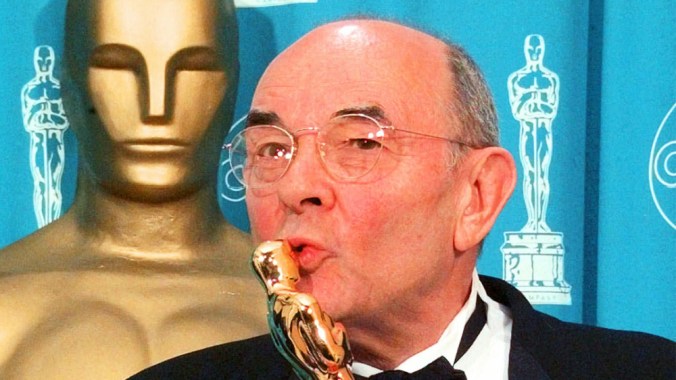
Stanley Donen

How hard would it have been to include a quick clip from “Singin’ in the Rain,” the all-time classic he directed with Gene Kelly, perhaps the most entertaining movie of all? Donen, who received a Lifetime Achievement Oscar, also directed “Charade,” “Damn Yankees,” and many other important films, including “Two For The Road,” a clip of which was shown to mark the passing of Albert Finney, who was, quite properly, accorded the honor of the last bow in this “In Memoriam.”

The excuse given for Donen’s snub was that he died last Tuesday. There was time to add him; of course there was. The producers just didn’t care enough to make the effort.

Sandra Locke

This one was especially cruel. If you know anything about the way Clint Eastwood treated Locke, his long-time live-in girlfriend and his frequent co-star, you are probably not quite as big a fan of Clint as you might be otherwise. Locke was very good when she had decent material to work with. Her film debut in 1968’s The Heart Is a Lonely Hunter  got her nominated for an Academy Award  for Best Supporting Actress, and she starred in many films, the most successful with Eastwood. From October 1975 until April 1989, Locke she lived with actor.   Locke had two abortions in that period, then had a tubal ligation, stating in her autobiography that her decision to have the procedures was due to Eastwood’s insistence that their art and lifestyle wouldn’t allow parenthood. Eastwood, meanwhile, secretly fathered another woman’s two children during the last three years of their relationship.

Nice guy.

Eastwood ended the virtual marriage with Locke when he changed the locks on their Bel-Air home. Locke filed a palimony suit, and after a year-long legal battle, the parties reached a settlement in which Eastwood set up a film development/directing deal for Locke at Warner Bros. in exchange for her dropping the action. (Clint also got married, after refusing to marry Locke during all of those years together.) Locke sued Eastwood for fraud in 1995, alleging that the deal with Warner was a sham. The studio had rejected all of the 30 or more projects she proposed and never used her as a director. She also claimed that Eastwood had, in essence, blacklisted her.  Eastwood settled out of court for an undisclosed amount.  Locke brought a separate action against Warner Bros. for conspiring with Eastwood, and this also was settled.

I got the horrible feeling that Locke’s snub was somehow a continuation of the industry’s mistreatment of Locke, who barely worked again after Clint dumped her. Continue reading

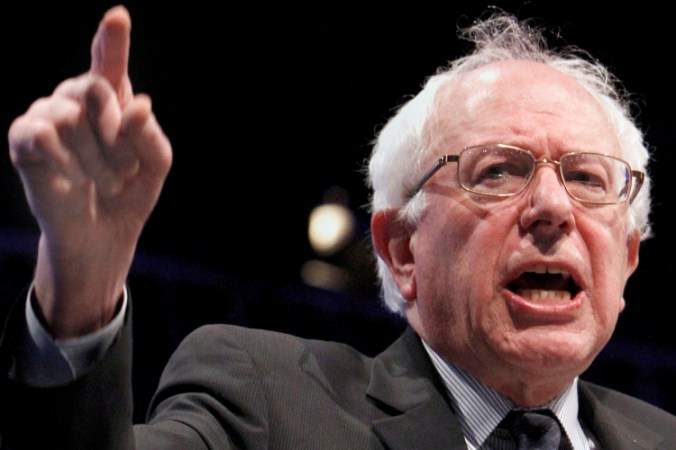
Yes, It’s Come To This…Bernie Sanders Is Attacked By Progressives For Rejecting Discrimination

Senator Bernie Sanders told  Vermont Public Radio,

“We have got to look at candidates, you know, not by the color of their skin, not by their sexual orientation or their gender and not by their age. I mean, I think we have got to try to move us toward a nondiscriminatory society, which looks at people based on their abilities, based on what they stand for.”

Wouldn’t you agree that this position is unassailable based on basic American values and principles? True, it is a self-serving position for Bernie, who is almost certainly too old, male and white to be a viable candidate in the  female, minority, youth dominated Democratic Party, but surely even progressives concede that favoring candidates based on their color, age and gender is bigotry. Right? They have some shred of integrity left, don’t they? Right?

Well, not these progressives apparently:

Neera Tanden of the Center for American Progress on Twitter:

“At a time where folks feel under attack because of who they are, saying race or gender or sexual orientation or identity doesn’t matter is not off, it’s simply wrong.”

(Her statement doesn’t even make internal sense.)

Former Hillary Clinton aide Jess McIntosh: “This is usually an argument made by people who don’t enjoy outsized respect and credibility because of their race, gender, age and sexual orientation.”

(You mean like by blacks discriminated against during Jim Crow, and by women for most of our history, and by gays even now in many communities, Jess?)

 Stephen Colbert: “Yes, like Dr. King, I have a dream—a dream where this diverse nation can come together and be led by an old white guy.”

(I used to think Colbert was witty. It is now clear that he is simply a vicious, hyper-partisan, cheap-shot jackass.)

Writes Prof. Turley, who gets the pointer for this story:

“The Democrats are clearly all-in on identity politics despite the fact that it is viewed by many as inherently discriminatory and divisive. It is a reminder that the best thing going for Trump in the 2020 election remains the Democratic establishment.”

I don’t think anyone paying attention needs any reminders of THAT, professor. That was true in 2016, and has been ever since.

Afternoon Ethics Warm-Up, 2/25/ 2019: Martina Navratilova A Gender Bigot? The Founding Fathers Nazis? Art Galleries Discriminating Against The Blind? WHAT’S HAPPENING?????

It would be a good afternoon if EVERYTHING WASN’T SPINNING OUT OF CONTROL!!!!

1. For the record, it appears that Facebook blocking Ethics Alarms posts has cost the site about 30% of its traffic. Mission accomplished, Thought Control Activists!

For now…

2. Did I call this, or what? In  October of 2017 I wrote about another example of tyranny by the disabled, when the Philadelphia-based 3rd U.S. Circuit Court of Appeals gave Paul McGann, who can neither see not hear, a chance to show that movie theaters must provide him with a “tactile interpreter” under the ADA.

No word yet on how Paul is faring, but last October I wrote about yet another example, as described in the New York Times:

…Eight suits have been filed in federal court in Manhattan over the past two weeks, most recently against Hofstra University on Long Island on Oct. 4. In each case, lawyers for Emanuel Delacruz, who is blind, charged that the college’s website is inaccessible to their plaintiff and therefore in violation of the Americans With Disabilities Act.

The filings are part of a growing number of actions involving accessibility and the internet.….Since January 2015, at least 751 lawsuits have been filed over the issue. The vast majority have focused on retailers and restaurants, according to a legal blog that tracks such suits… another website, which includes not only lawsuits but also government investigations into web or technological accessibility, lists 37 schools that have been accused of noncompliance with disability law.

I wrote, in part,

Next? Law suits against art museums for not having audio descriptions of every work exhibited. Law suits against sports stadiums, alleging that the ADA mandates play-by-play being blasted from the ballpark speakers. Then, I suppose, lawsuits against the world for not making being blind a pleasure.

From the Times last week:

“On Dec. 13, a blind Manhattan resident named Henry Tucker filed federal lawsuits against 10 art galleries, saying their websites were not accessible to people who could not see. The galleries’ names included Adam Baumgold Fine Art, Adelson, Agora, Albertz Benda and Acquavella. The next day, Mr. Tucker and his attorneys moved on to the B’s.”

Continue reading

Oscar Ethics: Let Us Pause To Marvel At The Unapologetic Jerkism Of Director Spike Lee

Director Spike Lee is a talented artist and an epic jerk, as he has proved too many times to mention. Lee reached his pinnacle of unethical grandstanding when he tweeted out what he thought was George Zimmerman’s address while the New Black Panthers were offering a bounty on Trayvon Martin’s shooter’s head. The man is an incurable race-baiter, as well as a constant catalyst for racial division. Last night’s Oscars put all of this on display, as well as a feature we don’t see that often so blatantly displayed: Lee has the sportsmanship and grace of a 9-year old.

When Green Book won the Oscar for Best Picture (as many had predicted),  Lee became visibly furious, then stood up and attempted to leave the Dolby Theater, the Associated Press reported. Lee stormed to the exit with his Oscar in hand, but was stopped by staffers who argued with him and eventually persuade him to  return to his seat. Lee’s film BlacKkKlansman was also nominated for Best Picture, and had won earlier in the night for its screenplay, which was co-written by Lee.

So far, nobody has been able to recall another nominee behaving so childishly and disrespectfully after losing in an Oscar race. Lee was defiantly unapologetic after the show, joking that he thought he was at a Knicks game and reacting to a ref’s “bad call.” That comment is also unethical, as the Oscars are supposed to be a collegial celebration of the art of movie-making, with all involved at least publicly supportive of the final awards, whoever they go to. Continue reading

Unethical Quote Of The Week: Rosaine Santos, MAGA-Hater

“I had a little bit to drink maybe that’s the reason that I couldn’t walk away but being discriminated for so many times in my life, I just had to stand up for myself. He’s not a victim. I am the victim. I have been bullied, OK?”

—-Brazilian immigrant Rosaine Santos, upon her arrest for assaulting  a male customer patron at a Casa Vallarta, a Mexican restaurant in Cape Cod who was wearing a “Make America Great Again” cap.

Santos attacked a man for wearing a MAGA hat, and was charged with disorderly conduct, assault and battery. She was upset that 23-year-old Bryton Turner was wearing the Trump campaign hat at a Mexican eatery.

Turner was just eating quietly when Santos started yelling at him. He pulled out his phone and started recording her. The video shows Santos is  hitting his hat off his head. As police escorted Santos out of the restaurant, she took another swipe at Turner.  She told police that Turner should not be allowed to eat at a Mexican restaurant because of his support for President Donald Trump.

What an asshole.

Observations: Continue reading

Once Again, Baseball Agent Conflicts Are Hurting Players Who Don’t Understand Why

Baseball writers are the tools of baseball player agents, useful idiots who write on and on about the underpaid millionaire players and the unfair owners, who won’t pay them what they “deserve.” They scrupulously avoid educating readers about the unethical player agents who manipulate the system and the players for their own benefit, not their clients.  I have written about the unregulated and largely ethics-free baseball agents before, but their conduct this off-season is unusually revolting.

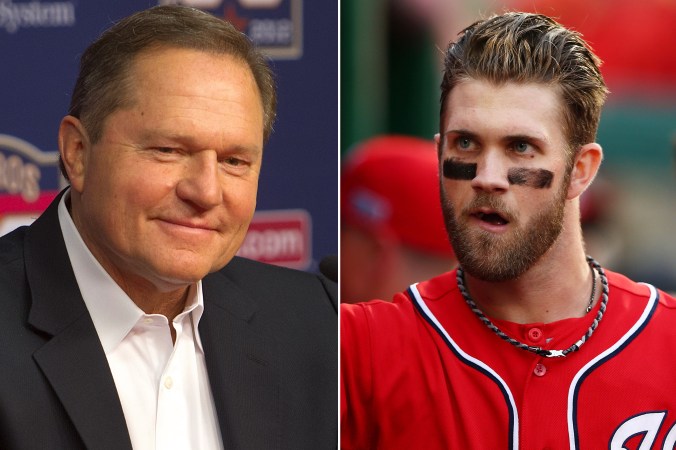
At the top of the list, as usual, is mega-agent Scott Boras, who cleverly treads the line between being an agent and a lawyer—he is both—while having too many stars under his thumb for the sports organizations or bar associations to hold him to account. For example, as a lawyer, Boras would be absolutely bound to tell his clients about a settlement offer, and would be subject to disbarment if he rejected an offer without communicating it to his client (you know, like you regularly see lawyers doing on TV and in the movies). However, there are no player agent rules that require an agent to communicate a team’s salary offer to a player. Agents can, and presumably do, reject offers without their clients ever hearing about them. This, of course, avoids the problem of a baseball star saying, “Oh, hell, that’s more money than I could ever spend anyway. I know it’s less than we talked about, but go ahead and take it.”

Agents have conflicts of interest so grand, and apparently so little understood, that meaningful consent from the client, theoretically the remedy, is virtually impossible. Let’s look at Bryce Harper, Boras’s client who is seeking more than $300 million dollars over a ten year guaranteed contract. Harper is 26 years old and has already made 49 million dollars, not counting endorsements. The functional utility of each dollar he earns is less than the one earned before in his situation. Realistically, there is very little difference between a $250,000,000 contract and a $300,000,000 contract to Harper, except from an ego perspective. The extra 50,000,000 won’t make any difference to him. Boras, however, is a different matter. Let’s say his cut of Harper’s salary is 5%.  He’ll get 15,000,000 if Harper signs for the high figure, but “only” 12,500,000 if Harper agrees to the lower figure. $2.5 million means nothing to Harper: he could throw it down the toilet, and wouldn’t feel a thing. The difference to Boras, however, is much greater in practical, and add to that the marketing advantage of being able to tell potential clients that he set the new all-time record for a free agent contract for his client. Continue reading

Sunday Morning Ethics Warm-Up, 2/23/19: “Spring Training Games Have Started, So NOTHING Can Upset Me Today” Edition [UPDATED]

1. This belongs in the “Bias Makes You Stupid” Hall Of Fame. [ Note of Correction: the story is two years old, dating from March, 2017. It was represented by my source as current, and I didn’t check the date on the link. My error. It changes nothing in the ethics commentary, however. ]

Three Oklahoma teenagers broke into a home last week and were greeted by a homeowner with an AR-15. He mowed them down, as he had every legal right to do, and may I say, “Good!” This is the perfect reason why someone might want to have the security of a semi-automatic weapon like the AR-15. This is a good example of why the “nobody needs a semi-automatic” is such a fatuous anti-gun argument. This homeowner needed one when three people tried to invade his home.

But I digress. The grandfather of one of the dead teenagers is protesting that it wasn’t a fair fight, telling  KTUL-TV:

“What these three boys did was stupid. They knew they could be punished for it but they did not deserve to die…Brass knuckles against an AR-15? C’mon. Who was afraid for their life? There’s got to be a limit to that law, I mean he shot all three of them — there was no need for that.”

Ah, yes, that word “need” again. I guess he should have knee-capped one, winged another in the shoulder, and counted on the third to surrender in tears. How was the homeowner supposed to know the kids “only” had brass knuckles with them—which are a potentially deadly weapon anyway? Yeah, the old man is just blathering away in grief, but then most anti-gun rhetoric comes out of emotion rather than logic. I’m sure the grandfather would also argue that it would have been preferable for the homeowner to get beaten to death rather than for three young men with their whole lives ahead of them to be killed.

Side note:  Getaway driver, 21-year-old Elizabeth Rodriguez was  arrested and charged with three counts of first-degree murder, along with one count of first-degree burglary and one count of second-degree burglary. That’s how felony murder works. No, I don’t feel sorry for her, either.

2. Today’s Jussie Smollett hoax item. Stop making me defend Van Jones! CNN’s dapper race-baiter  is getting criticized for calling Jussie an icon in this quote:

“This is the fall of an icon and I don’t think people understand how important he has been in the black community. ‘Empire’ as a show, to have him as a beloved character, I think did a great deal to knock back homophobia in the black community. The fact that he has been celebrated and you see homophobia in the black community through his eyes on the show, this is a Jackie Robinson against homophobia.”

Writes Hollywood conservative columnist Christian Toto: “Jones just served up arguably the worst “take” on the Jussie Smollett hoax story…You almost have to read it twice to appreciate the absurdity of the comparison. If Jones, brighter than the average pundit, can sink this low, it speaks poorly of the pundit class in toto.”

I think Jones is generally a blight on TV punditry, but there is nothing inappropriate about his observation. There is a lot of homophobia in the black culture, and Smollett had begun to loosen its grip by playing a popular, likable, admirable gay character on a one of the most popular TV shows with gay audiences. Sure, the Jackie Robinson comparison is excessive, but I get his meaning. The implication of what Jones is says is that as a figure who was more than just another actor because of his symbolic effect, Smollett had an obligation to protect his status and image. Jones wasn’t excusing Smollett at all. Continue reading

Social Media Is Eyeball To Eyeball With Legal Ethics, And Guess Who Blinked First?

Online consumer complaints about lawyers on sites like Avvo and Yelp have been driving lawyers crazy. The ethics rules on client confidentiality prohibit a lawyer from defending him (her) self online, because that requires revealing details of the representation. Two years ago, the Colorado Bar suspended a lawyer’s license d for six months after he responded to a negative online review and revealed that the complaining client had bounced a check and committed unrelated felonies. Lawyers are also generally prohibited from suing their clients for false statements about them in disciplinary complaints, but there have been exceptions. In Blake v. Giustibelli, the Fourth District Court of Appeal upheld a $350,000 libel judgement for a lawyer  against a divorcing couple who posted an online review that falsely accused the attorney of inflating fees and falsifying a contract.

Now Florida, one of the strictest jurisdiction regarding attorney ethics, has allowed a tiny crack in the wall. The Florida Bar Ethics Committee voted 18-0 to approve a Florida Bar Staff Opinion that “permits an inquiring attorney to post a limited response to a negative online review that the attorney says falsely accuses her of theft.” The Florida Bar says that  the increasing frequency of negative online reviews mandate some loosening of the rules. “An attorney is not ethically barred from responding to an online review by a former client where the former client’s matter has concluded,” the opinion states. “However, the duty of confidentiality prevents the attorney from disclosing confidential information about the prior representation absent the client’s informed consent or waiver of confidentiality.”

You can read more about the Bar Committee’s findings on the Florida Bar website here.