I’m sorry about the rambling headline, but I couldn’t find a short way to summarize just how bad this is.
It is fair to say that we can confidently add the AMA to the ABA and the ACLU as organizations that have decided to abandon their organizational missions to join the ideological assault on the United States, its values, and what our society once agreed upon as democratic and pluralistic priorities. “Advancing Health Equity: A Guide to Language, Narrative and Concepts,” recently approved and released and reading like a high school Junior Marxist Club manifesto, officially injects far Left cant into medical practice, where it does not belong and never has. Doctors are professionals, and as such have a duty to serve the public good using their special skills and knowledge. Being a doctor of medicine, we have learned, imbues one with no special policy expertise, historical perspective of political acumen whatsoever. Consider, just as a sampling, former Senator Bill Frist, Howard Dean, Ben Carson, Rand Paul (most of the time , fortunately retired Virginia Governor Ralph Northam , and, of course, Dr. Fauci.
As our final Comment of the Day from the weekend just past, here is sooner 8728’s neat explanation for why NPR felt it necessary to calm its listeners and readers by telling them that the wise response to concern over the Ukraine crisis was make lasagna or get a massage, as described in “And Even More Ukraine Invasion Ethics Points…”
***
The comment about NPR not seeing their audience as adults makes a ton of sense. Much of the modern Left isn’t like the old time Left. Americans used to be mostly united on the values of hard work, duty, faithfulness in marriage, etc. Political differences didn’t make a ton of difference in personal behavior. Now, the left is saying gender doesn’t exist, you can define your own existence any way you want, polyamory is good, there is no limit to welfare, and other types of ideas. They refuse to accept limitations on reality. Continue reading →
Few read Ethics Alarms on weekends (I guess I should write, “even fewer”), and I may start Mondays with more comment highlights from the Dead Zone past. This weekend was unusually lively. This Comment of the Day by Null Pointer took off from item number #2 of yesterday’s warm-up, regarding the GOP’s Rep. Marjorie Taylor Greene and Rep. Paul Gosar speaking at white nationalist event, in which I quoted The National Review’s David Harsanyi:
“ On social media, conservatives grouse that there’s a double standard. Democrats, they say, never condemn their extremists, they celebrate them. That’s a double standard worth living with. After all, any denunciation of Omar, Tlaib, or any other Squad member lacks credibility if House Republicans can’t publicly take the position that hanging out with (actual) white supremacists is deplorable.”
White supremacy is bad. All forms of racial supremacy are bad. All forms of supremacy are bad.
Republicans need to jump on the “all forms of supremacy are bad” principle, hard. Otherwise you will see white supremacy taking off again.
No, you cannot have a double standard. If you have a double standard, you do not have a fair principle that addresses the problem equally across the entire spectrum of the problem. If you don’t have a fair principle, no one is going to listen to you. People will not agree to operate by unfair principles. Continue reading →
Vladimir Putin going nuts took an unwelcome spotlight off Canada’s Justin Trudeau, who had found himself in ethics zugswang while dealing with the popular “Freedom Convoy.” Feminist Naomi Wolf found his assumption of “emergency powers” to risk a slippery slope to a police state. Ethics Alarms commenter Glenn Logan, in his Comment of the Day, was more sympathetic to Trudeau’s plight (as am I), prompting a two-part lesson in Canadian democracy from one of the Ethics Alarms commentariat’s eminent Canadians, Humble Talent.
“The First Amendment, and whatever the Canadian equivalent is (however weakly codified) does not protect actions that interfere with lawful commerce or disturb the peace to the point of mischief.”
Well I’m glad you asked!
Canada also has a constitution, although ours wasn’t predicated on the same base narrative as America’s. As an outsider looking in, America’s constitution is almost paranoid in nature, usually you don’t draft the founding documents to a nation’s governments under the auspices of governments being tyrannical and specifically with an emphasis on protection from that tyranny. I make no negative values judgement there…they work, in a stiffly rugged way. To highlight the differences between Canadian and American constitutional theory: Where the founders wrote “life, liberty and pursuit of happiness” in America’s declaration of independence, Canada’s founders instead wrote in “peace, order, and good governance”.
Our Canadian constitution is more malleable, and over the years, it’s been broadly re-imagined. Instead of enumerated amendments to the constitution, in 1982, Canada codified our rights in a portion of our constitution called “The Charter of Rights and Freedoms”.
Do you wonder why fewer and fewer Americans trust their government? The reason is simple: the government is stuffed with idiotic bureaucrats who presume to tell us how to live our lives when they repeatedly demonstrate that they are fools pretending to have expertise and wisdom when all they really have is power to abuse.
Here is one throbbing example: FEMA’s directions on how to survive a nuclear attack. Of primary importance to the Biden Administration: while avoiding death by radiation, don’t forget to take pandemic precautions (last section)…
The legend was quick to take hold. The account was that as the Russian military pounded targets across Ukraine with bombs and missiles, a small team of Ukrainian border guards on rocky, desolate Zmiinyi Island, “Snake Island” to its friends, received a warning that the Alamo defenders would have recognized: Surrender or die. “I am a Russian warship,” the invaders said, according to a recording. “Lay down your arms and surrender to avoid bloodshed and unnecessary deaths. Otherwise, you will be bombed.”
Travis answered the equivalent message with a cannon shot. The defenders of Snake Island’s answer was more reminiscent of the famous reply of the 101st Airborne Division’s acting commander Anthony McAuliffe during the Battle of the Bulge. Defending Bastogne, McAuliffe gave a one-word reply to a German surrender ultimatum: “Nuts!” The Ukrainians’ version: “Russian warship, go fuck yourself.”
[Quick digression here: As I have mentioned before on EA, my WWII vet father, who fought in the Battle of the Bulge and got a Silver Star for his efforts, insisted that nobody in the Infantry believed for a second that “Nuts” was the actual reply. He said the consensus of those who knew McAuliffe as well as the way soldiers talked in the field were certain that he had really answered exactly like the Ukrainians. Meanwhile, how absurd is it for today’s media to celebrate the courage and defiance of the Snake Island defenders’ response, yet feel compelled to censor it by printing “f—“? ]
Digression over. The story reported in the news media was that the Russians opened fire, killing all 13 border guards. They became instant martyrs and their fate became inspiration for the brave Ukrainian refusal to accept Russian domination. Ukrainian President Volodymyr Zelensky later announced the deaths and said that the island’s defenders will be bestowed with the title “Hero of Ukraine,” the highest honor the Ukrainian leader can award.
Among of the most emotionally resonant and thrilling moments in movies are when a large group spontaneously expresses unity of mind, loyalty, sentiment, or just the joy of living by lifting up their voices in song, as one. A healthy society should engender such moments and nourish the shared values and emotions that create them.
What today could prompt a large group to sing together today? The National Anthem once provided such moments, but the NFL has aided race-separatists by forcing the so-called “Black National Anthem” to compete with the “Star-Spangled Banner,” making it, despicably, a “white national anthem.” Today’s preeminent musical form, hip-hop, doesn’t lend itself to mass singalongs.
Here are six memorable examples from the Hollywood archives of movies celebrating the human instinct to burst into shared intense feeling, expressed in song. Incredibly, I found none of these classics in various on-line lists of “greatest movie crowd singing scenes.” The people who put together those lists don’t get it (and also don’t know classic films.) No, the “Wayne’s World’ lip-syncing of “Bohemian Rhapsody” doesn’t qualify, great as it is. It’s not a crowd scene, and Queen is doing all the singing anyway.
The Ethics Alarms top six, in random order:
1. From “The Sound of Music”:“Edelweiss”
This is the only entry from a musical, but the context is entirely dramatic, and the scene could have easily been in a straight drama. The Nazis have taken over Austria. Captain Von Trapp (Christoper Plummer), ordered to take his place in the Nazi navy, mourns the end of the Austria he knew, and knows that his fellow Austrians watching his family perform in a music festival as the uniformed Nazis loom over them, share his sentiments. He sings a simple Austrian folk tune, manages to give the audience an opportunity to express their sadness and defiance.
2. From “San Francisco”: “The Battle Hymn of the Republic”
This isn’t even the best crowd singing moment in the great 1936 Clark Gable/Spencer Tracy/Jeanette McDonald movie that climaxes with the San Francisco earthquake of 1906. At the end of the film, Gable, a cynical rogue whose romance with opera singer McDonald has foundered on his rejection of religion, has searched for her in the ravaged city. He finds her alive and helping survivors, and is so moved that he thanks God for the first time in his life. Then the news comes that the fire is out, and the people of San Francisco resolve to rebuild their city bigger and better than ever, as Jeanette leads them in song…
That’s Ukrainian model Tetiana Gaidar above, nicely symbolizing what old guy Vladimir Putin didn’t get about launching an unethical war in 2022.
Because of social media, 24-7 cable news and the web, world public opinion can–can—quickly coalesce around basic ethical values and arrive at a crushing consensus. Putin is being personally cancelled, and if his nation’s people decide they don’t want to be cancelled too, he might be in bigger trouble that he could have imagined in his worst nightmares. Ethics Alarms already mentioned how Putin forgot the Alamo, always a bad thing to do. He apparently also had forgotten that one of the big cracks in the Iron Curtain was inflicted when Ronald Reagan termed the Soviet Union an “Evil Empire.”
Economist John Kenneth Galbraith, writing in the Sixties about what made huge corporations successful, argued that they created nation-like loyalties by behaving as good corporate citizens, and that there was a crucial benefit in this that went beyond mere profit. The best people, he claimed, would not work for companies perceived as unethical, so becoming an organization that the best and the brightest would be proud to be part of was a matter of long-term survival.
Galbraith, was we have seen, was overly optimistic, but his general point is still important, particularly at the extremes. Too late, Putin is trying to save his reputation by trying the absurd cognitive dissonance trick of associating the Ukraine government with Nazis. It’s not working, because it is so obviously a self-serving lie.
1. If only baseball writers read Ethics Alarms...(or knew what ethics was, for that matter). More than five years after Ethics Alarms explained why Red Sox icon David Ortiz created an unavoidable slippery slope likely to carry Barry Bonds and the other steroid cheat superstars into baseball’s Hall of Fame, esteemed baseball writer Bob Nightengale figured it out, and just announced his brilliant analysis in USA Today. Ortiz was recently voted into the Hall, as EA noted here in the follow-up to the original article. [Much thanks to Jutgory for alerting me to Nightengale’s piece]
See? I’m smart! Not dumb everybody says… I’m smart and I want respect!
2. If the Republicans are going to publicly shun Liz Cheney for joining the political witch trials the Democrats are holding on the January 6 riots, they have no excuse not to take even more decisive action against the GOP Congress members Reps. Marjorie Taylor Greene and Paul Gosar, and AZ State Senator Wendy Rogers, for openly supporting Nick Fuentes, a Holocaust denier who has been correctly labeled a “white supremacist” by the Justice Department, and his organization, the America First Political Action Conference. Republican Gosar and Greene both attended the group’s conference this weekend, and both addressed the all-white throng, which engaged in such fun activities as applauding for Russia for its invasion of Ukraine, and chanting “Putin, Putin!”Continue reading →
1. Remember, we pay for this garbage...An article on NPR‘s “Life Kit” offered helpful suggestions about ways suffering Americans might deal with the crippling stress and anxiety of sitting safely at home in the United States as Ukrainians are fighting for their lives and freedom. Like…
“Do something that feels good for your body and helps you get out of your head….”
[Play] games with family,”
[F]inally re-create Grandpa’s famous lasagna, or learn how to make a prettier pie…”
Joy Behar wrapped up the award for most narcissistic and selfish response to the Ukraine crisis, but NPR is a tax-supported organization, and has decided that enabling American weenie-ism and creating a culture dominated by hyper-vulnerable, self-absorbed navel-gazers is its mission.
1. An animated TV show’s demonstration of support for an invaded nation is, of course, as useless as Michelle Obama’s infamous frowny face “Bring back our girls” photo, and is naked virtue signaling. Still, the hostility to the show for the gesture displayed by ultra-conservative Citizen’s Free Press readers is remarkable.There can be no ethical basis for not supporting Ukraine, or any country Russia invades, or any peaceful nation any country invades. Representative reaction: “Russia = Evil, Because: Trump. Thus, Ukraine isn’t an UNBELIEVABLY CORRUPT FAILED STATE… Ukraine is Saints. Might want to be somewhat skeptical and cynical when Biden, the MSM, and Hollywood is all trying to brainwash everyone into being pro-Ukraine, huh?” Wow. I didn’t know Tucker Carlson had this much influence.
It is a all a necessary reminder that the far right is just as unhinged as the far Left, just less totalitarian (for now).
There are other stories making the rounds…One has it that Trump — noting that Putin seized land from Georgia when George W. Bush was president and seized the Crimean peninsula when Barack Obama was president — warned Putin against a land grab on his watch.
“If you move against Ukraine while I’m president,” Trump is said to have told the Russian leader, “I will hit Moscow.” Putin reportedly scoffed, “No way,” leading Trump to say, “All those beautiful golden turrets will be blown up.”
[Also] Trump reportedly told Xi that any military move against Taiwan would be met with an attack on Beijing. Xi, like Putin, is said to have been stunned…
This unsubstantiated rumor is being reported in many conservative websites as fact. This is deceptive in the extreme. Goodwin says up front that the stories may be false, and he is a columnist, not a reporter. Yet other publications say that “‘The New York Post’ reported that…” using as evidence Trump’s statement to Fox News’ Laura Ingraham that Putin didn’t invade Ukraine during his administration for “a very good reason, and I’ll explain that to you someday.”
I think the story could easily be true, but it’s still a rumor, and should not be reported as fact or as a credible report. Continue reading →



 No, I’m not kidding, and this is not a hoax.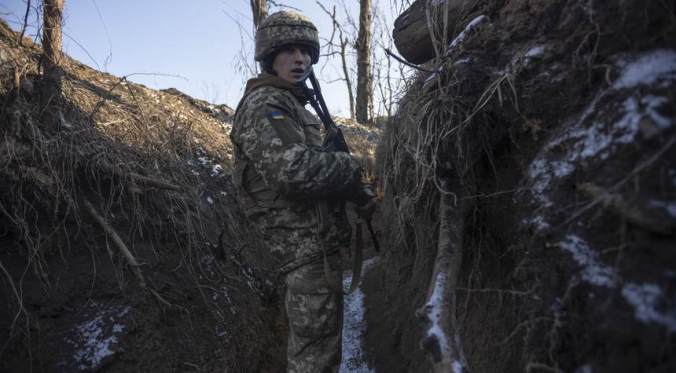




 Ethics Alarms
“The First Amendment, and whatever the Canadian equivalent is (however weakly codified) does not protect actions that interfere with lawful commerce or disturb the peace to the point of mischief.”
Well I’m glad you asked!
Canada also has a constitution, although ours wasn’t predicated on the same base narrative as America’s. As an outsider looking in, America’s constitution is almost paranoid in nature, usually you don’t draft the founding documents to a nation’s governments under the auspices of governments being tyrannical and specifically with an emphasis on protection from that tyranny. I make no negative values judgement there…they work, in a stiffly rugged way. To highlight the differences between Canadian and American constitutional theory: Where the founders wrote “life, liberty and pursuit of happiness” in America’s declaration of independence, Canada’s founders instead wrote in “peace, order, and good governance”.
Our Canadian constitution is more malleable, and over the years, it’s been broadly re-imagined. Instead of enumerated amendments to the constitution, in 1982, Canada codified our rights in a portion of our constitution called “The Charter of Rights and Freedoms”.
Continue reading →