Where Do You Get The Idea That It’s OK To Insult My Dog?

Rugby2

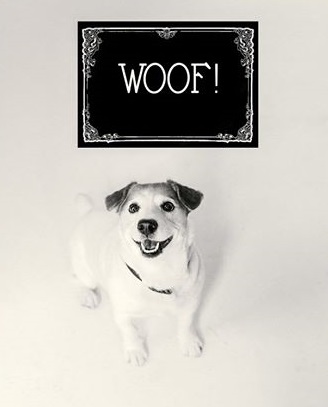
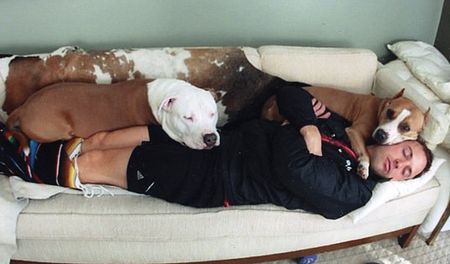
I was walking Rugby yesterday—that’s him above from a recent commercial photo-shoot–and ran into a young woman walking her West Highland Terrier. I like Westies, as does Rugby (but then, he also likes mail carriers, squirrels, my sister and once wagged his tail at a cockroach…), and I made some positive comments about the breed.

“Well, your dog certainly looks like he hasn’t missed many meals!” was her response. The ethicist programming blocked me from saying what first popped into my head, which was, “Well, neither do you, bitch,” and instead I attempted to enlighten her by saying, in a moderate tone,

“Actually, Rugby is an authentic, Jack Russell Terrier Association-certified Jack Russell, meaning that he is not the long-legged, faux monstrosity the AKC calls a “Parson Russell Terrier,” nor the much smaller toy-like version it calls the “Russell Terrier.” Jack Russell Terriers of the Irish, as in genuine variety, are certified by their personality and hunting traits, and not by looks alone. Thus they vary more in physical traits than AKC breeds, bred for show, and since the bulldog is part of the strange and wonderful alchemy that makes these dogs the bundles of joy they are, some Jacks, like Rugby and his still mourned predecessor Dickens, have a thick bulldog build, with a broad chest and stocky body. They are all muscle (“unlike your simpy terrier”–the ethicist filter blocked this too), and you may be surprised to learn, given the fact that he is at this moment acting more lively than your young dog, that Rugby is just short of 13 years-old, and thus just a bit heavier, but not much, than he was in his youth when the vet said he was as perfect a specimen of the breed as he has ever seen. Val Kilmer or Kirsty Alley he isn’t. He remains unslowed by time, and those meeting him for the first time often mistake him for a puppy, which is undoubtedly how he sees himself.”

She just walked on, hearing little of it.

Why do people think that making gratuitously critical comments about a stranger’s pet is any less rude and disrespectful than insulting a child or anything else that the individual obviously cares about? Continue reading

Fairness Quandary In Britain: What To Do With A Dog That Ate His Master?

No photo of Buster is available, but this is a Staffordshire Bull Terrier, and if this image  fills you with fear and revulsion, you're an idiot, at least when it comes to dogs.

No photo of Buster is available, but this is a Staffordshire Bull Terrier, and if this image fills you with fear and revulsion, you’re dangerously ignorant, at least when it comes to dogs.

In Waterloo, England last September, a Staffordshire Bull Terrier named Buster (or Butch…he apparently answered to both names, much in the way I answer to my wife when she calls me “Jack” or “You Idiot”…) found himself in a situation reminiscent of the infamous 1972 Andes plane crash that forced its survivors to resort to cannibalism. His master died suddenly, leaving the dog trapped in the apartment without access to sustenance. After an undetermined amount of time and increasing desperation, Buster  decided “Oh, the hell with it” and ate a sufficient amount of his best friend to stay alive..

I know—“Ick.” Buster may well have felt the same way. Once police had made the grisly discovery, however, Buster found himself in big trouble even though he was was in an emaciated state that suggested that he didn’t do this for fun. The police claimed he was a danger to the community, and the deceased’s family made it clear that it wanted Buster to be put down. Dog lovers and animal rights groups insisted that Buster was a victim of circumstance and that absent evidence that he had plotted to convert his live master into a feast, there was no precedent for blaming the victim in such a case.

After all, those passengers who survived in the Andes by eating the bodies of their less-fortunate companions were not executed. They appeared on talk shows.

Why the different attitude? Well, let’s see: Continue reading

Animal Ethics: Oh No! Prairie Dogs Are Serial Killers!

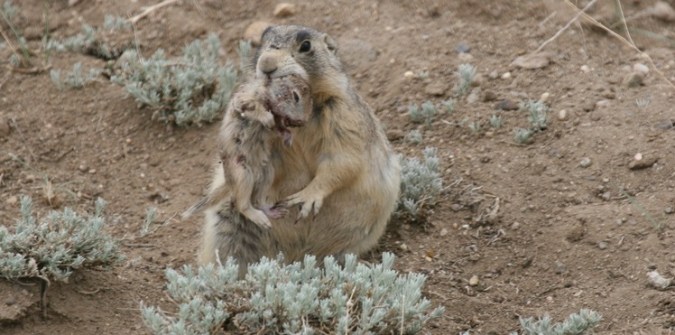
Aww, look at the cute little prai---MY GOD, WHAT IS IT DOING TO THAT SQUIRREL???

Aww, look at the cute little prai—MY GOD, WHAT IS IT DOING TO THAT SQUIRREL???

Here’s the most troubling quote from the article in Gizmodo about a biologist’s startling discovery that prairie dogs routinely kill baby ground squirrels because they don’t like baby ground squirrels…after all, they are herbivores:

“Pop culture loves to portray herbivores as peace-loving pacifists—just look at Zootopia as the latest example of this—but who can say what other barbarous acts are going undocumented in our backyards? Are rabbits stealing into burrows to throttle chipmunks in their sleep? Do elk and buffalo lose their cool and impale each other over prairie grass? These are the sorts of unsettling questions biologists will have to start asking.”

The reason those questions will be asked is the work of biologist John Hoogland of the University of Maryland Center for Environmental Science. His observations of prairie dogs, resulting in a paper published today in the Proceedings of the Royal Society B, indicate that the cute, fuzzy mammals “will chase ground squirrels—usually babies—and if they catch them, they shake them violently. While they’re shaking, they’re biting the back of the neck to sever the vertebral column. Sometimes they grab by the head and literally debrain the baby. It’s violent, savage, and awful.”

There is a reason for this violence: ground squirrels and prairie dogs compete for the same grasses as food. It is the first known instance of a mammalian herbivore killing another mammalian herbivore on a routine basis, and Hoogland’s research indicates that it’s “just business”: the fewer ground squirrels there are; the more food there is for the prairie dogs and their young.

Clearly, prairie dog society is organized according to extreme utilitarian principles: the ends justify the means….at least when it comes to ground squirrels.

I think the ground squirrels should build a wall.

Twitter Makes Us Stupid, Twitter Makes Neil deGrasse Tyson Look Stupid, Twitter Allows Neil deGrasse Tyson To Make His Fans Stupid

bats

Great.

Twitter is a wonderful medium for people who can only digest simple thoughts, as well as for those whose full powers of observation and analysis can be expressed in 140 characters. For everyone else, the social media device is an invitation to emote with inadequate thought, and to demonstrate undesirable character traits like arrogance, carelessness, recklessness and poor judgment.

Neil deGrasse Tyson, for better or worse, currently fills the niche of Pop Culture Smart Person, or PCSP. This is a role that has genuine cultural value, and has fallen in the past to such figures as Albert Einstein, Carl Sagan, Bill Nye and Stephen Jay Gould, among others. Smart people accepted by the broader culture can do more to help banish bad ideas, myths and biases than years of formal education, but they must wield their power with care, guard their credibility and appearance of integrity, and most of all, not abuse the trust of their fans.

In these matters, Tyson is a most irresponsible PCSP.  He ventures into partisan politics too frequently, is a media attention addict, and worst of all, he is addicted to Twitter, where he regularly tweets factoids barely worthy of a bubble gum wrapper and makes jokes that display his sophomoric sense of humor—for example, “If you removed all arteries, veins and capillaries from your body and laid them end to end, you’d die.” Steven Wright, he isn’t.

Those tweets are just embarrassing. However, it is affirmatively damaging when a man recognized as being educated and wise issues outright false scientific facts, like he did with a recent tweet announcing,

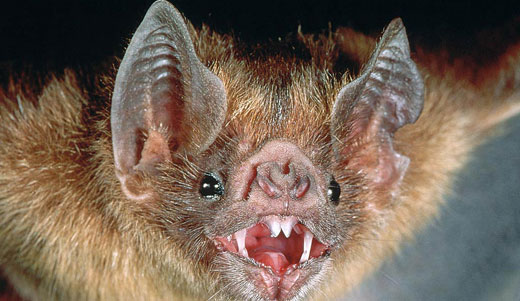
“If Batman wants so badly to be a bat, he might be more intriguing if (like Marvel’s Daredevil) he were also blind, like a Bat.”

Continue reading

In Addition To Ending Its Orca Shows, Sea World Will No Longer Use Spies To Infiltrate PETA…Wait, WHAT?

"Hey...have you ever seen that guy here before? I've never seen him before..."

“Pssst! Have you ever seen that guy here before? I’ve never seen him here before…”

In a statement delivered to fiancial analysts last month, Sea World Chief Executive Officer Joel Manby said that his board of directors has “directed management to end the practice in which certain employees posed as animal-welfare activists. This activity was undertaken in connection with efforts to maintain the safety and security of employees, customers and animals in the face of credible threats.”

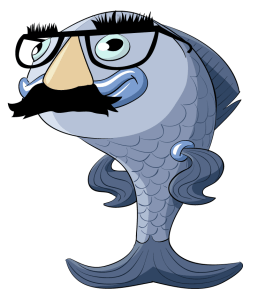
Huh? What kind of policy was that? PETA accused Sea World of doing this last summer, but as this is the same group of wackos that wants chimpanzees to be treated by the courts as humans and and has suggested that Punxsutawney Phil be replaced by a robot groundhog, I admit that I didn’t pay much attention. This sounds like a Saturday Night Live skit. I picture a mackerel wearing a disguise and carrying a placard. Continue reading

Speaking Of Photography Ethics, How About “Don’t Kill Anything”?

selfie dolphin

I’ll admit it: I have about as little interest in photography and photographs as it is possible to have for a human living in this century. I regard the mania for taking photos of oneself constantly and posting them on-line as strong evidence that crippling narcissism can be transmitted electronically, and as we have been discussing in comment to this recent post, if you try to use me as a prop in your cellphone camera-warped quest to make every your waking hour the object of public gawking, you had better ask permission first, or else. I realize this attitude is fighting the “everybody does it” tide, but I’m right, everybody is wrong, and that’s all there is to it.

This story out of Argentina, in addition to being disgusting, shows just how unbalanced the selfie-craze is making human priorities. I know—Argentina. This couldn’t happen here, right?  Not in a country where Bernie Sanders and Donald Trump are surging in the polls….we’re too smart.

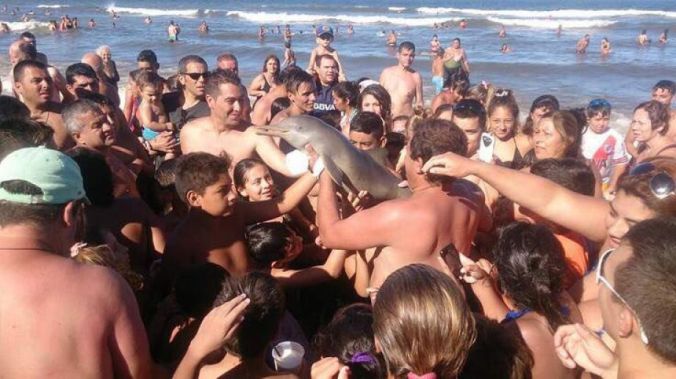
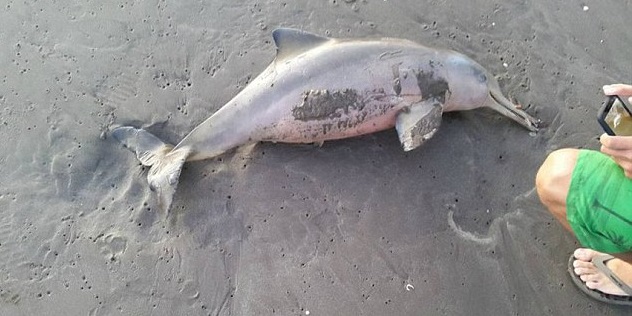
Two La Plata dolphins, members of a rare and endangered species, got to close to shore in their playfulness near an Argentinian resort last week. Some bathers plucked the small cetaceans out of the waves, and they were passed around a smiling, brain-dead mob containing selfie-mad amateur photographers.  One of the dolphins died of stress and exposure, and was just dumped on the beach. But never mind: it will live on in online shares and Instagram. What’s the problem, dude?

“At least one of these dolphins suffered a horrific, traumatic and utterly unnecessary death, for the sake of a few photographs,” a spokesperson from the World Animal Protection group said.  “This terribly unfortunate event is an example of the casual cruelty people can inflict when they use animals for entertainment purposes.”

Activists groups just cannot help themselves, can they?  They must squeeze every episode into their own agenda. This is one of many reasons why they aren’t trusted. This episode was about reckless, selfish, ignorant people who don’t have respect for living things, not Sea World.

Well, the crowd got their selfies, so it’s all worth it to them. Meanwhile. as for their once living, breathing, prop…

dead dolphin

Fortunately, the carcass was still good for one more photo.


Animal Ethics: The East African Topi

topi

The Topi is an African antelope. It’s hard to even google this animal, because Google keeps changing the word to “topic.”

Topi (that’s the singular and plural)  are strange. Their females are fecund only one day a year, which obviously makes that day a little frantic for the males. The males have to corner the females to mate, which is not always easy. Some of the males cheat by lying—there’s no other word for it.

All year long, male Topi warn the herd  of approaching predators by making a special, loud grunting sound that is immediately heard by all as “Watch out! A lion (or facsimile) is nearby!” When Topi hear the sound, they freeze and look  for the potential attacker.

Researchers have found that some male Topi win the mating sweepstakes by unfairly using the sound that 364 days a year means, no kidding, “We’re in trouble!” It has to be believed, for the safety and survival of the herd, and is. One day a year, however, on mating day, there are male Topi who falsely use the warning grunt to freeze shy females in their tracks, and while the girls are searching the area for something with sharp teeth, they get a big surprise from behind. These deceptive males sneak up on them, and it’s wham, bam, thank you, Miss Topi!

Topi males that use this subterfuge, researchers find, mate three times as often as those who play by the rules. Males who don’t cheat, and who don’t risk the effectiveness of a vital species defense device by playing “The Horny Topi Who Cried ‘Lion,” are less likely to pass along their genetic material.

The Topi are encouraging an unethical culture. It works for a few Topi now, but if each generation has more cheaters, will the Topi warning grunt become ineffective the rest of the year? I doubt that Topi have calendars.

If Topi were human beings, would the fake grunt tactic be unethical? Immoral?

Discuss.

__________________

Spark: Nature (PBS)

Is There An Ethical Obligation Not To Allow Idiots To Have Decision-Making Power In State Governments? The Case Of Flipper’s Privacy…

dolphins

A dolphin died in New Jersey’s South River last year, so a blogger sought to discover what killed it. She duly filed a public record request to the NJ Department of Agriculture for the results of the dolphin’s autopsy.The Department turned down her request, on the grounds that it violated the amended Public Records Act, which includes an exception for HIPAA information, including diagnosis and autopsies:

Dolphin privacydolphin privacy 2That’s right: New Jersey wants to protect the dolphin’s privacy. No, there is no dolphin autopsy exception to New Jersey’s law, and no cetacean privacy inclusion in HIPAA. On the off-chance that it isn’t obvious, Louis Bruni is an idiot.

This should be funny, I guess, but my patience with fools and dolts making life more difficult, expensive, inefficient and frustrating has about run out. My rapidly developing theory on crazy people starting to shoot other, thus-far less crazy people is that constant contact with the Louis Brunis of the world drive them to it, when combined with hopelessly bewildering technology and outrageously complicated rules, laws, regulations and procedures and the brazen dishonesty and corruption of so many of the “public servants” who are pledged to care about our welfare.

One day a delicate soul, their sanity on the ragged edge, makes a simple request, not even in an important matter, and are foiled by someone who thinks Dead Flipper has privacy rights, and who nonetheless has his salary paid by taxpayers. Out of the millions and millions of Americans who cope with this crap every day, day after day, an infinitesimal percentage of the public can’t handle that one extra insult to logic and common sense. and snaps like a dry twig in the wind. Like Sweeney Todd, their now damaged mind concludes that there are two groups of human beings, those who make everyone else miserable because they are evil, stupid, or both, and those who are the first group’s helpless victims. “Kill them all!” the now deranged victims of our Brunis conclude: killing the miscreants is just, and killing their suffering victims is merciful.

And off they go.

Now imagine layer and layer of Brunis, up and down all levels of government, sometimes reaching executive levels with access to real power. You know, like Joe Biden. John Kerry. Michele Bachmann. No, don’t. We have enough crazy people all ready.

Here…this will calm you:

UPDATE: Here we discover that Mr. Bruni previously was fined for lying about attending….required ethics classes! [Pointer: Phil Alperson]

_________________________

Pointer: Fred, one of his best.


The Seventh Annual Ethics Alarms Awards: The Best of Ethics 2015, Part I

Sweet Briar montage

Welcome to the Seventh Annual Ethics Alarms Awards, our blog’s retrospective of the best and worst in ethics over the past year, 2015.

It was a rotten year in ethics again, it’s fair to say, and Ethics Alarms, which by its nature and mission must concentrate on episodes that have lessons to convey and cautionary tales to consider probably made it seem even more rotten that it was. Even with that admission, I didn’t come close to covering the field. My scouts, who I will honor anon, sent me many more wonderfully disturbing news stories than I could post on, and there were many more beyond them. I did not write about the drug company CEO, for example, who suddenly raised the price of an anti-AIDS drug to obscene levels, in part, it seems, to keep an investment fraud scheme afloat. (He’ll get his prize anyway.)

What was really best about 2o15 on Ethics Alarms was the commentary. I always envisioned the site as a cyber-symposium where interested, articulate and analytical readers could discuss current events and issues in an ethics context. Every year since the blog was launched has brought us closer to that goal. Commenters come and go, unfortunately (I take it personally when they go, which is silly), but the quality of commentary continues to be outstanding. It is also gratifying to check posts from 2010 and see such stalwarts who check in still, like Tim Levier, Neil Dorr, Julian Hung, Michael R, and King Kool.  There are a few blogs that have as consistently substantive, passionate and informative commenters as Ethics Alarms, but not many. Very frequently the comments materially enhance and expand on the original post. That was my hope and objective. Thank you.

The Best of Ethics 2015 is going to be a bit more self-congratulatory this year, beginning with the very first category. Among other virtues, this approach has the advantage of closing the gap in volume between the Best and the Worst, which last year was depressing. I’m also going to post the awards in more installments, to help me get them out faster. With that said….

Here are the 2015 Ethics Alarms Awards

For the Best in Ethics:

Most Encouraging Sign That Enough People Pay Attention For Ethics Alarms To Occasionally Have Some Impact…

The Sweet Briar College Rescue. In March, I read the shocking story of how Sweet Briar College, a remarkable and storied all-women’s college in Virginia, had been closed by a craven and duplicitous board that never informed alums or students that such action was imminent. I responded with a tough post titled “The Sweet Briar Betrayal,” and some passionate alumnae determined to fight for the school’s survival used it to inform others about the issues involved and to build support. Through the ensuing months before the school’s ultimate reversal of the closing and the triumph of its supporters, I was honored to exchange many e-mails with Sweet Briar grads, and gratified by their insistence that Ethics Alarms played a significant role in turning the tide. You can follow the saga in my posts, here.

Ethics Heroes Of The Year

Dog Train

Eugene and Corky Bostick, Dog Train Proprietors. OK, maybe this is just my favorite Ethics Hero story of the year, about two retired seniors who decided to adopt old  dogs abandoned on their property to die, and came up with the wacky idea of giving them regular rides on a ‘dog train” of their own design.

Ethical Mayor Of The Year

Thomas F. Williams. When the Ferguson-driven attacks on police as racist killers was at its peak (though it’s not far from that peak now) the mayor of Norwood, Ohio, Thomas F. Williams, did exactly the opposite of New York Mayor Bill de Blasio in response to activist attacks on the integrity of his police department. He released a letter supporting his police department without qualification. At the time, I criticized him for his simultaneously attacking activists as “race-baiters.” In the perspective of the year past, I hereby withdraw that criticism.

Most Ethical Celebrity

Actor Tom Selleck. In a terrible year for this category, Selleck wins for bravely pushing his TV show “Blue Bloods” into politically incorrect territory, examining issues like racial profiling and police shootings with surprising even-handedness. The show also has maintained its openly Catholic, pro-religion perspective. Yes, this is a redundant award, as “Blue Bloods” is also a winner, but the alternative in this horrific year when an unethical celebrity is threatening to be a major party’s nominee for the presidency is not to give the award at all.

Most Ethical Talk Show Host

Stephen Colbert, who, while maintaining most of his progressive bias from his previous Comedy Central show as the successor to David Letterman, set a high standard of fairness and civility, notably when he admonished his knee-jerk liberal audience for booing  Senator Ted Cruz

Sportsman of the Year

CC Sabathia

New York Yankee pitcher C.C. Sabathia, who courageously checked himself into rehab for alcohol abuse just as baseball’s play-offs were beginning, saying in part,

“Being an adult means being accountable. Being a baseball player means that others look up to you. I want my kids — and others who may have become fans of mine over the years — to know that I am not too big of a man to ask for help. I want to hold my head up high, have a full heart and be the type of person again that I can be proud of. And that’s exactly what I am going to do.”

Runner-up: MLB Commissioner Rob Manfred, who dismissed the ethically-addled arguments of Pete Rose fans to reject his appeal to be have his lifetime ban for gambling lifted.  For those who wonder why football never seems to figure in this category: You’ve got to be kidding.

Ethics Movie of the Year

SpotlightTIFF2015

“Spotlight”

Runner-up: “Concussion”

Most Ethical Corporation

Tesla Motors, the anti-GM, which recalled all of its models with a particular seatbelt because one belt had failed and they couldn’t determine why. Continue reading

First Fick Of The New Year: Stephen Roseman

hamface

Web hoaxer Stephen Roseman posted a picture of a dog with a piece of ham on its face on Facebook, and counting on the power of suggestion, managed to horrify a lot of dog lovers while garnishing internet “prayers.” Here’s what he wrote along with the photo above…

This poor dog was badly burned and disfigured trying to save his family from a house fire
One like = one prayer One share = ten prayers

Lots of people liked and shared; I was previously unaware of the growing practice of equating “likes” on Facebook with prayers. Others, not so susceptible, and not so tender-hearted, perhaps, realized that the dog was a ham, and mocked everyone who fell for the scam. The hoax also set up religious Facebook users to be mocked by the likes of the Huffington Post and Ann Althouse, because equating Facebook likes and sharing with praying is so much more ridiculous than, say, Buddhist prayer wheels (one spin = thousands of prayers ), or, for that matter, folding your hands, closing your eyes, and moving your lips.

Once his hoax was discovered, Roseman posted the following admission on his Facebook page: Continue reading