Accumulated Ethics Notes On The Charlottesville Riots, The Statue-Toppling Orgy and The Confederate Statuary Ethics Train Wreck, Part 3 Of 3: Potpouri!

The Charlottesville  fiasco combined several ethics train wrecks, as I mentioned before, creating The Perfect Ethics Train Wreck. We have the airbushing away historical figures now out of favor ETW, the progressive anti-free speech ETW, the long-running 2017 Post Election ETW, which involves the news media’s determination to blow up any word or deed by the President, large, small, ambiguous or insignificant, into a justification to remove him. We have the burgeoning “pro-violence as long as it is against the far right caboose,” and the “Let’s figure out what the motives were behind specific statues, regardless of whether they were legitimate heroes or admired historical figures in the times in which the lived” cattle car. And, of course, the intensifying assault on free expression locomotive, bolstered by the guilt by association diesel engine.

What a mess. It is made worse by the fact that many of these rooted in fascinating and nuanced ethics problems, but being discussed on line and elsewhere by  single-minded, narrow-view, partisan, doctrinaire, hypocrites and  fools.

I’m going to root through some of the wreckage now…

  • Former African American NBA star and freelance social commentator Charles Barkley weighed in on the controversy by saying, “Who the hell cares about Confederate statues?” Of course, the vast majority of Americans don’t: it’s like the Washington Redskins. The controversy is driven by small, intense minorities forcing people to take sides over issues that they never thought about before. Adds conservative blogger Allahpundit:

“Remember, 62 percent told Marist that statues honoring leaders of the Confederacy should remain in place as historical symbols. That includes a plurality of blacks (44/40). If you nudge people to state an opinion on whether CSA monuments should stay or go, you’ll get a divide but one that leans strongly towards leaving them in place. If you include a “there are more important things to worry about” or “eh” option, the numbers that are effectively in favor of the status quo can only rise. Most people, I suspect, just don’t care much either way. In the end, to Barkley and to many, many others, we’re arguing about scenery.”

But apathy and ignorance don’t mean that important principles are not at stake, or that we are not facing a dangerous slippery slope. The blogger continues,

There’s peril in that, though, if you believe firmly in leaving the statues in place. The number of people who feel passionately about smashing monuments may be small but they’re motivated and have a defensible argument that these are tributes to white supremacy more than to the Confederacy or “gallantry” or whatever. If they succeed in pressuring local governments to remove them, the “eh” contingent (which includes Barkley) will flip the other way: “Now that they’re gone, there’s no sense obsessing over them anymore. What’s done is done.” The politics of “what done is done” are slippery here, easily mutating potentially from justifying the pro-statue position to the anti-statue one. Which, I guess, is why we’re destined for a big public argument over it despite wide apathy towards the subject across the population. Dedicated believers in leaving the statues alone know that if they don’t push back diligently, the tear-’em-down contingent will prevail through sheer agitative will.

Cultures can take tragic and destructive turns when a radical minority steers the ship after the majority shrugs and says, “Oh, let them have their way.” Freedom of thought, expression and communication often die by millimeters. Continue reading →

Morning Ethics Warm-Up: 8/21/17

GOOOOD morning!

Ready for an ethical week?

1.  I am beginning to wonder if aimless protesting and demonstrating has become a fad. Here is one piece of evidence: over the weekend, dozens of New York City police officers held a rally in support of getting quarterback Colin Kaepernick a job in the National Football League. Among the demonstrators was Frank Serpico, made famous by Al Pacino’s portrayal (Do not watch that movie now, as it has aged horribly), who must be bored or something.

What possible good can this rally do, other than to serve as some kind of perverse virtue-signaling by police (“I support the guy who said that when I’m falsely accused of murder, I should lose my salary before there’s an investigation or a fair determination of what really happened! Love me!”)? If the rally is supposed to tell NFL teams who they should hire to play based on talent alone, no team in its right mind will or should pay attention. “Hey, a bunch of cops in Brooklyn think that Colin’s better than we think he is. What the hell: lets give him a few million bucks!” If the rally is mostly about his National Anthem-dissing stunt,  all they are doing is guaranteeing that the borderline quarterback will stay unemployed. Kaepernick, by his own actions (and routinely inarticulate and simple-minded justification of them) irreversibly made linked his political stand to his football abilities. It’s like the dilemma Michael Sam created when he made a big deal about being openly gay. Was he being drafted because he was gay and the NFL didn’t want to appear bigoted, or because he was good enough to play? When he was cut, was it really because he was gay (Naturally Sam hinted it was) or because the team’s management thought it would have a better team on the field without him? The same was true of Tim Tebow: if a team cut him, it was suspected of hating God. Who needs a constant distraction like that?

If a protest can’t accomplish anything constructive, then it’s an unethical protest.

2. Popular culture in the Age of Trump is sending even more muddled and unethical messages that it used to. I’m trying to get though Marvel’s latest for Netflix, “The Defenders”, a series based on Marvel’s second-tier super-hero team that consisted of a rotating squad of hopeless mismatches, like Dr. Strange and the Submariner. It has been recast as a group of urban misfits (Bulletproof ghetto warrior Luke Cage, depressive and cynical strong girl Jessica Jones, blind super-nimble lawyer Matt Murdock (aka Daredevil) and boring young tycoon Eastern master Iron Fist, whose real name I can’t remember. Yesterday i watched, Luke, easily the most likable of the four, berate Iron Fist because we was white, rich, “privileged,” and had the cruelty and audacity to regard a young black kid who was being paid to spray acid on multiple murder victims of a sinister criminal enterprise as a criminal himself. “He just needs a job,” explains the huge, indignant, racist, classist, bullet-proof black guy.

Oh, well, that’s all right then! (Pssst! Luke! Don’t hurt me, but it’s called “accessory after the fact.”) Continue reading →

Morning Ethics Warm-up: 8/16/17

GOOD MORNING!

1. I’m heading to Boston and Fenway Park in a few hours to meet with two of my high school classmates and together pay our respects to the 1967 Boston Red Sox, the spiritual beginning of Red Sox Nation, and a group of men, then barely more than boys, who had as profound an effect on my life and view of it as anything I have ever experienced.

It’s the 50th Anniversary of that amazing team and the heart-stopping pennant race it won against all odds, in a four team race that came down to the final game of the regular season. I mean heart-stopping literally: the team wasn’t called “The Cardiac Kids” for nothing. TWO of my father’s colleagues at the Boston Five Savings Bank died of heart attacks while attending Red Sox games, during one of the 9th inning desperation rallies for which the team was famous. The only reason I didn’t perish in like fashion is because I was just 16 years old.

Why was this team, and that summer 50 years ago, so important to me? I don’t have time or space to answer that question well, and you’d probably wonder what I was babbling on about anyway. A 2017 film by Major League Baseball called “The Impossible Dream” does a fair job of explaining it, but it’s too short to do the job right.

I had listened to, watched or attended every Boston Red Sox game for five years, as the team lost and lost. From those bad teams, followed weakly by the city in those days, in a crumbling old park that seemed destined to be abandoned and torn down, I learned that winning wasn’t everything, that loyalty wasn’t easy, that Hemingway was right, and that baseball was about courage, humility, perseverance, doing your job every day, sacrifice, and hope, as well as usually losing at the end. That summer of 1967 taught me that hope is worth the effort even though hope is usually dashed by the ice water of reality, that you should never give up, that miracles do happen, and that nothing is as wonderful as when a community is united in a single, inspirational goal, no matter what that goal might be…and that you should never be afraid to give everything you have in pursuit of a mission, even when it is likely that you will fail.

I learned difficult, discouraging lessons, too. When an errant pitch hit Red Sox right-fielder Tony Conigliaro in the face on August 18, 1967, it was the beginning of a lesson that revealed its tragic last chapter 23 years later. That one taught me that life is horribly, frightening unpredictable, and that we envy others at our peril. It taught me that we need to do what we can to accomplish as much good as we can as quickly as we can, because we may lose our chance forever at any moment.

Tony C, as he was and is known as, was a beautiful, charismatic, local kid, the idol of Boston’s huge Italian-American community,  in his fourth season with his home town team at the age of 22. He dated movie stars; he recorded pop songs; he had a natural flair of the dramatic, and was destined for the Hall of Fame. One pitch took it all away. Although he had two comebacks and played two full seasons facing major league fastballs with a hole in his retina and his field of vision, Tony was never the same. After his final attempt to keep playing failed at the age of 30, he became a broadcaster, and at 37 was seemingly on the way to stardom again in 1982 when he suffered a massive, inexplicable heart attack—Tony  did not smoke, and had no family history of heart problems– that left him brain damaged until his death in 1990.

As Henry Wiggin, the star pitcher protagonist of the novel, play and movie “Bang the Drum Slowly” observes as he  reflects on the death of his catcher and roommate, everyone is dying, and we have to remember to be good to each other. But it’s so hard. Ethics is hard. The ethics alarms ring faintly when we are about the task of living, or not at all…

At the end of the story, the narrator, the best friend of the catcher (but not really that close a friend) recalls how quickly everyone on the baseball team went back to their selfish ways after their teammate went home to die Even the narrator, who was the leader of the effort to make the catcher feel loved and appreciated in his last days, ruefully recalls his own failing. The catcher had asked him a favor, just to send him a World Series program (the team won the pennant after he had become too ill to play), and he had forgotten to mail it until it was too late. How hard would it have been, the narrator rebukes himself, to just put it in an envelope and mail it? Why are we like that, he wonders?

1967 was the beginning of my exploration of that mystery too.

So I am going to Boston for the 30 minute ceremony. I can’t even stay for the game; I have a seminar to teach tomorrow morning, and the last flight out of Logan is at 9 PM. There will probably be just a small contingent from the Cardiac Kids: most of them are dead now, or too infirm even to walk onto the field. But Yaz will be there, and Gentleman Jim Lonborg; Rico Petrocelli, Mike Andrews, and maybe even Hawk Harrelson  and Reggie Smith. I will be there to say thank-you, that’s all.

And to show that I remember. Continue reading →

Morning Ethics Warm-Up: 8/15/2017

Gooood Morning, Ethics Alarms!

1. And the grandstanding goes on. CNN’s HLN repeatedly played the Tonight Show’s Jimmy Fallon’s undoubtedly heartfelt and gratuitous “very special episode” where he condemned racism and bigotry and saluted the victim of the vehicle attack by James Fields, saying that she was standing up for “what was right.” I’m sure she thought she was. She was, however, in a group that stood for the suppression of free speech and political views they have decided don’t deserve First Amendment protection. That is NOT “right.”

Shut up and be funny, Jimmy. You haven’t been given that show to make half-baked and ignorant political pronouncements, That’s Stephen Colbert’s job.

2. The President came out yesterday with an unequivocal condemnation of racism, bigotry, violence and white nationalism. The Times headline today notes this, but that “some say it was too late.” Of course “some” do.  And besides, says my allegedly rational liberal former Democratic Congressman staffer Facebook friend, it is obvious what he really believes. And besides, even if his statement hadn’t been too late, there were “dog whistles” in it, and his body language was suspicious.

I have to keep reminding myself that these people are ill, in the grip of a powerful mob mentality  and to “hate the sin, never the sinner,” as Clarence Darrow said (but probably didn’t believe).

3. Related: from Investor News Daily, via Instapundit:

“Obama never mentioned the anti-cop sentiment fomented by Black Lives Matter — with an assist from Obama himself — in his brief statement after five police officers were assassinated in Dallas. Obama did find room in those remarks to mention racist cops. Did anyone on the left complain?”

Wait—is it too late for Obama to condemn anti-white racism now? Continue reading →

From The “Stop Making Me Defend President Trump!” Files, The Unethical Tweet Of The Month By Chelsea Handler

Nice. The cult snarky feminist comic bluntly advocates a military coup. If there is a joke in there, someone show it to me.

These are your stars, progressives; your compatriots, your allies, your spokespersons and “truth-tellers.” They are willing to give up the democracy and the Constitution because they hitched their leftist hopes and fantasies to a corrupt, dishonest, venal woman and the anti-speech, anti-personal liberty, anti-sovereignty, anti-equal protection, anti-due process, anti-democracy party that rigged its process to inflict her on the American public.

You must be so proud.

What the hell’s the matter with you?

Comment Of The Day: “Ethics Quiz: ’13 Reasons Why'”

More important than giant chickens, more susceptible to compassionate solutions  than North Korea, and more worthy of our consideration than Debbie Wasserman Schultz because anything is, the teen suicide problem generated excelled responses to a post about it here, and was, as topics are so often, quickly buried by other controversies and events.

Lets’ discuss this a bit longer, shall we? It’s worth it. A good way is to recall one of the best comments the post about the Netflix series dramatizing a fictional teen’s suicide and its effect on her friends.  Here is Rip’s Comment of the Day on the post, Ethics Quiz: “13 Reasons Why”:

OK— this issue is one I have spent years delving into. I spent the better part of a decade doing volunteer work; developing interviewing techniques at Georgetown hospital with student actors to help train pediatric medical students on how to find youth that are engaging in or thinking about behaviors that put themselves at risk.Doctors Abrams and Hawkins have done amazing work on developing tools to reach at risk adolescents

I hope to return to  this at some point, but my volunteer work is currently on hold. Here is what I know.

75% of teen deaths, including suicides, in this country are avoidable if there is intervention in time. Suicide is the second leading cause of youth death, and LGBT youth are 4 to 6 times more likely to commit the act. Thank god for the Trevor Project and It Gets Better campaigns: they help. In the 90s when I tried to create suicide prevention programs through theater, I was told by administrators that we could not do this, as it might give the kids “ideas.”

Ugh. The statistics show they already have the ideas. Continue reading →

Morning Ethics Update: 8/10/17

Good Morning!

1. Less than two weeks after social justice bullies on social media chastised actor Mandy Patinkin for agreeing to take the place of a black actor in Broadway’s “Natasha, Pierre & The Great Comet of 1812,”  causing the politically impeccable Mandy to withdraw with humble mea culpas, and the “woke” creator of the  the Tony winning musical to humbly kowtow to the new show business principle that it is better for a show to close entirely, putting everyone out of work, than for a white actor to take over a role from a black actor who took over the role from a white actor in the first place, “The Great Comet’s” producers announced that the show will close in September.

Good job, everybody!

Morons.

2. First Amendment incursions are creeping in from all sides and all angles so fast it’s hard to slap them down. Cowboy Joe West, the major leagues’ longest-serving umpire,was just suspended for three days for comments he made a in an interview with USA Today published on June 20, to mark   the umpire’s 5,000th regular-season game. Asked which player beefed most frequently about his calls, West said “it’s got to be Adrian Beltre.” Beltre, who recently punched his own ticket into the Hall of Fame by getting his 3000th hit, is apparently something of a human Bermuda Triangle for ethics controversies.

“Every pitch you call that’s a strike, he says, ‘Whoa! Whoa! Whoa!,'” West was quoted as saying.  “I had a game with him recently and the pitch was right down the middle. He tells me, ”That ball is outside.’ I told him, ‘You may be a great ballplayer, but you’re the worst umpire in the league. You stink.'”

MLB suspended West for three days, telling the umpires union in a letter that the discipline was in response to an “appearance of lack of impartiality.” Beltre has said that he never assumed West was being anything but facetious. The umpires union is livid, and West is likely to file a grievance.

There are two theories about this strange episode in the Marshall household. I think it’s more evidence of slippage on the societal slope to speech suppression. My wife thinks baseball is laying the groundwork for replacing umpires on balls and strikes with robo-calls. After all, robots aren’t biased.

I hope she’s right, but I doubt it.

3. Why don’t Democrats want to clean up eligible voter rolls?the Justice Department filed a Supreme Court amicus brief  supporting the state of Ohio as it fights to defend its law that purges names from voter rolls if  those names aren’t attached to votes for a significant period. This reverses the Obama Administration’s position, which backed a lower court decision  that it ran afoul of the 1993 National Voter Registration Act.

Why does Ohio want to de-register voters who don’t vote for two years, then are sent notices asking that they confirm their voter registration, don’t respond to the notices ,and continue to not vote for another four years? I assume it is because the state doesn’t want dead people on the voter rolls. Why do Democrats want the names of dead people listed as eligible voters?

I’ll leave that to your imagination… Continue reading →

Unethical Quote Of The Month: An NFL Wife, On The Private Facebook Fearful Spouses Of Future CTE Victims Support Group Page

“It’s scary to think about the future and the ‘what ifs’ … if it’s what he loves, I have to support it.”

What? No, you don’t!

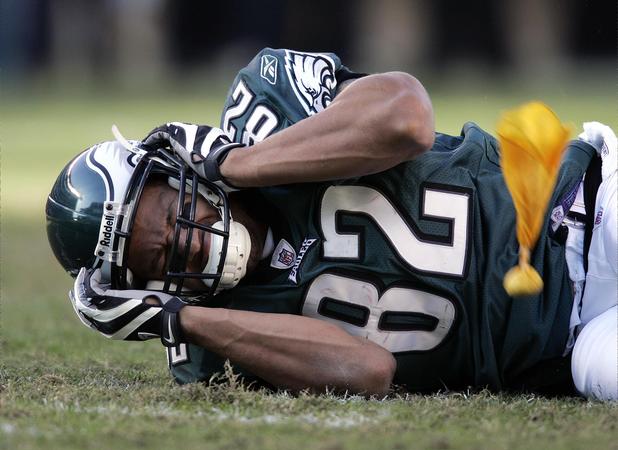
The above anonymous quote from a feature about how 2,000 wives of past and current NFL players share their fears and console each other as the evidence mounts that their husbands are likely to spend their final years as tortured, brain-damaged victims of their sport and burdens on their families illustrates how delusional supporters of the NFL money machine have become.

It also shows, to depressing degree, how people will rationalize and justify conduct that cannot be rationally defended.

If an unmarried NFL player without family responsibilities chooses to shorten his life and cripple himself in exchange for a brief career in the limelight and a lot of money, that’s his stupid choice to make. Then the only other responsible parties are the cynical and corrupt sport that knowingly pays him to make that choice, the amoral and greedy corporations that make such cruelty worth the NFL’s while, and the ethics alarms deficient football fans who get their Sunday thrills watching young men slowly disable themselves. Continue reading →

Morning Ethics Warm-Up: 8/9/2017

Good Morning!

1. On the matter of whether James Demore’s Google memo was unethical in its distribution, which some commenters here dispute, apparently he took the precaution of hiring an employment lawyer before he sent the memo. This strongly suggests that he was not merely opening up an internal discussion, but intentionally provoking a confrontation. If he just wanted to alert management to a problem, the ethical approach was to speak directly to management, not put out an e-mail that he had to know someone would leak to the internet.

Meanwhile, Google’s firing Demore for politely raising legitimate culture issues belies its “Don’t Be Evil” motto. It also may be illegal: Federal labor law bars union AND non-union employers alike from punishing an employee for communicating with fellow employees about improving working conditions. California also has a very strong anti-political discrimination law which “prohibits employers from threatening to fire employees to get them to adopt or refrain from adopting a particular political course of action.”

2. I noted this in yesterday’s post, but it’s worse than I thought: the left-wing news media, which is to say the news-media, has displayed neither discipline, common sense (you can’t keep signalling how biased you are, guys—eventually people will notice) nor ethical journalism by outrageously misrepresenting the message and the tone of the memo. CNN’s Brooke Baldwin, for example, described the memo as saying  “I don’t really like women anywhere near a computer.” That’s false reporting. Do these people understand that anyone can read the memo and see that either they are lying, or haven’t read the memo?

3. The memo’s allegedly “controversial” statement that men and women have some innate physiological, emotional and psychological differences that make their genders (in general, not in specific cases) better or less-well-suited for certain jobs, tasks or fields takes me back to my multiple battles with feminists who insisted that I cast female actors in “Twelve Angry Men.” They simply put their fingers in their ears and hummed when I pointed out that the play was about the group dynamics when twelve disparate male strangers are locked in a room. Do women in such a situation keep threatening each other physically? I think not. Actually, the play is an advertisement for diversity: having women in that largely dysfunctional fictional jury would have probably solved many of its problems, but because women are different from men, not because they are exactly the same, as the Georgetown feminists insisted. Women really need to decide what their stand is: are they different in ways that can be advantageous, or not different at all? They can’t have it both ways. On Instapundit, Glenn Reynolds recalled “The Althouse Rule of Gender Research”, which is, : “Scientists: remember to portray whatever you find to be true of women as superior.”

This goes for commentators, pundits, journalists, educators and, of course, Presidential candidates. ‘We need a woman in the White House (because men screw things up)’ is wise and true, and not sexist at all. Continue reading →

Ethics Quiz: “13 Reasons Why”

“13 Reasons Why” is a Netflix  television series based on the 2007 novel “Thirteen Reasons Why” by Jay Asher. A high school student receives a box containing 13 cassette tapes recorded by his friend Hannah Baker, before she committed  suicide. The show has been a critical and popular success (although the Times didn’t like it much) , and a second season is planned.

But Researcher John Ayers of San Diego State University has studied the results of the show on the culture by monitoring discussions of suicide on the internet following the debut of “13 Reasons Why.” The phrases “how to commit suicide” and “commit suicide”  have experienced a 26% and 18% increase in searches. Ayers sees no other explanation for this other than the show.  Searches for the phrase “suicide hotline number” also jumped, by 21%

Ayers now says, “Our worst fears were confirmed That is, thousands of people, thousands more, are searching online about ways to kill themselves.”

Ayers wants the first season to be re-edited to discourage suicidal behavior, and argues that the second season should be postponed. “Psychiatrists have expressed grave concerns because the show ignores the World Health Organization’s validated media guidelines for preventing suicide. The show’s staff instead continue to prefer their gut instincts,” Ayers says.

Your Ethics Alarms Ethics Quiz of the Day is this head-scratcher…

Is it ethical for Netflix to continue running the series in light of Ayers’ research and recommendations?

Continue reading →