Comment Of The Day: “For Some Strange Reason, The Playwright Didn’t Think ‘N-Word’ Carried The Same Dramatic Punch…”

Confession: before I wrote the post that Curmie fashioned into his Comment of the Day, I emailed him the underlying story in advance, given his unofficial position as the Ethics Alarms dramaturg. I almost asked him to write a guest post on the head-exploding tale of a university banning a black playwright’s work about the civil rights movement because it has white characters using the word “nigger,” but I guessed, fortunately correctly, that he would provide a Comment of the Day on the topic whatever I wrote.

And do he did, very well indeed.

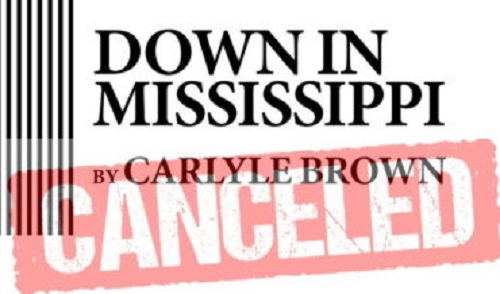
Here is Curmie’s Comment of the Day on “For Some Strange Reason, The Playwright Didn’t Think ‘N-Word’ Carried The Same Dramatic Punch…

***

The first comment on this post, by JutGory, is especially apt. [ JutGory wrote: “The Woke Paradox: We must teach ‘real history’ even if it might hurt the feelings of white kids/We can’t teach ‘real history’ if it will hurt the feelings of black kids.”]

But, as someone who taught college-level theatre courses for over forty years and continues to do some scholarly writing in the field, I’d like to take the analysis a little further.

In the interest of full disclosure, I should mention that I have directed two plays which contain the word “nigger.” Both, Tennessee Williams’s Cat on a Hot Tin Roof and Athol Fugard’s ”Master Harold”… and the boys, are widely anthologized and both are regarded as among the greatest works of 20th-century drama. The latter, which includes a particularly crude racist joke, is also unquestionably an anti-racist play, as Down in Mississippi appears to be (I confess I haven’t read it or seen it).

I was also asked by a recently-graduated black student a decade or so ago to play the role of a slave-owning plantation owner in a short film he had written and was directing. The character probably used the dreaded epithet at least a half dozen times in a four- or five-minute scene. I agreed to play the role, but for whatever reason the film shoot never happened.

My first question, unanswered by the linked article, is precisely who made the decision to cancel the performance. It certainly wasn’t the (black) playwright, who said that “maybe you should be less fragile. And try to listen to what your former generations are trying to teach you for the well good being of all of us,” and it’s unlikely to have been the theatre department, given that they were the ones who decided to produce the play to begin with.

Administrators above the level of department chair are almost never involved in the process of selecting a production season. But they will stick their noses into the process if there’s a potential controversy, even a fallacious one. We can reasonably surmise that it’s a dean, a vice president, or a president who is the Designated Weenie in this case. It certainly wasn’t the chairman of the Board of Trustees, Glenn O. Lewis, himself a black man, who points out that censorship is not a solution, and that “you don’t learn anything new until you get out of your comfort zone, and I think that is what Mr. Brown intended for this play to do.”
Continue reading

For Some Strange Reason, The Playwright Didn’t Think “N-Word” Carried The Same Dramatic Punch..

Yes, this is another Strange Tale of the Great Stupid.

A depressing one.

In the opening scene of Down in Mississippi by African American playwright Carlyle Brown, a white man calls a black character “nigger” multiple times and threatens him after learning that he’s in the area to help register black citizens to vote. Texas Wesleyan’s Black Student Association shared an Instagram post about how many students were “deeply disturbed” that such scenes would be shown on campus, because it might “hurt Black students and possibly students from other marginalized communities.”

So the university decided not to mount the production. Brown, the playwright, argued that the word’s use in the play was necessary to maintain historical accuracy and to provoke strong responses. Yes, and he might have also pointed out that this is live drama, and the objective of live drama is to arouse the audience’s emotions. Glenn O. Lewis, the first black board chairman the university has had, diplomatically said that he understood how the language could make some students uncomfortable, “But when have we ever … learned anything in our comfort zone?” Lewis asked. “You don’t learn anything new until you get out of your comfort zone, and I think that is what Mr. Brown intended for this play to do.” Lewis added that censorship of Brown’s work is not a real solution.
Continue reading

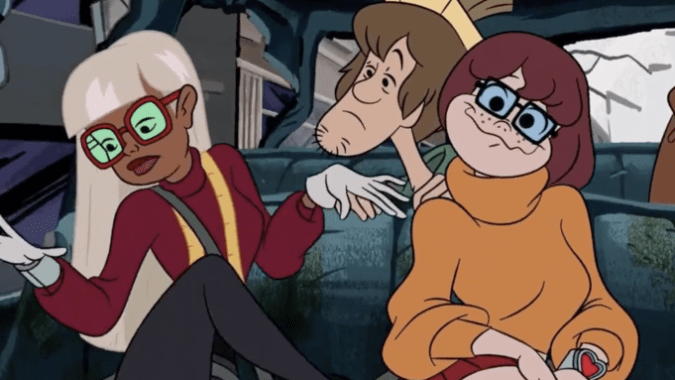
We Have To Talk About Velma…

I wish we didn’t.

I wouldn’t raise the issue except that the conservative blogs and commentators seem to be horrified by this most minor of pop culture developments—the sexual orientation of a five-decades-old Hanna-Barbara cartoon character?–and the usual progressive suspects are awash with joy. (Well, I guess you have to take your victories where you find them, however minuscule.)

The ethics issues are encompassed in the routine question, “What’s going on here?”

Continue reading

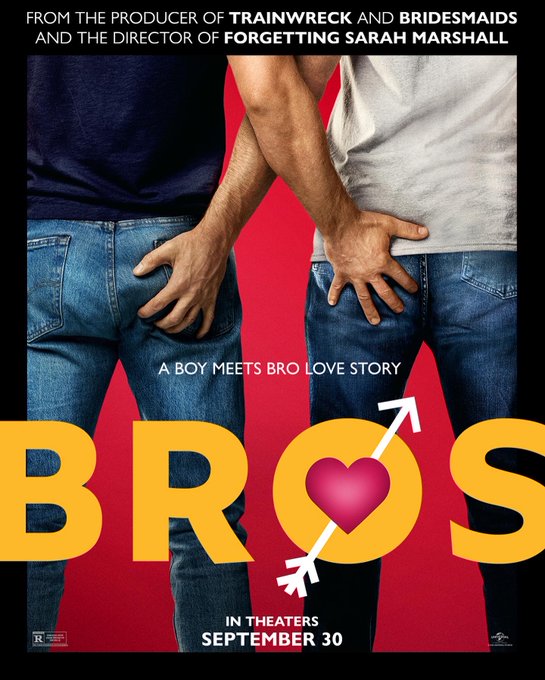
The Failure Of “Bros”: Why Don’t Minorities Accept The Right Of Majorities To Feel Like They Do?

Gee, what a shocking development! Non-gay audiences haven’t flocked to see a romantic comedy that advertises itself like that!

I’m a movie fan. I have lots of gay friends, family members and associates: I worked in the theater for decades. I respect them all; I support their right to live and love and marry whomever they please; I want them to be treated like any other law-abiding Americans in all things as they are judged solely on the content of their character, and regard discrimination and bias against them as despicable and unconscionable.

But I don’t enjoy watching gay sex and related activities.  I have every right to feel that way. I would no more pay, or take time out of my sock drawer duties, to see “Bros” than I would watch an NFL game, or attend a one-man show by Alec Baldwin. So sue me. But I think there are millions of Americans with similar tastes, and they span the generations.

Apparently the makers of “Bros” convinced themselves that non-gay (I will say “cis” when there is a loaded gun at my head and not before) Americans, who are, believe it or not, the majority, would go to see a romantic comedy about gays because they have been told that they should, and are bigots if the don’t comply. Non-gay America replied, “Bite me!,” and good for them. Continue reading

Unethical Quote Of The Day: Blogger Ann Althouse

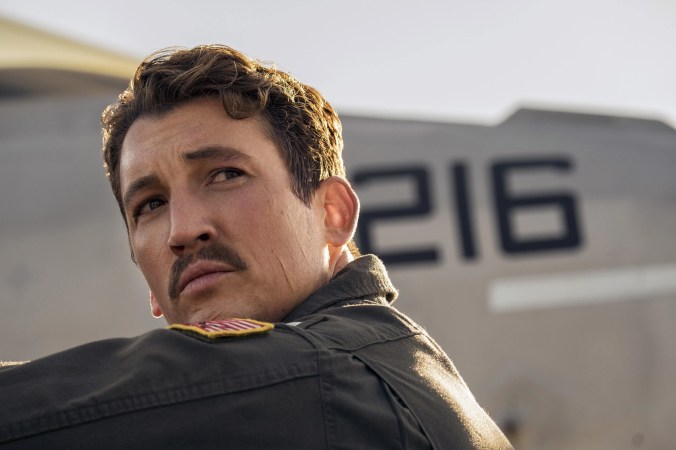
“Who is Miles Teller?”

—Ann Althouse, at the end of her blog post commenting on the premiere of “Saturday Night Live” and the New York Times’ review of it

The SNL premiere was guest-hosted by Miles Teller.

I’ve got some income-producing work to do for a client early this morning and I shouldn’t be working on an Ethics Alarms post, and I know I’ve been picking on Ann a lot lately, but I really can’t let this pass.

It’s really simple: if Althouse is going to engage in popular culture commentary as if her opinion should be taken seriously (as in “is worth reading on her blog”), then she has a base obligation to be at least minimally informed regarding American popular culture. She isn’t. She has never been, and I have read her blog for more than two decades, back when she was a law professor. There are arbitrary pockets of pop culture that she is obsessed with (like Bob Dylan songs), but it has always been obvious that Althouse is not very conversant in classic films or network TV; she’s even blogged about this hole in her experience. Not that there’s anything wrong with that, except that if one is going to critique popular culture, especially a show that at least purports to satirize current personalities and themes within pop culture, it is irresponsible, incompetent and arrogant (dare I say, “stupid”?) do do so when you literally don’t know what you are talking about.

Sixty-something Ann Althouse asking “Who is Miles Teller?” is the exact mirror image of those lazy jokes on TV and in movies about clueless Millennials who ask, “Who is John Wayne?” or “Who were The Beatles”‘ after a Boomer makes a reference to them or their equivalents. Saturday Night Live has always featured as guest hosts actors and singers (and sometimes, less successfully, politicians) who are currently popular, in the news and hot commodities, so Ann had to know that if Miles Teller was hosting the first show of the season, he must qualify. If she wasn’t familiar with him, then obviously she should have Googled his name: it would take all of three seconds. Her question, at the end of a post suggesting that “Saturday Night Live” is tired, unfunny and irrelevant (not that it isn’t), conveys stunning elitism as well as the qualities I already attached to it.

Continue reading

Race Pandering Law Of The Year, And Of Course It’s In California…

…and also of course, master progressive panderer Gov. Gavin Newsom signed it into law.

Newsom signed a bill yesterday to limiting the use of hip-hop lyrics as evidence in the criminal trials of rappers, a blatant sop to the African-American fans of the artists, inevitably black, who have an alarming record for assaulting, battering, raping or killing people

The law, welcomed by rappers, their fans, record producers, record industry executives and Black Lives Matter, is the first in the country to ensure someone’s “creative expression” is not used to “introduce stereotypes or active bias” against a defendant or be used as evidence in a trial against them. Yes, that would be because Assembly Bill 2799 is an unnecessary law that would only surface in one of the very few states so thoroughly addled by extreme Leftist ethics rot that such a monstrosity would even be considered without causing crippling laughing fits. A similar bill in New York failed earlier this year—yes, New York is one of those states.

Continue reading

Ethics Quiz: The Crystal Flute

The strange episode has everything: history, a President, music, bad taste, fat-shaming, historical ignorance, and more.

Lizzo, the defiantly obese pop singer, rapper and all-around musical whiz who is also a classically trained flutist, was permitted to entertain her Washington, D.C. concert audience this week by playing a crystal flute that a French craftsman and clockmaker had made for President James Madison in 1813. She was handed the sparkling instrument from Carol Lynn Ward-Bamford, a curator at the Library of Congress, then, as described by the New York Times, “played a note, stuck out her tongue in amazement, and then played another note, trilling it as she twerked in front of thousands of cheering fans. She then carried the flute over her head, giving the crowd at Capital One Arena one last look, before handing it back to Ms. Ward-Bamford.”

“I just twerked and played James Madison’s crystal flute from the 1800s!” Lizzo told the crowd. “We just made history tonight.”

Your Ethics Alarms Ethics Quiz of the Day is...

Was that an appropriate and ethical use of the historical artifact?

Continue reading

“A Simple Plan”: An Ethics Movie

I watched the 1998 film “A Simple Plan” again last night, and as usual with movies I see several times, I noticed some details and themes that eluded me in previous viewing. This is an ethics film, and one that would support a seminar, yet virtually none of the reviews of “A Simple Plan” mention ethics at all. That is to be expected, since ethics isn’t on Hollywood’s radar or that of 99% of the participants in the film industry, including reviewers. Checking the archives, I discovered that I mentioned the movie in an ethical context three times, but never seriously examined the film itself.

“A Simple Plan,” based on a novel by the same name, stars Bill Paxton, Billy Bob Thornton as the very different Mitchell bothers in rural Minnesota, Hank (Paxton) and Jacob (Thornton) who, along with Jacob’s friend Lou discover a crashed private plane in a snowy field. Along with the dead pilot, the wreck contains over $4 million in cash.

The simple plan of the title is the three men’s decision to take the money, hold on to it until the plane is discovered, and then divide it up afterwards if nobody is looking for the cash. Hank, the only one of the three with firing neurons, initially wants to report the crash and the cash, obviously the legal, safe and ethical course, but allows his genial but dim-witted brother and his habitually drunk friend convince him to try the “plan.”

This illustrates at least nine vital ethics lessons right up front:

Continue reading

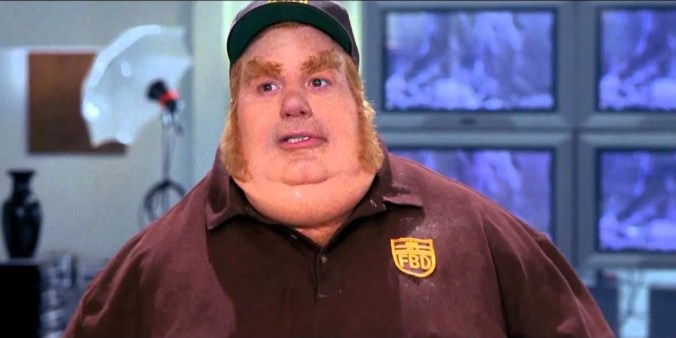
Today’s Dumb Woke Hollywood Casting Question: “Why Does Hollywood Keep Using Fat Suits?” [Corrected]

The New York Times today decides to try a new frontier in the woke casting double standard adventure—you know, the incoherent theory that minority actors should be considered for all roles and all character types regardless of sex, race, size or physical characteristics, but it is unethical for white performers to play any character that they have to act and use make-up to evoke. You know, like good Hollywood liberal Tom Hanks claimed when he issued his recent  mea culpa for playing a gay, AIDS battling lawyer in “Philadelphia.”  So, using the same logic, Tom must have been equally hostile to “diversity, equity and inclusion” when he took a role away from some brilliant, unknown actor with a 75 IQ to play Forrest Gump, just as an autistic actor should have starred in “Rain Man” instead of Dustin Hoffman.

Suuuure. But I’m getting ahead of myself. The Great Stupid often has that effect on me. Sorry.

The Times’ query, in the headline to a column by Arts Section pundit , is “Why Does Hollywood Keep Using Fat Suits?” Gee, it’s a mystery! And come to think of it, why does Hollywood keep using make-up? Special effects? Fake blood?

Here’s a much tougher question: why does the New York Times let people who know nothing about performing, entertainment, business, audiences, comedy, and casting write columns like this? Continue reading

Ethics Villains: Documentary Maker Ken Burns And PBS

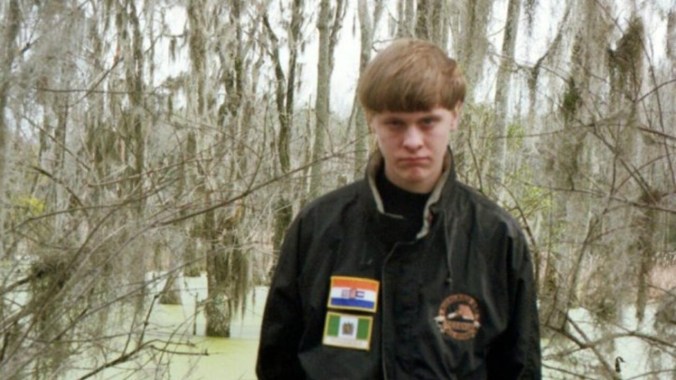
What, you well may ask, is a photograph of Dylann Roof doing in Ken Burns’ latest documentary, “The US and the Holocaust”? Good question.  The answer is, frankly, disgusting.

In the last of three parts in the film, shown tonight on PBS stations nationwide, the now familiar Burns historical story-telling is converted into a partisan, negative, political campaign ad, and not even a fair or respectable one compared to the ugliest attack ads you will see in the coming month. Apparently the tax-payer funded pubic broadcasting corporation decided that the perils facing of its patron Democratic Party in the upcoming election were dire enough to justify turning a legitimate and mostly admirable piece of documentary craft into supplementary material to Joe Biden’s indefensible attack on Republicans as fascists and “clear and present dangers” to democracy.

Burns, to his eternal shame—I will not watch any future Burns works—agreed to betray the trust of his viewers and the integrity of his art by using the last 10 minutes of “The US and the Holocaust” to draw an intellectually dishonest and virtually libelous analogy between the anti-Semites in Roosevelt’s State Department that blocked European Jews from escaping to the U.S. before Hitler sent them to the showers, the Nazis themselves, and those who oppose pro-illegal immigration policies in the U.S. today. Continue reading