Lazy Sunday Afternoon Ethics Picnic, 5/1/2022: A Very Merry Un-Birthday Edition

There’s vintage Disney—back before it decided it had a stake in having young children instructed in sexual matters by teachers, and when innocence was considered worth protecting. Yes, I recognize the irony in saying that about an “Alice in Wonderland” clip, given that Lewis Carroll was unhealthily obsessed with little girls, often asking their parents for permission to photograph them nude…and got it! (Alice was his favorite model.)

That’s the very strange and great Jerry Colonna voicing the March Hare, and Ed Wynn, of course, as the Mad Hatter.

Today is my “un-birthday.” My 94-year-old aunt, the last surviving member of her generation in my extended family called me up this morning to wish me a happy birthday. Since my real birthday is December 1, I was faced with an instant ethical conflict: was the right course to tell the truth, risking embarrassing her, or to play Birthday Boy, lying but being kind in the process? I opted for honesty, both using the Golden Rule—I wouldn’t want to be patronized—and deciding that my aunt, still sharp and always with a sense of humor, could, like Tom Cruise, handle the truth. She could; she laughed, wondered how she has the wrong date on her calendar, and we talked for an hour. SHE mentioned “un-birthdays,” causing me to recall the song.

1. Ethics lesson: Integrity should trump Loyalty. Elon Musk, responding to to the absurd ad hominem attacks from progressives calling him a fascist, a white supremacist and, worst of all, a conservative, provided this handy dandy sketch via, of course, Twitter, explaining that his beliefs have remained relatively stable, while his critics’ perspective has shifted:

2. And we trust these people with educating or rising generations…The University of Southern California former dean of the University of Southern California asked the law firm Jones Day to investigate allegations that its education school directed administrators to omit information from its U.S. News & World Report rankings submission to boost the school’s placement.  at least as far back as 2013, According to the just-release investigation results,   former dean Karen Symms Gallagher made sure that the Rossier School of Education only included information on its Ph.D. program, which has a lower acceptance rate than its Ed.D. programs,  despite explicit instructions in the questionnaire to include both Ph.D. and Ed.D. programs. Gallagher stepped down in 2020 after 20 years as dean. She’s now a professor at Rossier.

The probe turned up what Jones Day referred to as “irregularities” in how the education school calculated and reported research expenditures, and it identified other possible misreporting of faculty metrics, online program enrollment, graduates’ job-placement rates and more.  USC had pulled the  school from consideration in the U.S. News & World Report graduate-school rankings prior to the report.

Will she be sacked as a professor? What’s your guess? Continue reading

“Curmie” Comment Of The Day Double-Header #2: “DeSantis Strikes Back: Ethics Dunce Disney Gets The Legal And Ethical Consequences It Deserved”

No “echo chamber” we, so it is appropriate to include as a Comment of the Day Curmie’s vigorous dissent on the current conflict between Disney and Florida, particularly its ambition conservative governor Ron De Santis.

So here it is…in response to the post, DeSantis Strikes Back: Ethics Dunce Disney Gets The Legal And Ethical Consequences It Deserved…

***

Unlike you, Jack, I am neither a lawyer not an ethicist. The closest I’ve ever been to the former was being unofficially “pre-law” for about the first two and a half years of undergrad; the closest I’ve ever been to the latter is that you’ve called me ethical a couple of times. So forgive me if I have trouble discerning the line between that which is legal and that which is ethical.

Perhaps the terms of the agreement between the state and the corporation are akin to trademark laws: that Florida must aggressively defend its prerogatives or be in danger of losing them. But this doesn’t seem like something any corporate CEO would agree to. And I think we can take as given that Governor DeSantis would not be criticizing any corporation that publicly supported his position because they didn’t stay in their lane, even though the level of interference in public policy would be the same. No, it would be the progressives who’d have their collective skivvies in a twist in that case.

More to the point, Disney began their dissent, at least, while the bill was still under consideration. They were, in fact, arguing in favor of the status quo—when there was no law—a position that can hardly be regarded as interfering with the state, only with one party’s agenda. That they didn’t suddenly change their position when the bill became law doesn’t seem very problematic.

Moreover, it strikes me that educational policy is literally everyone’s business. I’m semi-retired now and not currently scheduled to teach at all in the fall, so I have no direct personal interest in what’s being taught in 3rd grade—these will never be my students—but I hope to be around long enough to be affected by their ability to vote or even to run for office… or to become doctors, lawyers, artists, or whatever. Yeah, I care what happens in that 3rd grade classroom. Continue reading

The Great Stupid Marches On: Plant Name Political Correctness And The Wandering Jew

Sometimes it all seems too much to bear. When I stumble upon something like this, I feel like smashing my head with a croquet mallet enough times to reduce my brain function to that of Margorie Taylor Greene or Cori Bush, and spending the rest of my days watching “Three’s Company” re-runs. Then I decide to write a post, and realize that once again, the most appropriate graphic is the “Blazing Saddles” “You know: morons” video clip. I could use that clip on ten posts a day now. More. Why do I bother writing this blog if insane ideological extremism is making the culture, society and public dumber by the second?

But I digress.

Let me tell you a story…

Continue reading

Morning Ethics Tune-Up, 2/22/22: A Very Special Episode…

1.  “What’s going on here?” I have not decided what exactly the article “The New Homophobia” in Newsweek (Flagged this morning by Althouse: Pointer for Ann!) means or portends: it is, after all, just one man’s opinion. However, I sense that it is relevant to the issues underlying the Disney vs. Florida controversy.

Excerpts…

I learned about queer theory, an obscure academic discipline based largely on the writing of the late French intellectual Michel Foucault, who believed that society categorizes people—male or female, heterosexual or homosexual—in order to oppress them. The solution is to intentionally blur—or “queer”—the boundaries of these categories. Soon this “queering” became the predominant method of discussing and analyzing gender and sexuality in universities…

***

This might not be a concern if, by adopting these new identities, young people were merely playing with the boundaries of normative gender expression—something that gays, lesbians, feminists, most liberals and even many conservatives would welcome two decades into the 21st century. But many young boys do not stop at simply painting their fingernails and wearing dresses, and young girls do more than cut their hair short and play football. With increasing frequency, these children are given drugs to block their puberty, cross-sex hormones and irreversible surgeries, all the while cheered on first by online communities, then the mainstream media and now the current presidential administration…

*** Continue reading

DeSantis Strikes Back: Ethics Dunce Disney Gets The Legal And Ethical Consequences It Deserved

During a special session called for the purpose, Florida’s Senate has passed a bill that would end the special autonomous tax district status granted to Walt Disney World 1967. The bill now goes to Florida’s House, where passage is expected. Gov. DeSantis will, of course, sign the bill into law.

Good.

The mainstream news media and its minions are pushing, hard, the skewed narrative that this is GOP hypocrisy, with a state government using its power to punish a corporation’s free speech. That, however, is not a correct analysis.

What Disney did, when it publicly announced that it would protest and fight to repeal the Parental Rights in Education Law (falsely and dishonestly tagged the “Don’t Say Gay” law by LGTBQ activists, including much of the news media), was to breach the implicit conditions of its 55 year-old deal with the State of Florida, and, in an uncharacteristic blunder, prompt it to do what it had an ethical and legal duty to do anyway.

By 1967, Walt Disney himself had been negotiating a sweetheart deal with Florida since Walt Disney World was just another twinkle in his eye. The planned 40 acre complex was audacious and unprecedented, and audacious because it was unprecedented. Central Florida was an under-utilized swamp, and Disney was promising to turn it into the biggest tourist destination in the U.S. This would mean publicity, tourism ,commerce, hotel construction, jobs, tax revenue and development for Florida, and Disney was a tough negotiator. (Another Disney theme park project planned for Manassas, Virginia was abruptly killed when that state was less than accommodating.) Disney had a well-earned reputation for doing things right, so Florida saw nothing but benefits in allow it nearly complete freedom to build and run the new theme park the way it chose, without meddling from regulators. When Disney wanted to build a building, fill in a lake, or pave a road, it didn’t have to seek permits or approval, allowing the place to operate and start making money for itself and Florida as early as possible. Continue reading

The Easter Ethics Basket: 4/17/2022. Yes, There Are Some Rotten Eggs…

Turner Movie Classics decided to kick off Easter with an abject lesson in art and life for us all. The movie is 1965’s “The Greatest Story Ever Told.” One of the very greatest of American film directors was George Stevens, who specialized in smart comedies (the Hepburn/Tracy classic “Woman of the Year”), light-hearted adventure films (“Gunga Din”) and musicals (“Swing Time,” the best in the Astaire-Rogers canon). Then, as wonderfully told in the documentary “Five Came Back,” he joined fellow directing greats John Ford, John Huston, William Wyler and Frank Capra in documenting World War II for the public, the troops, and posterity at the high cost, for all of them, of their emotional and mental health. (Wyler and Ford also suffered serious service-related injuries).

Stevens, though, drew the assignment of filming the horrors at the liberated extermination camps. When he returned to Hollywood, he didn’t feel light-hearted any more. From then on he directed dramas with serious themes, and they were his best films, like “Shane,” “Giant,” and “The Diary of Anne Frank.” Finally, he took on his most daunting challenge, filming the life of Christ with an all-star cast befitting of the project’s importance. “The Greatest Story Ever Told” is terrible; I find the film  unwatchable, and I’m not alone. Imagine the embarrassment of titling your movie “The Greatest Story Ever Told” and watching to turn out to be one of the worst movies ever made.

The bomb even has a special kick at the end when John Wayne appears as a Roman centurion staring up at Jesus on the cross, and says in the Duke’s trademark drawl, “Surely this man was the son of God!”

The Duke could shrug off, after all the resulting mockery; he had been more embarrassed playing Genghis Kahn throughout an entire film, Howard Hughes’ camp classic “The Conqueror.”

George Stevens, however, wasn’t used to bombing. The movie was a critical and box office bust, and the fiasco sent Stevens into retirement for five years. When he finally tried again, the director’s heart not only wasn’t light, it wasn’t in his work any more. “The Only Game in Town,” with Elizabeth Taylor and Warren Beatty, was an even bigger disaster than “The Greatest Story Ever Told,” though it’s easier to sit though. After all, it’s an hour shorter, and John Wayne doesn’t show up as a centurion.

The life lessons? Hubris and humility…don’t get cocky. Next: Nobody is too good or talented to fail, even at what they are best at. Finally: Aim for the stars, but be prepared to crash and burn.

1. Speaking of Stevens’ “The Diary of Anne Frank,” there was a weird episode on Ann Althouse’s blog. In one post she quoted David Mamet in his just-published book, as saying in part,

“Albert Hackett and Frances Goodrich… took an adolescent girl’s diary and raped it into “The Diary of Anne Frank,” a sitcom….”

Anne has many and large holes in her cultural literacy, especially regarding film. Her commentary left it open to question whether she really believed that Hackett and Goodrich had written a comedy based on Frank’s diary (They wrote a Tony Award-winning drama as well as the acclaimed film based on it), and passed on several comments by readers who took Mamet literally as well. An example: “Joan Rivers did an interview once about what things should never be the fodder for humor….Perhaps, younger people today are distanced enough from it for a sitcom about a Jewish family hiding in an attic for over two years who are then found and killed by the Nazis to not be in poor taste.” Another  “Turning the Diary of Ann Frank into a comedy is a pretty loathsome thing to do. Things like Hogan’s Heroes worked because the Nazis were the main objects of the jokes. The victims of the Nazis aren’t.” There are others. Why would Ann let those comments through to make the commenters look like fools, especially since she helped lead them astray? Or is she, as I very much suspect, unfamiliar with the movie (which is moving and excellent)? Continue reading

Disney And The LGTBQ Activism Ethics Train Wreck: A Prelude [Corrected]

I have been intending to examine the Disney empire’s misbegotten entry into the battle over Florida’s recently passed “Parental Rights in Education” law for weeks, but postponed the project because it is too complicated to do correctly without involving other complex issues that are closely related to it. Unfortunately, these issues have proliferated during the delay.

For example, Florida is threatening to remove Disney’s special status that allowed it to operate Disney World as an autonomous municipal government because of the company’s political action. Is that kind of punishment for a political opposition ethical? Should Disney have such special status, regardless of why it is being threatened with its removal? If the special status should be removed anyway, does it matter if it is done in response to political speech?

Here’s another: Republicans in Congress are threatening to end Disney’s copyright on Mickey Mouse, also in response to its LBGTQ activism. But that copyright should have ended decades ago, and its artificial endurance has stifled creative works blocked by thousands of other drawn-out copyrights that aren’t Disney. Now I am dealing with copyright law policy, the importance of Disney to the culture, and what, if anything, the government should do to–what? Reward it? Strengthen it? Direct it? Control it?

The Disney LGTBQ advocacy issue also involves, as virtually every issue does now, media ethics, as almost all outlets other than Fox have a clear pro-LGTBQ bias. The New York Times reporter assigned to covering Disney and the Florida law controversy is Brooks Barnes, and he can’t be trusted. In an earlier story last month, the reporter wrote,

Earlier in the week, Mr. Chapek, the company’s chief executive, botched an internal email to Disney employees. He was seeking to explain Disney’s public silence on anti-L.G.B.T.Q. legislation in Florida that activists have labeled the “Don’t Say Gay” bill.

Continue reading

Evening Clean-Up On The Ethics Aisle, 4/7/2022: “Yecchh!”

April 7 is a really bad ethics date. In 1994, the worst episode of genocide since World War II was triggered in Rawanda, resulting in the massacre of between 500,000 to 1 million civilian Tutsis and moderate Hutus. Rwandan forces even managed to avoid significant international intervention after the murder of ten Belgian peacekeeping officers: the Tutsis, a minority population that made up about 10% of Rwanda’s population, were never deemed important enough to be rescued by the international community. (Yes, the United Nations has been fearful, negligent, and in this case, racist, for a long time now.) The U.N. did eventually admit that a mere 5,000 soldier peace keeping force could have stopped the slaughter at the start.

That was big of the U.N.

Let’s send them more money.

The genocide’s seeds were planted the early 1990s when President Juvenal Habyarimana, a Hutu, began using anti-Tutsi rhetoric to consolidate his power . What followed were several massacres, killing hundreds of Tutsis. The government and army assembled the “Interahamwe” (meaning “those who attack together”) and armed Hutus with guns and machetes for the explicit purpose of wiping the Tutsis out. On April 6, 1994, President Habyarimana was killed when his plane was shot down. In response, Hutu extremists in the military began murdering Tutsis within hours. Belgian peacekeepers were killed the next day, and the U.N’s reaction was…

It bravely pulled its forces from Rwanda. Thousands of innocent people were hacked to death with machetes by their neighbors, but the international community, and notably the United States, took no action to stop the genocide. An estimated 75 % of the Tutsis living in Rwanda had been murdered. Bill Clinton later called America’s failure to intervene “the biggest regret” of his administration.

At least it beat out Monica.

1. They are still trying to excuse Will Smith and blame Chris Rock! Surprised? There were two additions to the canon today. The New York Times featured an absurd piece called “The Slap, Hair and Black Women.” A sample: Continue reading

Morning Ethics Ketchup, 4/5/2022: Ten Ethics Tales, And More Are Still On The Shelf!

No ethics warm-up for two straight days leaves me with a big pile of stinking undiscussed and aging issues and events….

1. So much of “in sickness or in health”...Baseball Hall of Fame lock Albert Pujols, recently signed to another multi-million dollar contract to be the St. Louis Cardinals designated hitter, waited a couple of days after his wife Deidre underwent  surgery removing a brain tumor to announce he was divorcing her. “I realize this is not the most opportune time with Opening Day approaching and other family events that have recently taken place. These situations are never easy and isn’t something that just happened overnight,” he wrote in part.  Yeah, I’d put the baseball stuff after the family stuff, Albert. I’m sure this came as no surprise to his wife (at least I hope so), and whatever part of the $344 million he has been paid through the years will definitely help, but especially with five children, letting his wife at least recuperate from a traumatic operation before dumping her would seem to be the more ethical course. Pujols’ reputation is one of being a nice guy; you know, like Will Smith.

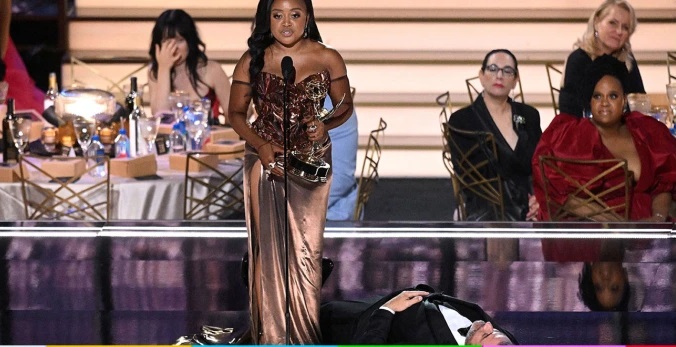
2. Watching free speech get “chilled” in real time...at the Grammys—who watches the Grammys?—host Trevor Noah began by promising that the he would be keeping “people’s names out of [his] mouth,” referring to Smith’s shouted demand after he went slap-happy. And he did. Today the New York Times critic approved of Noah not taking “meanspirited swipes.” If Chris Rock’s mild joke about a woman choosing to shave her head for a public appearance is now “mean-spirited,” the Left’s attempt to shut-down all comedy (except meanspirited swipes at men, whites and Republicans, of course, is nearing success.

3. Calling the Humane Society and the ASPCA! Martha Stewart announced that her four dogs killed her cat when they “mistook her for an interloper and killed her defenseless little self.” Did the dogs sign a statement to that effect? Her four dogs constituted a pack, and making a cat try to coexist with a pack of dogs is irresponsible. What really happened, I’s surmise, is that the cat and one of the dogs had what would have normally been a brief altercation, and the pack instinct kicked in for the other three. Continue reading

The Freakout To Florida’s Parental Rights in Education Law, Not The Law Itself, Will Send LGBTQ Acceptance Backwards

There is nothing discriminatory, bigoted, ant-gay, anti-trans or unethical in the “Parental Rights in Education Bill’ signed into law by Florida Governor Jim DeSantis. Have you read it, or just relied on the hysterical and dishonest characterizations of the bill by the news media and woke activists like the three Oscar co-hosts, who chanted “Gay, gay,gay, gay!’ like four-year-olds in supposed bold and hilarious defiance of what progressives have been calling the “Don’t Say Gay” law.

Read the law. It doesn’t prohibit saying “gay” at all (the word doesn’t appear in the law), and as unfortunately vague as the wording sometimes is, no fair interpretation would find that it inhibits free speech.

Here is the closest wording in the bill to an “anti-LGBTQ” provision, in Section 3, page 4:

3. Classroom instruction by school personnel or third  parties on sexual orientation or gender identity may not occur  in kindergarten through grade 3 or in a manner that is not age-appropriate or developmentally appropriate for students in accordance with state standards.

The Horror. Only the most committed and unhinged gay activist could find that provision problematic, and the fact that so many progressives do is signature significance: they lave lost touch with common sense and reality. The law isn’t anti-gay, it’s pro-parent (and student). Any parents who really think their 4-8 year olds need to be trained in human sexuality are welcome to do it themselves. I would not want my child introduced to those topic by kindergarten through third grade teachers, even if I had the opportunity to closely examine the teachers’ qualifications for doing so and the way it would be done. This is not their job, and no, I wouldn’t trust them to take it on if it were. They have a hard enough time teaching language, arts, math, science and history. I don’t trust them to teach ethics. Continue reading