In response to my recent question in a comment thread about when Ethics Alarms first noted that the Democratic Party was embracing totalitarian attitudes, tactics and principles, reader and commenter Zoltar Speaks tracked the post down, which, as I had speculated, was published in late October, 2016, right before the election. It was interesting, in light of having just passed the two year mark in the Trump Presidency, to review my thoughts at the time. Upon re-reading it, I conclude that there is nothing in that post I would retract, and that I wish I was as smart every day was I was on October 20, 2016. This section, however, really stood out in light of what has occurred since; the context was the last debate between candidates Trump and Clinton: Continue reading
“bias makes you stupid”
Ethics Hero, Covington Catholic Students Fake News: Dusty Smith
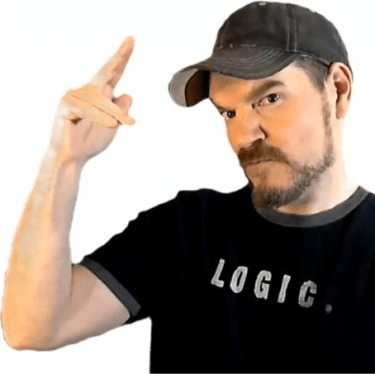
Who is Dusty Smith? That’s him above. He’s a pundit, activist and atheist who runs the “Humanist Society of Mississippi, ” is a self-proclaimed progressive, and detests Donald Trump. Unlike so many progressives and Trump-Haters however, truth and integrity still mean something to him. Thus it is that after initially reacting in knee-jerk, Pavlovian fashion to a false news story that seemed to bolster all sorts of mainstream news media, 2016 Post Election Ethics Train Wreck, “resistance” narratives—Catholics are bad, white males are toxic, whites are racists, Trump supporters are racists, pro-life advocates are fools, “The Age of Trump” has energized racism, just to name a few—-he actually reviewed the evidence, and realized that the story was, in his words, “bullshit.” He was disgusted, and made this video…
Nice job, Dusty.
His is one of many examinations of this fiasco emerging on the web now, not that it has discouraged many on social media from still citing the original story so they can signal to their “Orange Man Bad” friends that the posteris right-thinking and virtuous and deserves a tsunami of “likes” and “loves.” I bear an ugly truth: there is no excuse for this. It is irresponsible, incompetent, and destructive. You don’t denigrate a kid and paint a target on his back…


Reza Aslan
✔ @rezaaslan
Honest question. Have you ever seen a more punchable face than this kid’s?
…without being damn certain of your facts. (Actually, you never paint a target on a kid’s back, but let’s start with baby steps, since Trump-Hate has eaten so many consciences and ethics alarms.) Oh, but these kids were wearing MAGA hats, so they deserve it, right? That was the instant approach of the biased journalists and their inexcusably credulous readers, who then joined the social media mobs. It is not just because I was suspicious of the story from the beginning that I state now that everyone should have smelled a rat. After all, just the day before, the mainstream media whipped itself into an impeachment orgy based on a fake “bombshell” from the internet equivalent of the National Enquirer, BuzzFeed. Nor was that the first clue (or the hundredth) that the media can’t be trusted, particularly when it comes to conservatives and MAGA hats. Journalists have disgraced themselves progressively (in both definitions of the word) since at least the 2008 Presidential campaign; they cannot be trusted, and their abdication of ethical journalism now poses a direct threat to democracy. The members of the public who eagerly accepted the attack on the Covington school kids as fact aided and abetted divisive propaganda that they want to be true.
Writes Marta Hernandez about this incident in part at Victory Girls (which I am adding today to the Ethics Alarms links): Continue reading
Sunday Ethics Round-Up, 1/20/2019: Blogging Angry

Yeeee-hah!
I’ve been angry all day about the absolute perfidy and vicious dishonesty of the news media, magnified by the hate-fed gullibility of my friends on social media. I wanted to wait until my fury subsided before composing the warm-up. No luck.
1. The most egregious example of incompetent, biased, mob journalism yet? Meh. That story of how online left-wing gossip site BuzzFeed concocted a fake report that suggested impeachable conduct by Donald Trump, and how it was accepted without question by the mainstream media which spent all day feeding a buzz about imminent impeachment until the Mueller investigation had to make a public announcement that the story was crap? The New York Times had it on page 11. The original false story, of course, was on the front page, above the fold. Just for giggles, I checked to see what Rachel Maddow was saying at MSNBC, since she is supposed to be the Best of the Worst, and MSNBC had been reveling in a virtual impeachment orgy. I guess she has been learning at the knee of Al Sharpton; maybe his office is next to hers. She went full Tawana Brawley. Rachel’s spin was that just because this didn’t happen doesn’t mean it couldnt have happened, because we all know that Trump should be impeached and thus this doesn’t really change anything. Then she brought on the editor of BuzzFeed who told her audience that he stands by his story.
I’ve been feeling a lot like Cassandra lately. Long ago I concluded that Maddow was a charismatic fraud, smug and pursuing an agenda, and completely untrustworthy. “Oh no!” protested several of my moderate and progressive friends in the ethics field. She’s wonderful! Funny! Fair! Never biased!
One reason I’m angry is that so many of my friends have allowed themselves and their integrity to be corrupted. I expected better of them. Maddow is an ethics corrupter.
2. Then there was the Catholic schoolboy in the MAGA hat. This was a flash Ethics Train wreck I stumbled upon it on Facebook: one of my friends there posted a CNN link with a video about an ugly episode after the March for Life in which a group of Catholic school teens wearing MAGA hats harassed and mocked an elderly Native American man who was engaged in some kind of religious ritual. In response to a comment, my friend wrote that this was one more ugly example of what the current “racist environment” had created—in other words, it’s all Trump’s fault. Since the guy is in a profession in which integrity as well as objective and unbiased consideration of facts is part of the job description, I felt this cheap shot was not only unwarranted but misleading to others who might regard him as more than just the usual Facebook goof, and so I noted that a) wearing a Trump campaign cap doesn’t make you racist and b) because someone misbehaves wearing a Trump hat no more implicates him than wearing a Boston Red Sox cap implicated Alex Cora. His response was to write me a terse note demanding that I not comment on his edicts, and then he blocked me.
That turned out to be just the beginning. I hadn’t followed it, but the story turned out to be yet another manufactured fake news story in support of an anti-Trump narrative. The video was deceptively edited. The Native American Man confronted the kids, not the other way around, and a couple of them smirked at the old wacko beating a drum in their faces. He turned out to be a serial activist who had pulled such stunts before, trying to provoke confrontations. He, it turned out, was mocking the boys, not the other way around. Meanwhile, a radical Black Nationalist group was also shouting at the kids. Continue reading
Saturday Ethics Warm-Up, 1/19/19: It’s Fake News Day!
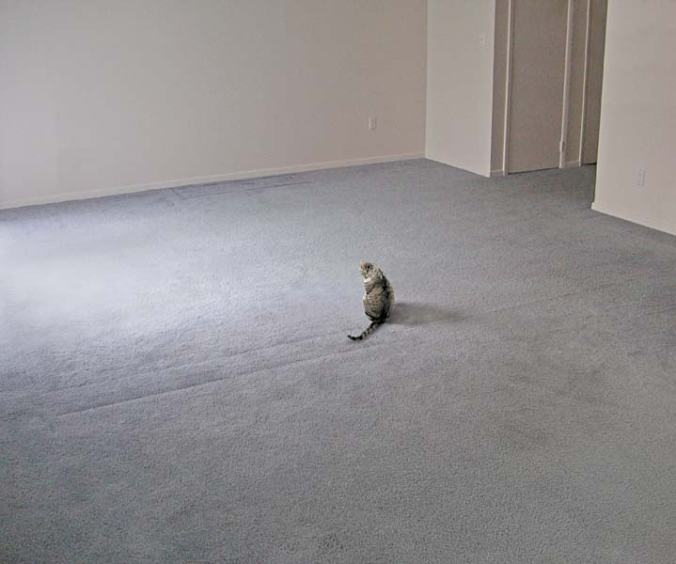
Welcome to the Ethics Alarms Dead Zone!
Increasingly, almost nobody comes here on Saturdays. For me, Saturday is when I have time to catch up on ethics issues, and that’s fun for me. Everybody else doesn’t find ethics fun? How strange…
1. Another day, another fake news story designed to thrill and energize the “resistance.” BuzzFeed published a “bombshell” about Michael Cohen, that impeccably reliable witness, telling investigators that President Trump instructed him to lie to Congress about his pre-election hotel plans—odd that, since there is nothing illegal about planning to build a hotel in Moscow. Without checking sources, without considering the media source’s record of those of the reporters (one of whom has a well-documented pattern of making stuff up), the mainstream media was off to the impeachment races, with CNN and MSNBC in particular talking about almost nothing else all day. Then, as the day edged into evening, the Mueller investigation dropped its own bombshell, taking the remarkable step of declaring the BuzzFeed story a lot of hooey. Some pundits on the Right who trust today’s incompetent news media as much as I do even suggested that BuzzFeed knew its claim was false all along, but were confident that nobody could prove it except the Mueller investigation itself, and of course it would never speak up. The same logic was behind Clifford Irving’s Howard Hughes autobiography hoax (Irving assumed that the reclusive Hughes would never come forward to expose him—but he did.)
The Daily Caller quickly compiled a list of eleven previous botched news reports related to the “collusion” narrative, and it was not all of them by any means. I haven’t checked, but I am quite sure that there were not this many mainstream media headline-generating news stories that proved to be false in the past ten Presidencies combined. What will it take for the industry to declare its performance a crisis? What will it take for even the “resistance” to conclude that their pals the journalists are hacks? Blogger Ann Althouse is so disgusted that she has taken to drawing rat cartoons and diagramming the sentences in anti-Trump screeds. “How embarrassing for the Trump haters,” she writes. “I didn’t even write about the BuzzFeed story myself. I’m so jaded about the latest impeachment bait.”
Why isn’t everybody? It isn’t just bias that makes you stupid. Hate makes you stupid too. Worse than that, it makes you LOOK stupid.
Entertaining accounts of the BuzzFeed fiasco are here and here. Continue reading
Morning Ethics Warm-Up, 1/18/2019: “The Pussy-Grabber Plays,” And More
1. The Comment Of The Day That Wasn’t. An aspiring troll calling himself “Alan P Siegfried, PharmD” attempted to post a debut comment on “Prophesy Confirmed: SNL And Our Nation Of Assholes,” which concerned Saturday Night Live mocking the war wounds of then candidate, now Congressman Dan Crenshaw as part of a campaign of ad hominem attacks on Republican. I considered making the post a Comment of the Day, as I have in the past with especially amusing rants, but it’s not that funny. I am going to reproduce it here, though, first, to provide another example of the kind of approach that the Comment Policies explicitly warn against. You don’t get leave to comment here by insulting me or condescending to your host, much as I am in thrall to the wisdom of pharmacists. I don’t know how someone can think that it is ethical to enter a house and immediately to start vomiting on the furniture, but commenters who do think that aren’t going to be tolerated. I also thought the attempted comment would be instructive on the question of why the current imbalance between commenters on the Left and Right here or late. Recent progressives have been arriving sneering and spitting; new moderate and conservative oriented readers have been acceptably civil. Why is that, I wonder? Here is the post, and my comments follow intermittently:
How many adults did you see ‘roll with laughter?’
This is called “a bad start.” I wrote that the mockery of Crenshaw by snickering Pete Davidson had the SNL barking progressive seals roaring with laughter, which it did. The first line also was signature significance, apparently suggesting that the vicious disrespect of a wounded veteran was mitigated if the laughter was muted. “Ah!” I say, when a comment begins like this. “An idiot!”
Or is that conjecture from a big city gal who dine went and lost touch with reality??
Wait—I’m a “big city gal”? I don’t even identify as one. Continue reading
The Hypocrisy Of Politically Correct Casting Mandates: Spielberg’s “West Side Story” Virtue-Signaling Debunked
There has to be a one word summary for this. “Ha!” “Duh”? “Yecchh!” “Wha?”
There is going to be a new film version of “West Side Story,” apparently to have one that doesn’t involve casting Russian-Americans (Natalie Wood) and Greek-Americans (George Chakiris) as Puerto Ricans. Of course, it’s OK for a white character to undergo a gender and nationality change because shut-up. This is, I believe, a doomed project, much as the remakes of “Ben-Hur” and “The Ten Commandments” were doomed. Remaking a film that won ten Oscars is a fool’s errand. So is making any movie musical in an era when the genre is seen as silly and nerdy by a large proportion of the movie-going audience, especially one that requires watching ballet-dancing street gangs without giggling. Steven Spielberg, who accepted this challenge, must have lost his mind.
Ah, but apparently wokeness, not art or profit, is the main goal.
“When we began this process a year ago, we announced that we would cast the roles of Maria, Anita, Bernardo, Chino and the Sharks with Latina and Latino actors. I’m so happy that we’ve assembled a cast that reflects the astonishing depth of talent in America’s multifaceted Hispanic community,” said Spielberg. “I am in awe of the sheer force of the talent of these young performers, and I believe they’ll bring a new and electrifying energy to a magnificent musical that’s more relevant than ever.”
Maria will be played by 17-year old New Jersey High School student Rachel Zegler, making her film debut opposite Ansel Elgort as Tony. The Sharks will be played by Ariana DeBose as Anita, David Alvarez as Bernardo, and Josh Andrés Rivera has been cast as Chino. The 1962 film’s Anita, Rita Moreno, is now playing what was the white, non-Hispanic, male role of Doc, now renamed and re-sexed.
Bravo to George Mason law prof. David Bernstein, for this deft take-down: Continue reading
Morning Ethics Warm-Up, 1/17/19: The “Why?” Edition
WHY is it a good morning?
1. Why are some people missing their ethics alarms? A family member owned a horse as a pet, and when the horse got old and infirm sold it to a slaughterhouse for dog food. This caused a long-running rift with the Alexandria branch of the Marshall clan, in which my wife will capture spiders and gently release them into the wild while singing “Born Free.” However, the family horse-trader is a saint compared to Fallon Danielle Blackwood, 24, a veterinary student in Alabama, who offered shelter for rescue horses only to profit by secretly selling the animals to Mexican slaughterhouses. She was arrested on a similar charge last year in North Carolina.
Though the current charges involve just 13 horses, Stolen Horse International, a nonprofit that helps find lost or stolen horses, says Blackwood may be behind the disappearance of dozens more. Her MO was to reach out to those in need of help caring for their horses and offer the equines a loving home at her farm near Boaz, Alabama.
Well, I hear veterinary school is expensive…
2. Why do the news media and the public let Democrats get away with the “immoral and ineffective” talking point? I discussed this in detail here. The latest to use the self-contradictory rhetoric was Rep. Ilhan Omar (D., Minn.), who denounced President Donald Trump’s “quest for a racist and sinful big wall” between the U.S. and Mexico during a speech on the House floor, and followed up with a tweet calling the wall “hateful and ineffective.” Now it’s “sinful” to enforce the borders, is it? How does someone make the argument that border security is “racist” and simultaneously claim that they are in favor of border security? If trying to keep illegal immigrants out is sinful and racist, how can the claim that border security is desirable be anything but hypocrisy?
This argument depends on listeners not paying attention, being complicit in an open borders strategy, or having the IQ of a mollusk.
3. Why do people this inept keep getting elected to Congress? At a Washington reception billed as a “celebration of Asian-American and Pacific Islander (API) members of the 116th Congress,” Hawaii Democratic Rep. Ed Case said that he felt like “an Asian trapped in a white body.” How awful! Trapped in a white body! Yechh! Pooie!
Pandering to racists is a bi-partisan activity, especially in the Aloha State, where hostility to whites is open and palpable. Continue reading
Morning Ethics Warm-Up, 1/16/19: Blacks With White Privilege, A Home Trump Derangement Test, Defending “Hamilton,” And More…
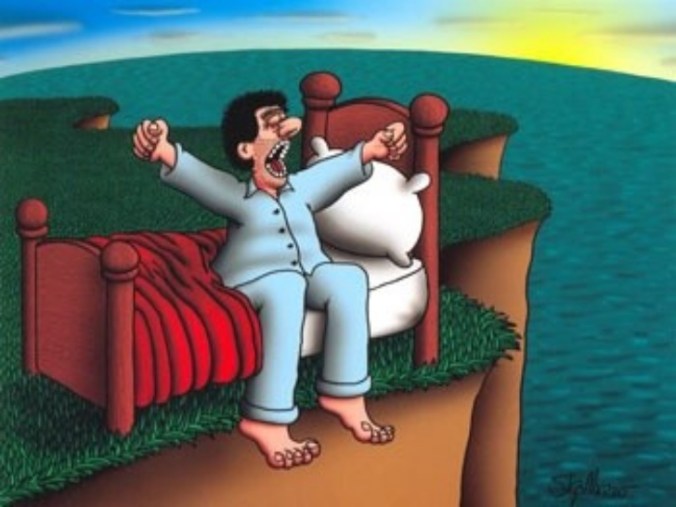
Got up on the wrong side of the bed today..
…and trying to recover.
1. Finally! The Ultimate Trump Derangement Home Test! This is wonderful, and we owe a debt to CNN for making this available. NeverTrump neocon Max Boot, who has been a “rseistance” ally since the 2016 election and who also writes op-eds for the Washington Post, presented this hilarious—but don’t tell anyone you are using the to test hilarious—visual aid to his recent Post screed:
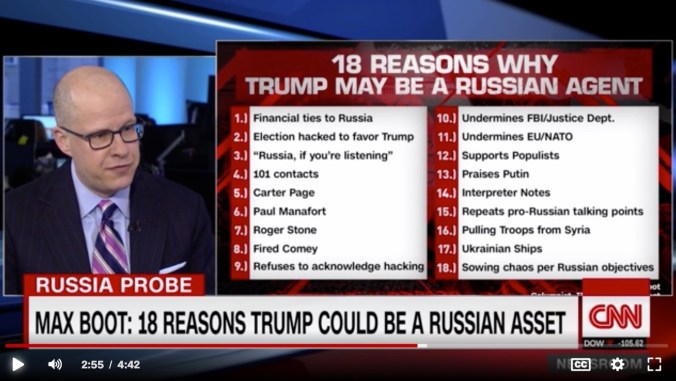
Isn’t that great? I initially thought it was a Saturday Night Live parody, but how could that be, when SNL is all Trump Derangement All The Time itself? All you have to do is show this to a suspected TDS sufferer, and wait for the response. Hearty laughter followed by something along the lines of,” Wow! I didn’t think even CNN would stoop this low, but there it is!”, and you know your friend or family member has escaped the jaws of madness. If the subject’s reaction is to point and shout, “See! See! I told you the election was rigged!”, then it’s time for cold compresses and a 911 call.
Once again, I miss the fevered passion of the self-exiled Trump Deranged commenters on Ethics Alarms, to see exactly how far gone they are, if they are. Hilarity was bound to ensue.
I was tempted to do a whole post showing how every one of Boot’s “reasons” are strained circumstantial evidence at best or utter nonsense at worst, but two words, “confirmation bias,” pretty much covers it, along with a third, “desperation.” Meanwhile, just as self-amusement, I’m working on the list of reasons why Max Boot might be a Russian agent. So far I have Dilbert’s Scott Adams’ observation that while the pitiful Russian fake news on social media couldn’t divide the country, hysterical anti-Trump conspiracy theorists are doing a good job serving Russian interests by undermining the Presidency; Max’s “Boot” code name, which evokes George Orwell’s’ famous metaphor for Communist totalitarianism; and that Curly Howard hair cut, the choice of international anti-democracy villains in James Bond films, “The Man From U.N.C.L.E,” TV’s “The Black List” and everything in between.
That’s only three, though. Suggestions welcome.
2. Is this good news or bad news? “Family Guy,” Seth McFarland’s nastier, cheaper, uglier rip-off of “The Simpsons,” has announced that it will be “phasing out” homophobic jokes. It’s certainly good news if this includes the disgusting and unfunny running gag about the old man next door to “The Family Guy” who has sexual designs on Peter’s idiot son, I guess. The problem is that the only feature of “The Family Guy” that made its intentionally tasteless and offensive humor excusable was that the show was cruel and unfair to everyone, pretty much equally. If the show is now bowing to victim-group pressure, how long will it be before its only targets are white men, conservatives, Fox News and Donald Trump?
If McFarland and the show are now afraid of being politically incorrect when political incorrectness is a career death sentence for everyone else, then it should just kill the show, rather than wander the airwaves hollowed out and submissive like the brainwashed Winston Smith at the end of “1984.”
Oh-oh. Second Orwell reference already today… Continue reading
Monday Morning Ethics Warm-Up, 1/14/2019: Bad Leadership, Bad Punditry, Bad Journalism…Looking For Silver Linings And Failing Miserably
Good Morning!
The news is ugly, but the snow is beautiful.
1. Who’s really to blame for the shutdown? A weak and feckless GOP Speaker was the culprit, the wishy-washy, onflicted and above-it-all Paul Ryan.He had a Republican majority in the House, and lacked the leadership, resolve and political skills to take care of the border issue when the opportunity was there. Is there any doubt that Nancy Pelosi, Tip O’Neil or Newt Gingrich couldn’t have gotten the job done?
We were constantly told that Ryan was a reluctant Speaker. Reluctant leaders are almost never effective leaders; leaders want to lead and like to lead, and it is unethical to assume the role of a leader when you don’t have the spine or the skills to do the job.
2. Stop making Ann Althouse defend Donald Trump! Ann, with assists from Seth Barrett Tilman and Glenn Reynolds, does a nice job debunking writer John McWhorter’s cheap shot criticism of the President in his “Trump’s Typos Reveal His Lack of Fitness for the Presidency/They suggest not just inadequate manners or polish, but inadequate thought.”
He wrote,
“The president of the United States has many faults, but let’s not ignore this one: He cannot write sentences. If a tree falls in a forrest and no one is there to hear it … wait: Pretty much all of you noticed that mistake, right? Yet Wednesday morning, the president did not; he released a tweet referring to ‘forrest fires’ twice, as if these fires were set by Mr. Gump. Trump’s serial misuse of public language is one of many shortcomings that betray his lack of fitness for the presidency. Trump’s writing suggests not just inadequate manners or polish—not all of us need be dainty—but inadequate thought. Nearly every time he puts thumb to keypad, he exposes that he has never progressed beyond the mentality of the precollegiate, trash-talking teen.”
My contribution: Continue reading
Ethics Hero: George Washington University Law Professor Jonathan Turley
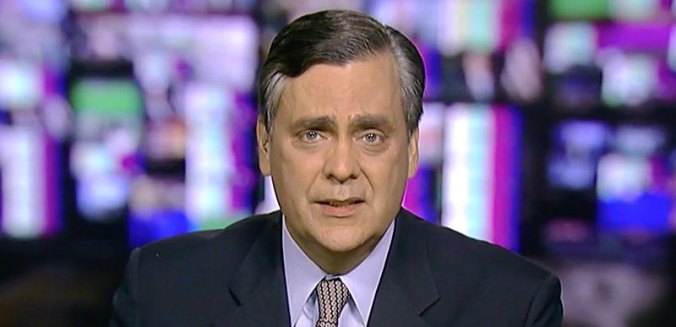
I almost included this in yesterday’s ethics warm-up, but realized that the point was too important not to have the focus of an entire post.
During the Post 2016 Election Ethics Train Wreck that threatens the stability of the United States and its future as a functioning democracy, Prof. Turley has been one of the select few to meet the qualifications laid out by Rudyard Kipling in my late father’s favorite poem “If.” He has managed to keep his head while all about him, especially in academia, his realm, but also most professionals, have been losing theirs, mostly in response to crushing peer pressure, unsupported conventional wisdom, and partisan bias.
It’s remarkable how much easier it is to analyze complex problems accurately when one can maintain sufficient objectivity and remove, and can overcome bias and resist the lure of rationalizations. In The Hill, Turley demonstrates the benefits of his integrity with a sharp and accurate post—it happens to be consistent with my own conclusions of more than a year’s duration, but I don’t have to hang out in a faculty lounge—explaining the dynamics of the unprecedented efforts by the FBI and the Justice Department to undermine the Trump Presidency before it even began.
Turley’s article begins by mentioning the New York Times “bombshell” about the FBI launching an investigation of whether the President of the United States was a Russian asset…
However, the real benefit of the investigative story may not be the original suspicion, but rather how it could explain the course that both sides have taken into our current quagmire. What if there were no collusion or conspiracy but simple cognitive bias on both sides, where the actions of one seemed to confirm precisely the suspicions of the other?
Let me focus the professor’s words here. There are all kinds of cognitive bias, and several may be at work. However, the main one is clearly confirmation bias, the human tendency to interpret information in ways that confirm what we believe already. Continue reading

