Just took a post-seminar nap—one of the bennies of a hime business– counted philosophers jumping over a fence, and now I’m awake and ready to rumble…
1. Wow. The quality of posts on this morning’s Open Forum is off the charts. Now my self-esteem is crushed , since it’s obvious that I’m keep the group back with my mundane commentary. If you haven’t dropped in on the colloquy yet, I recommend it highly.
2. This is why we can’t have nice things, and will have fewer and fewer of them as time goes on…Related to a thread in the Open Forum, about a controversy over the way artificial intelligence screens job applicants is this news from a week ago. Google announced that it was dissolving a newly established panel. called the Advanced Technology External Advisory Council (ATEAC). which was founded to guide “responsible development of AI” at the tech giant (colossus/ behemoth/monster). The group was to have eight members and meet four times over the course of 2019 to consider issues and recommendation regarding Google’s AI program. The idea was to have an intellectually and ideologically diverse group to avoid “group think” and narrow perspectives.
I know something about such enterprises. I once had the job of running independent scholarly research within the U.S. Chamber of Commerce on contentious policy matters. My methodology was to invite experts from all sides of the issue, the political divide, and spectrum of professions and occupations. The method worked. Oh, we had arguments, minority reports, everything you might expect, but the committee meeting were civil, stimulating and often surprising. This, of course, requires an open mind and mutual respect from all involved. Continue reading →
Baltimore Orioles first baseman Chris Davis is making baseball history, and not in a good way. Once a fearsome slugger—Davis led the American League with 53 home runs in 2013, and hit 38 as recently as 2016—he has lost whatever it is that allows a baseball player to hit a ball thrown at him at up to 100 mph. Last season, at the advanced baseball age of 32 when most players, not all, but most, begin to decline, Davis fell off the metaphorical cliff.
His batting average was .168, the worst in major league history for a regular, with a horrible .539 OPS (On base percentage plus slugging percentage), and a -2.5 WAR, meaning that the Orioles would have won 2.5 more games with a borderline major leaguer from the minors playing in his place. There were no injuries or other explanations for Davis’s sudden morph into an automatic out, and sometimes, not always, but sometimes, players bounce back a little bit after such a so-called “collapse” season.
It’s becoming increasingly clear that this won’t happen in Davis’s case. So far in 2019, Davis is 0-for-23 with 13 strikeouts this season and is hitless in 44 at-bats since last September 14. That’s within two outs of the record for consecutive hitless at-bats by a non-pitcher.
Want to know why baseball’s free agents over the age of 30 didn’t get the big long term contracts they expected this off-season? Look no further than the Orioles’ predicament with Davis. They had to pay him 23 million dollars to be the worst player in baseball last season, when Baltimore lost 118 games. They are on the hook for the same amount this year, and three more seasons after that.Continue reading →
1. Are fake media stereotypes ethical if they are benign stereotypes? When my son was a young child, I watched a lot of children’s programming, and immediately noticed that almost every show had a computer nerd, tech genius character, and that character was almost invariably black. I get it: the idea was to fight pernicious stereotypes with opposite stereotypes, but neither stereotype was accurate. (Lots of prime time movies and TV shows for adults also perpetuated the black tech genius trope, like “Die Hard,” “Star Trek: The Next Generation,” and many others.)
Now Madison Avenue or their corporate clients apparently want American to believe that inter-racial marriage is the norm. I literally could not care less who people marry, but I just sat through four TV ads in a row featuring black and white couples. I failed at my admittedly limited attempt to find out what current percentage of American married couples are bi-racial, but the last study, which is nine years old, found that less than 9% of married couples consisted of a white and an African American spouse. That’s great, but the popular culture should be reflecting society, not using its power to manipulate it according to its own agenda.
Funny, I’ve been told that obesity has become a serious public health problem in the U.S. Fat-shaming is wrong—the Woke still constantly insult the President by calling him fat, and that babe in the photo makes him look like Chris Sale—but fat glorification is irresponsible. But hey, what’s consistency when the idea is to virtue-signal like crazy? “[We’re]committed to representing beautiful women of all shapes, sizes, and skin types because ALL types of beautiful skin deserve to be shown. We love Anna because she lives out loud and loves her skin no matter how the “rules” say she should display” says Gillette. Continue reading →
At a Palo Alto Starbucks this week, a man wearing a red Make America Great Again cap, minding his own business, was confronted by a furious Rebecca Parker Mankey, an appointed member of Palo Alto’s North Ventura Coordinated Area Plan Working Group and co-chairs the Bayshore Progressive Democrats.
She began shouting that he was a”hater of brown people” and “Nazi scum,” and exhorted the other Starbucks customers and employees to join her in shaming him, . Mankey later said she was “heartbroken” that other “white people”—like her target— didn’t join her assault. “I called him more names and told him to call the police. Then I yelled and asked someone else at Starbucks to call the police. He wouldn’t call the police, so I called him a wimp. He got his stuff together to leave. I followed him to the register while he complained about me. Then chased him out of Starbucks yelling at him to get the fuck out of my town and never come back,” she wrote. One he was in the parking lot, she threatening to post pictures of him on social media—which she did—along with her version of the incident. She asked the public for help finding him so she could make sure he was harassed, saying, “I want him to have nowhere to hide.” Continue reading →
1. On the down side, “The Smollett Report” Explain this one: Attorneys for “Empire” actor Jussie Smollett announced today that all charges against him have been dropped.Smollett was indicted on 16 felony counts related to making a false report that he was attacked by two men. The two men were found and implicated Smollett, and the evidence that it was hoax appeared overwhelming. A minimum condition of dropping cases requires some acceptance of responsibility, but the actor still professes that he’s innocent. “I’ve been truthful and consistent on every single level since day one,” he said.
What’s going on here? I have no idea, but the word “Chicago” keeps popping up in my head.”
“You take the baton, you run your best race, and hopefully, by the time you hand it off, you’re a little further ahead. You made a little progress. I want to make sure that hand-off is well executed because, ultimately, we’re all on the same team….
Everybody is sad when their side loses an election, but the day after, we have to remember that we’re actually all on one team. This is an intramural scrimmage. We’re not Democrats first. We’re not Republicans first. We are Americans first.
This was a long and hard-fought campaign. A lot of our fellow Americans are exultant today. A lot of Americans are less so, but that’s the nature of campaigns. That’s the nature of democracy. It is hard and sometimes contentious and noisy. It’s not always inspiring.”
“Sometimes you lose an argument. Sometimes you lose an election. We try really hard to persuade people that we’re right, and then people vote, and then we lose. We learn from our mistakes. We do some reflection. We lick our wounds. We brush ourselves off. We get back in the arena. We go at it. We try even harder the next time.”
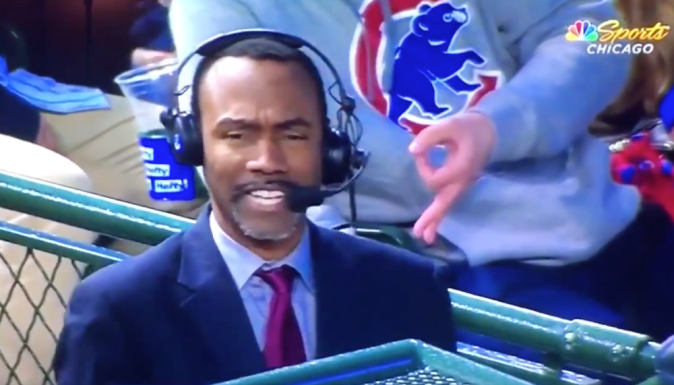
3. Psst! San Antonio! This is unconstitutional! The San Antonio City Council rejected Chick-fil-A ‘s application for a site at its airport this week because the company’s foundation has contributed to organizations that oppose same-sex marriage
Councilman Robert Treviño told the news media that the council made the decision based on “inclusivity.”
“With this decision, the City Council reaffirmed the work our city has done to become a champion of equality and inclusion. San Antonio is a city full of compassion, and we do not have room in our public facilities for a business with a legacy of anti-LGBTQ behavior. Everyone has a place here and everyone should feel welcome when they walk through our airport.”
Have these fools and censors even read the Bill of Rights? A government can’t penalize a business because it doesn’t like the opinions of its owner or management. This is viewpoint discrimination, and a screamingly obvious First Amendment violation. As Chick-fil-A accurately pointed out in its response, no one has ever been refused service or treated differently in one of the company’s restaurants because of race, gender, ethnicity, sexual orientation or gender identity. That’s their LGBTQ “behavior,” not their entirely legal and protected choice of charities and non profits.
Once again from the Democratic Party and the Left we whiff the rotten stench of nascent totalitarianism. Believe as we do, or be punished. This is the same company several Democratic mayors said were not welcome in their cities. Once again, this unconstitutional and undemocratic act by San Antonio’s Democrats is assured of a reversal by the Supreme Court, and if Justice Ginsberg still has most of her marbles and Sotomayor isn’t chasing rainbows and unicorns, it ought to be a 9-0 vote.
Local government actions like this ought to concern followers of both parties equally. The First Amendment should not be a partisan issue. Continue reading →
Yes, Dorchester is a community dominated by exactly the people you think it is. The ad says to the public, “If you bank with us, we know you’re white, and if you get robbed, we both know the thief is black.”
Nice.
Social media was on this like a shot, and TD Bank apologized, saying
“We are sorry that an ad that appeared in one of our stores was insensitive to the Dorchester community.The ad, which was removed today, does not reflect our core values around diversity and inclusion.”
This is a lie, and an obvious one. If the bank really had such core values, someone at the bank who saw the ad in production would have said, “Wait, are you out of your mind? We’re insulting Dorchester with this, and the message implies that our customers are likely to be robbed by blacks!”
What made it worse for the bank is that Samsung got burned in Boston just two years ago by trying an almost identical ad, which was also condemned as racist.
Yes, Mattapan has demographics similar to Dorchester.
Time for “Singin’ in the Rain” again, when I’m in this kind of mood…It helps.
Fridays have been discouraging of late. The already diminished traffic here, which always slowed to a crawl on Saturdays, is now almost as weak on Fridays and Sundays too. I have no idea why this is, but it gets old devoting two to four hours a day on weekends producing blog content that I think is worthy of readers’ time and thought while knowing that it will be largely ignored. Of course, running a home ethics business, weekends have meant nothing for many years, holidays as well, and I don’t know what this “vacation” thing is that my friends keep blathering about. To be clear, I love doing what I do, or I wouldn’t do it. I just wish I were more effective at persuading others to care about the topic of ethics as much as I do.
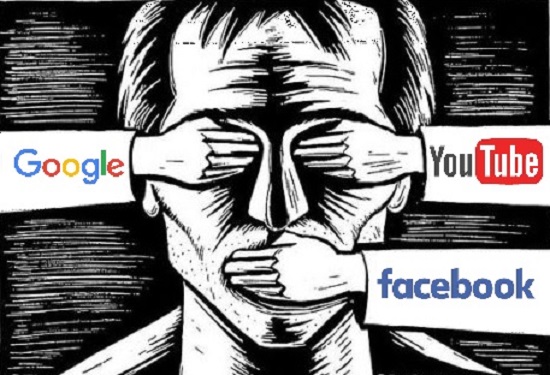
1. How to beat Facebook! I tried something this morning: I posted an essay without including a photo, and tried to post it on Facebook. It took! No error message! Then I added a photo after the link was on Facebook. The link still worked! I’m going to see if this was just a fluke or not, and I’m going to post a few things without graphics or videos to see if readers have the same luck posting and sharing them. If the photos being removed actually does get around whatever it is causing Ethics Alarms to be unsharable on Facebook, then I’ll have a decision to make. Obviously the photos and videos enhance the posts, and are sometimes essential. Is it worth the trade-off to stop using graphics if it allows more circulation on social media? My choices are…
Refuse to compromise the integrity of the blog to satisfy Facebook. (You know this is my default reaction.)
Leave photos off posts until I’ve put them on my Facebook page. This will allow people to access Ethics Alarms using that link.
Leave photos and videos off all posts.
Leave photos and videos off selected posts that I think are likely to be shared.
All of these, of course, assume that I continue to investigate and try to find out why Facebook won’t accept Ethics Alarms posts as they are.
2. You don’t get business from an ethics company by lying in your introductory pitch. Just got an email beginning thusly…
We would like to share our observations pertaining to your website. Though, your website is great and has all the information that prospective customers of your niche will search for. However, it has a lot of scope for getting optimized in line with Search Engine Guidelines so as to come on the first page in search results. We have conducted a meticulous SEO audit of your website and found that it can give you more return than it might be giving you at present.
Right. It is obvious that you have NOT read this website, because if you had you would know that it is not seeking “potential customers” (though my other website is) and that you currently have no clue about Ethics Alarms, its scope or its “niche.” This is a form letter, pretending, and badly, not to be. If you are this incompetent in your own marketing, why would I trust you to advise me regarding mine?
Go away. I hate you.
3. Watch “Network” again, if you haven’t lately. TCM has been running movies about journalism on Thursdays this month. Why do I suspect the network was lobbied to do this as CNN et al. try to make the false case that journalists are noble, ethical, devoted and trustworthy as a public defense against President Trump’s attacks on “fake news” and the “enemies of the people”? Well, most of the journalists portrayed in movies are like that. One reason I question the motives of the series is that it left “Absence of Malice” out, one of the very few negative (and accurate) Hollywood portrayals of journalists.
TCM could not credibly neglect to show “Network, ” however, Paddy Chayefsky’s wild satire of TV news that was a runner-up to “Rocky” as Best Picture at the 1977 Academy Awards, and is now on Broadway in a stage adaptation. (I agreed with that award then and do still: “Network”is intellectual and satiric, “Rocky” is visceral and emotional, they are both classics, but if they are both showing at the same time, I’m choosing “Rocky,” which makes me feel good, over Network, which makes me want to jump into the blender.) Watching it all the way through for the first time in many years, I realized that the film should be required viewing for all American citizens. What seemed hilariously cynical and over-the-top 40 years ago seems depressingly prophetic now.
The film (Screenwriter Paddy Chayefsky was the sharpest and most flamboyant of the great quartet of Golden Age TV writers; Rod Serling, Reginald Rose and Abby Mann were the others) portrays a TV network culture that is amoral and ruthless, willing to breach ethics, taste and decency, not to mention journalism ethics, to pursue ratings, dollars, and power. I don’t know if he was making a prediction, warning us, or just trying to be entertaining, but by brilliance or chance, Chayefsky was giving society a preview of what would constitute “news” in 2019. The result is that what was funny in 1977 is horrifying now.
The TV shows “UBS” puts on the air all have direct avatars today in reality shows and other genres that didn’t exist pre-cable. The veteran newscaster-gone-nuts whose live rants become a sensation, Howard Beale, the Mad Prophet of the Airwaves, no longer seems like an outrageous invetion. We have seen many “mad prophets” in alleged newscasts since “Network.” Glenn Beck may have been the closest to Beale, but Bill O’Reilly was in the ballpark, and Don Lemon, Chris Cuomo and a raft of MSNBC talking heads routinely say things at least as outrageous as Howard, before he would suffer a seizure in his passion and collapse at the end of every broadcast.
Moreover, the iconic moment in the film where Beale spurs people all over America to run to their windows, open them, and shout, “I’m mad as hell, and I’m not going to take it any more!” is another excellent metaphor for the 2016 election (though I like teh parade in “Animal House” best). The network executives are the personification of the smug, arrogant “elites” who were (and are) so, so confident that they knew what was best for the public, while they lied, manipulated, postured and profited. Donald Trump was elected less as an individual than as the physical manifestation of shouting out the window, and it was a symbolic and necessary message that the two parties and the news media still haven’t received.
I am proud of Americans for sending it, and the unethical alliance of elites who refuse to understand are playing with dynamite.
Ethics Alarms is blessed with several commenters with specific expertise in areas that arise here often. Alexander Cheezem is our authority on autism and the various misconceptions and unethical practices surrounding it, and he contributed valuable perspective on why Amazon was under pressure to stop offering two books about the topic. I carelessly assumed that the problem was the further circulation of the dangerous myth that vaccinations cause autism, since that is the autism-related issue we hear about most often from the media. There’s a lot more to autism misinformation than that, and Alexander graciously enlightens us.
As he acknowledges, the thrust of the post is not dependent on why the two books have been pulled The remedy to bad information is good information, not censorship–like the useful information in Alexander Cheezem’s Comment of the Day on the post, “Tales Of The Slippery Slope: Amazon And Censorship”:
Okay. I’m actually quite familiar with one of the books in question — I even spent about five years dealing (over and over and over again) with its author and her brand of bullshit (yes, that’s actually the technical term)… and I have to say that your analysis is flat-out wrong on one major point and significantly off in another respect.
Of course, whether that impacts the rest of the analysis is another matter.
The major problem with your analysis is that what sets those books apart is not that they’re anti-vaccine… but don’t take my word for it. As I write this, I’m paging through my first-edition copy of Rivera’s Healing the Symptoms Known as Autism (my second-edition copy is somewhere), so I’ll use it to illustrate. Let me give you just a small sample of what the book actually contains.
The thing is essentially a protocol book, dedicated to “teaching” parents a complicated pseudoscientific and ritualistic protocol centered around having the parents feed industrial bleach (chlorine dioxide) to their children, bathe their children in a solution of industrial bleach, and give their children bleach enemas. Continue reading →
“Unethical, sketchy, and uncomfortable behavior among Herndon officials are some of the main reasons behind the push to strengthen the code. The councilmembers shared stories of unnamed former town officials who publicly berated staff, grabbed a staffer in a sexual manner, and solicited jobs from other elected officials in the performance of their official duties.”
Herndon, Virginia, isn’t too far from where I live.
The problem the article encompasses is as old as the hills. Simply passing laws, or regulations, or rules prohibiting wrongful conduct doesn’t do anything to make the people subject to these laws, regulations and rules better human beings. It simply tells them that there are specific consequences to their bad conduct. Maybe that will discourage them, and maybe it won’t. After all, they have to be caught first.
The conduct described in the quote is unethical, and anyone with functioning ethics alarms knows its unethical. Abusing subordinates? Sexual assault and harassment? Using official duties to barter for career advancement? If an official knows this conduct and others equally blatant are wrong, then they don’t need a code. If they don’t know they are wrong, no code is going to help them, and individuals that ethically clueless shouldn’t be government officials.
That doesn’t mean that codes of conduct aren’t essential tools of creating an ethical culture in a local government or tree house clubs. They are, but they are just a starting point, putting in place external standards that have to be internalized, which is to say that they are then used to fix the settings on everyone’s ethics alarms in that culture. By themselves, codes do nothing, and they may even cause more misconduct. Unethical people who are also smart love the Compliance Dodge, from the Rationalizations List:Continue reading →
Autism “cures”, aka “Snake oil.”
Ethics Alarms is blessed with several commenters with specific expertise in areas that arise here often. Alexander Cheezem is our authority on autism and the various misconceptions and unethical practices surrounding it, and he contributed valuable perspective on why Amazon was under pressure to stop offering two books about the topic. I carelessly assumed that the problem was the further circulation of the dangerous myth that vaccinations cause autism, since that is the autism-related issue we hear about most often from the media. There’s a lot more to autism misinformation than that, and Alexander graciously enlightens us.
As he acknowledges, the thrust of the post is not dependent on why the two books have been pulled The remedy to bad information is good information, not censorship–like the useful information in Alexander Cheezem’s Comment of the Day on the post, “Tales Of The Slippery Slope: Amazon And Censorship”: