End of A Horrible Week Ethics Warm-Up, 12/6/2019…

Ho Ho Ho Crap!

1. “Radical? What radical?” Stanford law professor Pam Karlan, who stood out as a neon beacon highlighting 2019 Democratic Party extremism when she turned her House testimony on impeachment into an unhinged, Trump-hate rant including a cheeap shot at Barron Trump’s name, was apparently too radical for Barack Obama, says Legal Insurrection. He appointed far more moderate Solicitor General Elena Kagan to the Supreme Court, despite Democrats then being in control of both Houses.

“Fast forward to 2019, and this radical Obama SCOTUS reject is a star witness for the Democrat impeachment circus,” the blog notes. “It’s surreal how completely the Democrats have removed themselves from any semblance of rational thought when it comes to their impeachment obsession.”

If we regard the public as the jury and the House Democrats as prosecutors, how can one explain putting such an angry, ugly, biased and partisan fanatic on the metaphorical stand as an “expert witness”? Isn’t that gross incompetence? What’s going on here? In fact, let’s poll it. Who knows, maybe it will draw almost as much interest as the Peloton commercial poll, the second most active in Ethics Alarms history (so far). (But then there were more Google searches on “Peleton” than “impeachment” last week, so we know what American priorities are…)

2. Polls suggest that public opposition to abortion is rising again. Gee, I wonder why?

“Can you believe this?” wrote one on Facebook. “Knights of Columbus Belleville  (all men) organized this absolutely shameful act ….and also posted it on their facebook page.” Erecting a the memorial is shameful. Got it.

Well, they were just warts and parasites, so she has a point.

The National Post reported that the coordinator of a protest over the memorial stone, Elissa Robertson, accused the Catholic charity of “attacking a women’s right to choose,” saying,

“It was designed to shame people. I think it was absolutely uncalled for and that money they put into this anti-abortion monument could have done a lot of good somewhere else. It ties into patriarchal values and this idea that women’s bodies are meant to be controlled by men. It’s a broader issue that ties into violence against women, it ties into health care, it ties into safety.”

It ties into climate change! It ties into racism! It ties into tooth decay!

If one has no regrets or shame about snuffing out nascent human lives, then how does the monument shame you? The abortion argument is very difficult to win on a factual or ethical basis, but advocates have learned that “How dare you!” and “Shut up!” are very effective.

Actress Jameela Jamil certainly isn’t ashamed. She’s refreshingly honest…and scary. In a November Harper’s Bazaar interview with Gloria Steinem, she said,

“I’m very outspoken about the fact that I, similarly to you, feel very passionately about a woman’s right to choose I’m someone who’s had an abortion, and I feel like I need to make sure that we prove it’s not always just emergencies. People have abortions, sometimes a woman just wants her liberty, and we have to normalize that it’s okay just to make that choice for yourself, because your life is as important as a newborn life that doesn’t even exist yet.”

Wait, if it’s not living, then why do you have to kill it? Is it really a fair  to compare your avoiding an inconvenient responsibility or life disruption with another human being losing its life? Challenged on this, the actress responded on social media, “I SAID WHAT I FUCKING SAID and you’re clueless if you think I’m going to take it back. My life is more important to me than an unborn fetus’s one. Suck on THAT!”

Wait: I thought you said no life was involved.

This is the approximate level of thought, sensitivity and ethical analysis we hear from almost all pro-abortion activists. Basic competence and responsibility rules: if you can’t discuss a topic more articulately and thoughtfully than this, leave the issue to others. Here’s another one of Jamil’s clever arguments:
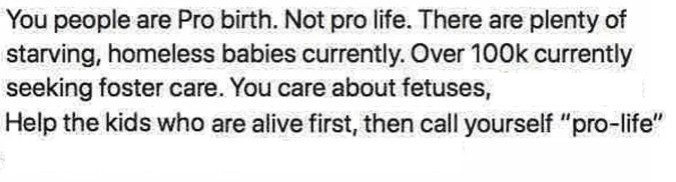
Or better yet, why not just kill them too? Continue reading →

Morning Ethics Warm-Up, 12/5/2019: Post Impeachment Hearing Meltdown Edition

Good Morning!

Somehow a picture of the so-called “unicorn puppy,” appropriately named “Narwhal,” seems appropriate today. The Democratic Party/”resistance”/mainstream media has been pushing its corrupt impeachment plot on the assumption that sufficient Trump-haters would find it cute, but as of yesterday the undemocratic motives and ugliness of the effort stood out like a tail on a puppy’s face. You can’t hide it, and lots of people will convince themselves that it’s attractive. But rationally, the damn thing has to come off.

1. On the Stanford law professor’s joke about Barron Trump’s name. Oddly, perhaps the most harmless part of the otherwise embarrassing testimony of Stanford constitutional law professor Pamela S. Karlan yesterday became the most controversial. “While the president can name his son Barron, he can’t make him a baron,” she said.

HAHAHAHAHA! Good one, professor! Gratuitous and completely irrelevant to the issues at hand,  but hey, anything to throw fish to the seals! Based on the outrage around the conservative media, most of which only referenced this knee-slapper without quoting it, I assumed that she had actually insulted the teenager.  I kept reading about how this was one more example of the double standard: using Obama’s daughters for political warfare was off limits, but now this mean professor was getting laughs from Democrats by making fun of Barron Trump. Laura Ingraham tweeted that this joke was guaranteed to turn the public against the impeachment farce for good. (I don’t think so, Laura. You should get out more.) Naturally the First Lady piled on, tweeting at the professor, “A minor child deserves privacy and should be kept out of politics. Pamela Karlan, you should be ashamed of your very angry and obviously biased public pandering, and using a child to do it.” Trump 2020 national press secretary Kayleigh McEnany went even more overboard:

“Only in the minds of crazed liberals is it funny to drag a 13-year-old child into the impeachment nonsense,” she wrote. “Pamela Karlan thought she was being clever and going for laughs, but she instead reinforced for all Americans that Democrats have no boundaries when it comes to their hatred of everything related to President Trump. Hunter Biden is supposedly off-limits according to liberals, but a 13-year-old boy is fair game. Disgusting. Every Democrat in Congress should immediately repudiate Pamela Karlan and call on her to personally apologize to the president and the first lady for mocking their son on national TV.”

Oh come ON. Continue reading →

Comment Of The Day: The Betrayal And Ultimate Triumph Of Dorothy Seymour Wills”

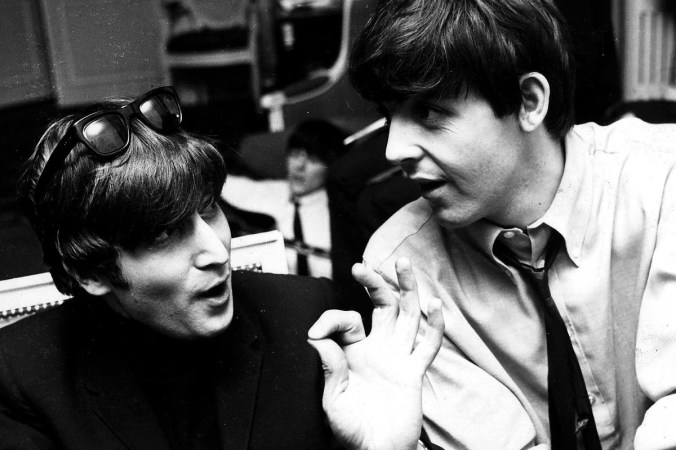
The smartest –and most ethical—thing John and Paul ever did: agreeing to share credit for every song, no matter who wrote it.

On the topic of authors being reluctant or resistant to sharing authorship credits,I wrote in a replay in a comment to the post,

I have shared the authorship credits of several stage shows where I was the initiator and the creator of 75-95% or more. There are two shows, a drama and a musical, that have made substantial money without my sharing in any of it—one because I added co-authors out of respect for their non-authorship contributions, the other for which I got no credit at all despite making the alterations that made the difference between the show being a hit and a flop. My wife thinks I’m a sap and a patsy. No, I think sharing credit liberally is the right thing to do, and that generosity should be the rule, not the exception. And I will continue to do unto others what they should have done unto me, even if the others usually don’t.

Here is a different personal perspective on the issue, in mermaidmary99’s Comment of the Day on the post, “The Betrayal And Ultimate Triumph Of Dorothy Seymour Wills”:

I was a record producer in the early 1980’s. (Still am.)

In ones early 20’s it was unheard of to be a producer unless one was in the group. To be a woman in their early 20’s was shocking to most every man who would arrive to the studio to see me in charge. They often assumed my boss was coming.

The men were always respectful and helpful as I cut my teeth in those early days.

How did I get a job like that?

The label owner, who was a studio musician and had played with The Righteous Brothers and other acts, had heard 3 songs I wrote on an album (my boss chose them and was the producer) and loved them. He asked my boss who wrote them, and he said I had. (And that I assisted on production on those too) so the owner said. “have her write and produced the next record, this stuff is amazing!”

So along with my then boyfriend, I did.

Yes, later I was a mom and asked to produce for another label. (Women producers were still unheard of) and I accepted. I asked my husband to help.

I’ll never forget his reply.

He kindly declined saying. If he did, I’d not get the credit, They’d think, “Oh, she helped her husband and probably nagged for credit.”

I was hurt because I wanted him to share in it. He explained nicely again how it wouldn’t support my Dream. And he LOVED producing too .

I’ve often felt lucky he was so supportive, and reading this I realize how very fortunate I am to have had him by my side.

I’m glad this story is being told. This woman deserves credit and I can see why men would both want her to, and not. Continue reading →

The Betrayal And Ultimate Triumph Of Dorothy Seymour Wills

There was an upsetting ethics story in the obituaries last week. It told the tale of the rank injustice perpetrated by a famous and much-honored researcher, historian and author on his collaborator, from whom he withheld  credit and recognition—because she was his wife.

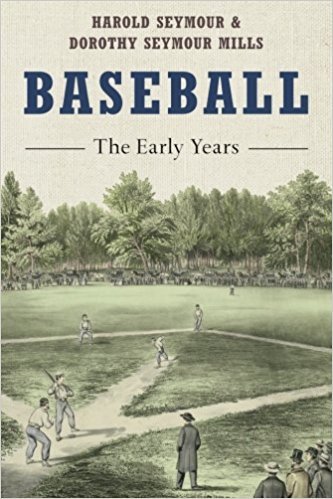
Dorothy Seymour Mills collaborated for more than 30 years on a landmark three-volume history of baseball with her first husband, Harold Seymour. Their work, originally attributed only to him,  is regarded as the first significant scholarly account of baseball’s past.  (“No one may call himself a student of baseball history without having read these indispensable works.” John Thorn in 2010, then Major League Baseball’s official historian.)

“Baseball: The Early Years” (1960), “Baseball: The Golden Age” (1971) and “Baseball: The People’s Game” (1990) all were completed with substantial and indispensable contributions by Dorothy, who, unlike her husband, was not a baseball fan. (“You write a lot more objectively about a subject you’re not in love with,” she once observed.) She was the primary researcher, organized the projects, typed the manuscripts, prepared the indexes (ugh) and edited each book before it went to the publisher. Because of her husband’s failing health, she wrote a substantial portion of “Baseball: The People’s Game.” Yet her husband adamantly refused to give her an author’s credit. Each book bore only Harold Seymour’s name, and hers was relegated to the acknowledgments.  The first book in the trilogy, “Baseball: The Early Years,” received rave reviews.  Sports Illustrated compared Seymour to Edward Gibbon, the iconic historian who wrote “The History of the Decline and Fall of the Roman Empire.” Dorothy was invisible, and her husband wanted it that way. Continue reading →

Mrs. Q’s Corner: Political Mascot


by Frances Quaempts-Miller

Towards the end of British author Douglas Murray’s latest book The Madness of Crowds is a call to find significance beyond politics:

 “One of the ways to distance ourselves from the madness of our times is to retain an interest in politics but not to rely on it as a source of meaning.  The call should be for people to simplify their lives and not mislead themselves by devoting their lives to a theory that answers no questions, makes no predictions and is easily falsifiable.  Meaning can be found in all sorts of places.  For most individuals it is found in the love of the people and places around them: in friends, family and loved ones, in culture, place and wonder.  A sense of purpose is found in working out what is meaningful in our lives and then orienting ourselves over time as closely as possible to those centres of meaning. Using ourselves up on identity politics, social justice and intersectionality is a waste of a life.”

 Murray ends his book arguing, “To assume that sex, sexuality, and skin colour mean nothing would be ridiculous.  But to assume that they mean everything will be fatal.”

 In the last year and a half my wife and I have lost six loved ones, including two grandmothers last month, only three weeks apart.  Between us we have lost three grandparents, a cousin, an aunt, and my father. Ours has been a house of grieving that has prompted both of us to re-examine what has brought us a sense of purpose and what we need to focus our energies on in the future.  After spending not just years but decades fighting for equality, it has become clear, with so much death, that such supposed noble efforts have only rendered a more broken heart in a more broken world. 

 At the age of fourteen I went to my first protest to express concern for the United States involvement in El Salvador.  At the time, I didn’t really know what our country was doing wrong but I did know that the exhilaration of marching in the middle of the street, after the police told us through their bullhorns not to, while yelling various slogans repeatedly, was intoxicating.  All my frustration with whatever complications life had thrown my way dissolved instantly.  Suddenly I was a part of something bigger than myself while believing my actions and those of the other protesters were on “the right side of history” (see 1B. The Psychic Historian on the list of Unethical Rationalizations and Misconceptions). For a somewhat shy teenager, I was instantly transformed by that march into a powerful person.  Continue reading →

Post Thanksgiving Ethics Hangover,11/29/2019: The Toilet Bowl, Mr. Peanut, And Other Embarrassments

This is always one of the strangest days of the year.

Especially strange for me: I keeled over right at the start of Thanksgiving dinner for no discernible reason. One minute I was sipping a beer and feeling oddly light-headed, and the next my son was lifting me off the floor. It must have been spectacular, because it scared the hell out of everyone but my son’s girlfriend, who assumed I was staging a gag. (She got to know me fast…) I’m sorry I missed the excitement.

Today I’ve been feeling out of it, but I can’t tell whether the cause is the fainting spell, L-Tryptophan, or something else (it has been a rough week). My wife has been following me around like a bloodhound, expecting me to go down for the count.

I’ll be seeing my doctor first thing Monday. But enough about me:

1. Tit for Tat. Three women,  Jana Solis, Natalie Sept and Nicole Vogel, accused Gordon D. Sondland, the United States ambassador to the European Union, of making unwanted sexual advances toward them years ago, right after he testified as a star witness at the impeachment proceedings against President Trump. Sondland appeared before Congress and gave what was  viewed by many as damaging testimony about the President’s dealings with Ukraine and the alleged “quid pro quo.”  The timing of the accusations is suspicious, and the Left has no one to blame but itself as its weaponized “believe all women” nonsense circles around like the deadly torpedo in “The Hunt for the Red October.” This was begun by Anita Hill, escalated by Cristina Blasey Ford, and soon such convenient accusations will have no power whatsoever.

Good.

2.Please remember: Hillary Cinton is (at least) as rotten a human being as Donald Trump, just a different kind of rotten human being. Journalist Ronan Farrow told the Financial Times  that Hillary Clinton cut him off him when she discovered he was investigating sexual assault allegations against Hollywood mogul Harvey  Weinstein. Weinstein donated tens of thousands of dollars to groups supporting Clinton’s candidacy during the 2016 presidential campaign, according to Federal Election Committee data.

Though Clinton had appointed Farrow as her special adviser on global youth issues in 2011 when she was Secretary of State and he had worked with Clinton “for years,” she quickly distanced herself from him and cancelled an interview after she learned that he  was looking into Weinstein’s harassment and sexual abuse.

“It’s remarkable how quickly even people with a long relationship with you will turn if you threaten the centers of power or the sources of funding around them,” Farrow said. “Ultimately, there are a lot of people out there who operate in that way. They’re beholden to powerful interests and if you go up against those interests, you become radioactive very quickly.”

It’s not remarkable. What’s remarkable is that so many women still get misty over the fact that this cynical hypocrite who pretended to be a feminist champion while allying herself with people like Bill Clinton and Harvey Weinstein was deservedly defeated in the 2016 election. Continue reading →

It Is With Great Reluctance That Ethics Alarms Concludes That As Generally Repugnant And Vulgar The Term “Asshole” Is, Mayor Pete Buttigieg Is One.

If this was just disgraceful pandering, grandstanding, and shameless virtue-signaling, he would only  have proven himself to be a jerk—a big jerk, to be sure,  but still just a jerk. But it is far more.

The new fad contender for the Democratic Presidential nomination is returning thousands of dollars in donations because they came from two lawyers who had the audacity to represent Supreme Court nominee Brett Kavanaugh as he attempted to defend himself against the contrived  ambush accusation of a sex crime, made in a Congressional hearing  on national television, a ploy designed to destroy his reputation. Buttigieg’s campaign said that it will not accept funds from people who helped secure the justice’s seat on the Supreme Court. You know. Dirty money.

Buttigieg’s campaign had received $7,200 from Alexandra Walsh, and $2,800 from Beth Wilkinson, Walsh’s law partner. Both represented Kavanaugh during his Senate confirmation ordeal. As I have vowed to point out every time some ignoramus asserts that lawyesr must be punished for the character, conduct or beliefs of the clients they represent and are responsible or culpable in any way for what those clients have said or done (or NOT done), it is a core and essential principle of our legal system that such an assumption is not only wrong but dangerous. It threatens the right of every citizen to receive competent legal representation and access to our laws and other rights.

Here, once again, is my favorite ethics rule, from the ABA Model Rules of Professional Conduct:

(b) A lawyer’s representation of a client, including representation by appointment, does not constitute an endorsement of the client’s political, economic, social or moral views or activities.

Whether the target is Hillary Clinton, Ted Cruz, Elizabeth Warren, Harvey Weinstein’s defense attorneys (also here), Larry Tribe, Gitmo defense lawyers, or Clarence Darrow, Johnny Cochran, Leslie Abramson and other defense lawyers who defend murderers and worse, the false claim that lawyers who take on unpopular, repulsive or guilty clients have done anything less than protected  the Bill of Rights and the rule of law is either rank ignorance or a deliberate effort to reduce the civic literacy of the public.

Buttigieg isn’t a lawyer, but he is very well educated and has a reasonable claim to brilliance.  Thus he knows and understands what lawyers do, but is acting as if he does not, intentionally making the public stupid (or keeping it conveniently as stupid as it already is ) for his own benefit.

Despicable.

But that’s not all. Continue reading →

The Forgotten Ethics Hero: William Ruckelshaus (1932-2019)

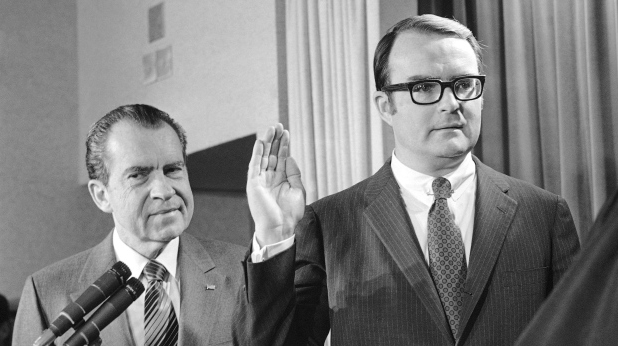
I’m supposed to be student of American Presidential history, and even I had virtually forgotten about William Ruckelshaus, who just died. It was Ruckelshaus who, along with Attorney General Elliot L. Richardson,  rejected Ethics Rationalization #15, The Futility Illusion or  “If I don’t do it, somebody else will” when the United States of America needed a hero, and got two.

His moment of courage arrived on an October night in 1973 destined to be known in the annals of American history as  the “Saturday Night Massacre.” Ruckelshaus was then Assistant Attorney General, and President Richard Nixon, was panicked that the ongoing investigation by Special Watergate prosecutor Archibald Cox was closing in on his blatant obstruction of justice. A White House-triggered burglary of the Democratic National Committee’s offices at the now-famous Foggy Bottom condo complex and hotel in Washington, D.C., seemed about to bring Nixon down, so Nixon resolved to have cripple the investigation by having Cox removed.  Ruckelshaus was the second of three officials the beleaguered POTUS ordered to fire the Harvard law professor. For some reason Nixon thought this might relieve him from having to produce the  nine incriminating Oval Office tape recordings that Cox had subpoenaed.

Ruckelshaus, under Nixon the first head of the new Environmental Protection Agency,  had been named acting head of the FBI in April of 1973, replacing L. Patrick Gray III. He was soon named the top deputy to Attorney General Elliot L. Richardson. When Nixon ordered the mild-mannered Richardson to fire Cox that fateful night, Richardson shocked Nixon by refusing, and resigning immediately. That made Ruckelshaus the Acting Attorney General, and he was suddenly on the hot seat, tasked with carrying out Nixon’s legally and ethically questionable orders.

Cox had been guaranteed complete independence by Nixon and Attorney General Richardson during the prosecutor’s Senate confirmation hearings in May of 1972.  Congress directed that he could be  be removed only for “gross malfeasance” in office, and by October 20, 1973, there had been none. “I thought what the president was doing was fundamentally wrong,” Ruckelshaus said  later. “I was convinced that Cox had only been doing what he had the authority to do; what was really of concern to the President and the White House was that he was too close. He hadn’t engaged in any extraordinary improprieties, quite the contrary.” Continue reading →

Remembering John Simon (1925-2019 ): The Day The Meanest Critic Alive Made Me Happy

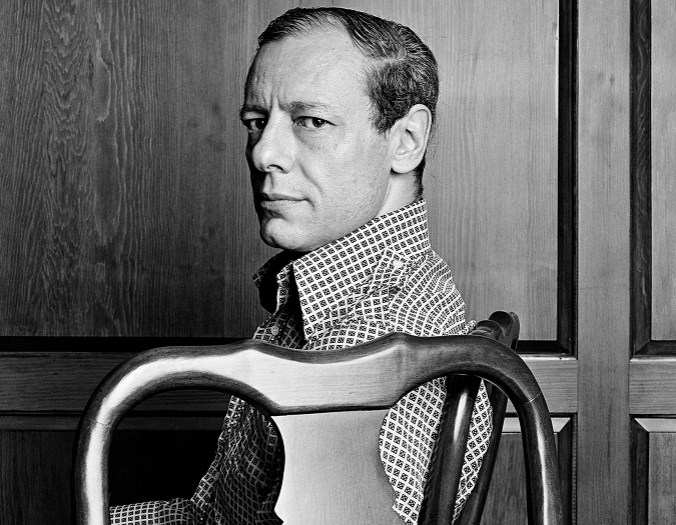
John Simon, who died three days ago at the age of 94, was known as a merciless, even cruel cultural critic.  From the Times obituary:

John Simon [was]one of the nation’s most erudite, vitriolic and vilified culture critics, who illuminated and savaged a remarkable range of plays, films, literature and art works and their creators for more than a half-century…In an era of vast cultural changes, Mr. Simon marshaled wide learning, insights and acid wit for largely negative reviews and essays that appeared in New York magazine for nearly 37 years…In a style that danced with literary allusions and arch rhetoric…he produced thousands of critiques and a dozen books…While English was not his native language, he also wrote incisive essays on American usage, notably in the 1980 book “Paradigms Lost: Reflections on Literacy and Its Decline.”

I met him exactly once (and we later had an online exchange), but in that single encounter he said something that meant a great deal to me, and that I will never forget.

As a drama critic, Simon made Frank Rich seem like an old softy. I don’t care for his kind of critiques, applying rarefied personal standards so divorced from the average audience member that they give no guidance at all. Simon was fun to read if you had no stake in the play or movie he was trashing, but those who worked full-time in show business generally hated him, and it is no wonder.  In one compilation of his reviews, “Reverse Angle: A Decade of American Films” (1982), he was positive about just 15 of the 245 films he discussed.  William F. Buckley .quipped that Simon “reviewed movies in the same sense that pigeons review statues.”

He was accused of being racist, misogynist, homophobic or grossly insensitive,  denied being any of those things, and argued that no person or group was above criticism, especially those who, in his view, lacked talent and covered themselves in mantles of race, ethnicity, gender or sexual identity and used them to claim preferential treatment in the marketplaces of culture. But some of his quotes resonate with me:

  • “I do not like uniforms. I do not like people who are a professional this, that or the other. Professional writers, actors and singers are O.K., but I don’t like professional Jews, professional homosexuals, professional blacks, professional feminists, professional patriots. I don’t like people abdicating their identity to become part of some group, and then becoming obsessed with this and making capital of it.”
  • “My greatest obligation is to what, correctly or incorrectly, I perceive as the truth. Kästner says, in essence, ‘All right, the world is full of idiots and they’re in control of everything. You fool, stay alive and annoy them!’ And that, in a sense, is my function in life, and my consolation. If I can’t convince these imbeciles of anything, I can at least annoy them, and I think I do a reasonably good job of that.”

In 1998, my now retired  professional theater company, The American Century Theater, was in the midst of its 1998 production of “Lady in the Dark,” the 1940 experimental musical by Moss Hart, Ira Gershwin and Kurt Weill. At that time, it was the first full run of the show since the original had closed on Broadway.  Our star, Maureen Kerrigan, informed me that her old room mate was married to the terrifying John Simon, and that both had traveled from New York to see her in the next day’s  Sunday matinee performance. Simon was infamously disdainful of musicals, and once described a guaranteed Broadway hit as “A loud, vulgar musical about Jewish Negroes.”

This was not happy news. We had already gotten our usual pan from the Post, which had no interest in our mission of producing American stage works at least 25 years old that had fallen out of the professional theater repertoire. Now we were going to be eviscerated by John Simon. He was used to watching all-Actors Equity productions in 2000 seat theaters, with multi-million dollar budgets. Our show had what I considered to be an excellent cast, but only Maureen was Equity. We did have a brilliant director—me. Somehow I doubted Mr. Simon would appreciate our talents.

After all, it was a production of a lavish show with a huge cast in a small black box theater seating 130 at best, with a full orchestra crammed behind scenery, on a budget about 1% of what the opus would take to do justice to now. I was expecting to be humiliated.

Simon watched the performance with a critic’s poker face, and afterwards, never inquiring about his verdict,  I volunteered to drive him and his wife to the airport. They both sat in stony silence for most of the trip, and then Simon suddenly said, “I’m very glad I saw your production.”

“Why is that?” I asked. He said, “I saw the Encores production, the concert version, several years ago, and I found it incomprehensible. I wrote in my review then that “Lady in the Dark” shouldn’t be revived. Now that I’ve see the whole thing, I realize I was wrong: it deserves to be revived and get a full production. Thank-you.”

Well,  that was the whole reason we started TACT: to give audiences a chance to see American shows that weren’t being produced, and to demonstrate why they shouldn’t be forgotten. Coming from maybe the toughest, most demanding critic who ever lived, Simon’s statement was high praise. And, of course, I knew he wasn’t just saying it to be nice, because he didn’t care about being nice.

I will always be grateful to John Simon for making me feel like the theater and the dedicated “Lady in the Dark” cast and production staff accomplished something important, when he, unlike so many in the theater, didn’t hand out praise indiscriminately.

Addendum: This is as good as anywhere to finally confess that having my young, struggling theater company take on one of the most famously difficult and complex musicals of all time was reckless and irresponsible. We were always dangerously short of money, and were committed to keeping tickets under 20 dollars. Our typical show to that point had cost 10-15 thousand dollars, and some of those lost money. “Lady in the Dark” ended up costing over $50, 000, easily the most expensive in the company’s 20 year history. Had the production flopped, it would have been the end of the experiment, and nobody knew whether anyone would want to see a nearly four-hour, three-act 60-year-old musical about a troubled professional woman undergoing psychoanalysis.

Fortunately, people did. The show played to over 100% capacity, and nearly broke even.  “Lady in the Dark” did wonderful things for the company, attracting subscribers, donations, and respect. But it was pure moral luck.

Officially Kicking Off The Holidays: The Complete “It’s A Wonderful Life” Ethics Guide, Updated And With A New Introduction For 2019


The Ethics Alarms Ethics Guide to Frank Capra’s 1946 masterpiece “It’s A Wonderful Life,” perhaps the greatest ethics movies of all time, has become this blog’s official welcome to the holiday season.  Once again, I have reviewed the post after another viewing of the film. It is a mark of the movie’s vitality that I always find something else of interest from an ethics perspective.

The movie is an important shared cultural touch-point,and exemplifies the reasons why I harp on cultural literacy  as so vital to maintaining our nation’s connective tissue. The film teaches about values, family, sacrifice and human failings unlike any other. I hope its power and uniqueness disproves the assertion, made in one online debate here this year, that new cultural creations inevitably and effectively supersede older ones, which, like copies of copies, eventually the cultural values conveyed get fainter and less influential.

Last year I wrote with confidence, “No, they really don’t,” but now I am not so sure. In , I learned that my druggist, about 35, married and with children, had never seen the movie. I gave him a DVD over the summer, and suggested that he watch it with his whole family, which he said he would: he moved on to another CVS branch, so I have no idea if he did or will. I used to be  amazed at how many people haven’t seen the movie; now I am not. Last year I wrote that my son’s girlfriend admitted that she hadn’t; this year he has a new girlfriend,  and she hasn’t either.

The movie is in black and white, and many Gen Xers and Millennials disdain uncolored films the way I once avoided silent movies.  Will anyone be watching “It’s A Wonderful Life” 20 years from now? I wonder. The movie begins in heaven, and has a strong religious undercurrent. Religion is increasingly mocked and marginalized today, and  I see no signs that the trend is reversing. Aside from the nauseating Hallmark Christmas movies, most of this century’s holiday fair is openly cynical about Christmas and everything connected to it.

Here’s an example of how rapidly  cultural touchpoints vanish: I’m going to poll how many readers remember this:

Deck us all with Boston Charlie,
Walla Walla, Wash., an’ Kalamazoo!
Nora’s freezin’ on the trolley,
Swaller dollar cauliflower alley-garoo!

Don’t we know archaic barrel
Lullaby Lilla Boy, Louisville Lou?
Trolley Molly don’t love Harold,
Boola boola Pensacoola hullabaloo!

Bark us all bow-wows of folly,
Polly wolly cracker ‘n’ too-da-loo!
Donkey Bonny brays a carol,
Antelope Cantaloupe, ‘lope with you!

Hunky Dory’s pop is lolly,
Gaggin’ on the wagon, Willy, folly go through!
Chollie’s collie barks at Barrow,
Harum scarum five alarm bung-a-loo!

Dunk us all in bowls of barley,
Hinky dinky dink an’ polly voo!
Chilly Filly’s name is Chollie,
Chollie Filly’s jolly chilly view halloo!

Bark us all bow-wows of folly,
Double-bubble, toyland trouble! Woof, woof, woof!
Tizzy seas on melon collie!
Dibble-dabble, scribble-scrabble! Goof, goof, goof!

Now just answer the poll, don’t go giving away the answer. Nobody knows all the lyrics that I just posted, nobody but the author ever did. The first verse, however, was once familiar.

Maybe there is hope: it was recently announced that a new musical adaptation of  the movie may be coming to Broadway as early as next year. The songs will be written by Sir Paul McCartney, and interest in The Beatles is surging.

“It’s A Wonderful Life” would be an excellent basis for a middle school ethics course. I haven’t seen a better, richer film for that purpose come along since, and I’ve been looking. Despite the many ethics complexities and nuances that the film glosses over or distorts, its basic, core message is crucial to all human beings, and needs to be hammered into our skulls at regular intervals, far more often than once a year.

What is this message?  In an earlier posting of The Guide I described it like this:

Everyone’s life does touch many others, and everyone has played a part in the chaotic ordering of random occurrences for good. Think about the children who have been born because you somehow were involved in the chain of events that linked their parents. And if you can’t think of something in your life that has a positive impact on someone–although there has to have been one, and probably many—then do something now. It doesn’t take much; sometimes a smile and a kind word is enough. Remembering the lessons of “It’s a Wonderful Life” really can make life more wonderful, and not just for you

Finally, I hope you all have a terrific Thanksgiving, and that the holiday season is joyous for all.

And now, heeeeeere’s GEORGE BAILEY!
Continue reading →