“If Caitlyn Jenner Can Identify As Female And Be Cheered For it, Why Is White NAACP Leader Rachel Dolezal Wrong To Identify As Black?” And Other Ethics Musings On A Really Strange Story

NAACP leader Rachel Dolezal, before she decided to be black.

NAACP leader Rachel Dolezal, before she decided to be black.

Rachel Dolezal, a prominent civil rights activist, the leader of Spokane’s NAACP chapter, chairwoman of the city’s Office of Police Ombudsman Commission and a professor in the African Studies Program at Eastern Washington University, has been falsely representing herself as black for years. When someone is asked if he or she is really black, and the answers he or she comes up with includes “That question is not as easy as it seems,” and “We’re all from the African continent,”  it’s fair to say the jig is up.

Or is it? Although Dolezal’s mother has spoken out about the 37 -year-old’s background, noting that there is no black ancestry that they know of in the family and that Rachel’s self-identification as black seems to arise out of the fact that she was raised with adopted African-American siblings—you know, like Steve Martin in “The Jerk”?—she may well sincerely believe she is black. Then what?

Dolezal’s actual race, if there is such a thing in her case since she sometimes identifies herself as “white, black, and American Indian,” has suddenly become an issue because she has reported alleged instances of harassment and hate crimes. An inquiry has also been opened at Spokane City Hall. “We are gathering facts to determine if any city policies related to volunteer boards and commissions have been violated,” Mayor David Condon, who appointed her to the city oversight board,  and Council President Ben Stuckart said in a joint statement. “That information will be reviewed by the City Council, which has oversight of city boards and commissions.”

Stuckart said the council will meet soon to discuss the developments and that he didn’t want to speak for the group until then. “But if this is true I’ll be very disappointed,” he said..

Is Dolezal credible? Is she courageous? Is she deluded? Is she nuts? Or is being black just, as Gore Vidal said about Truman Capote’s death, a good career move?

Some ethics musings:
Continue reading →

SPECTACULARLY Unethical Quote Of The Week: President Obama

“Don’t blame us for all the mistakes in the law—look at how long it is!”

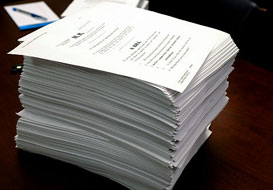
…on the Affordable Care Act and King v.Burwell, at his news conference. When President Obama was asked about the soon to be announced Supreme Court decision in King v. Burwell, he launched in an epic of unethical assertions and rhetorical games. I’ll highlight the unethical—not merely dishonest in some cases—statements and elaborate afterwards.

THE PRESIDENT: What I can tell state leaders is, is that under well-established precedent, there is no reason why the existing exchanges should be overturned through a court case. (1) It has been well documented that those who passed this legislation never intended for folks who were going through the federal exchange not to have their citizens get subsidies. (2)That’s not just the opinion of me; that’s not just the opinion of Democrats; that’s the opinion of the Republicans who worked on the legislation. The record makes it clear. (3)

And under well-established statutory interpretation, approaches that have been repeatedly employed — not just by liberal, Democratic judges, but by conservative judges like some on the current Supreme Court — you interpret a statute based on what the intent and meaning and the overall structure of the statute provides for. (4)

And so this should be an easy case. Frankly, it probably shouldn’t even have been taken up. (5)And since we’re going to get a ruling pretty quick, I think it’s important for us to go ahead and assume that the Supreme Court is going to do what most legal scholars who’ve looked at this would expect them to do. (6)

But, look, I’ve said before and I will repeat again: If, in fact, you have a contorted reading of the statute that says federal-run exchanges don’t provide subsidies for folks who are participating in those exchanges, then that throws off how that exchange operates. (7)It means that millions of people who are obtaining insurance currently with subsidies suddenly aren’t getting those subsidies; many of them can’t afford it; they pull out; and the assumptions that the insurance companies made when they priced their insurance suddenly gets thrown out the window. And it would be disruptive — not just, by the way, for folks in the exchanges, but for those insurance markets in those states, generally.

So it’s a bad idea. (8)It’s not something that should be done based on a twisted interpretation of four words in — as we were reminded repeatedly — a couple-thousand-page piece of legislation. (9)

What’s more, the thing is working. (10)I mean, part of what’s bizarre about this whole thing is we haven’t had a lot of conversation about the horrors of Obamacare because none of them come to pass. (11)You got 16 million people who’ve gotten health insurance. The overwhelming majority of them are satisfied with the health insurance. It hasn’t had an adverse effect on people who already had health insurance. (12)The only effect it’s had on people who already had health insurance is they now have an assurance that they won’t be prevented from getting health insurance if they’ve got a preexisting condition, (13)and they get additional protections with the health insurance that they do have.

The costs have come in substantially lower than even our estimates about how much it would cost. Health care inflation overall has continued to be at some of the lowest levels in 50 years. (14)None of the predictions about how this wouldn’t work have come to pass.(15)

And so I’m — A, I’m optimistic that the Supreme Court will play it straight when it comes to the interpretation. (16)And, B, I should mention that if it didn’t, Congress could fix this whole thing with a one-sentence provision. (17)

Wow, that’s even worse that I thought. Have there been more dishonest, deceptive, irresponsible statements by a President of the United States? Maybe. I don’t see how there could have been one that was much worse, though.

I’ll try to be brief, or else this will be a book. The numbers correspond to the bolded sections above… Continue reading →

Ethics Quiz: Hillary And Margaret

Making Ayn Rand seem like Shirley Temple...

Making Ayn Rand seem like Shirley Temple…

Many organizations find themselves conflicted when they accord proper respect and gratitude to their founders. The older an organization is, the more likely that its founder, however brilliant and accomplished, had scary skeletons in his or her closet, and worse, espoused views that modern minds find repugnant. The United States is awash in such founding dilemmas, beginning with Thomas Jefferson, whose private life, and some of his public life too, hardly met the high ideals and aspirations that lit the way for our nation’s creation. Revolutionary hero and “Father of the American Navy” John Paul Jones was an infamous pederast, and the man who built the F.B.I, J. Edgar Hoover, was a racist and extortionist who would have been right at home, perhaps more at home, with the KGB (except for his hatred of communists). There are many more, founders and creators of institutions in every sector of American life.

Margaret Sanger (1879-1966), however, is an especially hard case. The founder of the predecessor of Planned Parenthood openly and vigorously espoused beliefs that would make her a pariah today, and an embarrassment to the pro-choice movement. She was a racist, a white supremacist, a believer in eugenics, forced sterilization, and government prevention of the proliferation of the “unfit.” It is true that many of her most repulsive beliefs were considered acceptable and even progressive among intellectuals and activists of the time. It is also true that she was vocal in espousing them, and the work she is most honored for as a birth control advocate and an early feminist cannot be easily separated from her other, less admired positions.

Here are some of her more alarming quotes; you can research her writings and speeches more deeply here. Personally, I think she makes Ayn Rand look like Shirley Temple: Continue reading →

Our Unethical Justice Department’s Attack on Reason

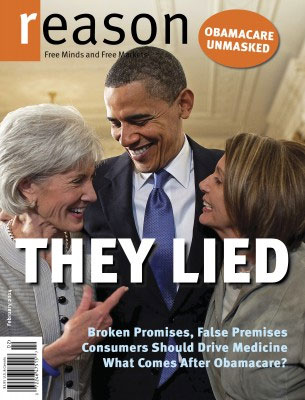
Reason

While we’re on the topic of progressive/Democratic fascism, did you hear the one about the Justice Department?

I continue to wonder when cognitive dissonance will kick in and genuine humanist liberals who have been willing to support this President and his arrogant, bumbling administration through one botch and fiasco after another finally realize that trampling on basic rights in defiance of the Constitution isn’t OK, even when done in the name of an African-American President. Time is running out, and so far, except from some notable exceptions, all I see is shrugs and smiles. “Well, they are terrorists.” “Well, they are racist cops.” “Well, it’s teabaggers.” “Well, it’s just a Faux News reporter” “Well, it’s for a good cause.” “Well, the ends justify the means.”

Will this latest example of the fascist inclinations of the hard left be a tipping point? I doubt it. The expected shrug will be “Well, they’re just asshole blog commenters.”

Let me just say this to my many progressive friends: You’re disgracing yourself, and betraying all the good values you think you stand for.

Obama’s Department of Justice has issued grand jury subpoena to force Reason.com to release the identity of commenters who made what the Justice Department claims are threats on the life of a Federal judge. Reason is a libertarian, and as far as I can tell, non-partisan, publication as well as an excellent one, but as you might expect from any source that cares about individual rights, it is very critical of the Obama administration. Not that this had anything to do with it being targeted by the Justice Department—why are you so cynical?

The topic in which these comments occurred is of no interest to me here; you can read about it in the links. The main point to ponder is that this is a frightening abuse of power, government bullying, blatant incompetence and an effort to chill free speech, especially since the Supreme Court last week ruled that a “true threat,” and thus outside the protection of the First Amendment, couldn’t possibly be like the comments in question.  Which of these comments, criticizing a federal judge’s decision against a drug dealer (a lot of Reason’s commenters love their illegal drugs) would you say is a “true threat”? Continue reading →

The Ethics Train Wreck That Never Stops: Ferguson’s Interim Chief Decides To Re-Write History

Al Eickhoff has been interim police chief in Ferguson since March, when he took over the  department upon after former Chief Tom Jackson’s  resignation. The LA Times recently interviewed him regarding how the Ferguson police handled the shooting death of 18-year-old Michael Brown, as well as related issues. In answer to one of the questions, he dropped this:

“We got a lot of negative notoriety and it all stemmed from Michael Brown’s body having to [lie] on the parking lot for 4.5 hours. The reason he was there for so long was because of hostile fire against our officers. We could not get to Michael Brown’s body.”

Wait, what? While there were reports that gunshots were heard during the period after Brown was killed by Officer Wilson, and there have been many explanations regarding why Brown’s body was allowed to lie in the street so long, hostile fire has never been alleged by anyone. Here was the New York Times’s detailed account of those controversial four hours on the subject: Continue reading →

Lincoln Chafee’s Batty Ethics Argument For The Metric System

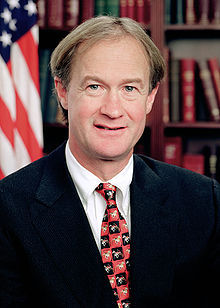
Lincoln_Chafee_official_portrait

Ugh. I can’t let this pass.

Yesterday I happened upon Lincoln Chafee on one of the Sunday shows, giving his elevator pitch for why he should be President. You may recall that Chafee, former Republican Senator and Governor of Rhode Island, turned independent after being defeated for re-election and now is following Bernie Sanders’ example, declaring himself a Democrat for the purpose of getting nominated. Chafee is another politician, like the Bush bothers and Hillary Clinton, who owes his initial political prominence to being related to a popular political figure rather than his own innate abilities. As he made obvious the more he spoke…

His two primary campaign positions were 1) “Wage peace”—whatever that means. This is right up there with John Lennon songs as serious policy discourse,  though I’m sure ISIS is fascinated by the concept, and 2) Adopt the metric system. Chafee borrowed this from the idea machine known as the Andrew Johnson administration, as Andy was the first President to officially acknowledge the benefits of the U.S. adopting the less eccentric measurement system used by Europe. I’m sure we all can agree that this is one of the most pressing issues facing the country today.

However, Chafee really got my attention, and sparked this post, when he attempted to combine his two prime objectives, which is no mean trick. I tried to find a transcript, video or a news report to document this, but so far I have failed: maybe everyone is trying to be nice. I swear I am not making this up, though I wish I were.

Chafee argued that the United States should adopt the Metric system because it invaded Iraq and didn’t find the weapons of mass destruction.

He really did. Continue reading →

Most Unethical Principal Of The Year? Maybe. Dumbest Unethical Principal Of The Year? Definitely

Principle Stenner giving David McCullough's speech. You can't see that his pants are on fire from this angle...

Principle Stenner giving David McCullough’s speech. You can’t see that his pants are on fire from this angle…

[NOTE: the original post’s headline ended with the creative word, “defeinitely,” I know not why. My demon proofer caught it yesterday, but I just read his alert. I’m sorry.]

Principal Mark Stenner delivered the commencement address for the May 22 graduation ceremonies for West Boca High School. It may have sounded faintly familiar to some of the those in the audience; after all,  Massachusetts’ English teacher David McCullough gave virtually the same speech to the class of 2012 at Wellesley High School.  That speech went viral on YouTube with more than 2.5 million views. Known as the “You Are Not Special” speech, it got McCullough, the son of Pulitzer Prize-winning historian David McCullough, a book deal. Principal Stenner repeated this famous, extensively circulated speech almost word for word,  never mentioning McCullough. He did make slight word changes and altered locations examples when necessary, but it was the same speech, and the plagiarism was noticed almost immediately.

Stenner still insisted that he didn’t  plagiarize the address . “I liked his idea. I should have said this was in part taken from him, ” he said. “In part,” in this case, means cutting some of the original, but including  details like referencing  ‘batty Aunt Sylvia” and the “maternal caped crusader,” and citing the same philosophers as McCullough, like Sophocles and Thoreau, but not crediting the man who wrote almost every word of the speech.
Continue reading →

The Trooper,The Law Clerk, And The Deer

This was all YOUR fault...

This was all YOUR fault…

Prof. Jonathan Turley would make this an ethics quiz, but not me.

He is troubled that a law clerk ended up an ex-law clerk after publishing a gratuitously nasty post on Facebook expressing her unseemly lack of sympathy for a New Jersey state trooper who died when his car collided with a deer. (Another trooper traveling with him was injured.) Turley shares my concern regarding the trend of employers punishing employees for their comments on social media, but in this case, I don’t have any sympathy for the clerk at all.

Responding to other Facebook commenters who expressed sorrow for the dead trooper and called him a hero, Leslie Anderson, who clerked for a News Jersey judge, Middlesex County Superior Court Judge Travis L. Francis, expressed strenuous dissent, writing,

“Not that sad, and certainly not ‘tragic,’ Troopers were probably traveling at a dangerously high speed as per usual. Totally preventable. At least they didn’t take any of the citizens they were sworn to serve and protect with them…The ‘victim’s’ employment as a state trooper is irrelevant to the circumstances, other than the fact that he injured a fellow trooper and destroyed state property as a result of his recklessness. He wasn’t running into a burning building or otherwise acting within the course of his employment at the time of the accident. The outcry and ‘thank yous’ are absurd, nonsensical, and completely unwarranted. There are people in this country and around the world dying for much less. There is nothing ‘tragic’ about this. Get over yourselves and your sense of entitlement, people . . .

Nonetheless, I agree that it is sad and heart wrenching for the family members left to suffer the consequences of the Trooper’s recklessness — especially for the deer family who lost a mommy or daddy or baby deer.”

Jerk. Continue reading →

Confounding Update To The United/Tahera Ahmad/Diet Coke Episode

Question_markWhen I posted with disgust on the Tahera Ahmad story (a Muslim-American woman who reported on Facebook that she was discriminated against by a stewardess and subjected to verbal abuse by a passenger on a United Airlines flight, and that no passengers came to her aid of defense), I noted that the facts seemed hard to believe, and that my commentary was based on a presumption that the account was true without knowing whether they were.

Now there have been two developments that provide additional perspective on the incident, and no enlightenment whatsoever.

First, United announced that it has investigated the incident, and fired the flight attendant. This would suggest that Ahmed’s account had at least some validity…or that the flight attendant got a fat settlement as United fired her to avoid a public relations battle with Muslim groups.

Second, this was posted on FlyerTalk Forums: Continue reading →

Slate: ‘How Dare A Billionaire Donate $400,000,000 to Harvard?’

See, Ozmandias? You should have opted for school of engineering.

See, Ozmandias? You should have opted for the school of engineering.

Slate’s article by Jordan Weissmann, its senior business and economics correspondent, about the largest donation ever made to Harvard University is one of those monstrosities that has great value as an ethics test. If you think his argument is reasonable, then you need help.

Essentially, the Slate piece is the ultimate example of an unethical argument I have focused on before, which can be summarized as, “If you give to what you care about rather than what I care about, then your donation is unethical.”

Unless your contribution is to ISIS, or isn’t really a contribution but an attempt to buy access for your own purposes (like with, to pick an example out of the air, a donation to the Clinton Foundation), there is nothing unethical about a $400,000,000 donation, which is what John Paulson just gave to Harvard University’s endowment for the School of Engineering and Applied Sciences. The school will be renamed after Paulson, which Weissman also finds repugnant. The title of the piece: “Billionaire’s Ego Donates $400 Million to Harvard.”

Let me pause here to note that I refuse to give my money to Harvard, which solicits me regularly. The university is rich, I’m not, and I prefer to give my charitable gifts to Georgetown Law Center, specifically to the student theatrical organization I founded there, which like all theater groups, needs funds. I am sure Weissman finds my contribution unethical as well, because, really, what good are the arts compared to what he has decreed is worth giving to as the “more pressing causes in the world”?  As he sees it, that is, but that’s all that matters.

Let me go through Weissman’s many objections that cause him to sneer at Paulson’s charity:

1. “Gestures to Ivy League schools …inevitably have as much to do with the giver’s ego as their sense of altruism.” Yes, and so do almost all philanthropic donations, regardless of source and objective. The motto in fundraising (I was a professional fundraiser for a decade) is that donors give money for their purposes, not yours. People who give a lot of money to good causes like to have some recognition, and they deserve it.  Apparently Weissman believes that the only ethical donations are anonymous ones, because that’s modest. I’m impressed by anonymous gifts, though they often have selfish motivations as well: the donors don’t want to be hounded by more fundraisers. Nevertheless, that lack of modesty is so trivial as a flaw in large charitable contributions that to harp on it is perverse. Successful people tend to have egos that are often in proportion to their accomplishments. The construct of the left is, we know, that accomplishments and success are just randomly distributed fruits of privilege, ergo the self-esteem that often results from such success is as unsavory as the privilege that generates it.

This is, to be blunt, un-American crap.

2. Harvard “does not strictly need more money, especially compared to the financially strapped colleges that typically educate lower-income students.” First of all, this is demonstrably false. Harvard does need more money if it is going to expand and improve its School of Engineering and Applied Sciences, secure that school’s financial health in perpetuity, and do so without sacrificing other objectives it deems important. Harvard also educates lower-income students, the best and brightest of them, and thus the best resources money can buy are expended on the students most likely to make the best use of them for the benefit of society. Weissman believes this is wrong, and that the 400,000,000 should be given to lesser schools, with less of a track record of spending money wisely, while educating less promising students.

I am in sympathy with that argument to some extent. The marginal utility of all that money is less at Harvard than anywhere else, and I can envision the donation having a far more sweeping impact elsewhere: giving it to Sweet Briar, for example. That does not mean there is anything wrong in any way with bolstering Harvard’s School of Engineering and Applied Sciences. The donation is an unequivocal, absolute good.

The money could have been spent “better”? That’s your opinion. It’s not your money. Shut up. Continue reading →