The Sixth Annual Ethics Alarms Awards: The Best of Ethics 2014

abstract door grand jury room

The Ethics Alarms Awards for the Best in Ethics 2014—sorry for the tardiness— are about 30% of the length of the Worst. Does this mean that the nation and the culture, not to mention the world, are doomed?

Not necessarily. I am well aware that most of the country is ethical, substantially fair and honest, diligent, and embodies ethical values in their every day dealings with you and me, and the world. We primarily hear, and to some extent, take note of, the corrupt, the irresponsible, the manipulative, the untrustworthy and the foolish. The Best Ethics list is smaller in part because only exemplary ethics gets publicity. I also should note that calling attention to unethical conduct and discussing it often does more to advance the mission of Ethics Alarms than confirming that right is right, though I sure wish there was more exemplary ethics to celebrate. Maybe the dearth of award winners here is my fault, and the result of my biases.

Boy, I hope so.

Here are the 2014 Ethics Alarms Awards for the Best in Ethics:

Most Important Ethical Act of the Year:

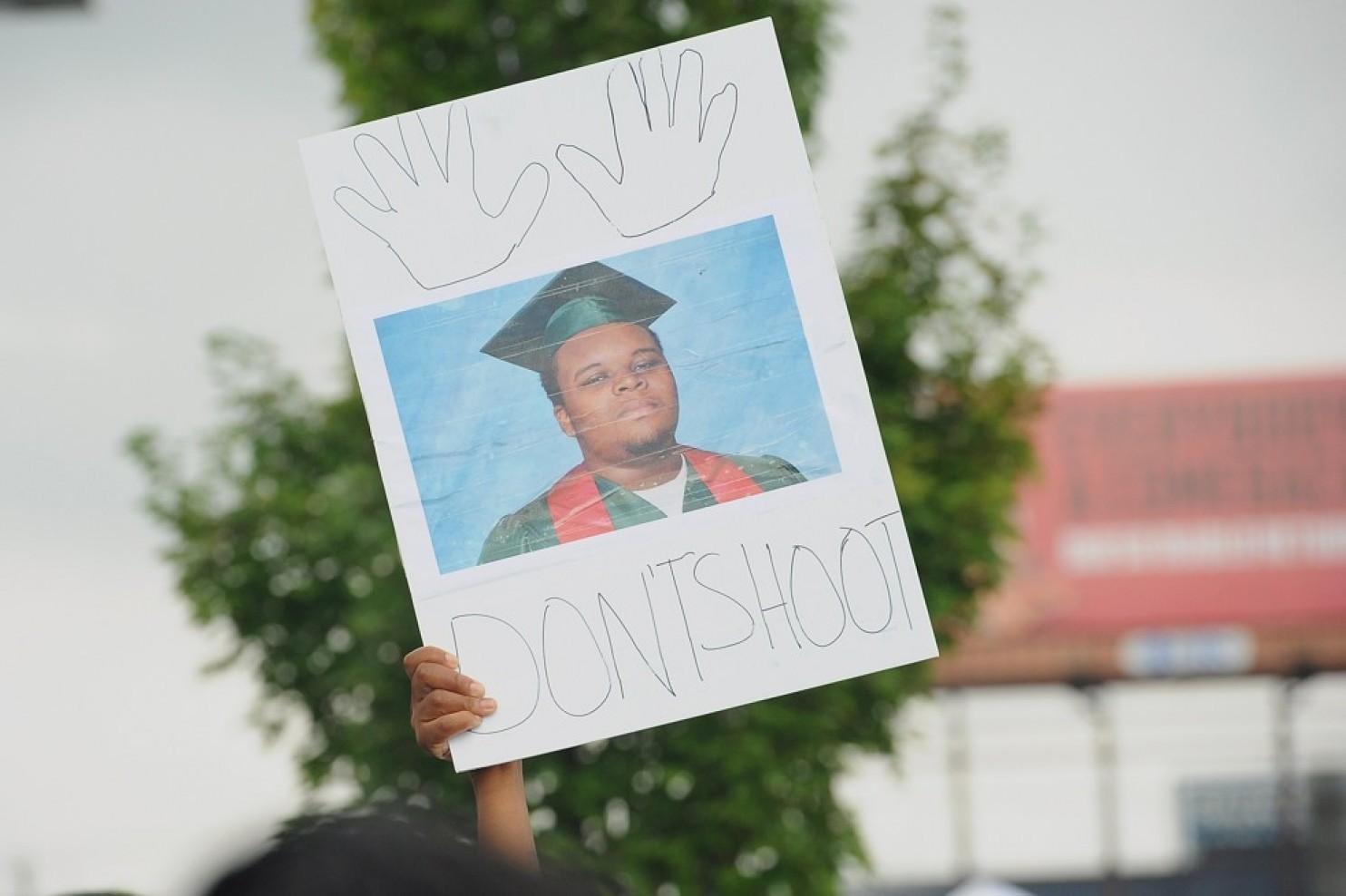
The Ferguson grand jury resisted public and media pressure to deliver a verdict of no indictment against police officer Darren Wilson, upholding the integrity of the justice system despite the injection of emotion, politics and race into a tragic incident where none of these belonged. Though the available evidence could never have supported a guilty verdict, it would have been easy and popular for the grand jury to make Wilson stand trial anyway, just as George Zimmerman did. Their reward has been to be attacked as fools and racists, but they did the right thing, when the wrong thing must have seemed very attractive.

Outstanding Ethical Leadership

The New York Yankees. (Bear with me now.) The Yankees are the most famous team in professional sports in the biggest sports market in the world. They make money without even trying. Yet when the team had a bad year and missed the play-offs in 2013, it committed nearly a billion dollars to re-building the team, a move that only makes sense in the quest to win games, not to maximize profit. Thus they prominently chose loyalty, mission and sportsmanship over greed. (The Yankees still missed the play-offs in 2014, too.) Then all year long the team placed a spotlight on Derek Jeter, their retiring hero, whose career and character single-handedly refutes the cynicism of sports critics fed up with the lack of character displayed by the Armstrongs, the Rices, the ARods, the Belichicks, the Winstons, the Paternos, and so many, many others. Finally, when two New York City police officers were assassinated after Al Sharpton, and the “Hands Up!” protestors, with the city’s own mayor’s support, had vilified the profession as violent, racist and untrustworthy, who will pay for the fallen officers’ children to go to college? The New York Yankees’ Silver Shield Foundation.  Add charity, compassion, civic duty and gratitude to the list of ethics values the New Your baseball club modeled for us. I know it seems odd and even trivial to follow up last year’s winner in this category—the Pope— with a sports franchise, but to paraphrase Babe Ruth’s famous rejoinder when the Yankees balked at his salary demands in 1930, saying he wanted to be paid more than then-President Herbert Hoover (“I had a better year that Hoover!”), the Yankees has a better year than the Pope.

Outstanding Sportsmanship

Jose Altuve, Houston Astros secondbaseman and American League batting champ….the right way. He began the final day of the 2014 season hitting .340, three points ahead of the Tigers’ Victor Martinez. If Altuve didn’t play in Houston’s meaningless last game, Martinez would have to go 3-for-3 to pass him, giving the DH a narrow .3407 average compared with Altuve’s .3399. By playing, Altuve risked lowering his average, providing Martinez with a better chance of winning the batting championship. Many players in the past have sat out their final game or games to “back in” to the prize, rather than give the fans a chance to watch a head to head battle injecting some much-needed drama into the expiring season.  Altuve, however, gave Martinez his shot. He played the whole game, had two hits in his four at-bats, and won the American League batting title on the field, not on the bench, as Martinez went hitless. The conduct, simple as it was, embodied fairness, integrity, courage, respect for an opponent, and most of all, respect for the game.

Best Apology

JESSICA_URBINA

 The Level #1 apology, according to the Ethics Alarms Apology scale, issued by Sacred Heart Cathedral Prep in San Francisco.The school had cruelly and needless embarrassed graduating senior Jessica Urbina (above), rejecting her inclusion in the yearbook because she chose to be photographed in a tuxedo rather than a dress, as the school’s dress code, which had not been previously made clear, demanded. I wrote…

“The rule is sexist, archaic, unthinking, prejudicial, arbitrary, cruel and wrong. The best way to change a rule that is sexist, archaic, unthinking, prejudicial, arbitrary, cruel and wrong is to break it, and see if those in charge have the sense and compassion to do the right thing. The administrators of Sacred Heart Cathedral High School flunked. I doubt that Jessica was even trying to provoke a confrontation: like any normal student, she wanted her image in the most important piece of memorabilia of her high school years to accurately portray her as she was, not as some alien ideal dictated by the Catholic Church. There was nothing to be achieved by banning the photo.”

The school reversed itself with grace and compassion. The apology is long, but a more humble or complete one would be unachievable. It achieved an ethical end to an ugly episode. You can read it here. Runner up: Writer Henry Rollins lovely and wrenching apology for his initial reaction to Robin Williams’ suicide.

Hero of the Year

Michael DeBeyer.  De Beyer has decided to sell his restaurant, which he opened more than 15 years ago and is worth an estimated  $2 million, to pay for whatever medical treatments are necessary to save the life of Brittany Mathis, 19. Brittany works for De Beyer at his Kaiserhof Restaurant and Biergarten in Montgomery, Texas, and  learned, in December 2013, that she has a 1.5 inch brain tumor.  She couldn’t afford the operation to find out whether the tumor was benign or malignant, and didn’t have health insurance. “I couldn’t live with myself; I would never be happy just earning money from my restaurant knowing that she needs help,” Michael told local reporters.

That’s what makes ethics heroes; really, really loud ethics alarms, combined with courage and caring.

Parent of the Year

NBA Star Kevin Durant’s Mom.

Most Ethical Celebrity

Matthew McConaughey. In a field notably sparse on exemplary ethics by celebrities, the 2013 Oscar winner for Best Actor stands out for a speech that was inspirational, thoughtful, and rife with ethics wisdom. It is worth recalling. Here it is:

Thank you. Thank you, thank you, thank you, thank you to the Academy for this—all 6,000 members. Thank you to the other nominees. All these performances were impeccable in my opinion. I didn’t see a false note anywhere. I want to thank Jean-Marc Vallée, our director. Want to thank Jared Leto, Jennifer Garner, who I worked with daily.

There’s a few things, about three things to my account that I need each day. One of them is something to look up to, another is something to look forward to, and another is someone to chase. Now, first off, I want to thank God. ‘Cause that’s who I look up to. He has graced my life with opportunities that I know are not of my hand or any other human hand. He has shown me that it’s a scientific fact that gratitude reciprocates. In the words of the late Charlie Laughton, who said, “When you’ve got God, you got a friend. And that friend is you.”

To my family, that who and what I look forward to. To my father who, I know he’s up there right now with a big pot of gumbo. He’s got a lemon meringue pie over there. He’s probably in his underwear. And he’s got a cold can of Miller Lite and he’s dancing right now. To you, Dad, you taught me what it means to be a man. To my mother who’s here tonight, who taught me and my two older brothers… demanded that we respect ourselves. And what we in turn learned was that we were then better able to respect others. Thank you for that, Mama. To my wife, Camila, and my kids Levi, Vida and Mr. Stone, the courage and significance you give me every day I go out the door is unparalleled. You are the four people in my life that I want to make the most proud of me. Thank you.

And to my hero. That’s who I chase. Now when I was 15 years old, I had a very important person in my life come to me and say “who’s your hero?” And I said, “I don’t know, I gotta think about that. Give me a couple of weeks.” I come back two weeks later, this person comes up and says “who’s your hero?” I said, “I thought about it. You know who it is? It’s me in 10 years.” So I turned 25. Ten years later, that same person comes to me and says, “So, are you a hero?” And I was like, “not even close. No, no, no.” She said, “Why?” I said, “Because my hero’s me at 35.” So you see every day, every week, every month and every year of my life, my hero’s always 10 years away. I’m never gonna be my hero. I’m not gonna attain that. I know I’m not, and that’s just fine with me because that keeps me with somebody to keep on chasing.

So, to any of us, whatever those things are, whatever it is we look up to, whatever it is we look forward to, and whoever it is we’re chasing, to that I say, “Amen.” To that I say, “Alright, alright, alright.” To that I say “just keep living.” Thank you.

Most Principled Politician

Thomas Menino

The late Thomas Menino, Boston’s beloved Democratic mayor for two decades (the longest in tenure in the city’s history), who retired last January and  died of cancer nine months later. Somehow I missed giving him the ethics send-off he deserved. Amazingly, he was the first Italian-American mayor in Boston’s history: the job has always been won by the city’s Irish machine. While mayors around the nation were embroiled in scandals and embarrassments, Menino undeniably improved the city, led it admirably in the aftermath of the Boston Marathon bombing in 2013, and left office with the admiration of conservatives as well as liberals despite being an aggressive agent of progressive policies.  His passion caused him to make some ethical missteps, such as joining other liberal mayors in telling Chick-Fil-A that it “wasn’t welcome” in Boston because of its owner’s anti-gay marriage sentiments. He joined Michael Bloomberg in creating Mayors Against Illegal Guns, and must share responsibility for some of the dubious tactics and misrepresentations of that organization. He also had a scandal or two involving political favors, but in 20 years, by my count, he had fewer than most Boston mayors had every year. In 2012, polls found that he had an approval rating over 80%, and left his position more popular than he entered it.  Boston is liberal, but it isn’t that liberal.

Most Ethical Company

Don’t ever let me do that again.

I just reviewed over a hundred posts about businesses and corporations from last year, and not one of them celebrated ethical conduct. The closest was, believe it or not, the Washington Redskins, for having the guts, orneriness and principles to stand against the forces of censorship and political correctness to refuse to change the name of their team and organization. It has been targeted as a symbolic scalp that race-baiters, grievance-hucksters and progressive bullies are determined to have hanging from their belts; the opponents of the team have recruited the U.S. government, and the pressure is tremendous. It would be so easy to change the name now, when support for the perpetually rotten team is at low ebb in Washington, D.C., but the principle is worth the battle. However, my gag reflex will not allow me to give this award to an NFL team, since by definition it must be engaged in so much else that is wrong.

So for a second straight year I’m going to send you to Ethisphere’s list of the most ethical companies in the world. Their criteria isn’t mine, but there’s got to be a genuinely ethical company of two on there somewhere. Let me know if you find it. Continue reading

Rand Paul, Anti-Vaxxing and Signature Significance

"Got it, Senator. NEXT!!!"

“Got it, Senator. NEXT!!!”

It would be nice if a genuine, rational libertarian candidate could be part of the national political debate. The problem is that there are no genuine, rational libertarians. To be genuine, a libertarian has to decide on his or her policy positions based on the dictates of the ideology, which is backwards: as a leader, rather than a professor or theorist, one must figure out what is going to work, and what you wish would work or what a pre-determined formula says should work are not germane to the issue. For proof of the flaw in the latter approach, all we have to do is consider the past seven years.

Thus libertarians are prone to saying things like, “The United States should never have entered World War II.” This has been a staple of Rand Paul’s deluded father, Ron Paul, and properly places pure libertarianism with pacifism, also known as Cloud Cuckoo Land. The Berrigans used to say the same thing, you know. I believe it was Philip who said that nobody tried passive resistance to defeat Hitler, so we’ll never know if it would have worked. When you say things like this for public consumption, you forfeit the privilege of being taken seriously. It is signature significance: your judgment can’t be trusted.

For me, Rand Paul’s libertarian moment of signature significance was when he questioned the need for the 1964 Civil Rights Act, essentially saying that the nation would have been just fine allowing people like Lester Maddox to chase African-Americans out of his restaurant with an axe handle, or bus drivers to force Rosa Parks to sit in the back of the bus until change occurred naturally, you know, like after the race war. Such statements are not isolated instances of momentary madness; they are markers of serious ethical and cognitive problems, and it was inevitable that the source of that opinion would have more of the same, and perhaps worse. Continue reading

Bias Check: Update

pcgraphpng.php

Responding to my recent post on trying to identify one’s own political biases and the 39 questions that everyone agreed left much to be desired in dividing liberal from conservative, an old friend from both law school and the stage has suggested another resource to try. He is a professor of telecommunications at a prestigious Midwest university, and pointed me to a site called The Political Compass. It has a more nuanced set of questions, and multiple choice answers that will place you on a Left-Right (economic)/ Authoritarian-Libertarian (social) grid.

The site is clearly British, and obviously hasn’t been tended for a while: it looks like it was set prior to the 2012 election. I have other problems with it, not the least of which that it places Barack Obama in the Right/Authoritarian quadrant. The site charts past political leaders, and it looks to me like the President is the ideological clone of…Margaret Thatcher. I’d say it needs some tweaking.

I haven’t taken the test again to check, but how the program scores the distinction between agreeing or disagreeing and strongly agreeing or disagreeing  intrigues me; in my case, which I chose was a toss-up. (Update: I just took the test again with all “strongly’s” checked. The result was virtually the same—a tad more left and libertarian. That’s my first test result above. )

As you will see if you take the test, some of the questions are phrased to create a false choice, like.. If economic globalisation is inevitable, it should primarily serve humanity rather than the interests of trans-national corporations,  and All authority should be questioned, and Taxpayers should not be expected to prop up any theatres or museums that cannot survive on a commercial basis.
Continue reading

Wait–What Idiot Thought We Wanted A Sequel To The Idaho Walmart Shooting?

Does this graphic look familiar? It should: I used it only a month ago, and for the exact same reason.

Does this graphic look familiar? It should: I used it only a month ago, and for the exact same reason.

From the Washington Post:

“A toddler reaching for an iPod in his mother’s purse grabbed a loaded gun instead before shooting both his parents in an Albuquerque motel room on Saturday, according to news reports. Police said the bullet hit the father in the buttock and the mother, who is eight months pregnant, in her right shoulder, but did not strike a 2-year-old child who was also in the room, according to Fox News.”

Gee, I guess Monique Villescas and John Reynolds, the lucky parents in this near tragedy, were so amused at the death of Veronica Jean Rutledge at the hands of her toddler that they just couldn’t resist trying the old “let’s leave a loaded gun where a small child can reach it” trick themselves. Or, I suppose, they might just be irresponsible fools.

Observations:

1. Two of these incidents in a little more than a month ?! What are the odds that Rutledge and these boobs were the only Americans leaving loaded guns within the reach of young children? Continue reading

Some Final, Hard Words Before Kick-off

cteliving

I made this comment to the main post on the Super Bowl, and decided that the point is important enough to elaborate on a bit and post here.

I’ve  become depressed talking to people on Facebook and elsewhere about the post. They don’t even pretend to have a real argument. Some fall back on the same rationalizations I explored in the post: one guy on Facebook’s rejoinder consisted of writing, “why worry about this when Congress and the White House are full of liars.” And people “liked” that response, which makes no sense at all.  The rest of the determined Super Bowl fans say, “Yeah, you’re right, but I like football and don’t want to think about it.”  That just is not a rational, ethical response to learning that your support is perpetuating a corrupt system that is exploiting and hurting people. It isn’t.

The NFL is not on the same scale of evil as slavery (yeah, I know, but we need the slaves to keep our lifestyle, so I don’t want to think about it) or the Holocaust (Yeah, but I don’t know any Jews, and the country’s doing well, so I don’t want to think about it) or a daughter-molesting husband (Yeah, but he’s a good provider, and I love him, so I don’t want to think about it). Sure, this is a game, but the process of self-delusion, corruption and passive acceptance of evil is exactly the same. Tell me how it isn’t.

And you know, it takes a lot less sacrifice to stop making it profitable for the NFL to lie and pay young men unto dementia and suicide than it did to reject slavery in the South, or Nazism in Germany, or even for an abused wife to report her husband for raping their daughter…because it is just a game. You can live a very happy life, a full life, a fun life, without the NFL being part of it. It’s corrupting American society and you. Don’t you they see that?

I guess slavery and the Holocaust didn’t have cool commercials, so that’s something…

Ashley Judd, Hillary Clinton, and Celebrity Malpractice

Mount Rushmore

I had hoped to have my “Celebrity Code of Ethics” complete for this post, but it isn’t, so I’ll just allude to some of its likely provisions.

I like Ashley Judd, I really do. I’m not sure why she never became the reigning female light drama star of her generation; she’s every bit as good as Sandra Bullock or Julia Roberts, and that voice! Now she’s routinely relegated to repetitious action movies and will be playing Jennifer Lawrence’s mother any day now—oh well, that’s show biz. Judd is also more articulate and intellectually curious than the average celebrity, so it was with great pain and disappointment that I learned that she had recently said this, in an interview with Larry King, about the presidential prospects of Hillary Clinton:

“I think she might be the most overqualified candidate we’ve had since – you know, Thomas Jefferson or George Washington.”

Now, I don’t expect celebrities to be historians or experts on anything  other than their profession and areas of specialty. However, one tenet of celebrity ethics is the same as that of doctors: “First, do no harm.” That means, for someone like Judd, a celebrity has an ethical duty to recognize that a disturbing number of people think that because she is rich and famous, she is necessarily  informed, responsible and wise, as well as a role model, and therefore, unlike the usual drunk on a barstool, when that celebrity says something outrageously ignorant, stupid and misleading, hundreds of thousands of people believe it and align their own beliefs accordingly. That’s harmful, and doing it is unethical. Continue reading

Ethics Quote of the Week: Senator Rand Paul

Senator Paul, forever young.

Senator Paul, forever young.

“I think that’s the real hypocrisy, is that people on our side, which include a lot of people who made mistakes growing up, admit their mistakes but now still want to put people in jail for that. Had he been caught at Andover, he’d have never been governor, he’d probably never have a chance to run for the presidency.”

Senator Rand Paul (R-Ky), in reaction to Jeb Bush’s admission that he smoked marijuana heavily as a student. Bush currently opposes the legalization of medical marijuana.

Oh, great: Rand Paul is 16 years old.

The chip off the old libertarian block Ron Paul (who would legalize heroin, ecstasy, LSD, you name it) now proves that he has no idea what hypocrisy is. It is troubling: Senator Paul is an MD, and can be an articulate and powerful speaker;  he can take bold strategic political steps that his Republican colleagues are too timid to try, like correctly charging Hillary Clinton with complicity in her husband’s sexual predation,  but he repeatedly conveys the impression that he’s just not all that bright. This quote is a sterling example. Continue reading

Unethical Ex Of The Month, Paige Dunham: Hell Hath No Fury Like A Ventriloquist’s Wife Spurned…

The ventriloquist and his spouses. Can you guess which is the ex?

The ventriloquist and his spouses, past and present. Can you guess which is the ex?

I suspect there’s a sad story behind this one that many a betrayed spouse can identify with. Did Paige Dunham stand shoulder to shoulder with her husband, Jeff Dunham in the lean years when he was struggling ventriloquist (and really, what could be worse, struggling accordion virtuoso?) only to have him toss her away like an old shoe once he hit the jackpot and became a rich and famous celebrity, as he sought and won a flashier spouse to match his flashier lifestyle? It sure looks like it.

Nevertheless, what Paige Dunham did to her ex-spouse’s Shiny New Model Audrey Dunham can’t be justified ethically. It is also apparently illegal. Continue reading

Brief Notes: Healthcare.gov’s Contractor, Netanyahu, and Charles Blow

life-preserver

I am drowning in important ethics topics and short of time, so I’m reluctantly employing the rarely-used (here) flotation device of briefly noting three stories that would normally warrant full posts. I’ll reserve the right to change my mind and fully explore one or more of them later.

1. Wait: who’s the journalist here?

Six days after Ethics Alarms noted the ridiculous fact that the IRS has hired—for about 5 million dollars of taxpayer money— the same group of incompetents who botched their 800 million dollar job of getting Healthcare.gov up and running, the Washington Post ran the story (on page 18). The new contract itself dates from August: I regard my nausea over it as late, but I regard the Post’s failure to report the story until now a) suspicious, b) incompetent and c) indefensible.

2. Netanyahu lobbies Congress Continue reading

Bias Check

Confirmation bias

Detecting and overcoming one’s own biases is one of the most important features of being ethical. “Bias makes you stupid,” after all, and stupidity can make you unethical. As the author of an ethics blog, this is of special concern to me, as I am constantly making choices that bias could seriously affect. Some of those choices include what issues and events have ethics components, which are most important to publicize, how should the ethical issues be analyzed, what conclusions are fair and reasonable, even how long a particular post should be, what authorities and references should be included, and what style—scholarly? humorous? bemused? indignant? outraged?—will best illustrate a point.

As regular readers here know, I can be harsh, often too harsh, when a commenter dismisses my commentary as partisan or ideologically motivated. First of all, it isn’t, and I resent the accusation. Second, it’s a cheap shot, essentially attacking my motives, objectivity and integrity rather than presenting substantive arguments. Third, it is a simpleminded approach to the world in general, and democracy in particular, and life, presuming that “there are two kinds of people,” and one type is always wrong, while the other type is always right. There is nobody I agree with all the time, and I am far from alone in that trait. People who agree with the same people all the time are not really thinking. They are just taking the easy route of picking sides, and letting others think for them.

Obviously, my approach to controversies, problems and ethical analysis are influenced by thousands of factors, including my parents,  my upbringing,  where I have lived,  teachers, friends, and family members, experiences, books, plays, movies and popular culture, interests  and passions (like leadership, American history, and baseball), what I’m good or successful at and I’m not, and so much else. These are not biases: once such influences mold your way of looking at the world and passing through life, they are, in fact, who you are. I’m comfortable with who I am. I just don’t want biases making me me stupider than I am.

Thus I am always interested in trying to identify where I stand on a the ideological scale. Some of my conservative friends think I’m liberal; all of my liberal friends think I’m conservative. Two sides again: I am confident that it is their place on the scale that leads to those perceptions. Today I encountered another test that supposedly divides liberals and conservatives sharply.  It comes from political scientist and philosopher James Burnham’s  1964 book “The Suicide of the West.” Burnham was one of those radical leftists who did a complete reversal in middle age and became an influential conservative theorist. You are asked to agree or disagree with these 39 statements, and the result reveals your ideological bent.

Here are the questions: Continue reading