Comment Of The Day: “The Pandemic Creates A Classic And Difficult Ethics Conflict, But The Resolution Is Clear, Part I: Stipulations”

The second Comment of the Day to come out of  Part 1 of the pandemic analysis ethics conflict analysis, like the first, does a lot of the work I would otherwise have to do to complete Part 2. A couple more like these, and the issue might be thoroughly covered without any input from me at all!

Here is Michael R’s Comment of the Day on the post,  “The Pandemic Creates A Classic And Difficult Ethics Conflict, But The Resolution Is Clear, Part I: Stipulations”:

The global warming cult has conditioned leaders and the media to trust models over data. If the data doesn’t match the model, it is the DATA that must change, which is why they keep adjusting the temperature measurements more and more to match the model. As with global warming, the model does not match reality and we are being told to trust the model, not the data.

Just to put things in perspective:

—Roughly 2.8 million Americans die each year. Around march, that is roughly 8000 people/day.

—If 5% of the population has asymptomatic coronavirus, that means that 400 dead people with test positive for coronavirus each day, even though it did not contribute to their deaths. Under current practice, that means 400 coronavirus deaths that really weren’t coronavirus deaths (or 12,000/month).

—It is hard to tell, but the number of deaths/month does not seem to be rising over previous years. It seems that most ‘coronavirus deaths’ are due to reclassifying cause of death, not actual effects of the virus. You can view the California doctor’s censored interview about that somewhere, if you can find it anymore.

—The number of actual extra deaths from coronavirus appears to be within the yearly standard deviation of deaths. Meaning: Deaths from coronavirus are not statistically significant yet.

—The fatality rate appears to be less than 0.1%. The flu is about 0.1% and the flu without the flu vaccine is about 0.3%, so this appears to be not as dangerous as the flu. More people are getting it, however, because it is new and people don’t have an natural immunity to it yet. This is why everyone needs to get it.

—Roughly 500,000 people die each year from medical mistakes.

—Places that had more restrictive lockdowns did not suffer from worse outcomes. They seemed to have suffered less.

Verdict: It seems that our ‘experts’ are morons. Let’s look at some of the policies from those ‘best people’. Continue reading

Comment Of The Day: “The Pandemic Creates A Classic And Difficult Ethics Conflict, But The Resolution Is Clear, Part I: Stipulations”

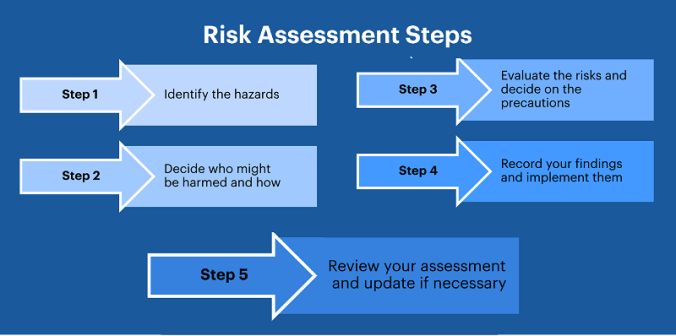
Matthew B fulfilled my fervent wish (as did Michael R, whose comment will be going up later today) by dealing with the risk assessment issue authoritatively and clearly so I wouldn’t have to.

Here is his Comment of the Day on the post, “The Pandemic Creates A Classic And Difficult Ethics Conflict, But The Resolution Is Clear, Part I: Stipulations”:

We’re seeing the problem with the vast majority of people’s inability to grasp statistics, and in particular the statistics of risk. That’s the problem here – with the Wuhan flu, we’re talking about something that – at most – could kill 1 in 100 people. We’re seeing higher numbers for death rates in many places, but they’re talking about case fatality rate. 1% in the US means 3 million people die, and we’re at 70K dead as of this morning in the US, 3.2 million short in 1% of American’s dying. Yes, I get many haven’t been infected and many more will die, but we’re absolutely on a trajectory far short of a 1% fatality rate.

As soon as you’re talking about numbers that low, far too many people’s brains stop being logical and emotion takes over. The tell for this is the saying “if it just saves one life.” People say that, but they’re turn a blind eye to so many things that kill people an no one addresses. Because there is no critical thought being applied, they remain illogical and darn near impossible to considering any position other than those formed by emotion.

We take risks every day that we don’t think about and we ignore things that people die from because of normalization of that risk. If you’re under 45, your odds of suicide, homicide and accidents killing you outweighs your risk of dying of health complications. If you’re under 25, that risk is three to one that it’s something other than a health condition that kills you. Even amongst the health conditions, there are many that are swayed by our own conduct and we ignore that.

Through most of the existence of the automobile, it’s ranked as the number one cause of premature death in the United States. Only in the last decade has the rise of the opioid epidemic managed to surpass the death rate of automobile fatalities. The opioid epidemic is a harder one to discuss, so I’ll start with the automobile. Automobile deaths are ignored, few people are afraid to get into a car because it might kill them. There are marginal improvements in automobile safety, but many of the key contributors have had little improvement. Mass use of air travel has had about 1/2 the time of the mass use of the automobile, but air travel has had massive improvements. At first there were many crashes because airplanes broke and directly or indirectly through the distractions they caused resulted in mass fatalities. That got fixed first. Then aviation regulators figured out that a growing fraction of accidents were pilots flying perfectly good airplanes into the ground or each other. They borrowed ideas from the nuclear industry, and instituted many policies that have resulted in a remarkable fall in airline fatalities. Do you realize the last time an passenger aircraft went down in the United States was November, 2001? 19 years. The only other crash was a 777 in San Francisco that stalled on approach, and most of the passengers came out with no or minor injuries. That’s truly remarkable. Continue reading

Comment(s) Of The Day: “Ethics Quiz And Poll: The Nurse Practitioner’s Dilemma”

We have a rare two-headed Comment of the Day on “Ethics Quiz And Poll: The Nurse Practitioner’s Dilemma,”about the nurse practitioner’s dilemma when she was asked by a poor, unmarried, 16-year-old , unemployed high school drop-out to help her get pregnant. Taking a minority position among commenters (the post’s poll results overwhelmingly favored counseling the girl against pregnancy), commenter valkygrrl wrote,

“Assuming the local age of consent laws make the pairing lawful, I think we have our answer in regard to professional ethics:

(f) Not discriminate against patients who have difficult-to-treat conditions, whose infertility has multiple causes, or on the basis of race, socioeconomic status, or sexual orientation or gender identity.

Assuming the local age of consent laws make the pairing lawful, I think we have our answer in regard to professional ethics.”

Commenter Tony, a physician, added in his Comment of the Day #1, Continue reading

Comment Of The Day: “Ethics Quiz And Poll: The Nurse Practitioner’s Dilemma”

As I thought it might, the Ethics Quiz about “The Ethicist’s” position that a nurse practitioner was obligated to help an unemployed, unmarried, 16-year-old high school drop-out get pregnant provoked a lot of discussion. Here is how the poll results on the issue are running:

And here is Arthur in Maine’s Comment of the Day on the post, “Ethics Quiz And Poll: The Nurse Practitioner’s Dilemma”:

Yikes. I know you hold Appiah in high regard, and your previous posts about his work make clear why. But I agree with you – he’s very much in the wrong on this one.

Many years ago, I worked in a group home for adjudicated teenagers. We had several 15 and 16 year old girls who, like the girl in question, actually wanted to become pregnant (thank God none of them managed to achieve this goal on our watch).

I recognize that my sample size is small enough that this is nothing more than anecdotal – but as far as I’m concerned, well-adjusted 16-year-old girls may adore babies and kids but understand that now’s not the time. To desire pregnancy at that age requires one or more underlying pathologies. Continue reading

Comment Of The Day: “Captain Crozier And The Ghost Of Billy Mitchell”

Eddie Rickenbacker

We have a lot of Michaels commenting here, and one of them, plain old Michael, I have had the honor and pleasure of knowing personally. In this fascinating Comment of the Day, he provides some fascinating details regarding Billy Mitchell’s trial, and some other perspective as well. The post immediately expanded by reading list.

Here is Michael’s Comment of the Day on the post, “Captain Crozier And The Ghost Of Billy Mitchell“:

As a cadet at the USAF Academy (class of 1969) I had Billy Mitchell  among my pantheon of heroes. Nonetheless, my philosophy professor, Col Malcolm Wakin, had us debate the ethics of the Billy Mitchell trial. He was not trying to get us to “an answer” (although it seemed pretty clear that the members of the Court were biased, and our debate centered more on Mitchell’s actions); rather, to engage in debate. It was one of the reasons he was my favorite Academy professors. Always probing. Always promoting open debate. This is a rather long intro, but I wanted the background of my own “ethics awakening” known.

Wakin was a major when he started promoting the idea that military academies should include philosophy departments. Other officers denigrated the idea, but the USAF decided to establish an Academy philosophy department and selected Major Wakin as its first department head. At the time, that meant a “temporary” promotion directly to full colonel! Therefore, not long after being called “silly” by many other officers, he outranked them. He was department head for many years, eventually retiring as a Brig General and being sought by many companies and the US Olympic Committee to provide ethics advice. Continue reading

Comment Of The Day: “Observations On A Tender, Obnoxious, Unethical Screed”

Bill Weir’s nauseating open letter to his newborn son River—GACK! ICK! BLECHHH! —- was so unethical in so many ways that I almost needed a ventilator to finish reading it. When I had finished posting on the monstrosity, I was awash with regret that I hadn’t the space nor the time to write the letter Weir should write, and was hopeful that one of the many acid-penned bards among the talented  commentariate here would take up the challenge. I was not disappointed.

Here is Steve-O-In-NJ’s Comment of the Day, one of his finest, on the post, “Observations On A Tender, Obnoxious, Unethical Screed”:

The article is utter garbage, written by someone untrained in science, but trained in making up stories. One day when River is grown up, assuming he makes it there and isn’t driven off the deep end by constant teasing, I hope he reads this article and asks him, just like Greta, “how dare you?” How dare you use my birth to push your own agenda and your employers’ agenda? How dare you plaster pictures of me as a newborn infant all over the internet where anyone can see them? How dare you reveal the circumstances of my conception to the world? I’m an individual. I am not an accessory to flash around like a new pair of sustainable dockers. I am not a prop for your causes. I am not an illustration to make a point next to pictures you cherry-picked to tell the story you wanted.

I’m not a half bad storyteller myself, and I’d tell quite a different story if a son were born to me. I always said if I had a son I’d name him Charles James, after my grandfather and father (ironically also now after two heroes of my own writing). So, if he were born, I’d say this: Continue reading

Comment Of The Day: “You Know, Harvard, When You Have To be Embarrassed And Shamed Into Doing What Should Have Been Your Automatic Response Anyway If You Had Any Decency, It’s Too Late To Save Face.”

Veteran commenter Tim Levier comes to the defense (sort of) of both Harvard and nuance.

Here is his Comment of the Day on the post, “You Know, Harvard, When You Have To be Embarrassed And Shamed Into Doing What Should Have Been Your Automatic Response Anyway If You Had Any Decency, It’s Too Late To Save Face.”

Can I play Devil’s Advocate here? (Maybe just devil’s half-advocate.) I mean, I think it’s delicious that Harvard is getting a first hand experience in “political correctness”, “public shaming”, and “fake news” all in one fell swoop; but this is an Ethics site and saying the truth should always be ethical.

Harvard’s endowment is $38.3 billion, but what does that mean? Endowments are donations intended not for the donation to be “used” but for the donation to be “invested”. The investment grows and pays income distributions to the target recipient. Sure, Harvard has an endowment of $38.3 billion, but that generates an annual distribution of roughly $1.9 billion. That’s a distribution during “good times”. Any bets out there that the distribution might crater this year?

Let’s assume it doesn’t. The $1.9 billion distribution is roughly 1/3rd of Harvard’s annual operating budget. That’s money that they were counting on, budgeted, and spent. Continue reading

Comment Of The Day: “Facebook Users Are Actually Posting This. It Shows Scrambled Ethics Alarms.”

It’s story time, courtesy of Steve-O-in -NJ, who was inspired by the obnoxious, hopefully fake internet message going around the web purporting to be a dressing-down of “inconsiderate” shoppers who “browse.”  He recounts a related episode I apparently missed, with trenchant commentary.

Here is Steve-O-in -NJ’s Comment of the Day on the post, “Facebook Users Are Actually Posting This. It Shows Scrambled Ethics Alarms.”

It reminds me of the list some bitter soon-to-be-former employee of Borders Books and Music wrote on a whiteboard and put up right before the whole chain closed in 2011 due to various factors, mostly the expansion of amazon and missing the boat on the e-reader market. I’ll run through it, adding my own commentary:

Things you never knew about Borders Employees:

    • We hate when a book becomes popular simply because it was turned into a movie.

What, so it means you’ll sell more of that book? How does that hurt you?

    • It confused us when we were asked where the non-fiction section is.

It shouldn’t. Anyone older than eight knows the difference between fiction and non-fiction. Yes, non-fiction is pretty broad, but that’s easily answered with a question to try to narrow what the person is looking for.

    • Nicholas Sparks is not a good writer … if you like him, fine, but facts are facts.

No, that’s your opinion, which counts for exactly nothing here. Just who made you, a skinny, bored, can’t-be-bothered-to-do-more-than-the-bare-minimum, clueless twenty-something, an authority on what constitutes a good writer? Your job is to sell books, not critique them, and certainly not to pass judgment on customer choices. You want to become a book critic, see if the local paper is hiring.

    • We greatly dislike the phrase “Quick question.” It’s never true. And everyone seems to have one.

Then get a job flipping burgers. Answering questions is part of the job.

    • Your summer reading list was our summer reading NIGHTMARE. Also, it’s called summer reading, not three days before school starts reading. Continue reading

Wuhan Virus Ethics Updates, Part 1

1. Why keep calling it the Wuhan virus? Because the largely successful news media and political correctness assault on the completely legitimate (and non-racist) label continues to bolster Chinese Communist propaganda and blame-shifting, and because the effort emerged as yet another use of Big Lie #4: “Trump Is A Racist/White Supremacist.”

As for me personally, I will keep using the term because I resent being told that what cannot possibly be racist is racist, especially when my capitulation enables similar political correctness bullying. See the Third Niggardly Principle.

2. Because it’s so darn difficult to maintain social distancing while playing tennis... About  200 yards from my home in Alexandria, Virginia, the public tennis courts have their nets removed by another proto-fascist. Yesterday, I saw two people playing on one of the courts using a self-rigged net.  Good for them.

3. The problem is, you can’t force bank employees to come to work. Our bank, a large national chain, has all of its offices closed in this area, Banking is certainly an essential  service, but the fact is that you can’t do banking completely remotely, though the bank is pretending you can. Its website asks for a social security number at the same time as scammers are sending out fake emails that lead you to an authentic-looking clone of the bank’s site so they can steal your personal data. Try to call to clarify or address any problem, and you get a message about how wait times are longer than usual. I’ll say they are: to try to get a fraudulent $4000 charge to our account cancelled, I had to wait for an hour and 40 minutes, then be transferred to wait another 35 minutes, then be cut off when a transfer failed.

Meanwhile, the bank’s on-hold music is played at an unbearable volume, and is an endless loop of some hellish arrangement of a melody that would have been rejected for a theme park ride. I am certain that the recording is designed to make you hang up, or, in the alternative, go crazy and run into the street naked.  It is exactly like the deliberately uncomfortable seats and garish color schemes fast food outlets use to ensure you vacate the premises the second you finish eating. I swear that there cannot be a single person on the globe who would find this music anything but torture. The genre is “loud, abrasive, repetitious semi-music,” and there is no market for that. It makes hip-hop seem like Chopin.

Banks are essential, and rather than stopping stores from selling “non-essential” items, the government ought to require really essential services to have open outlets to serve depositors and bank customers experiencing their own emergencies. If a 7-11 clerk can come to work, so can a bank employee. Banks have my property within their control, and in exchange for the privilege, they are obligated to respond when I need service related to that money. Continue reading

Comment Of The Day: “Afternoon Ethics Alarms, 4/19/2020: Facebook, Harvard, Broadway And You Know, Morons…” (Item #2)

The post touching on a Harvard  professor’s criticism of homeschooling  (also discussed here) sparked a lot of debate here as it has elsewhere.

Here is JimHodgson’s Comment of the Day on Item #2 in the post, “Afternoon Ethics Alarms, 4/19/2020: Facebook, Harvard, Broadway And You Know, Morons…”

The resistance to and denigration of homeschooling by academia is a source of constant irritation to me. It is another case of “our minds are made up, don’t confuse us with the facts. It’s like they just can’t stand a parent who declines letting the dysfunctional village raise their children.

The current societal shut-down due to the Chinese flu has made homeschoolers of many parents who are enjoying the experience. (This is based on conversations with my extended family and fellow church members, your mileage may vary.) My niece’s two girls, ages 6 and 9, exiled from their regular school, have easily kept up their school work, completed several art and STEM projects, and learned how to plant a vegetable garden. They are outside every day, weather permitting. My daughter’s homeschooling process continues without a hitch with her boys. The article’s undercurrent of opposition to parents actually raising their own children is ominous. Continue reading