Comment Of The Day:“’Mini-Mike’ Height Ethics”

Some day I’ll have to tote up the number of Comments of the Day attributable to each commenter. I have no idea who the current leader is, but there is no doubt that Chris Marschner is among the contenders. Here he discusses a long-time favorite topic of mine, the effect of height and size on the perceptions and uses of power.

Here is his Comment of the Day on “Mini-Mike”Height Ethics:

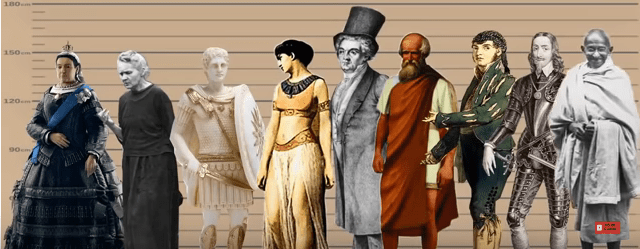
What is interesting is why people view tall people as somehow better leaders. There are numerous studies on the anthropological underpinnings of size and pecking order in the animal kingdom. It is not a stretch to think that deep within the reptilian parts of the human brain are the remnants of the need for a strong protector. The entire concept of the alpha male embodies this notion.

The larger, stronger member of the group takes on all comers and provides for the group while the betas and very meek simply do as they told or fight among themselves for the highest possible status in the group who, at some point, will eventually challenge the alpha member for dominance. Other studies involving what is considered beauty have also been done. We routinely give deference to attractive tall people unconsciously. Nature has imbued these folks with an innate power to get others in the group to do for them. I have termed these innate physical traits a source of natural power.

There are also numerous books on the origins of power. Some types include: Legitimate Power; Expert Power; Coercive Power; Referent Power; and, Reward Power. The Resistance attempts to convince the less informed that Trump is using coercive power while working to undermine his legitimate powers granted by the Constitution. Some who state that Trump has created a cult like following are ascribing Referent Power to him. I doubt a single Trump supporter with more than two brain cells sees him as a deity. But that seems to be what the resistance wants people to believe because it would create a schism in the religious communities. Continue reading

Comment Of The Day: “Seven Ethics Observations On The Las Vegas Democratic Candidates Debate”

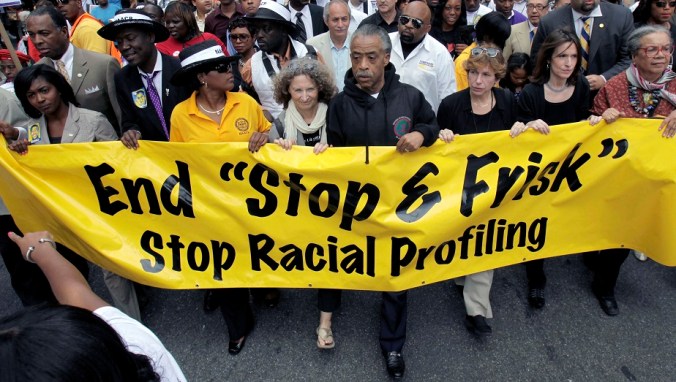
I’m jumping James Hodgson’s Comment of the Day in line past two COTD already on the runway. His topic is stop-and-frisk,which nas been the topic of much discussion hither and yon, especially on social media by people who have no idea what they are talking about. James does, and his post is both timely and helpful.

For some background on the stop and frisk Supreme Court case, here are some links:

There will be a test.

Here is James Hodgson’s Comment of the Day on the post, “Seven Ethics Observations On The Las Vegas Democratic Candidates Debate”: Continue reading

Comment Of The Day: “More Evidence That Arthur Herzog’s Novel ‘IQ 83’ Is Coming True—”

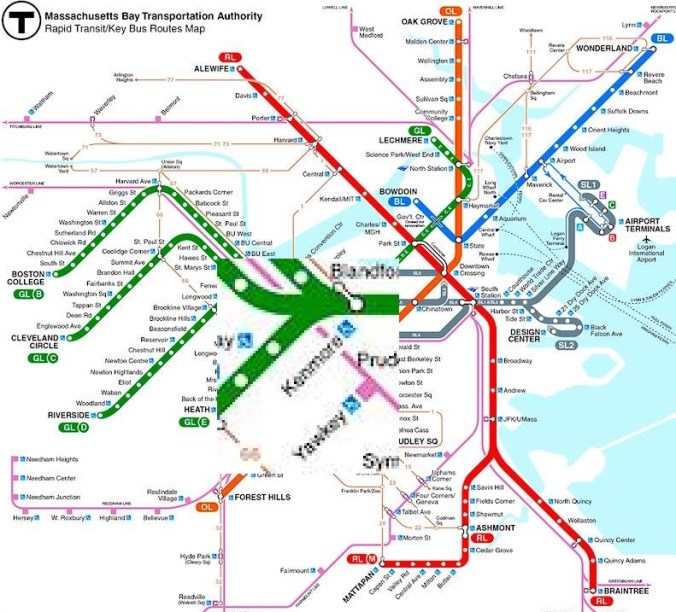
(I enlarged the two Fenway Park stops for your convenience…)

I grew up rising the buses and  subways in Boston, and later oversaw a huge U.S. Chamber of Commerce study on transportation infrastructure funding problem (hopeless then, much worse now) , so the Boston Councilwoman’s fascinating theories about how making public transit in Beantown free to riders immediately interested me…since I knew it was crap.

I probably should delve into this issue more frequently, so I was pleased and relieved that fellow New Englander Rich in CT gave us this Comment of the Day on the post, “More Evidence That Arthur Herzog’s Novel “IQ 83” Is Coming True—Beside The Fact That Bernie Sanders Is Leading The Race For The Democratic Nomination, That Is”:

The economics of public transportation are counter intuitive, and this plan is not as insane as it sounds. However, for a city like Boston, it would be absurd to eliminate ridership fare.

Let’s look at my hometown. We have one bus hourly from 7 AM to 10 AM, and 2 PM to 6 PM, that connects to a neighboring city. The farebox recovery ratio is about 15%: For every dollar spent on the service, customer fares return $0.15 – 15 cents on the dollar.

The bus is provided as a bare bones courtesy for those who need it. If the bus company raises the fare, ridership will go down, because people cannot afford to use it anymore (they then cannot get to work…). Fare recovery goes down with an increase in fare, but the cost of running the shuttle remains the same. The very population it is meant to serve is not served. We’d be running an empty bus back and forth.

In all truth, my town subsidizes 100% the cost of the shuttle under its contract with the city; the $2.00 fare effectively pays for the transfer to a city bus. Eliminating the bus fare only modestly increases the necessary public subsidy; any expansion of hours or geographic distance would also require an increase in subsidy.

If we look at a city like Boston, the economics are very different. The service is still provided for those who need it, but a great many more need it. The fare box recovery is closer to 30%-50%. The cost of the service is the same whether people are on it or not, so the city offers discounts for bulk purchases to attract people who would otherwise use a car. This has the positive effect of increasing ridership and improving the fare box recovery slightly; it also has the perverse effect that the people who need it the most pay the most for it. Continue reading

Comment Of The Day: “More Evidence That Arthur Herzog’s Novel ‘IQ 83’ Is Coming True—Beside The Fact That Bernie Sanders Is Leading The Race For The Democratic Nomination, That Is”

I want to express my admiration and appreciation to the Ethics Alarms comment gang for adding quality content to the blog while I was occupied in involuntary technology wars. The comments were copious and uniformly excellent, with several strong Comment of the Day candidates. In fact, I feel completely superfluous.

Here is Chris Marschner’s Comment of the Day on the post, “More Evidence That Arthur Herzog’s Novel ‘IQ 83’ Is Coming True—Beside The Fact That Bernie Sanders Is Leading The Race For The Democratic Nomination, That Is“:

While the focus is on Michelle Wu, Bloomberg’s past comments regarding the intellectual skill sets of farming and manufacturing are beyond the pale for stupidity. He flat out stated that farming requires only the ability to dig a hole and plant a seed, while manufacturing – using a lathe – one only needs to turn on the machine and make it go the right way.

Sure, he was not running for President at the time he made those comments but for him to suggest that the analytical problem solving skills the information age requires are not present in these occupations is prima facie evidence that he either lacks analytical skills when he made such a deduction, or his cerebral library of information on occupational skill sets has too few volumes of information.

While we are closer to AI than we were when Bloomberg established his financial reporting enterprise that allowed investors to make better investing decisions, most computing still relies on if x do y, if not do something else. If the computer cannot make sense of the data it returns an error code and stops, Fundamentally the computer says, in the immortal words of the robot from Lost in Space ” That Does Not Compute”. Continue reading

Comment Of The Day: “The Big Lies Of The “Resistance”: #8 ‘Trump Only Cares About Himself, Not The Country'”

Jeffrey Valentine has given us a perfect send-off into Presidents Day weekend with an epic post ranking the 44 men who have led our nation.

When I was a lad, Presidential ranking lists were common and popular. Jeffrey’s version is better and fairer than most of them. Then as now, the historian cabal was overtly political, overwhelmingly liberal, and successfully misleading the public with false narratives gilded into accepted truth. Worst of all was Kennedy’s house historian, Arthur M. Schlesinger, Jr.  who was routinely treated by the news media of the time as an objective authority, which he most certainly was not. He placed his friend and idol JFK in the “Near Great” category, scrupulously ignored the warts on Democratic Presidents like Wilson and Jackson, and was especially unfair to Eisenhower, whose “hidden hand” Presidency has gradually won admirers the more we learn about what he was doing.

Ethics Alarms is dedicated to the subjects of both ethics and leadership, so Jeffrey’s commentary is especially welcome as well as timely. Here is Jeffrey Valentine’s Comment of the Day on the post, “The Big Lies Of The “Resistance”: #8 “Trump Only Cares About Himself, Not The Country.” I’ll be back for a brief comment at the end:

Perhaps moreso than the original post, Adimagejim’s comments about former President Obama [JAM: Commenter Adimagejim was extremely critical of President Obama ] got me thinking about how I think about Presidents and how they rank. The more I think about it, I put Presidents into seven distinct categories. As you will see, my personal opinions don’t always mesh with popular opinion. I will also note that while I find the Presidents fascinating, I won’t even pretend to study them to to the extent that our host has.

The categories are as follows:

1. The Greats with no caveats. These are the Presidents who could objectively say “I was a great President because…..”, have a really reasonable explanation of why they were great, and not have to explain away any major part of their respective presidencies. In this category, I place George Washington, Thomas Jefferson, James Monroe, James K. Polk, Abraham Lincoln, Theodore Roosevelt, Harry S. Truman, and Ronald Reagan. [You’ll note these categories won’t create perfect rankings, per se, as I believe there is at least one president (Roosevelt) in paragraph 2 objectively better than Jefferson, Monroe, Polk, Truman, and Reagan].

[Note One: This ethics blog is often very critical of Jefferson-reasonably so as a man- but I’m ONLY analyzing the presidencies of these men. I think his presidency was clearly successful-even if he wasn’t an ethical individual. In fact, Jefferson may be the major exception that probes Jack’s rule that, generally speaking, the country is better served by an ethical man holding the presidency.]

[Note Two: James K. Polk doesn’t quite seem to fit on this list. I think his reputation is a function of consequentialism, however. He expanded U.S. territory, which set the stage for the civil war. Historians blame him for this- I don’t think that’s fair. I read somewhere that a historian once stated he resolved matter for HIS time. I think it’s unfair to expect a president to do more. What he resolved for his time- he resolved well. He was, therefore, a great, but not legendary, president.]

2. The Greats with Significant Caveats: These are the Presidents who could objectively say, “I was a great president because…”, have a really reasonable explanation about why they were great, but would have a major controversy or issue to to explain away in terms of their legacy. Caveats are always, in my mind, considered based on their respective times. My more liberal friends might put Washington in this category, because he owned slaves. I do not. This list includes Andrew Jackson (Trail of Tears), Franklin Delano Roosevelt (Japanese American Internment), Dwight D. Eisenhower, (McCarthyism), Lyndon B. Johnson, (The Vietnam War), and Bill Clinton (Monica Lewinsky). Continue reading

Comment Of The Day: “The Hypocrisy Of Politically Correct Casting Mandates: Spielberg’s ‘West Side Story’ Virtue-Signaling Debunked”

This was a nice surprise! Just as I began discussions about doing a special presentation for the Smithsonian Associates on West Side Story to coincide with the movie’s release (or maybe the Broadway revival’s opening this summer, mplo issued this timely Comment of the Day on a year old post, “The Hypocrisy Of Politically Correct Casting Mandates: Spielberg’s “West Side Story” Virtue-Signaling Debunked.”

Here it is;  I’ll have one comment at the end:

In my opinion, it would’ve been better if Spielberg had just left the original 1961 film version of West Side Story alone and created his own film with a similar theme, an homage  to WSS, instead of trying to update and remake it.

I have seen pictures of the cast, examples of Justin Peck’s choreography of the dancing, and the scenery settings, and how colorful they all are. I don’t like what I’ve seen, at all.The backdrop scenes look far more like wealthier, tonier parts of the city, as opposed to the impoverished, rough-and-rundown parts of the city that served as a backdrop in the original. The colors are too jarring.

The Jets, the Sharks and their girls in Spielberg’s reboot/remake of the film “West Side Story” look far more like wealthy suburban prep-school kids who are dressed to the nines for partying all over town than two street gangs who are at war with each other. The Jets, the Sharks and their girls in the original 1961 film version of “West Side Story” look way rougher and tougher than the ones in Spielberg’s  movie.

Justin Peck’s choreography looks too hyper, and more like hip-hop or rap dancing. I’ve seen pictures of that. Simon Oakland’s Lt. Schrank, William Bramley’s Officer Krupke, and the late Ned Glass’s Candy Store owner, Doc, also look  rougher  than Spielberg’s Lt. Schrank, Officer Krupke and “Doc,’ who has been given a sex change in the new script. [JAM: This was a gimmick to get Rita Moreno, the original film Anita, into the movie] Continue reading

Comment Of The Day: “Titanic Ethics”

Michael West has written a remarkable Comment of the Day in several respects. For one thing, it is a comment on a post that is almost eight years old, a record for Ethics Alarms. For another, he becomes the first commenter to comment on the same post under two different screen names. Finally, there is the fact that his point is one with historic validity, yet seldom if ever mentioned by the many critics of James Cameron’s  epic yet intermittently ridiculous film, including me. Follow the tag: there are a lot of  references to “Titanic” here.

One note in prelude to Michael’s essay: the cruel misrepresentation he alludes to can be partially laid at the now dead feet of Walter Lord, who wrote the influential and popular account of the Titanic’s sinking, “A Night To Remember.” It is an excellent account, but he decided to use Charles John Joughin as comic relief, and the  movies, including the one based on his book, distorted his portrayal, which itself seems to have been unfair.

Here is Michael West’s Comment of the Day on the 2012 post, “Titanic Ethics”

How about every Titanic movie’s depiction of Charles John Joughin?

Verdict: Unethical.

Joughin was the lead baker on board the Titanic. Built big and stout as a bull according to most who met him.

When he first heard the Titanic was going to go down, on his own initiative, he rallied the baking crew to gather what bread they could to distribute ample loaves to every lifeboat anticipating they may be afloat for awhile before rescue — something like 40 pounds of bread per boat. Several witnesses and his own testimony recount that he took multiple trips to help guide passengers from below decks up to the boat deck. He proceeded to a lifeboat, which he had been earlier commanded to be a crewman for (either tilling it or rowing, I’m not sure), only to discover another crewman had taken his spot. He didn’t protest, though he could have, so he helped load that boat and then went back to find more passengers below decks. After realizing there’d not be enough life boats and that many people would have to swim for it, he began to throw as many deck chairs into the water as he could as flotation devices, later he mentioned he hoped he could possibly find one of them after the ship went under. When the ship made its final plunge, he found himself standing on the back of the Titanic riding it into the icy waves. In the water, which was so cold, most people died of hypothermia within fifteen minutes…most much sooner than that, Joughin treaded water and swam for a remarkable one and a half to two hours before finding the upside-down collapsible commanded by Lightoller. Naturally, given Joughin’s luck thus far, the collapsible had no more standing room, so he had to float to the side for a bit longer before another lifeboat came by and picked him up. Continue reading

Unethical Quote Of The Week: Joe Biden

“You’re a lying dog-faced pony soldier!”

—-Fading Democratic Presidential nomination front-runner Joe Biden, lashing out at a New Hampshire voter whose questions annoyed him.

First, the important question: what the hell is a “pony soldier”? The answer is “nobody knows.” Nor does anyone know why this insult, epithet, whatever it is, leapt into Joe’s mind, but then it’s Joe Biden. Who can say what vestigial RNA from his prospector ancestors are knocking around in Biden’s gray matter? He thinks “malarkey” is hip slang; I’m waiting for him to start shouting “By crackie!, “Jumpin’ Jehoshaphat!” and “Tarnation!”

I found a website that attributed “pony soldier” to a John Wayne movie—no, you morons, the Duke’s movie was “The Horse Soldiers.” “Pony Soldier” is a forgettable 1952 Western starring Tyrone Power. Nobody, but nobody, quotes  Tyrone Power movies, and Power had as much business starring in a Western as David Niven. So it looks like this is just a spontaneous nonsense insult, like in “A Few Good Men” when Tom Cruise shouts, “You’re a lousy fucking softball player, Jack!” at Kevin Bacon after an argument  that has nothing to do with softball.

Now on to the incident itself. Today Biden was handshaking and chatting at a pre-New Hampshire primary stop in Hampton. A woman asked him,“How do you explain the performance in Iowa and why should the voters believe that you can win a national election?”

It’s a fair question, since the only reason on God’s green earth that anyone would seriously  consider a doddering, blathering, fading and rapidly aging old pol like Biden as a  rational nominee is that he would be preferable to the Doomsday Meteor.

“You ever been to a caucus?” Biden replied. When the voter said she had,  Biden snapped, “No you haven’t. You’re a lying dog-faced pony soldier!” Continue reading

Comment Of The Day: “Ethics Observations On The ABC Pre-New Hampshire Primary Democratic Candidates Debate”

Joel Mundt picks up his second Comment of the Day opining on the ever-green and always perplexing ethics controversy of slavery reparations, which was again broached in the recent Democratic candidates debate in New Hampshire.  The topic has had  a resurgence in recent years due to the advocacy of the current rock star of race-baiting , Ta Nihisi Coates, who regards the mass white to black wealth transfer as a the only way to solve America’s persistent economic gap among the races.

It has also had a long record of debate on Ethics Alarms, notably in the commentary on this 2019 post, where I admitted that I had momentarily lost my mind  in this one from 2016, in which I made…

“….no sense whatsoever. While again rejecting the concept of reparations (“the hell with that. [The idea is] to punish [whites] for the sins of slavery committed by their ancestors by arranging a massive transfer of wealth based on principles of tort law and damages. This has always been a pipe dream of civil rights extremists, couched in the language of revenge, as if the nation and the nation’s white citizens have made no efforts, sacrificed nothing, expended no resources or wealth, to try to undo the legacy of slavery and Jim Crow. Reparations are not going to happen, as the concept itself is unjust….”), I proposed a solution….that was indistinguishable from reparations…”

I concluded that mea culpa post by writing,

I’m better now. I am also, unfortunately, also back at Square One, my “Do something!” phase regarding race in America having accomplished nothing, as “Do something!’ arguments always do, and I still see no solution on the horizon.

I still don’t. Joel’s perspective can’t address that.

Here is Joel Mundt’s Comment of the Day on the post, Ethics Observations On The ABC Pre-New Hampshire Primary Democratic Candidates Debate:

The issue of reparations has tied numerous candidates up in knots. Now it’s Steyer’s turn, though I think he’s a knot-head regardless. I firmly believe that reparations have already been paid. If the practice of slavery had been cut off solely by Presidential decree or Executive Order, or because the South simply decided to halt it, one could make an argument, however painful and convoluted, that financial reparations had a place at the table of discussion.

But I believe that slavery was ended with bloodshed. Those who supported slavery and secession from the Union paid dearly for it. Hundreds of thousands of Confederate soldiers died for their cause, cities were razed and burned, and their newly-formed government was terminated. And the North paid, too, with the lives of hundreds of thousands of young men who fought to save the Union and ultimately, to end slavery.

And now, 160 years later, people like Steyer (and Buttigieg, and others) say that’s not enough. They are, in effect, telling those soldiers, “Thanks for the sacrifice, but this is more about money than you getting eviscerated by cannon shot and having your body eaten by gangrene.” I’m not sure spitting on their graves is worse.

But it does get worse. Continue reading

Comment Of The Day: “The Ethics Mess That Is US Race Relations, Chapter III: The Martin Luther King Day Essay”

In today’s Comment of the Day, Michael R explores the effects of college costs, student loans and ideological indoctrination on schools’ ability to provide an the valuable education students think they are paying for. Some of the factors he mentions I didn’t know about; I’m not sure  I’ve ever read about them anywhere else.

Here is the veteran Ethics Alarms contributor’s  Comment of the Day on the post, “The Ethics Mess That Is US Race Relations, Chapter III: The Martin Luther King Day Essay.”

I don’t think all universities have become worthless. There are a lot of problems with the universities and much of it has to do with student loans and leftist indoctrination.

Student loans make people forget about how much college actually costs. Students go to colleges with nicer dorms, bigger ‘Wellness Centers’, and more activities because they can ‘afford’ it with loans. This resulted in an ‘arms race’ to ditch traditional dorms for suites, and now full apartments for students. It resulted in big ‘Wellness Centers’ instead of gyms. It resulted in vast Student Activities staff and budgets. It resulted in more and more sports. I would estimate that only about 1/3 of college costs these days go to academics and academic support (academic buildings, utilities, janitorial, etc). The rest is sports, activities, and administration. If you had a lean college with good academics, but old-style dorms, no student life, and no sports, it would go bankrupt quickly. College is expensive these days because the students and the parents DEMAND it be that way. Continue reading