1. Does anyone else wonder how John McCain would have voted last night if President Trump hadn’t gratuitously insulted his military service and suffering as a prisoner of war? I do. I know how much veterans care about their service and sacrifice on behalf of their country, and how deeply a public insult like Trump’s must have hurt. McCain has been seething all of this time. Maybe last night was a vote based on principle; probably McCain thinks it is. There is no doubt, however, that he hates Trump’s guts intensely, and that kind of bias is almost impossible to banish entirely. He is also probably more than a little angry that his colleagues and his party allowed someone who would treat him that way to be the nominee.
The astounding foolishness of Trump’s initial insult to McCain was framed as an insult to veterans, but the fee for his gratuitous nastiness was always going to come due in a setting like last night. Human nature can’t be taken out of politics; in fact, politics relies on human nature. These people aren’t automatons. It would be ethical to put grudges aside, but nobody should count on it.
The President reportedly called McCain to argue for a “yes” vote. I wonder if the Senator said, Scaramucci style, “Mr. President, this unheroic prisoner of war says, with all due respect, ‘Go fuck yourself.'”
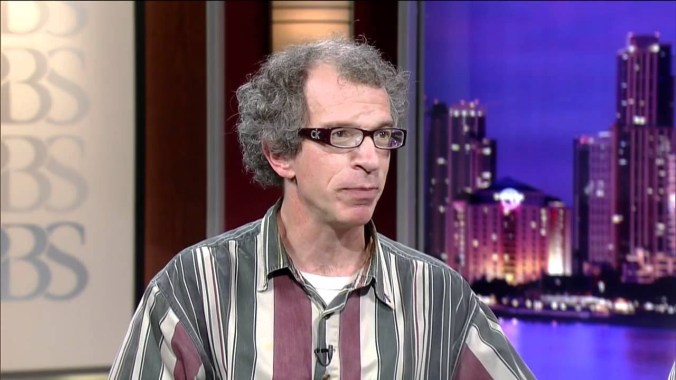
I find myself annoyed at the groundswell of good wishes for John McCain after his diagnosis of glioblastoma…McCain is a war criminal and, more to the point. someone who as a politician has championed horrifying actions and been lousy on state commitment to public health…But ultimately what troubles me is the urge to send such well wishes to an utter stranger as it reinforces the notion that some lives are more important than others. There are lots of people with glioblastoma and who have died from it (including my mother twenty years ago)….
—San Diego State University Political Science Professor Jonathan Graubart on Facebook, prompting some calls for him to be fired, and others on campus to second his opinion.
Is this an Ethics Quote or an Unethical Quote? I could call it an Ethics Quote because it raises many ethical issues, and mere statements of opinions, even stupid and vicious ones, are not usually unethical in themselves. This quote strongly suggests that the speaker is unethical in than one respect; it is also, at very least, irresponsible in its context, which is that he is a teacher, and represents the institution.
Jonathan Turley flagged this episode, as he reliably does any time a professor comes under fire for controversial speech. As always, he supports his fellow academic:
“Graubart’s comments are hurtful and hateful. It is a reflection of the incivility that has taken hold of our social and political dialogue. It is always sad to see a fellow academic rush to the bottom of our national discourse. However, we have free speech and academic freedom to protect unpopular, not popular, speech. Popular speech does not need protection. Graubart is expressing his deep political and social viewpoint on social media. He should be able to do that just as his critics have a right to denounce his views.”
San Diego State University is a government institution, and thus subject to the First Amendment, in addition to the principles of academic freedom. However, even a state institution has a right to protect itself from harm. This isn’t just political speech; it is bona fideasshole speech, signaling that the speaker is not a trustworthy teacher, and that any school that would have someone this intolerant, doctrinaire, vile and contemptuous of kindness and compassion educating, aka indoctrinating students isn’t trustworthy either. Universities, public or not, should be able to insist on a minimal level of professionalism from faculty in their public behavior and pronouncements so the institution isn’t permanently discredited, embarrassed, and harmed.
Law professor/blogger Jonathan Turley’s latest essay, “Roper’s Resolve: Critics Seek Dangerous Extensions Of Treason and Other Crimes To Prosecute The Trumps” had me at “Roper,” Turley’s direct reference to the most often posted movie clip on Ethics Alarms,* the scene above from “A Man For All Seasons.” Turley applies the scene correctly, too, to the depressingly large mob of previously respectable and responsible lawyers, elected officials, scholars, academics, journalists and pundits who have betrayed their professions’ values and ethics to falsely tell a gullible public that the President and members of his family, campaign and administration have committed treason, espionage, conspiracy, election fraud and obstruction of justice when such accusations are not supported by law or precedent, evidence, facts or common sense. These accusations are, rather, the product of unreasoning fury and bias sparked by Donald Trump’s election as President.
Some of the individuals Turley names, like Senator Tim Kaine, Hillary’s running mate, may be just spewing political bile out of a lack of integrity. Kaine is a former prosecutor and should know better. Some, like Cornell Law School Vice Dean Jens David Ohlin, may be examples of bias making smart people stupid. MSNBC legal analyst Paul Butler, who claimed Trump was “conspiring with the U.S.’ sworn enemy to take over and subvert our democracy,” and who declared it is now “clear” that “what Donald Trump Jr. is alleged to have done is a federal crime” are, sadly, typical of how the unethical and dishonest the news media now behaves much of the time. As for my fellow legal ethicist Richard Painter, also fingered by Turley, I’m convinced from his increasingly extreme and hysterical anti-Trump analyses that he has been driven to the edge of madness by Trump’s election. He’s not the only one.
Turley also points to former Watergate assistant special prosecutor Nick Akerman, who is just plain wrong. One cannot claim, as Ackerman does, that there is “a clear case that Donald Trump Jr. has met all the elements” of a violation of the election laws when, as Turley points out, no court has ever reached such a conclusion. That is prima facie evidence that there is no clear case.
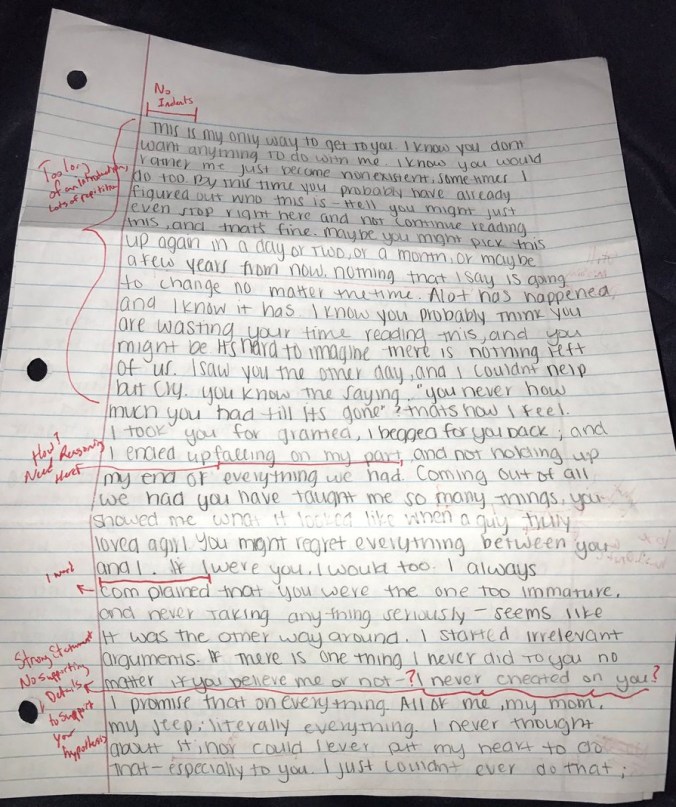
University of Central Florida student Nick Lutz set out to humiliate his ex-girlfriend after she sent him a letter (above) apologizing after their breakup, so he graded it like a school paper, and instead of keeping the exchange private and between them as a responsible, decent, fair adult would, he tweeted it to the world, where predictably, since the Twitterverse is populated by a lot of people like Nick, it went viral, with hundreds of thousands of like-minded jerks “liking” it.
Nick is, at this stage of his life, a toxic creep without properly functioning ethics alarms. However, his school had no legitimate interest in this matter. Yet it placed him on two semesters of suspension and probation as punishment for this entirely non-school related conduct. (No, the badly treated ex- is not a student.) UCF sent Nick two letters, the first stating that he may have violated the law (no, he didn’t), while the second stated that he had violated the university’s student rules of conduct regarding disruption and cyber-bullying.
Baloney. Read the rules; I did. Even though the rules are unenforceably broad, they wouldn’t apply to his conduct: Continue reading →
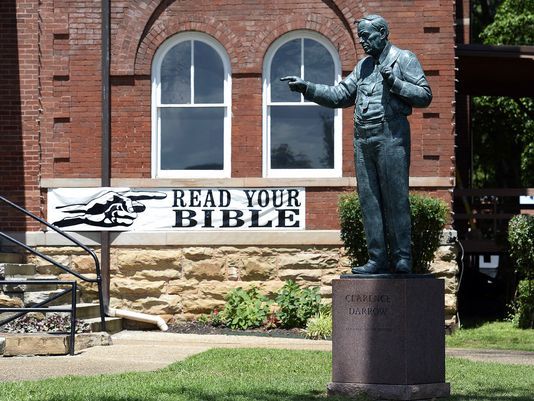
Apparently about a third of the population of Tennessee still doesn’t buy Darwin’s Theory of Evolution (according to a 2015 Pew Research Center study) so it should not be too much of a surprise that in Dayton, Tennessee, site of the famous 1925 Scopes Trial, a newly erected statue of Clarence Darrow in front of the historic red brick courthouse where the trial took place was met with some protests. At a County Commission meeting in the town, resident Ruth Ann Wilson suggested that bronze Darrow might unleash a plague or a curse. “I rise in opposition to this atheist statue, all right?” she said. “This is very serious, folks.”
No, that isn’t serious, but the persistence of ignorance both generally and about the issues battled over in 1925 are. Another resident, Brad Putt, is quoted by the New York Times as saying, “People around here know that if you have a court case, you have to have two sides,” referring to the fact that there has been a Williams Jennings Bryan statue standing in front of the courthouse since 2005. “You can’t have Optimus Prime unless you have Megatron. You’ve got to have a yin to the yang.” Well, that’s not quite right either, depending on what Bryan and Darrow symbolize. If the idea is to have the most famous opposing counsel in U.S. legal history facing off, okay, that’s fair. If he is saying, as I think he is, that science and religion must counter and balance each other, that’s nonsense. Continue reading →
1. This isn’t the first post of the day: I woke up around 4 AM and couldn’t get back to sleep (“As My Guitar Gently Weeps” was playing over and over in my head, don’t ask me why, and images from the Red Sox 16 inning loss to the Yankees was giving me the night terrors), so I went to the office and wrote this post. Charlie Green, critic and friend, properly pointed out that my comment in passing that incorrectly alluded to rumors about Joseph P. Kennedy being a bootlegger was exactly what my post was criticizing David Brooks for doing in his attack on the entire Trump family, going back generations, a truly ugly op-ed.
What I was sorely tempted to say was that I’m just an ethics blogger, trying to focus attention on ethics standards in a daily blog from which I receive no income and intangible professional benefits if any. I mange to get 2000-4000 words published every 24 hours, working in short bursts while I try to earn a living, run a business, do research and be as good a father and husband as I can be. I have no editors, no researchers (except generous volunteers) and my blog is not a “paper of record” for journalists, seen by millions and paid for by subscribers. Is it really fair to hold Ethics Alarms to the same standards as David Brooks and the New York Times?
Make no mistake: my own standards are that no typo, no misstated fact, no misleading argument, are acceptable on an ethics blog, or any blog, or anything published on the web. Charles was right: using an unproven accusation of long-standing (Until Charles flagged it, I thought the bootlegging charge was a matter of public record) undermines my case against Brooks. Nonetheless, Brooks has absolutely no excuse. This is all he does, he has all week to produce a column or two, and he has a staff.
I’ve also corrected my error within hours of making it. What are the chances that Brooks and the Times will ever admit that they intentionally impugned the character of Fred Trump using rumors and innuendo as part of their ongoing effort to demonize the President of the United States?
My guess: Zero.
2. The big story this morning appears to be O.J. Simpson’s parole hearing. Will he be paroled and released after serving just nine years of the three-decade sentence he received for his participation in a burglary? Assuming that it is true that O.J., now 70 and unlikely to stab any more ex-wives and innocent bystanders to death, has been a model prisoner, yes, that would be the ethical result. O.J. got away with a double murder—he will not be asked at the hearing, “Once you’re out, can we assume that you’ll renew your relentless hunt for the real killer?”—but he wasn’t put in prison for that crime. Officially, he’s innocent. His fellow burglars were all put on probation, while the judge threw the book at the former football star, presumably to exact a measure of societal revenge for Nicole and Ron. The sentence was unethical. I don’t feel sorry for O.J. at all; I’m glad he had to serve hard time, just as I would have been happy if he had been squashed by a meteor. Justice, however, demands that he go free.
1. It is a matter of constant fascination to me how all of President Trump’s personal lawyers appear to be flaming jerks, whatever their legal skills may be. Here’s an example from this week: Marc Kasowitz, President Trump’s personal attorney on the Russia conspiracy theory investigation, was contacted by a stranger, a retired public relations professional, who had read ProPublica’s unflattering story on Kasowitz. He sent the lawyer an email with the subject line: “Resign Now.’’
“I’m on you now. You are fucking with me now Let’s see who you are Watch your back , bitch/”
“Call me. Don’t be afraid, you piece of shit. Stand up. If you don’t call, you’re just afraid.”
“I already know where you live, I’m on you. You might as well call me. You will see me. I promise. Bro.”
Nice.
This isn’t a legal ethics violation, though it almost certainly would be if Kasowitz were addressing an opposing counsel in such a manner. It’s just generally unethical as outrageous, inexcusable, gratuitous incivility, reflecting poorly on him, his profession and his client. A client who was minimally concerned about ethics would fire him.
2. Speaking of a minimal concern for ethics, Trump’s defense of his son’s dumb but legal meeting with the Russian lawyer promising dirt on Hillary included the statement that “most people would have taken that meeting.” Once again, we have evidence that Donald Trump literally doesn’t know what ethics is. Oh, his rationalizations are the same ones the average ethically-retarded citizen uses—this is why he is President. They are still rationalizations. Yes, Mr. President, and most people would accept extra money from an ATM and not tell the bank about it. And most people lie to get out of trouble. And most people do all sorts of unethical things, which doesn’t make them ethical, responsible or appropriate.
He is the President, though, and this is how we will inevitably become a nation of assholes.
3. And speaking of assholes, there is Nancy Pelosi. Because a female journalist was blocked from access to the House of Representative by a Sergeant of Arms who properly pointed out that she was wearing a sleeveless dress, always forbidden according to Congress’s dress code, we were suddenly subjected to the false narrative that those mean, sexist Republicans were abusing women again, as well as being typically antediluvian in their ideas about propriety. (Men can’t go sleeveless either, but never mind.) Paul Ryan was the target here, as the Speaker is officially charged with enforcing such rules. The narrative was not really about the dress code, but just part of the over-all “Get Republicans” news media strategy to make the party as unpopular as possible. Yesterday Paul Ryan plausibly said that he wasn’t aware of the rule in question, and was happy to amend it. Then Nancy Pelosi piled on, tweeting, “Glad to see [Speaker Ryan] is updating the dress code for the House Floor. These unwritten rules are in desperate need of updates.”
Pelosi was Speaker for four years, her tenure ending just six years ago. The same rule Ryan is being attacked for was in place during her entire tenure. Why didn’t she fix it herself, dedicated feminist that she is? Her tweet is such obvious hypocrisy that it calls attention to the double standards employed by Democrats, the news media and women. Pelosi could have cheered the change without appearing to duck her own responsibility for their continuation. Instead, she acted as if she was an innocent bystander.
Nancy Pelosi is a major reason the Democratic Party has become a party of assholes. Who but an asshole would tolerate a national leader like this as the face of his or her party in Congress? Are Democrats proud of this woman? Do they endorse her tactics and rhetoric? We have to assume so, don’t we? Continue reading →
1. I’m encountering Ethics Alarms ethics alarms. For example, is it unethical for me to choose not to fix the typos in a comment from an obnoxious commenter? I generally fix mistakes when they turn up in comments from regulars here, or missing words and letters in first posts by newcomers. But the other day an annoying commenter of recent vintage registered a comment that seemed as careless as it was badly reasoned, and had several typos.Yeah, I fixed them. But I didn’t want to.
Then, after a long period without any blog banishments, I banished a commenter yesterday whose first post was really poor, and whose last was insulting in response to my pointing out just how poor it was. As I told him in the exit response, he had triggered The Stupidity Rule. I really don’t allow stupid people to comment here once I determine that they are hopeless. Is that wrong? Elitist? Mean?
I don’t want to keep explaining things to people whose comments indicate that they have preconceived notions, unshakeable biases, inadequate education and training in critical thinking, and are under the impression that an uninformed opinion is worthy of publication because it’s theirs. Yesterday’s exile also made the fatal error of criticizing the blog because it was “judgemental.” Yes, it’s a blog in which we analyze whether conduct is right or wrong, or something else. That demands judgment, and being judgmental. The fact that the matter at issue was a lawsuit—you know, before a judge?—and the commenter still made that observation anyway sealed his fate, even before he wrote that I was bald and presumably “repulsive to women.”
Wait…I’m bald???
2. The University of Missouri, aka Mizzou, is in crisis as a direct result of its administrators craven capitulation to race-based extortion triggered by general angst and the Ferguson Ethics Train Wreck in 2015. Before the protests (which were based on nothing specific at the University that was ever demonstrated by the protesters, other than the President refusing to bow to demands that he condemn random reported racial incidents that didn’t involve students), Mizzou was thriving, growing, and building new dormitories. Now, in response to the nationally publicized meltdown of common sense and adult supervision (climaxed by a protester-allied communications professor, Melissa Click, being caught on video calling for “some muscle” to prevent a student reporter from recording an ugly campus confrontation), enrollment is down 30%. The university is closing seven dormitories and cutting more than 400 positions, including faculty members.
Good. But from the comments of students and remaining faculty members, it doesn’t sound as if the right lessons have penetrated the campus culture’s race-addled skull. Continue reading →
1. I’ve always had ethical problems with parole hearings, and thanks to a link sent by Ethics Scout Fred, I really have ethics problems with parole hearings. This story, from New Hampshire public radio, portrays an unprofessional and chaotic process in which parole boards, made up of officials without training or guidelines, insult, bully and deride prisoners to get the answers they want. A sample:
“While they may review cases beforehand, the parole board has only about 15 minutes to speak with people convicted of charges including sex offenses, drug crimes, and domestic violence before deciding if they can live safely outside prison walls. Members receive no training and appointment requires no prerequisite experience. Most of the time, inmates who meet minimum requirements are granted parole.”
Great.
2. Crime naturally makes me think of Chicago, where, it is reported, the wise city managers, led by Mayor Rahm Emanuel (D) are installing a system that requires public high school students to show that they have plans for the future before obtaining their diploma. In order to graduate, students will have to demonstrate that they’ve secured a job or received a letter of acceptance to college, a trade apprenticeship, a gap year program or the military The Washington Post reports. Emanuel’s plan, approved by the Board of Education in late May, makes Chicago’s the first big-city system to make post-graduation plans a requirement.
“We are going to help kids have a plan, because they’re going to need it to succeed,” Emanuel told the Post. “You cannot have kids think that 12th grade is done.”
Oh, why don’t we just enlist the kids in the Social Justice Youth Corps, give them uniforms and some good progressive indoctrination, and be done with it? This is such an egregious abuse of power and autonomy, as well as parental authority, that the fact that it got a single vote indicates that the culture’s values are coming apart. I’m going to list five things that are unethical about this plan, and invite readers to some up with the doubtlessly large number of others that I missed because its early and the shock of this story fried half of mu brain:
It’s dishonest grandstanding. How are they going to enforce the “plan”? Will Chicago’s Plan Police keep tabs on graduates? Will students who don’t follow the plan be captured and thrown back into high school?
It is unfair, coercive. unconscionably narrow. What if a student’s plan is to continue her education by taking a year off and touring the world? What if the student plans on training for the Olympics, or a bodybuilding championship?
What if she wants to go to New York City and audition for shows?
The measure demonstrates myopic disregard for the original, the eccentric, the creative, the bold, the dreamer, the non-conformist and the individualist
But then individualists make poor sheep, right?
It is totalitarian. It is none of the government’s business what a student chooses to do after graduation, or when that student decides to it. Here was my plan, fully backed by my parents: spend as much time figuring out what I want to do with my life as it took.
I’m still figuring.
It is arrogant. It is disrespectful. It is presumptuous. It is an invasion of parental authority. It is probably unconstitutional. It is wrong.
Good Morning, everybody, and Happy Independence Day.
1. A minor item cross-filed under “Twitter makes you stupid and careless,” “Oh, sure, our public schools are terrific!” and “Is we getting dumber?”: Yesterday, whoever the History Channel allows to handle its Twitter account tweeted out the fact that July 3 was the anniversary of the final day of the Battle of Gettysburg, and included a picture of General…George Washington.
2. Is trolling ever ethical? When it’s pointed, clever and deserved, perhaps. Boston-based businessman and inventor V.A. Shiva Ayyadurai, a Republican who received a Ph.D. and his undergraduate degree from the Massachusetts Institute of Technology, is running for the GOP nomination to oppose Massachusetts Senator Elizabeth Warren. He’s running on the slogan: “Only a real Indian can defeat the fake Indian.” V.A. sent Warren a DNA test so she could prove that she’s part Cherokee, as she asserted in the past to get the benefit of affirmative action recruiting programs at Harvard Law School and the University of Pennsylvania. The Senator refused to take the test, prompting her tormentor to tweet,
“I’m deeply saddened @SenWarren refused my thoughtful (gift-wrapped) Birthday Gift: the 23&me DNA Test Kit,” Ayyadurai tweeted Sunday. “Most unfortunate! #FakeIndian.”
He then posted screenshots of the DNA test kit he purchased online.
Why doesn’t Warren just take the test? If it shows she has Native American DNA, then she’s killed an issue that has haunted her since 2012, and will continue to unless something changes. If it shows that she isn’t an “Indian,” then all she has to do is say that she was mistaken, she had bad information from her family, and regrets taking advantage of the affirmative action programs to the detriment of real minority academics. (Harvard listed her as a teacher “of color.”)
The answer is that Warren would rather claim that the Indian issue is a manufactured slur by the right, so she can continue to claim minority status and victim status. The answer is that she’s a cynical, cowardly fraud.
Warren, Hillary, Bernie Sanders, Tom Perez, Nancy Pelosi and Maxine Waters constitute the mots visible leadership of the Democratic Party.