The Black Lives Matters Effect, Part 2: Purdue’s Free Speech Chill

Perdue letter


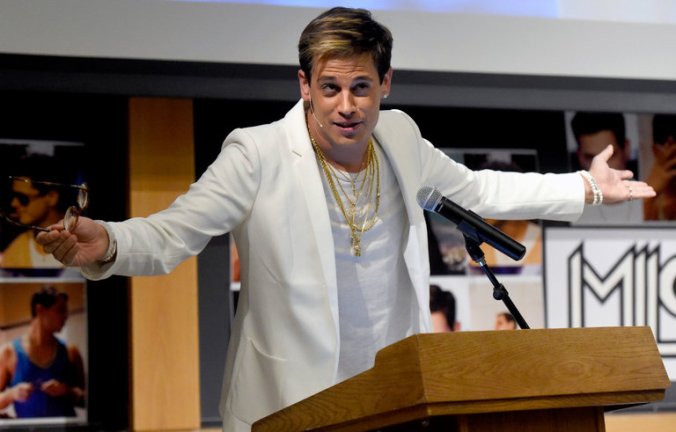
So powerful is the desire to be seen as on the “right” side  in an era where race trumps everything that a major university is harassing a student because he dared to be critical of Black Lives Matter. This is another, more sinister aspect of the Black Lives Matter Effect. A racist hate group that claims to promote virtuous objectives as cover, Black Lives Matter causes well-intentioned progressives-in-denial to equate well-earned attacks on the group to rejection of racial justice.

This episode is especially troubling. Purdue University Northwest student Joshua Nash received an ominous letter summoning him to a “required Administrative Meeting” scheduled by a campus administrator to discuss Nash’s personal Facebook comments. This is as appropriate as a letter demanding a student’s appearance before authorities because there was a complaint about his off-color toast at a wedding reception.

Nash says he isn’t certain which Facebook post was deemed worthy of threatened discipline, but it was probably the one where he states “Black Lives Matter is trash because they do not really care about black lives. They simply care about making money and disrupting events for dead people.” According to Nash, that comment was reported to Facebook, with removed it and suspended his account for 30 days. Nash also claims that a campus official said his social media comments could result in his expulsion.

I assume that FIRE will soon be in Nash’s corner, and maybe, just maybe, the ACLU, depending on what its integrity level is these days. This is campus suppression of free speech. I think the threat of expulsion–for a Facebook post?—is too ridiculous to be taken seriously, but the letter is bad enough. All students need to know is that a politically incorrect Facebook post will get them hauled into a “meeting,” a.k.a. inquisition, and their speech, with the exceptions of a few wilful martyrs, civil libertarians, and rebels, will be effectively muzzled. Continue reading

The Quest For A Positive Argument For A Donald Trump Presidency Continues: The Pathetic Professor Kesler

Searching

I am not a “Never Trump” advocate. I can conceive of a Presidential race that would force me to vote for Donald Trump, over, say, a Gorn, frightful Florida Congressman Alan Grayson, “Simple Jack” or Darth Vader. None of those, fortunately, are likely to be running in 2016, however, so the issue is moot. I have stated that there is no rational reason to vote for a candidate as undeniably unfit as Trump when the alternative is a candidate as undeniably as unfit as Hillary Clinton. Unlike Trump, Clinton does have positive features in her resume. As a Senator and former Secretary of State, she presumably has a passing comprehension of how the government works, and she comprehends the importance  of  public decorum and civility for a national leader, meaning that she knows that boasting about her penis or doing this…

Trump-Mocks-Disabled-Reporter-CNN-USA-Today

…is not remotely Presidential. Hillary’s positive features are, we all know, buried beneath the avalanche of her dishonesty, venality, incompetence and corruption,  but still, she has something. +1 beats – 1,606…even zero beats – 1,606.

Months ago, I challenged Trump supporters, Trump fans, Trump defenders and even Trump “oh come on, nobody is that bad”-ers to present a single, substantive, positive feature of Donald Trump that could justify voting for him as President. I have searched for and read alleged posts by professional pundits and others; I have listened to (until overcome with depression and nausea) Trump’s uniformly idiotic surrogates, and I have invited submissions. The results? Zilch. Nada. Bupkis.

“Hillary is evil!” is not a positive argument for Trump. Other submissions— “He’ll destroy the Republican Party, those collaborating traitors!”“I’m mad as hell, and I’m not going to take it any more!,” “He says what he thinks!,” “I hate political correctness!,” “He’ll stick it to the elites!” and the ever-popular incoherent grunt—are similarly non-responsive. I don’t think it is too much to ask, and the lack of any entry remotely meeting the modest requirements (the best so far is, “At least the news media might do their job with someone like him as President”) makes me more certain by the day that 1) I am correct to reject him and 2) that Gorn may not be so bad.

Clearly I am not the only one engaging in this quest. The Washington Post obviously searched under every rock to come up with an academic who would put his name on an op-ed last week titled “Why ‘Never Trump’ conservatives are wrong about Trump.”

He is Charles R. Kesler, a professor of government at Claremont McKenna College, and the editor of the Claremont Review of Books. My heart soared like a hawk when I saw the column:  Claremont McKenna is an excellent institution, and finally someone who does not communicate in howls, hocks and memes had written down a substantive argument to vote for Donald Trump!

But no.

Here, alas,  are his “substantive” points: Continue reading

KABOOM! The Tale Of The Third-Grader’s Racist Brownie Offense: No, I Don’t Understand This At All

brownies explosion

This story made my head explode, and thus it will be tagged “Kaboom!” Unlike most such Kaboom! posts, however, this one is likely to make my head explode every time I read it. Or think about it. Forever.

On June 16, a third grader made a comment about the brownies being served to his class during an end-of-the-year class party at the William P. Tatem Elementary School in Collingswood, New Jersey.  After another student opined that the remark was “racist,” the school called the Collingswood Police Department.

Okay, stop. I’m puzzled already, and my head exploded again just writing that:

  • How could a comment about brownies be racist? Did the child say, ” As with human beings, the blonde brownies are innately superior to the dark ones”? Somehow, I doubt it.
  • Another third grader pronounced the statement as racist. Not a teacher, now. An eight-year old. How can that trigger anything, in a sane world, but a discussion led by the teacher about what is and isn’t racist, and how people shouldn’t leap to such  inflammatory observations, because it makes human interaction difficult if not impossible?
  • The school called the police department? For what? A threatened brownie massacre? How is this conceivably a police matter? Why did the police come?

“What is the nature of your emergency?” “A third-grader in my class made an inappropriate remark about brownies!” “Calling 911 with prank calls is a crime, ma’am. Don’t do this again.” 

It is per se unethical and irresponsible for any police department to treat such trivia seriously.

All right,slogging on… Continue reading

Gene Autry Misinformation Update: Believe It Or Not, It Happened Again!

"Wild Bill" Donovan, who should have had nothing whatever to do with my ethics seminar today, but did anyway...

“Wild Bill” Donovan, who should have had nothing whatever to do with my ethics seminar today, but did anyway…

Yesterday I wrote about a lawyer in a legal ethics seminar interrupting me with a revelation about Gene Autry that was completely false.

Today I taught another legal ethics seminar, this time for a government agency. I was discussing was the various government ethics dilemmas in “Bridge of Spies,” the story of how lawyer Jim Donovan helped secure the release of downed U.S. flyer Francis Gary Powers in a famous incident during the Cold War. Many of the issues covered in my presentation were explored in this Ethics Alarms post.

As the film portrays it, Donovan, an insurance lawyer, does such a tenacious job defending an accused Soviet spy from U.S. government prosecution that the CIA recruits him to broker the trade of his now-former client, convicted and in prison, for Powers. In discussing the classic government lawyer dilemma of “who is the client?,”  I noted that the CIA agent who recruited Donovan told him that he would have no client. “Why did the CIA trust Donovan?” I asked socraticly. “Why did Donovan, an insurance lawyer, think he was qualified to engage in this kind of representation, it it was a representation?”

For the second time in nine days, an attendee piped up with an amazing piece of information.

“I suspect some of the answer to both questions is that James Donovan was the son of “Wild Bill” Donovan, who is considered the father of the Central Intelligence Agency,” he said. Continue reading

Four Supreme Court Decisions: Abortion, Guns, Affirmative Action, Corruption…And Ethics. Part I: Fisher v. University of Texas

Abigail Fisher: Not dark enough to get "an equal shot"

Abigail Fisher: Not dark enough to get “an equal shot”

The under-populated U.S. Supreme Court recently made four decisions on issues with ethical principles involved. This is the first of four posts reviewing the ethics implications of the decisions.

I. Affirmative Action: Fisher v. University of Texas

The University of Texas’ admissions program guarantees admission to top students in every high school in the state. It is dubbed the  Top 10 Percent program, though the percentage cutoff is flexible. A second part of the admissions program admits other students from Texas and elsewhere using standards that take into account academic achievement and other factors, including race and ethnicity. Many colleges and universities base all of their admissions decisions on such grounds. The case before the Court challenged that part of the program, and presented an opportunity for the Supremes to finally declare affirmative action unconstitutional, as previous opinions hinted they might do some day.

This was not the day, however. Justice Kennedy, writing for the majority, said courts must give universities significant but not total autonomy in designing their admissions programs, writing:

“A university is in large part defined by those intangible ‘qualities which are incapable of objective measurement but which make for greatness.’ Considerable deference is owed to a university in defining those intangible characteristics, like student body diversity, that are central to its identity and educational mission.But still, it remains an enduring challenge to our nation’s education system to reconcile the pursuit of diversity with the constitutional promise of equal treatment and dignity.”

This defines either an ethical dilemma, which the Court’s majority is punting, or an ethical conflict…which the Court majority is punting. Is diversity an ethical objective, or a practical one, that is, a powerful non-ethical consideration? It is hard to argue that diversity in a student body isn’t desirable—to enhance the educational experiences of students, to avoid having a permanent, under-credentialed underclass, to “look like America.” However, fairness and common sense argue that admitting one candidate over another who is better qualified simply because of ethnicity or race is per se wrong. I don’t blame the Court at all for not making a clean call.

As usual, President Obama described the result in simplistic terms. “I’m pleased that the Supreme Court upheld the basic notion that diversity is an important value in our society,” he told reporters at the White House. “We are not a country that guarantees equal outcomes, but we do strive to provide an equal shot to everybody.”

Thank you, President Obvious. The crux of the case, however, was what should be done when using race as a standard for admission to attain that diversity denies an “equal shot” to someone who has the misfortune to be white, like Abigail Fisher, or Asian-American. Continue reading

Why Does Colby College Think That It’s Ethical To Keep A “Bias Incident Log”?

Might be time for a new motto, Colby. On the other hand...

Might be time for a new motto, Colby. On the other hand…

Wait…you say that more than a hundred campuses have this or the equivalent?

Oh-oh.

I am scheduled to teach a legal ethics class in the avoidance of bias in the practice of law next year, and I’m already worried. Past engagements of mine on this topic have been popular with attendees, but not always appreciated by my clients. The bar associations that make such training mandatory usually want to get someone to drone on about how lawyers should love Big Politically Correct Brother and search their souls for any germ of an attitude that would make Chris Matthews say they are racist, or the President of NARAL say they are sexist, or a Black Lives Matter activist call them privileged.  In other words, these are often devised as political indoctrination courses, using “bias” as code for “non-conforming thoughts according to progressive orthodoxy.”

I can’t and won’t teach that, because it’s as wrong as it is boring. Bias includes all ideas wedged in our minds that overcome reason and prevent just, even-handed, logical and fair decision-making. Bias makes us stupid, and for lawyers, the kind of bias I’m talking about undermines justice. Ironically, what most proponents of anti-bias courses want to do is instill biases that they and their partisan allies approve of. Once that is done, the Orwellian process is complete. “Bias” then means “not accepting our biases, which aren’t biases because we believe them, and we are good.”  The rationalization involved is 14. Self-validating Virtue.

The news and ethics issues are reaching one of those crisis points for me where everything seems to be connected to everything else, and I am torn whether to write one huge, conceptual post (the ones most readers skip) or a series of single episode posts. Facebook, a topic on its own, is revealing most of my friends whom I would identify as Democrats or progressives as in the grip of a crippling cognitive bias-based malady. Why did they think it was just wonderful for so many elected officials to deliberately ignore the core Constitutional principle of due process? Why did they reflexively attack the British vote to leave the European Union as “racist” or “xenophobic” rather than recognize it as a principled reassertion of their nation’s autonomy and democratic principles? How did freedom of speech, freedom of thought, true civil rights, and democracy itself become so alien to so many supposedly intelligent and self-proclaimed liberal adults?

Don’t worry, I’m coming back to Colby. It really does come down to bad and anti-American education poisoning the culture. In an excellent though disturbing essay on the Ethics And Public Policy website, Stanley Kurtz persuasively argues that U.S. education itself has turned against liberty, resulting in an increasing majority of citizens who do not believe or accept the virtues of core American ideals.

The incident that brought my attention to the Colby Bias Incident Log, which, at Colby and elsewhere, sends a Bias Response Team into investigation mode, was one in which a student was reported for allegedly using the idiom “on the other hand.”

No, this is not a hoax. It is not a joke. And what the fact that I am writing this suggests is far from funny. It is tragic. Continue reading

Comment of the Day: “Ethics Hero: Mother Jones Pundit Kevin Drum”

There are, I think, three regular commenters on Ethics Alarms who extend all the way back to Ethics Scoreboard days, or pre-2012. One of them is Tim Levier, who unlike the other two, I have actually met while I was in his state of Colorado. Tim posted the following on my Facebook page, and I invited him to cross-post here. In his post, he addresses the “do something!” lament that appears to be thoroughly rotting the brains of our leaders in both parties as they hustle to pander to the emotional responses to the Orlando tragedy. Tim wrote a younger friend about what somethings he would do, and not all of them are relevant to guns. They all, however, are relevant to building a society in which fewer people might choose to start shooting strangers.

Here is Tim’s Comment of the Day on the post, “Ethics Hero: Mother Jones Pundit Kevin Drum.

I’m 35 and was recently talking with someone slightly younger. He had the standard call for ideas to check the “do something” box. After I did some jumping jacks to show that I did something, I buckled down and wrote some ideas.

Now, I’m usually accustomed to reading some constitutional murky stuff, so I veered a different direction. Below is my list as I wrote it to him, perhaps there’s something in it that speaks to people. My 4 ideas for improvement (not solutions, because solutions don’t exist.):

Idea #1

I’ll tell you that the #1 thing I would like to see in this country (give me some slack here, I believe everything is connected), given the state of health care…

I’d like to see a 3 tier system of medical insurance & payments. (Tier 3 will be the part that relates back.)

Continue reading

Ethics Dunce: ESPN

protest-mizzou

ESPN has announced it will give the University of Missouri (MU), a.k.a Mizzou, football team a special humanitarian award in July to honor the team for its strike  in 2015. You know the one, right?  If you did, then you are probably retching.

This was the Black Lives Matter-esque fuse that caused over a hundred universities to explode in racial unrest and cave in to pressure from black student groups to yield to demands supposedly addressing various imagined, concocted or politically exploited race-related problems on campuses, ranging from microagressions, to inadequate race-consciousness, to unidentified people saying mean things.

That last, in fact, was what caused the Mizzou foolishness. There, three unrelated episodes caused the “crisis”:

  • Payton Head, MU senior and president of MSA,  published a Facebook saying that he was walking around campus when the passenger of a pickup repeatedly shouted the “nigger at him.

No one confirmed his claim.

  • The Legion of Black Collegians posted on social media that the group was rehearsing for a performance at the University’s Traditions Plaza when a “young man” talking on his cellphone walked up to the group, was politely asked to leave, and hurled “racial slurs” at LBC members.

Was he a student? Nobody knows.

  • Someone draw a swastika using human feces inside Mizzou’s Gateway Hall.

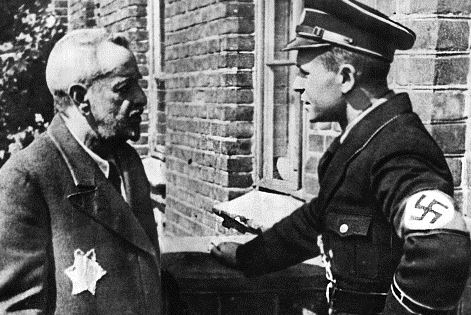
Funny, I think of the swastika as an anti-Semitic symbol, not anti-black one, but hey, whatever it takes, right?

None of these involved perpetrators who were identified, or who were shown to be students. None of them  were remotely within the control of the University; nor were they coordinated in any way.  Black groups on campus, however, harassed the school’s president, Tim Wolfe,  and demanded that he resign. A black graduate student began a hunger strike, promising to forgo all food and nutrition until Wolfe was ousted. Finally, black University of Missouri football players announced that they would not participate in team activities or games until the university yielded to various demands, including Wolfe’s dismissal. The coach and the rest of the team backed the black players, and the university caved.

In addition to sparking many other conflicts on other campuses, disrupting students’ education, making U.S. ccolleges look like the inmates were running the asylums (because they were) and increasing racial tensions, the episode had the effect of  causing a huge drop in enrollment that has cost Mizzou about $32 million.

Isn’t that great?

Good job, everybody!

Apparently ESPN think so, anyway. Continue reading

From The Ethics Alarms Double Standard Files: A Brock Turner Sentence For A Predator Teacher, And Everyone Shrugs

The predator teacher, who is much more deserving of a light sentence than Brock Turner, who should be killed, and the judge too, come to think of it...

The predator teacher, who is much more deserving of a light sentence than Brock Turner, who should be killed, and that judge too, come to think of it…

The lenient sentence Judge Aaron Persky handed to Stanford student Brock Turner for raping a drunken co-ed  enraged the social media and the public conscience, resulting in thousands of op-eds, protests from feminists and rape-culture activists, petitions, a recall effort, and most devastating of all, an Ethics Alarms post.

Last week, a 33-year old high school teacher named Lindsay Himmelspach pleaded guilty to repeatedly having sex with two minor students at the high school, and received the almost the identical sentence, from another California judge, as Turner. Himmelspach recieved three years probation and four months in jail.

I’m listening, but I hear no screams of outrage.

Huh.

The judge, Butte County Superior Court Judge James Reilley, administered the equivalent rap on the wrist that her Santa Clara colleague did on Turner because Himmelspach had no prior criminal record, she expressed remorse, and somehow he concluded that she’d never do such a thing again. (I’m sure it had nothing to do with the fact the she is hot, and the judge was thinking, “Those lucky bastards!”) Indeed, the judge didn’t even require the predator teacher to register as a sex offender, at least not yet. He’s keeping an open mind, and will decide after a separate hearing.

Hello?

Social media?

Continue reading

Fairness To Incompetent Lawyers?

To be fair, Tamara can blame the fact that she thinks this is a good law  suit on her cognitive problems..

To be fair, Tamara can blame the fact that she thinks this is a valid law suit on her cognitive problems…

Why this story didn’t make my head explode, thus rating the KABOOM! label, is a mystery. My theory is that the truly idiotic and ignorant exclamations on Facebook by my usually rational friends about guns in the wake of the Orlando terrorist attack have gradually strengthened my skull’s tolerance to internal pressure.

Once again, I have encountered a news story that required me to check and see if it was a hoax.

Tamara Wyche is a 2013 Harvard Law School graduate who is suing the New York State Board of Law Examiners. She claims she twice failed the bar exam because it refused to provide the same kind of testing accommodations that the law school did for her in her exams there, in recognition of her various cognitive problems. The fact that she flunked while being forced to take the exam under the same rules as everyone else resulted in the large Boston law firm Ropes & Gray terminating her employment. You can read her complaint here.

I confess that I didn’t read all of it: I didn’t want to press my luck with the old cranium.

The 29-year-old Wyche says she was diagnosed with depression and anxiety as a first-year law student at Harvard, and also  suffered several head injuries (?) that resulted in permanent memory problems and cognitive issues, requiring her to take several leaves of absence from her studies. She finally earned her law degree in 2013 thanks to Harvard granting her several doctor-recommended accommodations, including 50% extra time on tests, a separate testing room, and extra break time. She also was exempt from being called on in class, because of a propensity for anxiety and panic attacks.

Allow me to cut to the chase for a second, again in the interest of my dangerously bubbling brains, and perhaps yours. Continue reading