Comment of the Day: “The President’s Irresponsible And Untrue ‘One in Five Women Are Raped’ Claim”

numbers_statistics_stats

Rich (in CT) adds a superb and learned enhancement to the day’s post about President Obama’s dubious rape claims during the Grammy Awards.  It raises a question I hadn’t considered before: is part of the problem that researchers are as clumsy in their understanding of language as liberal arts types are in their use of statistics and numbers? The word “rape” has meaning; this is no place for Humpty Dumpty’s habit of using words to mean whatever one pleases. [“When I use a word,’ Humpty Dumpty said in rather a scornful tone, ‘it means just what I choose it to mean — neither more nor less.’ ’The question is,’ said Alice, ‘whether you can make words mean so many different things.’’The question is,’ said Humpty Dumpty, ‘which is to be master — that’s all.”—― Lewis Carroll, “Through the Looking Glass” ] Rich writes, “This data is important, as mental health and sexual disease propagation is affected by such contact, even if the traditional criteria imaged for “rape” is not met. ” I’ll concede that the data is important, but shouldn’t important data be clearly and accurately described? The data isn’t about rape! It’s about a variety of conduct linked by the researchers that they chose to call “rape,” knowing, presumably, that people who never read the data will take the misleading “rape” description and use it to confuse, persuade, deceive, and engage in scaremongering for political gain.

Rich writes that “not enough evidence is given to suggest that either study is unethical in and of itself.” Isn’t using vague, overly broad and misleading terminology for a study that is going to be made public intrinsically unethical—irresponsible, incompetent, untrustworthy?

Here is Rich (in CT)’s enlightening Comment of the Day on the post “The President’s Irresponsible And Untrue ‘One in Five Women Are Raped’ Claim”: Continue reading →
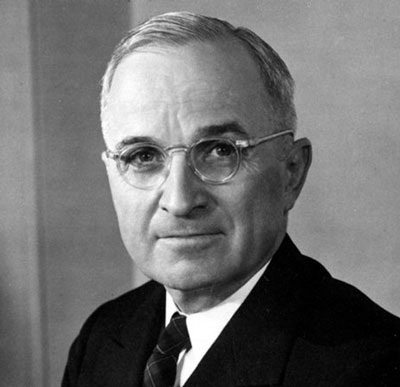
Now THIS Is An Ad Hominem Attack! or “Boy, Is Howard Dean An Ass, or What?”

“True, Harry didn’t go to college, but he’s a Democrat.”

People commenting on Ethics Alarms constantly accuse me of making ad hominem attacks, when what they mean to say is “You’re name-calling.” I’ll cop to name-calling. It’s can be a bad habit, but it has its uses, best illustrated when President Ronald Reagan referred to the Soviet Union as an “evil empire.” The description was true, and it immediately focused values-based criticism on a government and culture that needed it and deserved it.

Ad hominem, in contrast, is a logical fallacy in which one attempts to counter a substantive argument by attacking the character or other aspects of the advocate that can’t possibly have any bearing on the argument’s validity. For example, “you’re uglier than a pug” does nothing to disprove the substance of your adversary’s position, even if he is. Similarly, Bill Cosby has argued, even before 34 women accused him of raping them, that his advocacy of black community responsibility should not be undermined because of questions about his own rectitude.

There is nothing inherently fallacious, however, about diagnosing the conduct or statements of someone as proof that he or she is a fool, or a liar, or a jerk. It may not be civil, and it may be unfair, but it is not an ad hominem attack. As I have  explained it before, if I say you are an idiot because I think your comments are idiotic, that is a legitimate, if rebuttable assumption. (I may also be using “you are an idiot” as shorthand for “you are talking/sounding/acting like an idiot, and should avoid that.”) If I say you are an idiot, and therefor everything you say must be dismissed and ignored as the rantings of an idiot, that’s an unethical debating technique, ducking the argument by impugning the advocate.

Distinguishing between these very different but similar-appearing phenomenon can be a problem when trying to be fair to someone whose prior statements and conduct have already generated a negative diagnosis, and thus a bias. I have concluded, for example, that Joe Biden is a dolt, that Michele Bachmann is not playing with a full deck; that Sarah Palin is intellectually lazy and irresponsible, that Newt Gingrich is manipulative and untrustworthy, that Bill Maher is a pompous, none-too-bright blowhard and that Howard Dean is a vicious and unscrupulous ideologue. Nonetheless, I have to fight to assess what they say on the basis of merit, not my well-considered assumptions. It’s hard. When an idiot asserts something, is it unreasonable to be more skeptical of the statement than one would if, say, a brilliant, credentialed, unbiased observer said the same thing? (Wow—I can’t think of a single one!) No. And this is why ad hominem attacks, especially coy, subtle, clever ad hominem attacks, work so well in politics.

This brings us to that vicious and unscrupulous ideologue, Howard Dean. Continue reading →

The President’s Irresponsible And Untrue “One in Five Women Are Raped” Claim

In a video that aired during the Grammy Awards on Feb. 8, President Obama stated, as President of the United States and a certifiable hero to the kind of citizens who watch the Grammy Awards, this:

“Right now, nearly one in five women in America has been a victim of rape or attempted rape.”

Let’s begin with the fact that this is false, or at least, there is no reason to believe it is true, or even close to true. (More about this in a minute.) Was the President’s statement a lie? We can’t tell. If the President believes that rape is so common that 20% of all women are raped, then what he said is not a lie (a false statement knowingly made by the speaker in order to deceive), which leads to some uncomplimentary conclusions:

a. He has a remarkably low opinion of his own nation and culture…but then we knew that, didn’t we?

b. He believes what he is told without challenging it or examining an assertions’ origin, methodology and assumptions. Really? This guy is supposed to be brilliant. I would think such a jaw-dropping and frightening statistic would mandate some examination, but see a.

c.  Why hasn’t this been a major focus of his administration? Isn’t the President alarmed about this? Why is the Attorney General running around the country holding the hands of parents of dead kids who attack police officers and fighting attempts to make voters prove who they are at the polls if women are being raped like The U.S. is the Congo? Why is the Presidentusing his time to make faces on videos to sell Obamacare? Isn’t this clearly a reason to make one of his “I will not rest” speeches, in this case not resting until the rape frequency in the Land of the Free is lower than that of a Columbia ghetto? He believes 20% of the women in the country under his stewardship  being raped in their lifetimes doesn’t rate mentioning in his “if wishes were horses” State of the Union, and relegates this horrendous health and crime emergency to…the Grammys?

If Obama doesn’t know if the stat is true, but said it anyway, then he was irresponsible. He’s President of the United States; people believe him, even after the shattered pledge of transparency and “If you like  your health care plan…” and the “red line” and all the rest. He can not fairly, honestly, ethically state that something is true when he doesn’t know whether it is true or not. That is a lie, then: not the statistic itself, but the implication that he believes it.

Or he knows the statement is false, and made it to deceive, because the ends justifies the means.

In the discussion following last week’s post about the persistence of the false narrative that Bush’s 2000 electoral vote victory was “stolen,” I briefly referenced the now mostly abandoned fake “1 in five” statistic  on campus rape, the one that prompted the 2014 Unethical Quote of the Year from Senator Claire McCaskill when it was debunked. This prompted blog warrior Liberal Dan to re-state the President’s proposition, since he is one of those people who continue to believe the President despite all evidence to the contrary. “One in 5 women are raped,” he wrote, unequivocally, linking to a 2011 New York Times study.

I wish I had the time and space to muse about what it says about an intelligent American when a stat like that one, whether it is used by the Times, the President, or Lena Dunham, doesn’t set off his or her ethics alarms, Fake-Stat-O-Meter and bullshit buzzer. This is what happens, though, when the President makes a factual assertion. I knew the stat was crap; I just don’t have the time to prove it’s crap to people who want to believe it. I assumed someone would pretty quickly, and sure enough, the Washington Post’s hard-working, liberal-biased but diligently trying to compensate Fact-checker Glenn Kessler came through.

In his Washington Post column today, Kessler gives us the results of his research into Obama’s lazy/irresponsible/dishonest claim. His findings? Continue reading →

Instant Ethics Train Wreck: The Alabama Gay Marriage Stand-off

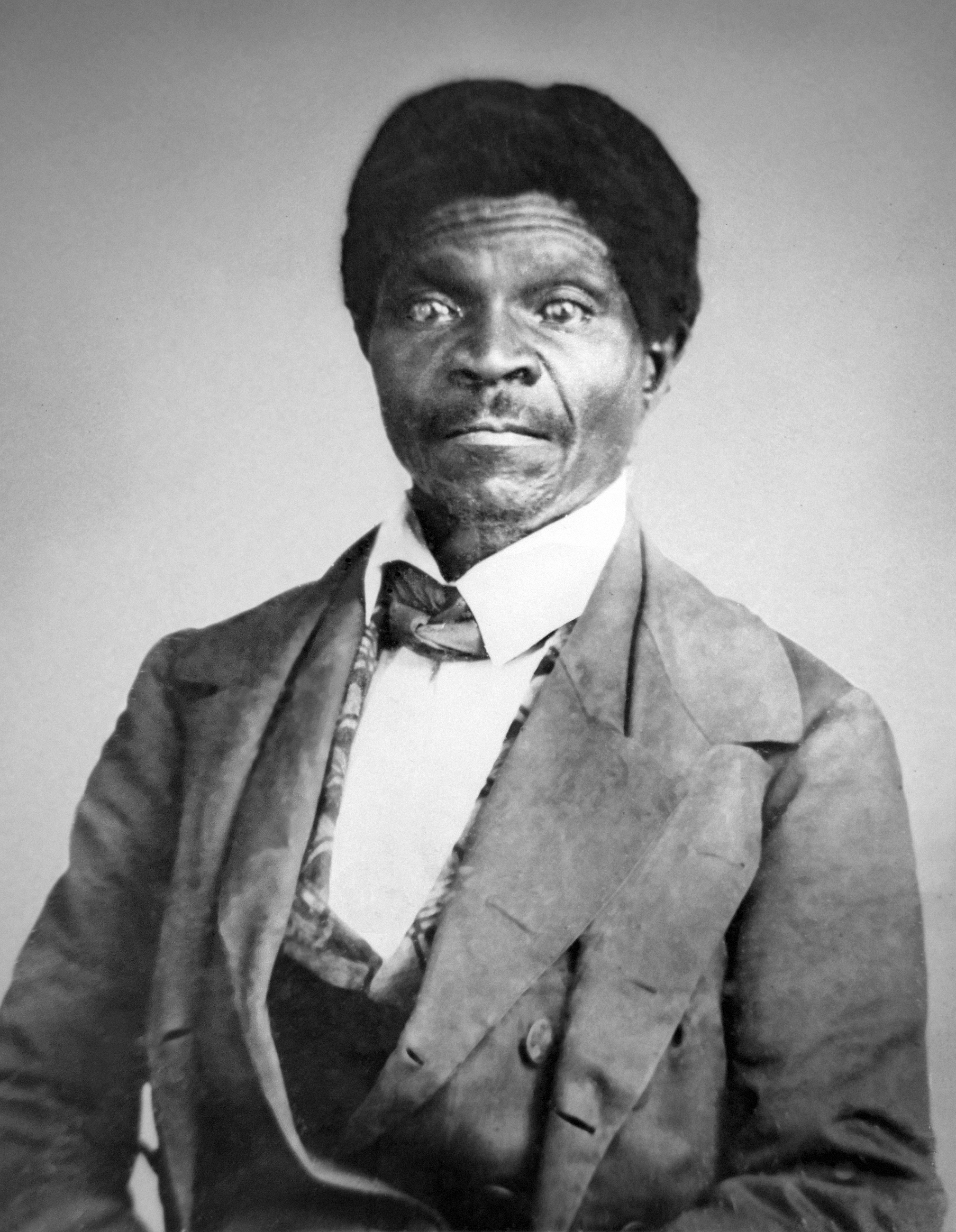
What does Dred Scott have to do with the Alabama gay marriage mess? Absolutely nothing.

What does Dred Scott have to do with the Alabama gay marriage mess? Absolutely nothing.

This summer, the Supreme Court will again take up the issue of the Constitutionality of state gay marriage bans, having left the question open (why, I don’t know) after striking down the Defense of Marriage Act in 2013. Since that ruling, the states have been busy little bees, some passing laws banning same-sex marriage, some doing the opposite, then fighting out multiple appeals at various levels of the judicial system. Three things are certain: the cultural and legal acceptance of same-sex marriage looks unstoppable; all states need to agree on what a legal marriage is; and some faith-based same-sex marriage opponents will not give in until the last dog dies.

Beginning at the end of last week, a messy situation in Alabama involving all of these factors burst into a full-fledged ethics train wreck. The links in this post will let you immerse yourself in the mess if you choose: I’m going to try to be clear. Here is what has transpired so far:

1) A federal judge, District Court Judge Callie V. Granade,  struck down the state’s ban  on same-sex marriages in January and said that Alabama could start issuing licenses last week unless the U.S. Supreme Court stepped in and stayed her order. A stay was immediately requested by the Alabama Attorney General, who properly defended the state’s law.

2.) The 11th Circuit Court of Appeals refused to step in and stop her order from going into effect.

3) The U.S. Supreme Court also refused the stay request, allowing marriages to proceed in Alabama.

4) Roy Moore, chief justice of the Alabama Supreme Court, reminded everyone that probate judges report to him, not the federal judge and not the Attorney General, and do not have to issue marriage licenses to gay couples until he tells them to. He told them not to.

5) Some Alabama probate judges followed Moore, and some went ahead and issued the licenses. Mass confusion reigned.

6) Meanwhile, the refusal of the U.S. Supreme Court to issue a stay pending its ruling on state same-sex marriage laws later this year was widely interpreted as tantamount to SCOTUS deciding the case before it was even argued.

7) Justice Clarence Thomas, in a dissent from the  majority’s rejection of the stay (we don’t know what the vote break was), argued that “This acquiescence may well be seen as a signal of the Court’s intended resolution of that question. This is not the proper way to discharge our . . . responsibilities.”

8) Justice Ruth Bader Ginsberg, meanwhile, appeared to endorse gay marriage in an interview.

9) Attempting to break the impasse, U.S. District Judge Callie V.S. Granade ordered Mobile County, Alabama to start issuing marriage licenses to same-sex couples, paving the way for resistant officials across the state to follow suit, in a decision stating that the state’s ban on same-sex marriage had been struck down and that ­Mobile County’s probate judge had to adhere to that decision.

10) Chief Justice Moore remains unmoved, but now most of the probate judges are following the federal order.

Got that?

Good, now you can explain it to me.

What a mess.

Here are the ethics verdicts on the participants so far: Continue reading →

KABOOM! “Hey! Let’s Torture Our Son For His Own Good!”

This was a bad one...

This was a bad one.

I really need my brains right now. I have an intellectual property legal ethics seminar to write, and an aggravating commentary on the ridiculous stand-off over gay marriage in Alabama. And yet there are my brains, scattered all over the ceiling and walls after the first KABOOM! of 2015.

That’s one more reason to be furious at Elizabeth Hupp, Rose Brewer,  and Denise Kroutil, otherwise known (here) as the Cretin Family.  That, and the fact that they are brutal, child abusing idiots. You see, Auntie Denise was concerned that Hupp’s six-year-old son wasn’t sufficiently wary of strangers. Grandma Rose agreed, so with Mom’s approval, they arranged to have a stranger kidnap the child, imprison him, and terrorize him.

Followed by a stern lecture.

Let me know when your head blows up as I relate this ridiculous/horrible/unbelievable but true story. Continue reading →

Comment of the Day: “The Eternal Ethics Conflict: Drawing Lines, Enforcing Them”

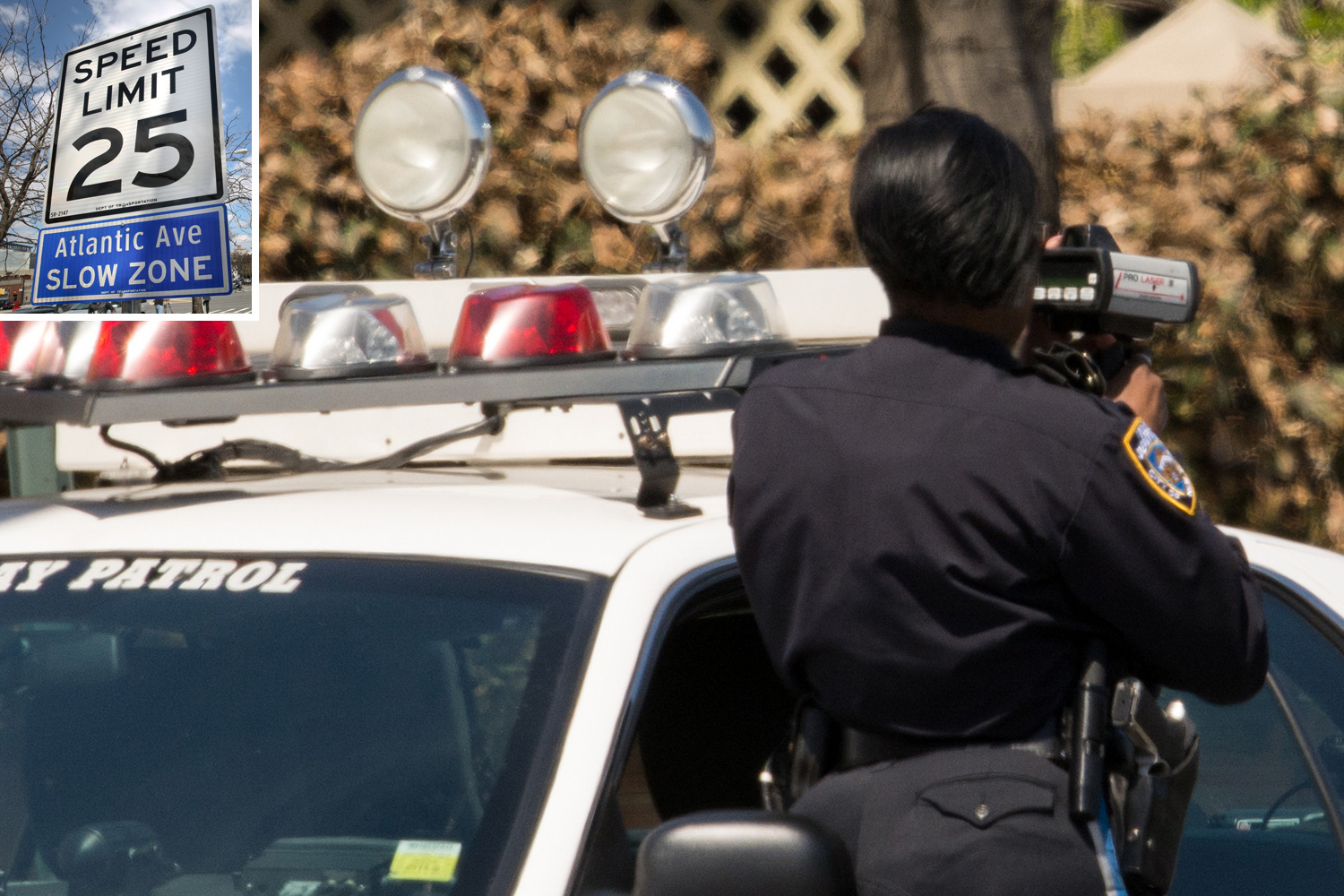
speed traps

The post generating texagg04‘s (latest) Comment of the Day dealt with the tricky and common ethics problem of enforcing reasonable rules strictly in the face of situations where compassion and sympathy pull us toward leniency, because the penalty for non-compliance seem out of proportion to the transgression. He correctly identified this as a problem involving the Ethics Incompleteness Theorem (or Principle), which is an ethics analysis concept used frequently here, and one of my favorites. The Theorem, as stated in the Ethics Alarms Concepts and Special Tools, a.k.a. “the Rule Book,” holds that…

The human language is not sufficiently precise to define a rule that will work in every instance. There are always anomalies on the periphery of every normative system, no matter how sound or well articulated. If one responds to an anomaly by trying to amend the rule or system to accommodate it, the integrity of the rule or system is disturbed, and perhaps ruined. Yet if one stubbornly applies the rule or system without amendment to the anomaly anyway, one may reach an absurd conclusion or an unjust result. The Ethics Incompleteness Principle suggests that when a system or rule doesn’t seem to work well when applied to an unexpected or unusual situation, the wise response is to abandon the system or rule—in that one anomalous case only— and use  basic ethics principles and analysis to find the best solution. Then return to the system and rules as they were, without altering them to make the treatment of the anomalous situation “consistent.”

No system or rule is going to work equally well with every possible scenario, which is why committing to a single ethical system is folly, and why it is important to keep basic ethical values in mind in case a pre-determined formula for determining what is right breaks down.

 Tex expands the discussion into such areas as test scores, speed limits, and rule-making itself.  Here is his masterful Comment of the Day on the post, The Eternal Ethics Conflict: Drawing Lines, Enforcing Them:
Continue reading →

Ethics Quote of The Month: Fired Sony Executive Amy Pascal

Good for you, Amy.

Good for you, Amy.

“Here’s the problem: I run a business. People want to work for less money, I’ll pay them less money. I don’t call them up and say, ‘Can I give you some more?’ Because that’s not what you do when you run a business. The truth is, what women have to do is not work for less money. They have to walk away. People shouldn’t be so grateful for jobs. … People should know what they’re worth.”

—Recently fired—because of those hacked e-mails—Sony Pictures chief Amy Pascal, in an interview with journalist Tina Brown at the Women in the World conference in San Francisco. She was addressing her e-mails revealing that actress Jennifer Lawrence was paid less than her male co-stars in “American Hustle.”

Take that, “77 cents for every dollar”!

My least favorite deceitful statistic took it on the chin with Pascal’s candid and accurate statement, and she ranks Ethics Hero status not just for saying it, but saying it in front of an audience full of women who have supported the lie while cheering and voting for politicians who repeat it.

A large chunk of the disparity between the salaries of men and women for the same jobs is not the product of bias or discrimination, but the natural consequences of females being raised to be less assertive, with lower self-esteem, and their resulting poor negotiating skills. Pascal is placing responsibility squarely where it belongs. This has been one more example of a traditionally mistreated group relying on victim-mongering rather than focusing on personal responsibility, accountability and honesty to address what is well within their power to fix.

Brava, Amy Pascal!

If Sony had any sense or principals, it would give you your job back.

The Strange And Unethical Case Of The Aging, Ageless, Part-Time Actress

Cheer up, Junie! Remember the sage words of the great Satchel Paige: “How old would you be, if you didn’t know how old you was?”

Cheer up, Junie! Remember the sage words of the great Satchel Paige: “How old would you be, if you didn’t know how old you was?”

In October of 2011, Ethics Alarms offered an Ethics Quiz that asked, “Did the Internet Movie Data Base do anything unethical by publishing the actress’s real age without her permission?” The occasion was a lawsuit asking for over a million dollars in damages by an anonymous film actress who claimed that Amazon’s Internet Movie Data Base harmed her career by researching and publishing her real age without her permission. My conclusion at the time was that Actress X was

“shooting at the wrong villain. If there is age discrimination in Hollywood, confront it: a number shouldn’t disqualify her from any roles at all. I am not saying that fighting such a long-standing tradition in the show business culture isn’t a daunting task, but that’s the real problem, not a web service that conveys information about movies and movie stars by publishing facts.”

Well, it’s almost four years later, this dubious case has wound its way to trial, and we are now learning some fascinating things: Continue reading →

Why Our Children Will Grow Up To Be Cheats and Liars: The Little League Champs Are Banned For Cheating, And Are Told That They Should Be Proud Anyway

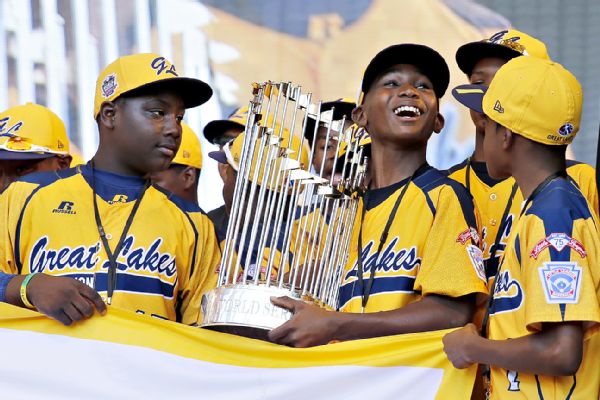
Littel League champs

When the Tom Brady/ Bill Belichick/New England Patriots cheating issue was at high pitch [Aside: Notice how we have heard nothing about this at all since the Super Bowl, which the Patriots won. This is why NBC thinks it will get away with not firing Brian Williams…both the news media and the public have the attention span of closed head injury victims, especially when it comes to liars, cheaters and betrayal. They call this phenomenon “America’s belief in redemption.” It is actually is a product of America’s crippling domination by chumps, dolts, suckers….and people who are liars and cheats themselves.], a friend of mine brushed it all off saying, “It’s a game.” Well, children learn a lot about ethics from games, and if they learn that adults think cheating is acceptable (never mind that a billion dollar business is hardly just a “game”), they will cheat in their games, and later in life.

Today we learn that the inspiring 2014 Little League Champions, the Jackie Robinson West team that was the first all-African-American team to win the tournament, has been stripped of all of its wins, including those from its Great Lakes Regional and United States championships. As a result, the United States championship has been awarded to Mountain Ridge Little League from Las Vegas.

A Little League investigation revealed that the Jackie Robinson team, which was supposed to field a team exclusively from the Chicago South Side, secretly used an expanded boundary map. Team officials conspired with neighboring Little League districts  to build what was essentially an all-star team by acquiring players from well beyond the South Side. Continue reading →

Brian Williams Ethics Train Wreck Update: David Brooks’ Ethics Confusion

Huh?

Huh?

David Brooks’ New York Times op-ed column decrying the widespread criticism of Brian Williams’ serial lying show us that Brooks himself is frighteningly confused regarding such basic ethical values as accountability, trust, trustworthiness and accountability. That’s good to know, don’t you think? Now the question is why anyone in their right mind would care what such an ethically muddled political and cultural analyst thinks about anything.

Yesterday, the Washington Post revealed yet another example of Williams’ fabulism: his bizarre story about roaming gangs at the local Ritz Carlton in the wake of New Orleans’ devastation by Katrina. Never mind, argues Brooks: the problem isn’t with Williams, it’s with his critics.

Brooks’ New Times column begins with a strange, exaggerated and unethically inclusive first paragraph about how  fame drives people to wrongdoing. “The desire for even more admiration races ahead. Career success never really satisfies. Public love always leaves you hungry,” he writes. “Always?” Who is he talking about, himself? The famous people being described here are emotionally and spiritually unhealthy famous people–addicts to fame, narcissists, desperate hostages to celebrity. I have no doubt that Williams fits that description,  but many prominent, accomplished and celebrated people do not. They are known as “trustworthy.” Having impugned many thousands of well-adjusted pubic figures past and present to lay the groundwork for an “everybody does it” defense of Williams (EDI is running neck and neck with the other favorite rationalization being used by Williams enablers: “It’s not the worst thing.”), Brooks attacks anyone not famous who resents being lied to:

“The barbaric part is the way we respond to scandal these days. When somebody violates a public trust, we try to purge and ostracize him. A sort of coliseum culture takes over, leaving no place for mercy. By now, the script is familiar: Some famous person does something wrong. The Internet, the most impersonal of mediums, erupts with contempt and mockery. The offender issues a paltry half-apology, which only inflames the public more. The pounding cry for resignation builds until capitulation comes. Public passion is spent and the spotlight moves on.”

This paragraph is astounding, and embarrassing too. Someone violates a public trust, and the public has the audacity not to trust him any more! What barbarism! Is Brooks even passing familiar with the concept of accountability? Not on the evidence of this drivel, he isn’t. An honorable man or woman in a position of trust who so publicly disgraced himself as Brooks has should immediately and voluntarily resign. Once, long ago, that was the natural, traditional, expected and required response to such a scandal, but this was in the days when celebrity and power was not so frequently accompanied by greed. Williams is paid about ten millions dollars a year, and that’s apparently too much to give up merely to demonstrate integrity, remorse and acceptance of responsibility for wrongdoing, especially when there are allies like Brooks out there ready to shift the blame.

There would be no need to purge someone who has proven themselves untrustworthy in a high position of trust if the individual would be accountable and courageous and purge himself, as he (or she—I’m looking at you, Kathleen Sibelius) is obligated to do. How can Brooks not understand this? The offender offers a “paltry apology,” and Brooks blames the public for correctly concluding that such an offender doesn’t understand the seriousness of what he did, isn’t really sorry, and will do it again. So the “pounding cry for resignation builds until capitulation comes.” Yes, David, that’s the way it’s supposed to work. This isn’t barbarism. This is civilization. This is enforcing standards. This is ethics, this is accountability.

Brooks doesn’t comprehend any of it, apparently:

“I do think we’d all be better off if we reacted to these sorts of scandals in a different way. The civic fabric would be stronger if, instead of trying to sever relationships with those who have done wrong, we tried to repair them, if we tried forgiveness instead of exiling.”

We’d all be better off if we let people who lie to us stay in the position that will allow them to keep lying to us? Continue reading →