Morning Ethics Warm-Up, 10/29/2018: Codes, Cars, Carter And The Caravan

Boy, this really IS a good morning!

(The warm-up may rely a bit more on links and quotes than usual…as Bob Cratchit tells Scrooge, “I was making rather merry yesterday.”)

1. Breaking News: Jimmy Carter is right! Former President Jimmy Carter, now 94, has injected himself into the Georgia governor’s race by asking Republican candidate Brian Kemp to resign as secretary of state. Carter’s argument is that there is an appearance of impropriety in his being officially responsible for an election in which he is a candidate, and that his resignation is essential  to preserve public confidence in the outcome of Kemp’s race against Democrat Stacey Abrams. Carter’s made the request in an Oct. 22 letter .

“One of the key requirements for a fair and trusted process is that there be a nonbiased supervision of the electoral process,” Carter wrote, explaining that stepping aside “would be a sign that you recognize the importance of this key democratic principle and want to ensure the confidence of our citizens in the outcome.”

When he’s right, he’s right. Kemp should resign, and his lamer than lame rationalization for not doing so, that it isn’t really he who supervises the election but his staff, would be sufficient reason not to vote for him in the gubernatorial election.

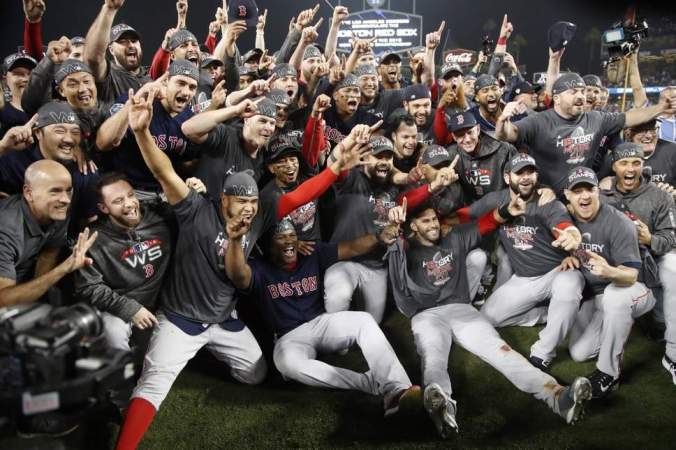
2. Ethics Dunce: Red Sox owner John Henry. You would think the progressive owner of the Boston Globe could restrain himself from blatant virtue-signaling while his team was celebrating its historic season and World Series victory, but no. Henry saluted his team for being “diverse” in his post-game remarks. Nobody sane cares how diverse, whatever that means (Where were the women, John? Where were the Asians? The differently-abled? Muslims? LGBT representatives?), a pro sports team is as long as it wins, and if it doesn’t win, its check-offs on an EEOC form won’t make it any better or its losing more palatable. The 2018 Red Sox were assembled according to the skills and talents of its personnel, with race and ethnicity a non-factor. What mattered is that the team’s manager (he’s Puerto Rican, and I don’t care) proved himself a natural leader who created a selfless, courageous, professional culture on his team, none of whom mentioned race, religion or creed all season, and properly so.

The compulsion to spurt progressive cant at every opportunity is pathological. Continue reading
Morning Ethics Warm-Up, 10/15/18: Overthrowing The Government, Replacing Umpires, and Fooling Some Of The People Who Never Did Their Science And Math Assignments [UPDATED!]

Good morning…

1. Baseball Ethics: Again, Robocalls, please! Last night, Game #2 of the American League Championship Series between the 2017 World Champion Houston Astros and some team from Boston again showed why Major League Baseball must install automated ball and strike calls and automatic video review if the game is going to have any integrity at all. Regarding the latter, there was a play in which a Houston batter’s swing and miss for strike three was erroneously called a foul ball by the home plate umpire, and the replay claerly showed that the bat had missed any contact by inches. Nonetheless, the batter got another chance. He struck out (“no harm, no foul” literally) a second time, but that was just moral luck. If he had hit a home run, altering the game’s outcome, the system would have been changed with lightning speed: Ye Olde Barn Door Fallacy.

Regarding the constant missed call and strike calls that risk changing the outcome in every game, the previous game in the serious contained a classic example. In a close contest with the two runners on base and a 3-2 count, Red Sox batter Andrew Benintendi was called out on a pitch about six inches outside the strike zone. Instead of the inning continuing with the bases loaded and the AL season RBI leader, J.D. Martinez, coming to the plate, the inning was over. Listening to the ex-players like TBS color man Ron Darling babble excuses and rationalizations is almost as infuriating as the obviously wrong calls. “Well, the ball wasn’t too far off the plate” and “That pitch has been called a strike earlier tonight” and “The umpires have a difficult job”: Shut up, Ron. The strike zone is set by the rules; a ball is either a strike or it isn’t, so a call is either correct or it’s botched. Blatantly missed calls were “part of the game” in an earlier era when nothing could be done about them, but that’s not true now. Baseball is supposed to be determined by the skill and performance of the players, not by random, unpredictable mistakes by the bystanding officials. Can you imagine a criminal defendant sent to prison in a trial where the judge repeatedly allowed inadmissible evidence against him because he misinterpreted the law, and the appeals court shrugging and rejecting an appeal with a unanimous opinion that said, “Hey, mistakes happen! It’s part of the system’s tradition and charm!”

2. Run, Fauxahontas, Run!  Fake Native American Senator Elizabeth Warren (D-Mass) announced that she finally did have her DNA tested. No cheapie home test for this aspiring Cherokee: she had the DNA test performed  by Carlos D. Bustamante, a Stanford University professor (and Democrat) and expert in the field who won a 2010 MacArthur fellowship for his work on tracking population migration via DNA analysis.  He concluded that “the vast majority” of Warren’s ancestry is European, but he added that “the results strongly support the existence of an “unadmixed Native American ancestor,” and calculated that Warren’s pure Native American ancestor appears in her family tree “in the range of 6-10 generations ago.” That’s a big range: six generations would make her 1/32nd American Indian, but ten generations would make her 1/1024th Native American. Nothing in the test proves she has the Cherokee ancestry she claims.

UPDATE: Apparently the Globe reporters and editors are among the math-challenged. Mid-day, it issued a second correction:

“Due to a math error, a story about Elizabeth Warren misstated the ancestry percentage of a potential 6th to 10th generation relative. The generational range based on the ancestor that the report identified suggests she’s between 1/64th and 1/1,024th Native American,” the Globe explained.

This means Warren is somewhere between 0.09 and 1.5 percent Native American, not between .19 and 3.1 percent as originally claimed.

Continue reading

Ethics Quote Of The Week: Emily Yoffe

“Even as we must treat accusers with seriousness and dignity, we must hear out the accused fairly and respectfully, and recognize the potential lifetime consequences that such an allegation can bring. If believing the woman is the beginning and the end of a search for the truth, then we have left the realm of justice for religion.”

—-Emily Yoffe in her essay titled, “The Problem With #BelieveSurvivors”

More…

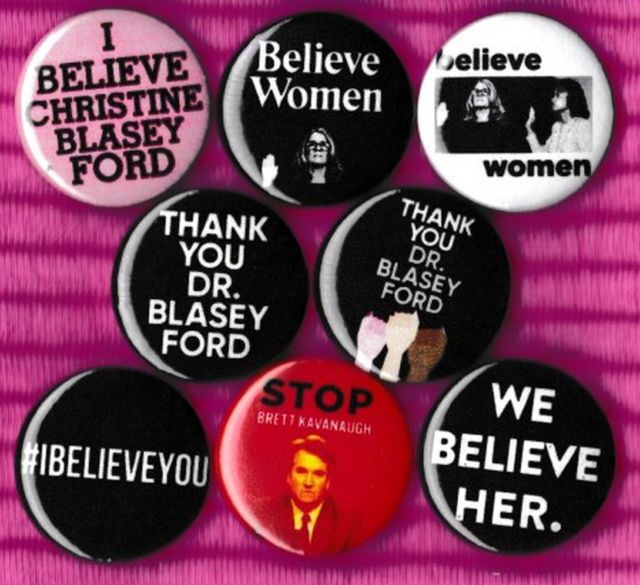
…in a Senate floor speech the day before the hearing, Democratic Senator Kirsten Gillibrand of New York announced that it was unnecessary for her to hear Kavanaugh’s testimony. Gillibrand declared, “I believe Dr. Blasey Ford.” Many Democrats, in keeping with #BelieveSurvivors, are taking their certainty about Ford’s account and extrapolating it to all accounts of all accusers. This tendency has campus echoes, too: The Obama administration’s well-intended activism on campus sexual assault resulted in reforms that went too far and failed to protect the rights of the accused.

The impulse to arrive at a predetermined conclusion is familiar to Samantha Harris, a vice president at the Foundation for Individual Rights in Education (FIRE). Harris says that under Title IX, students who report that they are victims of sexual misconduct must be provided with staffers who advocate on their behalf. These staffers should “hear them out, believe them, and help them navigate the process,” she said, but added, “When the instruction to ‘believe them’ extends to the people who are actually adjudicating guilt or innocence, fundamental fairness is compromised.” Harris says that many Title IX proceedings have this serious flaw. As a result, in recent years, many accused students have filed lawsuits claiming that they were subjected to grossly unjust proceedings; these suits have met with increasingly favorable results in the courts…

…The legitimacy and credibility of our institutions are rapidly eroding. It is a difficult and brave thing for victims of sexual violence to step forward and exercise their rights to seek justice. When they do, we should make sure our system honors justice’s most basic principles.

All true, but here is my question: How did we arrive at a place where any of what Joffe writes needed to be said at all?

Unethical Quote Of The Week, Cross-Filed to “The Brett Kavanaugh Nomination Ethics Train Wreck,” “Nah, There’s No Mainstream Media Bias,” AND “Bias Makes You Stupid”: ABC Correspondent Terry Moran

“Overturning Roe vs. Wade by an all-male majority, two of whom have had credible accusations of sexual misconduct lodged against them, would not be a legitimate action.”

—–ABC correspondent Terry Moran, on an ABC news broadcast, as he discussed what would happen to the nation’s highest court if the Senate confirms Supreme Court nominee Brett Kavanaugh,

It doesn’t get much worse than this. The statement is irresponsible, unfair, ignorant, partisan, incompetent, inflammatory and untrue. It involves multiple distortions of law and fact. It is an opinion presented as fact by an individual lacking the credentials or authority to issue such an opinion. It also encourages defiance of lawful authority.

Moran is a journalist, trained as a journalist and as nothing but a journalist. His current role at ABC is as a foreign correspondent. He is no lawyer, and apparently has no idea what a conflict of interest is. For him to use his air time to make such a pronouncement, sure to be sucked up by the eager, empty brain cells of social media junkies everywhere, is an abuse of his position and influence. That is, however, what he and his colleagues increasingly call “journalism” in 2018. It isn’t journalism, not the ethical kind. It is propaganda, and worse.

For the sake of brevity, since these are major misrepresentations that could each be the subject of scholarly essays, allow me to just bullet point them:

  • More fake news, Future and Psychic News Division. Why is Moran talking about Roe v. Wade being overturned? There is no case before the Supreme Court that would do that. There is no pending case in the system that would lead to that. None of the sitting justices or Kavanaugh have argued that Roe should be overturned, and the conservative justices have all declared their fealty to the concept of stare decisus, in which established SCOTUS decisions are regarded as settled law except in extraordinary circumstances.

For a broadcast journalist to discuss a remote hypothetical—and it is remote by definition, since none of the conditions necessary for it to occur appear to exits—is brazen fear-mongering and misleading the public.

  • More fake news, Future and Psychic News Division, Part II.  Then Moran forsees what individual Justices will decide in this imaginary case that hasn’t been argued, or briefed. In this he reduces the Supreme Court, which analyzes difficult questions of law, to a group of agenda-driven knee-jerk hacks, which they are not.

Journalists like Moran are the agenda-driven knee-jerk hacks, and at least in his case, are unable to imagine anyone else treating important controversies objectively

  • Gender stereotyping. There is no justification for assuming that a male justice would automatically vote to overturn Roe, and the assumption is historically ignorant. After all, an all-male SCOTUS majority established Roe.

Moran also assumes that no woman on the Court would vote with the male members even if the particular facts and law related to the imaginary, hypothetical future case that may never exist required an honest, objective female Justice to do so. This is  simple-minded, biased thinking that reduces both genders to their lowest common denominators.

  • The misleading word, “credible.” “Credible” means “capable of being believed” by itself. I could state here that I am five foot three inches tall and once worked as Latin tutor to make extra money in school. Those are both credible claims: there’s nothing that makes them unbelievable. They are also untrue. Being credible is not the test for whether any statement of evidence should be believed, and in any dispute, such statements must be considered in the context of other evidence. Brett Kavanaugh’s denial is also credible, except to those who have a vested interest in disbelieving it.

In this nation, and in any just society, we do not make judgments about people based on “credible accusations.” The accusations must be corroborated and substantiated to some extent. Dr. Ford named witnesses, and none of them have confirmed her story. That does not make her accusation incredible, but no conclusions can be drawn from it either.

  • There’s no conflict of interest. I don’t know what tortured definition of conflict of interest Moran thinks he knows, but whatever it is, it doesn’t exist in law or ethics. I’m assuming that a conflict is what he thinks would undermine the legitimacy of his imaginary, future hypothetical SCOTUS decision. If mere gender created a conflict, then neither women nor men could consider abortion cases. Blacks couldn’t rule on civil rights cases. Motherhood, fatherhood, whether a judge had an abortion or chose not to have one, these at most create biases, not conflicts, which occur when a judge’s current tangible, real life, current interests will be affected by a decision he or she is obligated to make. Judges are pledged to ignore their biases, not to never have them. All human beings have biases; judges are professionally trained and obligated to do a better job than the rest of us recognizing them and overcoming them.

Continue reading

Noonish Ethics Warm-Up. 9/27/18: “You’re The Bad Guys,” Cont.

Hi!

1. Unethical in its simplicity. An esteemed commenter insists, “Any witnesses who allege that Kavanaugh assaulted them should be allowed to testify.” This is either naive (incompetent) or intellectually dishonest. The Democratic Party’s stated objective is to delay a confirmation vote until after the Fall election, in the Hail Mary hope that the Senate will flip to them. There should be no question that the party, now thoroughly corrupted by a mindset holding that anything—lies, character assassination, perjury, misrepresentation, defiling of due process—is justified if it will protect abortion rights and its own power, would manipulate such a rule for political benefit, would recruit an endless series of politically motivated accusers if it could accomplish the objective of running out the clock.

The “any witnesses” flaw was amply demonstrated by yesterday’s fiasco. “New Kavanaugh allegations!” my late TV news screamed. By this morning, the entire story had fallen apart, and yet that ridiculous account (an anonymous woman claimed she was assaulted on a boat in Newport by a drunken “Brett” and friend, so an anonymous man beat them up) added to the designed false impression that multiple, verified, credible witnesses were confirming that Brett Kavanaugh is, as that same esteemed commenter has suggested, a serial sexual predator.

A witness whose claims are raised in a timely manner (that is before hearings begin allowing time for investigation and a response from the accused), whose account meets minimum standards of plausibility, whose accusation involves conduct relevant to a nominee’s fitness to serve, and whose story did not occur so long ago that verification or rebuttal is impossible, should be allowed to testify.

Those qualifications eliminate all of Kavanaugh’s accusers, as well as Anita Hill. Continue reading

The Attack Of The Unethical Women

I had pretty much concluded that Christine Blasey Ford was contemptible based on her willingness to impugn a public servant’s integrity, derail what should be an orderly and fair political process, and manipulate the U.S. Supreme Court’s membership using a three decades old allegation that involved, at worst, teenage misconduct. She did this with full knowledge of how #MeToo has unjustly harmed other men simply by raising unprovable rumors and characterizations. In fact, it seems clear that she chose her course of action knowing that she could harm Brett Kavanaugh the same way. If the allegation was politically motivated, as I strongly suspect it was, she is unethical and despicable. If the motive was late vengeance for a teenager’s indiscretion, she is unethical and despicable.

Imagine someone you may have harmed when you were an immature teen. That individual never calls you to account, privately or officially. She never urges you to apologize, accept responsibility, or make amends, or gives you an opportunity to do so. No, she maintains the grievance in escrow, to bring it out years or decades later when the accusation will not only do the most damage, but will also be impossible to defend against. What a cruel, horrible, inhuman way to treat anyone.

First Ford attempted to harm Kavanaugh anonymously. Then, when that wasn’t going to work, she announced her accusation in the news media.

What is being ignored by all those rationalizing Ford’s actions is that that the harm to alleged wrongdoers is magnified and multiplied the longer a victim delays calling for accountability. If Kavanaugh did what he is alleged to have done, he should still have the right to deal with the consequences, accept punishment if any, and be able to get on with his life, set a straight course, and prove his character and values as an adult. Wouldn’t anyone want that opportunity? Shouldn’t any 17-year-old miscreant have that opportunity? As I have already noted, Ford’s conduct is an anti-Golden Rule monstrosity.

It also creates the equivalent of ethics toxic waste. In a just society, nobody is pronounced guilty until guilt is proven, and nobody is publicly accused unless the offense is provable.  A prosecutor who knows that there isn’t evidence to convict someone of an offense is violating prosecutoral ethics to bring charges. Ethically, the principles follow. If you cannot prove an accusation, if all you have is your word and nothing else, if there is no chance that any evidence will arise that supports your version of events, you must be, at very least, absolutely certain that you are correct. Ford cannot be 100% certain. Not after more than 30 years, and especially after a long period in which she says she had forgotten about the alleged episode. There are many, many memorable episodes in my life, and I have always had a remarkable memory for events I witnessed or took part in. Such memories, however, shift and blur over time. No 30 year-old memory is 100% reliable, and because we, well, those of us who are fair and honest, know that is true, no 30-year memory should be employed as a weapon or personal destruction. Ford’s memory is both destructive and impossible to defend against exactly because it is so old. Continue reading

Unethical Quote Of The Week: Fred Guttenberg…And An Integrity Test For Everyone Else

“Put out my hand to introduce myself as Jaime Guttenberg’s dad. He pulled his hand back, turned his back to me and walked away. I guess he did not want to deal with the reality of gun violence.”

—–Fred Guttenberg, the father of one of the Parkland shooting victims, on Twitter, trying to execute a disgraceful and transparent “gotcha!” to impugn SCOTUS nominee Brett Kavanaugh.

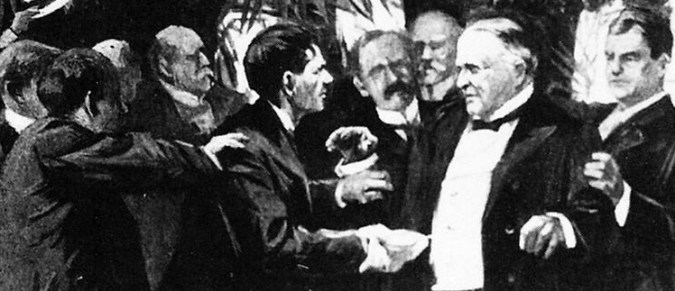
Sorry, Fred, but I know my Presidential history, and if a stranger offers his hand to me, especially in a hostile environment, my mind flashes back to when Leon Czolgosz used the ploy to assassinate President McKinley. That would be my reflection on “the reality of gun violence.” Of course, I don’t know that Judge Kavanaugh is a student of Presidential shootings, but I also don’t see any reason why “I’m Jaime Guutenberg’s dad” should have meant anything to him at all. It wouldn’t to me. Supreme Court designates are  required to have memorized the names of every shooting victim now?

The entire hearing where this occurred looked like a particularly badly-directed scene from an amateur production of “The Persecution and Assassination of Jean-Paul Marat as Performed by the Inmates of the Asylum of Charenton Under the Direction of the Marquis de Sade.” People were dressed up in costumes and screaming; Democratic Senators were grandstanding. Then a complete stranger comes up and offers his hand to the target of all of this hate and commotion.  The fact that Kavanaugh was wary well of his wisdom and judicial restraint.

Anyone who cites this obvious set-up as a relevant or substantive reflection on Kavanaugh’s character or fitness for teh Supreme Court has abandoned all shreds of fairness and integrity, and should be treated accordingly.

Let me be more specific: anyone who criticizes Kavanaugh for this is an asshole.

Take names.

Ethics Quote Of The Month: Barbara Harris (1935-2018)

“Everyone gets acting mixed up with the desire to be famous, but some of us really just stumbled into the fame part, while we were really just interested in the process of acting.”

—Actress Barbara Harris, who died last month at the age of 83.  The statement was quoted in he New York Times obituary from an interview she gave in 2002.

If you didn’t know Barbara Harris had died—indeed, if you didn’t know who Barbara Harris was—it is a measure of her integrity that she would have been pleased. I knew Harris’s work well (though I found out she had died just recently), but only because I have long been dedicated to show business history. Indeed, she was one of my favorite actresses who was a welcome accent to any movie she deigned to appear in, striking, but not beautiful, versatile, but not flashy, funny when the role required it, powerful when the challenge was dramatic or tragic, always a bit off-center, always surprising, never predictable.

She was an off-center ethics hero too, by rejecting the malady not only of her era but of her chosen profession as well. Barbara Harris rejected celebrity as a career goal or a life value, sneered at fame, and believed that it was what you accomplished in life that mattered, not how well-known or admired you became by accomplishing it. Harris often chose her projects according to how obscure she thought they would be, and actively avoided recognition. What a marvelous obsession! In her case, it was also an ironic one, because the most quirky and unpromising projects often became viable because she elevated them.

Her entire career was proof of the wisdom of Harry Truman’s great observation, “It is amazing what you can accomplish if you do not care who gets the credit.” Harris did not care about the credit, but she accomplished a great deal. As a young teenaged actress who loved the process of improvisation, she was a founding member of the Second City improvisational theater in 1959, planting the seeds that gave our culture too many comic geniuses to count, along with Saturday Night Live and everything it spawned as well. Harris was the very first performer to appear on stage for Second City, in fact.  From there it was stardom on Broadway, often with her more famous Second City pals Alan Alda and Alan Arkin. She starred in a the musical  “On a Clear Day You Can See Forever” (Harris could sing, too); “Oh Dad Poor Dad Mama’s Hung You In The Closet And I’m Feeling So Sad”; and “The Apple Tree” (and won a Tony Award in 1967). Her movies included a classic Harris turn in A Thousand Clowns (1965), Who Is Harry Kellerman and Why Is He Saying Those Terrible Things About Me? (which got her an Oscar nomination in 1971), Nashville (1975),the first Freaky Friday (1976) opposite Jody Foster, Hitchcock’s last film, Family Plot (1976), the cool, clever nostalgic spoof  Movie Movie (1978) that I bet you have never seen, a seering performance as the betrayed wife of a Senator in The Seduction of Joe Tynan (1979), and her final film, Grosse Pointe Blank  in 1997. Then she retired from performing to teach acting.

During Harris’s career, she did none of the things actors typically do to keep their name before the public—no talk shows, few guest appearances on TV, no celebrity cameos on “Murder She Wrote” or “The Love Boat.” Somehow she instinctively understood that it wasn’t popularity or fame that defined her worth, or any human bieng’s worth, and refused to allow our society’s corrupting elebrity obsession of  warp her values or dictate her needs.

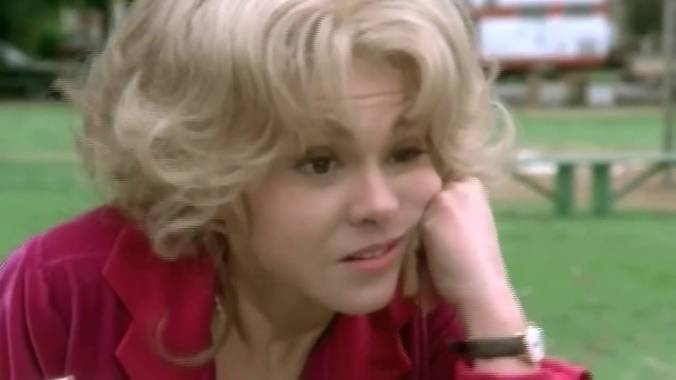
For me, Barbara Harris’s defining moment occurs at the end of the perfect movie for her, Robert Altman’s rambling, improvisational film “Nashville,” which is, among other things, about the sick obsession with fame and fortune that Barbara Harris rejected. Harris has few lines, and plays a runaway middle-aged wife who is determined to be a Country Western star. Her efforts are desperate, pathetic, and darkly comic, but at the film’s climax, when a famous singer is shot at a political rally for a renegade Presidential candidate, she grabs the suddenly open microphone of the fallen star she envies, and begins to sing in the chaos.

Let’s watch it now, and remember a woman and an artist of unshakable integrity and dedication to her art, and only her art.

Ominous Anti-Free Speech Quote Of The Year: U.S. District Judge Robert Lasnik

“The Court declines to wade through these issues based on the limited record before it and instead presumes that the private defendants have a First Amend ment right to disseminate the CAD files. That right is currently abridged, but it has not been abrogated. Regulation under the AECA means that the files cannot be uploaded to the internet, b ut they can be emailed, mailed, securely transmitted, or otherwise published within the United States. The Court finds that the irreparable burdens on the private defendants’ First Amendment rights are dwarfed by the irreparable harms the States are likely to suffer if the existing restrictions are withdrawn and that, overall, the public interest strongly supports maintaining the status quo through the pendency of this litigation.”

—U.S. District Judge Robert Lasnik, in his preliminary injunction issued today blocking the federal government from allowing publication of the blueprints of 3-D printable guns.

The injunction will stand until final resolution of the multi-state lawsuit seeking to keep the blueprints offline. Lasnik had issued a temporary restraining order in the case July 31, prompting this post, which states the Ethics Alarms position still:

“It sure sounds like prior restraint to me, and I suspect, when this gets to the Supreme Court, which it inevitably will, that will be the conclusion.

This began as one more example of the Obama Administration playing fast and loose with the Bill of Rights. Now, it may well be, as the suit by the states alleges, that the Trump Administration didn’t handle its legal U-turn properly, it being, after all, the Trump Administration. Nonetheless, the government blocking the online publication of information, which is what a blueprint is, when no copyrights, patents or trademarks are being violated or national secrets revealed, seems like a pretty clear First Amendment violation.”

If Lasnik’s langauge about “abridged, but it has not been abrogated” doesn’t send chills down your spine, I guess that means you’re a typical progressive or Democrat these days. The First Amendment says that “Congress shall make no law…abridging the freedom of speech,” meaning that the judge here admits that his ruling and the law suit are efforts to cut another chunk out of our core national values. But hey, it’s all cool! The ends justify the means, and we all know that guns are bad. That Second Amendment thingy? Once we take down the First, the Second will be a piece of cake.

As was discussed at length in the excellent thread on the previous post, it’s a long, long way, not just from May to December, but also from having the blueprint of a #-D printable gun and actually having a gun. Does the judge full comprehend that? I doubt it very much. If there is one theme that runs through judicial decisions and opinion involving rapidly evolving technology, it is that most judges and too many lawyers don’t understand the technology well-enough to regulate it or make coherent policy.

I still think this is such an obvious example of prior restraint that the Supreme Court will knock it down, especially after Kavanaugh joins the Court, and I hope I am wrong that the anti-Second Amendment liberal wing will unite in dissent, but I believe that is likely.

Sigh.

Ought I to say this? What the hell….

I am increasingly coming to believe that what is really at stake in the upcoming elections is the Bill of Rights, and perhaps our democracy itself.  The “resistance’s” attempt to undo the election of President Trump is just part of a long-term, concerted assault on our institutions, by a growing faction that believes that freedom and liberty are too dangerous to be left in the wrong hands, and must be constrained—abridged, so to speak—by those who know best.

Them.

________________________

Pointer and Source: ABA Journal

Morning Ethics Round-Up, 8/23/2018: A Quote Fest!

Good Morning!

1. Now THIS is narcissism! It’s long, but go ahead and read it.  This  was Madonna’s “tribute” to the late Aretha Franklin at the VMAs this week:

Aretha Louise Franklin changed the course of my life. I left Detroit when I was 18. $35 in my pocket. My dream was to make it as a professional dancer.
After years of struggling and being broke, I decided to go to auditions for musical theater. I heard the pay was better. I had no training or dreams of ever becoming a singer, but I went for it. I got cut, and rejected from every audition. Not tall enough. Not blends-in enough, not 12-octave range enough, not pretty enough, not enough, enough. And then, one day, a French disco sensation was looking for back-up singers and dancers for his world tour. I thought, “Why not?” The worst that can happen is I could go back to getting robbed, held at gunpoint and being mistaken for a prostitute in my third floor walk-up that was also a crack house. So I showed up for the audition, and two very large French record producers sat in the empty theater, daring me to be amazing. The dance audition went well. Then they asked if I had sheet music and a song prepared. I panicked. I had overlooked this important part of the audition process. I had to think fast. My next meal was on the line. Fortunately, one of my favorite albums was “Lady Soul” by Aretha Franklin. I blurted out, “You Make Me Feel.” Silence. “You Make Me Feel Like A Natural Woman.” Two French guys nodded at me. I said, “You know, by Aretha Franklin.” Again, “Mmmhmm.” They looked over at the pianist. He shook his head. “I don’t need sheet music,” I said, “I know every word. I know the song by heart, I will sing it a cappella.” I could see that they did not take me seriously. And why should they? Some skinny a– white girl is going to come up here and belt out a song by one of the greatest soul singers that ever lived? A cappella? I said, “Bitch, I’m Madonna.”

No, I didn’t. I didn’t say that. Cause I wasn’t Madonna yet. I don’t know who I was. I don’t know what I said. I don’t know what came over me. I walked to the edge of the pitch black stage and I started singing. When I was finished and drenched in nerve sweat. Y’all know what this is, right, nerve sweat? They said, “We will call you one day, and maybe soon.” So weeks went by and no phone call. Finally, the phone rang, and it was one of the producers, saying, (French accent) “We don’t think you are right for this job.” I’m like, “Why are you calling me?” He replied, “We think you have great potentials. You are rough for the edges but there is good rawness. We want to bring you to Paris and make you a star.” We will put you in a studio . . . it sounded good, and I wanted to live in Paris and also I wanted to eat some food. So, that was the beginning of my journey as a singer. I left for Paris.

But I came back a few months later, because I had not earned the luxury life I was living. It felt wrong. They were good people. But I wanted to write my own songs and be a musician, not a puppet. I needed to go back home and learn to play guitar, and that is exactly what I did. And the rest is history.

So, you are probably all wondering why I am telling you this story. There is a connection. Because none of this would have happened, could have happened, without our lady of soul. She led me to where I am today. And I know she influenced so many people in this house tonight, in this room tonight. And I want to thank you, Aretha, for empowering all of us. R-e-s-p-e-c-t. Long live the queen.

Another anecdote I would like to share: In 1984, this is where the first VMAs were, in this very building. I performed at this show. I sang “Like a Virgin” at the top of a cake. On the way down, I lost a shoe, and then I was rolling on the floor. I tried to make it look like it was part of the choreography, looking for the missing stiletto. And my dress flew up and my butt was exposed, and oh my God, quelle horreur. After the show, my manager said my career was over. LOL.

The fact that Madonna is getting flack for this is almost as funny as the fact that she would think a long monologue about herself qualified as an appropriate tribute to Franklin. This is a manageable mental illness, but it is pathological, and Madonna is an extreme narcissist in a business that produces them in bushels. But didn’t everyone know that? Why, knowing that this woman only sees the world in terms of how it can advance her interests, would anyone entrust  her with giving a tribute to anyone else? That’s rank incompetence.

Narcissists are incapable of ethical reasoning, since ethics requires caring about someone other than yourself.  Madonna’s “tribute” is a valuable window into how such people think. Madonna really thought the nicents thing she could say about Aretha Franklin is that she made a cameo appearance in Madonna’s epic life.

2. Next, a ventriloquist act! Continue reading