The bad news is that the platform for this powerful exposé is The Economist, which most Americans don’t read. Another problem is that the essay by former Times opinion editor James Bennet is prohibitively long: over 17,000 words. Nonetheless, everyone should read it, especially those who still hold on to the myth that “advocacy journalism” is journalism, that’s it’s healthy for our democracy, or that the New York Times can be trusted to convey facts rather than propaganda.
The piece is titled “When the New York Times lost its way,” and the author begins by focusing on the Senator Tom Cotton op-ed piece that he was forced to take down and that cost him his job. It is understandable that Bennet feels that way, but the fact that he would point to that episode and not many others that occurred before it shows his own blindness and bias. Apparently the Times announcing in late 2016 that it would henceforth frame the news to ensure that Hillary Clinton, or pushing the Hillary-seeded Russian collusion myth for two years didn’t qualify as signature significance of a corrupted paper, but pulling a conservative U.S. Senator’s op-ed because the Times staff disagreed with it does. Well, that one cost Benett his job, after all.
Ironically, Bennet’s biases enhance his credibility: in many ways he’s a classic Democratic, Trump-hating progressive, and yet he’s still blowing a very loud whistle on his colleagues. Is he a “disgruntled ex-employee”? Sure he is; Bennet is bitter and disillusioned, and maybe that’s why he felt it necessary to write such an exhaustive piece. Nonetheless, his argument is persuasive. If the Times was the newspaper it claims to be (and that Bennet shows it is not), it would have published his essay itself.
The article is here, and to encourage you to read it, I’ll point out some representative passages:
The headline is “One-in-Five Mail-In Voters Admit They Cheated in 2020 Election.” The findings, in brief:
1. “More than 20% of voters who used mail-in ballots in 2020 admit they participated in at least one form of election fraud.”
2. “21% of Likely U.S. voters who voted by absentee or mail-in ballot in the 2020 election say they filled out a ballot, in part or in full, on behalf of a friend or family member, such as a spouse or child, while 78% say they didn’t.”
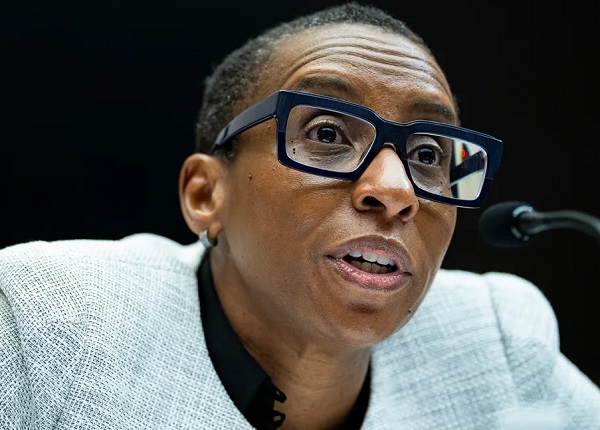
City-Journal, arguably the best of the conservative websites, has extensive coverage of the plagiarism allegations against Claudine Gay, whose presidency of Harvard was already on shaky ground following her awful testimony before Congress regarding the burgeoning anti-Semitism on campus. It is too detailed for me to summarize correctly, and if I cut and paste sufficient amounts of the piece I’ll be plagiarizing, so you should read all about it here. (You may have to register, but access is free.)
Disgustingly, the New York Times and the Washington Post have not reported this yet. That’s outrageous, and one more screaming example of how the Left circles its wagons any time an ally seriously screws up. Harvard is to progressive indoctrination in education what the Times is to progressive propaganda in journalism, but the last thing the mainstream media needs now is another Hunter Biden laptop fiasco. Harvard is very much in the news already for it’s ugly role in the Hamas-Israel Ethics Train Wreck; Gay is now a central figure, and for the plagiarism development to be given the “nothing to see here” treatment by the news media is spectacularly foolish as well as unethical. [Update:This afternoon, after Harvard mentioned the plagiarism issue, both the Times and the Post finally reported on it its digital editions.]
But I digress…I had initially assumed that the accusations that Gay had violated Harvard’s own policies on citations, credit to other scholars and plagiarism were like past attacks on controversial authors like Ann Coulter, technical but non substantive, the sort that could be dug up on many published public figures by those seeking to damage their reputations. I was mistaken, however. Gay’s violations are substantive and substantial. Moreover, Gay appears to have appropriated material from one of the most significant scholars in the field of racial issues in American, now retired Vanderbilt professor and author Carol Swain.
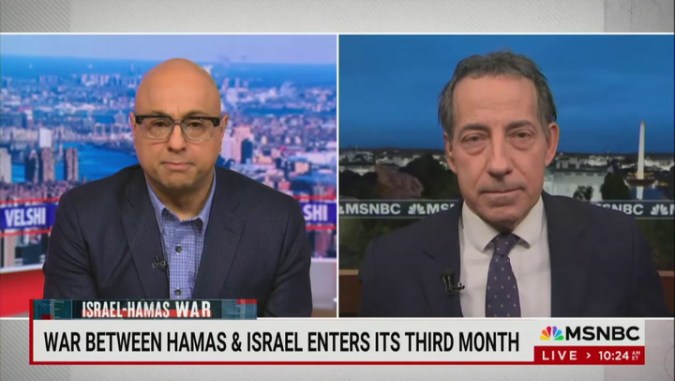
Imagine: this guy is on the House Judiciary Committee! Imagine again: here is what passes for rational, logical, responsible rhetoric on MSNBC.
Asked about the disgraceful performance of the three college presidents under questioning from Rep. Elise Stefanik, Rep. Raskin pulled out every irrelevant anti-Republican talking point he could think of to avoid criticizing fellow woke warriors, beginning with saying he hopes a college president would take action when there are calls for genocide on campus because “lax Republican gun laws” mean “we’ve got to take very seriously” people making threats.
Yes, the debacle at the hearing was about gun control. Then he really got rolling:
The backlash and debate over the ridiculously inept responses by the presidents of MIT, Harvard and the University of Pennsylvania regarding anti-Semitic demonstrations on their campus touches on too many ethics issues for me to organize coherently right now, especially since I have been inundated by emails and phone calls from many people with diverse and perceptive thoughts about the matter. I’m going to devote this post to individual items related to the college leaders’ disgrace.
1. A core ethics conflict is the question of when campus demonstrations and speech cross a line into speech that undermines the educational mission of a school. A college is not required by the Constitution to permit all speech; the Supreme Court has been clear that when speech begins to interfere with the educational functions of a school, it can be disciplined and curtailed. The problem all three school presidents encountered is that their universities’ past record of restricting (or allowing to be restricted) conservative speech and speakers on campus made their stand appear to be that anti-Semitic speech on campus was tolerable even when it creates a hostile living and studying environment for Jewish students. As the prosecutorial Congresswoman pointed out while grilling the three women, racist sloganeering on campus would be swiftly shut down as harassment on their campuses. How can the double standard be justified? Answer: it can’t be.
I was thinking of making this an ethics quiz, but I couldn’t decide what to ask.
The Daily Signal reports—an exclusive!—that a teenage boy who identifies as a girl is heading to the Irish Dancing World Championships after placing first in the U14 2023 Southern Region Oireachtas competitions. The conservative website tells us that the winner competed as a boy and placed 11th in the world in the Coimisiún Le Rincí Gaelacha (CLRG) World Championships just eight months ago, in April 2023. (These kids just grow up and change sex so darn fast these days!). In the meantime, a “non-binary” contestant won another Irish dancing competition in August.
Irish dancing competitions are typically divided by gender. The Daily Signal reports, “Parents of girls competing in Irish dance are frustrated and outraged, saying that they cannot understand why a boy with physical advantages is allowed to dance against their daughters.” Huh? I would think a male would have only physical disadvantages in competing against girls in a dancing competition, just as a male dancer would be at a disadvantage trying to win the part of the Sugarplum Fairy in “The Nutcracker.” I assume female Irish dancers are supposed to appear, well, feminine while wowing judges with their footwork. If not, why is the competition restricted to girls?
Glenn Loury, is an economist, academic, and author who holds the Merton P. Stoltz Professor of the Social Sciences and Professor of Economics at Brown University. Since he is tenured, Loury doesn’t feel constrained by the lock-step ideological conformity so many of his race (he’s black) hew to in the wake of the George Floyd Freakout. In his latest newsletter on substack, Loury writes in part,
Poetic truth “thri[ves] more by coercion than reason,” accusing all who dispute it of complicity with the ineradicably racist system that governs and has always governed the country.
That Darren Wilson executed Michael Brown is one such poetic truth; that Derek Chauvin murdered George Floyd is, I believe, another. Despite the aptness of Steele’s term, poetic truth is no truth at all, nor is it particularly poetic. It is power masquerading as fact, brute force in the guise of knowledge. The cities that burned across the country following Floyd’s death were expressions of such a truth, as was the incarceration of the police officers convicted of a crime they did not commit. The scramble toimplement race-based policies and quotas, to elevate self-appointed gurus of “antiracism,” and to proclaim, against all evidence, the unreconstructed nature of American society were all tendrils of the same truth, which still threatens to assert itself whenever an incident emerges that fits its preferred pattern.
The cost in life, limb, and property incurred by this particular poetic truth would be bad enough. But I fear that, in the aftermath, when the embers have cooled and Chauvin’s name has been forgotten by everyone save his family, the true danger of the poetic truth of George Floyd will come to fruition.
Later in the piece, Loury quotes John McWhorter, the New York Times pundit: Continue reading →
I can’t avoid it this time: the episode comes too close on the metaphorical heels of Curmie’s examination of biased and misleading reporting (here and here) and the post about the desperate AUC (the Axis of Unethical Conduct) settling on declaring Trump an American Hitler as its best shot at keeping him out of the White House if they fail at “locking him up.”
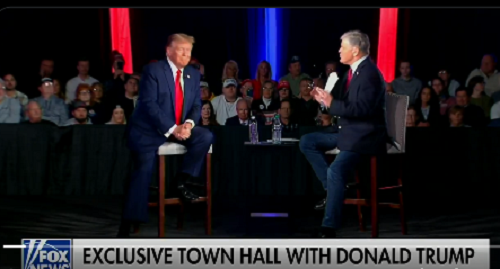
What happened next was so similar to what was described in my post that it’s almost comical. In an Iowa town hall with Sean Hannity on Fox News, Trump was asked about the current scare-mongering narrative that he was going to be a dictator. Trump, who apparently can’t stop himself from trolling, said,
“He says, you’re not going to be a dictator, are you? I said no, no, no — other than day one. We’re closing the border and we’re drilling, drilling, drilling (for oil). After that I’m not a dictator.”
And how was that quote relayed on multiple outlets? “Trump says he’ll be a dictator from Day One.” See? He admits it!Aaron Rupar, the same shameless hack I mentioned in the earlier post, tweeted, “Trump admits he plans to do some dictatorial things on “day one” of his second term.” Rupar’s a dishonest asshole, but he’s not stupid. He knows that what Trump was describing isn’t “dictatorial,” but he exploited, as usual, Trump’s inflammatory language.
The executive branch has statutory power to close borders under certain circumstances. If Trump used that power, it wouldn’t be “dictatorial,” it would be legal and backed by democratically- determined laws. If the President doesn’t have statutory power to do something, he can’t do it. As for “drilling”: all Trump can do is lift Biden’s executive orders blocking drilling. The measures he’d be eliminating were no less “dictatorial” than his orders cancelling them. The President can’t order private companies to drill (or else what, shoot the executives?). So once againTrump was being careless in his rhetoric, thus throwing raw meat for his foes in the media and the Trump-Deranged to freak out over. And, of course, they took the bait.
Trump enjoys doing this, even though it fuels the hysterical and biased coverage of everything he says or does, even though it increases political divisions in our society. He’s having fun giving the news media what it wants, and they have no scruples or restraint either. The rest of the country are victims.
We have almost a year of this to go. Isn’t that great?
The title for this two-part edition of Curmie’s Conjectures refers to a song by the Irish punk band the Boomtown Rats, “Don’t Believe What You Read,” which includes not only the title admonition but also lines like “I know most what I read will be a lot of lies / But you learn really fast to read between the lines.”Part I of this exercise attempted to suggest something of the parameters of the problem. As Jack suggested in his introduction to that piece, it’s not an exhaustive list of the various forms of journalistic chicanery, but I hope it served as a representative sample.
Here in Part II, I’ll attempt the daunting task of examining strategies to “read between the lines” and come at least a little closer to the truth of what happened in a given situation. So, what to do? How do we determine if that less-than-objective source we’re reading actually has this one story right, especially if it’s the only source about a particular story? Boy, do I wish there was an easy answer to this one. That said…
The most effective means of ascertaining the truth, of course, is to get different perspectives on the issue. I think I’ve mentioned both here and on my own blog that when I was in England doing my MA (at the time “Don’t Believe What You Read” was released, as it happens), I’d alternate between reading the Telegraph, which leaned right, and the Guardian, which leaned left. If the former said “X but Y,” thereby suggesting that Y was the more important point, the latter would likely say “Y but X.” But whichever paper you read, you’d know that X and Y, though perhaps seemingly in opposition, were both true, and both worth knowing about.
Of course, both the Telegraph and the Guardian were, whatever their political perspectives, both reputable news sources. That’s a statement that would be difficult to make about many of the most prominent news media in this country in the 2020s. Equally importantly, as suggested in Part I, the problem is often that we hear only from one perspective.
There are three possibilities for why this should occur. One, which is (alas!) probably the least likely, is that both X and Y editors make an honest decision that a story is or is not newsworthy. Or X media outlet knowingly runs with a story that is either grossly distorted or fabricated altogether. Or outlet Y, knowing the story casts their team in an unfavorable light, ignores it, hoping it will just go away. At some point it becomes untenable to try to ferret out the true motives; the truth of the story may be a little easier to discern, although there are no guarantees.
[I am particularly grateful for this installment of Curmie’s Conjectures because it assuages my guilt a bit. As longtime readers here know, I occasionally promise posts that never show up, or do, but so long after the promise that it’s embarrassing. Years ago, I promised a post defining and examining all journalistic tricks that I classify as “fake news,” and I use the term broadly to include misleading headlines, burying the lede, omitting key information thatundermines the writer’s agenda, poisoning the well and other techniques. I started the thing, got frustrated and overwhelmed, and never finished it. Here Curmie doesn’t exactly present what I intended, but he touches on much of it, and as an extra bonus, he wrote it more elegantly than I would have (as usual). JM.]
I doubt that this blog has ever before turned to punk rock for ethics advice, but Boomtown Rats composer/frontman (and Live Aid impresario) Bob Geldof had it right in a song that’s probably more relevant today than it was 40+ years ago: “Don’t Believe What You Read.” Well, not uncritically, at least. At our host’s suggestion, I’m about to enter the fraught territory of trying to decide if a story published by an obviously biased media outlet might, this time, just be accurate.
It’s difficult of late to find a news source that only leans in one direction or the other, rather than proselytizing for the cause. The news networks and major newspapers have carved out their market shares based on feeding their viewers and readers what they want to be fed. Whether the advent of Fox News was a trigger or a reaction is up to individual interpretation, but there’s absolutely no doubt that we’re now in an era in which news as reported is determined largely by editorial positioning, rather than the other way around.
It’s inevitable that, to steal a line from another of my favorite musicians, Paul Simon, “a man hears what he wants to hear, and disregards the rest.” Fighting our own biases is not made easier by the knowledge that learning from experience and confirmation bias are opposite sides of the same coin. If a story appears only on Fox News and the Drudge Report, or only on AlterNet and MSNBC, there’s an excellent chance that the indignation is feigned and the actual events are something of a nothing-burger.
But “usually” is not “always.” As a society, we’re well aware of the tale of the boy who cried wolf and the miraculous last-second basket from well past half-court. We nod and smile at the suggestion that stopped clocks are right twice a day.
There are a few variations on the theme of biased journalism. The first, editorializing in a news story, is generally the easiest to spot and the easiest to counteract. If there are words like “communist,” “Nazi,” or “un-American” to describe a US politician, or phrases like “unborn children” or “reproductive freedom,” you’re reading an editorial, whether the article identifies itself as such or not. There’s nothing wrong with editorializing; it’s what I do here and on my own blog, after all. But I also try to not to suggest that what I write is completely objective.
Another variation on the theme, and a personal pet peeve, is what I call a Schrödinger sentence, because it is simultaneously true and not true. For example, I’ve seen a whole lot of conservative commentary on this blog that “progressives want X.” (“X” in this context, of course, has nothing to do with what Elon Musk renamed Twitter.) True, there are enough progressives who advocate for X to make the noun plural, but I’m a progressive, and I’m a big fan of not-X. The implication—or, rather, one possible implication—of the sentence is that in order to be a progressive, one must want X. That is no more true than suggesting that all conservatives believe in Jewish space lasers. And I really resent being told what I believe.