Comment Of The Day: “Sarcasm-Tainted Observations On The Milwaukee Riots”

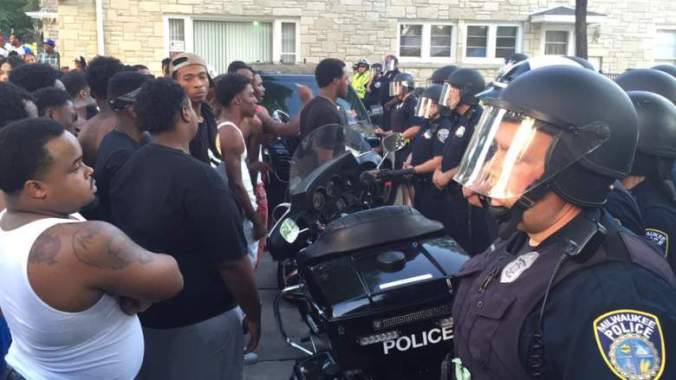
Milwaukee rioting

Chris Marschner, a grandmaster of the Ethics Alarms Comment of the Day feature, issued another deserving one with his thoughts on the Milwaukee riots. It is a highlight of the threads generated by this topic, but there are many other highlights amid the 90+ comments, including an Alamo-like stand against overwhelming odds (and logic) by that prolific, embattled, and adamant EA progressive, deery. The whole discussion is well worth reading. Deery also authored the comment that inspired Chris’s response below.

Here is his Comment of the Day on the post, “Sarcasm-Tainted Observations On The Milwaukee Riots”:

For the life of me I cannot see how any rational human being can justify rioting and the looting businesses because they feel they are owed something for being “oppressed”. What the hell did the gas station or auto parts store do to them? Does that case of Cheezits being carried out of the store address all of your complaints, or is it just a partial down payment on a never ending invoice for the injustice you perceive? Sorry I have no sympathy for anyone who had myriad opportunities to become educated in a manner that would permit them to read, write, perform arithmetic calculations, and just plain think.

No amount of funding can overcome community apathy. Especially, when apathy is the root cause of the need for funding in the first place. The community needs to recognize that if it wants things to be different then it needs to come to grips with the idea that they must take on the lion’s share of the work to enjoy a better life; it cannot be bestowed upon them. It must pool its own resources first before it requests resources from others. It must demonstrate that it is committed to being responsible for the work of changing the situation. Any one who thinks jobs and opportunities will simply emerge with more government spending in areas that suggest crime is rampant needs his/her head examined. No amount of tax abatement will overcome the cost of rebuilding a business that has been burned to the ground. It should be noted that the police did not spray paint tags all over other people’s buildings. It’s not urban art, it’s vandalism. The police did not create the need for security grates over the glass windows of shops. The police did not throw litter all over the street and dump furniture and tires wherever they pleased. More importantly, within the BCPD, the officers charged with various felonies while on the force were predominantly non-white so it not always a racial issue.

I grew up in Baltimore City. I lived there from 1956-1989. I went to Balto. City public schools (BCPS). I went to Woodbourne Jr. High and graduated from Northern High in 1974. Both schools were integrated and each had its share of bad actors be they white or black. In those days black parents wanted to keep their kids away from the “element”. I don’t think that is the case today. Today we celebrate the gangsta persona.

I was neither a star pupil nor a bad student. What I did learn from my father was that college was not something I could ask for help with and no school counselor ever suggested that I consider college. I saw the battles my older brother went through to get him to fill out the financial information on the financial aid applications. My father hated to disclose his income. Perhaps it was because he felt inferior to what others made or maybe he just did not like the idea of getting government assistance. I don’t know. I just learned not to ask about college. To this day I don’t remember either parent talking to me about college except for when I was in 8th grade and I could not pass the foreign language class which was required for college prep.

I did not go to college immediately after high school. Ironically, both my parents were Baltimore City Public School teachers for much of their lives. My mother who taught English was known as that white honky bitch at Northern Parkway Junior High. That’s what the parents called her when she called them to discuss a student’s lack of progress. She got called that a lot. I saw the tears of frustration.

Continue reading

Unethical Quote Of The Month—But Awfully Revelatory, If You Have The Integrity To Accept What It Means—California Gov. Jerry Brown

0404_NWS_LDN-L-BROWN-DC

“Economically, minimum wages may not make sense. But morally, socially, and politically they make every sense because it binds the community together to make sure parents can take care of their kids.”

—–Governor Jerry Brown on April 4, as he signed into law a phased state-wide increase in the minimum wage to $15 dollars an hour.

As Commentary wrote in reaction to this jaw-dropping admission following an irresponsible act, “Good intentions have always inoculated the left against criticisms of the consequences of their policy preferences.” This has become a culture-wide, self-destructive malady during the Obama administration, led by the President. Lately, Obama has become increasingly open about it, as when the President killed the Keystone pipeline citing climate change concerns while admitting that doing so would have no likely effect on climate change, but most of his “signature policies” are similar. The Iran deal bids fair to leave Israel as a smoldering wasteland, and the Iranian government has gone out of its way to demonstrate that it cannot be trusted while already violating, as even Obama admits, the “spirit” of the deal, but God Bless Obama for trying to restrain its nuclear ambitions.

The Affordable Care Act is failing in virtually every respect, fulfilling most of the dire predictions of its opponents, but this is still an “achievement” because, and it’s true, more Americans are insured than before. Obama’s Education Department’s sincere—I’ve no doubt about it—effort to make women feel supported and safe on college campuses seeded extensive due process abuse and discrimination against male students, and the most-gender divided campus community since the Seventies. His civil rights policies and rhetoric have created the worst racial divide since the early 1960’s. The intentions in all of these cases were, at least arguably, impeccable and admirable, and apparently for committed progressives, it is that, and not that the policies in pursuit of Panglossian goals have been societally disastrous, that matters.

The mass insanity of raising the minimum wage is the apotheosis of this mania. Note that I am trying to attribute the best possible motives with this: I have read many conservative writers who believe that the left knows the policy will be catastrophic economically, but because it will be politically useful in the short-term, they don’t care about the long-range consequences. Admittedly, statements like Brown’s makes this difficult for me not to agree with them, except that it is usually considered stupid to tell voters that what you are doing makes no sense.

To state what should be obvious, if  large minimum wage increases don’t make sense economically, that means they are bad policy, incompetent, and thus unethical. And we know–know—that they do not make sense economically.

Here’s economist Robert Samuelson: Continue reading

Barbra Gives An Ethics And Intelligence Test!

Streisand tweet

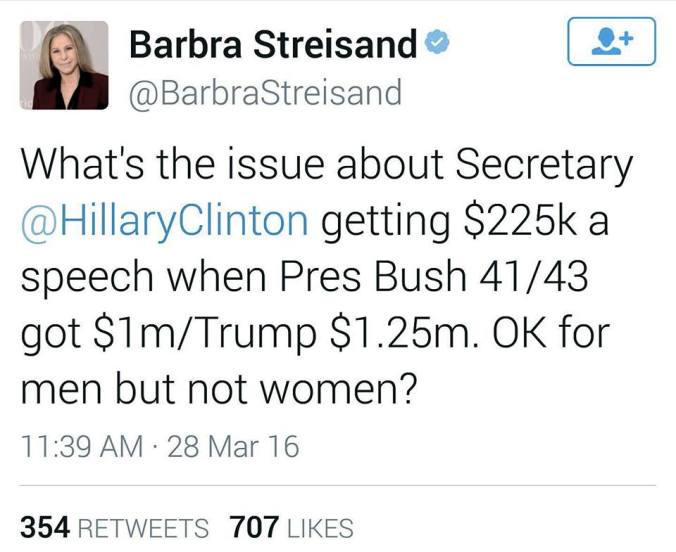
Quick, now: what is Babs missing, other than the basic ethics principle that “Everybody does it” is not a justification or an excuse for unethical conduct?

Unethical Tweet Of The Month: Hillary Clinton

hedge funds

Among her almost infinite flaws, Hillary Clinton is stunningly lacking in self awareness, and her statements often—astoundingly often—point to her own misconduct and ethical bankruptcy without her comprehending the self-indictment. She has tweeted, more than once, this sentiment, for example:

“To every survivor of sexual assault…You have the right to be heard. You have the right to be believed. We’re with you.”

…though Hillary was emphatically not “with” the women who credibly accused her husband of sexual assault, and still do. She will make statements to one group that are the exact opposite of what she recently said to another group, without batting an eye. Hillary actually committed the meta-lie of saying she never has lied, which is manifestly unbelievable. Then there was this Titanic-style gaffe…

“There should be no bank too big to fail and no individual too big to jail.”

…coming from someone who is, many legal experts believe, not already under indictment purely because she is “too big to jail.” (and then there is hubby Bill, who engaged in flat-out illegal election conduct in Massachusetts that you or I would have been arrested for, and didn’t even get a rap on the wrists.) Neither Clinton has any integrity at all, or shame either. It’s really quite stunning.

Last week, Hillary tweeted this howler:

Hillary Tweet 1

This is an example of a politician intentionally playing to class divisions, ignorance and bias, and worse, encouraging them. It is exactly like saying that it is “unacceptable” that Jimmy Fallon, who only hosts a silly late night show, makes more money than any cancer surgeon, special needs teacher or EMT alive. In some ways it is worse, because most people understand what those jobs are, and may  sort of comprehend the economic principles at work: if Jimmy Fallon drops dead, there is no replacement who will bring to the job exactly what Jimmy Fallon did. He is a unique commodity, and EMT’s are not. The statement is just an emotional attack on the fact that people value laughing over things that are objectively more practical, and entertainment salaries reflect that. Continue reading

Blame Tom Toles For This Post: NO, Obama Can NOT Honestly Claim That He Cut The Deficit

Toles deficit

While we’re on the topic of misleading statements, as in lies, foisted on the American public by the President of the United States, I now have to bring up his boast in his State of the Union speech that “We’ve done all this while cutting our deficits by almost three-quarters.” [Don’t get me started with “all this.”]

I was going to leave this infuriating line alone, I really was, because when you get on the topic of deficits, the numbers-spinners have a field day. Then I saw Tom Toles’ cartoon, above, for the Washington Post.

Toles, if I haven’t made it clear before, is the worst of a breed that is itself a disgrace to journalism, a form of editorial content that is immune from the ethical restrictions that are supposed to govern journalism. It is the ultimate “clown nose on/ clown nose off” scam, and Toles exploits its license beyond the nauseating limits set by his over-rated predecessor, the equally biased but not quite as shameless Herb Block….you remember, the guy who drew all businessmen as obese, cigar-chomping robber barons out of the 1890s, and conservative Congress members as cavemen. Yeah, he was subtle and fair all right. Toles is much worse.

By what version of English and logic can anyone say that Obama reduced the deficit at all, much less by “almost three-quarters? Here is the chart of the deficits since 2005 in dollars: Continue reading

Signature Significance: Bernie Sanders’ Ignorant Tweet

Bernie tweet

Yesterday, the Democratic candidate for President of the United States, a long-time member of the United States Senate, tweeted this message to his “followers,” and also, given the nature of Twitter, the nation:

“You have families out there paying 6, 8, 10 percent on student debt but you can refinance your homes at 3 percent. What sense is that?”

Now, if you don’t instantly recognize why this is an astoundingly ignorant statement, especially for a Presidential candidate running on a platform of economic restructuring, that’s okay. Don’t feel badly. It’s a weekend, you’re probably groggy from all the holiday cheer, and most important of all, you aren’t presuming to hold yourself out as qualified to be President, or constantly lecturing about the evils of capitalism. Sanders is, however, and this cretinous statement is signature significance. Nobody who understands loans, interest, collateral, banking, or economics would say, write or publish such a fatuous statement, even once. This is signature significance: an informed, logical, attentive, competent individual will not make such a bone-headed mistake…never. Sanders, however, has said this at least twice; in October, he tweeted a variation on the same economically ignorant theme:

“It makes no sense that students and their parents pay higher interest rates for college than they pay for car loans or housing mortgages.”

Actually, it does, Senator; it makes perfect sense, unless you are twelve. The concept is called “collateral.” That is something of value that  a lender can take if a borrower defaults on the loan. The deal is interest, plus security, the collateral. A house or a car are tangible collateral, so the interest rate can be lower. When the loan is for college tuition, however, there is no collateral. If the borrower defaults on the loan, the bank can’t take the student’s diploma, or education, or download all of the alleged knowledge the loan paid for from brain to laptop. Of course the interest rate is higher. That is, “of course” if you know anything at all about finance.

The unavoidable and shocking conclusion: Sanders is holding himself out as the leader to revolutionize how the U.S. economy works, stimulate growth and jobs, and show the way to a fairer and more just financial system, yet he is stunningly uninformed about the basics of finance, hasn’t learned a thing in all his years in the Senate, and worse, lacks the diligence to learn what he has an obligation to understand in order to justify having a vote on economic matters in the U.S. Senate, never mind setting policy as President.

This is bad.

Is there any excuse or defense for that tweet? No. Should anyone trust an elected official this ignorant and so lazy and arrogant that he makes no effort to disabuse himself of financial illiteracy? No. Does such a bone-brained misunderstanding mean that no intelligent person should listen to or take seriously any of his pronouncements about the economy? Yes.

To be fair to the Senator, let’s try to find some explanation for this that doesn’t prove that he couldn’t pass Economics 101 at a community college: Continue reading

Robert Samuelson And Social Security’s Pro-Rich Bias

A typical nuanced view of the problem...

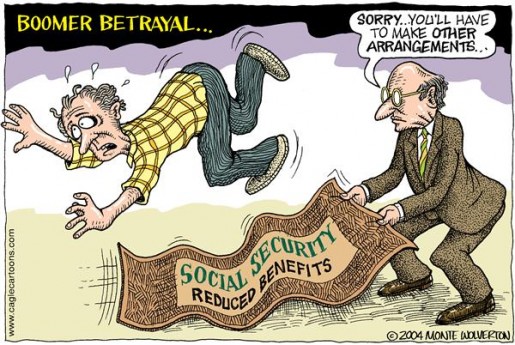
                                    A typical nuanced view of the problem…

My father was in the private pension business before he died, and the idiocy of how Social Security was set up drove him to distraction. I’m pretty sure he voted for Ross Perot in 1992 because Perot argued that it made no sense not to means test the program. I’m tempted to take a copy of Robert J. Samuelson’s op-ed last week to Arlington National Cemetery and leave it on his gravestone.

Samuelson is reliably one of the most rational, thoughtful and probing of all the op-ed columnists. Last week he wrote about how the life-expectancy gap between the wealthier segments of U.S. society and the poorer ones made Social Security as it is currently constituted a significant contributor to the income gap that progressives desperately want to make a key issue in the 2016 election, because dividing the nation by class (and race, ethnicity, religion and gender) is a big part of their playbook.

He wrote…

“The figures come from a new report by the National Academies of Sciences, Engineering and Medicine, which estimated life expectancies for workers born in 1930 (now 85) and 1960 (now 55) at age 50. The findings are stark. For the richest fifth of men, there was a 7.1-year increase in life expectancy, from 81.7 for those born in 1930 to 88.8 years for those born in 1960. Meanwhile, for the poorest fifth of men, life expectancy fell slightly, from 76.6 years for those born in 1930 to 76.1 for those born in 1960. The changes for the remaining men also parallel income: For the second richest fifth, the increase was 8 years to 87.8 years; for the third richest, 5.3 years to 83.4 years; and for the fourth richest, 1.1 years to 78.3 years.”

Nobody should be surprised that wealth equals health. It is difficult to pinpoint why the gap is so large, but should we have to? It seems intuitively obvious. Many  disadvantages–race, upbringing, family stability, good roles models, education, character, intelligence, opportunities, culture, neighborhoods—that undermine quality of life simultaneously or in combination with each other handicap earning ability  and health before we even get to the question of medical care.

Samuelson goes on… Continue reading

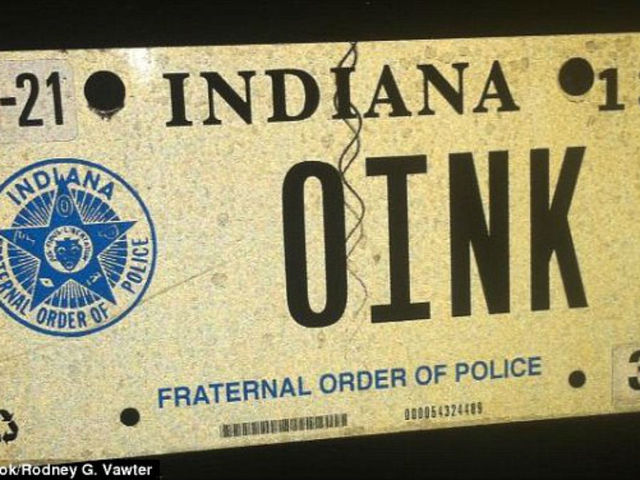
Law vs. Ethics: A Snatched Bar Mitzvah Gift, A Leaky AG, An Embarrassing Scoreboard, and”OINK”

Oink

I try to keep my legal ethics seminars up-to-the-minute, so while preparing for yesterday’s session with the Appellate Section of the Indiana Bar, I came across a bunch of entertaining stories in which the ethics were a lot clearer than the law, or vice-versa. All of them could and perhaps should sustain separate posts; indeed, I could probably devote the blog entirely to such cases.

Here are my four favorites from the past week’s legal news, involving a mother-son lawsuit, a brazenly unethical attorney general, a college scoreboard named after a crook, and police officer’s sense of humor: Continue reading

The Next Time You See One Of Those Opera Commercials About Selling Structured Settlements, Think About “Rose”

Rose

Because I worked as the general counsel for the late Richard Halpern, a kind and brilliant man, I know a lot about structured settlement, and also about the slimy businesses that conspire to destroy them. Richard’s company, The Halpern Group, worked with trial lawyers to develop structured settlements for successful plaintiffs who had won long-term damages for catastrophic injuries due to medical negligence, product liability or other torts. Most of these clients were poor, and if their millions in damages, designed to help them survive the rest of their lives, were awarded in lump sums, the result would almost always be catastrophic. These were poor people, for the most part, with poor families and poor friends and neighbors, none of whom had any experience or success managing money.  Drop millions on someone who has never had luxuries of any kind, and a spending spree as well and handouts to needy or greedy friends and acquaintances were sure to follow. For their own protection (or the protection of minors needing lifetime medical care), these plaintiffs of Rich’s lawyer clients were advised to forgo a big lump sum in favor of an annuity which would pay out regular amounts over time.

The plaintiffs own the income stream, but not the annuity itself. With assured income developed according to projected needs, the plaintiffs and their families could be assured of security and relative comfort and well-being—relative, because damages can seldom make up for broken bodies, minds and lives. Let me take over for myself here, from a post I wrote on this topic almost exactly six years ago.

Once they are on their own, however, the compensated victims are targeted by viatical settlement companies, both those with cute opera-singing commercials and those without. They undermine the sound advice of the attorneys with slogans like “It’s your money!” and try to persuade the former plaintiffs to unstructure the structured settlement by selling the annuity’s income stream to the viatical settlement company at a deep discount. Result: the annuity company gets the regular income at bargain rates, and the victims get a new, smaller lump sum to dissipate in exchange. The statistics say that the customer of the viatical settlement company will run out of cash long before he or she runs out of the need for it. But for the company, it’s a sweet deal.

It’s also despicable. The viatical settlement industry like to use lottery winnings, which are usually paid out in annuities like structured settlements, to justify their business. Lottery winning are windfall funds; while the same dissipation  hold for those lump sums (most multi-million dollar lottery winners have no money left after five years), the winners are usually no worse of after the money has been blown than they were before their number came up. When the money is a settlement for an injury, however, losing it is calamity. I would consider a viatical settlement company that only bought the income stream from lottery annuities ethical. There is no such company, however. The victims with structured settlements are a much larger and more lucrative market.

I have written about these legal but unethical businesses more than once. The first time, on The Ethics Scoreboard, I described a viatical settlement company only by using quotes from its own website, and explained what it meant, accurately. The company’s lawyers demanded that I take down the post, claiming that I had disparaged them (by using their own words and making it clear how they made their money.) I was in no position, with a family, a struggling business and aging parents, to engage in a legal battle of principle (though I suspected the company was bluffing, and I didn’t know Ken White and Marc Randazza then, both courageous blogging lawyers who assist bloggers who are threatened, like I was being threatened, to silence them. I took down the post. Continue reading

Out Of 199 Quotes, 40 That Reveal Donald Trump’s Ethics

Slogging through 199 Donald Trump quotes is too much for anyone to endure. Here are the 40 that matter...

Slogging through 199 Donald Trump quotes is too much for anyone to endure. Here are 40 that matter…

I don’t like or trust the technique of cherry-picking quotes from famous people to make them sound stupid, venal, mean or distasteful. First of all, the technique has been  abused by the news media, which uses it against people like Sarah Palin and Dan Quayle, but seldom digs up quotes to embarrass the leaders and political figures they like and support. Many liberal icons—Barney Frank comes to mind—talk so incessantly that it would be easy to make them sound like monsters or fools using the technique, but if it is done to these people at all, it is done by ideological blogs with minimal exposure. Second, those who make such lists often cheat, taking quotes out of context, or worse, making them up. Many lists designed to show that Sarah Palin is an idiot, for example (she is many things, but idiot is not among them) use lines actually said by Tina Fay while lampooning Palin.

Michael Kruse’s feature for Politico called “The 199 Most Donald Trump Things Donald Trump Has Ever Said”, however, deserves a bit more deference. After all, he appears to have waded through a putrid swamp of Trump interviews, books, and videos, which probably left him drooling and giggling in a corner some place; I’ll be relieved when I see evidence that he’s OK. That task took courage, dedication and endurance: attention must be paid. Moreover, this isn’t the usual list of ten or twenty quotes: you could make Stephen Hawking  seem like a dolt in twenty quotes if you chose them maliciously. This is 199. Impressive.

Also horrifying. In selecting the 199 juiciest and most provocative quotes from any prominent American, wouldn’t you expect at least one that was articulate, thoughtful, wise or memorable? I’m not looking for Samuel Butler here, or even Barack Obama, but for someone who is at least for the nonce a “serious” candidate for the highest office in the land, it would be reassuring to find some evidence of wit, perspective, reflection, or a vocabulary beyond that of a typical 8th grader, and it just isn’t there. Has Trump  read any literature? Has he ever seen a play? Is he capable of a relevant famous quote or a cultural reference (saying that Bette Midler is “grotesque” doesn’t count, though “grotesque” may be the most sophisticated word that appears on the list)? If so, there is no hint of it. Maybe Kruse intentionally left out quotes that would reflect well on Trump, and omitted utterances like “I suppose there’s a melancholy tone at the back of the American mind, a sense of something lost. And it’s the lost world of Thomas Jefferson. It is the lost sense of innocence that we could live with a very minimal state, with a vast sense of space in which to work out freedom” (George Will) or “When buying and selling are controlled by legislation, the first things to be bought and sold are legislators” (P.J. O’Roarke) or even“Our political differences, now matter how sharply they are debated, are really quite narrow in comparison to the remarkably durable national consensus on our founding convictions.” (John McCain). I doubt it.

There are three Trump bon mots in the 199 that barely justify quoting, like  #57: Continue reading