Texas Abortion Law Freakout Friday Continues: Psaki And Althouse

Psaki

I. Psaki

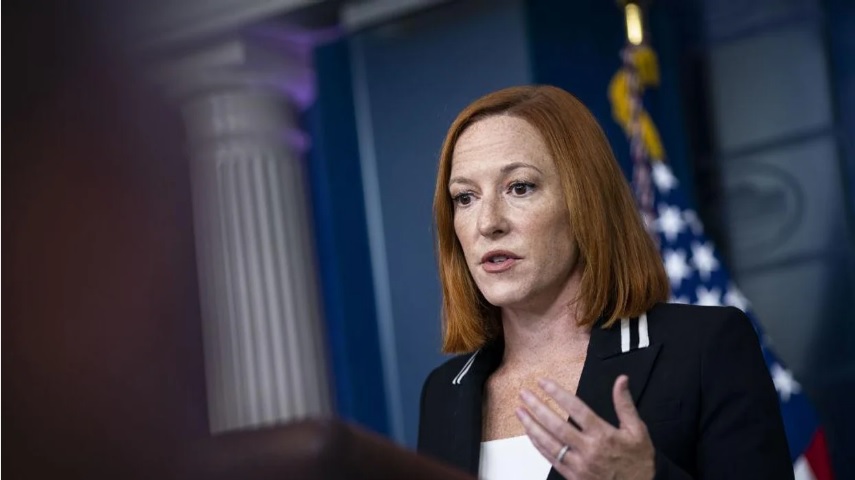
The exchange yesterday that Biden White House paid liar Jen Psaki had with reporter Owen Jensen, of the Eternal World Television Network (EWTN), a Catholic news organization, raises this conundrum: if there is persuasive ethical argument for abortion and abortion advocates have been defending Roe v. Wade for half a century, why are they so bad at it?

“Why does the president support abortion when his own Catholic faith teaches abortion is morally wrong?” the reporter asked. It’s a fair question, of course, and one that Joe Biden has (badly) tap-danced around for decades, claiming that he accepts the teachings of his church but refuses to impose his religious beliefs on others. This means, of course, that he believes abortion is murder but advocates it anyway. It is not a serious, honest or ethical position.

Psaki’s answer, as many of her answers do, ducked the question, saying that the President “believes that it’s a woman’s right, it’s a woman’s body and it’s her choice.” It’s a woman’s right to kill a human being? That is what Psaki is saying Biden believes, if he is as faithful as he claims. Typical of her ilk, her answer pretends that the only issue is the woman’s body and rights. Then Jensen asked who Biden thinks “should look out for the unborn child?” That is also a fair question, since Psaki’s answer was a Jumbo: “Unbornd child? What unborn child?”

Her next answer was worse:

“He believes that it’s up to a woman to make those decisions and up to a woman to make those decisions with her doctor. I know you’ve never faced those choices, nor have you ever been pregnant, but for women out there who have faced those choices, this is an incredibly difficult thing.”

An unborn child is either a life, or it isn’t. Biden’s faith states that it is. Despite that, the President believes that a woman can magically make a life a non-life by choosing to do so, along with her doctor How does that work, Jen? Then she stoops to the “men have no right to have a position on abortion” cheat, which would be unnecessary if she had a reasoned, persuasive defense of abortion beyond “Roe v. Wade says it’s a right, so it’s a right.”

No, Jensen’s never been pregnant (but he could be, Biden’s trans constituency should remind her), but he has been a fetus, and so has Psaki. Thus both should recognize the importance of the fetus’s right to exist.

Ah, but the moral and ethical dilemma posed by an unwanted pregnancy is difficult, Jen says. Yes, it’s difficult. Difficulty is not an argument for taking an innocent life. Is this the best a devoted abortion advocate can do under focused questioning? Apparently it is, at least when the advocate is as incompetent as Psaki. Was Sean Spicer really any worse than this hack? I don’t see how, except that he was working for President Trump.

II. Althouse

Continue reading

Texas Abortion Law Freakout Friday Presents Comment Of The Day And Response 2 On “Texas’s Clever Anti-Abortion Law”

Down Syndrome abortion

I guess I could also call this “Isaac Comment of the Day Rebuttal Friday,” but it’s not quite as catchy.

Here is Here’s Johnny’s Comment of the Day on the post, “Texas’s Clever Anti-Abortion Law,” followed by, as in the earlier post today, Isaac’s Comment of the Day response.

***

“I am of two minds when it comes to abortion. My left side says people have a right to privacy in medical stuff (especially from government), and an absolute right to control of their own bodies. My right side says killing humans is wrong (mostly).

“The left, generally, when it comes to abortion, shies away from recognizing that a human life is being ended, while otherwise, mostly, proclaim the sanctity of human life. The right, generally, when it comes to abortion, shy away from privacy rights, while, otherwise, mostly, proclaiming that government should just leave us alone.

“The suggestion posed here, that the fetus/unborn child be carried to term and placed for adoption, has merit. The last time I checked, there were a lot of potential adoptive parents.

“But, consider a real-world case that I am all too familiar with. The fetus/unborn child is diagnosed in utero as having Down syndrome. The list of potential adoptive parents shrinks considerably. But, the parents are opposed to abortion, the child is born, and the severity of Down syndrome is far worse than expected. The list of potential adoptive parents would be close to zero. Several surgical procedures are necessary soon after birth, significant expense in money to taxpayers and in both money and time to the parents.
But, the parents never considered placing the child for adoption anyway.
Advance the calendar about a decade and a half. The teen cannot communicate, although she seems to understand some things. She cannot feed herself. She cannot manage using a toilet. She has reached puberty, but cannot manage pads. She can walk, clumsily, but cannot be allowed to wander too far.

Continue reading

It’s Texas Abortion Law Freakout Friday! First Up, Comment Of The Day And Comment Of The Day Reply On “Texas’s Clever Anti-Abortion Law”

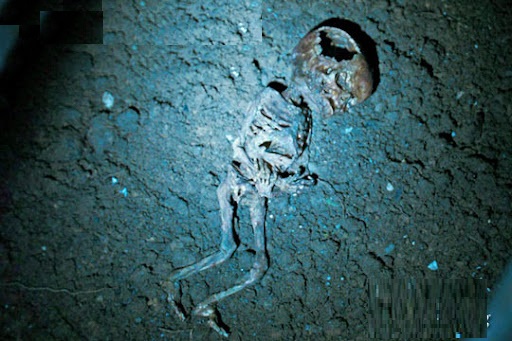
Baby in grave

First up on “Texas Abortion Law Freak-out Friday is Extradimensional Cephalopod’s timely exploration of the popular “we should be able to kill unborn babies while they can’t think, before they can” justification for legal abortion. As that characterization might suggest, I hate that argument, which has been made passionately by some abortion advocate every time the topic has arisen on Ethics Alarms. The reason I find it ethically objectionable is that the theory was devised to justify a position that had already been decided. Extradimensional Cephalopod’s comment begins by calling it intellectually honest. I admire his presentation of the argument, but that’s exactly what it isn’t. Abortion advocates, desperately seeking a way to get around the inconvenient fact that a human life was being snuffed out in the procedure and not willing to embrace the “Baby? What baby?” shrug that defines most pro-abortion rhetoric, came up with the “not sentient, ego not human” dodge after already endorsing abortion. This is scientifically and logically dishonest, because a bias—“we really, really want abortion to be legal”—drove the conclusion.

As E.C. makes clear, it is still a better defense of abortion than the fiction that only one human being’s life is at stake. As Isaac also makes clear in his Comment of the Day in response, it’s still not good enough.

First, here is Extradimensional Cephalopod’s Comment of the Day on “Texas’s Clever Anti-Abortion Law.” Isaac’s rebuttal will follow.

***

“The intellectually honest argument for abortion, which I’m still baffled most proponents don’t seem to bring up, is that a person–a sapient being–is not defined by having human DNA or a heartbeat, but by patterns of information in their brain (or whatever module they use to think with).

“There’s disagreement on whether to draw a meaningful distinction between patterns that are sapient and patterns that are subsapient–often called animals–as well as what ethical obligations sapients have to animals. In any case, proponents of abortion regard any information patterns in the brain of a human fetus as being less than sapient, and therefore not subject to the same ethical protections as fully sapient humans. For at least some of a human pregnancy, that belief would be supported by a developing brain not yet having achieved the complexity required to support a sapient consciousness. At some point, it may be that the brain is decently complex but hasn’t absorbed enough information to start forming a consciousness.
I’ve read somewhere that developing humans may start learning sounds and linguistic phonemes while still in the womb, though, and while I haven’t investigated the studies supporting this claim, it’s a claim that must be challenged by those who would argue that unborn humans haven’t absorbed any information.

Continue reading

Texas’s Clever Anti-Abortion Law

abortion Texas

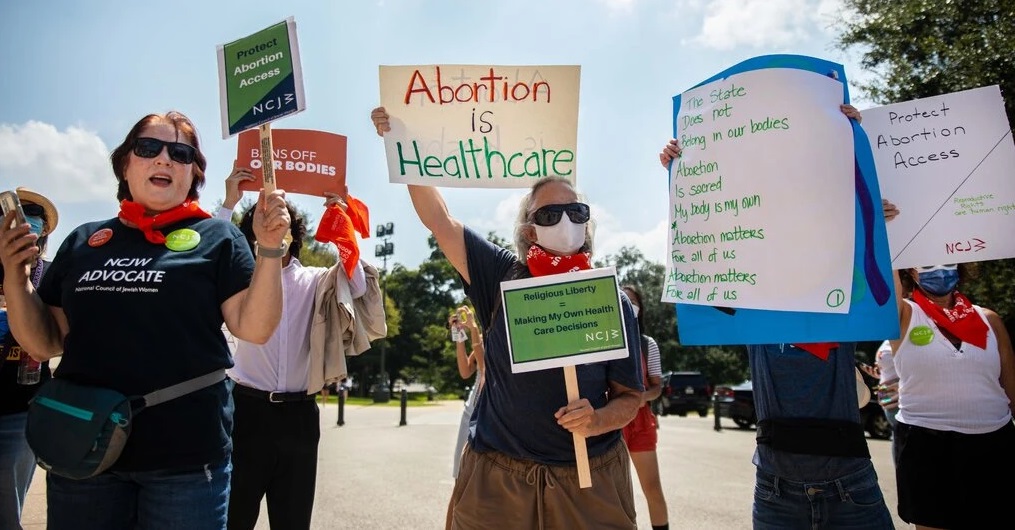
The Texas law, which went into effect yesterday when the U.S. Supreme Court declined to block it on a 5-4 vote. (Guess which justices were on each side. Next question: Who is buried in Grant’s Tomb?) The law bans abortions after a fetal heartbeat can be detected, which is after about six weeks of pregnancy. Roe v. Wade, the 1973 Supreme Court decision that established a constitutional right to abortion until a fetus was viable (by the medical standards of 50 years ago), would seem to preclude such laws, which other states ( Georgia, Mississippi, Kentucky and Ohio) have passed only to have them held in limbo by the courts The Texas law is the first to be implemented, in part because it approaches the issue from a clever (some might say diabolical) perspective.

The law does not make exceptions for rape or incest, as it should not: if the objective is to protect the human life of the unborn child, how that life came into being is irrelevant. It does permit abortions for health reasons, allowing a termination only if the pregnancy endangers the mother’s life or might lead to “substantial and irreversible impairment of a major bodily function.” The clever part is this: the Texas law doesn’t require state officials to enforce it, meaning that abortions won’t he halted by government action. The Texas law deputizes private citizens to sue anyone who performs an abortion or “aids and abets” a procedure. Any citizen has standing, regardless of connection to the patient, the abortion doctor or the clinic and may sue and recover legal fees along with $10,000 if they win.

This means that the Supreme Court will have to consider not only whether the Texas law in unconstitutional, but whether it can even be challenged in court, what the SCOTUS majority called “complex and novel” procedural questions. Predictably, while the majority opinion was relatively restrained, the dissenters freaked out.

Continue reading

Ethics Quote Of The Month: Lincoln Brown

Taliban abuse

I try to keep my true rants to a minimum, as they are unseemly for one in my role. I also try, not quite so successfully, to tamp down my occasional impulse to write, “I told you so!” It really helps me a lot when a web pundit like Lincoln Brown, a former talk show host and conservative columnist, writes pretty much exactly what I am feeling.

Brown’s essay titled “Dear Leftists, I Hope You Can’t Live With Yourselves” is what I have been dreaming of posting on Facebook for my 200 or so left-biased Facebook friends, some of them real friends I once thought better of as well as a few relatives, who would write mouth-foaming screeds about President Trump’s emails but who have maintained absolute Facebook silence on the Afghanistan disaster other than to post a meek and deflecting, “I think it was time to get out of Afghanistan, right everybody?” Brown’s whole post is the Ethics Quote of the Month, but here are some highlights:

Continue reading

No Naked Nurse Principle

Naked Nurse

There is a Naked Teacher Principle, however. The Principle states that a secondary school teacher or administrator (or other role model for children) who allows pictures of himself or herself to be widely publicized, as on the web, showing the teacher naked or engaging in sexually provocative poses, cannot complain when he or she is dismissed by the school as a result. The Naked Teacher Principle and all of its variations have been explored exhaustively on Ethics Alarms, The last time it was discussed, nearly a year ago, was in the context of rebutting the argument that there are similar principles regarding police and firefighters.

The current controversy is similar. Allie Rae, shown above, was a competent and dedicated Boston-area ICU nurse (and a 37-year-old mother of three) until she was was forced out of her medical job after employers discovered her non-traditional sideline, an OnlyFans page with a current following of more than 69,000. She says she started being sexually provocative on the web to relieve pandemic lockdown stress as well as her reaction to being on the hospital’s front lines during the Wuhan peak, sometimes working 14-hour shifts. Actually, maybe nursing was the sideline. After all, Allie says she made over $8,000 in her first month on OnlyFans, and she was making only seven a month as a nurse.

Continue reading

Ethics Quiz: Apple Thinks Of The Children

Apple privacy

Last week, Apple announced a plan to introduce new technology that will allow it to scan iPhones for images related to the sexual abuse and exploitation of children. These tools, however, which are scheduled to become operational soon, can be used for less admirable objectives, like so many technologies.

Apple’s innovation will allow parents have their children’s iMessage accounts scanned by Apple for sexual images sent or received. The Parents would be notified if this material turns up on the phones of children under 13. All children will be warned if they seek to view or share a sexually explicit image. The company will also scan the photos adults store on their iPhones and check them against records corresponding with known child sexual abuse material provided by organizations like the National Center for Missing and Exploited Children.

Cool, right? After all, “Think of the children!!” (Rationalization #58) But while Apple has promises to use this technology only to search only for child sexual abuse material, the same technology can be used being used for other purposes and without the phone owner’s consent. The government could work with Apple to use the same technology to acquire other kinds of images or documents stored on computers or phones. The technology could be used to monitor political views or “hate speech.

Computer scientist Matthew Green, writing with security analysist Alex Stamos, warns,

“The computer science and policymaking communities have spent years considering the kinds of problems raised by this sort of technology, trying to find a proper balance between public safety and individual privacy. The Apple plan upends all of that deliberation. Apple has more than one billion devices in the world, so its decisions affect the security plans of every government and every other technology company. Apple has now sent a clear message that it is safe to build and use systems that directly scan people’s personal phones for prohibited content.”

Your Ethics Alarms Ethics Quiz of the Day:

Does the single beneficial use of the Apple technology make it ethical to place individual privacy at risk?


Noontime Ethics, 8/18/2021: The Segue Edition

Segue

1. Combine mental health with unaccountable female superstar athletes and you get.…another “How dare you expect me to answer questions like any other pro athlete, you sexists racist!” moment from Naomi Osaka. Ahead of the Western & Southern Open in Mason, Ohio, tennis’s reigning queen finally agreed to sit down for questions from the press on a Zoom call. You will recall that at the French Open in May, she said she would decline to do pretournament or post-match news conferences, even though they are required of all players. When Osaka was fined $15,000 for skipping her press commitments after her first-round victory, she withdrew before her second-round match in Paris, for the first time playing the mental health card., later used so effectively by Simone Biles at the Olympics. At the session in Mason, Paul Daugherty, a sports columnist for The Cincinnati Enquirer, asked ,“You are not crazy about dealing with us, especially in this format. Yet you have a lot of outside interests that are served by having a media platform. I guess my question is, How do you balance the two?” Osaka, after an attempt at an answer that wasn’t an answer, ran out of the room in tears. Her agent, Stuart Duguid, said via text message, “The bully at The Cincinnati Enquirer is the epitome of why player/media relations are so fraught right now. Everyone on that Zoom will agree that his tone was all wrong, and his sole purpose was to intimidate.”

Imagine that response from a male athlete to a legitimate if tough question. Imagine an agent for such a male athlete calling the questioner a “bully.” Female athletes cannot protest that they must be treated equally with male jocks and still reserve the right to revert to delicate flowers when it serves their purposes.

Continue reading

Ethics And Leadership Failure On Afghanistan, Part I: In And Out

I’m not a foreign policy expert. (Is anyone a foreign policy expert?) so Ethics Alarms will go light on what “should” have been done by the U.S. in Afghanistan. The one thing I am unalterably convinced of now, as I was in 2001, is that the U.S. had to take strong military action against the Taliban after it aided and abetted Osama bin Laden. No nation can just shrug off a fatal, ambush attack on its citizens with a finger wag and a stern, “Now don’t do that again, or you’ll be sorry!”

Obviously staying twenty years in the pseudo-nation was way, way too long, expensive and costly in American lives, but dreaded mission creep set in. My approach after 9/11—and I think that of several past Presidents, including Eisenhower and Truman—would have been to strike hard, make sure as many military and government officials as possible were among the dead, accept the civilian casualties as unavoidable, and make sure that a properly frightening death toll—ten times what we lost on 9/11, perhaps, 30,000?—made the necessary point: “Don’t mess with the United States of America.” Once that message was delivered, get out. Colin Powell’s too often quoted nostrum that if you broke a country you were obligated to fix it should not have applied. Afghanistan was already broken; it was and remains a chaotic mess of warlords and medieval thinking supported by the heroin trade. Nobody can “fix” it. However, the Taliban was bad, and worst of all it oppressed women, so all of a sudden our objective became an ethical one, not retaliation but reform.

Continue reading

Oh, Good…A Non-Political Reason To Avoid Saturday Night Live

Sanz and Fallon

It’s a sad truth, at least for me: the more you know about comedians and comics, the harder it is to laugh at them. There are notable exceptions of course (and as always): Martin Short, John Candy, Carol Burnett and a few more apparently are or were genuinely nice and relatively normal human beings. As a rule, however, extraordinary comedy talent is nourished by misery and emotional pain, and misery and emotional pain have a strong tendency to produce broken, sick, untrustworthy people.

For a lot of audience members, this isn’t a problem. For me, it is. I love great comedy, I’ve directed comedies, I’ve written comic scripts, revues, parodies and essays, and I’ve performed comedy. But once I learn that a comedy genius was or is a horrible human being, or acts like one sufficiently frequently not to be trusted, I just don’t enjoy watching and listening to that performer any more. The list of those who have landed on my “Can’t Make Me Laugh List” is too long to compile, and I really don’t care to encourage debates about whether it should matter that Charlie Chaplin was sexually attracted to little girls, or that Danny Kaye was a cruel misanthrope. It matters to me.

There are a few compensating advantages of this mindset, though. I haven’t watched a single minute of Saturday Night Live for so long I don’t even remember exactly when I started finding the show repugnant after years of never missing an episode. The reason I stopped watching was the show’s increasingly smug political bias that began to swallow the satire whole. I know it was somewhere around the George W. Bush presidency. (I had a similar experience then with David Letterman and The Daily Show.) SNL’s conversion into a full-time shill for progressives and Democrats became especially nauseating when it became addicted to using left-wing thug Alec Baldwin as a guest. There is no one on Earth I hate enough to find Alec Baldwin mocking him or her funny, and when it comes to Baldwin’s Trump impression, only the biases of Saturday Night Live directors and audiences can explain its popularity. As a director, I’d consider his amateurish routine unacceptable in a Cub Scout skit.

Fortunately, a recent emerging scandal looks like it will give me a new reason to detest the show that has nothing to do with politics.

Continue reading