Wednesday Morning Ethics Warm-Up, 11/18/2020: The Betraying Friend, The Abusive Model, The Grandstanding Lawyer, And The Partisan CEO

Several of these items could support stand-alone posts, I suppose, but I have bigger metaphorical fish to fry. I’ve also figured out that traffic would look better if I broke some of these 800-1000 word posts into multiple 400-500 word bites, but to hell with it: a post should be as long as it has to to make the points I want to make. Traffic has also been excellent lately: from Election Day through yesterday EA has had the best extended streak since 2017. As usual with such surges, this has involved some quirks. For example, the post about Margaret Thatcher’s favorite poem has been leading all posts in clicks for three days. I didn’t see that coming…

1. Ethics Quiz: Which is more unethical, the creep who offers such tales out of school, or the publication that gives her a platform?

The entire genre of former school mates coming forward with unflattering and ancient anecdotes about political figures is unethical. Now that Ivanka Trump’s father is likely to be out of the White House next year, her seventh grade friend Lysandra Ohrstrom decided it was a safe to reveal what a creep the First Daughter was as a 13-year-old, because so few of us lacked a functioning ethics compass at that age. She also decided that she would enjoy being interviewed on various Trump-hating TV shows, I assume.

Why the woman continued to stay friends with someone she now says was an elitist snot is a mystery; yes, some of Lysandra’s tales impugn adult Ivanka as well as the child version.

One of her earliest memories of Ivanka is her blaming a fart on a less popular classmate. The monster! In their twenties, Ivanka asked Ohrstrom for a book suggestion and when her friend suggested “Empire Falls,” replied, “Why would you tell me to read a book about fucking poor people?” Ohrstrom also recalls Ivanka once telling her “You’ve really turned into a Marxist” during a discussion about affordable housing in Manhattan.

Is there anyone who has ever lived who doesn’t have embarrassing incidents that occurred early their lives and that they trust that the family and friends who witnessed them have the decency and loyalty not to inform the world? Ohstrom’s ignorance of the Golden Rule and her pathetic lunge for 15 minutes of fame tell us more about her character than reveal anything relevant about Ivanka Trump.

Continue reading

Saturday Ethics Aftermath, 11/14/2020: Art And Ethics

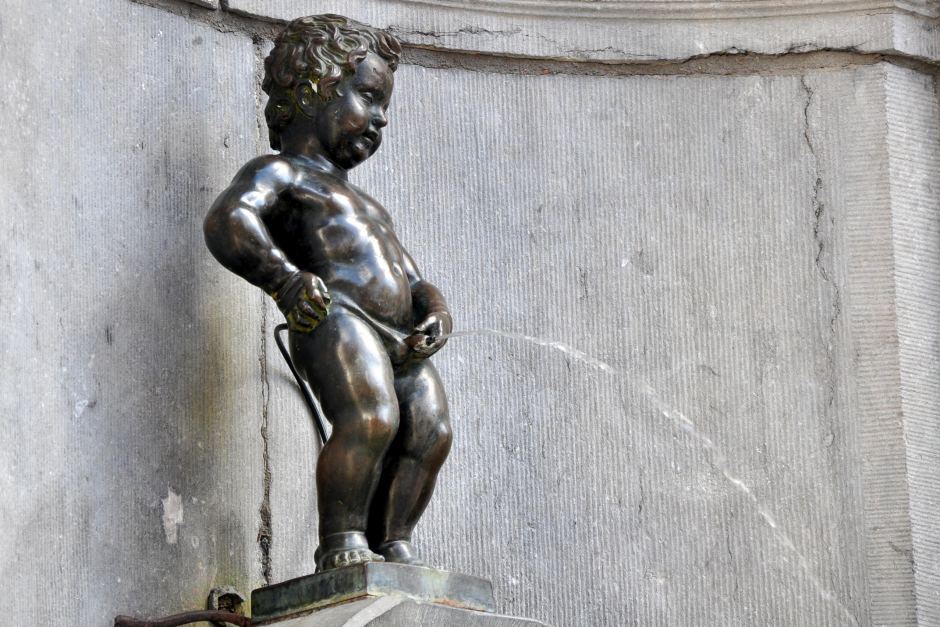
Brussels statue

1. Movie plot ethics. It’s clear that I have watched far too many movie and TV programs. I am now at the point where certain routine plot and directorial devices not only annoy me, they insult me. I regard these now as disrespectful and incompetent, and in that sense, unethical. I’m not talking about the cliches that still work with the young and uninitiated, like how the apparently dead/injured/ betrayed/ rejected or abandoned character you forgot about is always the one who shows up to save the day. (Among the reasons I love the “Magnificent Seven” so much is that when the one member of the team who had quit shows up to rescue his pals in the final gun battle, he is shot and killed immediately.) I’m referring to tropes that are self-evidently stupid and should seem so for any viewer over the age of 12.

For example,  if there’s a vicious, murdering psychopath chasing you, and you knock him cold with a steel pipe or incapacitate him in other ways, you don’t assume he/she/it is dead and leave the killer there to revive and slaughter you. You make sure the manic/monster is dead. Beat his head to a pulp; heck, cut it off.  This is often paired with another idiotic scene, the ill-timed hug. The world is going to blow in seconds, zombies are coming, crazies are beating down the door: save that passionate embrace for later, you morons! The same applies to long, emotional conversations in the midst of disasters when every second counts. Which is worse, I wonder: the long debate in “Armageddon” between Bruce Willis and Ben Affleck when they have literally seconds to save the Earth from an asteroid apocalypse, or the even longer argument among three fire fighters in the middle of a burning building?  That was in “Backdraft,” and I never quite felt the same about director Ron Howard after that.

2. Statue ethics again.  A new London  sculpture dedicated to Mary Wollstonecraft, the 18th-century writer and feminist hero (and the mother of Mary Shelley) is attracting much hate from art critics and the public.

MW memorial

The work by the British artist Maggi Hambling features a small, naked woman standing on a pillar silvered bronze, set on a cube of dark granite. The overall form is just larger than an average person, and sits well with the park: “Why is Mary naked?” critics are demanding. One Twitter user said: “I had no idea Mary had shredded abs.”

Morons. Read the statue’s base: “For Mary Wollstonecraft, 1759-1797.”  This is not intended to be a likeness of, but a tribute to,Wollstonecraft, whose most famous quotation from her “A Vindication of the Rights of Woman,” published in 1792, appears on the other side of the base:  “I do not wish women to have power over men; but over themselves.”

Before one starts criticizing anything, it is essential, fair and responsible to know what one is talking about. Every day I send to Spam Hell comments from Ethics Alarms critics who obviously didn’t read the post they are commenting on. I once went to great lengths to get a local theater critic fired who reviewed a show I directed after I saw her walk out before the second act.

On the other side, as a stage director who made being clear my prime directive, I hold the artist partially responsible when a large proportion of viewers don’t understand what is being communicated.

3. Then there is this:

Continue reading

One More Time: SCOTUS Must Decide Between Freedom Of Religion And Gay Rights in Fulton v. City of Philadelphia

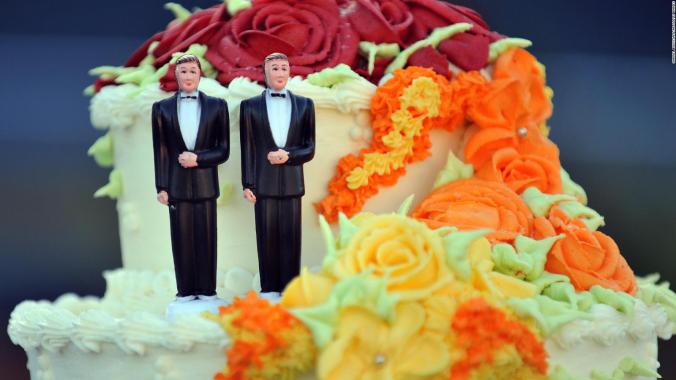
In Fulton v. City of Philadelphia the U.S. Supreme Court will decide yet another legal controversy that should not have occurred at all. Like the various cake-designing law suits, two parties that easily could have come to a mutually agreeable compromise decided, as the old saw goes, “to make a federal case of it.” Now, with the decision bound to abridge somebody’s constitutional right, we will have yet another example of how “Hard cases make bad law.”

This week the Justices heard arguments testing its 2015 decision establishing a right to same-sex marriage with Philadelphia’s decision to bar a Catholic agency that it had hired to screen potential foster parents because the agency refused to screen same-sex couples and approve them, since the position of the Church is that same-sex marriage is a sin. Hence the question: Is Philadelphia discriminating on the basis of religion by refusing to continue using the agency based on its religious mandates? The Church’s lawyer, Lori Windham, says that the agency only wants to continue work that it has been doing for centuries. Besides, she argued, gay couple had ever applied to the agency. If one had, she said, the couple would have been referred to another agency.

What’s the beef, then? Justice Alito says that like the bakery cases (my comparison, not his), LBGT activists want to bend the Church to its will, resulting in Philadelphia acting based on hostility to the Catholic agency’s views.

Continue reading

Day After The Day After Updates And Observations On The 2020 Election

Thanksgiving hangover

1. I had written some time ago that the best possible outcome ethically would be a Trump landslide, and the worst would be a Trump win in the Electoral College while losing the popular vote. Somehow I missed the obvious worst scenario, which is what we are getting: a mega-2000 mess, with multiple states in doubt for various questionable factors, resulting in litigation by both sides, stretching on into December.

This was one more example of how the false and biased polls interfered with legitimate analysis.

2. I have frequently praised Richard Nixon for passing on the opportunity to challenge the results in Illinois, Texas and other states after the 1960 election, and saying that it was more important to respect the process and not throw an election into turmoil. Of course, based on what we know about Nixon. That may have been a ploy and virtue signaling: while there was certainly some voting shenanigans, notably in Richard Daley’s notoriously corrupt Chicago, Nixon maybe have been told that he would lose anyway, and that challenging the results would make it harder for him to come back and win in ’64 or ’68. Nonetheless, Nixon set the norm, and Al Gore broke it in 2000. Now it seems insane for a party to not to challenge a close election if there seems to be any question about the legitimacy of the result.

That shift is also a reflection of the widening chasm between the two parties. There wasn’t much difference philosophically between the Democrats and Republicans in 1960, nor between Nixon and Kennedy. (There wasn’t much difference between their ethical instincts either, but we didn’t know that at the time.) Today there is every reason to believe that for a party to just shrug off the possibility that a Presidency has been stolen in the best interests of the nation is a breach of duty and a betrayal of the public trust.

However, a party (like the Democrats since 2016) or a candidate (like Hillary Clinton) continuing to deny the results after they have been validated is unforgivable and destructive.

Continue reading

Mid-Day Ethics Tidbits, 11/4/2020: Sort-Of Post-Election Edition, With Yummy NONE Election-Related Items!

1. Ay Caramba! Does anyone think that former Playboy model Eva Marie has a legitimate complaint because she was kicked off a Southwest flight along with her seven-year-old son for wearing this outfit on board?

Eva Marie

I don’t. She said she was “humiliated and embarrassed” when a Southwest Airlines flight attendant told her she couldn’t board looking like that. I don’t believe it for a second. She was seeking publicity. “When they threatened to remove me off the plane if I didn’t have a change of clothes, I felt completely humiliated, embarrassed and highly offended,” the Instagram influencer said of the incident. “I’m an A list member for SWA and have a credit card with the airline and I have perks that allow any person traveling with me to fly free because of my high status with the airline. So even as being a loyal customer with them, I felt like the other women on the plane were judging me based on my attire and they were saying my breasts are too large,” she added. “Well, that’s something I can’t help.”

No, you shameless jerk, they were judging you because you won’t observe even minimal social conventions, like not going out in public looking like a stripper mid-routine. If she is a “high status” member of the airline, then she is presumably aware that it has a dress code. It is overwhelmingly likely that she pulled this as a stunt to gain Instagram users  to “influence,” and exploited Southwest to do so.

The airline would be fair and reasonable to ban her from flying.

Continue reading

Social Q’s Ethics: The Good, The Bad, And The Stupid

I mentioned earlier that I had stopped checking New York Times  Sunday advice column “Social Q’s” because its author, Phillip Gallanes, had apparently received the memo from Times brass so his advice and choice of queries were now primarily “woke” propaganda. However, reading material in our bathroom was recently in short supply, forcing me to peruse two recent Gallanes columns in which there was one interesting ethics issue raised, and two others that were a perfect examples of where Gallanes’ biases make him an untrustworthy advice columnist.

1. The photograph: The interesting issue regarded a daughter whose parents had recently died, and who was shocked that a valuable photograph was not directed her way in the distribution of the estate. It was, she said, second only to the parents’ home in value, and had appreciated in value greatly in the decades since it was given. Didn’t she have a right to get the photo, since she had given it in the first place? Wasn’t it unethical for the parents to treat it like the rest of their estate?

Gallanes properly pointed out that there was no basis for her assumptions in law or ethics. There are no strings attached to transfers of property unless they are made explicit at the time of the gift. What a cumbersome societal norm that would be: an estate is obligated to figure out the original source of every object of value and make sure they return to the original giver! What Gallanes didn’t say, and I would have, is “Who are you kidding? You want the valuable item, and have concocted a phony justification for claiming it.”

2. The vote. Another Social Q’s questioner wrote,

Continue reading

Ethics Dunces: Girl Scouts USA

Girl Scouts

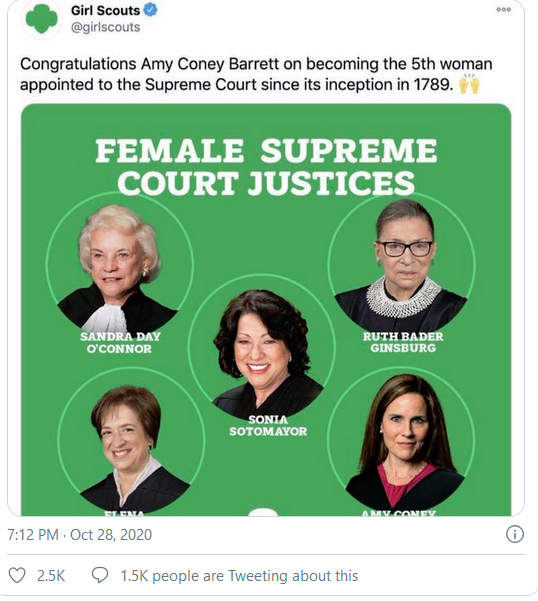
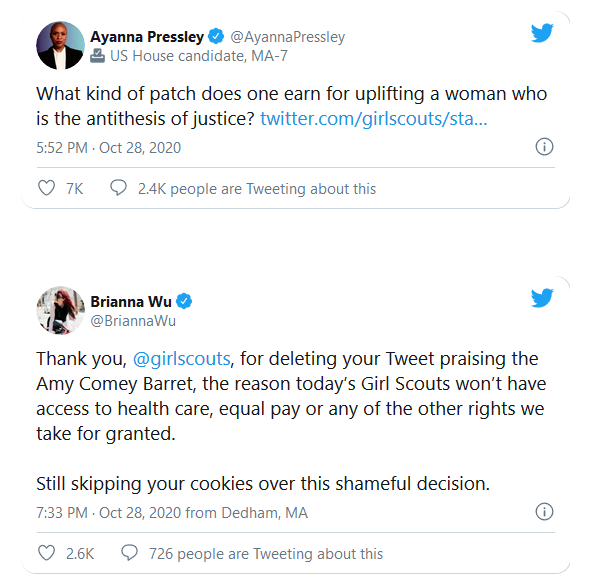
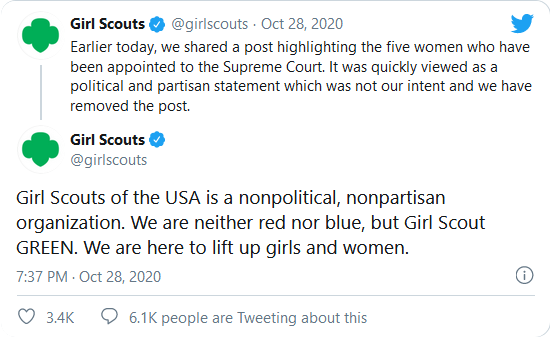
I covered this episode briefly yesterday (Item , but upon reflection, it deserves more derision. The decision to pull the simple tweet saluting all of the women who have served on the Supreme Court because of indefensible tweets like these cited yesterday…

Asshole tweets

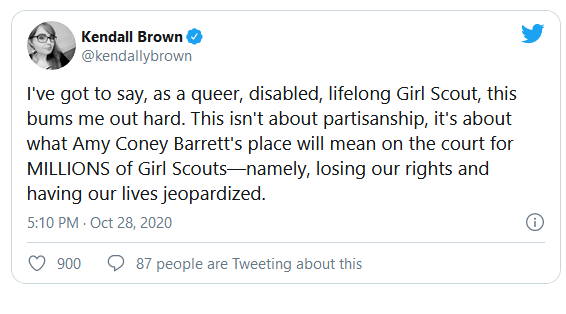
and others, like this…

Brown screenshot

…was bad enough: craven, submissive, and irresponsible. The organization’s explanation afterwards, when it had begun getting the much-deserved criticism for backing down in the face of the Woke Mob, compounded its disgrace. First it tweeted meekly,

Girl Scouts Grovel

..and when that abject grovel was not well-received, a Girl Scouts USA spokesperson so mealy-mouthed that—well it’s too early, and I can’t think of a witty metaphor—gave us this:

Continue reading

Worst Ethics Role Model Of The Week: Hillary Clinton

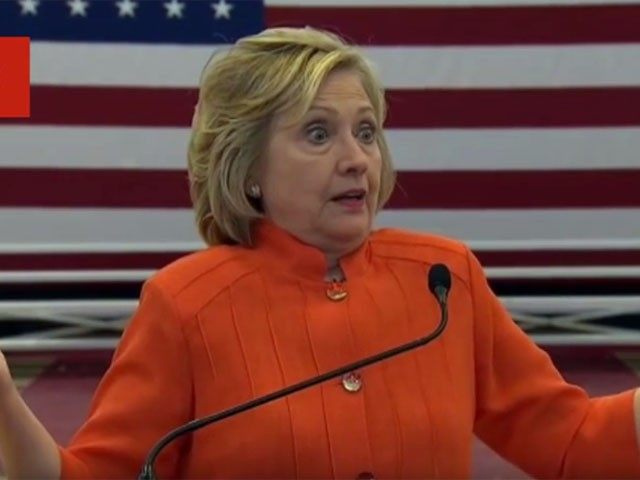
Hillaryshrug

I have no desire to magnify or dwell on Hillary Clinton’s failures and character flaws. She has reason to be miserable, just as Al Gore did; I really can’t imagine what it must be like to be either of them.

However, as Hyman Roth memorably said, “This is the life we have chosen!” Politics involves regular defeat and victory, compromises and disappointments, all under public scrutiny, with plaudits and jeers a routine part of the experience. If you can’t handle it, you’re in the wrong business. While I can be sympathetic to the stresses of the life, I also expect those who try to persuade us to bestow extraordinary honors, power and trust upon them to display extraordinary character or at least adequate character.

This Hillary Clinton has shown, repeatedly, she cannot do. The character is not there to  display.

Here is what she said in part in a guest appearance on Kara Swisher’s New York Times Opinion podcast, “Sway,” after  Swisher asked Clinton if she thought a woman president would handle the coronavirus pandemic more ably. [What an idiotic question, but that’s Kara Swisher for you…]

“I have no doubt, especially if it were me. I was born for that. I mean, that’s why I knew I’d be a good president. I was ready for crises and emergencies, and I would have done what you see these women leaders doing. You listen to the science. You bring in people in an open, inclusive way. You communicate constantly, you make the case by explaining why what you’re doing is in the long-term interests, not only of health, but also, of the economy. Yeah, I have no doubt in my mind at all that I would have stepped up to that crisis.”

Regarding the possibility of the President’s re-election, Clinton said,

Continue reading

The Throbbing, Unethical Stupidity Of Senator Mazie Hirono

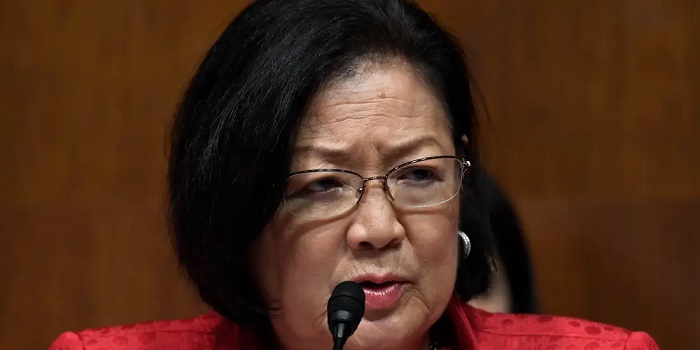
Hirono

One of the more ridiculous moments in the hearings to vet Judge Barrett was the contrived indignation expressed by Senator Hirono and Senator Cory Booker when the nominee used the term “sexual preference.” The Democrats had nothing valid to complain about regarding the judge—attacking her religion had proven unpopular and ugly in her previous confirmation hearings—so this was the best they could do: political correctness and dubious language taboos.

It wasn’t just them, of course: Patty Murray, the third-ranking Democrat in the Senate, tweeted: “Judge Barrett using this phrase is shameful and offensive—and it tells us exactly what we need to know about how she views the LGBTQIA+ community.” Yes, that’s certainly fair: the unplanned and innocent use of term that has been unofficially designated as “offensive” by activists tells Democrats “all they need to know.” This was the signature significance moment that saw Webster’s dictionary prove beyond a shadow of a doubt its unethical bias and lack of integrity when the company reacted to the Hirono-Booker vapours by changing the online definition of “sexual preference” to match the new GoodSpeak.

Honestly, why aren’t people embarrassed to be supporting a party and its allies that behave like this? But I digress.

As pointed out in the related Ethics Alarms article, inconveniently for Hirono, two of her Democratic colleagues on the Judiciary Committee and her party’s Presidential nominee, Joe Biden, had also recently used that phrase that “tells us exactly what we need to know” about them, which is—what exactly? That they missed a memo from the Language Police High Command? I’m confused.

So was National Review writer John McCormack, who relates his exchange with the Hawaiian Senator on the topic:

Continue reading

“Systemic,” A Four Part Ethics Alarms Depression, Part 4: Systemic Patriarchy And Hypocrisy

feinstein Schumer

As the election draws nigh, I am thoroughly sick of writing, “If the Democrats had any integrity, they would…” and I’m sure you, faithful ethics fan, are sick of reading it. Quite obviously the current Democratic party cares no more about integrity than they do about process, the Constitution, civility, or trying to avoid dividing Americans.

But I admit, as an ethicist, the flagrant hypocrisy I have seen virtually every day since the Democrats decided that destroying a President was more important than preserving American democracy is depressing, and often frightening. Yesterday, Joe Biden raised the specter of Joseph Goebbels in reference to President Trump, when it is his party—and he—who have used the Goebbels’ Big Lie tactic repeatedly, as Ethics Alarms has documented extensively. The fact that Biden is his Party’s nominee is as gross an example of hypocrisy as ever witnessed in American political history: the same party that spent two years insisting that sexual assault and sexual harassment disqualified prominent men for positions of power in all fields, and that women had a right to be believed when they accused men of abusing them, chose a man whose habit of sexual harassment is decades long and a matter of photographic record.

Last week, it again was the feminist base of the Democratic Party that was abused, but never mind: clearly these women have no more integrity or ethical principles than the men they pimp for. They are in the right party, obviously—they one that postures without meaning what it says.

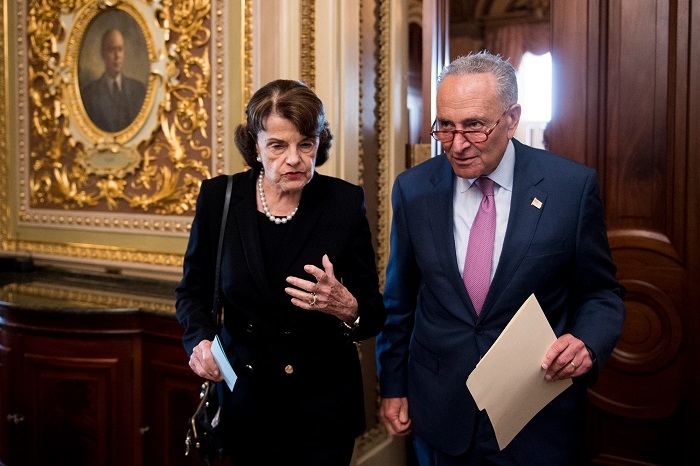
At the conclusion of the Amy Coney Barrett Judiciary Committee confirmation hearings, ranking Democratic Senator Dianne Feinstein, foolishly believing that statesmanship, comity and collegiality were still values the Senate was supposed to embody, commended Committee Chairman Lindsay Graham for his leadership and said it was “one of the best” hearings she’d ever been a part of. She then hugged him.

Yet yesterday, as if that was all a mirage, there was Feinstein standing submissively behind Chuck Schumer on the steps of the Supreme Court, as the Minority Leader Chuck Schumer said that his fellow Democratic Senators  had boycotted the committee vote because it was an “awful, awful hearing.” Schumer had, we were told, had a little talk with the oldest Senator in the body, apparently warning her to expect a horsehead in the bed if she didn’t meekly toe the party line, even though she thought she was doing that. Remember “when they go low, we go high?” Remember all of Feinstein’s party’s blathering about Democratic norms? Restoring bi-partisanship in Congress?

Continue reading