SPECTACULARLY Unethical Quote Of The Week: President Obama

“Don’t blame us for all the mistakes in the law—look at how long it is!”

…on the Affordable Care Act and King v.Burwell, at his news conference. When President Obama was asked about the soon to be announced Supreme Court decision in King v. Burwell, he launched in an epic of unethical assertions and rhetorical games. I’ll highlight the unethical—not merely dishonest in some cases—statements and elaborate afterwards.

THE PRESIDENT: What I can tell state leaders is, is that under well-established precedent, there is no reason why the existing exchanges should be overturned through a court case. (1) It has been well documented that those who passed this legislation never intended for folks who were going through the federal exchange not to have their citizens get subsidies. (2)That’s not just the opinion of me; that’s not just the opinion of Democrats; that’s the opinion of the Republicans who worked on the legislation. The record makes it clear. (3)

And under well-established statutory interpretation, approaches that have been repeatedly employed — not just by liberal, Democratic judges, but by conservative judges like some on the current Supreme Court — you interpret a statute based on what the intent and meaning and the overall structure of the statute provides for. (4)

And so this should be an easy case. Frankly, it probably shouldn’t even have been taken up. (5)And since we’re going to get a ruling pretty quick, I think it’s important for us to go ahead and assume that the Supreme Court is going to do what most legal scholars who’ve looked at this would expect them to do. (6)

But, look, I’ve said before and I will repeat again: If, in fact, you have a contorted reading of the statute that says federal-run exchanges don’t provide subsidies for folks who are participating in those exchanges, then that throws off how that exchange operates. (7)It means that millions of people who are obtaining insurance currently with subsidies suddenly aren’t getting those subsidies; many of them can’t afford it; they pull out; and the assumptions that the insurance companies made when they priced their insurance suddenly gets thrown out the window. And it would be disruptive — not just, by the way, for folks in the exchanges, but for those insurance markets in those states, generally.

So it’s a bad idea. (8)It’s not something that should be done based on a twisted interpretation of four words in — as we were reminded repeatedly — a couple-thousand-page piece of legislation. (9)

What’s more, the thing is working. (10)I mean, part of what’s bizarre about this whole thing is we haven’t had a lot of conversation about the horrors of Obamacare because none of them come to pass. (11)You got 16 million people who’ve gotten health insurance. The overwhelming majority of them are satisfied with the health insurance. It hasn’t had an adverse effect on people who already had health insurance. (12)The only effect it’s had on people who already had health insurance is they now have an assurance that they won’t be prevented from getting health insurance if they’ve got a preexisting condition, (13)and they get additional protections with the health insurance that they do have.

The costs have come in substantially lower than even our estimates about how much it would cost. Health care inflation overall has continued to be at some of the lowest levels in 50 years. (14)None of the predictions about how this wouldn’t work have come to pass.(15)

And so I’m — A, I’m optimistic that the Supreme Court will play it straight when it comes to the interpretation. (16)And, B, I should mention that if it didn’t, Congress could fix this whole thing with a one-sentence provision. (17)

Wow, that’s even worse that I thought. Have there been more dishonest, deceptive, irresponsible statements by a President of the United States? Maybe. I don’t see how there could have been one that was much worse, though.

I’ll try to be brief, or else this will be a book. The numbers correspond to the bolded sections above… Continue reading →

Confused Ethics Observations On Caitlyn Jenner, Up and Down the Cognitive Dissonance Scale

Cognitive DissonanceThis whole episode is pure cognitive dissonance hell for me, with high scale values clashing with low scale conduct, and the result being as hard to analyze neatly and dispassionately as the aftermath of an elevator crash. But I’m a fool, so I’ll take a shot at it anyway.

1. Bruce, now Caitlyn, Jenner’s openness about his transsexual issues is brave and may yet help this misunderstood and routinely derided group achieve acceptance. PLUS.

2. She should have played ethics chess, however, and as a public figure who, she now says, always planned this transition, was irresponsible not to. Associating herself with the traveling freak, venality, bad taste and atrocious values caravan known as the Kardashians guaranteed that anything she did thereafter would be a legitimate object of suspicion. MINUS.

3. Turning her transition from Bruce to Caitlyn into a reality show was similarly counter-productive and harmful to her cause, assuming the cause really matters to her. I doubt that it does.  Reality shows equal schlock, emotionalism, manipulation, phoniness—and money. That won’t help the trans population. MINUS.

4. As the first bona fide celebrity to undergo gender reassignment (no, I don’t call Chastity Bono a real celebrity), Jenner could have handled this in a modest, measured manner that made trans people look reasonable, dignified, and rational. Unfortunately, Bruce Jenner was always a fame-addicted narcissist,  so her handling of the process is what you’d expect from one. Too bad. MINUS.

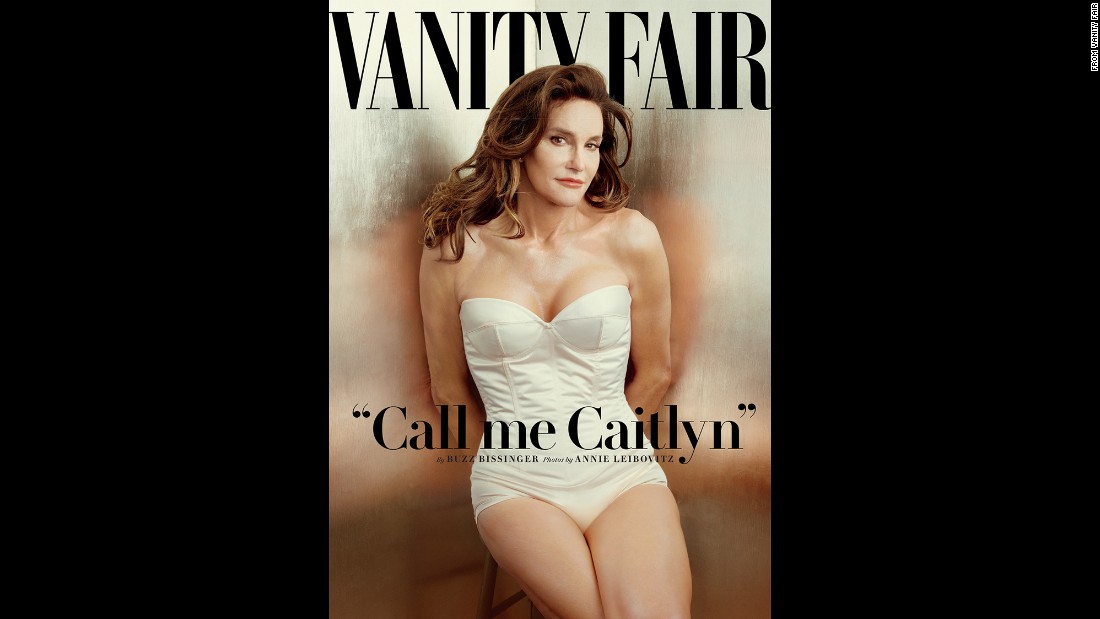
5. Thus we have the over-praised, over exposed, over-hyped, Vanity Fair cover, which is pure sensationalism, an exploitation of a serious issue for magazine sales, and a fraud. (Literally anyone can be dressed, shaved, and made up to look feminine.) Is Jenner interested in legitimizing and de-stigmatizing gender reassignment, or getting hubba-hubbas for a titillating man-to-bimbo transformation? Is Playboy next for Caitlyn? Don’t bet against it. MINUS for Vanity Fair; MINUS for Jenner

6. Is this really the way an ethical father kindly, sensitively and responsibly handles this kind of tectonic life change when he has six children and four step-children, including teenaged daughters? Admittedly, the daughters are crypto-Kardashians, so normal rules of delicacy might not apply. Still… MINUS for Jenner.

7. Republicans, conservatives and Neanderthals who are incapable of comprehending this serious topic should shut up about it.  There is grounds to criticize many aspects of this episode in American culture, but just making snarky comments like Neil Cavuto did on Fox is unproductive, unkind, divisive, and, frankly—I’ve been on Neil’s show, and I hate to say it—makes one look like an ass. If you don’t understand what’s going on, Neil, there’s no law that says you have to cover it. MINUS for Cavuto.

8. I had to shut off TV to get way from the breathless coverage of Jenner’s “coming out” photo. This isn’t respectful or responsible coverage, this is “Look! Bruce Jenner is HOT!!! She has BOOBS!” coverage, juvenile, degrading, and transparently salacious. It shouts “freak,” and that is exactly what Jenner should not want, nor should any LGBT advocate. Of course, the conduct of Vanity Fair and Jenner asked for it. MINUS for the news media.

9. To the extent that Jenner’s act promotes more public discussion and understanding of the issues facing trans individuals, this all may have a beneficial effect that may outweigh the negatives. Right now, there is too much static to tell. PLUS.

I hope.

A Naked Teacher Principle Application That Nobody Will Disagree With! At Least I Hope Not…

...especially with her new boobs....

…especially with her new boobs….

Amazingly, this is the first bona fide sighting this year of the Naked Teacher Principle, an Ethics Alarms standard, and it is, as Hazel used to say, “a doozy.” (Yes, I will continue to try to educate younger readers in the finer points of Sixties pop culture no matter how obscure the reference is. Look up Ted Key, Shirley Booth, Don DeFore, and The Saturday Evening Post, my children…)

Since it has been so long, here is the NTP:

The Naked Teacher Principle: The Principle states that a secondary school teacher or administrator (or other role model for children) who allows pictures of himself or herself to be widely publicized, as on the web, showing the teacher naked or engaging in sexually provocative poses, cannot complain when he or she is dismissed by the school as a result. The original formulation of the NTP can be found here. It has had many tweaks and variations since, which can be found here.

Now hold on to your hats, public school fans. Here is the recent story that it governs: Continue reading →

Ethics Hero: Popehat’s Ken White

sunshine-through-the-clouds

I can’t really say Ken White is a friend. We have never met, though we have spoken on the phone. I sent him a copy of my book. He has cited my posts and I have (often) cited his; we have disagreed and argued. I think he’s still ticked off at me for asserting here that well off, smart, educated professionals (like him) who argue for drug legalization share responsibility for the fates of the poor, uneducated or not so smart people who ruin their lives using the junk because the elite have proclaimed that the laws are foolish. (I still believe that, by the way, more today than ever.)

Ken also advised me wisely when I was being threatened with a lawsuit. I am eternally grateful for his kindness. We share a profession and the avocation of blogging, as well as a professional interest in ethics. We are both fervent believers in the First Amendment, but Ken is a true warrior on the front lines, while I just occasionally submit a dispatch from the battlefield. We both adopted children from overseas, and have some similarly warped strains to our humor. One thing I do not share with Ken is clinical depression, thank goodness. He suffers from it, I don’t. Continue reading →

Another TV Doctor, Another Breach: Dr. Sanjay Gupta’s Heroic And Self-serving Ethics Blindness

Are TV doctors entertainers, journalists or doctors? In a way the question doesn’t matter: if they are doctors, then they are obligated to follow medical ethics and the standards of their profession at all times, no matter what else they may be taking compensation for. This is why “Dr. Oz” is ducking the issue when he tries to avoid accountability for pushing quack remedies on his TV show (if it ducks like a quack…) by arguing that he isn’t practicing medicine, but engaging in entertainment. He’s still a doctor, every second of his life, once he takes that oath.

CNN’s Dr. Sanjay Gupta has largely steered clear of ethical issues in his tenure as the network’s medical expert. Not entirely, however; for example, in 2009, he was prominently mentioned as a possible Surgeon General, and was in discussions with the White House while continuing his reporting on the air, raising real and potential conflict of interest concerns. The most recent controversy is more serious. Continue reading →

Death Throes Of The Death Penalty: Dumb Expert, Dumb Advocates, Dumb Debate

“Next!”

As I recently concluded, the death penalty is beyond saving, not because it can’t be defended ethically and morally, but because the issues are tangled beyond repair.

The controversy over the legality of the so-called drug cocktails that somehow became our execution method of choice is a perfect example. The battles over capital punishment trapped policy-makers into this kinder, gentler, ridiculously complicated method of execution that has suffered snafus ranging from unavailable drugs to ugly extended deaths. The problem is the floating definition of “cruel and unusual punishment,” prohibited by the Constitution, but almost entirely subjective. Many judges think killing a killer is itself cruel by definition, and the more reluctant Western Europe becomes to execute the worst of the worst, the easier it is to make the argument that the death penalty is also unusual.

I don’t get it. I never have. India once executed condemned criminals by having the subject place his head on a stump under the raised foot of  trained elephant, which on a command would smash the head like a grape. Quick, painless–messy!—but virtually fool-proof. A pile-driver would be an acceptable equivalent.  Ah, but ick! In this stupid, stupid, intellectually dishonest debate, ick always equals “cruel and unusual,” because to opponents of the death penalty, killing people, even horrible, dangerous people, is inherently icky.

(Oddly, ripping unborn babies out of the womb is not, but I digress.)

I’ve admitted it, and I will again. (This lost Ethics Alarms Luke G., one of its best commenters the last time.*) It is obviously wrong to intentionally prolong an execution or deliberately cause pain, but if the occasional execution is botched and the condemned suffers, that should be cause for great rending of garments, nor should it be used to discredit capital punishment. As I wrote here about Clayton Lockett’s execution in Oklahoma…

“There was no question of Lockett’s guilt, and his crime was inhuman. Such wanton cruelty and disregard for innocent life warrants society’s most emphatic rebuke, and the most emphatic rebuke is death. It is essential that any healthy society make it clear to all that some crimes forfeit the continued right to not just liberty, but also life. Anyone who weeps because this sadistic murderer experienced a few extra minutes of agony in the process of being sent to his just rewards has seriously misaligned values. No method of execution will work every time, and to make perfection the standard is a dishonest way to rig the debate. If the death penalty is justified, and it is, then we should expect and accept the rare “botch.” Meanwhile, if the concern really is efficiency, reliability, speed of death and minimal pain, there are literally dozens, maybe hundreds of methods of swift execution that would accomplish this. They just won’t pass the standards of death penalty opponents, because no method will.”

Today the Supreme Court heard oral arguments on the question of whether Oklahoma’s use of the common surgical sedative midazolam did not reliably make prisoners unconscious during lethal injections, thus violating the Eighth Amendment’s protection against “cruel and unusual punishment.” It’s a ridiculous case, which arises out of the botched April 2014 execution of Lockett that sparked the post I just quoted. It is a ridiculous case because the method of execution isn’t worth arguing over. Elephant. Head. Problem solved. Why is Oklahoma fighting about which cocktail to use? This is the anti-capital punishment team’s game, and sooner or later, the result is preordained.  Continue reading →

Comment of the Day: “Ethics Dunces: Ten Prominent Doctors, Surgeons and Med School Professors Who Want Columbia To Kick Dr. Oz Off Its Faculty”

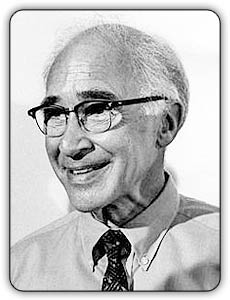
The late Prof. George Wald, the best teacher I ever had. In biology, not political science. George did not acknowledge the distinction.

The late Prof. George Wald, the best teacher I ever had. In biology, not political science. George did not acknowledge the distinction.

Commenter Alexander Cheezem, who has quite a bit of expertise (also passion) on such matters, weighed in on the current controversy over the “quackery” of daytime TV star “Dr. Oz.” This time I’ll hold my comments until the end; here is Alex’s excellent Comment of the Day on the post, Ethics Dunces: Ten Prominent Doctors, Surgeons and Med School Professors Who Want Columbia To Kick “Dr. Oz” Off Its Faculty:

I’m going to have to both agree and disagree with you here. First off, I applaud Columbia University’s response and agree that the principle of academic freedom is applicable here… to a point.

Secondly, however, I’m going to have to disagree with you regarding the parallels. Linus Pauling was an embarrassment to medicine, not chemistry. Wald was overly passionate about politics, not biology. Nagel’s views on biology are an embarrassment, not his views on what he’s supposed to be actually teaching. Chomsky’s forays into political science may be an embarrassment (personally, I regard them as something of a mixed bag), but that’s not what he was the professor of, is it?

Kass, McKinnon, Harper, and Singer are closer parallels, of course, but there’s still one rather huge difference: Dr. Oz is a doctor… and runs his show as one. It is, as the comedian John Oliver put it, the Dr. Oz Show, not “Check This Shit Out With Some Guy Named Mehmet”. This is quite relevant for a number of reasons, not the least of which is that offering medical advice is within the scope of what doctors do. Offering that advice while invoking his medical license as a relevant qualification, simply put, can be considered part of the actual practice of medicine. Continue reading →

Fugitive for 39 Years Turns Himself In For Free Health Care…Wait, WHAT??

"Oh, Mr. Moore? We have that bed you made 39 years ago. Now lie on it."

“Oh, Mr. Moore? We have that bed you made 39 years ago. Now lie on it.”

From NBC:

“…Clarence David Moore, 66, called the Franklin County (Kentucky)Sheriff’s Office on Monday and said he wanted to turn himself in, the sheriff’s office said. When deputies arrived, they found Moore — who’d been living in Frankfort since 2009 and had ID’d himself as Ronnie Dickinson — partially paralyzed and unable to walk because of a recent stroke. He was arrested and taken by ambulance to a hospital for examination before he was taken to the Franklin County Regional Jail.

“Sheriff Pat Melton told NBC station WLEX of Lexington on Tuesday that Moore said he’d escaped from the Henderson County, North Carolina, Prison Unit in the mid-1970s and has been on the lam for almost four decades. But as he got sicker, he couldn’t get medical coverage to pay for the complications of his stroke and other health problems, because he doesn’t have a valid Social Security number under his alias…Moore was arraigned Tuesday morning and waived extradition to North Carolina on a charge of being a fugitive from another state. He was being held without bond pending his being returned sometime this week….”

I hate to appear uncharitable, but I don’t understand this at all.

Moore chose to defy the justice system for 39 years, and now wants to get the benefit of it on his terms, when it’s useful and convenient to him?

He chose to avoid paying his debt to society. Society certainly has no debt to him. The ethical course is for the North Carolina’s governor to pardon Moore, and allow him to fend for himself, stroke or not. For taxpayers to have to foot the bill for a felon’s health care when he has shown nothing but utter contempt for the justice system is a travesty of justice, logic and ethics. If it’s compassion at issue, take the money that would have to be spent on Moore and use it to help an elderly law-abiding citizen who can’t pay his medical bills.

Or burn it.

Does the State have some subtle ethical obligation to the fugitive that I’m missing?

Ethics Dunce: Alexandra Robbins, The Mocking Nurse

Mockery

If you set out to defend ethically indefensible conduct in print, you better be able to do a better a job of it than this.

Alexandra Robbins, in an op-ed causing quite a bit of controversy in the Washington, D.C. area, attempted to not only justify the despicable conduct of medical professionals deriding and ridiculing their unconscious patients, but to sanctify it, arguing, lamely, that doctors and nurses are mocking the unwitting and vulnerable human beings who have placed their lives in their hands in order to “rejuvenate [the medical personnel] and bond them to their teams, while helping to produce high-quality work. In other words, the benefits to the staff — and to the patients they heal — outweigh occasional wounded feelings.”

Right.

Robbins’ protests of virtue amount to a desperate raid on the Ethics Alarms Rationalization List, which, as always, operates as virtual Rotting Ethics Detector, or RED. If you find yourself thinking these corrupting self-delusions, you’re on the verge of unethical conduct; if you find yourself saying them, you’ve applied for membership in the Dark Side, and if you are so rationalization-polluted that you proclaim them in print, like Robbins, you shouldn’t be trusted to mail the water bill, much less to cavort in the operating room.

Rationalizations aren’t the only ethical problem with her loathsome essay. The entire thing is a Jumbo, denying the blatantly undeniable. “Oh, no!” readers are told. “We aren’t being disrespectful to patients when we mock their weight, sex organs, or the maladies that placed them in pain, peril and in our care!” Robbins expects us to believe that insults constitute “non-destructive coping measures” that help nurses and doctors “provide the best possible care, even if those methods might seem unprofessional outside of the health-care setting.”

They seem unprofessional because they are unprofessional. Continue reading →

Ethics Dunces: Ten Prominent Doctors, Surgeons and Med School Professors Who Want Columbia To Kick “Dr. Oz” Off Its Faculty

Dr Oz

Perhaps they tried this because Columbia has been having a bad ethics year so far… that could be it, I guess.

For the record, here are are the ten prominent individuals in the field of medicine who called on Columbia University to kick Dr. Mehmet Oz, better known to Oprah fans and junk TV addicts as “Dr.Oz,” off its medical school’s faculty:

Henry I. Miller, M.D.
Robert Wesson Fellow in Scientific Philosophy
& Public Policy
Hoover Institution
Stanford University
Stanford, CA

Scott W. Atlas, M.D.
David and Joan Traitel Senior Fellow
Hoover Institution
Stanford University
Stanford, CA

Jack Fisher, M.D.
Professor of Surgery (emeritus)
University of California, San Diego
La Jolla, CA

Shelley Fleet, M.D.
Anesthesiologist
Longwood, FL

Gordon N. Gill, M.D.
Dean (emeritus) of Translational Medicine
University of California, San Diego
La Jolla, CA

Michael H. Mellon, M.D.
Pediatric Allergist
San Diego, CA

Gilbert Ross, M.D.
President (Acting) and Executive Director
American Council on Science and Health
New York, NY

Samuel Schneider, M.D.
Psychiatrist
Princeton, NJ

Glenn Swogger Jr. M.D.
Director of the Will Menninger Center for Applied Behavioral Sciences (retired)The Menninger Foundation
Topeka, KS

Joel E. Tepper, M.D.
Hector MacLean Distinguished Professor of Cancer Research
Dept of Radiation Oncology
University of North Carolina School of Medicine
Chapel Hill, NC

And here is their letter. They are troubled because “Dr. Oz” has embraced dubious products and health promotion techniques on his TV show. Indeed he has. On TV, Dr. Oz is a quack. He uses his medical credentials to, as the letter says, show “disdain for science and for evidence-based medicine” and to display  “baseless and relentless opposition to the genetic engineering of food crops.”  And no one can deny that  “he has manifested an egregious lack of integrity by promoting quack treatments and cures in the interest of personal financial gain.”

None of which is justification for taking him off the faculty, where his teaching duties are unrelated to his lucrative TV persona, and are the direct result of his recognized expertise in cardiothoracic surgery.

Could it be that all of these doctors—including Professors Tepper and Fisher, and Dean Gill— have never encountered the sacred educational principle of  academic freedom? Continue reading →