Comment Of The Day: “Morning Ethics Warm-Up: 8/24/17”

The debate over what kind of tolerance is required and justified in a democracy inspired reader Chris Marschner to submit a thoughful and thought-provoking comment, as he has before, that takes the discussion in a diferent direction.  I’ll let you read it and have your own reactions; Chris needs no further preface.

Here is his Comment of the Day on the post,Morning Ethics Warm-Up: 8/24/17:

Let me begin with the question, what lies as the foundation of tolerance? Is it understanding, empathy, or a just a willingness to comprehend an alternative perspective? Perhaps it is all three. By definition, tolerance is a willingness to live and let live, so to speak. But, the notion of willingness to live and let live does not preclude the actions of those who seek to change minds through cogent rational argument.

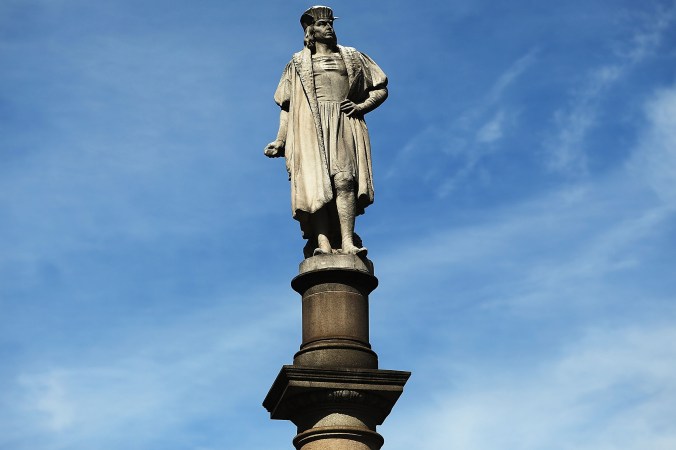
I have listened at great length to those who oppose and support the destruction or removal of Confederate iconography in today’s world. If we start with the assumption that what is right and good will triumph over that which is bad and evil in time without the need to resolve the dispute violently we might move toward a more tolerant and enlightened social structure.

My thesis is neither a defense of nor a condemnation of societal issues that continue to pit one against another. I will merely juxtapose the historical issue which divided the nation into camps that found the practice repugnant and those that found no problem with it an a modern day issue that one group find morally repugnant while others do not and attempt to draw parallels to historical events that sanctified, or at least legitimized social behavior.

Again, I am trying not to cast any judgement on any behavior but to develop my thoughts I needed to find a modern day issue that a majority segment of our population finds morally repugnant and another minority segment sees as perfectly acceptable. I then asked myself the question to what lengths might the minority segment go should the majority segment impose its will by executive or judicial fiat? How much will the minority tolerate before it finds the political majorities imposed will too much to tolerate. What issue might create substantial animus toward the ruling segment that it too may seek to enjoin itself from laws of the land. What parallels in history do we see that might engender such animus and how might future generations view the loser if the debate escalated into a full on confrontation? Continue reading

Comment of the Day: “Yes, Virginia, There Is A White Supremacist Teacher Principle”

It is seductively easy to be certain about one’s analysis of controversial issues if you simplify them to the point of distortion. This is what politicians do, and it is often impossible to tell whether they are trying to deceive,  just don’t understand the issue at hand, or are deliberately ignoring inconvenient facts to advance an agenda. Sometimes it is all three. The Civil War, as the recent debate over Confederate statues again illustrates, is a classic example of this phenomenon, and has been since the war itself began. Southerners saw their cause as just, because they were fighting for the right to determine the shape of their own culture, a right they felt was embodied in the Constitution itself. Since that culture included slavery, to assert that the South had a measure of law and ethics on its side has routinely dismissed as, and simplifies as, sympathizing with slaveholders. (As an aside, I wonder if the censorious Left will redouble its efforts to get “Gone With The Wind” exiled from television permanently. I’m betting yes.)

Arguments about what the Civil War was fought over have been taking on the tenor of the old Miller Beer commercials: “Less filling!” “More taste,” or perhaps the Certs ads: “Certs is a breath mint!” “Certs is a candy mint!” “STOP you’re both right!” To his great credit, texagg04 accepted the challenge of trying to clarify the complexities of the “root causes of the Civil War” confusion in a concise comment (the topic has filled long scholarly books). He did an excellent job, and as he wrote as he began his explanation, the complexities matter. They usually do.

Here is texaggo4’s Comment of the Day on the post,Yes, Virginia, There Is A White Supremicist Teacher Principle:

…The South seceded to defend against what it believed would be the Republican plan to eradicate slavery via the National level of government.

Slavery is why the South seceded – Slavery could be said to be a type of Final Cause of secession.

But that said, slavery was merely the topic of the question, “Who has final authority to make significant economic decisions within the individual states: The States or the National level of government?” State powers — those not delegated to the Union — was the issue to be answered as it pertained to slavery. So “States Rights” could be said to be a type of Formal Cause of secession.

There was NO war at that point, because secession, prior to the Civil War, was widely regarded as a perfectly legal course for States *voluntarily* part of a Union to do.

Stopping secession, that is preserving the Union status quo, is *why* hostilities began. Continue reading

Comment Of The Day: “Morning Ethics Warm-Up: 8/23/17”

Like Baltimore removing its politically incorrect statues, here I am in the dead of night trying to catch up with the Ethics Alarms Comments of the Day.

By the way, of all the statues taken down and under attack, the one I can most sympathize with is that of Chief Justice Roger Taney. There is only one reason anyone remembers Taney, and only one thing a statute to him can symbolize: the Dred Scott decision, which he authored. Since it is, by acclamation, the single most disastrous Supreme Court decision in the nation’s history, having a statue of Taney standing in front of the Maryland state house is difficult to defend.

Taney is something of a tragic figure. The rest of his judicial career was distinguished, but that is a bit like saying that the rest of that performance of “Our American Cousin” was terrific. He actually thought the Dred Scott decision would avert a civil war by settling the slavery question once and for all. He was not an evil man, just a horribly misguided one.

There is a street named after Taney in Alexandria. Every time I pass the sign, I think, “This is weird.” Who defends the Dred Scott case? Who has defended it in the last 150 years?

But I digress.

Tippy Scales is an undercover journalist, registering his period disgust at the ethical collapse of his profession here because it is not safe to do so elsewhere. He filed this Comment of the Day two days ago, on the post, Morning Ethics Warm-Up: 8/23/17

(I’ve linked to the topics and posts he  has referred to within his post.)

Let’s review the past few days… Continue reading

Morning Ethics Warm-Up: 8/24/17 [UPDATED]

GOOD MORNING!

1. I’m moving this to the top from its original placement at the end. I warned that the mania for retroactive statue-toppling and historical air-brushing was a deadly slippery slope to cultural chaos from the moment Dylan Roof’s rampage primed the Confederate flag banning push. I said that there was no clear stop on that slope, and that this was a massive ethical error that would quickly spin out of control.

I am accepting apologies and “You were right, I was wrong” messages at jamproethics@verizon.net. I will reply gracefully.

2. It’s a good thing, in some ways, that President Trump has no ethics alarms, or has them but doesn’t understand what all the ringing means, because if he did, he might realize that he has put himself in ethics zugswang in the matter of former sheriff Joe Arpaio, the anti-illegal immigration zealot who is facing up to six months in jail for defying a federal judge’s order to stop targeting Latinos based solely on the suspicion of their legal status. Trump has been urged to pardon Arpaio. Let’s see:

  • Arpaio did defy a judicial order. Should a law enforcement official be treated especially harshly when he does this?

Yes.

  • The judicial order related to Arpaio’s practice of assuming that individuals of Hispanic descent were more likely to be violating the immigration laws in his jurisdiction than other citizens. Since his jurisdiction was rife with Hispanic illegals, was this an unreasonable assumption on his part? No. Was it still discriminatory? Sure. Is the balance between profiling, which in such situations is a valuable law-enforcement tool, and the importance of equal treatment under the law a difficult one legally and ethically? Yes. Does a sheriff have the right and authority to ignore the way this balance is decided one legal authorities define it?

No.

  • Is the determination of this balance often polluted by ideological biases, in this case, against enforcement of immigration laws?

Yes.

  • Do Donald Trump, and his supporters, and those Americans who may not be his supporters but who agree that allowing foreign citizens to breach our borders at will without legal penalties is certifiably insane, believe that Arpaio’s position on illegal immigration is essentially correct and just?

Yes.

  • Nonetheless, did his ham-handed methods give ammunition to open-borders, pro-illegal immigration, race-baiting activists like the one who told the New York Times,

“Trump is delivering a slap in the face to dignified, hard-working people whose lives were ripped apart by Arpaio. Arpaio belongs in jail, getting a taste of his own medicine. Trump wants to put Arpaio above the law, showing they are both about white supremacy.”

  • Is sending Arpaio to jail a political imprisonment?

Yes, although he made it easy to justify on non-political grounds.

  • Are political prisoners the ideal objects of Presidential pardons?

Yes.

  • Would pardoning him send dangerous messages (it’s OK to violate judicial orders you think are wrong; the ends justifies the means; Presidents should meddle in local law enforcement, “extremism in defense of liberty is no vice”) as well as defensible ones ( judges and elected official enabling illegal immigration are a threat to the rule of law; Joe is an old man with a long record of public service who deserves mercy even though he was wrong…)

Yes.

  • Will such a pardon, especially as the news media is again spinning to make the case that Trump is sympathetic with xenophobes and white nationalists, further inflame an overly emotional debate that needs to be calmed, not exacerbated?

God, yes.

  • Is the most responsible course for Trump to stay out of this mess?

YES!

  • Will he?

Of course not. Continue reading

Morning Ethics Warm-Up: 8/22/17

Good Morning!

1. You cannot imagine how long it takes to prepare a post on WordPress when the internet connection is going out repeatedly, requiring a trip down a flight of stairs, re-booting the modem, scanning for a channel back up the stairs in my office, and furiously searching, reading and linking until Verizon kicks out again after three to ten minutes.

Since none of my 40 phone calls to the Verizon tech who promised that the three-months’ long problem was fixed and that he would sprint like a bunny back to our home to trouble shoot if the malady returned had received the courtesy of a response, I snapped, and got into my car to visit a Verizon wireless store about five minutes away that I didn’t know existed. For some reason the world, though sun-lit, was bathed in a weird light, and my neighbors were lying on the ground wearing what looked like 3-D glasses, but never mind: I had someone to yell at.

There were two young men about the age of my son manning the store, and I told one of them, through gritted teeth, the whole infuriating saga of how much Verizon DSL sucks and what useless customer service his employer provides, rendering both my business and my communications chaotic and unbearable. I didn’t expect anything, really. I just wanted to give hell to someone face to face.

To my shock and amazement, the young man actually did something. He got on the phone—I told him that I took sadistic pleasure in watching Verizon personnel go through the infuriating phone tree, get put on hold, get disconnected, end up in the wrong department, for all of this happened to him as I watched and listened—but he finally reached a supervisor, and told him that the story he had just heard from the gentleman in his office made him ashamed to work for Verizon, and he wanted to know how my problems could be addressed immediately. Yes, he knew that I had a tech visit already scheduled, “but since the same tech has been out there three times, each time assuring him that the problem was successfully addressed, why would he trust us to fix the problem now?”

“If I were him, I would have dumped Verizon and found another provider.”

After about 45 minutes, here was what he accomplished. He got them to agree to send a different and higher level tech this time. He set in motion the process of getting me fee rebates for the three months of intermittent service. And he gave me his card, with instructions to call him immediately if the problem wasn’t fixed. “If I have to, I’ll come to your house and personally see that you have functioning internet service from a new provider,” he said. “one way or the other, I will fix this problem.”

Now THAT’S customer service.

Stay tuned!

2. From President Trump’s speech yesterday:

The men and women of our military operate as one team, with one shared mission and one shared sense of purpose. They transcend every line of race, ethnicity, creed and color to serve together and sacrifice together in absolutely perfect cohesion. That is because all service members are brothers and sisters. They’re all part of the same family. It’s called the American family. They take the same oath, fight for the same flag and live according to the same law. They’re bound together by common purpose, mutual trust and selfless devotion to our nation and to each other.

The soldier understands what we as a nation too often forget, that a wound inflicted upon a single member of our community is a wound inflicted upon us all. When one part of America hurts, we all hurt. And when one citizen suffers an injustice, we all suffer together. Loyalty to our nation demands loyalty to one another. Love for America requires love for all of its people.

When we open our hearts to patriotism, there is no room for prejudice, no place for bigotry and no tolerance for hate. The young men and women we send to fight our wars abroad deserve to return to a country that is not at war with itself at home. We cannot remain a force for peace in the world if we are not at peace with each other.

As we send our bravest to defeat our enemies overseas — and we will always win — let us find the courage to heal our divisions within. Let us make a simple promise to the men and women we ask to fight in our name, that when they return home from battle, they will find a country that has renewed the sacred bonds of love and loyalty that unite us together as one.

But as my Trump-deranged Facebook friends say, we know he doesn’t believe any of this. We know in his heart that he’s a racist Nazi. Besides, they don’t want to heal those divisions. They want to exploit them, and why would they want to be undivided from deplorable citizens they hate anyway? Continue reading

Accumulated Ethics Notes On The Charlottesville Riots, The Statue-Toppling Orgy and The Confederate Statuary Ethics Train Wreck, Part 3 Of 3: Potpouri! [Continued]

  • Grandstanding as always, Nancy Pelosi proclaimed that all of the Confederates honored in the Capital Gallery should come down. How odd that this never occurred to her when she was Speaker of the House and the Democrats held the Senate and the White House.

The Gallery is exactly the kind of enclosed public space for display that the statue-topplers argue should house the controversial statuary, places where their context can be considered outside of the public square. They don’t mean it, though. They want the statues hidden away, so nobody will see then without searching for them like Indiana Jones.

  • It was nice of Duke to show just how calculated and hypocritical this sudden eruption of horror at long-standing monuments is. While the school is capitulating to students by removing another statue of Lee from its chapel, there seem to be no plans to tear down the statue of George Washington Duke  a Confederate soldier and a slave owner. Duke’s son, Buck, gave a large endowment to  what was then called Trinity College, and in appreciation, the school changed its name to Duke University. And this happened in the twenties, which proves that the real objective was to salute Jim Crow—or so we are being told now.

Duke was named after a confederate soldier and a slave owner, meaning that by the Left’s logic the entire school is a memorial to white supremacy and slavery. But the students who happily agreed to have his name appended to their life forever are traumatized by a campus statue of General Lee. Continue reading

Accumulated Ethics Notes On The Charlottesville Riots, The Statue-Toppling Orgy and The Confederate Statuary Ethics Train Wreck, Part 3 Of 3: Potpouri!

The Charlottesville  fiasco combined several ethics train wrecks, as I mentioned before, creating The Perfect Ethics Train Wreck. We have the airbushing away historical figures now out of favor ETW, the progressive anti-free speech ETW, the long-running 2017 Post Election ETW, which involves the news media’s determination to blow up any word or deed by the President, large, small, ambiguous or insignificant, into a justification to remove him. We have the burgeoning “pro-violence as long as it is against the far right caboose,” and the “Let’s figure out what the motives were behind specific statues, regardless of whether they were legitimate heroes or admired historical figures in the times in which the lived” cattle car. And, of course, the intensifying assault on free expression locomotive, bolstered by the guilt by association diesel engine.

What a mess. It is made worse by the fact that many of these rooted in fascinating and nuanced ethics problems, but being discussed on line and elsewhere by  single-minded, narrow-view, partisan, doctrinaire, hypocrites and  fools.

I’m going to root through some of the wreckage now…

  • Former African American NBA star and freelance social commentator Charles Barkley weighed in on the controversy by saying, “Who the hell cares about Confederate statues?” Of course, the vast majority of Americans don’t: it’s like the Washington Redskins. The controversy is driven by small, intense minorities forcing people to take sides over issues that they never thought about before. Adds conservative blogger Allahpundit:

“Remember, 62 percent told Marist that statues honoring leaders of the Confederacy should remain in place as historical symbols. That includes a plurality of blacks (44/40). If you nudge people to state an opinion on whether CSA monuments should stay or go, you’ll get a divide but one that leans strongly towards leaving them in place. If you include a “there are more important things to worry about” or “eh” option, the numbers that are effectively in favor of the status quo can only rise. Most people, I suspect, just don’t care much either way. In the end, to Barkley and to many, many others, we’re arguing about scenery.”

But apathy and ignorance don’t mean that important principles are not at stake, or that we are not facing a dangerous slippery slope. The blogger continues,

There’s peril in that, though, if you believe firmly in leaving the statues in place. The number of people who feel passionately about smashing monuments may be small but they’re motivated and have a defensible argument that these are tributes to white supremacy more than to the Confederacy or “gallantry” or whatever. If they succeed in pressuring local governments to remove them, the “eh” contingent (which includes Barkley) will flip the other way: “Now that they’re gone, there’s no sense obsessing over them anymore. What’s done is done.” The politics of “what done is done” are slippery here, easily mutating potentially from justifying the pro-statue position to the anti-statue one. Which, I guess, is why we’re destined for a big public argument over it despite wide apathy towards the subject across the population. Dedicated believers in leaving the statues alone know that if they don’t push back diligently, the tear-’em-down contingent will prevail through sheer agitative will.

Cultures can take tragic and destructive turns when a radical minority steers the ship after the majority shrugs and says, “Oh, let them have their way.” Freedom of thought, expression and communication often die by millimeters. Continue reading

Morning Ethics Warm-Up: 8/20/17

Good Morning, everyone!

Good Morning, General!

Good morning, Traveler!

1. Sensing that there is now a new approach to undermining Donald Trump’s presidency with propaganda, today’s New York Times Sunday Review sports a front page almost completely occupied with a giant graphic of the President’s head without a face. In place of a face is a photo of the Charlottesville torchlight demonstration. suggesting that he approved of the demonstration and its primary participants’ white supremacy views. This is a complete lie, of course, and meets the definition of Anti-Trump porn. The rest of the supplement follows the front page’s tone.

2. An impeachment and conviction of President Trump absent the kind of offenses the Constitution specifies would be nothing less than a coup, and an illegal over-turning of an election for partisan gain. Please observe the individuals, professionals, pundits and elected officials advocating this: they are the ones treading close to treason, defined as “the crime of betraying one’s country, especially by attempting to…overthrow the government.”

3. Of course, the cowardly, chaotic and anarchistic juveniles calling themselves “Anonymous”—you can’t get more chicken that that—are all-in with the phony impeachment drive, and have published what it says are the private cell phone numbers of 22 GOP Congressmen to bully them into supporting the movement. I would give you a link, but the one sent to me has crashed my browser twice: apparently a story about Anonymous even makes my computer throw-up.

4. Then there is this Incompetent Elected Official, Democratic Tennessee Rep. Steve Cohen, who announced this week that he will introduce articles of impeachment against President Trump “based on his defense of the white supremacists who participated in a deadly rally in Charlottesville, Va., over the weekend.” While we’re at it, let’s call out The Hill for that slanted and misleading description.

First Cohen, who said,

“Instead of unequivocally condemning hateful actions by neo-Nazis, white nationalists and Klansmen following a national tragedy, the President said ‘there were very fine people on both sides.’ There are no good Nazis. There are no good Klansmen.”

Cohen is a simple-minded ignoramus with the historical perspective of a lump of granite, and you can quote me. Sure there were good Nazis. Is he really claiming that every German citizen who didn’t have the courage to risk liquidation by defying Hitler was evil? That every child indoctrinated in Hitler youth groups were beyond redemption? Here’s a good Nazi: Henri Salmide. Here’s another: Albert Goering.

And wait, didn’t Stephen Spielberg direct a movie about another good Nazi, one who is honored in the Holocaust Museum here in D.C.? I’m sure I recall something about that. Huh. I’m sure the name will come to me.

There have been good Klansmen too. Legendary Democratic Senator Robert Byrd was once a member of the Klan. So was Hugo Black, one of the greatest judicial minds ever to enhance the Supreme Court.  Yes, and even Harry Truman, a much-admired Democratic President, found it politically expedient at one point in his career to join the Klan.

Is Cohen ignorant and stupid, or does he just want to make sure Democratic voters who believe their elected representatives are ignorant and stupid? Those attempting to benefit politically by dividing the nation and sowing discord want to represent every issue as black and white, good and evil, with no acknowledgement that there are important nuances to consider. Cohen is an especially nauseating example, arguing that if a President doesn’t accept misleading progressive half-truths and jump through the hoops they set set up, he is a criminal. Nor can Cohen defend his double standard, embraced wholeheartedly by the anti-Trump’s gotcha! brigade, that if you march with the white nationalists against the purging of American history (which should be marched against, as it is ethically despicable) you are innately  bad, but if you march with hooded, violent thugs of the antifa movement in favor of Soviet-style historical editing and in an attempt to silence protected speech, you can still be the salt of the earth.

Nor can anyone.

5. Ah, yes, the Hill. It described the President’s remarks as a “defense of the white supremacists.” In fact, Trump never defended white supremacy. He defended the cause they claimed to be marching for, which was allowing Robert E. Lee’s statue to stand.  I also defend that cause, as well as the right of anyone to march in protest against the current orgy of statute-toppling, that virtuous activity that sometimes must be undertaken in the dead of night. Moreover, the Hill says that one side”participated in a deadly rally in Charlottesville, Va., over the weekend,” as if there was not another side that also participated, one that included hooded individuals intending violence…or perhaps the hood were to hide bad cases of acne. This was exactly why it was appropriate for the President to level blame on both the demonstrators and the counter-demonstrators.

As always of late, the news media, like Cohen, wants to keep the public misled and divided.

_______________________

Pointer: Neil Dorr

Accumulated Ethics Notes On The Charlottesville Riots, The Statue-Toppling Orgy and The Confederate Statuary Ethics Train Wreck, Part 2 Of 3: Amy Alkon Loses Her Mind

Part One is here.

Perhaps the scariest capitulation to the Confederate statue hysteria is Amy Alkon, the usually astute and level-headed blogger, advice columnist and political correctness foe (her book is called “Good Manners For People Who Sometimes Say Fuck“). I often quote her and cite her blog, which in some ways is similar to Ethics Alarms.  Tragically, this issue has both lobotomized and hypocritized her:

Not “Foolish” To Remove Confederate Statues From Public Squares — It’s What We Do To Be Decent Human Beings And Fellow Americans To Black Americans

That “so foolish” remark is how the President put it — and, as usual — as John McWhorter pointed out on CNN, it comes from an impulse appropriate to a 12-year-old boy.

There’s the argument some are dragging out that Jefferson owned slaves (so shouldn’t we yank his statues and pictures, too?). I’m disgusted by that; however, it’s a side note to what he was to this country — to all he gave to this country. So, no, I’m not for going around the country and doing searching background checks on all the subjects of monuments and pulling them down.

Having monuments to confederate leaders in public squares, however, is like naming a school “Hitler Junior High.”

It’s a horrible slap in the face to black citizens and it makes me sadder than any of the stuff that we’ve seen in the news lately.

Yes, disgustingly, people are actually fighting to have monuments up that glorify people who believed blacks to be inferior and fought to the death to protect that view and the shameful capture and enslavement of other human beings that went with it….

What? What hysterical, historically ignorant social justice warrior has a cocked gun at Amy’s head, making her type crap like this? Let’s see:

1. It is foolish…short sighted, destructive, presentist, hysterical, knee-jerk—to remove “Confederate statues” by which Suddenly Stupid Amy really means “Individuals who at some point in their career performed bravely or ingeniously in the Confederate army, or on the side the Confederacy.” Are monuments to President John Tyler, who served in the Confederate cabinet, Confederate monuments? Tyler is the one who decided that the Vice President should become President, not just acting-President, when a President dies in office. I’ve visited his home in Virginia; we honor him on President’s Day.

If Tyler hadn’t made his stand for the continuity of government, Lyndon Baines Johnson, the masterful liberal Democrat who moved heaven and earth to pass the Civil Rights Act, would almost surely never have been President at all. Every American should raise their eyes heavenward in thanks to Tyler’s statues and monuments, especially African Americans. Were his honors raised to emphasize Jim Crow? Hardly. Jefferson Davis was a distinguished statesman based on his public service before the civil war, just as Pete Rose was a record-setting baseball player before he got himself thrown out of baseball for gambling. Pete’s statue is justified for his on-field achievements, just as Davis’s honors can be justified by his that had nothing to do with the Confederacy.

2.The President’s words are typical of a twelve-year old. Those criticizing him for properly standing up for his nation’s historical record, complex human beings and major figures in our history who are not just good or bad but an amalgam of influences, upbringing, the times and regions in which they lived and the circumstances under which they made crucial choices, and for seeing immediately the perils of forced cultural amnesia may be more articulate—it isn’t hard—but have failed a test of citizenship that he has passed with flying colors.

3. The fact that Thomas Jefferson was not only a slaveholder but one who repeatedly raped a slave who did not have the power to say “no” while he was extolling her “inalienable rights” is no “side issue.” How breezily Alkon, a fierce feminist, abandons her values so she can oppose Donald Trump!

Yechh.

Alkon is taking the “No True Scotsman” fallacy in her teeth. “We must pull down the statues and memorials of supporters of slavery because they are insults to African Americans, but Jefferson isn’t really a supporter of slavery.” No, he was also a moral coward, a liar, a thief, and perhaps the biggest hypocrite in American history.  Forced to choose, I’ll take Robert E. Lee over Jefferson for character every time. However, Tom wrote our mission statement as a nation, defined our values in his words (though not his conduct), and managed to pull off the Louisiana Purchase.

Those achievements are worth every honor we have given him. The thesis behind the statue assault, however, is that only the bad stuff recognized in hindsight matters. Amy’s rebuttal to those who rightly recognize the unethical nature of that assertion consists of shouting “That’s ridiculous!” She doesn’t have a legitimate rebuttal. There isn’t one. Continue reading

Accumulated Ethics Notes On The Charlottesville Riots, The Statue-Toppling Orgy and The Confederate Statuary Ethics Train Wreck, Part One

As an introduction, I have to say that this episode, which has quickly turned into an ethics train wreck of sweeping and perhaps catastrophic proportions, frightens me as few issues do. It has become a danger to free speech, to cultural diversity, to liberty, education, historical fairness, cultural cohesion and  common sense. It appears to be the metastasis of all the demonizing rhetoric, self-righteous pandering and virtue-signaling, and totalitarian-minded efforts to remold the past in order to control the future. The level of contempt, hate and intimidation being focused on those who—like me—are attempting to keep the issues in perspective by analyzing complex and emotional ethical components in context is causing the fervor involved to approach  that of unthinking mobs. The damage done by the worst mobs of the past, however, were mostly confined to a restricted region, or, like The Terror in France or the Red Scare here, were immediately repudiated one the fever broke. I’m not sure that this fever will break, at least not before it breaks us. It is the perfect storm of self-righteous fanaticism, as the anti-Trump hysteria collides with Obama era race-baiting and victim-mongering, both of which have run head on into the mania for air-brushing history to remove any mention of events, movements, attitudes or human beings that “trigger” the perpetually outraged of today.

Social media has magnified the intensity of this already deadly storm, by allowing once intelligent people to throttle their brains and judgment into mush by confining their consideration of the issues to partisan echo chambers. Daily, I am embarrassed and horrified by what I read on Facebook by people who I know—I KNOW—are capable of competent critical thought but who have completely abandoned it to be on the “right” side, where facile, half-truths and lazy conclusions are greeted by a myriad “thumbs up” and “hearts.”

And I am angry–contrary to popular opinion, I’m not usually emotionally involved in the issues I write about; like Jessica Rabbit, who isn’t really bad (she’s just drawn that way), I’m not usually as intense as I seem. I just write that way—that I am so tangential and impotent that what see so clearly has little persuasive power at all, because I’ve frittered away my opportunities to be influential in a thousand ways.

I have never allowed futility to stop me, though, because I have spent a lifetime banging my head against walls.

Here are the ethics observations I’ve been accumulating since the first torches were lit in Charlotte:

  • Please watch this video, from Ken Burn’s “The Civil War”:

I was moved when I first saw this, which was in the documentary’s final chapter, and I am moved still. The old Union soldiers moaned when they saw the men who had tried to kill them, and who had killed their friends and comrades, re-enacting their desperate open field march into deadly artillery. Then they dropped their arms and met their former foes, and embraced them.

These men didn’t think of the former Confederates as traitors, or racists, or slavery advocates. They, like the Union veterans, were just men of their times, caught up in a great political and human rights conflict that came too fast and too furiously for any of them to manage. They were caught in the same, violent maelstrom, and knew it even 50 years earlier. Soldiers on both side wrote how they admired the courage of the enemy combatants they were killing, because they knew they were, in all the ways that mattered, just like them. It was the Golden Rule.  After the war, these soldiers who had faced death at the hands of these same generals, officers and troops, did not begrudge them the honor of their statues and memorials, nor their families pride in the bravery of their loved ones.

Yet now,  self-righteous social justice censors who never took up arms for any cause and in many cases never would, employ their pitifully inadequate knowledge of history to proclaim all the Civil War’s combatants on the losing side as racists and traitors, and decree that they should be hidden from future generations in shame. We have honored men and women for the good that they represent, not the mistakes, sins and misconduct that are usually the product of the times and values in which they lived. In doing so, we leave clues, memories, controversies, differing vews, and stories for new generations to consider and better understand their own culture and society, and how it came to be what it is.

Those who want to tear down monuments to the imperfect, whether they know it or not, are impeding knowledge, perspective, wisdom, and understanding. They want only one view of history, because they will only tolerate one that advances their ideology and values—just as the Americans of the past believed in their values. Foolishly, I suppose, they trusted future generations to act on their own ethical enlightenment without corrupting the historical record. Continue reading