From The “Grandstanding Ingratitude” Files…Ethics Dunce: Boston Red Sox Owner John Henry

Ah, Ethics Alarms heaven! The statue-toppling mania issue has collided with the Boston Red Sox, just two days after my pilgrimage to Fenway Park!

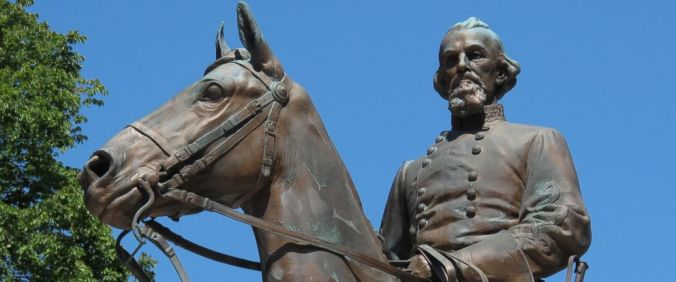
ESPN reported yesterday that Red Sox owner John Henry wants Boston to change the name of  the street that borders the legendary park, Yawkey Way, and he is trying to exploit the   current political correctness mania that has cities pulling down statues of war heroes in the dead of night to accomplish his goal.

That’s my characterization, of course, not ESPN’s.

Henry told the Boston Herald that he is “haunted” by the racist legacy of previous owner Tom Yawkey, who led the team from 1933 to 1976. Because he is haunted, he thinks that it is fair and right that the man who beyond question saved the team, ran it as a Boston institution and public utility, and is as responsible as anyone for the fact that Henry owns one of the prestige franchises in all of sports, should be dishonored and shunned because he wasn’t enlightened about civil rights long before Martin Luther King began marching.

Such disgraceful moral grandstanding and self-righteous ingratitude is seldom seen. But I guess if anyone should be able to grandstand, its someone who owns a baseball park.

For those who mock the idea that the desecration of Robert E. Lee’s statues leads directly to George Washington, now hear this; for the Boston Red Sox, Tom Yawkey is George Washington.

The only owner any one remembered before Tom Yawkee bought the team was Harry Frazee, consigned to Beantown Hell for selling Babe Ruth (and many other stars) to the New York Yankees in 1919. From that moment on, the team was a perennial loser, often in last place, while New York won pennant after pennant and sneered at its proud rival on the Bay. In 1933,

Tom Yawkey , a lumber tycoon and baseball enthusiast, bought the team and poured money and love into it, buying other team’s stars (Left Grove, Joe Cronin, Jimmy Foxx) and turning the team into worthy challenger to the Yankees.  From the beginning, Yawkey paid no  attention to the bottom line as he tried to build a champion out of the franchise, or as he put it, “to bring a championship back to the fans of Boston.” This was during a period when teams had permanent control over player contracts, and most owners used that leverage to pay players pathetic wages. Not Tom Yawkee. He was criticized for over-paying players–hilarious now, when we’re talking about his paying a utility infielder $15,000 when others of his ilk were making just $8,000, and current utility players make a couple million dollars a season. Sportswriters in Boston called the Red Sox a country club, and blamed Yawkee for “falling in love with his players.” In 1960, Ted Williams had to ask Yawkey to cut his salary, because he felt embarrassed after a bad year, his only one.

Was Yawkey a racist? He was born in 1903, and grew up during the Wilson Administration, when Jim Crow really took of. Sure he was a racist, along with about 95% of the whites in the nation.  Continue reading

Morning Ethics Warm-up: 8/17/17

Good Morning!

1. I got back late last night from my pilgrimage to say thanks to the Impossible Dream team, and now I’m on my way out to teach an ethics seminar for D.C. government attorneys. I haven’t caught up with the comments yet; I’m sorry. Things should be back to normal hear by this afternoon. Here are the surviving members of that 1967 Red Sox team that changed my life:

Incredibly, the Red Sox barely promoted the event, and had no memorabilia, not even a T-shirt, available at the souvenir stands. I asked one of the sales people, who said the team had given them nothing, figuring that the typical fan was too young to remember or care.

And people wonder why I object to tearing down statues…

2. …which the unethical Mayor of Baltimore ordered to be done yesterday in the dead of night. From the Times:

It was “in the best interest of my city,” Mayor Catherine Pugh said Wednesday, as she explained why she ordered Confederate monuments removed under the cover of darkness, days after violence broke out during a rally against the removal of a similar monument in neighboring Virginia.

“I said with the climate of this nation,” Ms. Pugh said later, “that I think it’s very important that we move quickly and quietly.”

With no immediate public notice, no fund-raising, and no plan for a permanent location for the monuments once they had been excised — all things city officials once believed they would need — the mayor watched in the wee hours on Wednesday as contractors with cranes protected by a contingent of police officers lifted the monuments from their pedestals and rolled them away on flatbed trucks…

David Goldfield, a professor of history who studies Confederate symbols at the University of North Carolina at Charlotte, said the removal of the monuments in Baltimore was likely to be part of a “rolling cascade” of cities and states ridding themselves of, or at least relocating, similar statues.

”You’re going to see another wave of these removals.” Mr. Goldfield said. “The fact that it’s done fairly expeditiously is not surprising because if you do it quickly the opposition can’t build up, and the confrontations that we’ve had, not only in Charlottesville but elsewhere, will not materialize.”

By all means, move quickly and without notice or due process so lawful protests and expressions of public opinion “can’t build up.” “It was in the best interests” is such a versatile rationalization for unilateral government action.

Democracies don’t undertake controversial actions in the night. Dictatorships do. Pugh and others nascent fascist of the left are as responsible for “the climate of this nation” as much or more than anyone else, and now want to exploit the dangers of that climate to stifle dissent.

Perfect. Continue reading

Morning Ethics Warm-up: 8/16/17

GOOD MORNING!

1. I’m heading to Boston and Fenway Park in a few hours to meet with two of my high school classmates and together pay our respects to the 1967 Boston Red Sox, the spiritual beginning of Red Sox Nation, and a group of men, then barely more than boys, who had as profound an effect on my life and view of it as anything I have ever experienced.

It’s the 50th Anniversary of that amazing team and the heart-stopping pennant race it won against all odds, in a four team race that came down to the final game of the regular season. I mean heart-stopping literally: the team wasn’t called “The Cardiac Kids” for nothing. TWO of my father’s colleagues at the Boston Five Savings Bank died of heart attacks while attending Red Sox games, during one of the 9th inning desperation rallies for which the team was famous. The only reason I didn’t perish in like fashion is because I was just 16 years old.

Why was this team, and that summer 50 years ago, so important to me? I don’t have time or space to answer that question well, and you’d probably wonder what I was babbling on about anyway. A 2017 film by Major League Baseball called “The Impossible Dream” does a fair job of explaining it, but it’s too short to do the job right.

I had listened to, watched or attended every Boston Red Sox game for five years, as the team lost and lost. From those bad teams, followed weakly by the city in those days, in a crumbling old park that seemed destined to be abandoned and torn down, I learned that winning wasn’t everything, that loyalty wasn’t easy, that Hemingway was right, and that baseball was about courage, humility, perseverance, doing your job every day, sacrifice, and hope, as well as usually losing at the end. That summer of 1967 taught me that hope is worth the effort even though hope is usually dashed by the ice water of reality, that you should never give up, that miracles do happen, and that nothing is as wonderful as when a community is united in a single, inspirational goal, no matter what that goal might be…and that you should never be afraid to give everything you have in pursuit of a mission, even when it is likely that you will fail.

I learned difficult, discouraging lessons, too. When an errant pitch hit Red Sox right-fielder Tony Conigliaro in the face on August 18, 1967, it was the beginning of a lesson that revealed its tragic last chapter 23 years later. That one taught me that life is horribly, frightening unpredictable, and that we envy others at our peril. It taught me that we need to do what we can to accomplish as much good as we can as quickly as we can, because we may lose our chance forever at any moment.

Tony C, as he was and is known as, was a beautiful, charismatic, local kid, the idol of Boston’s huge Italian-American community,  in his fourth season with his home town team at the age of 22. He dated movie stars; he recorded pop songs; he had a natural flair of the dramatic, and was destined for the Hall of Fame. One pitch took it all away. Although he had two comebacks and played two full seasons facing major league fastballs with a hole in his retina and his field of vision, Tony was never the same. After his final attempt to keep playing failed at the age of 30, he became a broadcaster, and at 37 was seemingly on the way to stardom again in 1982 when he suffered a massive, inexplicable heart attack—Tony  did not smoke, and had no family history of heart problems– that left him brain damaged until his death in 1990.

As Henry Wiggin, the star pitcher protagonist of the novel, play and movie “Bang the Drum Slowly” observes as he  reflects on the death of his catcher and roommate, everyone is dying, and we have to remember to be good to each other. But it’s so hard. Ethics is hard. The ethics alarms ring faintly when we are about the task of living, or not at all…

At the end of the story, the narrator, the best friend of the catcher (but not really that close a friend) recalls how quickly everyone on the baseball team went back to their selfish ways after their teammate went home to die Even the narrator, who was the leader of the effort to make the catcher feel loved and appreciated in his last days, ruefully recalls his own failing. The catcher had asked him a favor, just to send him a World Series program (the team won the pennant after he had become too ill to play), and he had forgotten to mail it until it was too late. How hard would it have been, the narrator rebukes himself, to just put it in an envelope and mail it? Why are we like that, he wonders?

1967 was the beginning of my exploration of that mystery too.

So I am going to Boston for the 30 minute ceremony. I can’t even stay for the game; I have a seminar to teach tomorrow morning, and the last flight out of Logan is at 9 PM. There will probably be just a small contingent from the Cardiac Kids: most of them are dead now, or too infirm even to walk onto the field. But Yaz will be there, and Gentleman Jim Lonborg; Rico Petrocelli, Mike Andrews, and maybe even Hawk Harrelson  and Reggie Smith. I will be there to say thank-you, that’s all.

And to show that I remember. Continue reading

From The “I Told You So Files”: First They Came For General Lee…[UPDATED]

UPDATE: Because the first two news sources I had were in error, I originally posted that the event described occurred this week. It did not: it occurred in October of last year.

Just a few hours ago, I was explaining to a usually wise and rational commenter why her willingness to allow periodic purges of statues and memorials honoring those individuals who past members of our society determined were worthy of continuing honor. The figure in question was Robert E. Lee, not one of my personal favorites, but a generally recognized military genius and easily a man whose life and accomplishments included several justifications for permanent memorials. My favorite: Lee personally vetoed the Confederacy’s fallback plan of taking the war to a guerilla stage, extending the conflict indefinitely. It might well have worked, but Lee refused. I’ll happily grant him some perpetual statuary for that. But the self-righteously intolerant practitioners of presentism want Lee cast as a an irredeemable villain, and his statues toppled.  There are many reasons why this kind of self-imposed cultural amnesia is offensive, harmful and stupid, but in my exchange with that usually wise and rational commenter, I focused on the slippery slope, writing,

You cannot articulate what the stop is on that slippery slope that doesn’t end with blowing up Mount Rushmore.

Imagine my surprise, not to be proven right, for that occurs often, but to be proven right so quickly by a news report I just read concerning a protest  by more than 200 political correctness  maniacs inside the American Museum of Natural History in New York City. Their goal: take down the statue of former of Theodore Roosevelt—historian, author, scholar, orator,  political philosopher, war hero, patriot, cowboy, explorer, public servant, the father of conservationism, the creator of the National Parks system, President and one of progressivism’s founding pioneers—and, of course, one of the Mount Rushmore Four. The protest’s organizers, NYC Stands with Standing Rock and Decolonize This Place, called the statue of the former New York City police commissioner and former New York governor  a “stark embodiment of the white supremacy that Roosevelt himself espoused and promoted,” adding in a statement that “The statue is seen as an affront to all who pass it on entering the museum, but especially to African and Native Americans.” The protesters carried signs that read “BLACK LIVES MATTER,” “DECOLONIZE THIS MUSEUM,” and “ABOLISH WHITE SUPREMACY.”

Of course they did.

Continue reading

Ethics Hero: World War II Veteran Marvin Strombo

Many Japanese soldiers during World War II went into battle carrying small “Rising sun” flags, the red sphere on the field of white, with the white field decorated by hundreds of classmates, family members and friends. The flags were for good luck, and to link soldiers to their loved ones while they fought for the Emperor.  I had never heard of this practice until today; my father served in the European theater, so he would not have known that many American soldiers took these personal talismans from the bodies of fallen Japanese soldiers as war trophies.

U.S. Marine Marvin Strombo was such a soldier. A member of  an elite sniper platoon during the bloody battle for the Pacific island of Saipan in 1944, he had taken a flag from a dead Japanese soldier lying on his left side—he remembered that the young man looked like he was  asleep—after he noticed something white sticking out from his jacket.

The flag with all the inscriptions on it hung behind glass in Strombo’s gun cabinet in his home in Montana for decades until 2012, when the son of his former commanding officer contacted him for assistance with a book he was writing about the exploits of his father’s platoon. (ARGHHH! I just remembered that I haven’t gotten back to a member of my Dad’s unit who wrote me a couple of months ago!) Working with the author,  Strombo learned about  the Obon Society, a nonprofit organization in Oregon that works to locate and return the personal Japanese flags to the families of the fallen soldiers who carried them. Researchers determined that the dead soldier Marvin’s flag had belonged to was named Yasue Sadao. What Strumbo thought was calligraphy were really the signatures of 180 friends and neighbors, including 42 relatives, who saw Yasue off to war from Higashi Shirakawa, a small village of about 2,400 people in the mountains roughly 200 miles west of Tokyo. Continue reading

Morning Ethics Warm-Up: 8/12/17

Good morning, all!

1. I can’t keep writing the same post repeatedly as the politically correct, the historical censors, the Soviet-style Left and the gallactically stupid continue to tear down statues and eliminate honors to significant Americans who are predecessors deemed worthy.  Just hunt for the “airbrushing history” tag here and you’ll find too many already. We should note, however, how the cognitive dissonance scale is coming into play to the benefit of the unethical airbrushers.

In Charlottesville, home of the University of Virginia, this weekend will witness thousands of white nationalists and neo-Nazis demonstrating to protest a plan to remove a statue of Robert E. Lee  from a city park, because, Lee’s sub-21, infinitely wise undergrads insist, erasing Lee from history will undo the legacy of racism, or something. Of course, for the Racist Right to be the ones protesting makes this position look reasonable. White supremacists organizing the protests unjustly associates Lee with their cause, making his statue mean something it never did, and attaching him to  cause that was not his. The protests against tearing down Lee’s statue–UVA’s founder, Thomas Jefferson, will be next on the non-person list, or close to it—should be coming from historians, scholars, liberals, believers in fairness, nuance, and integrity, and those who are literate enough to understand that the life of Robert E. Lee has much to teach every child and American about loyalty, hubris, hard choices, tragic choices, hypocrisy, courage and more. Why aren’t they protesting? Two reasons, now: they don’t want to be shoulder to shoulder with the scum of the earth, and they are too timid to stand up for crucial ethical principles, unlike the censors of Charlottesville, who don’t understand them, and the Neo-Nazis and white supremacists, who don’t have them.

2. And speaking of historical airbrushing and censorship: Last year, I designated the Smithsonian Institute’s National Museum of African American History and Culture in Washington, D.C as an Ethics Dunce for omitting the second African American SCOTUS justice, Clarence Thomas from mention while devoting an exhibit to his unsubstantiated accuser, Anita Hill.  Now the museum has announced plans to honor Jim Vance.

Come on, you all know who Jim Vance is, don’t you? (D.C. area residents: shut up!) Jim Vance, who transformed America for blacks? Give up? Vance was a long-time popular local D.C. television news broadcaster, with a nice screen presence and a casual delivery.  He just died, and he was black. The museum’s founding director, Lonnie Bunch, said the broadcaster “symbolized that it was really important that America was changing and his presence was a symbol of that change.” Right, sort of….although Vance was hardly the first or the most prominent black newscaster in D.C. Clarence Thomas, however, was the first conservative black justice…which is, of course, why is being shown such disrespect by the “Nation’s Attic.”

I haven’t visited the huge, striking new museum on the mall yet, and I won’t until its shows signs of being am objective chronicler of history rather than a tool of interest group propaganda. Continue reading

Ethics Dunce: West Virginia Governor: Jim Justice

Gov Justice went to a Republican rally, and all he got was this T-shirt…seemed to fit, though…

I’ve written about party-switching by elected officials before; unfortunately, it was on the old Ethics Scoreboard, which is temporarily in limbo thanks to an incompetent web hosting service and some corrupted old disks. I can summarize the proper ethics standard for the practice, however. It was demonstrated perfectly by the  now retired former Republican U.S. Senator from Texas, Phil Gramm. Just days after  he had been reelected to a House seat  as a Democrat in 1982, Gramm was thrown off the House Budget Committee in a dispute with party leadership. In response, Gramm resigned as a Representative, changed parties, and ran for his old seat as a Republican in a special election. He won easily, and  was a Republican ever after. That’s the honorable way to do it.

Or, you could be like West Virginia Governor Jim Justice, who announced that he was flipping  from the Democratic Party to the GOP at last night’s  rally with President Trump. Continue reading

Al Luplow And The Duty To Remember


A culture is defined by what it chooses to remember and what it chooses to forget. Ideally, a culture would remember everything, because knowing the past, as Santayana famously observed, was insurance against repeating its mistakes.  But time is a huge eraser, as Shelley told us:

I met a traveller from an antique land,
Who said—“Two vast and trunkless legs of stone
Stand in the desert. . . . Near them, on the sand,
Half sunk a shattered visage lies, whose frown,
And wrinkled lip, and sneer of cold command,
Tell that its sculptor well those passions read
Which yet survive, stamped on these lifeless things,
The hand that mocked them, and the heart that fed;
And on the pedestal, these words appear:
My name is Ozymandias, King of Kings;
Look on my Works, ye Mighty, and despair!
Nothing beside remains. Round the decay
Of that colossal Wreck, boundless and bare
The lone and level sands stretch far away.”
This is why historians have such a crucial role to play in preserving our culture, by preserving stories, lives and memories along with the inspiration and wisdom they can provide.Sometimes a lost memory is rescued from neglect. Today we remember Colonel Joshua Chamberlain as one of the central heroes of the Battle of Gettysburg for his desperate stand with the 20th Maine Volunteer Infantry Regiment at Little Round Top, culminating in his using his knowledge of military history (he was a college professor) to improvise the bayonet charge that held his position and turned defeat into victory. That was not the case for almost a century, however, until the historical novel “The Killer Angels” retold the story so vividly that Chamberlain’s entire career became the object of new scholarship and admiration. This was truth emerging, but it was also justice. Chamberlain deserved to be remembered.

Unfortunately, Chamberlain is an exception. Once a life, a deed, a remarkable moment is forgotten, it is usually gone. That is a tragedy for the culture. The duty to remember, which I have discussed here before, is the duty to protect the culture and its riches. It is also based on the Golden Rule. We all would like our lives to be remembered as long as possible, especially when we accomplished something that future generations could and would appreciate or benefit from recalling.

This brings us to Al Luplow.

Two nights ago, in an outrageously antic and entertaining game between the Cleveland Indians and the Boston Red Sox, Indians outfielder Austin Jackson robbed Hanley Ramirez of a home run by leaping in the air at the right centerfield bullpen fence reaching over it mid-air to catch the ball, and tumbling over it. He still held on to the ball—he could have easily broken his neck—and the home run became an out.

Although outfielders have fallen over that fence from time to time, notably in the 2013 play-offs…

Continue reading

Morning Ethics Warm-Up: 8/3/17

Baaaaad Morning for me, GOOD MORNING to you, I hope.

1.  The New York Times, I thought, has an unusually fair story on the two phantom Trump phone calls that roiled “the resistance” yesterday. The President had said that he had received “calls” from the President of Mexico and the Boy Scout leadership, the former to salute him for getting tough at the border and the other to praise his controversial remarks at the annual Jamboree. There were no such calls, as the Mexico and the BSA had strongly suggested, and the White House confirmed this yesterday. In its piece this morning, the Times included a germane quote from pre-politics Trump in his 1987 book “The Art of the Deal”:

“People want to believe that something is the biggest and the greatest and the most spectacular. I call it truthful hyperbole. It’s an innocent form of exaggeration — and a very effective form of promotion.”

Germane, except that we already know that he thinks this way—and I don’t think referring to a conversation (in the case of Mexico) or multiple members of the Boy Scouts leadership”praising his speech in person after he was done (“Nice job!” “Great speech!” “The boys really appreciated it!”) as phone calls qualifies as “hyperbole,” truthful or otherwise.

These are examples of the President’s well-established addiction to speaking in word clouds and approximations. He “saw” (well, maybe not literally) “thousands of Muslims” (Okay, maybe he didn’t see them, but they were there! ) celebrating the doom of the Twin Towers in New Jersey. He never supported the Iraq invasion (saying otherwise to Howard Stern doesn’t count). Now add the hundreds of others we either discussed here or that were flashpoints during the campaign. The President’s attitude toward these little and large imprecisions of language has been, apparently since childhood, “Whatever.” He really doesn’t think they matter, because to him the difference between, for example, “calls” and other communications doesn’t matter.

It’s a terrible habit. It undermines his credibility. It weakens his ability to persuade and lead. It makes him look foolish, careless and stupid, and shows a lack of discipline. It gives his intractable foes easy bullets to shoot at him. It’s also an established trait, at this point. This is, again, the Julie Principle. This is how he is, and both his supporters and detractors know it. What  is accomplished by treating each new example as a major scandal? “Well, you can’t just let him get away with it!” is the reply.

He doesn’t get away with it. It undermines his credibility. It weaken his ability to persuade and lead. It makes him look foolish,  careless and stupid, and shows a lack of discipline.

2. The Times seems to make a mild “everybody does it” excuse for the President, citing the examples of two Presidents the Times also hated, LBJ and Reagan, mostly Reagan. “It is hardly unprecedented for a president to use a story to inspire or motivate, or to embellish a yarn for the sake of punctuating a poignant message,” the Times says. Then it recounts this: Continue reading

File This In The Niggardly Principles Files: The Family That Helped Build Portland’s Public School System Is Condemned To Oblivion Because The Schools Are Afraid To Teach

I really hate this story, and all stories like it. I hope you do too.

In a perfect and perfectly disgraceful breach of the First Niggardly Principle, the Centennial School District in southeast Portland will be excising “Lynch” from three schools before the beginning of this school year: Lynch Meadows, Lynch Wood, and Lynch View elementary schools. The schools were named to honor the family that originally  donated land for the the  schools to be built upon over a century ago. What, however, is the obligation to appreciate and honor those who selflessly seek to assist public education, compared to the need to cater to those whose education was inadequate? Nothing, apparently.   Superintendent Paul Coakley explains that “many newer families coming into the district associate the name with America’s violent racial history.”

Well, that should settle it, then! Why burden these narrow-minded and easily-triggered products of the victim culture with facts, knowledge and perspective?

More from Coakley: “There were an increasing amount of questions and some complaints from families of color around the name…there is no connection between the Lynch family and the practice associated with the term” but the name has still “been a disruption for some students.”

Here’s a creative alternative solution: educate them. How about that? Is that too challenging for the students? For Portland’s schools? From Wordorigins.com: Continue reading