Two and a Half More Rationalizations: “The Hillary Inoculation,” “The Unethical Tree in the Forest,” and a Sub-Category of “The King’s Pass”

42-hitchhikers-guide-to-the-galaxy-5139489-1024-768

“There are more rationalizations in heaven and earth, Horatio, than are dreamt of in your philosophy.”

It certainly seems so, Hamlet.

And stop calling me “Horatio”!

While writing about the McDonnells, I found myself citing some obvious and common rationalizations that I discovered (to me shame and embarrassment)  had never been added to the Ethics Alarms Rationalizations List, which two days ago stood at an even 40. I wrote them up and added then, placing “The Unethical Tree in the Forest” at #10, since it is so common, and designating the other, “I deserve this,” as a sub-category under “The King’s Pass,”at #11 (a). Then, in today’s comments to yesterday’s post about the perfect Naked Teacher (if only all those who clicked on that post were just slightly interested in ethics!), came a ridiculous argument that I immediately recognized as particularly infuriating rationalization I had heard before, too often, in the days when Democrats were churning out rationalizations like the chocolates on Lucy’s conveyor belt. I have dubbed it “The Hillary Inoculation.” These put the current count of rationalizations at forty-two, and a half. Here are the new additions.

Learn to recognize them, but don’t use them.

10. The Unethical Tree in the Forest, or “What they don’t know won’t hurt them.” Continue reading

Ethics Quiz: Rank The Unethical Politicians!

Three pols

For your first Ethics Alarms Ethics Quiz of the New Year:

Consider these unethical politicians from Florida, Texas and California…

Unethical Politician A:

California State Sen. Kevin de Leon (D-Los Angeles)

Ethics Failures:

Competence, Responsibility, Diligence

Explaining his proposed legislation SB808, dealing with “ghost guns” (that is, home-made weapons) at the California Capitol in Sacramento last week, de Leon held up such a firearm and said, “This right here has the ability with a .30-caliber clip to disperse with 30 bullets within half a second. Thirty magazine clip in half a second.”

This is genuine anti-gun gibberish that could not possibly be uttered with a straight face by anyone even slightly familiar with guns. There is no such thing as a “30-caliber clip;” he is referring to a 30-round magazine. (There is also no such thing as a “30 magazine clip.) “Caliber” refers the measurement of the width of a bullet or the internal diameter of a gun barrel, not what the magazine will hold. And the average rate of fire for a semi-automatic rifle, which is what he was holding, is about 120 rounds per minute, not 3,600 rounds per minute.

Why are legislators who don’t care enough about guns to educate themselves about what they are, how they work and what they are capable of doing, submitting legislation about guns? Because they just know guns are dangerous, and in their infantile, knee-jerk reasoning, that’s all they have to know. The rest is fakery: the legislator is pretending that he has sufficient expertise to be credible on the issue, when he is too lazy and arrogant to do the minimum study necessary to render him qualified to vote on gun regulations, much less author them.  This is the equivalent of a legislator who thinks babies are delivered by storks proposing abortion laws. Continue reading

A Titanic Fraud Sinks At Last

loraine titanic

Frauds, fakes, hoaxers, swindlers, con artists and scamsters occupy a dark corner of humanity’s family tree. They steal from the innocent, undermine and discourage legitimate charity, make well-intentioned public policy suspect and inefficient, distort history and human knowledge, and cause the the public to be more callous and cynical. These venal liars not only are unethical, but they make ethics themselves appear naive and foolish. This week, a scam of long-standing that began with a mysterious woman who claimed to be a grown infant believed to have died on the Titanic was finally, through DNA evidence and the obsessive work of Titanic history buffs, proven to be what it was…a lie. Continue reading

The Fifth Annual Ethics Alarms Awards: The Worst of Ethics 2013 (Part Three)

Jill-Greenberg

Unethical Artist Of The Year

Photographer Jill Greenberg, whose art requires parents to make their children cry. Runner-up: Peeping Tom photographer/artist Arne Svenson

Kaitlyn Hunt

False Allegation Of Anti-Gay Bigotry Of The Year

Kaitlyn Hunt’s parents, who spun a false tale of anti-gay prejudice to portray their sexual predator daughter as a victim after she was accused of statutory rape by the parents of her under-age target. Hunt’s parents even managed to suck the ACLU into their web and the liberal-leaning press portrayed her as a martyr to anti-gay bias. But Hunt’s lies ultimately caused her cover-story to unravel.

 Unethical Hoax Of The Year

Oberlin students Dylan Bleier and Matt Alden, aided and abetted by  Oberlin College and its president, Marvin Krislov. The two students, self-proclaimed progressives, posted a series of racist and anti-Semitic posters, graffiti and anonymous emails as “an experiment.” Krislov and Oberlin, after cancelling classes and engaging in campus-wide navel-gazing, continued to allow the media and the public believe that this was the work of racists on campus well after it had learned who the real miscreants wereRunner-up: The horrible Meg Lanker-Simons, former University of Wyoming student (now admitted to law school—I don’t want to talk about it) who threatened herself with rape and used the bogus threat to show that her campus was violent and sexist.

Most Unethical Use of Social Media Continue reading

Unethical Website Of The Month: Ranker

"One of these things is not like the others..."

“One of these things is not like the others…”

Lists, especially stupid celebrity lists (Worst plastic surgery…Most overpaid…Actors with famous siblings…Actresses with high IQs) are a staple of the internet, and there are sites like Cracked (which does them well), Buzzfeed (which occasionally does) and Bleacher Report (which is sloppy unless it is doing lists of hot women, in which case it is just undiscriminating) that often appear to do little else. That’s fine; everything on the web doesn’t have to be edifying, profound or useful. Still, there are some basic rules of competence and responsibility even in list-making on the web. One is that as with any conduct involving the conveyance of information, do your homework and don’t mislead readers or  create misconceptions.

Another is that when you are dealing with individuals to whom you owe your nation’s very existence and who are as superior to you as a human being as you are to an anteater, show some damn respect.

Ranker, a second tier list site apparently operated by junior high school drop-outs (but whose lists are “recommended” by more respectable and heavily trafficked sites like Mediaite and The Daily Beast) failed these two essential principles with their offensive list, “33 Celebrities Who Have Killed People,” introduced with this:

“…Many celebrities were involved in tragic accidents that resulted in deaths, while others committed cold-blooded murder. Some celebs have served time in prison stemming from convictions, and others have gotten away with murder; sure, maybe they were wrongly accused, or maybe they just had great lawyers. Several famous people were involved in deadly car accidents. Former First Lady Laura Bush missed a stop sign and slammed her car into another vehicle, accidentally killing her friend who was driving the other car. She was in high school at the time of the accident. Other celebs who killed people in car accidents include Keith Moon, Ted Kennedy, and Rebecca Gayheart. What do you think about all the celebrities who have killed someone?” Continue reading

Ethics Hero Emeritus: Aitziz Hasan (1997-2013)

aitzaz

Aitzaz Hasan, 15, was  standing with fellow students outside his school last week in Ibrahimzai, a region of Hangu in north-western Pakistan. They noticed a man approaching wearing a vest laden with explosives.  They knew what was about to happen. There were over 2000 children at the school,and Aitzaz told his friends that someone needed to stop the suicide bomber from getting close enough to harm them.

According to witnesses, Aitzaz approached the terrorist, confronted him, and tackled him to keep him from getting any closer.

The suicide bomber detonated his vest, killing himself and the brave boy.

This is by far the shortest biography of any of the Ethics Heroes enshrined here in the Ethics Alarms  Heroes Hall of Honor. It is far from the least impressive. This young man, whose life had barely begun, made the ultimate sacrifice to save the lives of others. No one of any age should have to face the choice Aitzaz had; no one  should ever have to grow up under conditions that would impose such an ethical challenge on anyone. Yet when the crisis arose, this young man had the  courage and values to do what all nations honor soldiers and other heroes for doing to preserve civilization and human life through the centuries: he faced the challenge, put the lives of others before his own, fixed the problem, ended the threat, and died. Continue reading

Betrayal: Robert Gates Gets Even

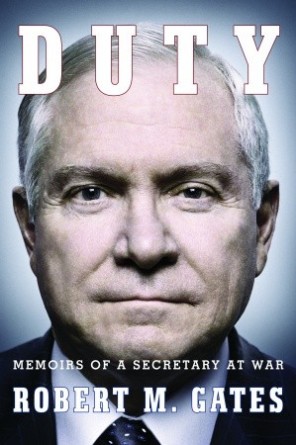
dutygates

When General George Marshall, World War Two military leader, former Secretary of State, and architect of the Marshall plan, was offered a million dollars to write his memoirs in the 1950s, he demurred, saying that there was no way he could write a truthful memoir without undermining people still at work in the government and military.

And then there was David Stockman…Paul O’Neill

…and Robert Gates.

Bottom line: these people betray their colleagues for money, and often, as is Robert Gates’s case, out of spite. Former Defense Secretary Gates, like the others, was given an opportunity to serve his country in a high executive branch position. He was privy to policy discussions and the inner workings of the administration. He was trusted. To reveal details of his tenure while the administration he worked for is still in office, done in a way designed to provoke criticism and embarrass his former associates and boss, is the height of disloyalty, and a breach of implicit confidentiality.

The honorable and ethical way to write such a book would be to wait until it could not actively interfere with the work of the Executive Branch. The people may have a right to know, but they do not have a right to know everything immediately. People in high policy-making positions must be able to be themselves, express opinions, and have productive meetings with the confidence that those they work with are not collecting notes for a future Book-of-the-Month sellout. Books like Gates’s undermine that trust, make it more difficult to get candid and controversial opinions and ideas into the decision-making process, and ultimately hurt all of us. The former  Secretary and those who appreciate the additional ammunition for administration-bashing can assemble a lot of rationalizations for the  book, but they all boil down to “Everybody Does It,” the most threadbare and cowardly rationalization of all.

The ethical thing would have been for Gates to write the book in a few years, or not to write it at all. The ethical conduct for the reading public is to discourage betrayals, no matter who is the one betrayed, by sending such books to the remainders bin.

I suppose I should mention that except for the substitution of Robert Gates’ name for that of Paul O’Neill, and replacing “Treasury” with “Defense,” every word above was written in 2004, when I condemned the sell-out of fired Bush Treasury Secretary O’Neill, who had just provided the information used in a Bush-bashing tell-all called “The Price of Loyalty: The Education of Paul O’Neill.” (Yes, the old Ethics Scoreboard is coming in handy today.) Every word applies with equal force to the new memoir by Gates, who was President Obama’s Secretary of Defense and whose current tell-all attack has set Washington buzzing, except that Gates’s conduct is ethically far worse. Continue reading

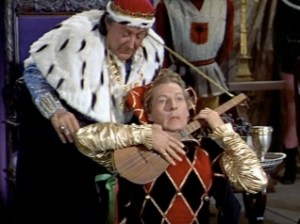
Natasha Leggero’s Stand: Protecting The Jester’s Privilege


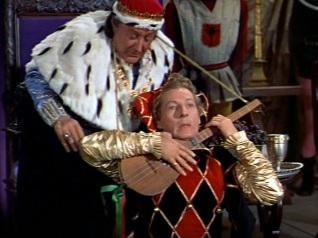
"Sing what you like, Fool. Just make sure I laugh."

“Sing what you like, Fool. Just make sure I laugh.”

In days of old when knights were bold, it is said, the King’s Fool was able to safely say outrageous, disrespectful things to the sovereign that might get anyone else drawn and quartered. This lucky exemption came to be known as the Jester’s Privilege, and it existed, and exists, for valid reasons. Humor, satire and all the other permutations of comedy are essential to societal sanity, and it makes sense to give the broadest discretion to practitioners of the craft in their efforts to provoke laughter—which is, as Reader’s Digest still reminds us monthly, “the best medicine.” That means that comics should not fear decapitation if their inspiration of the moment fails to provoke the desired mirth, or touches an audience member’s sensitive areas. In addition, the jester is sometimes able to expose a truth that will not be reached any other way.

It sounds like a good rule, and it is a good rule, but as with most ethics-related rules, applying it is difficult. Who gets the Jester’s Privilege…only professional comics, or does it apply to amateurs too? What about non-jesters just trying to be funny? “It was just a joke!” is a classic excuse invoked by insensitive and vicious people, including politicians, when they say something outrageous, as they try to use the privilege without a license, and in so doing, make it less effective for the humorists who really need its protection. Not everyone should assume that they have the full armor of the Jester’s Privilege. Mockery and ridicule are too often used as political weapons of targeted destruction.

Should some subjects be exempt from the Jester’s Privilege? The official position of comics, comedians, wags and wits has long been “No,” but even in Ye Olde Days, jesters sometimes went too far, and ended up with their heads on pikes. The problem any humorless king had after doing this, of course, was finding a jester willing to hazard a joke more edgy than “Why did the king cross the road?” For that reason, I think it’s vital that the Jester’s Privilege be strong and a near absolute. The sin that matters is not being funny, which means topics of unusual sensitivity take care of themselves.For centuries, for example, comics imitated and mocked those afflicted with speech impediments, especially stuttering, with big laughs guaranteed. Somewhere along the line, though, Porky Pig stopped being funny. The absence of laughs was enough to retire him; no heads had to roll.

On NBC’s New Year’s Eve show, the following exchange occurred between host Carson Daly, comic actress Jane Lynch and rising comedienne Natasha Leggero:

CARSON DALY: SpaghettiOs on Pearl Harbor Day, they sent out a tweet featuring their mascot holding an American flag asking people to quote “take a moment to remember #PearlHarbor with us.” It offended a lot of people, corporations glomming on to, you know, sentimental American historic traditions, seemingly looking for people in business. It wasn’t good. But you were offended for another reason.

JANE LYNCH: I’m offended because they were referring to SpaghettiOs as pasta.

NATASHA LEGGERO: I mean, it sucks that the only survivors of Pearl Harbor are being mocked by the only food they can still chew. It’s just sad.

Hilarity ensued, as the NBC gang laughed uproariously. Almost immediately, Leggero was getting flamed all over the social media and the wbs for denigrating the Greatest Generation. Steve Martin, I assume, would have humbled himself and apologized immediately, but not Leggero. Continue reading

Obamacare, “The March Of Folly,” And The Ethical Obligation To Accept Unpleasant Facts

Charge+of+the+Light+Brigade+Cavalry+Charge

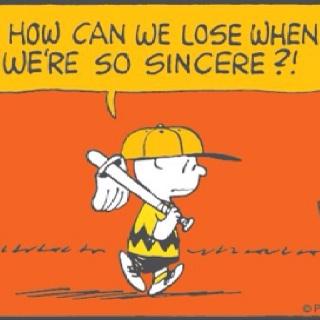
Today, while listening to the furious efforts of such liberal talking heads as E.J. Dionne (NBC’s Meet the Press), Donna Brazile (ABC’s Sunday Morning With George) and Juan Williams (Fox News Sunday) to explain why the Affordable Care Act disaster is not really a disaster and why it should be full steam ahead even as the legislation is unraveling before our eyes, my mind kept jerking back to two disparate sources. One was Barbara Tuchman’s “The March of Folly,” the celebrated historian’s 1985 examination of how governments persist in doomed policies long after it is obvious to all, including them, that the effort is not only futile but disastrous. The other was “Peanuts:”

Sincere

For this is what the bitter-enders regarding the Affordable Care Act have become. Because the absurdly flawed and over-reaching legislation was well-intentioned, and because it was sincerely designed to help people who need and deserve help, and because the hearts of those who rammed it through the process, ignoring warnings, systemic checks and balances, prudence and common sense, were pure, the law just has to work. Former White House spokesperson Robert Gibbs literally said this to David Gregory on “Meet the Press” this morning. There’s just no choice, he said. The administration just has to make it work, that’s all. Anyone who has read Tuchman, or who has been alive longer than Justin Bieber, should get chills to hear sentiments like that. Continue reading

Santa Claus Ethics, Stupid Division

I don't care WHAT color this guy is, I'm getting my kid OUT of there!

I don’t care WHAT color this guy is, I’m getting my kid OUT of there!

The fact that there is a serious debate going on in the blogosphere and news media whether 1) Santa Claus is white; 2) whether it is racist to maintain he is white and 3) whether he should be some other race or species is more evidence that the United States of America is having a nervous breakdown. It also demonstrates that race-baiters and the insanely politically correct have no sense of proportion, moderation or shame, and that too many of those who are confronted by these annoying people don’t have the sense to know when to just nod, pat them on the heads and say, “Sure, sure…if it makes you happy.” Here are some loosely connected observations on a controversy too dumb to justify organization: Continue reading