“Print the Legend” Ethics: The Unjust Obscurity of Mary Quantrell

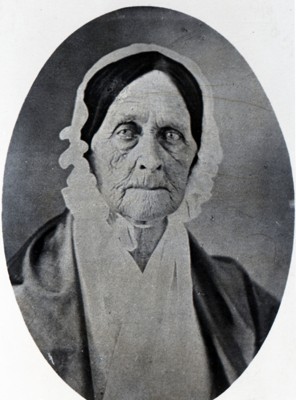
Barbara Fritchie, as in the poem. But the Barbara in the poem was really Mary.

Today is the anniversary of the Battle of Antietam, the single most bloody day in the Civil War, with nearly 21,000 casualties on September 17, 1862.  Most of us, at least those of my generation, were introduced to the battle with a poem, “The Ballad of Barbara Fritchie,” by John Greenleaf Whittier, telling the tale of a brave old woman, ninety years old, who confronted Confederate General Stonewall Jackson’s troops as they marched through Frederick, Maryland to the battlefield, by waving Old Glory after the troops had fired at it, and saying,

Shoot, if you must, this old gray head,
But spare your country’s flag,’ she said.

Barbara Fritchie is now an icon, and has been portrayed in novels and films. Her house is a historic landmark, and the town uses her name and the poem to market everything from candy to T-shirts. And, I learned this Sunday, it is all a lie, though not old Barbara’s fault. The poet got his facts wrong, or used excessive “poetic license” because “Barbara Fritchie” pleased his ear better than “Mary Quantrell”, the name of the real flag-waver, and a 90-year old patriot made for a more colorful plot than a mere 30-something with chutzpah. Whittier also made Jackson the antagonist of the tale, when in fact the general was the less flamboyant and famous A.P. Hill. In 1876 Quantrell wrote to Whittier pleading with him to correct the record, signing her letter, in quotes, as “Barbara.” He did nothing. Continue reading →
Emmett Burns Emulates Rahn Emanuel, or, What Does It Tell Us That Yvette Clarke Is NOT This Month’s Most Incompetent Elected Official?

Brooklyn, NY, circa. 1898. If you look closely, you can see the slaves working in the windmills…

In case you missed it, Rep. Clarke, the Congresswoman from Brooklyn, NY, had thousands of American banging their heads against the wall (and, tragically, many more, like those who voted this dolt into office nodding their empty heads and saying, “She speaks the truth!”) when she told Comedy Central’s wag Stephen Colbert that Brooklyn still had slavery in 1898, a full 33 years after the Civil War and the passage of the 13th Amendment. When Colbert, in mock surprise, said, “It sounds like a horrible part of the United States kept slavery going until 1898! Who would be enslaving you in 1898 in New York?”, Rep. Clarke, eager to fill the gaps in Colbert’s knowledge of New York history,  informed him that it was “the Dutch”…who lost control of New York when “New Netherland” was conquered by the British in 1664, 200 years before the end of the Civil War. Continue reading →

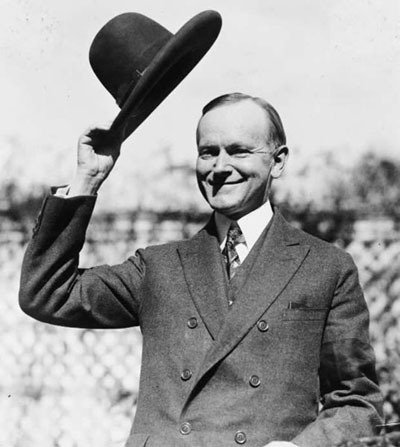
Ethics Quote of the Day: Calvin Coolidge

“There is no right to strike against the public safety by anybody, anywhere, any time.”

—-Calvin Coolidge, then Governor of Massachusetts, soon to be Vice-President and later President upon the death of Warren G. Harding, in a September 14, 1919 telegram to labor leader Samuel Gompers on the occasion of the Boston police department strike.

Cal made his words count.

The Boston police were fired for extorting the city, and Coolidge’s words were in the air when President Ronald Reagan responded to an illegal strike by air traffic controllers by firing the strikers and banning the union.

Now Chicago’s teachers are striking, not against the city management that is denying their demands, but against the children of the city and their families.

What would silent Cal say? I think I can guess. Harming children and families for higher wages is as much extortion as leaving a city unprotected against crime, and cannot be defended ethically. The defense will be, inevitably, “Well, management is unfair, and their offer is unjust. What are we supposed to do?”

The answer is: something else.

__________________________________

Facts: Chicago Tribune

Source: Wikipedia

Graphic: Washington, Jefferson and Madison Institute

Ethics Alarms attempts to give proper attribution and credit to all sources of facts, analysis and other assistance that go into its blog posts. If you are aware of one I missed, or believe your own work was used in any way without proper attribution, please contact me, Jack Marshall, at  jamproethics@verizon.net.

And While We’re On The Topic Of Outrageous Lies, Who At The DNC Dreamed Up THIS One?

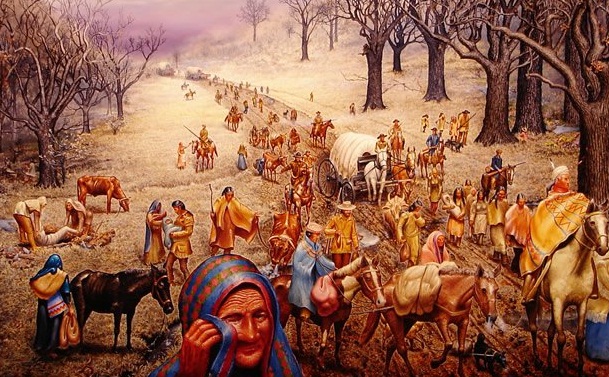
The Trail of Tears, just one of those pace-setting civil rights initiatives by President Andrew Jackson, father of the modern Democratic Party.

With my head swathed in ice and restraints, trying to stem the explosion (I have vacated the house of all other living things), I note this, which I happily was unaware of until a few hours ago, from a history of the Democratic Party, on a new Democratic National Committee web site .

 “For more than 200 years, our party has led the fight for civil rights, health care, Social Security, workers’ rights, and women’s rights.”

Health care? Okay.  Social Security? Obviously. Workers’ rights? A closer call, but sure. Women’s rights? Sold, though literally none of these can be traced back to 1812. Nobody was thinking about health care until the 20th Century. Worker’s rights became an issue in the late 19th. Social Security wasn’t a twinkle in any Democrat’s eye until the 1930’s, and the Democratic Party wasn’t very concerned about women’s rights until the 20th century either.

But can the Democrats claim 200 years’ support of civil rights? Absolutely not. To claim this is beyond mere lying, and reaches Orwellian proportions as an effort to re-write history. It is also blatant misinformation, clearly designed for the uneducated, the historically ignorant, the gullible or the stupid—you know, most people—or it was written and approved by members of this group who built the DNC site. Let’s be unequivocal: The Democratic Party did NOT lead the fight for civil rights for “more than 200 years.” No historian believes this or has written this. It is a complete, nonsensical, made-up, silly piece of dishonest puffery: Continue reading →

The Forgotten Meaning of Labor Day

Do you know who this is? You should! It’s Labor Day, dammit!

Labor Day commemorates one of the great ethical victories of American society, and not one in a hundred Americans know it. Labor Day marks the end of summer, and a time for retail store sales, and the last chance to get away to Disney World, but few of us think about the real meaning of the word “labor” in the name, and how it is meant to honor brave, dedicated men and women who fought, sometimes literally, the forces of greed, political influence, wealth and privilege in this country to ensure a measure of safety, consideration, fairness and justice for the hardest working among us.

Today labor unions are controversial, and with good reason. Many of them have been run as criminal enterprises, with deep connections to organized crime; many operate in a blatantly coercive and undemocratic fashion. Union demands and strong-arm tactics, while providing security and good wages to members, have crippled some American industries, and limited jobs as well. Today the unions  get publicity when one of them tries to protect a member who should be punished, as when the baseball players’ union fights suspensions for player insubordination or even drug use, or when school districts are afraid to fire incompetent teachers because of union power, or when the members of public unions protest cutbacks in benefits that their private sector counterparts would be grateful for. It is true that today’s unions often embody longshoreman philosopher Eric Hoffer’s observation that  “Every great cause begins as a movement, degenerates into a business and ends up as a racket.” *

That not what Labor Day honors, however. It is celebrating the original labor movement that began at the end of the 19th century, and that eventually rescued the United States from an industrial and manufacturing system that was cruel, exploitive, deadly and feudal. Why the elementary schools teach nothing about this inspiring and important movement, I do not know. I suspect that the story of the American labor movement was deemed politically dangerous to teach during the various Red Scares, and fell out of the curriculum, never to return. Whatever the reason, it is disgraceful, for the achievements of the labor movement are every bit as important and inspiring as those of the civil rights movement and the achievements of our armed forces in the protection of liberty abroad. Continue reading →

Neil Armstrong’s Disputed Words: “The Ethics of Changing History”

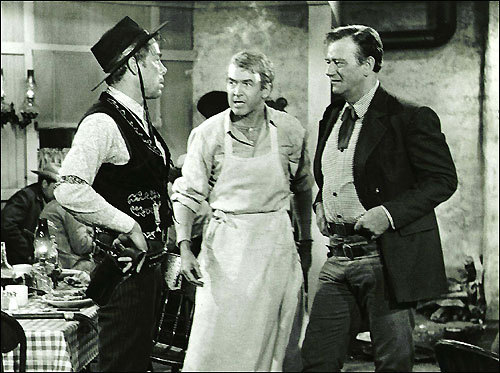
Pop Quiz: What does Neil Armstrong and this classic Western have in common?

[The death of mo0n-walking astronaut Neil Armstrong  ate the age of 82 reminded me of a 2006 essay about Armstrong’s famous quote that I wrote in 2006 on The Ethics Scoreboard. The AP just revisited the issue, and you can read the full text of my 2006 piece, The Ethics of Changing History: Of Crockett, the Titanic and “One Small Step” on the Scoreboard archive site. Here is the relevant portion of that article:] Continue reading →

The Bill James Effect, Or How Nature Conspires To Make Us Irresponsible

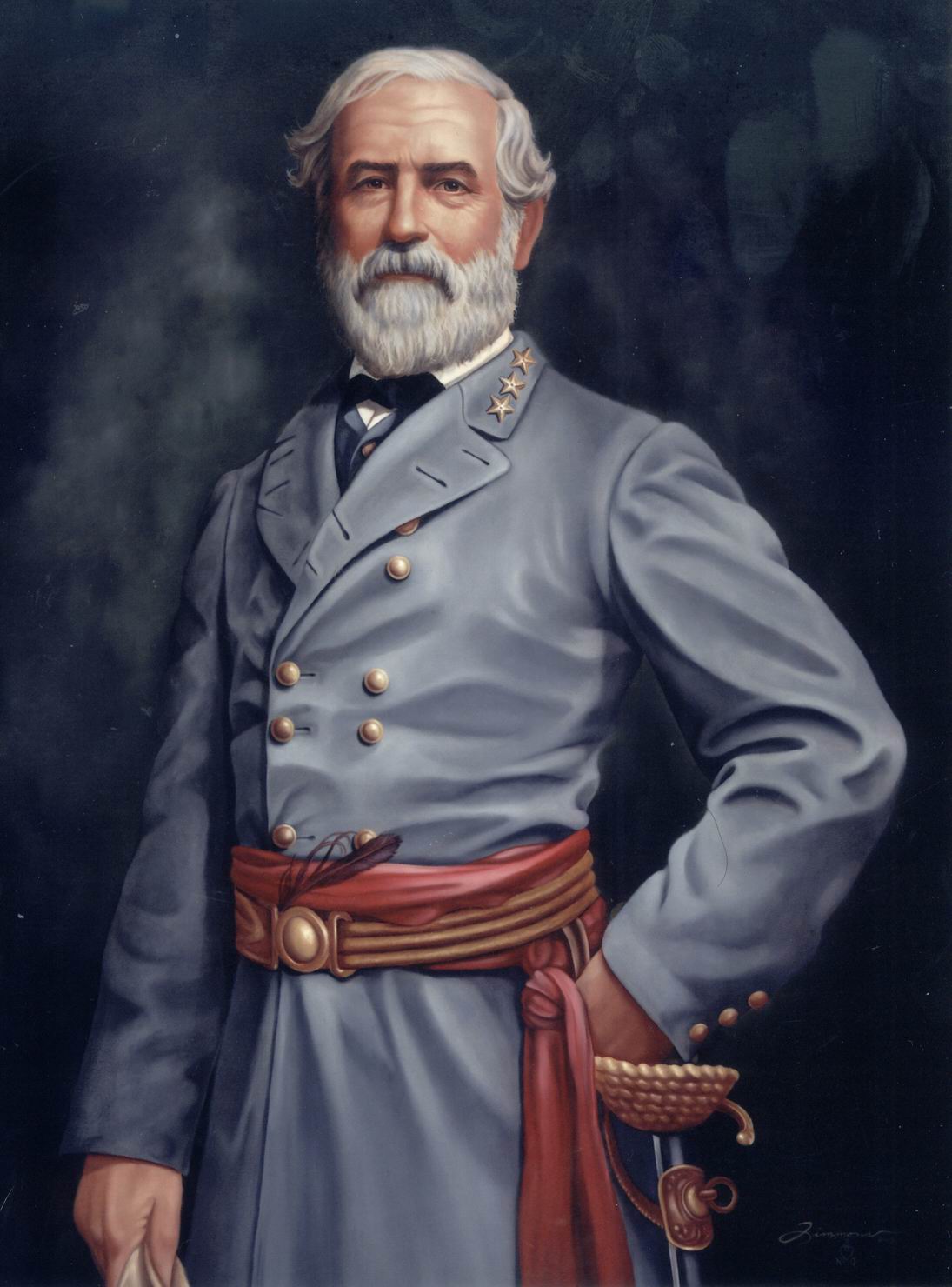
Quiz: What do Gen.Lee and Bill James have in common?

You see, our strengths do us in, sooner or later. The greater the strength, the more successful it has made us, the more dangerous it is.

In the American Civil War, Robert E. Lee was the smartest general on the field…so smart that he broke iron-clad rules of battle strategy again and again, and prevailed every time. When everyone told him how it was usually done, always done, Lee knew that he could get an edge by doing something else. You never divide your forces, his aides, subordinates and the military books told him. So Lee did, at Chancellorsville, and won an incredible victory.

Then came July 3, 1863: the final day of the Battle of Gettysburg, and Pickett’s Charge. Everyone told Lee that a massed Napoleonic assault, over an open field, into enemy artillery and a fortified line, was suicidal. But when conventional wisdom dictated a course of action, that was when Lee had always succeeded by ignoring it. So he ordered Pickett’s Charge. This time, conventional wisdom was right. The same qualities of creativity, courage, certitude, and willingness to resist the power of convention that had caused Lee’s men to trust him unconditionally had resulted in the massacre of thousands. Pickett’s Charge wasn’t bold or ingenious. It was irresponsible. Lee, because of a lifetime of success challenging what others thought was obvious, was no longer able to tell the difference. Continue reading →

The Ethical Fate For Joe Paterno’s Statue

In the wake of the Freeh Report’s revelations regarding the extent of the late Joe Paterno’s involvement in allowing Jerry Sandusky’s child molesting appetites to be sated with Penn State’s  assistance, many are calling for the campus statue honoring the now-disgraced coach to be removed.

I am generally opposed to removing memorials and honors to historical figures according to the popular verdicts of the day, for several reasons. The main one is that every individual who ever achieved something worthy of such honor also was guilty of misconduct that someone could convincingly argue outweighs it on moral or ethical grounds. New facts are uncovered, cultural values shift, and over time, no revered figure is safe from deconstruction. The reverse is also inevitable: if a life can be judged unworthy of honor, subsequent generations may well disagree. The verdict of a community, a culture and an era should be given due weight and respect;  a statue, memorial or monument not only recognizes an individual but also represents the judgment of our predecessors. Leave their judgments alone, and if we disagree with them, try to make ours better. Continue reading →

In Tennessee, the Tea Party Tries An Anti-Chris Rock

The fine art of whitewashing, brought to you by Tennessee’s tea parties.

It might have been Chris Rock’s anti-Fourth of July tweet, or perhaps because there hadn’t been enough news stories making tea party members look racist or foolish (though there have), but suddenly Salon and other left-leaning websites started publicizing an 19 month-old press conference by Tennessee tea parties demanding that the Tennessee legislature pass a law that would whitewash American history, particularly as it applies to the Founders. From a report in the Commercial Appeal from January of 2011:

“Hal Rounds, spokesman for the group, recently claimed at news conference that there was ‘an awful lot of made-up criticism about, for instance, the Founders intruding on the Indians or having slaves or being hypocrites in one way or another.’ As a result, the Tea Party organizations argue, there should be ‘no portrayal of minority experience in the history which actually occurred shall obscure the experience or contributions of the Founding Fathers, or the majority of citizens, including those who reached positions of leadership.’ ‘The thing we need to focus on about the Founders is that, given the social structure of their time, they were revolutionaries who brought liberty into a world where it hadn’t existed, to everybody — not all equally instantly — and it was their progress that we need to look at,’ Rounds explained of his interpretation of the legacy of the Founding Fathers.”

There is a lot of useful information to be extracted from this remarkable theory, some with ethics ramifications, and some without. Among the non-ethical conclusions are that… Continue reading →

Why Journalists Can’t Shoot Straight

George probably wasn’t lying, but Bill sure was.

The issue in the Washington Post’s weekly Outlook section concerned the virtues and dangers of honesty in a Presidential campaign, a matter that interests me from the perspective of ethics, presidential history, and citizenship. Two Post reporters were given the assignment of creating sidebars to the main article, one on candidates who told the truth and were punished for it, the other on campaign lies that came back to haunt the Presidents involved.

These are not difficult assignments, by any means. Either would be a legitimate term paper topic for a high school senior’s history class; both would be rejected as a history major’s thesis topic as overly simplistic. Yet both Rachel Weiner and Aaron Blake botched their tasks, and would have earned D’s at best in high school history, and that’s only because of grade inflation. The reasons for their failures exemplify the inadequacy of the mainstream media for the job we need it to do during a Presidential election.

Continue reading →