In July of 2019, 10-year-old Gavin Carpenter and a friend were playing outside with toy weapons near a Fort Carson, Colorado intersection, acting out a favorite video game scenario. One of the weapons was an an orange Nerf bow that apparently didn’t work. Gavin had a toy gun with an orange tip. It was also broken. The boys might as well have been using their fingers, or sticks.
As part of the game, they pretended to shoot at passing cars. One driver stopped, and was furious, shouting at the boys, who ran to a grandparents’ house. The man called the police. The County Sheriff’s deputies arrived and arrested both Gavin and his friend. They were handcuffed and taken to the Colorado Springs Police Department for mugshots and fingerprinting.
For pretending to shoot at cars with obvious toys that couldn’t shoot anything. And they were ten.
Gavin was finally released into his parent custody at10:30 p.m. They hired an attorney to help get the charge expunged from Gavin’s record, but the District Attorney was intent on prosecuting. The boys were moved into a diversion program requiring community service,writing an essay, and other hoops to jump through. 216 days later, what was charged as Felony Menacing was finally expunged from their records
Now the rogues gallery inhabiting this revolting episode: Continue reading →
Desperately trying to get this post out before the walls close in. I’m doing a program for an always receptive BigLaw firm in Atlanta, and its a program I know well, and I’m still anxious about it. It doesn’t help that I have some kind of cold, but the show must go on…
1. Super Tuesday musings…
Last night, I stumbled on a Fox News panel discussing the Julie Principle at length regarding Joe Biden’s brain farts and Trump’s Tweets! They didn’t use that term, of course, but it would have helped explicate what they were trying to say, which was that once you’ve decided to accept the flaws of a candidate, more evidence of those flaws won’t change your support.
Speaking of… Joe Biden got his sister and his wife mixed up during his victory speech. If there was ever a question of how much the country doesn’t want socialism, the fact that so many Democrats preferred to vote for this sad husk than capitulate to Bernie should answer it.
How proud I am of my home state, which told the world that even voters who know best, and presumably support to some extent, Elizabeth Warren don’t think she should be President. Thus they validated Abe Lincoln’s rule: you can’t fool all of the people all of the time. Warren was the 2020 field’s worst demagogue and biggest hypocrite, as well as one of the most shameless liars. As I write this, she hasn’t dropped out yet, perhaps because she doesn’t want to help Sanders, whom she still resents for saying that a women couldn’t be elected President. Well, he was right as far as she is concerned. Good.
Warren was easily my least favorite of the Democratic contenders from an ethics standpoint. After I posted on Facebook about one of her many deceptions, a friend, apparently seriously, commented that I seemed to have a real bias against her. It reminded me of one of Martin Short’s brilliant improvs as idiot celebrity interviewer “Jiminy Glick,” when he cracked up Mel Brooks by asking, “Now what is it that you have against Hitler?”
2. Wait, he did WHAT??? Cedric Sunray, a college recruiter from Oklahoma Christian University, visited Harding Charter Preparatory High School in Oklahoma City last month and met with 110 juniors and four teachers in the gymnasium to talk about opportunities at the college. He then asked the students to line up from darkest to lightest skin complexion, and then line up from “nappiest” to straightest hair. As the students lined up, some of the teachers left to report the request to school administrators, who intervened. Sunray was quickly fired.
Sunray later wrote that the exercise was meant to be an “icebreaker” and that he has made the same presentation dozens of times at other institutions. Really? And nobody complained?
The president of Oklahoma Christian University, John deSteiguer, visited the prep school to apologize to students and staff members. Too late, I’d say. Any school that would let someone like Sunray represent it is too inept to be trusted. Continue reading →
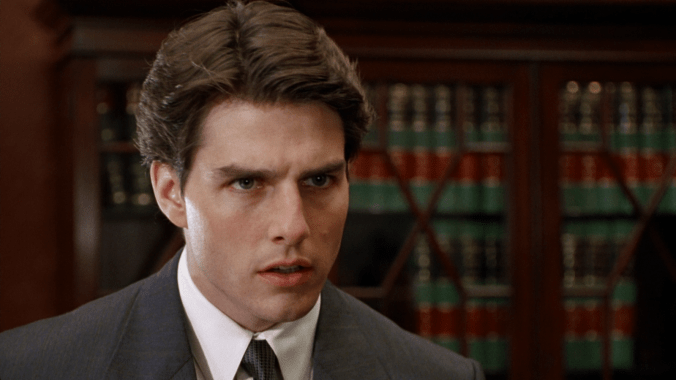
Remember how, in the film adaptation of John Grisham’s “The Firm,” the young lawyer Mitch McDeere (Tom Cruise)who is trapped in a mob-owned law firm wiggles out of his dilemma in part by proving that the firm’s lawyers were routinely over-billing clients?
Judge Mark L. Wolf concluded that the two firms double-billed for their attorneys’ work on a class-action lawsuit involving State Street Bank, and even billed for the work of other attorneys not employed at either firm. Thornton’s managing partner, Garrett Bradley, listed his brother as an attorney on the case and charged $200,000 for his time even though Michael Bradley was barely involved. Uncovering this scandal was another triumph of the Boston Globe Spotlight Team, the investigative reporting division that uncovered Boston’s predator priest cover-up in 2002. Continue reading →
1. Totalitarianism watch. Idling one’s car for longer than three minutes, or more than one minute while adjacent to a school, is illegal in New York City. There have been anti-idling laws since 1972, but they were previously examples of the law being used to encourage conduct rather than enforce it. Now, with socialist Bill de Blasio at the city’s helm, the laws are being enforced with a vengeance.
The city is offering bounties to citizens who report their neighbors, for example. “If you witness a vehicle idling illegally, you can potentially receive a reward for your enforcement efforts through our Citizens Air Complaint Program” says a city website.
Nice.
The theory is that forcing people into not idling their car will mitigate climate change, just like forcing people to ride bicycles and to stop having children when the Left gains sufficient power and the Green New Deal is within reach. Cars idling for no reason is a pet peeve of mine, particularly when they idle in a parking space with cars waiting while the driver checks his or her messages on a cell phone. There are, however, good reasons for idling. I have idled while recharging a dead battery for example. I have idled in sub-freezing weather to keep the car warm while my wife, who had a cold, ran into a 7-11 to buy some cough medicine. The blunt boot of the law does not belong in this matter, like many matters that today’s progressives and socialists want to turn into government edicts.
If you don’t know what I’m talking about, you should. Frederick is the overly duty-conscious and somewhat dim-witted hero of Gilbert and Sullivan’s “The Pirates of Penzance,” one of the Savoy duo’s so called “Big Three,” the Victorian operettas that have been performed the most over the years. (The other two are “H.M.S Pinafore,” and the currently unfairly besieged—but arguably the best of them all—“The Mikado.”) They aren’t my three favorites, mind you, but like seven of the other G&S masterpieces, they are damned good, and have aged better than most American musicals, especially the Rogers and Hammerstein classics. Poor Frederick was apprenticed to a pirate until his 21st birthday, but due to a cruel twist of fate and legalistic nit-picking, his 21st birthday didn’t arrive until 1940, because he was born on leap year. Today is his 41st birthday, though he is 164 years old.
I apologize for the stupid subtitles in the clip from the movie. Unlike most G&S performers, the diction of Kevin Klein, Rex Smith and Angela Lansbury is excellent.
(I’m hurrying because I’ve learned from cruel experience that traffic on Saturday after 12:30 slows to crawl..)
1. Thus ends Black History Month. I do not favor tribal distinctions in our days and months. It is inherently divisive, and Black History Month smacks of honors affirmative action. The history of black Americans is American history, inextricably intertwined with the history of the rest of us. Our entire history ought to be taught and learned without bias and spin, and no race or ethnic groups should hesitate to take pride in the accomplishments of other Americans regardless of their color or ancestry.
NOTICE of CORRECTION! Item #2 below has now been shown to have been based on a hoax. More after…
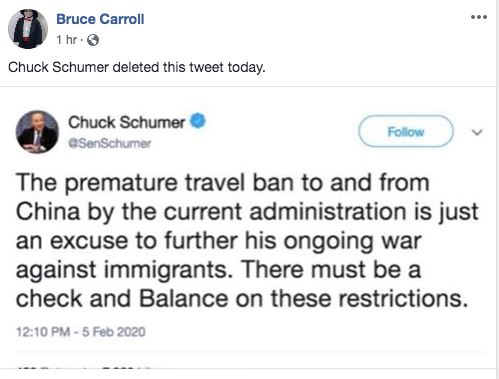
2. Res ipsa loquitur:
Obviously the note in Chuck’s tickler file came up: “Today transition from saying Trump was doing too much in response to the Corona virus to saying that he isn’t doing enough.”
What awful, awful hacks these people are.
They are still awful hacks, but I hate being caught by these hoaxes. This one was especially sinister, because the fake tweet is completely consistent with what the Democrats and the news media had been saying about the President’s move to stop travel from China. However, insisting that a faked message is still “true enough” is what Dan Rather did in the scandal that ended his career as a respectable journalist.
We now know that the tweet is a hoax because ProPoblica, a nonprofit journalism organization, maintains a database of tweets deleted by politicians called Politwoops that uses Twitter’s Streaming API to find tweets from politicians that have been deleted. Schumer’s tweet is NOT in the database, thus we know it wasn’t posted.
[T]here are the Tilli Buchanans among us, who want to tear down social norms, not really knowing what the consequences will be over the long term, just for the hell of it. In addition to being irresponsible and disrespectful, they are also lousy citizens.
They are not, however, criminals. She should be able to walk around naked in front of her children, just as we allow parents to engage in all sorts of other dubious practices. That she can doesn’t mean she should, but this is part of a long, long list where we must rely on ethics rather than law.
Facing being placed on a sex offender registry for 10 years, Tilli agreed to a plea deal with her pleading guilty one class B misdemeanor lewdness charge and paying a $600 fine while serving probation. The charge will be dismissed if Buchanan can keep her shirt on for a year.
4. More “The rest of the story,” uber-jerk division. In 2018, Saturday Night Live performer Pete Davidson mocked GOP Congressional candidate Dan Crenshaw for his eyepatch, the result of a combat wound. Davidson said that he looked like “a hitman in a porno film” and dismissed the origin of his disfiguring injury as something he got in “war or whatever.” Veterans, their families and others who don’t usually pay attention to SNL anymore since it has become partisan, shrill, and lazy protested loudly, and Davidson apologized while Crenshaw appeared on a later show, where he was funny, gracious, and forgiving
It was obvious to me (and, I’m sure, Crenshaw) that Davidson was forced to apologize, but it takes a special breed of jerk to come back after he has left the scene of his insults and say so.
In Davidson’s new stand-up special, “Alive from New York,” Davidson, says,
“So I made fun of this guy with an eyepatch and then, like, I kind of got forced to apologize. My roommate thought I should apologize so that I didn’t get shot in the face. People were like, ‘You hate America!’ And I’m like, ‘No, I just didn’t want to be incorrect about how he lost his fucking eye. Is that a crime?! The only thing I did do, which I am guilty of — and I apologize for — is I did make that guy famous and a household name for no reason, right? I did what, like, Ariana Grande did for me, right? I sucked his dick at ‘SNL.'”
This is what you lost your eye for, Dan.
5. You could show this to your Bernie Bros friends, but I doubt they could understand it. At the Foundation for Economic Education, J. Kyle de Vries does an excellent job of explaining the Social Security cheat, and why it has to be reformed. The system no longer makes sense, but the socialist enablers refuse to consider the problem. de Vries writes in part,
Millennials and Generation Z: Do you want to fund my Social Security benefits with higher payroll taxes than I paid in the past? Especially when the likelihood is high that your benefits are not going to be as lucrative as mine?
I am lucky. My Social Security benefits will be funded by you and other workers, and I plan on living to 140. If you are younger, that should concern you. Right now, you and your employer are forced to contribute 12.4 percent of your income into a fund that goes into a black hole, financing some other guy’s retirement. Wouldn’t you rather put that 12.4 percent into a fund you manage?
…Assume a self-employed 25-year-old makes $75,000 this year. Further assume she is required to set aside 12.4 percent of her income into a protected, tax-deferred trust, just as she must do for Social Security. But this is her account, managed by her, just like a 401k plan. If she realizes a 3 percent increase in income each year and can earn 6 percent on a conservative mix of stocks and bonds during her lifetime, her trust will accumulate to over $3,500,000 at age 70. At 8 percent growth, that number will be an astounding $6,142,000.
Would you rather have accumulated these much larger sums to augment your retirement income than get the average $1,500 per month Social Security check issued today? Lesser potential income is just one of the problems with the present system.
…Contrary to popular belief, payroll taxes are not invested in a fund to secure benefits like most other pension plans. Since the beginning, payroll taxes went first to make payments to current retirees with the balance “borrowed” by the feds for spending on things other than Social Security benefits. For most of the program’s history, the amount of payroll taxes the feds received was much higher than the Social Security payments, meaning the feds had a lot of money to spend on other things. Because of demographics, that situation has changed perilously, threatening the future of the Social Security system.
…What all this means is millennials and Gen Zers will see higher taxes for Social Security across the board, perhaps many times. They will also most likely see reductions in promised benefits, especially if they accumulate a lot of money over their working lifetimes.
…Wouldn’t you rather have your own retirement fund you manage yourself instead of the flimsy promise of government IOUs? Increasing payroll taxes today only delays the day of reckoning. The current unfunded liabilities for Social Security are over $34 trillion. Let’s not double down on a failed experiment that will bankrupt our country in the future and leave millions destitute in retirement.
Wouldn’t it be nice if Donald Trump was articulate enough and organized enough to explain this in a debate, or in a national address to the public? Wouldn’t it be nice if young voters would pay attention, and if the news media could report on the issue fairly?
Wouldn’t it be nice if I could fly to Disney World by flapping my arms really hard?
Oh, I’m sure these are unrelated occurrences, just like it was a coincidence that a progressive college professor suddenly sort-of remembered a school days attempted sexual assault by teenaged Brett Kavanaugh just in time to accuse him during his Supreme Court nomination confirmation hearings. You’re sure too, aren’t you? No progressive would be so vicious as to try to weaponize #MeToo to “cancel” an MSNBC pundit for pointing out that Bernie Sanders sounds like a crypto-Communist, right? Come on. How ruthless do you think these people are?
Hot on the heels of Chris Matthews reminding young, naive and ignorant MSNBC viewers who don’t know Khrushchev from Orange Crush that the Cold War was fought with people who have the same world view as Bernie Sanders, even comparing Bernie’s rise to the Nazis marching into Paris (THAT was a bit excessive, but Chris apologized), a progressive journalist suddenly decides that Chris’s long ago flirtatious bantering with her was, come to think of it, really unwelcome, especially coming from someone who doesn’t trust Bernie. Continue reading →
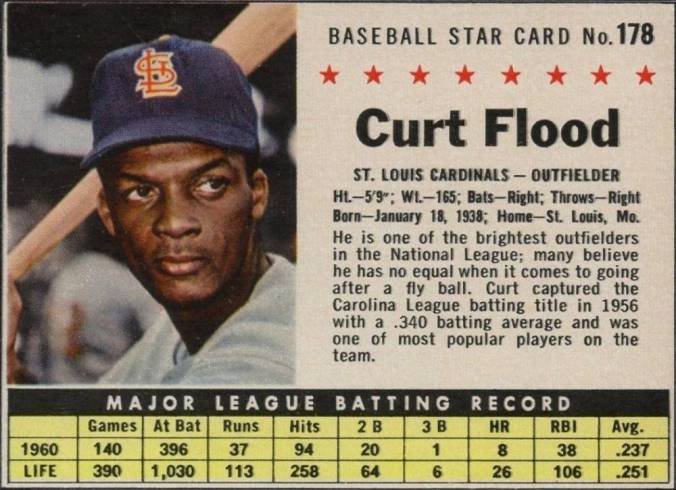
Yesterday, U.S. Rep. David Trone Trone (D-Md.) and Rep. William Lacy Clay (D-Mo.), Rep. Ann Wagner (R-Mo.) and Sen. Roy Blunt (R-Mo.) held a news conference calling on the Major League Baseball Hall of Fame’s Golden Era Committee to nominate and elect former centerfielder Curt Flood when the committee meets in December. Trone said he was looking for something that both parties could agree on, and hit on this, which is, coincidentally, something neither party has any expertise about whatsoever.
“This really resonates across both sides of the aisle,” Trone said. “Everybody in America, whether you’re Republican, Democrat, independent, white, black or brown, believes in the American dream and fairness and decency. Decency and fairness and justice. And we all believe in that at our core, in all parties, in all colors.’’
Trone says he polled colleagues in each party about supporting Flood “because Washington is such a broken community, nobody is doing stuff together. We ought to try where we can actually do something together to honor somebody who really paid a price. Curt Flood paid a pretty horrible price. He put everything on the line — his whole career, his whole life, he put it all out there on the line. It’s been really easy for people to come together and say, ‘You know what? We have to do something about this. Let’s do something decent for a change and speak to who America really is.”
Grandstanding. Race-pandering. Virtue -signaling. Abuse of position.
Kwame Anthony Appiah is the first and only competent ethicist to handle the long-time New York Times Magazine column, so I feel badly that most of the time when I reference his opinions, it is to criticize one of them. He over-all record is excellent, despite the impression one might get from Ethics Alarms. For example, read his superb, if a bit overblown, response to a white woman who was “deeply offended” that a contractor hired by her husband flew a small confederate flag on his truck. She wanted to report him as a racist to his boss, and asked Appiah if this was the right thing to do.
That nuanced advice is more typical of “The Ethicist’s” work than this recent chapter, in which a man wrote that he had split from his wife after she had refused any physical intimacy, saying that it was no longer “part of her life.” She suggested a trial separation, which led to a formal divorce, and the couple signed a non-disparagement agreement as part of the process. Recently she admitted to him that she had repeatedly cheated on him during their marriage, and that she suggested the trial separation so she could resolve her affair at the time with a married man.
The inquirer says that he has never blamed his wife in discussions with his sons for the end of the marriage, but that he has learned from them that she “places the sole blame on me for every problem ever experienced by our family, including the drug addiction of our older son. When I recently contacted her about visiting him in jail, she said he didn’t want to see me. I contacted him and found that this was not true.”
He asks “The Ethicist” if he can ethically violate the non-disparagement agreement in his own defense, and tell the sons what a lying, cheating, betraying mother they have. To my amazement, Appiah said he could, and even suggested that he should, arguing in the process of a looooong discourse, Continue reading →
A recent interview in the New York Times Magazine reminded me once again of what an arrogant, race-baiting, self-deluded and toxic presence Harvard Prof. Henry Louis Gates is on the American society landscape. It was Professor Gates, you will recall, who provoked a racial incident with a white Cambridge , Massachusetts police officer who was investigating a report that an African American male had broken into Gates’ home. The African American male was Gates himself, who had returned from a trip to find his door jammed, and jimmied his own front door. When Cambridge police Sgt. James Crowley arrived at Gates’ abode to investigate a 911 call that said that two African American men had broken into the house, Gates answered the door and immediately accused the officer of racially profiling him. He eventually flashed his Harvard ID, then demanded the officers name and ID number as well. The officer asked him to come outside for that information, and Gates came out onto his porch, again accused him of racial bias, shouted over his words and insulted him. The officer, who was a trainer in the area of avoiding racial prejudice, asked the professor to calm down Gates continued to shout, and a crowd was gathering. After warning Gates that he was disturbing the peace, and would be arrested if he didn’t go inside—Gates kept saying it was his porch and he’d stay outside if he chose to—Crowley took the Harvard professor into custody.
Charges were quickly dropped, but Barack Obama, in a pattern that continued throughout his Presidency, weighed in on an event he know little about, and pronounced the white officer the villain of the episode. (Gates was a friend of the President’s, and, of course, the African American.) Obama was properly criticized for his knee-jerk reaction by many, including me. (My multiple articles about this mess are still trapped on the old Ethics Scoreboard, currently off line because the hosting company messed up.) Embarrassed, as he deserved to be, Obama pulled a transparent public relations stunt of inviting the white cop and the black scholar to the White House for a so-called “beer summit.”
Not thrilled to be up before Virginia’s sunrise, but looking forward to it…
1. It’s sad what happens to Ethics Alarms expatriates...One upon a time, uber-progressive blogger/cartoonist Barry Deutsch, aka Ampersand, was one of the most prolific, open-minded, articulate and reasonable commenters here. Then Barry banned himself because he didn’t like my pointing out that his blog is an echo chamber, after he censored my comment there noting that his SJW throng’s position on the Trayvon Martin-Zimmerman affair was intellectually dishonest. So Barry retreated to his self-made bubble. I check in on him now and then, and that admirable open-mindedness has disappeared in the marinade of relentlessly woke and intolerant fans.
Here’s how bad it is for Barry: this what he wrote on his “Alas! A Blog”recently: “Conservatives are against all immigrants (or at least all non-white immigrants), not just unauthorized immigrants.”
Tragic. Barry Deutsch now believes that anyone who disagrees with his far left world view is a racist. The Ampersand who followed Ethics Alarms would never think such a thing, much less publish it.
2. The trouble with billionaires. The class warfare being fomented by Bernie Sanders and others for a cynical and destructive power grab is an old formula that, when it works, always brings chaos in its wake. Throughout history, it has succeeded more often than basic economics and common sense would dictate in part because so many of the ultra-rich persist in being jerks. Does being a jerk make one more inclined to get rich, or does becoming extremely rich have a tendency to make one a toxic jerk?
That’s a question for the ages, but the behavior of people like billionaires Peter Nygard and Louis Bacon make things easier for class warfare demagogues like Sanders, Elizabeth Warren, and Rep. Ocasio-Cortez, just as it did for Lenin and Robespierre before them. This story, about their absurd and costly feud, illustrates how extreme wealth can permit one’s ethics alarms, not to mention sense of proportion, go dead.
The Bahamian pleasure palace featured a faux Mayan temple, sculptures of smoke-breathing snakes and a disco with a stripper pole. The owner, Peter Nygard, a Canadian fashion executive, showed off his estate on TV shows like “Lifestyles of the Rich and Famous” and threw loud beachfront parties, reveling in the company of teenage girls and young women. Next door, Louis Bacon, an American hedge fund billionaire, presided over an airy retreat with a lawn for croquet. Mr. Bacon preferred hunting alone with a bow and arrow to attending wild parties, and if mentioned at all in the press, was typically described as buttoned-up.
The neighbors had little in common except for extreme wealth and a driveway. But when Mr. Nygard wasn’t allowed to rebuild after a fire, he blamed Mr. Bacon. Since then, the two have been embroiled in an epic battle, spending tens of millions of dollars and filing at least 25 lawsuits in five jurisdictions. Mr. Nygard, 78, has spread stories accusing Mr. Bacon of being an insider trader, murderer and member of the Ku Klux Klan. Mr. Bacon, 63, has accused Mr. Nygard of plotting to kill him.