“Dear Legal Ethicist: I’m a Lawyer, and I Think My Real Estate Client Might Be Jack the Ripper. What Should I Do?”

Here is a perfect example of where legal ethics and ethics diverge.

The Supreme Judicial Court of Maine reprimanded veteran Maine lawyer Eric B. Cote for investigating the background of Rory Holland—leading a “one man crusade” was how the court put it— after Holland  was convicted of a double murder and sentenced to two life sentences. Cote was convinced that Holland was a serial killer, and that there were other victims. Cote set out to find out who they were.

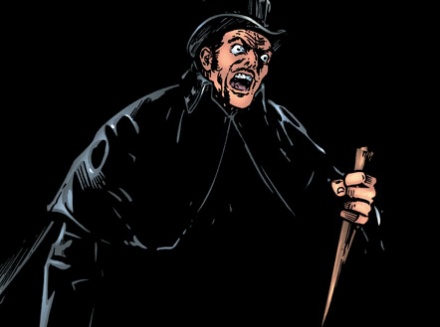
What’s wrong with that, you ask? Well, Cote had represented the convicted murderer in a real estate transaction. The reasons he suspected Holland came from information he learned in the course of the representation, and under the ethics rules of every state, he cannot reveal such information for the benefit of others to the detriment of a current or former client. Continue reading →

Trayvon Martin Ethics Train Wreck Update: The Wreckage So Far, and The Wreckers

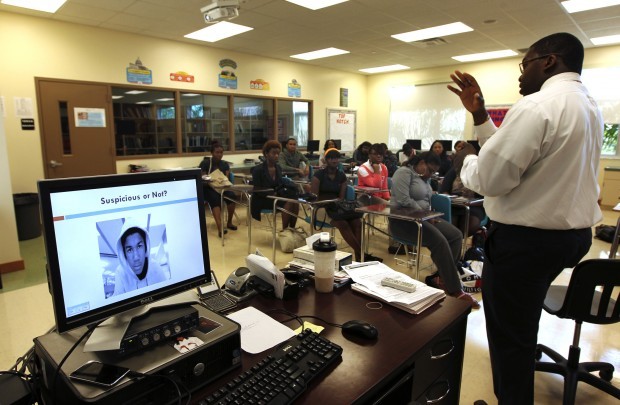
The "George Zimmerman Is a Racist" segment in Clinton Mitchell's high school ethics class.

Gallup released a poll yesterday, showing:

  • African-Americans are nearly five times more likely to be convinced that gunman George Zimmerman is “definitely guilty” of a crime than non-blacks.
  • 75% of African-Americans believe that racial bias led to Martin’s shooting, whereas less than half of non-blacks do, though a majority of the public believe that race was a factor in the tragedy.
  • 73% of blacks, about twice the percentage of the rest of the population,  believe that Zimmerman would have been arrested if the person he shot was white.

What we now have, clearly, is  significant, dangerous, and festering racial distrust, not created solely by the Trayvon Martin incident but exacerbated by it. This can only harm race relations, law enforcement, and the nation generally, and yet it is beyond argument that this divide has been encouraged and nurtured. Obviously the potential already existed, and one would think that responsible figures in public life, the civil rights establishment, elected office and the media would take the responsible course and attempt to minimize the shooting’s potential for increasing racial divisiveness in America.

They did not. Once again, they ripped the scab right off racial healing, and did so recklessly, cruelly, ineptly, and in some cases, maliciously. They are still doing it, or passively allowing it to be done by others. This is wrong, and shockingly so. Rational and fair analysts and observers all along the ideological spectrum should be saying so, but they are not. Fairness and honesty should not partisan issues. Playing the politics of hate and divisiveness is a threat to the fabric of the United States of America and in this case, risks unraveling decades of progress in race relations and understanding. There can be no excuse for it, and yet the primary culprits reside among the most influential and prominent institutions in the country. Journalists. Congress. Civil rights organizations. Pundits. Educators. And the President of the United States. Continue reading →

“Blue Bloods” Ethics: The Good Lie?

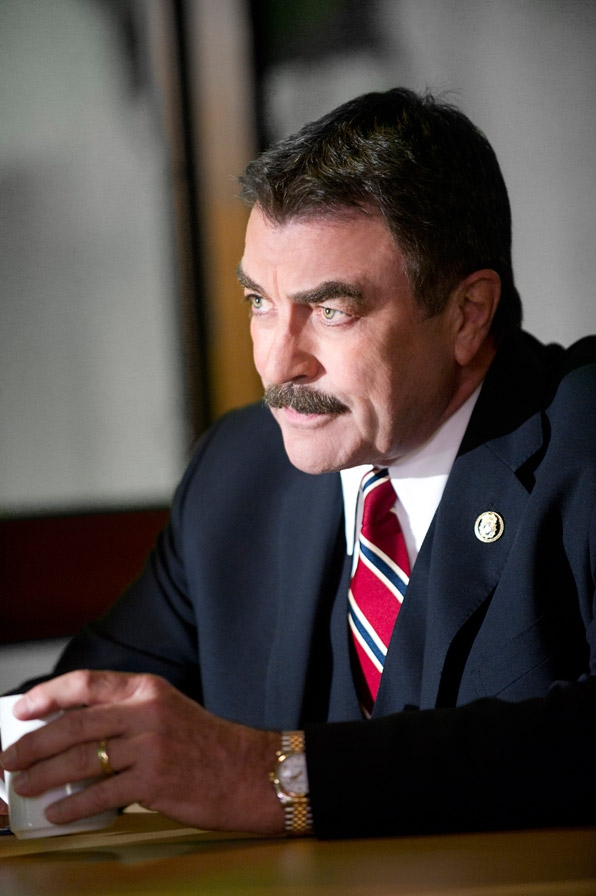
Tom Selleck as NYC Chief of Police Frank Reagan

Tom Selleck’s CBS drama “Blue Bloods,” chronicling the exploits of  the Reagans, an improbable fictional New York City family that dominates NYC’s law enforcement, featured an excellent example of a necessary lie last night, in which utilitarian principles would hold that the lie,  a rather serious and extensive one—many interlocking lies, really—was the most ethical option available.

The situation arose because the Chief of Police (Frank Reagan, played by Selleck) learned that his police officer son, Jamie Reagan, had rescued a child from an explosion, and the press and city were clamoring to know who the hero was. (Nobody saw the rescue, which is a contrived detail, but necessary to set up the ethical dilemma.) But Jamie was also working undercover in a serious and dangerous operation, having infiltrated an organized crime family. (Why was a uniformed cop allowed to stay on the street while leading a double life? Seems reckless to me, but Father Chief knows best.) To protect the undercover operation and his son, Frank Reagan decides on an elaborate deception, persuading his son’s partner, who was on the scene of the rescue, to take the credit and even accept a commendation in a public ceremony.

Lying to the public and the press to such an extent is almost always inexcusable, but protecting an anti-crime effort in the public interest, as well as the imperiled officer involved in it,  is a rare case in which the balance tips away from the truth. The “Blue Bloods” solution was the best one available given the situation and the law enforcement priorities.  But… Continue reading →

Ethics Quote of the Week: Prof. Paul Horwitz

“I can think of a number of posts about the ACA from legal scholars last week that were clearly and openly offered as advocacy and did a fine job of it. And I can think of others that were clearly not offered as advocacy at all, and said useful and interesting things about the oral arguments…But I do believe that some posts last week traded on the authority of their authors, made overconfident or disingenuous claims about the state of current law and the strength or weakness of opposing arguments, and did so for strategic reasons. I see those reasons as more inculpatory than exculpatory. I don’t see the minimal requirements for scholarly integrity that I offered as changing because of the medium, or because of the importance and currency of the case.”

Hey, Professor! We assume you're smarter than we are: don't play games with our trust!

—-University of Alabama Law Professor Paul Horwitz, writing about the confounding number of liberal law professors and scholars who wrote internet posts professing that the constitutionality of Obamacare’s individual mandate was obvious and undeniable, and that the provision’s Supreme Court approval was assured. As Ethics Alarms did regarding other commentators, Prof. Horwitz suggests that some of the commentary was designed as spin, or to use his term, to “shape the narrative.” He argues that in cases where the scholar was deliberately over-stating the case for constitutionality, this constituted a breach of integrity and honesty. Hie professor-speak for this is “inculpatory.” He means that it was unethical.

Which, of course, it was. Continue reading →

Ethics Quiz: What To Do With a Bad Seed?

A horror story from Cowlitz County, Washington:

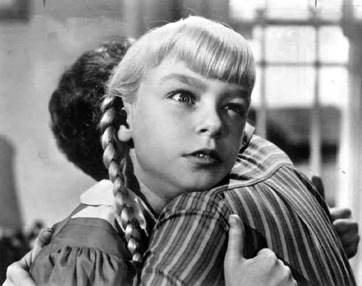
Little Rhoda didn't know what she was doing was bad! Suuuuuure she didn't...

When she was was 11 years old, Cassandra Ann Kennedy decided that her father didn’t love her enough, and that she would have a happier life if he wasn’t around any more. So that she made up a story that her father had raped her, told police, and..voila! In 2002 her father was convicted of rape and  sent to 15 years in a Washington state prison.

In January of 2012, Cassandra, now 23,  confessed that it was all a lie. “I did a horrible thing,” Cassandra told detectives. “It’s not OK to sit and be locked in this horrible place for something you didn’t do. It’s just not right.”

Figured that out all by yourself, did you, Cassie? Continue reading →

George Zimmerman and the “Racial Profiling” Canard

Racists, all of 'em.

On the frequently disgusting but reliably gripping CBS drama “Criminal Minds,” viewers quickly get accustomed to hearing the FBI profiler heroes alert police and public to be on the look-out for a “white, middle-aged man.” Why man? Easy: virtually all serial killers are male. Why white? Same thing: although a rare black serial killer comes along (the D.C. snipers were African-American), the vast majority of serial killers from Jack the Ripper onward have been Caucasian.

You know, I just don’t feel denigrated by the fictional FBI’s alert (the real FBI would do the same.) Telling the public that the individual butchering prostitutes or massacring families is the same race as I am isn’t bias, bigotry or racism, it’s logic. It is also, beyond question, racial profiling, which, under the right circumstances, makes sense, prevents crime, catches criminals, and isn’t unethical or racist in the least.

So effectively have civil rights advocates and the media managed to bias the public against rational racial profiling, however, that the phrase itself has become a synonym for racism. When you mangle and distort a descriptive term in this way, blurring the distinctions between phrases and concepts, the culture gets a lobotomy and forced aphasia. What is the term for a fair and legitimate conclusion that a particular crime in a particular area is more likely to be performed by one race than another? Right now, the term is racism. Continue reading →

Unethical Quote of the Week: President Obama (Sigh!)

“Ultimately I’m confident that the Supreme Court will not take what would be an unprecedented, extraordinary step of overturning a law that was passed by a strong majority of a democratically elected Congress.”

—President Obama speaking in the White House Rose Garden about the Supreme Court’s deliberations on the constitutionality of Obamacare.

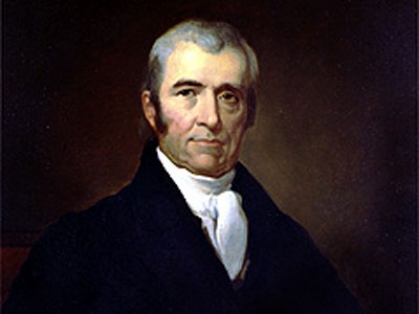
Obama made John Marshall roll over in his grave. We Marshalls just hate that,,,

This is the kind of presidential dishonesty that drives me bonkers, I must confess. It manages to deceive and misinform. It is dependent on the ignorance of  the public, so it is also condescending, disrespectful, and cynical, in addition to being an intentional  lie.

Not a lie, you say? Perhaps a mistake? Sorry, no dice: Obama was advertised as a former constitutional law expert and a Harvard Law School whiz. He can’t claim now that he’s really a babe in the woods when it comes to the Law of the Land and judicial history.

Unprecedented? The power of the Court to overturn unconstitutional acts of Congress was established by precedent, when Chief Justice John Marshall—love that name—led the court to invalidate the Judiciary Act of 1789. Is Obama playing games with “democratically-elected Congress,” since the Senate wasn’t elected directly until 1912, with the passage of the 17th Amendment. I suppose so…if challenged, he can say that he is still right, because all of Congress wasn’t elected “democratically” in 1789. Of course, few Americans know that, so the statement qualifies as deceit. Continue reading →

First Amendment Ethics and the Conundrum of the Despicable Blogger

Attack-blogger Crystal Cox---exercising her rights, jeopardizing yours.

One thing that the public just doesn’t understand about lawyers is that their job sometimes involves fighting for the most despicable people imaginable, because those despicable people have legal objectives they have a right to pursue as citizens, and because the principles underlying the fight are important, even if the particular clients—and often their objectives too–are blights on humanity.

Over at Popehat, Ken has chronicled a classic example, in which First Amendment specialist Eugene Volokh (he of the Volokh Conspiracy) and the Electronic Freedom Foundation are backing blogger Crystal Cox as she appeals a $2.5 million defamation judgment against her, in which an Oregon judge ruled that bloggers did not have the same protection against defamation claims under the First Amendment as journalists do. Cox, of whom I was blissfully unaware until Ken’s post, is clearly the kind of person who is a menace on the internet, lacking basic decency, fairness, scruples and common sense, and yet stimulated by the power that the medium provides her. The signature act that established this for me is revealed by Ken at the top of his post:

“Here’s the most important thing you need to know about blogger and “investigative journalist” Crystal Cox: when she got angry at First Amendment attorney Marc Randazza, she didn’t just register the domains marcrandazza.com and fuckmarcrandazza.com and marcrandazzasucks.com in order to attack him. She registered jenniferrandazza.com and nataliarandazza.com — the names of Randazza’s wife and three-year-old daughter.”

Yup, that’s enough, all right: signature significance. Is there any chance that an individual who would do this even once could be an ethical, reasonable, fair person?  No! Only an unethical creep would even consider such conduct; with a normal person, the ethics alarms would be ringing so loud that they would be paralyzing. Continue reading →
Ethics Dunce: Eric Wemple

Talk about ethics blindness.

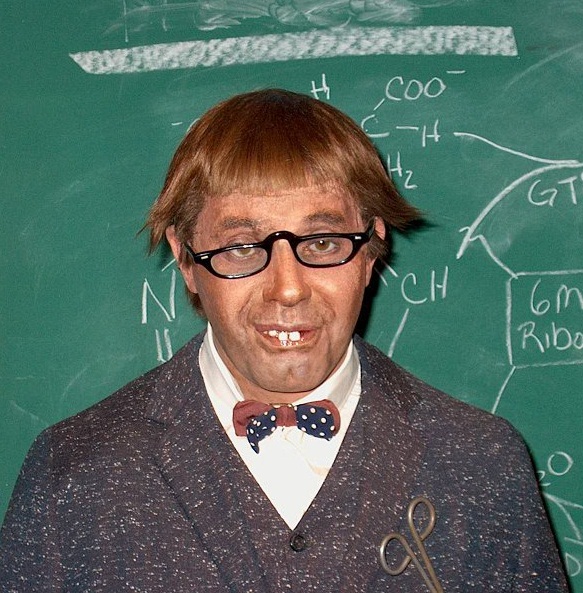
Find that loose screw, Eric, and then tell Spike where it is...

On his Washington Post blog, Eric Wemple gushes like Old Faithful about sweet, contrite, courageous Spike Lee, who appropriately apologized (and paid an undisclosed sum) to the Florida couple whose address he had accidentally tweeted to help get George Zimmerman harassed, attacked or killed—that being his clear intent by trying to send Zimmerman’s address to the world, or more specifically, the New Black Panthers’ vigilantes. Wemple was blown away by Spike’s willingness to accept responsibility for his boneheadedness and admit he was wrong:

“Yet his reaction to the mishap rehabilitates the good name of an honest apology. Lee used no qualifiers, no minimizers, no excuses — and no ‘I am sorry if anyone took offense to my actions.’ Just plain regret and shame. Score a victory for the apology.”

So “I’m sorry I nearly got you killed; honest, I was trying to get that other guy killed!” is an impressive apology, is it? Continue reading →

Ethics Train Wreck Update: Martin-Zimmerman Reflections

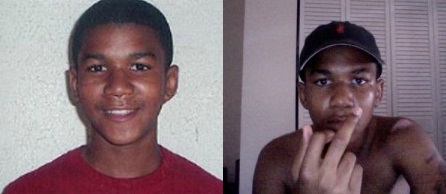
Is it only fair to show one version of the victim?

As the NAACP joined with Al Sharpton today to lead a protest of thousands in Sanford Florida, some notes on recent ethics carnage and confusion in the wake of Trayvon Martin’s shooting death:

  • Roslyn Brock, who chairs the national board of directors for the NAACP, perfectly illustrated  ignorance of the justice system and short-sightedness that has characterized this whole, sorry incident. “We come to make sense of this great tragedy and the entire world grieves with us,” she said . “When the Sanford police did not arrest George Zimmerman, they essentially placed the burden of proof on a dead young man who cannot speak for himself.” But of course, as every American should know, that is where the burden of proof lies. The alleged victim in a death is represented by the state, and it is the state that has the burden of proof of guilt as well as having the burden to justify an arrest. It is not Zimmerman’s responsibility to prove his innocence, though that is what the un-American process engineered by race-activists and the media has come to. Does the NAACP really want to take the position that there should be a presumption of guilt in criminal matters? Or just in circumstances where the victim is an African-American and the suspect is not?
  • While CNN has taken the lead in trying to present a balanced picture of the controversy, NBC, mostly through MSNBC, has thoroughly disgraced itself by essentially taking an advocacy position on Zimmerman’s guilt, even to the point of doctoring his 911 call to make it seem clear that this was a case of racial profiling. “This guy looks like he’s up to no good…He looks black.” is how Zimmerman’s 911 call was played on the  “Today Show” and relayed on MSNBC’s website. The actual conversation was this: Continue reading →