Stop Cruelty To Children—Or To Put It Another Way, Stop Jimmy Kimmel

Bulletin to Jimmy Kimmel: Enough is enough, you sadistic jerk.

Also known as "Jimmy Kimmel Cruel!" and "Jimmy Kimmel Sadistic!"

Flush with his “success” of persuading his most irresponsible viewers to make their own children cry by lying to them about eating all their Halloween candy and then posting the videos of their kids’ emotional distress on YouTube, ABC late night talk show host Jimmy Kimmel has told the same warped people to traumatize their children again, this time by granting the kids the special treat of opening a Christmas gift early, but having a terrible gift (like a half-eaten sandwich) inside. The emotional reactions of the children thus deceived are also, per Kimmel’s directive, videotaped for posterity  to inspire mirth on the part of  his similarly warped viewers who don’t have children (and thank God for that), because, as we all know, disappointing kids at Christmastime is fun.

This has got to stop. It doesn’t matter if some, like Mediate’s Jon Bershad , think this is “the cruelest, funniest joke ever,” and others, like the Huffington Post’s reviewer, think the pranked children’s misery is “hilarious.” Children are not props for Jimmy Kimmel’s sadistic amusement, and parents who are willing to use their children this way, intentionally spoiling their Christmas anticipation for the entertainment of sadistic strangers, are, to be blunt, rotten, despicable, and untrustworthy parents. Something important—Compassion? Kindness? Empathy? Loyalty? Responsibility? Love? — is absent in their parental make-up, and that void is being cynically exploited by Kimmel, who has crossed the threshold from arrested adolescent to full-fledged villain. Continue reading →

“It’s A Wonderful Life” Ethics, Part 3

Here is the final installment of the Ethics Alarms overview of the ethical issues raised in Frank Capra’s classic. Some of the comments on Parts 1 and 2 have suggested that my analysis is unduly critical. Nothing could be further from the truth. I love the movie, and have already said that I find it ethically inspiring. Noting that characters act unethically in a movie about ethics is no more criticism than pointing out that people in horror movies never just leave when things start getting weird (as I would). I know that their actions drive the plot and are necessary. This is, however, how an ethicist watches a movie with as many ethical choices as “It’s A Wonderful Life.” I can’t help it.

Now back to George, Mary, and Bedford Falls:

11. Uncle Billy screws up as we knew he would

11.  Christmas Eve arrives in Bedford Falls, and Uncle Billy manages to forget that he left the week’s deposits in the newspaper he gave to Mr. Potter. Thus more than $8,000 is missing on the same day that the bank examiner is in town. Why is Uncle Billy still working for the Savings and Loan? He’s working there because George, like his father, is putting family loyalty over fiduciary responsibility.  Potter, of course, is a thief; by keeping the lost money to trap George, he’s committing a felony, and an unnecessary one. As a board member on the Savings and Loan, Billy’s carelessness and George’s negligence in entrusting him with the bank’s funds would support charges of misfeasance. Mr. Potter, had he played fair, might have triumphed over George legitimately, and no Christmas miracle or guardian angel could have saved him. But this is the inherent weakness and fatal flaw of the habitually unethical: since they don’t shrink from using unethical devices, they often ignore ethical ways to achieve the same objectives that would be more effective.

12. George folds under pressure Continue reading →

Death Bed Extortion Ethics

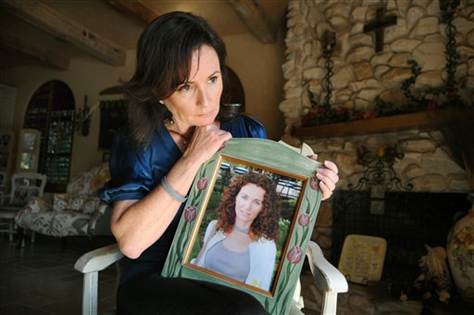
The new Mrs. DeVita holds a picture of her matchmaker, the old one.

There are few things more unfair, or that represent more of an inherent abuse of power and loyalty, than dying requests.

In 2007, Jackie DeVita , a 42-year-old mother terminally ill with brain cancer, removed her wedding ring and handed it to Colleen Leary, her unmarried sister, saying, “I want to know that this is the three of us,” referring to Colleen, Jackie and her husband, Richard. “Don’t ever leave my kids.”

A year later, in 2008, Jackie died, and three months after Jackie DeVita’s funeral, Colleen Leary became Mrs. Richard DeVita.

I hope it works out.  Jackie’s request, however, was a terrible thing to do, the equivalent of emotional extortion. Continue reading →

My 15 Hollywood Cures For A Paterno-Penn State-Sandusky Hangover, Part 2

Part 1 listed the first seven of my 15 cinematic remedies for Penn State-inspired ethics ennui. Part 2 includes the final eight. Please don’t take the order too seriously; I could have shuffled the whole batch. I also tried to include as many genres as possible. When it comes to ethics, good lists can be compiled using all Westerns, all sports movies, all war movies, courtroom drama or science fiction. Here we go…

8. Spartacus (196o)

The raw history is inspiring enough: an escaped gladiator led an army of slaves to multiple victories over the Roman legions in one of the greatest underdog triumphs ever recorded. Stanley Kubrick’s sword-and-sandal classic has many inspiring sequences, none more so than the moment when Spartacus’s defeated army chooses death rather than to allow him to identify himself to their Roman captors (“I am Spartacus!”)

Ethical issues highlighted: Liberty, slavery, sacrifice, trust, politics, courage, determination, the duty to resist abusive power, revolution, love, loyalty.

Favorite quote: “When a free man dies, he loses the pleasure of life. A slave loses his pain. Death is the only freedom a slave knows. That’s why he’s not afraid of it. That’s why we’ll win.” [Spartacus (Kirk Douglas)] Continue reading →

Unethical Quote of the Week: Kim Kardashian

Whatever.

“After careful consideration, I have decided to end my marriage. I hope everyone understands this was not an easy decision. I had hoped this marriage was forever, but sometimes things don’t work out as planned.”

—-Kim Kardashian, reality star and cornerstone of the ongoing famous-for-being-famous Kardashian family media scam, announcing her sudden divorce filing –apparently explained to the celebrity gossip site TMZ before being revealed to her soon-to-be ex—-from husband Kris Humphries, to whom she had been married for 72 days.

In the dark days of the Great Depression, unscrupulous promoters held dance marathons across the country, the first “reality shows” since Nero fed Christians to lions for sport in the Roman Colosseum. Desperate people stayed on their feet dancing with only brief rest periods for thousands of hours, with participants getting meals for their suffering and the last couple standing getting a cash prize. Sadistic Americans paid admission fees to watch the carnage. One of the most popular gimmicks in the marathons was the fake wedding, in which the MC would proclaim that two of the courageous contestants had fallen in love, and would be married right on the dance floor. Continue reading →

The Selfish Brother, the Stranded Passengers, and the Key To Ethical Problem-Solving

Carolyn Hax is an advice and relationship columnist, not an ethicist. Still, her ethical instincts, values and ethics problem-solving technique are impeccable. This week, she schooled her readers on the most important step in approaching any ethical dilemma: define the problem correctly.

An inquirer asked Hax,

“Am I being selfish in insisting that my parents can stay with us for only two weeks after the birth of our first child? My brother thinks so and isn’t speaking to me.”

As the letter proceeded, crucial details appeared.  The writer’s parents had suffered some kind of financial crisis that required them to move into the brother’s home. The brother’s wife is pregnant. It looks like the stay will be six months, and the brother wants his sibling’s family, new baby notwithstanding, to do its fair share. Two weeks out of six months doesn’t seem fair to Bro.

Hax nailed the problem with the letter immediately: Continue reading →

Stacy Crim, Ethics Hero…and the Hardest Choice

Last week in Oklahoma, Ray Phillips fulfilled a promise to his sister Stacy, taking home from the hospital 5-pound Dottie Phillips, born prematurely in September, to become the newest member of his family.  Stacy died last month of brain cancer, just three days after holding her infant daughter for the first and only time. Dottie was able to come into the world only because Stacy, 41, had made the choice to reject chemotherapy for her rapidly spreading cancer that was diagnosed after she learned that she was pregnant.

When life places one of us in a “Sophie’s Choice” dilemma like Stacy’s, no one has standing to question or challenge whether the ultimate choice is “right.” There is no right choice. Stacy was faced with deciding whether to sacrifice the unborn child she had never met, a child whom many in America choose to regard as a neither a life or a being with any individual rights, but rather only as an ephemeral potentiality made of cells, similar to a pay-off at the races or a stock dividend. Even those who take the opposite view, that Dottie was a human life even at the earliest stages of her development in the womb, would never assert that a mother would be wrong to choose life-saving cancer treatments for herself at the risk of the unborn child. In such a case the right to choose is nearly unanimously accepted, and it is the hardest choice of all. Continue reading →

A Fan’s Obligation: 12 Life Lessons From Being a Red Sox Fan

Thanks Carlton. I won't forget.

This is not going to be a fun day.

The Boston Red Sox, the baseball team to which I have devoted a remarkable amount of my time, passion and energy over a half-century, are threatening to complete late season collapse of embarrassing and historic proportions. A spectacularly bad month of September has the team holding on to its once assured post-season play-off slot by its fingernails, and the squad appears to be dispirited and unhinged. Today the Red Sox play a double-header with the New York Yankees, the team’s blood-foe, and its prospects don’t look good. I, of course, must watch both games.

Following a losing baseball team is emotionally hard—I listened to or watched every game the Red Sox played in a six year period in which they never had a winning season— but following a collapsing winning team is much, much worse. It feels like a betrayal, yet at the same time the fan feels guilty for being angry with the players, who undoubtedly are suffering more than you are. This is, after all, their career. Still, you have had your hopes raised over many months; you have, if you are a serious fan, attached your self-esteem to your team’s fortunes. Watching it tank is like watching a presidential candidate you have argued for, and gone to rallies for and contributed to make an ass of himself in a debate. (And no, I’m not a supporter of Rick Perry.) Continue reading →

Ethics Quiz: Does The Golden Rule Ever Make You a Sucker?

For Ken Anderson, an alternative tattoo instead of "Mother"

With great trepidation, I visit our friends to the North for the second time in a week…this time, for an Ethics Quiz.

Ken Anderson, 47, of British Columbia, has been fighting a lawsuit by his aged mother, Shirley Anderson, since 2000. Using a rarely used section of B.C.’s Family Relations Act, she is demanding that he pay her $750 per month in “parental support.” The law declares that adult children are responsible for legally supporting parents who are “dependent on a child because of age, illness, infirmity or economic circumstances.”

Anderson isn’t keen on the request, since both his parents abandoned him when he was a mere tyke of 15, leaving him behind as they moved away with two younger siblings. He lived with other families and then quit school to find work. Now he’s married with two kids, and makes his living driving a truck. Continue reading →

The Tragedy of Monica Lewinsky

At 21, Monica Lewinsky was charmed into an illicit sexual relationship by the President of the United States, a master charmer with a long record of similar dalliances. There are millions of extra-marital affairs in the U.S., but one involving the most powerful man in the country was certain to be at the center of historic media attention. Bill Clinton knew it, and he understood the risks. Monica Lewinsky did not and could not, and it was her life that was thrown tragically, permanently, off its tracks. Continue reading →