Ethics Observations On A Forgotten Singing Sensation

Jill corey

For all my (self-) vaunted dedication to popular culture, I had no idea who Jill Corey, pictured above, was. When I glanced at the New York Times obituary feature about her last month, it didn’t ring enough of a bell for me to read it. But I left the section lying around for some reason, and finally read it last night. Her life is a story filled with ethics enlightenment about life, luck, and priorities.

On Nov. 9, 1953, when she was only 17, Norma Jean Speranza of Avonmore, Westmoreland County, a coal miner’s daughter just like Loretta Lynn, was featured in a Life Magazine cover story called “Small Town Girl Gets New Name And a New Career.” She became a true overnight sensation, recording hundreds of songs for Columbia Records, including “Love Me to Pieces,” “I Love My Baby,” “Let It Be Me” (which the Everly Brothers covered memorably) and “Sometimes I’m Happy,” the featured single on her career-defining album, “Sometimes I’m Happy, Sometimes I’m Blue.” Corey, it is fair to say, had one of those rare female voices that are instantly appealing, like Judy Garland and Karen Carpenter. Listen…

Those low notes!

Critics and audiences loved her. Silver Screen magazine said she had a “voice as lovely as a glass slipper, and a personality to match,” and that was typical. Corey was a regular on the television variety programs “Robert Q’s Matinee” (1950–1956) “The Dave Garroway Show” (1953–1954), the 1958–1959 version of the iconic “Your Hit Parade,” and on Johnny Carson’s CBS comedy-variety show before he took over “Tonight.” She also had her own syndicated radio and television shows. In 1958 she starred in a feature-length musical film, “Senior Prom” (co-produced by Moe Howard!)

So why doesn’t (almost) anyone remember her today?

In 1961, she married Don Hoak. He’s remembered now more than Corey is thanks to “City Slickers”: in a scene on a dude ranch, the one woman in the group complains to Billy Crystal and his two friends that she doesn’t understand men’s obsession with baseball. Who cares who played third base for the 1960 Pittsburgh Pirates, she asks hypothetically, and the words are barely out of her mouth before the three guys blurt out, “Don Hoak!”

Corey stopped performing and recording to raise a family; she and Hoak had a daughter. He dropped dead of a heart attack in 1969 at the age of 41 while chasing a thief who had stolen his brother’s car. Unexpectedly, Jill Corey had to return to singing. But her moment had passed. She was no longer famous or in demand, and popular music, the culture and public tastes had moved at supersonic speed in the eight years between 1961 and 1969. Once seemingly everywhere in magazines, TV and the radio and seemingly headed to a long career, she was back to being an unknown. When she died in May at the age of 85, few noticed.

Observations:
Continue reading

Saturday Afternoon Ethics Picnic, 6/5/2020

Giant ants

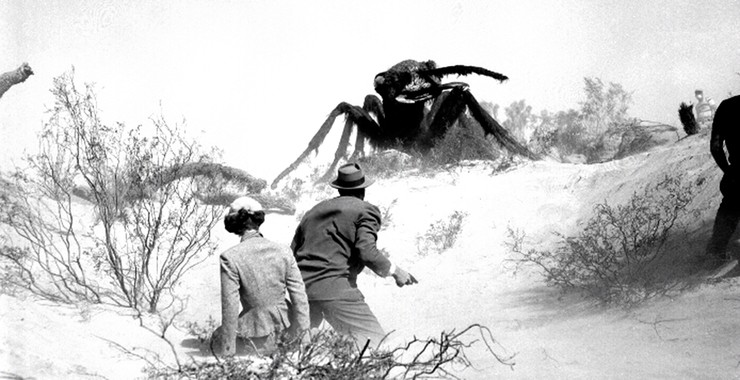
And what’s a picnic without ants?

June 5, the day before D-Day, is another date chock full of ethics history. It doesn’t count, but Ronald Reagan died on this date in 2004: I was just thinking that the Great Stupid would have killed him. In Presidential history, this was the day, in 1888, President Grover Cleveland vetoed a bill that would have given a pension to war widow Johanna Loewinger, whose Civil War vet husband died 14 years after being discharged from the army. He was discharged a little less than a year after enlisting for what the army surgeon’s certificate called chronic diarrhea. Loewinger received his pension until he cut his throat in 1876. When Johanna applied for a widow’s pension it was denied; his suicide was not considered to be caused by his military service. Johanna argued that the death was part of the insanity triggered by his war service, and appealed to a member of Congress to petition Cleveland with a bill. But the President declared all previous inquests into the former soldier’s unfortunate death to be satisfactory. Mrs. Loewinger got no pension.

I always thought this was gutsy of Cleveland (or something), since he had paid someone to serve in the Union army for him after he was drafted. But there were bigger ethics landmarks on June 5:

Continue reading

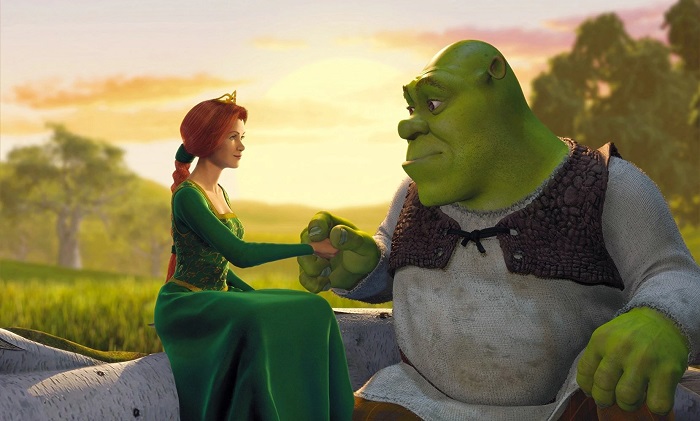
“Shrek” Ethics, Popular Culture, Critics And The Meaning Of “Good”

Shrek

The New York Times today has a feature celebrating the 20th anniversary of “Shrek,” the Dreamworks animated film released on May 18, 2001 that quickly became a box office smash, received wide critical acclaim and went on to win the first Academy Award for best animated feature. Sayeth the Times, “Twenty years later, ‘Shrek’ is still a beloved, offbeat fairy tale whose characters and jokes continue to permeate pop culture, reaching another generation of fans.” There have already been two sequels, with another on the way.

But over at The Guardian, film critic Scott Tobias isn’t looking back on “Shrek” as a cultural watershed, but as a cynical, sloppy, artistic mess. He pooh-poohs the movie with gusto, writing in part,

It’s hard to account for why Shrek hit the cultural moment as squarely as it did – other than, you know, people seemed to enjoy it – or why it will be celebrated in 20th anniversary pieces other than this one. But it’s worth pointing out how comprehensively bad its legacy remains, opening up the floodgates for other major studios to pile celebrities into recording booths, feed them committee-polished one-liners and put those lines in the mouths of sassy CGI animals or human-ish residents of the uncanny valley. Worse yet, it encouraged a destructive, know-it-all attitude toward the classics that made any earnest engagement with them seem like a waste of time. Those once-upon-a-times were now rendered stodgy and lame, literally toilet paper….there’s an excess of anachronisms and buddy-movie riffs from [Mike]Myers and [Eddie] Murphy that have little relation to the backdrop and a woe-is-me soppiness to the love story between two lonely, misunderstood freaks. (Nothing screams “unearned gravitas” like slipping in a cover of Leonard Cohen’s Hallelujah.)…What’s left is an all-ages film that’s somehow more crude and juvenile in its appeals to adults than children. The grownups in the room can snicker knowingly at Farquaad’s name and the repeated references to his penis size while the kids are left with fart jokes and the wanton diminishment of timeless characters and stories. Last year, the National Film Registry added Shrek to the Library of Congress, which seals its canonization, but it’s remarkable how much of an early aughts relic it’s become, an amber-preserved monument to phenomena (Mike Myers, Smash Mouth, Michael Flatley) that hasn’t stood the test of time.

Continue reading

Monday Morning Ethics Warm-Up, 5/10/2021: “Help! Every Ethics Story I Find Makes Me Want To Jump Into My Shredder!”

Remember that Ethics Alarms is dependent on its many scouts, tipsters, fans and friends to keep the content varied and enlightening. As it is I can’t keep up, and having to engage in principled boycotts of unethical news sources (CNN, MSNBC, NPR, Fox News, ESPN, ABC and more) has made research more difficult, since even these blighters of the culture occasionally have something useful to report. Positive stories, those that tell me that society may be heading into the light rather than slithering into the darkness, have been in especially short supply lately, or if they have not, I’m not seeing them.

Speaking of seeing, maybe one reason I am in a rotten mood is that my wife decided that the perfect way to begin the week was by watching the 2008 Canadian film “Blindness,” a smug, would-be ethics film in which much of the world is suddenly rendered sightless by a mysterious pandemic. The movie’s villain is a blind man with a gun, who declares himself “king;” Julianne Moore plays an ophthalmologist’s wife who pretends to be blind so she can stay with her sightless husband as the stricken are rounded up by the government; and the plot has developments like this (from the Wikipedia plot summary):

“A man with a handgun appoints himself “king” of his ward, and takes control of the food deliveries, first demanding the other wards’ valuables, and then for the women to have sex with their men. In an effort to obtain necessities, several women reluctantly submit to being raped. One of the women is killed by her assailant, and the doctor’s wife retaliates, killing the “king” with a pair of scissors. In the ensuing chaos, the building catches fire, with many inmates dying. The survivors who escape the building discover that the guards have abandoned their posts, and they venture out into the city. Society has collapsed, with the city’s population reduced to an aimless, zombie-like struggle to survive.”

Amusingly and predictably, the movie was attacked by organizations representing the blind.

It made me wish I was blind while I was watching it.

1. Wow…the New York Times really is sticking with the debunked “1619 Project” narrative! Nick Rojas writes this in a Times news story:

The Three-Fifths Compromise, an agreement reached during the negotiations in 1787 to create the United States Constitution, found that, for the purposes of representation and taxation, only three-fifths of a state’s enslaved people would be counted toward its total population. It is regarded as one of the most racist deals among the states during the country’s founding.

The Three-Fifths Compromise was not racist, and it is only notorious to the historically ignorant and those who have deliberately misrepresented the facts to advance Critical Race Theory. Giving full representation to slaves in the Southern states would have vastly increased the slave states’ power, and made it more difficult to keep slavery from spreading. Historians are mostly in agreement that the compromise was ultimately in the long-term interests of black Americans and began the process leading to emancipation.

Continue reading

Weekend Ethics Frolics, 5/9/2021: Birthing Persons Day Edition

Frolicking

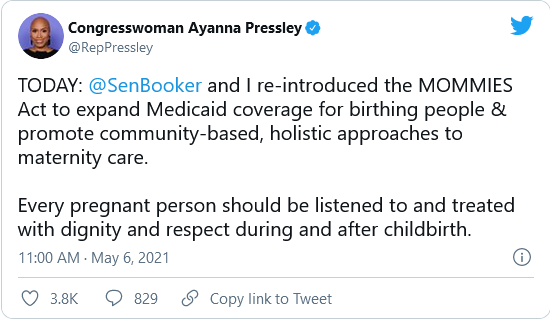
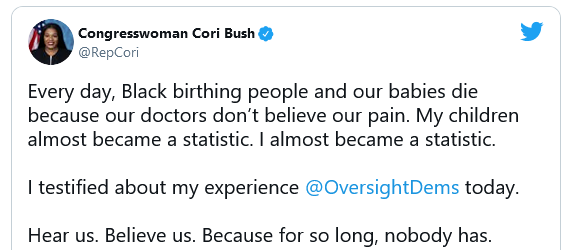
Surely you have heard by now that a few addled Democrats in Congress have begun using the hilarious term “birthing people” to describe mothers. This is in order to pander to the trans population, because the special problems of this tiny minority are worth turning the entire culture inside out and upside down. So far it’s three certifiably silly people on the Hill whose credentials as ethics dunces are unusually strong, even for Congressional Democrats (the links go to signature significance EA posts: Senator Cory “Spartacus” Booker , certifiable Rep. Ayanna Pressley, previously heard arguing that “girls” have a right to attack other girls with knives “uninterupted”, and the spectacularly unqualified Rep. Cori Bush, who was supposedly on Biden’s short list for VP, which is terrifying—yes, even more terrifying than Kamala Harris:

birthing person tweet 1Birthing person 2

This is fascinating from an ethics perspective, specifically the slippery slope. The Great Stupid that has descended over the land, with special focus on progressives, has led to vocal support for so many ridiculous ideas—defunding the police, paying people more to stay out of work than to have jobs, open boarders, electing Joe Biden, packing the Supreme Court, and more—that the once fairly bold line between “progressive” and “batshit crazy” appears to have been erased. At some point, and maybe “birthing people” is it, even left-tilting Americans will wake up and say “Whoa! These are wackos!”

And indeed they are.

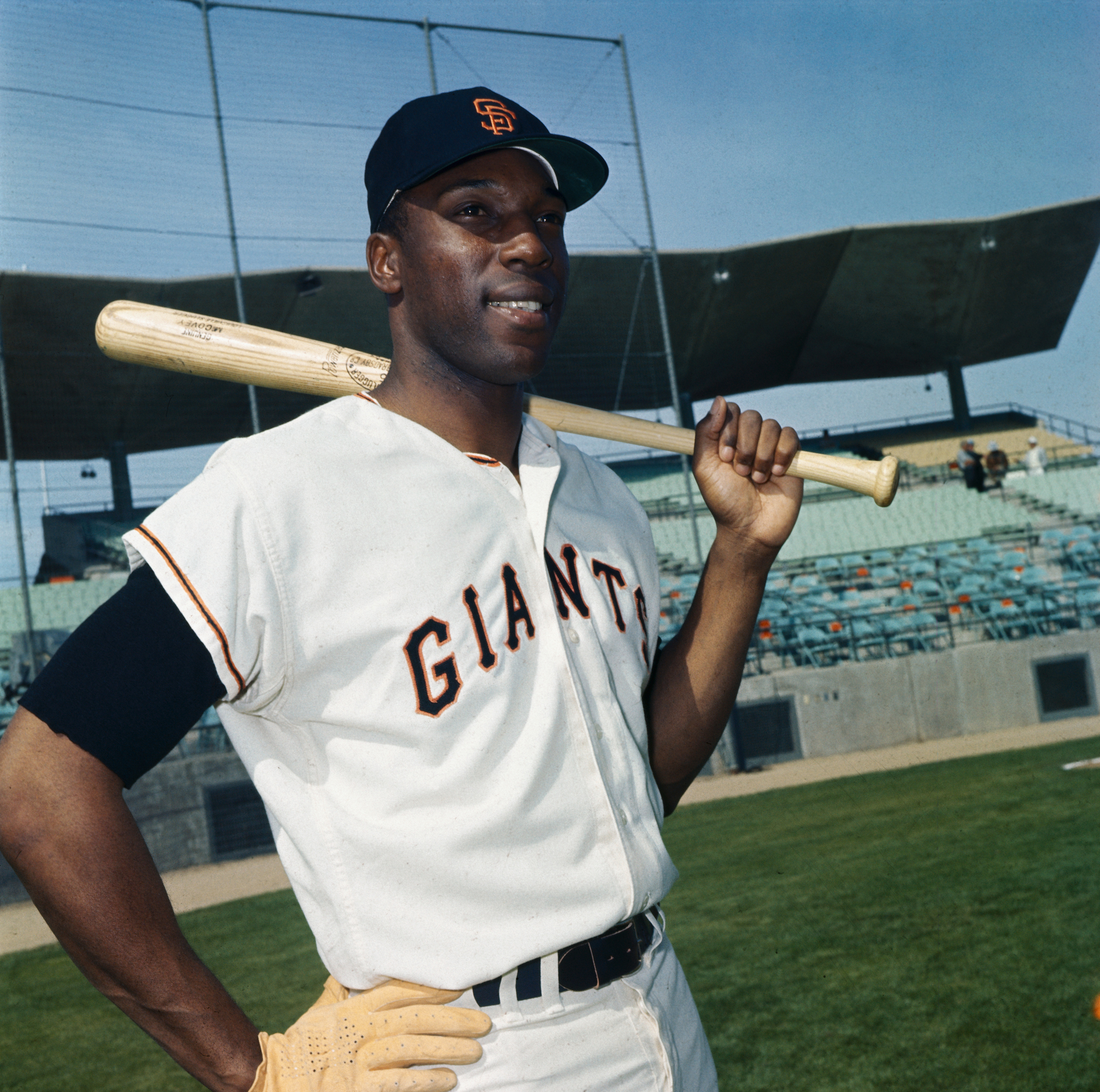
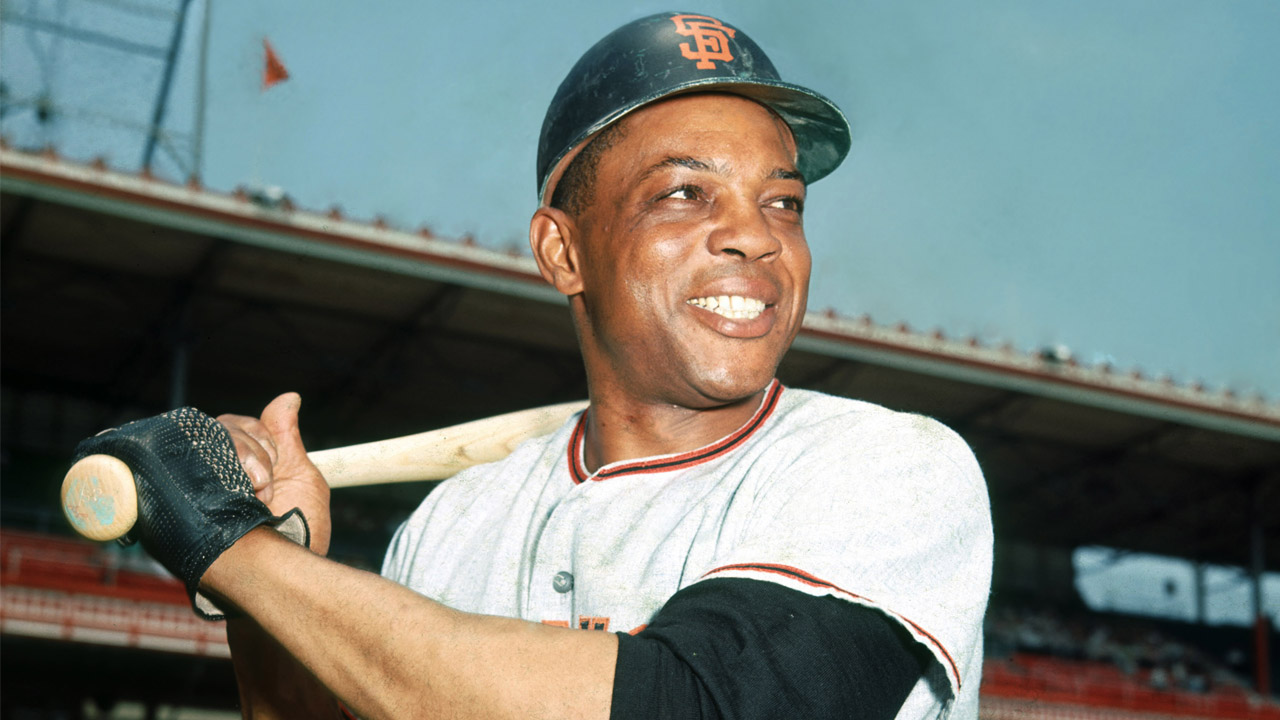
1. Also from the “What an idiot!” files…On baseball and Giants’ Hall of Fame immortal Willie Mays’ 90th birthday last week, House Speaker Nancy Pelosi’s Twitter account posted a picture of Willie McCovey. Willie Mays is a national icon, probably the greatest African-American baseball player of all-time, and any American, especially any American elected official, who does not know what he looks like is too ignorant of America’s culture and history to serve competently. (I’m only exaggerating a little.) Not only is this an insult to the Say Hey Kid (What does that nickname mean, Nancy? Huh? Come on, you represent San Francisco!), it’s the kind of “they all look the same to me!” mistake that white officials are typically savaged for, as when Senator Rubio mixed up Rep. John Lewis with Rep. Elijah Cummings. At least Cummings and Lewis looked a little bit alike. McCovey, who was also a Hall of Fame slugger and who also played for the Giants,

Willie McCovey Holding Baseball Bat

looked nothing like Willy Mays…

Willie-Mays-US-2155529

…and to make the distinction easy for baseball ignoramuses, Willie McCovey is DEAD.

Continue reading

From The “Just Tell Me The Rules” Files: Are Alvin And The Chipmunks Racist?

The song you hear above was the brainchild of Rostom Sipan “Ross” Bagdasarian, a cousin of author and playwright William Saroyan. He performed under the stage name of Dave Seville, and using that name, had a novelty hit in 1958 with “I Told the Witch Doctor.” The song introduced the gimmick of speeding up a human voice to sound high pitched and funny, as with helium. The singing “witch doctor” (it was, of course, “Seville” himself) was returned to vinyl later in the same year as a chipmunk, actually three chipmunks, in a Christmas novelty song, “Christmas Don’t Be Late.” That hit, in turn, spawned sequels, eventually an animated TV series, and finally, two movies.

By current woke standards, having a “witch doctor”—generally thought of as a black member of a primitive African tribe—sounding silly and singing gibberish like “Ooh ee ooh ah ah ting tang walla walla bing bang, ooh ee ooh ah ah ting tang walla walla bang bang” is racially demeaning (rather than what uninfected people would call “silly and harmless”) bordering on racist.

Continue reading

May The Fourth Ethics Warm-Up: The Derby, Booing Mitt, And Other Pastimes…

Besides the terrible pun, May the 4th has great ethical significance in U.S. history. The children of the Sixties have the date seared into their memories as the 1970 tipping point in the Vietnam war protests. Twenty-eight young and badly trained National Guardsmen fired their weapons at a group of anti-war demonstrators on the Kent State University campus. Four students were killed, eight were wounded, and one was permanently paralyzed. The tragedy didn’t make the war any more or less wrong, but it massively shifted sympathies to students, protesters, and the one-time punchline of the previous few years, hippies. Future U.S. activists learned the lesson of Kent State well: if you can goad the opposition into violence, it is a victory for the cause, just and reasonable or not. This makes no sense, of course, other than being the ideal use of the cognitive dissonance scale

But Kent State doesn’t came close to the impact of the Haymarket Square Riot in Chicago, Illinois on this date in 1886. A bomb was thrown at a squad of police attempting to break up a peaceful labor rally that was getting rowdy. The police responded to the bomb by wildly shooting into the crowd, killing more than a dozen people and injuring hundreds. The episode had wide-reaching effects in labor, law and politics, galvanizing the union movement, leading to great political courage by some politicians (like Illinois Governor John Peter Altgeld, who pardoned three arrested activists who hadn’t been executed or died in 1893) and craven expediency by others.

The episode was also the major catalyst in bring a small-time lawyer named Clarence Darrow to Chicago, and inspiring him to be a labor lawyer.

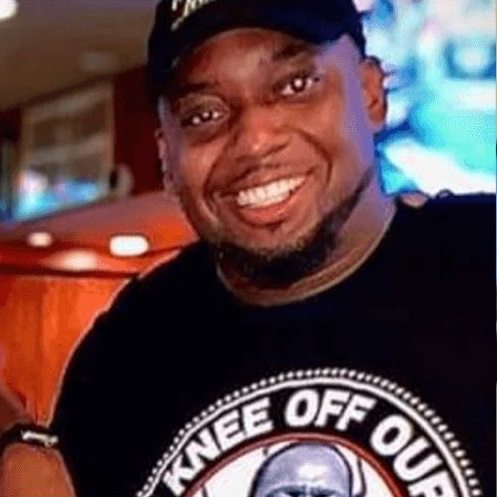
1. More on Brandon Mitchell, the Chauvin juror who couldn’t keep his mouth shut. The photo of Mitchell wearing a Black Lives Matter T-shirt at a protest in Washington D.C. last August…

…has some legal experts…and me…wondering if the chances of the Chauvin verdict being overturned just got a whole lot better. “I’d never been to D.C.,” Mitchell humina-huminaed about his reasons for attending the event. “The opportunity to go to D.C., the opportunity to be around thousands and thousands of Black people; I just thought it was a good opportunity to be a part of something.”

Part of what, exactly, sir?

Brandon also says he doesn’t recall wearing such a shirt. That’s not encouraging regarding his honesty, is it?

Meanwhile, in the story about the latest development in the George Floyd Ethics Train Wreck, the AP writes,

A photo, posted on social media, shows Brandon Mitchell, who is Black, attending the Aug. 28 event to commemorate Martin Luther King Jr.’s “I Have a Dream” speech during the 1963 March on Washington. Floyd’s brother and sister, Philonise and Bridgett Floyd, and relatives of others who have been shot by police addressed the crowd.

Others who have been shot by the police? Floyd was shot too? I did not know that!

Continue reading

Assorted Ethics Items, 4/23/2021: I Can’t Talk Or Eat, But I Can Still Write. And Think, Sort Of…[Finally Corrected!]

Well, THAT was certainly unpleasant…made a root canal seem like the warm embrace of a succubus by comparison…

1. An alternate juror in the Chauvin trial gave an interview. She seems like a pretty rational sort, but two comments support the contention that the trial was not a fair one:

  • “I did tell them that I saw the settlement run across the bottom of the screen one day…I was not surprised there was a settlement, but I was surprised they announced it beforehand.” She also said she understood that civil trial and criminal trial standards were different, but the fact that the city essentially announced that its police were liable for Floyd’s death cut the legs out from under Chauvin’s defense.
  • “I did not want to go through rioting and destruction again and I was concerned about people coming to my house if they were not happy with the verdict.” If any jurors feel that way, it’s not a fair trial.

Continue reading

Saturday Morning Ethics Warm-Up, 4/17/2021: No Good, Good, Good, No Good, and Good

Some baseball ethics notes in italics, since a lot of you don’t care:

  • The Institute for Diversity and Ethics in Sport (TIDES) issued Major League Baseball an overall grade of C+ , with a B+ for racial hiring and a C for gender hiring. (There was nothing about competency and qualifications hiring, for some reason.) The report also praised MLB’s decision to pull the All-Star Game from Atlanta, proving that the organization is a partisan political group using “diversity” as a prop. Baseball should pay no attention to TIDES whatsoever. It is the Southern Poverty Law Center of sports.
  • There was a wonderful example of why baseball needs robo-umps in Wednesday’s game between the Red Sox and the Twins in Minneapolis. At a critical moment in a tie game with the bases loaded for the Twins, Sox pitcher Matt Andriese struck out the last Twins batter for out number three, ending the threat. The umpire, however, said the ball had been fouled into the dirt before bouncing into the Boston catcher’s mitt. The video showed that the bat had missed the ball by several inches, and no foul had occurred. When Red Sox manager Alex Cora came out to protest, the home plate umpire, also the crew chief said, “There’s no way I’ll be over-ruled on that call.” What he apparently meant was that the other three umpires would back him up even though he was obviously wrong, and after briefly caucusing, that’s what they did. Cora was thrown out of the game. Luckily for the umpires, Andriese struck the batter out with next pitch, so the mistake and cover-up didn’t matter. Moral luck!
  • Also Twins related: Twins shortstop Andrelton Simmons issued an articulate tweet about why he was declining to be vaccinated like his teammates, after considering the risks. He tested positive 24 hours later. Also moral luck!

1. NOW you’re telling us???. At 6:57 pm on April 15, I stumbled across this:

Continue reading

Feminist Popular Culture Progress Report: Women Weenies Mostly Banished; Now About That Screaming…

It is remarkable how frequent the “women as helpless weenies” appears in movies and TV shows. A man is engaged in a life-and-death struggle with a criminal, a murderer, a maniac, a wild animal or a monster, and the woman, often a young and healthy woman, just crouches in terror doing nothing more useful than wimpering. I remember this bothered me when I was a child. My mother wasn’t like that; indeed, I’ve never known a woman like that. It’s not just cowardly to be a bystander, it’s stupid. If “her man” loses the fight, what does she think will happen to her?

Over the last several decades of this trope has faded away, and thank goodness for that. It was insulting to women, and to the extent that popular culture influences gender roles in society, the representation of women as helpless damsels who could only wait and pray that their champion prevailed was archaic. The cliche was also boring. One of the better feminist role-models was Marion (Karen Allen) in “Raiders of the Lost Ark.” She could throw a punch and knocked out a German (using aircraft wheel blocks) when he was about to shoot Indiana Jones as he fought off a Nazi goon. Now the woman coming to the rescue of an imperiled man is pretty much standard, even very young women, as in the “It” and the Netflix movie, “Enola Holmes.”

Good. It’s about time.

Continue reading