Saturday Ethics Warm-Up, 12/8/18: Last Weekend Before I Have To Decorate The %^&$! Christmas Tree Edition

Good morning!

1. How can this be? Based on the same documents, the President crowed that Mueller had nothin,’ and the mainstream Trump-hating media crowed that the walls were closing in. It’s a confirmation bias orgy! Charges aren’t evidence, and attempted contacts with a foreign power isn’t “collusion,” and we’ve already talked about the theory that paying off a floozy not to kiss and tell, which is 100% legal at all other times, is a stretch to call and election law violation when the rake is running for President. No such case has ever been brought; it’s dubious whether one would prevail; even if it did, this is a fining offense at most. [ For the record, this is the “resistance’s” Impeachment Plan K, in my view, one of the lamest.]

Both sides are jumping the gun. In the media’s case, it’s more fake new, future news and hype.

2. Stare decisis vs. the prohibition on double jeopardy. In Gamble v. US, just argued before the Supreme Court, the question is whether the federal government can try a citizen for the same crime a state court acquitted him of committing. I’ve always hated the rule that it can (the cops in the Rodney King case were jailed that way), because it seems clear to me that the Constitutional prohibition on double jeopardy (that’s the Fifth Amendment) was intended to prevent such trials. Still,  previous Supreme Court decisions have upheld the convictions.  In the current case, it appears from oral argument that a majority of the current justices agree with me, but are hesitant to so rule because of the doctrine of stare decisis,  which means respecting long-standing SCOTUS precedent.

A ruling to apply double jeopardy would be a ruling against stare decisis, meaning that Roe v. Wade might have less protection than many—including me–have thought. Stay tunes, and watch Justice Kavanaugh’s vote particularly.

3.  Is wanting to/needing to/ actually taking steps to changing one’s sex a mental disorder? There have been a lot of articles about this lately, especially in light of evidence that peer groups, the news media, LGBT advocacy and parents are making many young children want to change their sex before they even know what sex or gender is. The question is itself deceptive, because it pretends that “mental disorder” is anything but a label that can be used or removed with a change of attitude or political agendas. Vox writes,

Major medical organizations, like the American Medical Association and American Psychiatric Association, say being transgender is not a mental disorder. The APA explained this in explicit terms when it stopped using the term “gender identity disorder” in favor of “gender dysphoria”: “Part of removing stigma is about choosing the right words. Replacing ‘disorder’ with ‘dysphoria’ in the diagnostic label is not only more appropriate and consistent with familiar clinical sexology terminology, it also removes the connotation that the patient is ‘disordered.’”

Well, “removing a stigma” is hardly a valid criteria for deciding whether something is a malady or not. What being transgender “is” can’t be changed by what we call it. Recently narcissism was removed from the mental disorder list—that doesn’t change the fact that narcissists see the world and themselves in a way that most people do not, and that this perspective causes them and the people around them a lot of trouble during their lives. The process worked in reverse with alcoholism, where being officially labelled a disease removed a stigma.

I once directed the comedy/drama “Nuts,” which opines that “insanity” is just a view of reality not shared by the majority. It was on this basis that the Soviet Union sent dissidents to mental hospitals. I don’t care what various associations or professionals call these minority positions: we know that they are using bias and political agendas to devise the label. This is one area where a phrase I despise, “It is what it is,” may be appropriate. Continue reading →

The “White Christmas” Ethics Guide (REVISED And UPDATED)

I’m looking at some holiday movies to add to the Ethics Alarms library of annotated classics—no, ethics and “A Christmas Story” are irrelevant, it being a child’s remembrance and hardly literal–but I might as well begin with  revising and revisiting the “White Christmas” guide, which first appeared in 2012. 

I still like the film—my wife hates it—being a fan of all four stars, especially Bing and Danny, as well as the director, Michael Curtiz.  I do like it a bit less each time I see it, mostly from an ethics perspective, and the successive revisions reflect that.

I still get misty when the old general, played by Dean Jagger, gets saluted by his reunited army unit, which has gathered at his struggling, snowless, Vermont inn on Christmas Eve to remind him that he is still remembered and loved. Nonetheless, “White Christmas” is by far the strangest of the Christmas movies, and also the most unethical. Though everything works out in the end, the characters in the sloppy plot spend the whole movie lying, extorting, betraying, manipulating and generally mistreating each other, always with no recriminations at all, and usually with no consequences either.

In his addendum last year to my original post, Michael West found the film foundering from the second the opening credits ended. He began with the script for the opening scenes—General Waverly* is played by Dean Jagger; Captain Bob Wallace is Bing Crosby, and Private Phil Davis is Danny Kaye:

Opening Scene in the Jeep as they hear the Entertainment show.

GEN CARLTON (To Adjutant): What’s this all about, Captain?

ADJUTANT: A little entertainment for the men, sir. Tonight’s Christmas Eve.

GEN CARLTON: These men are moving up tonight, General Waverly. They should be lined up for full inspection!

GEN WAVERLY (To Carlton): You’re absolutely right. (To Adjutant): There’s no Christmas in the Army, Captain.

ADJUTANT: Yes, sir.

GEN WAVERLY (To Carlton): There’s always a slip-up or two during a change in command. The men get a little loose. But I know I’m leaving them in good hands.

GEN CARLTON: (To Waverly): Thank you, General. (To Driver): Sergeant, take me to headquarters immediately! We’ll have those men turned out on the double!

The Sergeant looks at General Waverly.

GEN WAVERLY: Goodbye, Sergeant. Take the short cut.

SERGEANT: Yes, sir!

The jeep pulls off and makes a half circle. The Adjutant makes a gesture, as if to stop it. Waverly stops him. The Adjutant turns to him.

ADJUTANT: That’s not the way back to headquarters!

GEN WAVERLY: Joe, you know that, and I know that, but the new General doesn’t know it. Or he won’t for about an hour and a half.

ADJUTANT: That Sergeant’ll be a private tomorrow!

GEN WAVERLY: Yes… isn’t he lucky?

SCENE CHANGE TO ENTERTAINMENT SITE:

CAPTAIN BOB WALLACE and PRIVATE PHILIP DAVIS are doing a number on stage to entertain a mass of 200 or so soldiers. GENERAL AND ADJUTANT just starting to take seats, off to one side where they are not noticed by the performers. ABOUT 6 SOLDIERS seated in audience. They look off, see General, start to rise. The General notices them – motions for them to sit down again, indicating he doesn’t want attention called to himself. Captain Wallace sings “White Christmas”.

CPT WALLACE: Well that just about wraps it up, fellas. It’s certainly too bad General Waverly couldn’t be here for this little yuletide clambake ’cause we really had a slam bang finished cooked up for him. I guess by now you know the Old Man’s being replaced by a new Commanding General fresh out of the Pentagon…it’s not a very nice Christmas present for a division like us that’s moving up. The Old Man’s moving toward the rear. That’s a direction he’s never taken in his entire life. Well all I can say is we owe an awful lot to General Waverly and to the way…

GEN WAVERLY: ATTENTION!

Every man is at attention and every head has turned to where General Waverly has taken up a position near the front of the platform.

GEN WAVERLY: Captain Wallace, who’s responsible for holding a show in this advanced area?

CPT WALLACE: Well sir as a matter of fact it was…

PVT DAVIS: …me Sir! It was my idea sir. Uh, I mean when you gotta entertainer sir of the caliber of Captain Wallace, sir…I mean sir…it’s Christmas Eve, sir. And well, sir, I mean that if you were in New York, Sir, you’d have to pay six sixty or even eight eighty to hear a great singer like Captain Wallace, sir.

GEN WAVERLY: I’m well aware of Captain Wallace’s capabilities. Who are you?

PVT DAVIS: Er…Phillip Davis, sir. Private First Class, sir.

GEN WAVERLY: Well, at ease, Davis.

DAVIS: Yes, Sir!

WAVERLY: I said, At Ease!

DAVIS: Oh, uh, Yes, sir, thank you sir.

WAVERLY: This division is now under the command of General Harold G. Carlton, and I don’t want anyone to forget it — not that he’ll let you. He’s tough — just what this sloppy outfit needs. He’ll have you standing inspection night and day — you may even learn how to march. And if you don’t give him everything you got, I may come back and fight for the enemy. Merry Christmas!

ASSEMBLED MEN: Merry Christmas!

GEN WAVERLY: Well, I guess, all I can say is, how much I…what a fine outfit…How am I going… (to Wallace) don’t just stand there, how am I going to get off…?

CPT WALLACE: We happen to have a slam-bang finish…He turns to the musicians, gives the downbeat.

They play “THE OLD MAN,” which is sung by the entire outfit.

ARTY FALLS IN VICINITY…Soldiers crouch…then finish singing.

GENERAL AND ADJUTANT DEPART.

MORE ARTY FALLS, ON SITE…Men scatter. Captain Wallace and Private Davis try to get men to cover. Private Davis man handles the Captain to cover as a wall collapses where he had just been standing.

For starters, we see a mass of soldiers in an open air situation within effective range of enemy artillery fire. A single well-placed artillery round could eliminate approximately 200 soldiers — more than an entire World War 2 Infantry Company (whose authorized strength is about 190-195 men; but given this stage of the war and attrition, this could easily be 2-3 companies of EXPERIENCED soldiers). Someone in the chain of command KNOWS this to be true and authorized this gathering despite the obvious danger. We know for certain that the Adjutant knows what the gathering is, as he answers in line #2 precisely what is going on. But an Adjutant has no command authority, so someone else authorized the gathering. We have to assume General Waverly didn’t know until the Adjutant answered General Carlton’s inquiry based on General Waverly’s later questioning of Captain Wallace. We can’t ever be sure who actually made the decision to have the entertainment occur at that location since Private Wallace, breaking an incredible number of military bearing protocols, interrupts a Captain, to answer a General. This Private, Private Davis, accepts all responsibility for the decision to expose upwards of 2 companies-worth of men to devastating artillery fire.

This information leaves us with two options: Either it really was Private Davis’s idea to have the venue at that location, in which case, Private Davis’s commanding officer and the various commanding officers AND EVERYONE ELSE in their chain of command are colossally INEPT for agreeing to the idea. The second option is that Captain Wallace DID indeed make the decision to have the venue at that site, and now he’s standing there like a lump allowing a subordinate to cut him off mid-sentence, a military no-no, and then allowing the subordinate to take the heat of any potential censure that was forthcoming. Of course, since he’s a Private trying to cover for his boss, he’ll say anything, so I won’t even ding him for the horrible excuse that 200 men should be exposed to German artillery fire because CPT Wallace is a famous singer – we all know it’s worth dying to hear Bing sing…

But of course, even General Waverly doesn’t seem to mind that 200 of his soldiers are idling around with a population density rivaling that of Bombay, just one artillery strike away from having more in common with mist than with humanity. When HE discovered what was going on by the Adjutant’s answer in line #2, he should have immediately ordered the soldiers disperse and had about two dozen commissioned officers who had every ability to stop the farce standing in his headquarters receiving the most royal dressing down of their careers and maybe a few firings.

What possibly does General Waverly think outweighs the need to disperse a mass of soldiers within effective range of artillery? Why, a Christmas music concert of course! It is Christmas Eve, after all!  Now, the Army does a really good job bending over backwards for the morale, welfare, and recreation of soldiers, much more than was ever considered a military precedent. BUT, we learn from the dialogue, the entire division is on orders to “move up tonight.” This somewhat vague description could range anywhere from simply occupying a section of the line to relieve a unit coming back or it could mean they are initiating a major offensive operation. We learn, however, that this movement, whatever it is, is occurring in mere hours. Having experienced large movements of soldiers myself, I know that if a Division is stepping off in a few hours, the men down to the platoon level are ALREADY in their assembly areas doing final preparations. This is apparent to the new commander, General Carlton, who is astonished that the men aren’t doing their final checks of equipment and gear.

Which leads us to the next bit: General Waverly is none too concerned about the unjustifiable exposure he’s tolerating of his…well, now General Carlton’s men…as we know Waverly has just been replaced by General Carlton, who, trope-tastically, we learn is one of those wretched new leaders who is probably horribly incompetent. The movie lets us know early on that he’s a despicable piss-and-vinegar type when he is mad that the men are having Christmas entertainment. Never mind that we now know that Carlton is severely concerned about a huge mass of men within artillery range open and exposed as well as not anywhere near where they ought to be to initiate movement of the entire Division.

The movie also lets us know he’s a jerk because it pushes the whole “fresh out of ________” trope. The usual way this plays out is the “fresh out of West Point” or “fresh out of ROTC” smear applied to new Lieutenants who assume Platoon Leadership with little to no actual experience. Unfortunately, this doesn’t exactly play out on the General level. Yes, the General ranks expanded rapidly during World War II, but an individual didn’t become one by being a complete buffoon (and yes there are always exceptions — but General Carlton, who seems to have a sense of urgency that no one in Waverly’s sphere of influence seems to possess, does not seem to be the exception).

Never mind, we’ll go on with the traditional “smearing of the new guy who replaces the beloved experienced leader.” In the original script I copied and analyzed, the dialogue was OVERTLY insubordinate and actively undermining of the men’s confidence in their new commander. In the corrected dialogue, though cleaned up a lot, there are still hints of undermining the new guy’s authority before he even makes a decision as the commander. There’s General Waverly’s smart-ass “There’s no Christmas in the Army” jab as a response to Carlton’s concern about the location and timing of the entertainment event — which he says “knowingly” to the Adjutant, who, we must remind ourselves no longer works for the Waverly but for Carlton.

There is the extra-rotten move when Carlton, recognizing the imminent danger as well as the horrifying breach of schedule in implementing the plan of operations, indicates he plans to move to Headquarters immediately to begin rectifying the situation and is undermined either by the Sergeant driving Carlton or by General Waverly himself. The driver decides to undermine Carlton’s ability to fix the problem by taking an extra long route back to headquarters. Between a driver and a singing-private, this division is apparently full of the lowest-ranking guys thinking they know best when to leave a behind-the-schedule division exposed to enemy fire just so they can catch a few tunes from Bing. The only other possible explanation is that General Waverly, himself, with a nod-nod wink-wink, authorized the driver to follow the reckless plan to take an hour-and-a-half detour, which we assume will require another hour-and-a-half correction before Carlton can get to Headquarters. Just as with the Adjutant before, let’s again consider that this driver no longer works for Waverly, but for Carlton The Sergeant is being openly insubordinate.

Even if Waverly was not responsible for the three-hour diversion, he immediately became complicit when the Adjutant, in an apparent realization who his new boss is (Carlton), moved to correct the driver but was stopped  from doing so.by General Waverly

The last bit of insubordination and undermining  the chain of command comes from the subtle digs Captain Wallace makes during his speech. His “Fresh out of the Pentagon” disdain undermines faith that Carlton may be a good commander, followed by the snide “not a nice Christmas present” for the division is enough to get any soldier censured. Soldiers and peers WILL whisper about their leaders, but an open act of insubordination like that? Stamped out like a spark in a dry forest… I won’t even address the fact that it’s a COMMISSIONED OFFICER making the openly insubordinate comments and a CAPTAIN no less. He would be dismissed and transferred immediately.

But hey, I suppose Waverly recognized all their rotten conduct when he feebly tried to make things right by saying “hey guys, he’s a good commander, never mind all the stuff we said before and our attitudes we displayed before!” A few moments later, just to do Carlton some justice, the artillery shelling arrives.

Then the movie moves into its funny guilt extortion phase. Army private Phil Davis (Danny Kaye) rescues his smooth-singing captain, Bob Wallace (Bing Crosby) from being crushed by a falling wall in a World War II bombing raid, and injures his arm in the process. (It’s not a plot feature, but the battlefield set for the entire opening sequence is itself unethically unprofessional by being chintzy even by musical standards: it looks like they are filming a skit for a Bob Hope Christmas Special.  I thought it was lousy when I saw it as a kid. Michael Curtiz deserved better; the man directed “Casablanca.” Show some respect.) Phil then uses Wallace’s debt of gratitude to coerce him into accepting the aspiring comic as a partner in Wallace’s already successful civilian act. This is obviously unfair and exploitative, but Bing accepts the ploy with good spirits, and the next we see  the new team of Wallace and Davis knocking ’em dead and rising in the ranks of stage stars.

The act looks terrible. Bing was never much of a dancer, a game hoofer at best, and you don’t feature the greatest voice in the history of American popular music by having him sing exclusively duets. Nevertheless, all we see of the team’s rise is both of them singing and corny dancing inferior to what Bing did with Bob Hope in the “Road” movies.

Never mind. They have a show on Broadway, and as a favor to a mutual army buddy, they agree to watch the boonies nightclub act of “The Haynes Sisters” (Rosemary Clooney as Betty, and Vera-Ellen, of wasp-waist fame, as kid sister Judy. Did you know that in the “Sisters” number, Clooney sang both parts? ). Bing is immediately smitten with older sister Rosemary, but there is a tiff over the fact that younger sister Judy fooled them into seeing their act: she, not her brother, had sent the letter asking for a “favor.”

This is the first revealed of many lies woven into the script. This one is a double beach of ethics: Judy uses her brother’s name and contacts without his permission or knowledge, and lures Wallace and Davis to the night club under false pretenses.

Bing dismisses Judy’s cheat by noting that everyone “has an angle” in show business, so he’s not angry. Rosemary is, though, and reprimands Bing for being cynical. That’s right: Vera/Judy uses their brother’s name to trick two Broadway stars into watching their little act, and Rosemary/ Betty is annoyed because Bing/Bob (Bing’s bandleader, look-alike, sound-alike brother was also named Bob) shrugs off the lie as show business as usual. True, Betty is technically correct to flag the Everybody Does It rationalization, but shouldn’t she be grateful that Bob isn’t reaming out the Haynes sisters and leaving the club in a huff? OK, nice and uncynical is better than nice and cynical, but Bob is still giving her and Judy a break. As the beneficiary on Judy’s angle, Betty is ethically estopped from complaining that Bing/Bob’s reaction was “I don’t expect any better.” I can, she can’t. He should expect better: accepting unethical conduct allows it to thrive.

As we soon find out, however, Betty often flies off the handle.

Continue reading →

Morning Ethics Warm-Up, 12/6/18: The Defended And The Indefensible

Goooood Morning!

Baby, it’s stupid outside…

1.PLEASE stop making me defend Hillary Clinton. In a “controversy” reminiscent of the mainstream media’s hyped and manufactured criticisms of every word. sigh, look or twitch by President Trump, the conservative web is in an uproar over Hillary Clinton’s “snub” or Melania Trump yesterday. Hillary didn’t wave at Melania, you see. She just “nodded” her head. Good Lord, leave the poor woman alone. She’s obviously not well. We know she’s bitter, angry and depressed. Now she and Bill are facing sparse audiences on their ill-advised tour together. So she didn’t greet Donald Trump’s spouse with enthusiasm at a funeral—so what? If she had, everyone would be saying that she’s a hypocrite and a phony. She is, of course, but that’s not the issue.

Fake snub.

2. Oh, fine, now I have to defend Natalie Portman… Inexplicably acclaimed actress Natalie Portman apologized to has-been singer/actress/ sex-symbol Jessica Simpson after  Simpson said Portman was slut- shaming her. Portman said in an interview with USA Today that as a teenager she was”confused” by a sexy photo of Simpson “on the cover of a magazine saying ‘I’m a virgin’ while wearing a bikini.” Portman said, “Like, I don’t know what this is trying to tell me as a woman, as a girl.”

This triggered a long rebuke by Simpson on social media:

“I was disappointed this morning when I read that I ‘confused’ you by wearing a bikini in a published photo taken of me when I was still a virgin in 1999. As public figures, we both know our image is not totally in our control at all times, and that the industry we work in often tries to define us and box us in. However, I was taught to be myself and honor the different ways all women express themselves, which is why I believed then – and I believe now – that being sexy in a bikini and being proud of my body are not synonymous with having sex. I have always embraced being a role model to all women to let them know that they can look however they want, wear whatever they want and have sex or not have sex with whomever they want. The power lies within us as individuals. I have made it my practice to not shame other women for their choices. In this era of Time’s Up and all the great work you have done for women, I encourage you to do the same.”

Portman immediately backed down, saying her comments were not meant as a jab toward Simpson, saying, “I would never intend to shame anybody and that was absolutely not my intention. I was really talking about mixed media messages out there for young women and completely apologize for any hurt it may have caused because that was definitely not my intention. What I said was I was confused by mixed messages when I was a young girl growing up, and there are a lot of messages for how women should be, and women should be allowed to do whatever they want.”

The issue Portman raised was and is a legitimate ethics conflict, and should be discussed openly by women, men, and culture. Continue reading →

Mourning Ethics Warm-Up, 12/5/2018: Fredo, Tom Arnold, Rep. Ocasio-Cortez, Senator Hirono, Fredo, Joe Biden, And Camille Paglia—Who Doesn’t Belong In This Group?

Good Afternoon…

1 A Big Lie is born!  The fact that Tom Arnold married Rosanne Barr tells me all I need to know about his intelligence and judgment, though it did get him a single good movie role in “True Lies,” which I never could completely enjoy because the her husband’s abuse of Jamie Lee Curtis’s character seemed so cruel and offensive, but was still played for laughs. That movie is decades old, but Arnold is still holing on to shred of celebrity by being a full-time President Trump troll,  thus getting him the love and fealty of thousands of like-minded Twitter users. 250,000 of them.

Last week, he tweeted that “80% of gun owners shoot themselves or members of their own families.” His tweet was shared all over social media, and not entirely by those who used it to demonstrate beyond the shadow of a doubt that Arnold is a moron. Thus it will believed by many Americans, quoted by the anti-gun addled, and generally make Americans even dumber on this topic than they already are.

2. When will they ever learn?  Or un-learn? The University of Montana is now featured as the Foundation for Individual Rights in Education’s (FIRE) “Speech Code of the Month.” It earned the honor by declaring in its Student Code of Conduct’s ‘Statement of Responsibility’  that all members of the campus community “have the personal responsibility to promote an atmosphere of civility,” and that discussions “should never become mean, nasty or vindictive.”

Of course, since the administrators of a committed left-biased institution will decide what is “mean” or “uncivil,” both subjective standards, you can guess whose speech will be chilled by this.

When did freedom of expression stop being a liberal value? Presumably it began when progressives stopped being able to defend their most extreme conduct, positions  and beliefs…

Continue reading →

“Rudolph The Red-Nosed Reindeer” Ethics

Yes, it’s come to this.

The last time I had to write about attacks on the children’s Christmas song “Rudolph the Red-Nosed Reindeer,” it involved a school capitulating to a single Jewish parent who complained that teaching students the song indoctrinated kids into Christianity. (Naturally, the school capitulated, and banned Rudolph.) This time the complaints involve the ancient Rankin-Bass Puppetoon version of the story, which invades our TV sets every Christmas season. Here’s the account of quirky blog Victory Girls, after citing various tweets and blog criticism of the show from newly woke Americans:

Santa is a big, fat jerk and a bigoted, d*ck, apparently. Rudolph’s father was “abusive”. Comet was a terrible coach. Yukon Cornelius is a gun-toting redneck who engages in animal cruelty. GASP! And who isn’t triggered by Burl Ives’ character, Sam the Snowman?! He’s ALL WHITE for crying out loud! If you sing along to any Burl Ives’ Christmas Carols, you might be a white supremacist. Delete all Burl Ives Christmas tunes from your Apple playlist STAT! Never mind, I forgot. These folks would never know how to have a Holly, Jolly Christmas if someone threw it at them and gave it to them gratis and called it a college education.

As a kid in the 70s and 80s, I would look for its listing in the TV Guide. Rudolph the Red Nosed Reindeer was one of my most beloved, go-to Christmas classics and still is. But now, in the days of woke, the story behind Rudolph the Red Nosed Reindeer is “seriously problematic” and those who don’t see it this way have “serious problems”. Those people are, according to the hyper-vigilant SJWs, Conservatives. Whilst making tongue-in-cheek social justice commentary about Rudolph, they have neglected the key takeaways of this story from years ago. Although he was bullied, left out of all of the reindeer games, unaccepted, different-quirky even-young Rudolph was able to overcome and do something absolutely great. He saved the day! He made kids smile. And his story is magical. He didn’t stomp his hooves and whine and go to a “safe space” and resign himself to life being too hard as a red-nosed reindeer and call it quits. He didn’t blame others and become a victim. He didn’t expect special treatment or demand it from his peers because he was different. He may have shed some tears and that’s okay. When given a challenge, he rose to the occasion and excelled and proved his biggest critics and his bullies wrong.

Continue reading →

Mid-Day Ethics Warm-Up, 11/29/18: Slime, Blather, Theft And Trolling

Good Afternoon…

For me, anyway: I woke up feeling healthy for the first time in 17 days.  Now the day’s ethics stories will make both of us feel sick. I’m sorry.

1. The Sliming. The news media is determined, in the absence of any verified or verifiable evidence, to continue sliming Brett Kavanaugh. The Washington Post placed the story about his return to coaching  girls’ basketball in its “Public Safety” section. Nah, there’s no mainstream media bias!

This below-the-belt innuendo that the Supreme Court Justice is a threat to the young women on his team was caught, criticized, and the Post claimed it was an accident. You know, if journalists played it straight, and  had any credibility as objective, fair commentators, such an explanation would be credible. But they don’t, and it’s not.

Then there was the Huffington Post and AOL, which ran this story, headlined “Ford Is Still Receiving Death Threats, Kavanaugh Is Back To Coaching Basketball.”

The innuendo here is that there is some kind of injustice that the accused gets to resume his life while the accuser’s life is still disrupted. No, one who is accused should always be able to return to his life if the accusation is unproven and unconvincing, though that’s often not the case, and not the case with Kavanaugh as his continued sliming by the Left-wing media demonstrates. As for Blasey-Ford, no one should endure death threats. This is, however, a false dichotomy. There is no evidence that Kavanaugh did anything wrong, much less that he is a sex offender. My view is that Blasey-Ford, for political reasons, raising a high school episode that she could not confirm and didn’t recall herself for 30 years in order to discredit an adult judge of sterling reputation and credentials was unethical, irresponsible, and unfair.

2. The Sliming, cont.: Mark Twain Prize Division. Julia Louis-Dreyfus, inexplicably awarded the Kennedy Center’s Mark Twain Prize as the individuals who has “had an impact on American society in ways similar to” Twain—Julia Louis-Dreyfus? Seriously?—-used her acceptance speech to display her Twain-like rapier wit and take cheap shots at Justice Kavanaugh. (They are too idiotic and unfunny to warrant repeating.) It takes a lot of gall for someone to be accusing a public figure of sexual assault at any event sponsored by the John Fitzgerald Kennedy Center, or with Kennedy anywhere in the name. Indeed, it took some gall for Dreyfus to even accept the award. I searched her resume to find any evidence that she ever wrote a funny line or witticism of her own, which should be the criterion and usually has been, even with wan selections like Tina Fey, a minor wit if there ever was one. The precedent for Louis-Dreyfus would be Carol Burnett, who also is just a comic actress whose wit comes from other artists, though she bestrides the like of Fey and Louis-Dreyfus like a Colossus. Sad and politically incorrect to admit, but comedy just isn’t a field where women seem to excel, so once again, the quest for diversity involves a compromise in values. Continue reading →

Morning Ethics Warm-Up. 11/27/18: Unethical Perry Mason, Icky Science, Race Card-Playing Democrats, Intrusive Bosses And Slanted History

Good morning…

1. They are showing “Perry Mason” reruns again on cable TV. That was the show that made my generation want to be lawyers, under the delusion that a defense attorney could regularly prove a criminal defendant innocent. (Pssst! They are almost all guilty.) The show holds up, but boy, Perry was sleazy. In an episode I watched while I was sick, he had his investigator tell the hapless prosecutor, Hamilton Burger (Ham Burger to his friends) that he had found an incriminating piece of evidence that proved someone other than Perry’s client had committed murder. Ham relied on the information and got the killer to confess once he was faced with the production of the “smoking gun.” But Perry’s investigator hadn’t really found anything.

Having one’s agent lie to the state prosecutor is a serious ethics breach. Perry also caused the DA to tell a falsehood to get the confession, though Burger wasn’t lying, since he believed Perry’s contrivance. Prosecutors are no more allowed to lie than other lawyers, but when they do lie “in the public interest,” they seldom get more than a slap on the wrist from courts and bar ethics committees, if that. Burger didn’t seem very upset that Perry conned him, because the real killer was caught. The ends justifies the means, or did in “Perry Mason.”

2. Ick or ethics? A Chinese scientist claims that he had successfully employed embryonic gene editing to help protect twin baby girls from infection with HIV. We are told that bioethicists in China and elsewhere are reacting with “horror.” Writes the Times,

“Ever since scientists created the powerful gene editing technique Crispr, they have braced apprehensively for the day when it would be used to create a genetically altered human being. Many nations banned such work, fearing it could be misused to alter everything from eye color to I.Q….If human embryos can be routinely edited, many scientists, ethicists and policymakers fear a slippery slope to a future in which babies are genetically engineered for traits — like athletic or intellectual prowess — that have nothing to do with preventing devastating medical conditions.”

As with cloning, my view on this controversy is that a new technology does not become unethical because of how it might be used. That unethical use will be unethical, and that is what needs to be addressed when and if the problem arises. (Airplanes could be used to drop atom bombs!) The fear of “designer babies” also seems to be an example of “ick”—it’s strange and creepy!—being mistaken for unethical. Making stronger, smarter, more talented and healthier human beings is not in itself unethical, even if it is the stuff of science fiction horror novels and Josef Mengele’s dreams. Continue reading →

Bill Robinson, Fred Astaire, And The Good “Blackface”

We recently came through the usual Halloween bag of “blackface” controversies, and Ethics Alarms, as it has before, tried to guide the discussion to the material distinctions that social justice warriors, who strategically deal in absolutes when seeking power through real and contrived offense, refuse to acknowledge or are intellectually incapable of doing so. The short version of the Ethics Alarms message: make-up for legitimate theatrical purposes isn’t “blackface,” isn’t “racist,” and shouldn’t be object of knee jerk condemnation based on emotion or ignorance.

Today Turner Movie Classics showed “Swing Time,” the 1936 musical that is probably the high water mark in the Ginger Rogers-Fred Astaire canon. It has the best song (“The Way You Look Tonight”), the best novelty scene (Astaire pretending to be a klutz in a dance lesson with Ginger, then shocking her and her boss—and saving her job— by showing “what a great teacher she is” by dancing, well, like Fred Astaire) and arguably two of the best dances by the two, “Never Gonna Dance” and “Waltz in Swing Time.” The film also contains a controversial “blackface” number, “Bojangles of Harlem,” in which Fred pays homage to two great black tap dancers who were teachers and inspirations for him, Bill “Bojangles” Robinson and John Bubbles. Local TV stations have long been reluctant to show “Swingtime” because of guaranteed complaints that the number is racist, or, if they cut the number (which is unconscionable), complaints pour in from film and Astaire fans that they have defaced a classic out of misplaced political correctness.

If one argues that the number is “racist” because of Fred’s make-up, then one is necessarily arguing that no white performer can ever offer an admiring  salute to an African-American great by emulating him. Astaire’s choreography (by Hermes Pan) contained specific references to trademark steps and gestures by both Bubbles and Robinson, though more of the former than the latter. (Some would say, maybe even Fred, that this was because he didn’t dare set himself up to be compared to Robinson, whom many regard as the greatest tap-dancer of them all.) Blackface, as typified by minstrel shows, was a burlesque of negative black stereotypes. There isn’t a hint of this in Astaire’s number: he wears dark make-up because he is honoring two contemporary black dance stars who he knew, learned from, and respected. The make-up is the epitome of a legitimate theatrical device, and racially demeaning neither in intent nor effect. Those who see it as such are either deliberately misconstruing the number, or don’t know what they are talking about. (There is an unfortunate racially demeaning set piece that appears for a couple of seconds at the start, a large caricature of exaggerated black features. You can take the film out of 1936, but you can’t take 1936 out of the film.)

The ironic part of the effort to quarantine “Bojangles of Harlem” is that the number is one of the few reminders in our culture of who Bill Robinson was, and—here’s Jack on his “duty to remember” and cultural literacy soapbox again–he was an important figure in American theatrical, cultural and civil rights history that should be remembered.  Instead, Robinson is almost completely forgotten: I bet most of the NAACP members who get up in arms when TMC shows “Swing Time” have no idea how significant Robinson was, and the contributions he made to art and society. Continue reading →

Ethics Alarms Sheepishly Presents Rationalization #69: John Lyly’s Rationalization, Or “All’s Fair In Love And War”

Why sheepish? Well, for an authority on rationalizations, it’s pretty embarrassing to have one of the most famous and oldest rationalizations of them all not appear until the 91st entry on a list being compiled for ten years.

Most people would guess that the old saying comes from Shakespeare. Nope: household name John Lyly, a poet, included the idea in his novel “Euphues: The Anatomy of Wit,” published in 1579, about ten years before the Bard wrote his first play. The novel recounts the romantic adventures of a wealthy and attractive young man, and includes the quote “the rules of fair play do not apply in love and war.”

As often happens, I stumbled on this prominent hole in the list while on another mission. A reader had questioned my criticism of George Bailey and his mother in the Ethics Alarms guide to “It’s a Wonderful Life,” in which they plot to snatch the lovely Mary (Donna Reed) away from George’s obnoxious  (“Hee haw!!”) old childhood friend and wheeler-dealer, Sam Wainwright. The reader’s argument was that Mary and Sam had made no commitment, and that she was obviously looking for a better match, so she was fair game for George. This sent me back to the movie, which I watched again last night. The key scene is this one: George is talking to his mother party for younger brother Harry and his new bride… Continue reading →

The “Charlie Brown Thanksgiving” Scandal

Some people are now conditioned to see racism in everything, and they are a menace to society, sanity, and the pursuit of happiness.

But I’m getting ahead of myself…

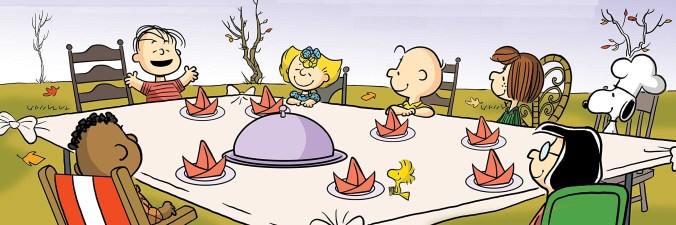
What does it mean that the above scene from ” A Charlie Brown Thanksgiving,” first aired on November 20, 1973 and every year since, suddenly struck some Americans as “racist” in 2018?

Hint: it doesn’t mean that the public is becoming more “woke” to actual racism in America. It means that the relentless effort by one segment of society and many in the news media to use the accusation of “racism” as a political wedge and a weapon to achieve power has officially reached the most dangerous level yet, and is gradually poisoning society. The idea is to make virtually anything potentially “racially insensitive”—choice of words, clothing, casting in TV shows, law enforcement, voting, socialization choices, literally anything and everything, including innocent composition choices in animated cartoons. The objective is to produce fear….fear of making a mistake, fear of offending anyone with hypersensitivity to racial slights, real or imaginary, fear of being labeled guilty of “racism,” which is now the worst crime on earth. This is a sick development that will create a sick society and a dysfunctional culture.

Here is how one critic describes the evidence of racism in the above picture:

“Franklin, the one and only black friend in the group, is seated by himself on one side of the table while the other is crowded with the rest of the friends. On top of that, he’s sitting in a lawn chair as opposed to everyone else’s proper furniture.”

This is deceit and trouble-making:

  • There are six human beings at the table, one of whom is black. In fact, the diversity exceeds the percentage of blacks in the U.S. population. There is nothing racist about him being “the one and only.”
  • Franklin is not sitting “by himself.” He is sitting at the same table with his friends as a welcome guest at a community gathering. Is Linus, who also has one side of the table to himself, sitting “by himself” too? No, he’s a member of the group, at the same table as his friends. Is Marcy, at the opposite end, sitting “by herself?” No, she is also sitting with the group, just like Franklin.
  • Is having one side of a communal table considered some kind of insult? Not at any table I’ve been seated at. I love having a side to myself. It is also an advantage to be able to look at your family and friends across a table, rather than to have to talk to them by turning your head and craning around. There is a strong argument that Franklin is being treated with special consideration.
  • Why did the artist set up the table like that? I guarantee it was not to make a racist statement. How can I guarantee that? I guarantee that because 1) the “statement’ would be idiotic 2) because nobody out of millions of viewers saw any such statement for four decades 3) because if you wanted to be hostile to blacks, you could just skip Franklin. Franklin, a minor, (indeed transparently token) “Peanuts” character added to the comic just five years earlier, is at the gang’s celebration in place of Schroader, Violet, Pigpen, and even Lucy, all more prominent characters. So what’s the theory, that the cartoonists gave the black kid a place at the table over major, long-standing characters in order to insult him? How racially paranoid do you have to be to think like that? The answer is “pretty damned paranoid,” and that’s the state of mind malign political forces here want to promote.
  • Here’s why the table was set like it was:

Continue reading →