Holiday Ethics Assigment: Quick! Watch These 25 Great Old Ethics Movies Again Before You Go Bonkers Too!

movie-theater

I am compiling a new list of great ethics movies to help those troubled by the recently completed Presidential campaign, the election and its aftermath. I haven’t decided whether to reveal it piecemeal, or collectively as I have before, but I do need to begin by presenting the previous list of 25, actually the combination of several previous posts. Ethics films I have covered individually since those lists debuted, like Spotlight and Bridge of Spies, will eventually be added.

For now, here’s the top 25. Don’t pay attention to the order.

1Spartacus (196o)

The raw history is inspiring enough: an escaped gladiator led an army of slaves to multiple victories over the Roman legions in one of the greatest underdog triumphs ever recorded. Stanley Kubrick’s sword-and-sandal classic has many inspiring sequences, none more so than the moment when Spartacus’s defeated army chooses death rather than to allow him to identify himself to their Roman captors (“I am Spartacus!”)

Ethical issues highlighted: Liberty, slavery, sacrifice, trust, politics, courage, determination, the duty to resist abusive power, revolution, love, loyalty.

Favorite quote: “When a free man dies, he loses the pleasure of life. A slave loses his pain. Death is the only freedom a slave knows. That’s why he’s not afraid of it. That’s why we’ll win.” [Spartacus (Kirk Douglas)]

2.  Hoosiers (1986)

“Hoosiers” is loosely based on true story, but its strength is the way it combines classic sports movie clichés—the win-at-all-costs coach down on his luck, the remote superstar, over-achieving team—into a powerful lesson: it isn’t the final victory that matters most, but the journey to achieving it.

Ethical issues highlighted: Forgiveness, generosity, leadership, kindness, courage, loyalty, diligence, redemption.

Favorite quote: “If you put your effort and concentration into playing to your potential, to be the best that you can be, I don’t care what the scoreboard says at the end of the game, in my book we’re gonna be winners.” [ Coach Norman Dale (Gene Hackman)]

3. Babe (1995)

A wonderful movie about the virtues of being nice, the greatest civility film of all time. Second place: “Harvey.”

Ethical issues highlighted: Civility, kindness, reciprocity, loyalty, courage, love, friendship, bigotry, bias.

Favorite quote: “Fly decided to speak very slowly, for it was a cold fact of nature that sheep were stupid, and there was nothing that could convince her otherwise…The sheep decided to speak very slowly, for it was a cold fact of nature that wolves were ignorant, and there was nothing that could convince them otherwise”  The Narrator (Roscoe Lee Browne) Continue reading

Thanksgiving Ethics From The “Fear Of Being Shot Causes Broken Ethics Alarms” Files

Bridgeport, Connecticut police stopped cars on the day before Thanksgiving, and surprised the motorists by handing them turkeys rather than tickets.

Awww!

Too bad it’s per se unethical conduct, an abuse of power and position, and a dangerous precedent. This is unpleasant déjà vu, for I’ve written this post before, more than once, and as many times in this year than the previous seven years combined. It’s pretty obvious why. Police, who were being shot and ambushed all over the country last week, are desperate to endear themselves to citizens and validate their role as a beneficent force in the community, which needs no validation.

“It’s a way of giving back, reaching out to the community and making sure everyone has a meal for thanksgiving,” says Bridgeport Police Capt. Roderick Porter, not getting it at all. I wonder what would have happened if one of those turkey stops was a fleeing felon. Would objections have been raised if the white cops only stopped black motorists, to say “We like you! We really like you! Here’s a turkey!”

Here comes the déjà vu again: As I wrote about the ice cream caper, which was pretty much the same thing: Continue reading

Note To Conservatives On The “Hamilton” Cast’s Harassment Of Mike Pence: I’ve Got This. You’re Not Helping.

grandstand-hamilton

The problem is that, as you might guess, Trump-supporting Republican and conservatives are as ethically clueless as the Democrats attacking them.

Now there is a backlash against the “Hamilton” actors who singled out an audience member (who happened to be the Vice-President Elect) for specific abuse last week, because, the theory goes, elected officials who a cast doesn’t like shouldn’t be able to attend live theater without entailing the risk of being harassed. Ethics Alarms has been very clear about why this is wrong in every way, and all rebuttals have boiled down to “But we don’t like Mike Pence or Donald Trump, so we should be able to suspend ethics!”

Keep telling yourselves that.

Now it has been discovered that some of the “Hamilton” grandstanders probably didn’t vote in the election, and the actor whose mouth was used to issue the lecture to Pence had himself authored some Trump-like misogynist  rhetoric in a tweet or two. This is supposed to prove hypocrisy, and undermine the legitimacy of the cast’s ambush.

It doesn’t do this, because the cast’s stunt had no legitimacy at all, votes or not, hypocrisy or not.

Is the whole Trump term going to be like this? I fear so, since the incoming President literally is bewildered by all concepts ethical, and his defenders appear to be similarly disabled.

Look: if it is per se unethical and wrong for a theatrical production to turn on audience members without consent or warning to humiliate, threaten or accost them, the qualifications of the cast members engaging in this harassment can’t make the unethical act more or less so. Continue reading

The Complete “It’s A Wonderful Life” Ethics Guide [UPDATED AGAIN! ]

 Once again, Ethics Alarms re-posts its ethics guide to Frank Capra’s 1946 masterpiece “It’s A Wonderful Life,”one of the great ethics movies of all time. It was written in 2011, and revised regularly since, including for this year’s version. I suspect we need it more in 2016 than usual.

It is fashionable now, and was even when the film was released, to mock its sentiment and optimism. On one crucial point Capra was correct, however, and it is worth watching the film regularly to recall it. Everyone’s life does touch many others, and everyone has played a part in the chaotic ordering of random occurrences for good. Think about the children who have been born because you somehow were involved in the chain of events that linked their parents. And if you can’t think of something in your life that has a positive impact on someone–although there has to have been one, and probably many—then do something now. It doesn’t take much; sometimes a smile and a kind word is enough. Remembering the lessons of “It’s a Wonderful Life” really can make life more wonderful, and not just for you.

Here we go:

1. “If It’s About Ethics, God Must Be Involved”

The movie begins in heaven, represented by twinkling stars. There is no way around this, as divine intervention is at the core of the fantasy. Heaven and angels were big in Hollywood in the Forties. Nevertheless, the framing of the tale advances the anti-ethical idea, central to many religions, that good behavior on earth will be rewarded in the hereafter, bolstering the theory that without God and eternal rewards, doing good is pointless.

We are introduced to George Bailey, who, we are told, is in trouble and has prayed for help. He’s going to get it, too, or at least the heavenly authorities will make the effort. They are assigning an Angel 2nd Class, Clarence Oddbody, to the job. He is, we learn later, something of a second rate angel as well as a 2nd Class one, so it is interesting that whether or not George is in fact saved will be entrusted to less than Heaven’s best. Some lack of commitment, there—then again, George says he’s “not a praying man.” This will teach him—sub-par service!

2. Extra Credit for Moral Luck

George’s first ethical act is saving his brother, Harry, from drowning, an early exhibition of courage, caring and sacrifice. The sacrifice part is that the childhood episode costs George the hearing in one ear. He doesn’t really deserve extra credit for this, as it was not a conscious trade of his hearing for Harry’s young life, but he gets it anyway, just as soldiers who are wounded in battle receive more admiration and accolades than those who are not. Yet this is only moral luck. A wounded hero is no more heroic than a unwounded one, and may be less competent as well as less lucky.

3.  The Confusing Drug Store Incident

George Bailey’s next ethical act is when he saves the life of another child by not delivering a bottle of pills that had been inadvertently poisoned by his boss, the druggist, Mr. Gower. This is nothing to get too excited over, really—if George had knowingly delivered poisoned pills, he would have been more guilty than the druggist, who was only careless. What do we call someone who intentionally delivers poison that he knows will be mistaken for medication? A murderer, that’s what.  We’re supposed to admire George for not committing murder.

Mr. Gower, at worst, would be guilty of negligent homicide. George saves him from that fate when he saves the child, but if he really wanted to show exemplary ethics, he should have reported the incident to authorities. Mr. Gower is not a trustworthy pharmacist—he was also the beneficiary of moral luck. He poisoned a child’s pills through inattentiveness. If his customers knew that, would they keep getting their drugs from him? Should they? A professional whose errors are potentially deadly must not dare the fates by working when his or her faculties are impaired by illness, sleeplessness or, in Gower’s case, grief and alcohol.

4. The Uncle Billy Problem

As George grows up, we see that he is loyal and respectful to his father. That’s admirable. What is not admirable is that George’s father, who has fiduciary duties as the head of a Building and Loan, has placed his brother Billy in a position of responsibility. As we soon learn, Billy is a souse, a fool and an incompetent. This is a breach of fiscal and business ethics by the elder Bailey, and one that George engages in as well, to his eventual sorrow. Continue reading

Opening The Door, Tit-For-Tat, And The Drunk In The “Hamilton” Audience

opening-the-door

All right, all right, maybe this is the final word on the “Hamilton” controversy.

What do we make of this?

A supporter of President-elect Trump reportedly interrupted a Saturday-night performance of “Hamilton” in Chicago with profane shouts at the show’s cast. According to BroadwayWorld, somebody seated in the balcony shouted, “We won! You Lost! Get over it! Fuck you!” during the number “Dear Theodosia,” which is about Alexander Hamilton and Aaron Burr coming to terms with what being a father meant in the newly formed United States. The audience member was escorted out of the theater by security after a brief altercation.

Rueful thoughts: Continue reading

Justice Ginsberg Has Reached Her “What The Hell” Stage, But That Doesn’t Mean It Can Extend To Ethics

ginsberg-jabot

Justice Ginsberg has been speaking out lately in intemperate fashion, first about Donald Trump, then about Colin Kaepernick. In both cases she received immediate criticism and issued apologies. It’s clear, however, that the liberal feminist icon, now 84 and in ill health, has reached the point in life where she feels she doesn’t need to be especially vigilant about what she says, a bit like Estelle Getty’s character Sophia on “The Golden Girls.” After all, what can anyone do to her?

Now that would normally be the time where ethics are paramount: ethics are what you do when you know you can get away with it (among other handy definitions). Ginsberg is a member of the one court that has no official Code of Judicial Ethics,  but since it is the highest court in the land, its judges are obligated to be exemplars, not rebels.

But what the hell. Justice Ginsberg affects ornate jabots when she is on the bench: they spruce up the unisex black judicial robes. In 2014, she revealed that some of them have special significance. She wears one Jabot, for example, when she is part of a majority which is about to deliver its opinion. She wears another when she is dissenting from the majority opinion. (That’s it above.)

Wednesday morning, following the election of Donald Trump, an event that she had earlier told an interviewer would cause her to move to New Zealand, Ginsburg sported the “dissent jabot” on the bench, though no opinions were being read. Reporters quickly picked up on the code, and took the choice as an expression of opposition to Trump’s election, which it almost certainly was. She has not disabused anyone of the assumption.
Cute, clever, unprovable, and unethical. It would have been a clear breach of decorum, independence and judicial dignity for Ginsberg to wear a Hillary button on her robes, or to sport any political statement. Judges typically oppose lawyers, clients and witnesses from bringing politics into court. For a judge to do it is asking for an official reprimand. For a Supreme Court Justice to do it, it doesn’t matter what the message is, shows a lack of respect for her own profession, as well as a lack of self-control.

The gesture is also unprofessional and a breach of the duty of all high government officials to publicly show respect and support for each other. For Ginsberg to “shout out” her dissent to a Presidential election (it doesn’t matter if it is code or not) in such a prominent public forum intentionally endorses divisiveness, at a time when divisiveness is a real threat to national stability.Naturally, her feminist, progressive and Democratic fans cheer this defiance, because they don’t know judicial ethics from corn flakes. Heck, after defending Hillary Clinton for so long, they don’t know any ethics from corn flakes. Justice Ginsberg knows, however. She just doesn’t care any more.

Ah, what the hell?

Continue reading

‘It Profits A Law Firm Nothing To Give Its Soul For The Whole World … But For Hillary, Thornton?’

Once again, a memorable line from the best ethics film of them all, “A Man For All Seasons,” came rushing back to me as I observed another example of professionals abandoning their ethical principles to assist the most demonstrably corrupt Presidential candidate in U.S. history, Hillary Clinton.

Not just her, however, to be fair. The Thornton Law Firm in Boston has used an illegal and unethical maneuver to circumvent election laws and give millions of dollars to the Democratic Party and Sen. Elizabeth Warren, Sen. Harry Reid, President Obama and, of course, Hillary, among others.  The scheme was revealed by the Center for Responsive Politics and the Spotlight investigative team at the Boston Globe.

The firm has just ten partners, but is one of the nation’s biggest political donors. A whistle-blower sent firm documents showing that firm members have been making large donations to Democrats, only to be reimbursed by the firm days or even hours later with bonuses matching the amounts donated exactly.

Federal law limits partnerships–law firms are almost all partnerships—to maximum donations of $2,700 per candidate. This was what is called a “straw donor” plot. “Straw donor reimbursement systems are something both the FEC and the Department of Justice take very seriously, and people have gone to jail for this,” Center for Responsive Politics editorial director Viveca Novak told CBS. Continue reading

From The Ethics Alarms Mail Bag: A Reader Asks, “Is The Verizon Wireless “Can You Hear Me Now?” Guy Unethical For Going Over To Sprint?

Question: Is the former Verizon Wireless spokes-character  whose tag line was “Can you hear me now?” unethical to star in commercials for Verizon competitor Sprint?

Answer: No, because that character, “the Test Man,” wasn’t real.

The real actor who played him, Paul Marcarelli, was playing a character and reading a script. He was acting the role of someone who told the audience how good the Verizon Wireless network was. He didn’t have to believe what he said was true. His loyalty extended no farther than his contractual obligations. The actor wasn’t ethically obligated to use Verizon Wireless, like it, understand it or believe in it, any more than Dos Equis’s “most interesting man in the world” has to really be interesting. Once the first ad series was dropped, he was a free agent.

Verizon could have included some kind of non-compete provision in the contract, forbidding Marcarelli from doing ads for a competitor, at least for a while.  It definitely could have prevented him from playing the same character as he played in the Verizon commercials, because that character is owned by Verizon. However,  Marcarelli uses his real name, Paul, in those Sprint ads, so he can argue that he’s not playing the Verizon character, but himself, and he owns the rights to “Paul Marcarelli.”

However, I do think the Sprint ads are unethical, and so obviously dishonest that they reflect poorly on Sprint. Continue reading

Ethics Dunce: “Rolling Stone” Founder/Owner Jann Wenner

rape-on-campus


I’ve been awarding Ethics Dunces for more than a decade now, and I’m beginning to find the title too generic. For example, Jann Wenner, in this instance, is a particularly repugnant Ethics Dunce. In short, the title’s too good for him.

Wenner’s iconic baby, Sixties relic Rolling Stone magazine, is a defendant in a  $7.5 million lawsuit brought by Nicole Eramo, a former Associate Dean of Students at the University of Virginia, who claims that the 2014 Rolling Stone article “A Rape on Campus” depicted her as a villain in the shocking story, which was ultimately shown to be about a gang rape that never happened. (Ethics Alarms covered this episode extensively, an ethics train wreck, here.) Testifying in video excerpts from his deposition, Wenner said his magazine was wrong to retract the  article, despite the fact that it was based on false allegations. In his videotaped testimony Wenner claimed that much of the material in the article was accurate

How Dan Rather of him! In a classic example of agenda-driven reporting, Rolling Stone writer Sabrina Rubin Erdely accepted the tale of a never-identified student called  “Jackie” who claimed to have been brutally raped at a party that never happened, at a misidentified fraternity, primarily by one student who was falsely accused. Because of the article, the  fraternity system at the University was temporarily shut down and permanently subjected to more stringent regulations. The male student body was tarred as teeming with sexual predators. The entire thesis of the article was based on the fabricated rape account. There is no ethical justification to continue to present such an article after its diseased heart must be removed. Continue reading

A Fake Judge Disqualifies Herself From Becoming A Real Judge

This is ridiculous.

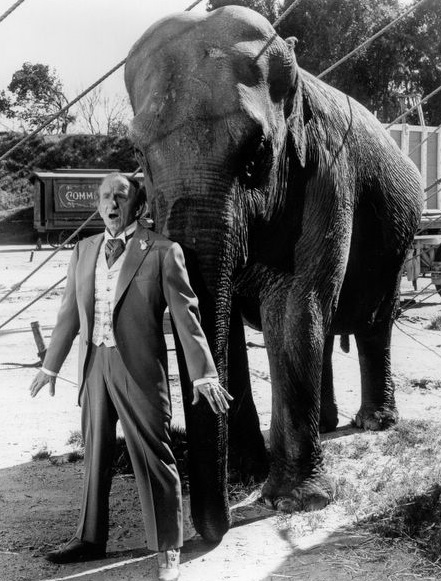
Well, sure it's OK to impersonate a judge ON STAGE...

Well, sure it’s OK to impersonate a judge ON STAGE…

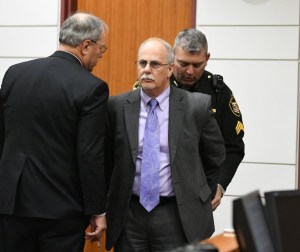
The Illinois Attorney Registration and Disciplinary Commission is asking for the immediate suspension of a judicial candidate Rhonda Crawford, who is running  for a judgeship covering parts of Chicago and its suburbs. The request asks the Illinois Supreme Court to block Crawford from becoming a judge if she wins the election, which is likely, since she is running unopposed. The reason she has been deemed unfit to be a judge is that she already pretended to be one, in essence impersonating a judge and ruling on cases in traffic court.

Crawford admitted last month that she wore a judicial robe and sat at the bench as part of a “shadowing process”  under the direction Judge Valarie Turner, who was reprimanded and  reassigned to administrative duties after pulling the stunt. Near the end of the afternoon court call, Judge Turner announced that “we’re going to switch judges” and gave her judicial robe to Crawford. Crawford didn’t correct the misstatement, and began acting as the judge. Judge Turner, who appears to have taken leave of her senses, told the prosecutor earlier in the day that Crawford was a judge, and Crawford did not correct the misstatement. When an officer in the courtroom congratulated Crawford on her judgeship, Crawford did not correct him, either. Judge Turner later told the presiding judge investigating the incident that she thought Crawford really was a judge, which is odd since she was employed as a law clerk and staff attorney, and real judges tend to have their own robes while not requiring second judges to stand behind them. Continue reading