End Of Week Ethics Alarms, 10/11/2019: The Liberty Under Attack Edition

Wait…

I’m looking forward to the weekend  even though I’ll be working throughout.

I’m obviously an idiot.

1. My Ethics Alarms doesn’t even “ping!” on this one.  KTVU, the Bay Area’s Fox affiliate, summarized the St. Louis Cardinals’ devastating win over the Braves in Game 5 of the National League Division Series with a chyron reading, “Braves Scalped.” The Horror! Exclaimed the always sensitive Yahoo! Sports, “That’s straight out of the yikes factory. Particularly given the conversation that’s surrounded the Braves recently. A Cardinals pitcher of Native American descent objected to the Braves’ infamous tomahawk chop and the team responded Wednesday by toning down its use of the chop. There’s not any good time to roll out a “scalped” headline, but this was a particularly bad one.” The headline to the story says the headline is “racist.”

OK, why? I want one good reason. If a team is going to call itself something other than “The Baseball Players,” which would be strikingly unoriginal, you have to admit, then metaphors and colorful language relating to that teams’ nickname are automatically appropriate. “Orioles’/Cardinals’/Bluejays’ Wings Clipped!”…”Red Sox/Whie Sox unravel!”…”Tigers/Cubs/ Declawed!”…”Nats Swatted!”…”Giants Dwarfed!”…  “Pirates Walk The Plank!”…”Diamondbacks Rattled!”…”Mariners Sink!” But “Braves (or Indians) Scalped!” is an outrage? The team lost 13-1! The Braves were down 10-0 after the first half-inning; it was an epic slaughter. I could u8nderstand the discomfort if Native Americans never scalped their adversaries, but they did. This isn’t some kind of historical slander. Let’s see…here’s some of a rather scholarly article on the subject of scalping…

…the languages of the eastern Indians contained many words to describe the scalp, the act of scalping, and the victim of scalping. A Catholic priest among the Hurons in 1623 learned that an onontsira was a war trophy consisting of “the skin of the head with its hair.” The five languages of the Iroquois were especially rich in words to describe the act …To the Mohawks and Oneidas, the scalp was onnonra ; the act of taking it, kannonrackwan . Their western brothers at Onondaga spoke of hononksera , a variation of the Huron word. And although they were recorded after initial contact with the Europeans, the vocabularies of the other Iroquois nations and of the Delaware, Algonquin, Malecite, Micmac, and Montagnais all contained words for scalp, scalping, and the scalped that are closely related to the native words for hair, head, skull, and skin. That these words were obviously not borrowed from European languages lends further support to the notion that they were native to America and deeply rooted in Indian life….paintings and drawings reinforce that image. The single most important picture in this regard is Theodore de Bry’s engraving of Le Moyne’s drawing of “How Outina’s Men Treated the Enemy Dead.” Based on Le Moyne’s observations in 1564-65, the 1591 engraving was the first pictorial representation of Indian scalping, one faithful to Le Moyne’s verbal description and to subsequent accounts from other regions of eastern America. The details—sharp reeds to extract the scalp, drying the green skin over a fire, displaying the trophies on long poles, and later celebrating the victory with established rituals by the sorcerer—lend authenticity to De Bry’s rendering and support to the argument for the Indian invention of scalping….[I]n the end, the American stereotype of scalping must stand as historical fact, whether we are comfortable with it or not.”

In summary, the word was obviously not meant literally to refer to a baseball game. Nor was the use of it was in no way libelous to real Native Americans. Yahoo’s pearl-clutching, and that of social media political correctness cops, is more offensive by far than the Fox chryon.

2.  As if you didn’t have to jump through too many hoops to fly already…In 2005, Congress passed the Real ID Act, which made the addition of a star to state IDs  and drivers licenses necessary to have access to nuclear power plants and federal facilities. Then some genius decided that access to airplanes should be added to the list. Continue reading

Ethics Dunce: Rep. Rashida Tlaib (D-MI.)


These two, I can tell apart…

Representative Tlaib is the least recognized of the renegade, embarrassing members of “The Squad,” sort of like José Carreras of “The Three Tenors,” who was always the one nobody could remember after naming Plácido Domingo and  Luciano Pavarotti. She is best known, perhaps, for repeating her classy motto “Impeach the motherfucker!” Maybe people will now remember her for the blight on Congress that she proved she is after her latest debacle.

Tlaib recently called upon the Detroit Chief of Police James Craig to hire only blacks  to run the department’s facial recognition program. Following a demonstration of the technology, Tlaib said,  “Analysts need to be African-Americans, not people that are not. It’s true, I think non-African-Americans think African-Americans all look the same!” Her proof for that statement is that people often confuse Reps. John Lewis, D-Ga., and Elijah Cummings, D-Md.

I plead guilty: I have always had trouble keeping them straight. That’s because they are both ancient House members who rest on their civil rights era laurels, who engage in race-baiting as a matter of course, and who both have shaved heads. Quick, now: which is Cummings, and which is Lewis?

I also used to get actresses Jaimie Pressly and Margot Robbie mixed up, as does  almost everyone else. (That’s Pressly on the left, Robbie on the right.)

Does that prove white people think all white people look the same?

Oh, never mind. Still, one would like to think a member of Congress would know that such a hiring requirement would violate anti-discrimination laws, in addition to being based on racial bias . Craig responded, “I trust people who are trained, regardless of race, regardless of gender,”  and called Tlaib’s suggestion “racist.” To be kind, I’d just call it ignorant and stupid.

Not for the first time, Tlaib doesn’t know what she’s blathering on about. In Facial Recognition Technology,  the operator doesn’t make the identification, programed algorithms do.  That’s the whole point.  Not to be dissuaded by facts, or her fundamental misunderstanding of the issue, Tlaib has written an  op-ed  or The Detroit News denouncing FRT as “racist technology.”

Incidentally, one of Margot Robbie’s notable roles was in “The Suicide Squad.”

________________________________

Source: Res Ipsa Loquitur 1, 2

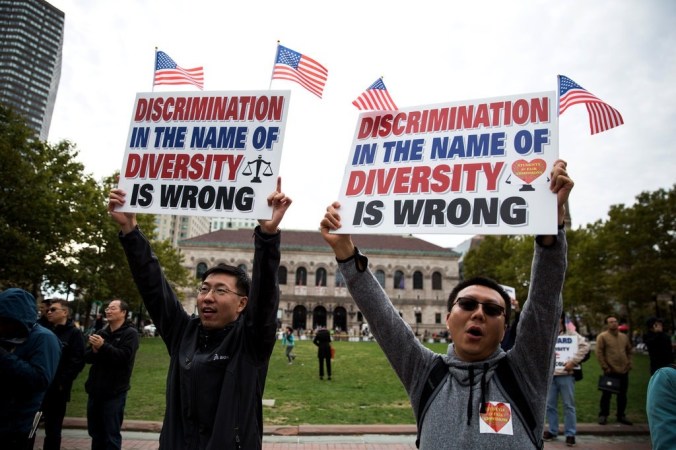
The Ruling In The Harvard Asian Discrimination Case: So What WAS “The Point”?

In response to U.S. District Judge Allison D. Burroughs’ ruling this week that Harvard University does not discriminate against Asian Americans in undergraduate admissions, two commentators issued reactions with almost themes: the ruling missed the point. In the New York Times, law professor Melissa Murray wrote that the opinion missed the point by being…

…focused on diversity as the sole grounds on which the use of race in admissions may be justified. As Judge Burroughs noted in her ruling, diversity-centered admissions policies can “enhance the education of students of all races and backgrounds, to prepare them to assume leadership roles in the increasingly pluralistic society into which they will graduate,” “broaden the perspectives of teachers” and “expand the reach of the curriculum and the range of scholarly interests.” Her words echo the standard refrains that have been deployed to defend affirmative action since Justice Lewis Powell’s opinion in University of California v. Bakke (1978). Justice Powell famously extolled the virtues of the “Harvard Plan,” which recognized that a “farm boy from Idaho can bring something to Harvard College that a Bostonian cannot offer.” The problem, of course, is that thinking about diversity in terms of what beneficiaries might contribute makes the benefits of affirmative action contingent and conditional — worthy only because its beneficiaries serve the broader needs of institutions and those who are assumed to belong.

To the contrary, Murray believes that Harvard’s race preferences out to be justified as permanent reparations, though she never uses those exact words.  (Hmmmm.…I wonder if she’s black? Let’s see…why yes, she is!):

Those who fought for affirmative action expected institutions to maintain policies that ensured continued representation of those who had long been excluded. But at least in the courts, these convictions have been largely jettisoned.

That’s because they are unethical, illegal and unconstitutional.

The momentary victory for Harvard, which was correctly accused of discriminating against Asian-Americans in admissions in order to further affirmative action goals, was the result of an ideological rather than a legal analysis. I give the judge credit for being open about his bias: how else could one interpret his reasoning? From the Washington Post:

While Harvard’s “admissions process may be imperfect,” Burroughs wrote, the judge concluded that statistical disparities among racial groups of applicants “are not the result of any racial animus or conscious prejudice.”

The law does not require “racial animus or conscious prejudice” to make  racial discrimination illegal. Discrimination on the basis of race is unfair, unjust, illegal and wrong. The judge doesn’t address that fact; he just explains why Harvard’s discrimination is the good kind, writing,  “The use of race benefits certain racial and ethnic groups that would otherwise be underrepresented at Harvard and is therefore neither an illegitimate use of race or reflective of racial prejudice.”

What does “under-represented” mean? This is a tell: Judge Burroughs is a disciple of the Left’s edict that  institutions, workplaces, benfits and distinctions are inherently suspect or harmful if they don’t closely match demographic divisions within the public in general. This essentially un-American myth requires the use of quotas while disguising their intent and function.

Affirmative action has always been an example of policy hypocrisy, engaging in present discrimination in order to combat the effects of past discrimination. It was justified, at best, as a temporary breach of core principles in pursuit of a theoretical remedy to a unique problem.

Another “the opinion missed the point” article had a more useful, if also flawed,  analysis than the law professor’s “We should keep discriminating against whites and Asians forever because of slavery and Jim Crow” argument. Richard Ford makes the case in “The Harvard Ruling Misses the Point” that the entire debate is taking place within an absurdity. Elite institutions like Harvard exist to bestow the credential of being  certified “elite,” a member of the deserving American upper class. “Democratizing” the anointment process by artificially using factors that have nothing to do with merit or achievement to bestow elitism is self-contradictory: once it becomes obvious that getting admitted to Harvard signifies nothing substantive, then Harvard’s ability to sanctify its graduates vanishes, or should.

It should. Harvard’s degree always was something of a fraud in this respect. Ford correctly observes,

The unstated assumption that folds affirmative action into a general critique of elite admissions is that acceptance should be based exclusively on individual merit (and that merit, in turn, should be measured by grades and test scores). Indeed, opponents of affirmative action often speak as if it is a departure from an otherwise even-handed and admirable meritocracy. But the Harvard case and the bribery scandal both expose—in high relief, if not for the first time—the extent to which non-racial (and hence legally unproblematic) admissions preferences dwarf those associated with race. Athletes, legacy applicants, and those otherwise likely to help universities secure large donations enjoy higher admission rates than members of underrepresented racial groups. Affirmative action is one of the more modest of many departures from numerical indicia of merit.

Continue reading

The Most Important Question Raised By Another Fake Hate Crime Story: How Much Lousy, Irresponsible, Divisive, Biased Journalism Will The Public Tolerate And The News Media Refuse To Fix?

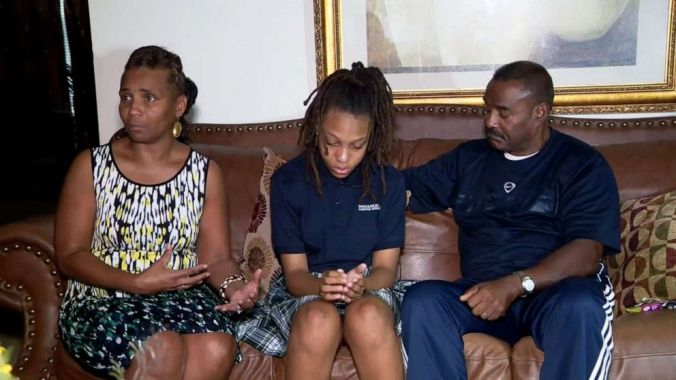
All over the major newspapers and news media last week was the ugly tale of another “hate crime.” 12-year-old Amari Allen, a black sixth-grader at a Christian, Northern Virginia private school, said that three white boys held her down and  cut off some of her dreadlocks.

The New York Times  and other news sources decided this was national news, just like a white Catholic school boy not having the right expression on his face when he was being harassed by a Native American activist.  More proof of racism in America! “They put me on the ground,” the girl recounted in an emotional phone interview”One of them put my hands behind my back. One put his hands over my mouth. One cut my hair. They were saying that my hair was ugly, that it was nappy.”  Why was this alleged episode of childhood bullying worthy of national attention? It was because Mike Pence’s wife Karen teaches at the school, the Immanuel Christian School in Springfield, about 15 minutes from my home.

This was cognitive dissonance manipulation. Pence’s wife teaches at a school where a black girl was racially harassed, thus the school is racially biased, thus Karen Pence is facilitating racism, thus her husband consorts with a racist, and it all leads back to that racist, President Trump. ( Big Lie #4)

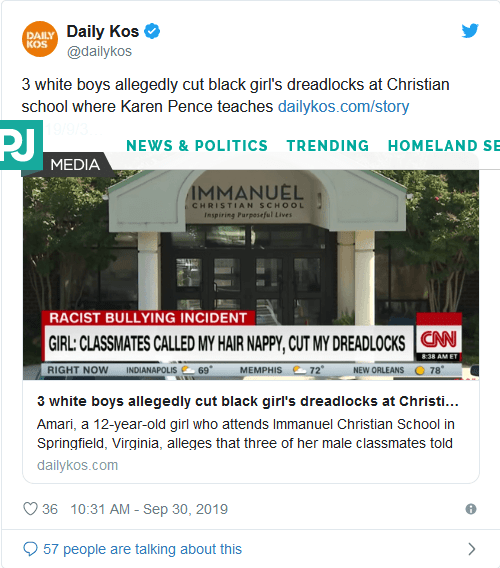
With the same motivation,  the left wing websites enthusiastically promoted the story. Here’s the always shameless Daily Kos:

See the white supremacy hate crimes that Trump, Pence, and Republicans foster? The local NAACP immediately got into the act, talking about lawsuits.

Except that it didn’t happen. The Washington Post reported today that the girl has recanted, and her grandparents, who are raising her, have apologized.  Continue reading

Why American Colleges Are Increasingly A Waste Of Money, Time, And Minds: A Case Study From American University

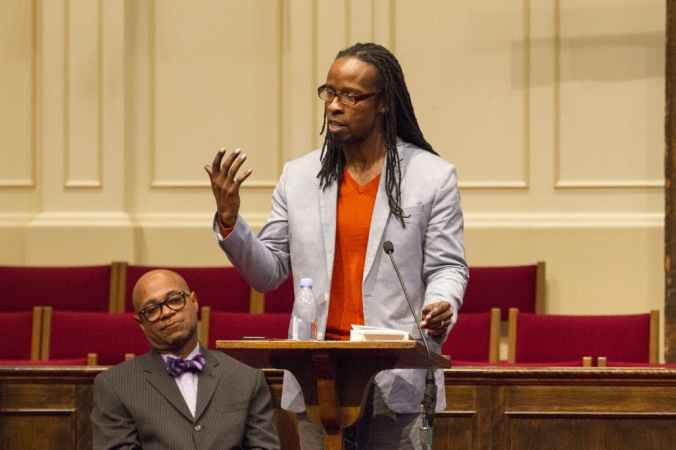
American University in Washington D.C. (Full disclosure: I once taught legal ethics at the law school there) employs Ibram X. Kendi as a history prof and  Director of the Antiracist Research & Policy Center. He writes, and thus advocates, utter nonsense like this, from his recent opinion piece  in Politico:

To fix the original sin of racism, Americans should pass an anti-racist amendment to the U.S. Constitution that enshrines two guiding anti-racist principals: Racial inequity is evidence of racist policy and the different racial groups are equals. The amendment would make unconstitutional racial inequity over a certain threshold, as well as racist ideas by public officials (with “racist ideas” and “public official” clearly defined). It would establish and permanently fund the Department of Anti-racism (DOA) comprised of formally trained experts on racism and no political appointees. The DOA would be responsible for preclearing all local, state and federal public policies to ensure they won’t yield racial inequity, monitor those policies, investigate private racist policies when racial inequity surfaces, and monitor public officials for expressions of racist ideas. The DOA would be empowered with disciplinary tools to wield over and against policymakers and public officials who do not voluntarily change their racist policy and ideas.

Continue reading

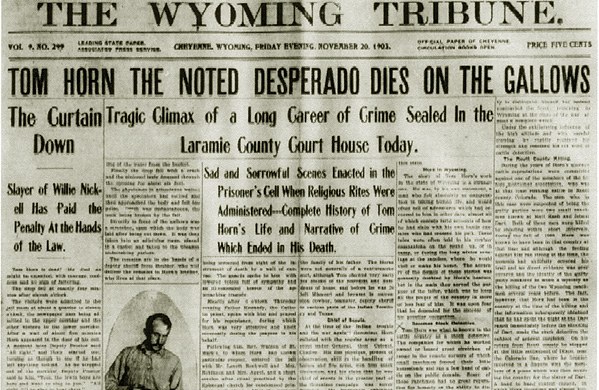
Directed Verdict Ethics In The The Movies: “Tom Horn” And “To Kill A Mockingbird”

Once again, as I watched the film version of “To Kill A Mockingbird” for the 50th time, I was bothered by the fact that Atticus never asked for a directed verdict, and the kindly, seemingly fair-minded judge never declared one.

A directed verdict is also known as a judgment as a matter of law or JMOL. It means that one side or the other has failed to meet a minimum burden of proof, and is usually declared by a judge  after is a motion made by a party, during trial, claiming the opposing party has presented insufficient evidence to reasonably support its case.  A directed verdict  is similar to judgment on the pleadings and summary judgment. Judgment on the pleadings is  made after pleadings and before discovery; summary judgment occurs after discovery but before trial.

A directed verdict occurs during the trial, and a judge can also render one spontaneously, without a motion. The motion can even  be made after a verdict is returned by a jury, where such a motion is technically for a “renewed” directed verdict, but commonly referred to as judgment notwithstanding the verdict.  In a civil trial, a party must have moved for a directed verdict before the jury reports out its decision. In a criminal trial, as in the fictional Tom Robinson case, there is no such requirement. The court may set aside a guilty verdict and enter an acquittal in the interests of justice.  A criminal defendant is not required to move for a judgment of acquittal before the court submits the case to the jury for the verdict to be overturned. A verdict of not guilty can never be overturned.

In “To Kill A Mockingbird,” black defendant Tom Robinson is convicted of rape despite the primary prosecution witness, the alleged victim, contradicting her own testimony at several points, and despite strong evidence that the beating she claimed was part of the sexual assault was shown to be delivered by a right-handed man—like her spectacularly vicious and creepy father—when the defendant couldn’t use his right hand at all. Atticus Finch never moves for a directed verdict, and the judge never declares one, though he presides over the fiasco of a trial with a disgusted look throughout. Continue reading

Ethics Observations On Justin Trudeau’s “Brownface” Scandal

Other than “Hahahahahahahahahahahahahaha!” that is.

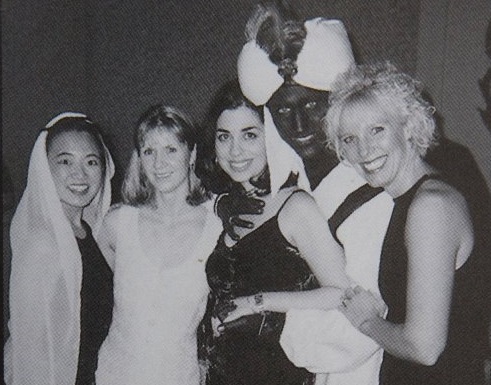
News item:Justin Trudeau, Canada’s prime minister, wore brownface makeup to a party at the private school where he was teaching in the spring of 2001. TIME has obtained a photograph of the incident. The photograph has not been previously reported. The picture was taken at an “Arabian Nights”-themed gala. It shows Trudeau, then the 29-year-old son of the late former Prime Minister Pierre Trudeau, wearing a turban and robes with his face, neck and hands completely darkened. The photograph appears in the 2000-2001 yearbook of West Point Grey Academy, a private day school where Trudeau was a teacher.”

Also: “The re-election campaign of Prime Minister Justin Trudeau of Canada was thrown into turmoil on Wednesday when a photograph surfaced of him wearing brownface makeup at a 2001 private school party….Speaking with reporters aboard his campaign plane, Mr. Trudeau, who has long championed the rights of racial minorities in Canada, confirmed that he was in the photo and that he was dressed as Aladdin.

“This is something I shouldn’t have done many years ago,” Mr. Trudeau said. “It was something that I didn’t think was racist at the time, but now I recognize it was something racist to do, and I am deeply sorry.”

Observations:

1. Wearing make-up to create an image along with a costume is not “racist.” Either Trudeau is just pandering  and grovelling to political correctness, or he’s not every bright. I’ve written about this before, most notably here (the post that got Ethics Alarms banned from Facebook). How is that make-up a negative commentary on the inferiority or inequality of a race? Not being sensitive to the hair-trigger offense reflexes of minorities and activists looking for a “gotcha!’ is not racist. It is not being sensitive to hair-trigger offense reflexes by minorities and activists looking for a “gotcha!” Continue reading

Comment Of The Day: “Saturday Ethics Warm-Up, 9/7/2019: Trump’s Obsession, Joe’s Hands, And University Ethics Stumbles” [Item #3]

To refresh memories, #3 in this ethics warm-up of a week ago involved this email, sent to the University of Wisconsin campus yesterday by administrators.

To our campus community, Friday morning, what was intended as a protest to inspire action on environmental climate change had a very different and negative impact on many who witnessed it. Two students displayed nooses tied around their necks outside the Humanities Building.

The students involved have since apologized for their actions and committed to rectifying the impact they caused. We commend the university staff and members of our campus community who immediately intervened with the protesters and helped them understand the impact they were having. The protesters then removed the nooses.

The fact remains that members of our community were harmed. While the First Amendment guarantees the right to free expression, our community best succeeds when we express our views and promote a campus climate that is welcoming and safe to everyone.

We hope this experience can serve as a learning opportunity. Regardless of whether the display of a hateful symbol is based on a lack of cultural understanding or an expressed intent to promote fear, the lingering legacies of what these symbols represent create visceral and painful reactions among many. That harm is especially acute for people of color, for whom this history is very real.

Let’s be clear: ignorance is not an excuse. We can and must do better. For those of us who are members of majority communities, our campus offers many resources through Student Affairs and the Division of Diversity, Equity and Educational Achievement to learn about racism and injustice and about how to be strong allies.

And for those who are impacted by incidents like this, we want you to know that we support you and have resources to help….

I wrote, “The school would not make a similar statement if American flags were burned  or an effigy of President Trump were set on fire, and those gestures are no less offensive to many than the symbolic use of a noose. Nor was anyone “harmed” by the student protesters. Opinions, symbols and gestures do not harm healthy, normal people. Forcing the students to apologize was wrong and a direct affront to their right of expression.”

Mrs. Q then picked up the baton. Here is her Comment of the Day on that issue: Continue reading

Regarding Felicity Huffman’s Slap-On-The-Wrist

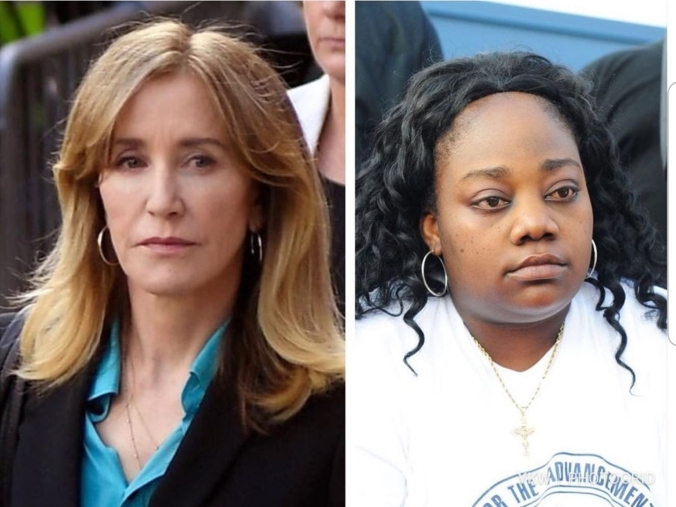
Before actress Felicity Huffman was sentenced for her participation in the rigged college admissions scandal, also known as “Varsity Blues”, the leftist website Salon had already pronounced her treatment by the justice system as racist. It said in part,

Back in 2011 Tanya McDowell was homeless and living in her van. She wanted her five-year-old son to receive a quality education, so she enrolled him in Brookside Elementary of the Norwalk School District. He was later kicked out due to a residency issue, so he transferred to Bridgeport schools.

Police investigated McDowell and charged her with fraud. A year later she pleaded guilty to first-degree larceny and conspiracy to commit first-degree larceny; for these offenses, she received a five-year sentence. Before McDowell started serving it out, she was charged with selling narcotics to an undercover police officer, an offense that killed her community support. McDowell was ultimately given 12 years, to be suspended after she served five, and followed by five years of probation; the narcotic sentence to run concurrently with a five-year sentence she had already received in the Norwalk school case. All of this story, from the over-policing of this mother to the severity of her sentence, along with everything she did, was obviously driven by poverty, which remains synonymous with “guilty” in our lopsided system of so-called justice.

On the other hand, you have a person like Felicity Huffman, who enjoys the many privileges that come with being a rich “Desperate Housewives” star…and having the resources to expose her daughter to educational advantages that McDowell may not have even been able to dream of: tutoring, unlimited books, technology, a safe learning environment, and even an SAT specialist who helps struggling kids obtain high scores. …[T]he actress was arrested in March on mail fraud and conspiracy charges as an outcome of the FBI’s Operation Varsity Blues investigation, and pleaded guilty to mail fraud, after paying $15,000 to allegedly rig her daughter’s SAT scores. Huffman is scheduled to be sentenced in Boston on Friday — for one month in prison, if the federal prosecutors’ recommendation is followed. Huffman’s attorneys have instead asked for a year’s probation, plus community service and a $20,000 fine.

Let’s begin with the fact that this is unethical and dishonest advocacy. Searching for an admittedly terrible prosecution from eight years ago  to contrast with Huffman’s case is contrived racism. The fact that the mother was later legitimately charged with selling narcotics renders the comparison a stretch at best.  In the absence of sufficient numbers of cases across the country to make a valid generalization, Salon’s assumptions are just cheap muckraking.

Stipulated: charging McDowell with larceny for trying to sneak her child into a better school district was a cruel and unethical prosecution; charging her with fraud and seeking a significant punishment was not. The idea was to discourage similar deceptions, no matter how well-intentioned they were.  That is a valid law enforcement objective, and an important one.

What Huffman’s attorneys proposed as appropriate punishment was irrelevant to Salon’s thesis. Their job is to get the actress as light a sentence as possible, and if possible, no sentence at all. We are not told what McDowell’s attorney’s argued on her behalf, because it is also irrelevant, but, I suspect, it was omitted because their recommendations were not that different from those of Huffman’s case. Continue reading

Sunday Ethics Warm-Up, 9/15/2019: Opinions, Ethical And Not

It’s a glorious day here in Northern Virginia!

Makes me feel like things are looking up, even though they probably aren’t.

1. I refer you to the most recent post about “the resistance’s” arsenal of big lies. specifically Big Lie #5, “Everything is terrible.” In the Times’ Sunday Review section, usually a resistance nest to one degree or another, though less so in recent months, Trump Deranged Times columnist Michelle Goldberg offers a long essay beginning with the assumption that current day America is a dystopian society. How does she justify this ridiculous assertion? Referencing the science fiction novel “The Handmaid’s Tale,” in which women in the U.S. “are stripped of their identities and consigned to reproductive slavery for the elite.” Goldberg writes,

“It’s hardly surprising that in 2016 the book resonated with people — particularly women — stunned that a brazen misogynist, given to fascist rhetoric and backed by religious fundamentalists, was taking power despite the wishes of the majority of the population.”

I especially like the “despite the wishes of the majority of the population” part, but the whole statement is dishonest  agitprop. Nobody “took power;” an election took place under Constitutional constraints. Goldberg cannot possibly gauge the “wishes” of the majority, since, as usual, the majority didn’t feel sufficiently concerned about the Presidential election’s outcome to bother to vote, meaning they didn’t “wish” for either candidate to win with enough seriousness or commitment to be  part  of any persuasive analysis. Meanwhile, the President was elected according to the system the United States has operated under since its inception. And describing Trump, who is about as religious as most recent Presidents, which is to say, not at all, was “backed by religious fundamentalists” is as accurate as saying that Barack Obama was backed by anti-white racists.

Read the whole stupid thing. It is irresponsible for a legitimate newspaper to publish such crap, but no more so than for one to employ a biased disinformation specialist like Goldberg as a regular contributor.

2. Once again, Andrew Sullivan finds his way toward calling out unethical journalism. In a recent essay for New York Magazine, the occasionally conservative, gay, religious, emotional but determined truth-teller—as he sees it, anyway—declares  the New York Times a publication that has abandoned journalism for activism.

Two quick reactions: a) Ya think, Sherlock? and b) THIS was your first clue?

He concludes strongly, though, writing, “To present a truth as the truth is in fact a deception. And it is hard to to trust a paper engaged in trying to deceive its readers in order for its radical reporters and weak editors to transform the world.”

Hard? The right word is “irresponsible.”

Related: This excellent essay by Peter Wood expounds further on the duplicity of the Times’ much heralded “1619 Project.” Continue reading