Rationalization #51: The Hippie’s License, or “If It Feels Good, Do It” (“It’s Natural!”)

hippies

It is time—past time, really— for a another entry in the Ethics Alarms Rationalization List.

One of the most seductive and simple-minded of rationalizations, The Hippie’s License flourished in the 1960’s and still haunts us today. The theory is that that up-tight and sanctimonious moralizers drive mankind into misery, stress and insanity by denying basic human urges and instincts, and worse, declaring conduct based upon them wrong. This leads to guilt and the reduction of self-esteem. The Hippie’s License was employed in the Swinging Sixties to justify everything from promiscuity and adultery to petty theft and lawlessness,  incivility, vandalism, public defecation and poor hygiene. It was also, as it is today, wildly hypocritical: the hippies derided violence, and little is more human or natural than that.

The sad truth is that ethics are unnatural, civilization is unnatural, and the state of being human demands a greater acceptance of responsibility to others than nature has programmed into us. Ethics evolve faster than we do; while our DNA is telling men to mate with every healthy and attractive female, to fight those who challenge their status in their group and to take what we want and need whenever we want and need it, civilization, traditions, laws, societal standards, experience, knowledge, education and ethical systems instruct us otherwise for our own good Indeed, much of the task of being ethical involves recognizing natural instincts that make us do bad things, and resisting them. Continue reading

“I think abortion is evil, but it is a necessary evil.” Discuss.

Foetus-435110

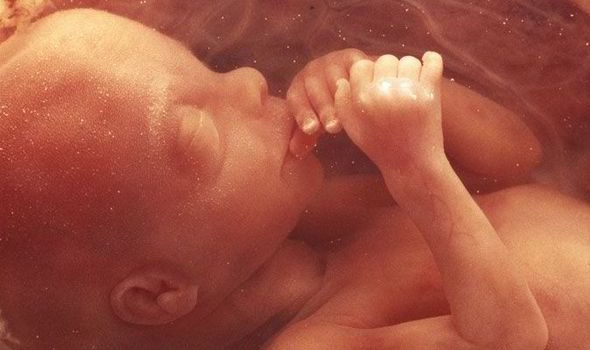
This blog doesn’t discuss evil very often because it is not a term appropriately associated with ethics. Evil is a concept related to morality. In an ethics discussion, I would take evil to mean something extremely, irredeemably unethical by any ethical analysis or system. The statement “I think abortion is evil, but it is a necessary evil” appeared parenthetically in a comment by Beth, a frequent commenter on Ethics Alarms who is a mother and a lawyer, regarding the Planned Parenthood videos. Though the news media appears to have successfully distorted that story by focusing only on whether the videos were evidence of illegal “trafficking in body parts” by Planned Parenthood, that was not the reason I posted the essays, and it is not the reason those videos are significant in the ongoing debate over abortion rights. Two high ranking individuals in the organizations casually discussed the crushing and crunching of the heads and torsos of living and helpless individuals with the sensitivity I would associate with stepping on a roach. If this doesn’t disturb you, it should. If it does disturb you, as it did Beth, what does that mean?

Abortion is one of the most important and difficult ethics issues in the culture, indeed in world culture. It involves millions of lives and millions of deaths, law, bioethics, religion, social policy, science, human rights and feminism, as well as society’s ultimate respect for life itself. I have written about the ethics of the abortion debate frequently (you can find most of the relevant posts here), but to summarize the Ethics Alarms views on the topic:

1. Abortion is an ethics conflict, meaning that there are ethical principles in opposition to each other, requiring society to set priorities.

2. The absolutist position on the anti-abortion side is that abortion involves the taking of innocent human life, which begins from conception, and is thus unethical in all cases. It is a strong position if one accepts the underlying assumption.

3. However, no absolute position is really absolute. Every ethics absolute has an exception, or several: there must be some circumstances when abortion is necessary and right. (This is not true of moral absolutes, since moral absolutes are self defining. If the power dictating a moral precept says it is absolute, it is so.)

4. The absolutist position on the abortion side of the argument holds that a woman’s right to have complete dominion over her body, reproductive activity and health justifies abortion in all cases. This is not a strong position, and in fact is one that cannot be honestly argued or sustained. It supports abortion on demand for any purpose or preference, entirely at the mother’s discretion.

5. To make that argument, extreme pro-abortion advocates have had to deny the humanity and human rights of unborn children, even to the point of arguing that they are not individuals at all, but mere “parasites,” or “tumors.” The removal of a second life from the equation that is at the core of the abortion problem makes the abortion decision easy and guilt-free; it also settles the debate by pretending the central issue doesn’t exist. That issue is that there is another life involved, not just the mother’s.

6. The debate over the ethics of abortion has been handicapped by the tactic of both sides to pretend a legitimate interest championed by the other doesn’t exist. A woman’s ability to control her own life, career and what happens to her body is an important societal issue, yet the term “pro-life” ignores it entirely. It is not the only important interest involved in the abortion decision, however, as the term “pro-choice” suggests.

7. Neither absolute position, whatever its theoretical virtues, is practical from a policy perspective. Desperate women who are pregnant will seek abortions, people will help then (or exploit them, or kill them), and public policy cannot pretend otherwise. Society will not tolerate punishing women for aborting their unborn children, whether they deserve to be punished or not. Yet allowing mothers to have unborn children killed on a whim leads to the callous, ugly, dangerous attitude toward innocent life on display in the Planned Parenthood videos. Callousness toward any human life, history has shown us, is a slippery slope with the potential of doing terrible harm to the culture.

8. Roe v. Wade was a premature Supreme Court decision and a badly reasoned one. Until and unless it is overturned, abortion is a right. That does not mean, and never meant, that abortion necessarily is right.

9. Because absolutism fails here, abortion is a problem that demands utilitarian analysis–balancing of interests and values, in the best interests of society, long and short-term, and everyone in it, according to the facts as we understand them.

10. Balancing requires an honest acknowledgement that there is something to balance. The “pro-choice” and “pro-life” dichotomy doesn’t acknowledge that in their most extreme incarnations, and since abortion is currently a right, the pro-choice lobby detects no reason to yield to logic, science and reality. Continue reading

Planned Parenthood’s Callousness Toward Life On Video, ACT II

In her op-ed for  USA TODAY, Kirsten Powers, one of the token liberals (she’s a moderate conservative, really) on Fox News, does an excellent job of compiling the inadequate and indeed damning responses of Planned Parenthood and the pro-abortion establishment to the video evidence of its executives’ stunning lack of respect for  unborn human life. (I covered much of the same territory here and here.) There is now a second video, and that means that the “this is just an aberration and one woman’s mistake” rationalization for Planned Parenthood’s senior director of medical research, Deborah Nucatola casually talking about crushing the heads of living human beings to preserve their organs for medical research. Powers quotes her “friend and former Obama White House staffer Michael Wear” as tweeting “It should bother us as a society that we have use for aborted human organs, but not the baby that provides them.”

Well said. Does it bother us? It certainly doesn’t bother Democratic presidential candidates, none of whom have breathed a word about the videos. Neither have they been asked about them, because with the exception of the evil Fox News, none of the news organizations have treated the first video as anything but a one day story. Writes Powers, accurately,

It’s a measure of how damning the video is that Planned Parenthood’s usual defenders were nowhere to be found. There was total silence from The New York Times editorial board and their 10 (out of 11) pro-abortion rights columnists. Hillary Clinton and Nancy Pelosi — both recipients of Planned Parenthood’s highest honor, the Margaret Sanger Award — have been mum.

They want the story to go away, and the reason is that the ethics of abortion is extremely vulnerable to facts and honest discussion. Shouldn’t the news media be promoting both? Let me rephrase that: wouldn’t objective, unbiased, ethical journalists have a duty to examine the issue in the light of the videos, and not shrink from them?

Of course. Continue reading

Professor Schwitzgebel Concludes That Ethicists Aren’t Very Ethical—Luckily, According To Him I’m Not An Ethicist, So I Don’t Take It Personally

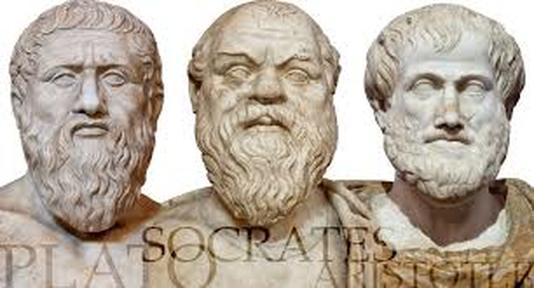
Greek phil

Eric Schwitzgebel is professor of philosophy at University of California, Riverside, as well as an author and a blogger. His essay “Cheeseburger Ethics” immediately caught my attention, as his thesis is one that I have embraced myself, occasionally here: ethicists are not especially ethical.

The essay is thought-provoking. He’s a philosophy professor and an academic, so naturally he views his own, isolated, rarified species of ethicist as the only kind. In announcing the results of his “series of empirical  studies” on the ethics of ethicists, Professor Schwitzgebel announces, “…by ‘ethicist’, I mean a professor of philosophy who specialises in teaching and researching ethics.” Got it, prof. I, in contrast, am the kind of ethicist typically denounced on other blogs as a “self-proclaimed” I don’t regard myself as an academic, my degrees are in American government and law, and my specialty is leadership and the role of character in developing it. My job isn’t to teach half-interested students about the abstract thoughts of dead Greeks and Germans; my job is to make professionals, elected officials and others understand what being ethical in their jobs and life means, how to distinguish wrong from right, and how to use proven tools  to solve difficult ethical problems they will face in the real world. I get paid for it too.

My audiences hate ethics, usually because of the people who Prof. Schwitzgebel has decided are the “real” ethicists. They have made ethics obscure, abstract and gnaw-off-your-oot boring for centuries, with the result that the mere word “ethics” sends the average American into a snooze. I have had corporate clients ask me to teach ethics without using the word “ethics.” The most common evaluation I read are from participants who write that they dreaded my seminar and were shocked that they were engaged, interested, entertained, amused…and learned something useful and occasionally inspiring.

Is it ethical to reduce the public’s interest in and respect for the very subject—a vital one– you have chosen to specialize in and teach, often because you have lousy speaking and teaching skills? Why yes, I’d call that very unethical. So I agree with Schwitzgebel’s assessment of his colleagues. Continue reading

29 Reasons Why “81 Things Mike Huckabee Has Denounced” Should Be Denounced


Republican National Convention

Political reporter—not humorist, not feature-writer, but reporter—David Farenthold of the Washington Post wrote a long feature (it is a hit piece, disguised) called “81 Things Mike Huckabee has denounced.” It doesn’t matter to me which politician this kind of junk is written to trash: Huckabee’s as deserving a target as anyone. On my rapidly growing list of candidates I would take a hacksaw to my neck before voting for, he is filed somewhere among Rand Paul, Bobby Jindal and The Donald. Farenthold’s  article itself would be unethical if it was written about The Green River Killer. It is in that horrible abuse of journalism category known here as “Making Readers Dumber and Less Ethically Astute Than They Already Are.

Here are the 29 reasons why I am denouncing “81 Things Mike Huckabee has denounced.”

Reasons #1-7 It is dishonest.

It’s pretty obvious what the post is about, but the author doesn’t have the guts or the honesty to admit it. The real title should be, “Mike Huckabee opposes gay marriage, so it’s okay for me to trash him about everything I can think of whether it’s fair or not.”  After correctly noting in his reasons 3 (“Same-sex marriage”) and 4. (“The Supreme Court decision that legalized same-sex marriage nationwide.”) that Huckabee is not a fan of gay marriages,  Farenthold also devotes 68 though 79, plus 81, on his list of his  “things” directly to this, and in deceitful fashion  places the last 13 of them at the end of his list. Many are misleading in the context of his stated purpose, giving me seven reasons to denounce his list:

  • #68. claims that Huckabee “denounced”  “Homosexuality, in general” when he referred to it as  “a sin” 41 years ago in a Baptist newspaper advice column.  That’s not a denunciation. To a Baptist, that’s a statement of fact.  (Reason #1 )
  • In #70,  Farenthold says that Huckabee denounced “Homosexuality, in general” is this quote: “I’ve had people who are gay that worked on my staff. It’s not like I’m some homophobe. If you ask me is it the normal pathway? I don’t think so.” “I don’t think homosexuality is a normal pathway” is a “denunciation”? No, it’s an opinion, and not even an inflammatory one. Gays comprise less than 10% of the population: that alone is sufficient to justify “not normal.” (Reason #1)
  • In #71. Farenthold accuses the Republican of “denouncing”  gay parents by saying, “The children…really cannot, get critical early-life lessons in how a heterosexual family functions successfully.” OK, maybe, and so what? And adopted boys raised by a lesbian couple can’t get critical  early-life lessons in how to use a urinal. (Reason #3 )
  • For his 72nd  item, Farenthold calls this statement…

“Of the seventy-three sex scenes shown that week…two involved male homosexual couples.”

…a denunciation of  “Same-sex couples in TV shows.” Pointing out a statistic is now “denunciation”? (Reason #4)

  • #74 alleges that  “It actually became easier to get out of a marriage than to get out of a contract for the purchase of a used car!” is a denunciation of “Allowing heterosexual couples an easy path to divorce. ”  In fact, he was talking about divorces generally, in a book about strengthening families,  marriage, and commitment. (Reason #5)
  • The stretching gets absurd in #75. Huckabee  declared that citizens should engage in civil disobedience after the Supreme Court’s decision declaring same sex marriage a right. He did not, in any way, denounce “States allowing same-sex couples to marry, after the Supreme Court said they could.” He said that he would do something else.  (Reason #6 )
  • For his last “denunciation,” the Post’s Congressional beat reporter cites this question—“Do you want a president who follows? Or do you want a president who leads?” as one encompassing “President Obama and Hillary Rodham Clinton, for changing their minds and embracing same-sex marriage.”I could make this one about three reasons for an ethical denunciation , so dishonest is it, but I’ll be kind. Farenthold is spinning. Everyone in D.C., and most out of it, know that both Clinton and Obama based their public views on gay marriage on the polls and the opinions of the Democratic base, and didn’t have sudden epiphanies. Huckabee was quite accurately and fairly criticizing political cowardice and a lack of integrity on the parts of both Democrats, not the fact that they “changed their minds.” Just because a political reporter is playing in the sandbox of the Post “Style” section doesn’t mean that his blatant display of partisan bias is any less disturbing, or that it implicates his trustworthiness as a journalist any less.  (Reason #7 )

We get it, Dave. You really, really dislike politicians who don’t support gay marriage and believe it should not be made a right. You could make that point legitimately rather than grossly mischaracterizing the nature of the arguments of one of them who disagrees with you. Continue reading

Ethical Quote Of The Week: GOP Senator And Presidential Candidate Lindsey Graham

lindsey_graham

You know what, I’m not your candidate. I don’t want you to vote for me. I couldn’t disagree with you more.”

-South Carolina Senator Lindsey Graham during an election event in Des Moines, Iowa, after an Iowan Republican in the crowd.suggested banning Islam.

Later Graham said, “He’s got a right to say whatever he wants to say, but I have an obligation to the Republican Party, to the people of Iowa and the country as a whole to be firm on this. I’m not buying into that construct. That’s not the America that I want to lead.”

I will await the first Democratic Party candidate who demonstrates similar integrity with an equivalent reply to a supporter who advocates banning hate speech.

I suspect I will wait until the stars turn cold.

July Fourth Ethics: On Liberty And Freedom

US-original-Declaration-1776

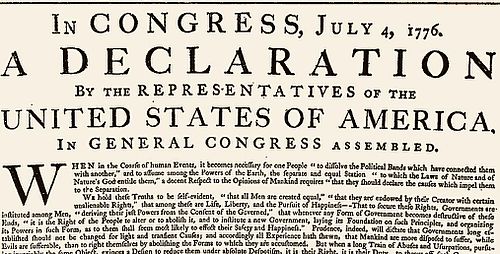
“We hold these truths to be self-evident, that all men are created equal, that they are endowed by their Creator with certain unalienable Rights, that among these are Life, Liberty and the pursuit of Happiness.–That to secure these rights, Governments are instituted among Men, deriving their just powers from the consent of the governed, –That whenever any Form of Government becomes destructive of these ends, it is the Right of the People to alter or to abolish it, and to institute new Government, laying its foundation on such principles and organizing its powers in such form, as to them shall seem most likely to effect their Safety and Happiness.”

—-The Declaration of Independence

“It is my living sentiment, and by the blessing of God it shall be my dying sentiment, independence now and independence forever. “

—-Daniel Webster, U.S. politician and orator

“Liberty is the soul’s right to breathe, and when it cannot take a long breath, laws are girdled too tight.”

—-Henry Ward Beecher, abolitionist.

“Without an unfettered press, without liberty of speech, all of the outward forms and structures of free institutions are a sham, a pretense – the sheerest mockery. If the press is not free; if speech is not independent and untrammeled; if the mind is shackled or made impotent through fear, it makes no difference under what form of government you live, you are a subject and not a citizen.”

—- Senator William Borah (R-ID), 1917

 “If liberty means anything at all, it means the right to tell people what they do not want to hear.”

—-George Orwell
Continue reading

A Jumbo For Sulu

SuluGeorge Takei, the Japanese-America actor permanently enshrined in pop culture history for his role of Sulu in the original “Star Trek” TV series. He has essentially lived off that one felicitous part for forty years, recently acquiring less moldy,  non-sci-fi following by being a gay rights advocate.

Takei recently skimmed, or just didn’t comprehend, Clarence Thomas’s  audacious dissent to the Supreme Court’s Obergefell ruling and Justice Kennedy’s majority opinion declaring same-sex marriage to be a fundamental right protected by the Constitution. Apparently he also does not comprehend that Supreme Court dissents are both stimulating and useful to legal scholars as well as those, unlike Mr. Sulu, possessing an open and curious mind.

Thomas made the unusual but provocative argument that human dignity is innate:

Human dignity has long been understood in this country to be innate. When the Framers proclaimed in the Declaration of Independence that “all men are created equal” and “endowed by their Creator with certain unalienable Rights,” they referred to a vision of mankind in which all humans are created in the image of God and therefore of inherent worth. That vision is the foundation upon which
this Nation was built.

The corollary of that principle is that human dignity cannot be taken away by the government. Slaves did not lose their dignity (any more than they lost their humanity) because the government allowed them to be enslaved. Those held in internment camps did not lose their dignity because the government confined them. And those denied governmental benefits certainly do not lose their dignity because the government denies them those benefits. The government cannot bestow dignity, and it cannot take it away.

Thomas was expressing  his disagreement with the majority that the government withholding the right to marry from gays robbed them of human dignity. I think it is a rather pedantic argument that has more validity in the abstract than in reality, but the position that rights come from creation rather than the government is a core concept in the Declaration of Independence, and one that statists, as in “modern Democrats,” like to ignore. If individuals are born with rights, they cannot be truly taken away. If citizens must look to the government to have their rights granted to them, then government is granted too much power in exchange. Thomas’s philosophical argument is classic conservatism. Naturally, that means, in Takei’s intolerant and partyist world view, that he deserves abuse. Continue reading

The Great “Gotcha!”: Walmart Exposed As The Cynical Corporate Hypocrite It Is

ISIS-Cake

I don’t generally approve of “gotchas,” but you have to love this.

After Walmart’s CEO piously announced that his chain aims to never offend a single customer and was thus banning everything with a Confederate flag in it, on it, or around it, Chuck Netzhammer went to a Walmart in Louisiana and requested a cake decorated with the taboo flag’s image. He was refused. Then he asked to have a cake decorated with the ISIS battle flag. Walmart happily obliged! After all, who’s offended by ISIS?

Netzhammer then posted a video memorializing Walmart’s hypocrisy, saying on it that the Islamic State “is beheading Christians, selling little girls into slavery and is currently a terrorist org at war with the United States — but you can’t buy the General Lee toy car …?”

Yup, that’s about the size of it. Continue reading

Ethics Observations On The King v. Burwell and Obergefell v. Hodges Decisions And Their Aftermath

supreme-court

 Obergefell v. Hodges, in which the Supreme Court considered whether states had to recognize a right to same-sex marriages, and King v. Burwell, in which the Court was called upon to clarify some incompetent drafting in the Affordable Care Act, could not be more dissimilar in terms of issues, topics, and significance. Nonetheless, because the two decisions involved hot political issues and arrived on consecutive days, and because they ended up favoring the positions that Democratic and progressive partisans support, they have been conglomerated in public discourse to fit several general themes, all, to varying degrees, misleading, simplistic, and biased. The decisions have also launched some of the most hysterical and embarrassing commentary in recent memory.

Some ethics, as opposed to legal, observations:

1. Anyone who hasn’t read the majority opinions and the dissents, who just skimmed them—believe me, if law school taught me anything, it taught me that skimming court opinions was a sure road to error and humiliation—or who read them but could not understand them, should be ignored, and perhaps gently mocked, for expressing any view at all about whether the decisions were the “right” ones. Quite simply, such people are not qualified to hold an opinion. They can have, and express, an opinion regarding whether the Court’s calls on Burwell or Obergefell are consistent with their own needs, desires, belief or political orientation, but they have no basis for asserting that either decision is wrong, or, right, on the law.

2. One can find it troubling and ominous, as I do, that the votes on the two cases were as predictable as they were. Objective legal scholars with integrity should be capable of ruling in ways that are not congruent with the personal political philosophies. A Democratic Presidential appointee who favors expansive government activity in health care control should be able to look at a statute designed to accomplish that purpose and still conclude, “Nope, the law mean what they want it to mean,” or “Sorry, the damn thing is unconstitutional.” Similarly, we should be able to trust a politically conservative justice to examine a statute that he objects to on principle and still conclude, “Yup, it passes the test.” Maybe all the Justices are capable of meeting this standard, but these two cases don’t suggest that. They suggest the opposite. Continue reading