Hi!
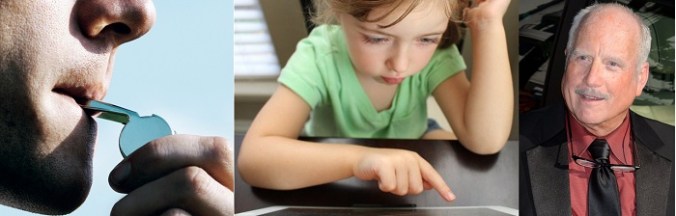
1. So now we know…The mysterious “whistleblower” is almost certainly Eric Ciaramella, a CIA analyst, former National Security Council staffer, and a career intelligence officer.who has served in both the Obama and Trump administrations. It would have been nice and reassuring if he were not so strongly tied to the Dark Side, meaning the Democrats and various “resistance” figures, but he is. That doesn’t mean he had an agenda, but somehow all of the leakers and rebels who have been instrumental in keeping the Left’s coup fires burning have aspects of their backgrounds that justify skepticism.
From the generally useful and fair article about in Heavy:
Ciaramella has worked for the Central Intelligence Agency for several years and was assigned to the White House during the end of the Obama administration. He worked closely with Biden in his role as an expert on Ukraine. Ciaramella also has ties to Sean Misko, a former NSC co-worker who now works for Representative Adam Schiff and the Intelligence Committee. According to The New York Times, the whistleblower first went to a CIA lawyer and then to an unnamed Schiff aide before filing the whistleblower complaint. The aide told the whistleblower to follow the formal process, but conveyed some of the information he learned from him to Schiff, without revealing his name, The Times reported.
“Like other whistle-blowers have done before and since under Republican and Democratic-controlled committees, the whistle-blower contacted the committee for guidance on how to report possible wrongdoing within the jurisdiction of the intelligence community,” said Patrick Boland, a spokesman for Schiff, told The Times.
The whistleblower’s ties to Democrats, including Biden, Schiff, former CIA Director John Brennan, former Director of Intelligence James Clapper and former National Security Adviser Susan Rice, have created controversy, with Trump and Republicans using his past work with them in an attempt to discredit him.
I did say generally fair. The fact that this guy who created the path to the latest impeachment excuse just happens to be a Democrat with connections to a veritable nest of anti-Trump zealots does and should discredit his objectivity to some extent. An “attempt” shouldn’t be necessary.
2. Geewhatasurprise…. From the MIT Technology Review:
A study published today in JAMA Pediatrics warns that kids’ literacy and language skills suffer with screen use, and MRI scans of their brains appear to back up the findings…. Forty-seven 3- to 5-year-olds took a test to measure their cognitive abilities, and their parents were asked to answer a detailed survey about screen time habits. …The scans revealed that kids who spent more time in front of screens had what the authors call lower “white matter integrity.” White matter can be roughly thought of as the brain’s internal communications network—its long nerve fibers are sheathed in fatty insulation that allows electrical signals to move from one area of the brain to another without interruption. The integrity of that structure—how well organized the nerve fibers are, and how well developed the myelin sheath is—is associated with cognitive function, and it develops as kids learn language. …Lead author John Hutton of Cincinnati Children’s Hospital told MIT Technology Review there’s a clear link between higher screen use and lower white matter integrity in the children his team studied. That structural change appears to be reflected in the results of the cognitive test the kids took as well, which showed high screen time associated with lower levels of language and literacy skills. “The effect size is substantial, as these findings also rigorously controlled for multiple comparisons across the brain,” Hutton says.
One easy and ethical remedy would be for parents to make sure their kids don’t see them constantly staring at their phone.
3. A terrific, ethical, extemporaneous speech from Richard Dreyfus. No, Richard Dreyfus is not, and has never been, a typical Hollywood knee-jerk leftist. Glenn Beck’s conservative website “The Blaze” was “astonished” when actor/educator Richard Dreyfus recently told Fox News host Tucker Carlson,
“You were talking about the speakers on university campuses. And I am totally, incontrovertibly on your side about this. I think any intrusion into freedom of speech is an intrusion into freedom of speech. And when one of the presidents of one of the colleges said, ‘this is a school, not a battlefield,’ I said, no, it is a battlefield of ideas and we must have dissonant, dissenting opinions on campuses and I think it’s political correctness taken to a nightmarish point of view
I have withdrawn from partisan politics. I am a constitutionalist who believes that the Constitution and the Bill of Rights must be central and the parties must be peripheral. What’s most important for me is what you just mentioned haphazardly, we are over 30. Civics has not been taught in the American public school system since 1970. And that means everyone in Congress never studied the constitution and the bill of rights as you and I might have. And that is a critical flaw because it’s why we were admired and respected for so long, it gives us our national identity, it tells the world who we are and why we are who we are, and without a frame that gives us values that stand behind the bill of rights, we’re just floating in the air and our sectors of society are not connected.
What’s really important is that the assumptions of the left and the right are all skewed wrong. We have to find areas of agreement and areas that we share. And we do share the notion that education accomplishes certain things. One, it turns students into citizens. And, two, it teaches students how to run the country before it’s their turn to run the country. And, three, it teaches the values of this nation.
People come from all over the world or are born into this nation without the values that we have here. That’s why they came here, to get them. And what are they? You can put them in opportunity, rise by merit, mobility, and freedom. That’s what we sell. And if you don’t want that, you’ve chosen the wrong place. And you don’t get a pass by being born here, you have to learn it. Even the Ten Commandments are not known at birth. You must learn them. And we must learn our values and if we don’t, we are fatally, fatally wounding ourselves. We will not have any way to really combat the ideas behind ISIS because we won’t know our own. And we have to.
Exactly.
Fox News should give Dreyfus a show.






 Ethics Alarms