“Systemic Racism” Update

I need a graphic for “The Great Stupid,” but until I get one, that clip above from Ed Wood’s masterpiece, “Plan Nine From Outer Space,” will have to do. I have to check back and find out which generous reader sent me this after I asked if there was a “Stupid, stupid!” equivalent of the “Madness! Madness!” clip from “Bridge Over The River Kwai.” That’s the immortal Dudley Manlove uttering those words, by the way. And that was his real name!

Update: Commenter Wallphone found the “Plan Nine” clip, and has my enduring gratitude.

Here are some especially annoying recent developments on the incoherent “systemic racism” front.

1. Philonase Floyd, the brother of the late, great,George Floyd, said, following the sentencing of Derek Chauvin, “I just want to reiterate: not just black lives matter, all lives matter.” Strangely, he was not immediately condemned as a racist or racially insensitive and forced to apologize like so many others who were hounded mercilessly for saying “all lives matter.” Of course, the explanation is that Floyd’s skin shade gives him license to say “all lives matter.”

I only want to know the rules, that’s all. That seems like a reasonable request. But the systemic racism scam is truly Calvinball.The rules are made up and changed according to whatever is expedient at the time. Incidentally, there is a politician named Calvin Ball who is the county executive of Howard County, Maryland. Guess his party and race. [Hint: He’s allowed to say “All lives matter.”]

2. There has to be some designation for the cowards and enablers of rising totalitarianism that accurately describes sniveling traitors to democracy like Charlette LeFevre and Philip Lipson, the directors of Capitol Hill Pride in Seattle. I was considering the “Winston Smith Award,” but that seems unfair to Orwell’s tragic hero.

The two sent a letter to the Seattle Human Rights Commission that said,

“It has come to our attention that an event called ‘Take B(l)ack Pride’ at the Jimi Hendrix public park June 26th is charging Whites only admission as reparations. We consider this reverse discrimination in its worse form and we feel we are being attacked for not supporting due to disparaging and hostile e-mails. We will never charge admission over the color of a person’s skin and we resent being attacked for standing in those values.”

Continue reading

Law vs. Ethics #2: The Supreme Court Unanimously Says Colleges Can Use Tuition To Run A Professional Sports Business

In NCAA v. Alston, handed down yesterday, a unanimous Supreme Court ruled that the National Collegiate Athletic Association (NCAA) violated the rights of student athletes and the Sherman Antitrust Act by restraining colleges from compensating student athletes. Justice Gorsuch wrote the opinion, upholding the U.S. Court of Appeals for the 9th Circuit. Justice Brett Kavanaugh wrote a concurrence.

The decision was a slam dunk for the players. Gorsuch vivisected the NCAA argument that its compensation rules should not be subject to a “rule of reason” analysis because it is a joint venture to offer consumers the unique product of intercollegiate athletic competition. The NCAA has monopoly power in the market, Gorsuch explained, so it deserves no such deference. The NCAA’s argument that it should be exempt because it offers societally important non-commercial benefits is ridiculous on its face, and Gorsuch explained why.

Justice Kavanaugh’s concurring opinion went further:

Continue reading

Morning Ethics Warm-Up, 6/21/2021: Happy Birthday U.S. Constitution! [Corrected]

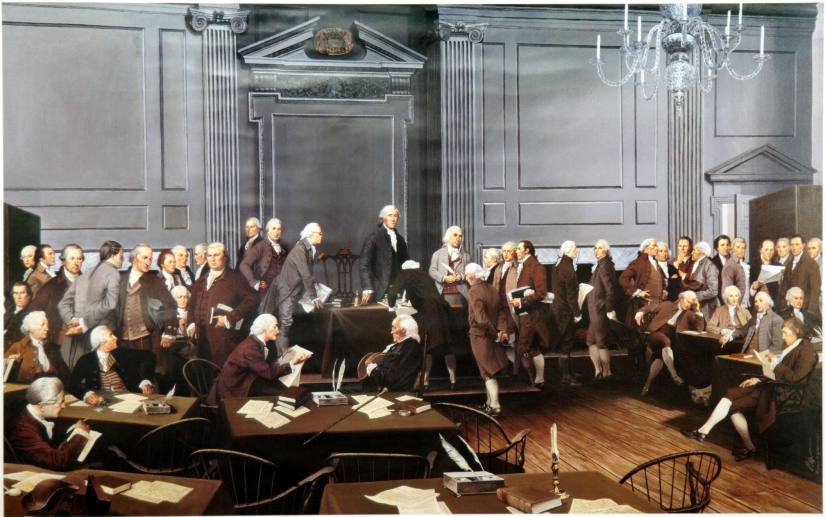
Constitution signing

On this day in 1788, habitually cantankerous New Hampshire became the ninth and last required state to ratify the Constitution of the United States and make it the law of the land. December 7 of 1787 had seen Delaware, New Jersey, Pennsylvania, Georgia and Connecticut quickly signed the document. But Congress had voted that at least 9 of the 13 former colonies had to sign on before the document was considered adopted. New Hampshire, Massachusetts and the remaining states opposed the document, as it failed to reserve sufficient powers to the states and did not protect individual rights like freedom of speech, religion,the press, and the right to bear arms. In February of 1788, New Hampshire, Massachusetts and other states agreed to ratify the document with the promise that necessary amendments would be developed and proposed. The Constitution was ratified based on the compromise by Massachusetts, Maryland and South Carolina, making 8. New Hampshire made nine. The first Congress under the new Constitution adopted 10 amendments, the Bill of Rights, and sent them to the states for ratification. Rhode Island, which opposed federal control of currency and was critical of compromise on slavery, was the last hold-out; the U.S. government had to threaten to sever commercial relations with the state to force it to sign on. Finally, on May 29, 1790, Rhode Island voted to become the last of the original 13 colonies to join the United States of America.

Today the U.S. Constitution is the oldest written constitution in operation in the world, and the only one predicated on ethical principles, thanks to the Bill of Rights.

I would have preferred to see Constitution Day made a national holiday over “Juneteenth,” since it was the principles laid out in the Constitution, along with the Declaration of Independence, that eventually led to the elimination of slavery, and the document has been the backbone of our republic’s epic success in other respects as well.

1. “Larry Vaughn Day”? I regret not noting yesterday that it was the anniversary of the release of “Jaws,” a milestone in American cultural history. It is also an ethics movie, and one that pops into my mind often, since the irresponsible conduct of the weaselly mayor of Amity, Larry Vaughn (Played by Murray Hamilton, who made a career of portraying human weasels), remains SOP for so many elected officials, locally and nationally, and also the leadership of corporations, associations, industries, sports, universities and <cough> religious organizations. Ethics Alarms has a Larry Vaughn tag, and I should have used it in dozens more articles than I have. He is the perfect symbol of leadership that, in the words of Matt Hooper (Richard Dreyfuss) will always “ignore this particular problem until it swims up and bites you in the ass.”

The U.S. could benefit greatly from a “Larry Vaughn Day” on June 20 in which every elected official and organizational leader be required to watch “Jaws.”

Continue reading

In Iowa, An Unattributed Shout Of “Let Him Hang” Becomes A National Race Incident…

I missed this story; luckily a reader, whom I am not certain whether he wants his name posted, didn’t. He sent it to me, writing in part, “So the catcher [Yes, it’s a baseball story] clapped and the word hang was heard. Both could be explained by the way teams talk to each other to cheer the team on. But it’s presented as if a MAJOR racial incident occurred. A half page article in a major news publication designed to stir animosity.”

That’s exactly what happened, though it wasn’t just the news media, it was all triggered by a mixed-race high school baseball player’s mother who has been conditioned to see racism whether it is in evidence or not. This is another success of the progressive racial outrage project.

Here is what happened, courtesy of the Des Moines Register yesterday. I’m going to interject my analysis as we go along to save time:

“Norwalk Warriors baseball player Ryan Wood was up to bat with three balls and two strikes in a doubleheader against Dallas Center-Grimes on Friday as his mother, Lisa Wood, watched from a seat in the stands. Wood said the DCG pitcher threw a ball into the opposite batter box, “practically in the dirt,” and Ryan, who recently graduated from Norwalk, went to walk to first base. He was halfway there when the umpire called a strike.”

Comment: Typical parent: Ryan’s mom was well up the third base line, but she was certain that she saw the pitch better than the umpire, who was behind the plate and inches away. Baseball players are coached to sometime try to steal a ball four call by starting to walk to first base. Once in a blue moon, it works.

“While Ryan, who is of mixed race, walked back to the plate, Lisa Wood said that DCG’s catcher clapped in her son’s face. “My son strikes out and the catcher yells at him ‘Go sit down,’ …And then somebody — whether it was the catcher or another in the dugout … somebody said, ‘Let him hang.’” Wood said the racial jeer was so loud that all of the parents near the outfield heard it, adding that she was “so shocked” that she turned to her 14-yearold daughter, who was sitting next to her in the stands to confirm what she’d heard.”

Continue reading

Baseball Has A Cheating Problem That Is Old, Was Supposedly Addressed Decades Ago, And Is Strangling The Game. It Is Relevant To More Than Baseball (Part 3: The Crackdown)

Before the 2021 season started, Major League Baseball claimed that it was about to start enforcing the rule against applying foreign substances to the baseball. Why. one might wonder. As Part I described, baseball has been casual about this rule for a long time, and the pattern goes back even longer than when Ethics Alarms first discussed it. In 1920, the game, trying to clean up its tarnished image in the wake of 1919 Black Sox scandal, banned the spitball as well as other “trick pitches” that involved altering the ball itself a few pitchers who were regarded as “spitball specialists” were “grandfathered” meaning that they were allowed to keep throwing the otherwise illegal pitch while others were not. This is not the way to make a rule against cheating, and the ambivalence about the spitball continued well into the 1980s. Baseball, and especially sportswriters, seemed to think this particular kind of cheating was cute. Only a few pitchers could throw a spitball, and those who did, notably Gaylord Perry, now in the Hall of Fame, were only occasionally caught and punished. Baseball finally made a rule that a pitcher couldn’t bring his fingers to his mouth; if he did, an automatic ball was called. Meanwhile, umpire searches of a suspected pitcher using other substances like K-Y jelly, usually hidden in a cap, became the stuff of comedy, as in the famous sequence from “The Naked Gun” above.

MLB became lax about enforcement, and predictably, some pitchers, and eventually most pitchers, took what was accepted as a “little” pine tar to get a better grip on the ball and, aided by modern chemistry, began using so-called “sticky stuff” to get higher rates of spin on the ball than they could with their natural talents. This development accelerated after 2018, when home runs became more common than ever before. When the rate of homers reached absurd levels in 2019, breaking the rules against putting foreign substances on the ball was viewed as a matter of professional survival. Pitchers experimented, trying Tyrus Sticky Grip, Firm Grip spray, Pelican Grip Dip stick and Spider Tack, a glue intended for use in World’s Strongest Man competitions and whose advertisements show someone using it to lift a cinder block with his palm. Some combined several of those products to create their own personal “sticky stuff.” Their clubs used Edgertronic high-speed cameras and TrackMan and Rapsodo pitch-tracking devices to see which version of the glue worked best.

Continue reading

Baseball Has A Cheating Problem …It Is Relevant To More Than Baseball (Part 2): Unethical Quote Of The Week: Boston Red Sox Manager Alex Cora

Cora

“I come from suspension and I know how embarrassing that is and how tough that is, not only on you as a person but your family, your friends and the people that love you. Ten games, a year, two years, three years, it doesn’t matter. Being suspended is hell and you don’t want to go through that. I was very open to them and hopefully they understand that.”

—Boston Red Sox manager Alex Cora on Major League Baseball’s threat of 10 game suspensions for pitchers  caught cheating by using sticky substances on baseballs , a practice that has been against the rules  for a hundred years.

Almost exactly a year ago, I wrote that Alex Cora, then serving a one year suspension from Major League baseball, didn’t “get it,” it being why cheating is wrong, what ethics is, and why it is important to act ethically in all aspects of life. He still doesn’t get it. Cora (you can catch up here) was suspended because he engineered and oversaw a  season long sign-stealing scheme as bench coach in 2017 for the Houston Astros, who used it to inflate their offense and ultimately win the World Series. When it was finally discovered, Cora was the acclaimed manager of the Boston Red Sox, who succeeded the Astros as World Champions in 2018. The Red Sox had been cheating in their triumphant season too, though not as extensively, and  an investigation blamed it all on a low-level coach., not Cora, though Cora was his supervisor, and the whole thing seemed oddly reminiscent of Cora’s cheating in Houston. Continue reading

Baseball Has A Cheating Problem That Is Old, Was Supposedly Addressed Decades Ago, And Is Strangling The Game. It Is Relevant To More Than Baseball (Part 1: Introduction)

Baseball sticky

Since about four other readers pay any attention to my baseball ethics posts, let me say right up front why this a mistake. Baseball’s current pitchers using foreign substances on the ball problem is, ethically, exactly the same as our nation’s election cheating scandal, or the illegal immigration crisis. It arises from the same dead-headed rationalizations, intellectual laziness, and self-serving deception. We can and should learn from it. But we won’t.

If you want to ignore the latest baseball ethics scandal as a niche problem unrelated to greater ethics principles, be my guest. You will be missing an important and still developing lesson.

Baseball’s hitting is way down this year, and pitching is more dominant than it has been since the mid-1960s. There is a reason: almost every pitcher is using some kind of sticky substance on the ball. This increases “spin rate,” which before computers and other technology was impossible to see, much less measure. The faster a pitcher can make a ball spin, the more it moves, curves and dives at higher speeds. Sticky substances allow a pitcher to do that. Using them is against the rules; it’s cheating. But for years now, the same kind of ethics-addled fools who allowed Barry Bonds and other cheats to use illegal steroids and wreck the game’s home run records as long as they lied about it have let pitchers illegally doctor the ball.

This week, the whole, completely avoidable ethics train wreck became an engine of destruction for the National Pastime.

Unfortunately, one has to understand the context to comprehend what is going on now, and that means looking backwards, in this case, to 2014. Here, with some edits, are two Ethics Alarms essays that provide the context. The first was titled “The Abysmal Quality of Ethical Reasoning in Baseball: A Depressing Case Study.” The second, Pineda-Pine Tar, Part II: Baseball Clarifies Its Bizarro Ethics Culture, appeared 13 days later. Yes, what is happening now was foretold by conditions that were evident seven years ago. The remaining parts of this series will bring you, and the train wreck, up to date.

***

What happened was this: During last night’s Red Sox-Yankee game in Yankee Stadium, the Boston broadcasting team of Don Orsillo and Jerry Remy noticed a glossy brown substance on New York starting pitcher Michael Pineda’s pitching hand. It was very obvious, especially once the NESN cameras started zooming in on it.   “There’s that substance, that absolutely looks like pine tar,” play-by-play man Don Orsillo said. “Yeah, that’s not legal,” color commentator and former player Jerry Remy replied.

Indeed it isn’t.  According to rule 8.02(a)(2), (4) and (5), the pitcher shall not expectorate on the ball, either hand or his glove; apply a foreign substance of any kind to the ball; [or]  deface the ball in any manner.

The Red Sox, who probably knew about the gunk on Pineda’s hand, didn’t complain to the umpires, and just went about their merry way, losing the game. Asked about the stuff on his hand, Pineda demonstrated the full range of body language indicating that he was lying his head off. “It was dirt,’ he said. Later, when the ick appeared to be gone,  Pineda explained, he had just sweated his hand clean. Right. Whatever was on his hand—beef gravy, crankcase oil, chocolate syrup…the majority of pundits think pine tar—it wasn’t “dirt.” Pineda’s manager, Joe Girardi, was brazenly evasive.

The Yankee pitcher was cheating. This isn’t a major scandal, but cheating is cheating: sports shouldn’t allow cheating of any kind, because if a sport allows some cheating, however minor, it will encourage cynical, unscrupulous and unethical individuals on the field, in the stands, and behind keyboard to excuse all other forms of cheating, from corked bats to performance enhancing drugs. Cheating is wrong. Cheating unfairly warps the results of games, and rewards dishonesty rather than skill. Cheating undermines the enjoyment of any game among serious fans who devote energy and passion to it. Any cheating is a form of rigging, a variety of lying.

And yet, this clear instance of cheating, caught on video, primarily sparked the sports commentariat, including most fans, to cite one rationalization and logical fallacy after another to justify doing nothing, and not just doing nothing, but accepting the form of cheating as “part of the game.” I’ve been reading columns and listening to the MLB channel on Sirius-XM and watch the MLB channel on Direct TV since this episode occurred. Here are the reactions:

Continue reading

Ethics Catch-Up, 6/10/2021 (But I Keep Falling Further Behind!)

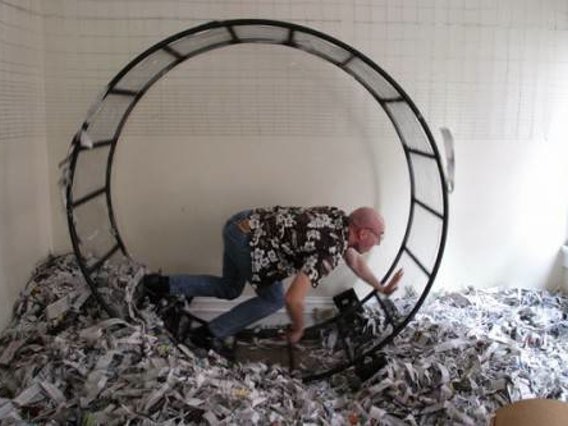
Hamster wheel

That’s not me, by the way. I would never wear a shirt like that…

1. Not substantiated, but worth mentioning: Fulton County, Georgia, poll manager Suzi Voyles says that when she sorted through a stack of mail-in ballots last November, she noticed strange uniformity in the markings on ballots favoring Joe. Biden. All the absentee votes contained perfectly filled-in ovals for Biden, except that each of the darkened bubbles featured an identical white space inside them in the shape of a tiny crescent, indicating they had been marked with toner ink instead of a pen or pencil. All of these ballots were printed on different stock paper than the others she handled as part of a statewide hand recount of the 2020 Presidential election, and none were folded or creased, as mail-in ballots usually are. To her, the Biden votes looked like they’d been duplicated by a copying machine. At least three other poll workers observed the same thing in stacks of absentee ballots for Biden they handled, have joined Voyles in swearing under penalty of perjury that they something was—is—seriously amiss. A state judge has ordered that all of the 147,000 mail-in ballots counted in Fulton be unsealed to allow a closer inspection of the Biden ballots for evidence of counterfeiting. Observations:

  • Why is this only happening now, rather than before the results were certified?
  • Even if the audit show that Trump “won” Georgia, indeed even if similar audits show that he should have won the election, nothing will change as far as the current government is concerned. You can’t unring that bell. Congratulate the Democrats: it worked!
  • Even the Georgia audit alone, if it turned up sufficient counterfeit ballots, would still force some accountability on the news media and progressive pundits, who have rather too vigorously insisted that the election was as pure as the driven snow.
  • So far, the mainstream media has ignored this story, and will continue to if it comes to nothing. Right now, it’s officially just more conservative conspiracy theory.
  • I am certain that there are many in authority who believe that even if there was widespread fraud in 2020, it shouldn’t be revealed because that knowledge would cause civil unrest. I almost feel that way myself, except that Democrats and news media have been shouting from the rafters that complaints about the loose controls on mail-in ballots are fanciful, and that Trump is “lying” when he says the election was stolen. Now the truth has to be determined, so that highly dubious narrative doesn’t prevent essential reforms.
  • If the Xeroxed ballot accusation turns out to be legitimate, things will get ugly. At that point, maybe they have to.

2. Accountability Ethics, Baseball Division. The last two nights, the Houston Astros were booed lustily in Boston by fans indignant about that team’s cheating in 2017, including during a close play-off series with the Red Sox on the way to the Astros’ World Championship. There’s a disconnect here: the primary villain in the cheating scandal is the current Red Sox manager, Alex Cora, who engineered the sign-stealing scheme the team used to help it’s hitters all season. Cora, of course, hasn’t bee jeered at all. Alex said that the booing of his former team made him uncomfortable. Good! He told the press after the game in part,

“Tough to hear it. Because at the end, I was part of that. I was part of the 2017 Astros, and I was part of the whole sign-stealing situation and them being booed and screamed at … I was part of that, too. I know there’s a lot of people in this town who are fans of the Boston Red Sox that don’t agree that I’m the manager [Note: Like me…] There’s others that yeah, they’re OK with it and others, they’re just happy that we have this [winning] record. But that was something I was wondering for a while — how people were going to treat them — because at the end, we were part of it. [Clarification: Not “part of it,” Alex. You were the instigator of it.] Me and [current Red Sox player] Marwin [Gonzalez] were part of that, and it was a tough one last night. When I got home, I thought about it. I was like, ‘Wow.’ It was tough. It was a tough night.”

Not tough enough. I also liked how he threw his own player under the metaphorical bus. Most Boston fans had forgotten that Gonzales, now with the Sox , was one of the Astros’ sign-stealing cheats. I’m sure he was happy to hear his manager remind everyone in his new city.

Continue reading

Dear Red Sox: That Was An Unethical Banner, But You Asked For It

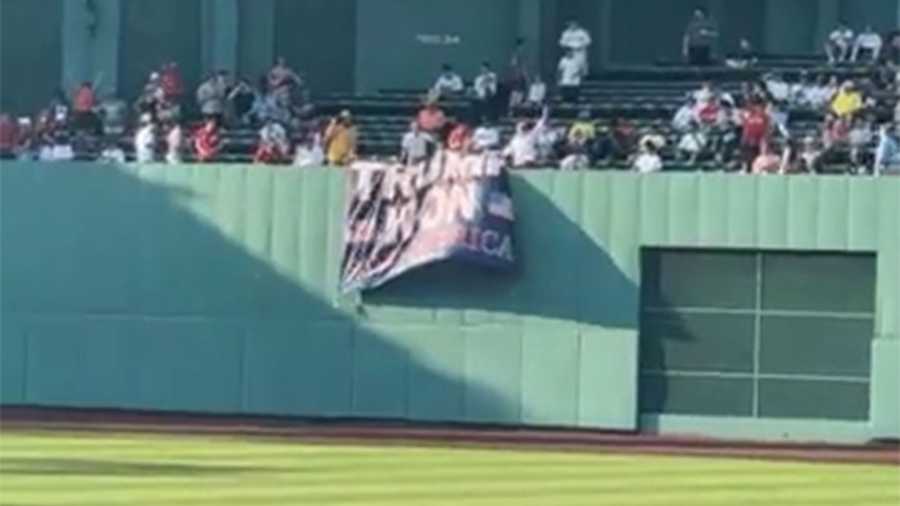
trump-won-banner-fenway-park

During yesterday’s late afternoon game Red Sox game against the Miami Marlins in Fenway Park, some fans unfurled a huge “Trump won — Save America” banner over the centerfield wall during the fourth inning. The banner was confiscated and the fans ejected from the game. Some of the players and quite a few spectators were amused. Similar messages appeared on banners unfurled during Mets and Yankees games in recent weeks.

The Red Sox have long had a policy prohibiting large signs and banners in the park, though I have seen some appear without the park staff taking action. Political signs have always been taboo. In 2017, this sign…

Continue reading

Ethics Madness On The Golf Course

I saw this story four days ago, and talked myself out of posting about it because I decided there had to be something I was missing and I didn’t feel like spending time researching pro golf, since I find golf so boring.But I couldn’t help myself, and kept reading articles, and now I’m convinced. This was wrong. And it was nuts. (Yeah, I’m pretty sick of the “Madness!” clip from the last seconds of “The Bridge Over The River Kwai” too—that’s James Donald, incidentally. I’m more sick of the apparently endless stream of incidents in The Great Stupid that prompt it.)

Golf pro Jon Rahm crushing the field in the PGA’s Memorial Tournament; indeed, he was on the way to a possible course record He had a six-stroke lead, and was 18 under par. Only golf legend Ben Hogan has done as well on that course in the tournament’s history. I had never heard of Rahm (though I will now know him as “that poor bastard), but he’s apparently the #3 ranked golfer in the world. That rating would have risen, and as would his bank account, when he won the nearly 1.7 million dollar prize money.

Right in the end of a round, however, on international TV, Rahm was told that he had been disqualified. The tournament’s medical adviser walked up to himafter he had played his final shot and gave him the news that he had tested positive for the Wuhan virus. Rahm had been undergoing daily tests after discovering before the tournament that he had come into close contact with someone who had tested positive.  Each of his previous tests had come back negative, but the positive test, once it was verified, was viewed as disqualifying. He took it, well, like a prole and a devotee of Vox. He tweeted,

“I’m very disappointed in having to withdraw from the Memorial Tournament. This is one of those things that happens in life, one of those moments where how we respond to a setback defines us as people. I’m very thankful that my family and I are all OK. I will take all of the necessary precautions to be safe and healthy, and I look forward to returning to the golf course as soon as possible.”

I might have defined myself by tweeting (if I hadn’t banned Twitter from my life),

Continue reading