
Sigh.
I can’t decide whether it is completely predictable that the richest man in the world has a 5th grader’s comprehension of ethics and integrity of principles, or whether it should alarm us all. I do know that those of us hoping that Musk could transform Twitter from the censorious, leftist propaganda organ that it has become into a fair and valuable platform for public discourse are probably going to be disappointed.
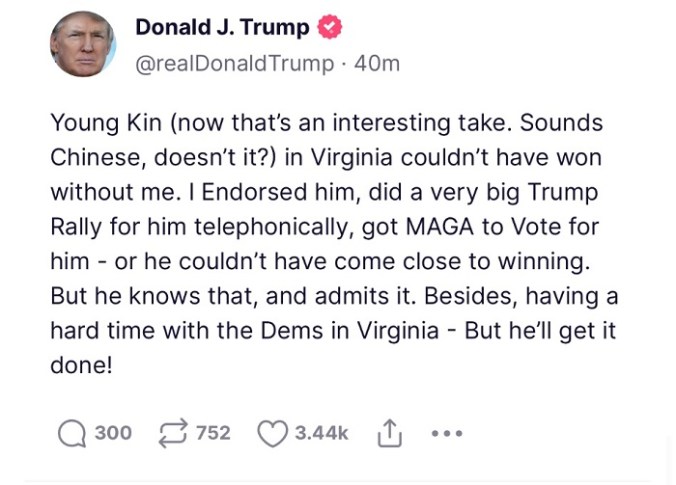
Musk said on Twitter yesterday that he was reinstating former President Donald J. Trump to the platform, and poof!, Trump was back on the site. That’s fine: Musk should have reinstated him immediately as soon as he had the metaphorical reins of Twitter in hand. His banning in 2021 was both partisan and political; as the immediate former President, Trump’s ability to express his opinions and positions on the most used social media platform was essential to the national dialogue, regardless of what he had to say, or how obnoxiously he might say it. The principles that supposedly led Musk to spend billions of dollars buying Twitter demanded that Trump be reinstated.
But what did Musk do? He put the matter up for a vote on Twitter. How does that compute, as the robot on “Lost in Space” might say? Allowing a group to vote to decide whether an individual gets to speak or not is the epitome of censorship. Stifling free expression by those who are unpopular or who have unpopular opinions is the antithesis of the First Amendment. Doesn’t Musk understand that? Apparently not, or, perhaps more likely, he does understand it to the extent he has thought about it in his brilliant but weirdly wired brain, but doesn’t care. The vote was good publicity. The vote would get headlines. The vote would attract new accounts. Principles, shminciples; ethics, shmethics. I own this place and I’ll do what I want.
That’s basically the Donald Trump approach to ethics. Great.






You and I are in complete agreement on the issue of viewpoint discrimination. I will counter that the service provided is not free. It is true that monetary compensation is not used but the Users barter for the service by providing valuable personal data and rights to the content they post online on an ongoing basis.
While Facebook does not sell users data directly it does so indirectly by serving as a middleman using its algorithm to serve up targeted advertising. That is the foundation of the business model from which the service derives its income.
One might argue that the perceived value of this trade is lopsided in favor of the user because of the billions of dollars needed to create and maintain the platform while all the user exchanges for access is giving the Service intelligence about the User. The problem with that argument is that it only appears lopsided because until the business model was developed the user has no individual means to collect financial compensation for them being subjected to an endless barrage of advertisements. Through this business model Users obtain an exchange of value by creating a social media account. In a sense, Facebook, et al serves as a medium of exchange which is the primary defining characteristic of money. Continue reading →