Ethics Dunce: Libertarian Andrew Cohen

The ethical virtue at issue is integrity.

On the other hand, some times you just have to say, "oh, the hell with it" and stomp on the damn snake...

Those who oppose abortion as the taking of innocent human life may not, consistent with integrity (forget about logic) also say that abortion is a personal choice. Those who oppose capital punishment as a matter of principle (rather than as a problem of fair application) may not, consistent with integrity, announce that of course they would make exceptions in the cases of Hitler, Bin Laden, and Ted Bundy. A pacifist who won’t explain why the U.S. shouldn’t have fought World War II isn’t a pacifist at all, but a poseur.

Now Andrew Cohen, a self-declared libertarian blogger, has written a defense of the state determining whether or not potential parents may have children.  He writes: Continue reading

Ethics Blindness in the Media: ESPN and the Syracuse Post-Standard Keep a Child Predator on the Prowl

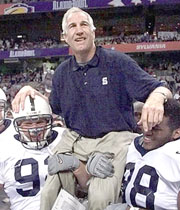
I know it is difficult keeping up with all the sports child molestation stories. This isn’t the Penn State football program scandal, where university officials carefully looked the other way while football coaching legend Jerry Sandusky apparently was using the campus to trap and abuse kids. This isn’t the Bill Conlin scandal, in which the sports writer just accorded the highest honor from his peers has also been accused of sexually molesting children. The topic is the Syracuse University basketball scandal, where once again an alleged molester was allowed to escape detection and prosecution for years, this time because of a perverted concept of journalistic ethics.

In 2002, ESPN and the Syracuse Post-Standard were given an audiotape on which the wife of Bernie Fine, the Syracuse University assistant basketball coach now accused of serial sex abuse, told one of the alleged victims of molestation that she knew “everything that went on” with her husband’s crimes. Both the paper and the network decided not to run stories based on the tape and the victim’s claims, and never sent it to law enforcement authorities.

They kept the tape in the files, until the step-brother of Bobby Davis, the former ball boy who made the initial recording, came forward to accuse Fine of molesting him, too. Then the tape was released, and Syracuse University fired Fine the day it aired.

The question: why didn’t the Post-Standard or ESPN give the tape to the police? How many children were molested because they didn’t? Continue reading

Comment of the Day: “Distracted Driving, Pot, and “The Great Debate””

The drug legalization advocates attacked en masse regarding my post about the faulty opposition of the Right to measures prohibiting cell phone use while driving and the Left to anti-marijuana legislation. The passionate pot advocates shattered the previous Ethics Alarms record for comment volume; to read the threads, one would think I am the last remaining citizen who supports drug laws. I more than fulfilled my obligation to respond to as many of the comments as possible, and there were many articulate and well-informed advocates.  I was waiting for a worthy Comment of the Day from the debate, one that didn’t rely on one of the four fallacious arguments that will drive me to drugs if I have to read them much more. Neill Franklin, a first time commenter, came through.

Here is his Comment of the Day, on Distracted Driving, Pot, and “The Great Debate”:

“Well, we can discuss all of the philosophies, intent of the law and compare oranges to apples all day and night, but here’s the bottom line from a practical, what’s happening in the streets, our neighborhoods, cities, neighboring countries and to our kids, point of view. No speculation here…all facts. Continue reading

Ethics Dunce:The Baseball Writers Association of America

"Well, yes, there was THAT, but what really matters is that he was one hell of an assistant coach!"

The high-profile Sandusky/Paterno/Penn State child molestation scandal has shaken the foundation of the sports world, and in the process, given resolve to past victims of child abuse to identify their molesters. The most recent example is veteran Philadelphia sportswriter Bill Conlin, who abruptly resigned from his job as a columnist for the Philadelphia Daily News when he learned that four adults had come forward to accuse him of molesting them when they were children in the 1970s. This created am immediate crisis for the Baseball Writers Association of America, who had this year bestowed its highest honor on Conlin, the J.G. Spink Award. It never looks good when the person you have declared to represent the best of your profession is revealed as drug-dealer, a serial killer, a foreign agent, or a child molester.

Here’s how the BBWAA dealt with the matter on its website, in this “official statement”: Continue reading

Distracted Driving, Pot, and “The Great Debate”

As balm for Christiane Amanpour’s bruises from being kicked off her ABC Sunday show back to CNN, the network honchos let her try a different format this weekend (since nobody was watching anyway.) Styled “the Great Debate,” it pitted conservatives Paul Ryan, the GOP House intellectual, and columnist George Will against soon-to-be-retired Democratic Congressman Barney Frank and Clinton’s former Labor Secretary and perpetual Munchkin Robert Reich for the full hour, exchanging familiar talking points on the usual suspect national issues. The debate wasn’t so great, for several reasons, prime among them being the natural motor-mouth tendencies of Reich and Frank, who, I would guess, took up approximately twice the air time as the conservative pair. The teams were similarly unbalanced in cheer, with Reich as perky as his Lollipop Guild training would suggest, and Frank full of his trademark wisecracks, while Will was dour as ever (when faced with liberal cant, the columnist always looks like my high school Latin teacher did when I was botching the day’s translation) and Ryan radiated the charisma of a certified public accountant.

The most interesting exchange was when George Will derided proposed federal regulations against “distracted driving” as the latest installment of the nanny state encroachment on personal rights, saying that individual freedom should trump the government’s concern for public safety except in the most extreme circumstances. One of the good uses of absolutist reasoning is that it raises a very high bar before breaching a valid principle can even be considered, since it has to be considered as an exception if it is to be contemplated at all. Barring unsafe conduct that increases the likelihood of automobile accidents, however, is not the place for absolutism, but for utilitarianism—rational balancing. Continue reading

Three Terrible Tales From the Busted Ethics Alarms Files…

An unfortunate side-effect of writing Ethics Alarms is becoming aware of such stunningly unethical conduct in all reaches of American society that it risks sending me into despair. I have no illusions about my level of influence over the problem—virtually nil—and the mounting evidence, often bolstered by the tenor of the comments to some posts, that our society does a poor job installing functioning ethical reflexes is both frightening and intriguing. What percentage of the American public go through their lives without functioning ethics alarms, and how do we tell who they are in time to protect ourselves?

As to the first question, I have no idea, but I suspect it is disturbingly high. The second question is even more difficult. Fear of consequences keeps most unethical people from revealing themselves until they face a crisis or an opportunity too tempting to resist. Then they do things like this: Continue reading

Voting Reform Ethics

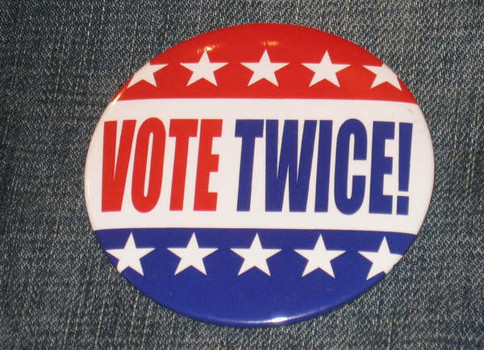
It is interesting that Attorney General Eric Holder would choose to become the point man for a  partisan effort by the Obama administration to demonize new voter qualification measures in 14 states. Holder is an embarrassment, credibly accused of lying to Congress in its efforts to get to the bottom of the Fast and Furious fiasco, and justifiably regarded by objective observers as incompetent even before his claim that the botched and deadly gun-smuggling operation went on under his nose without his cognizance, because, you know, he doesn’t read his e-mails. There are many viable theories why President Obama hasn’t yet asked Holder to leave, all plausible, all disturbing: Obama really thinks he’s doing a good job; Obama is being loyal to a loyal employee to the detriment of the nation; Obama is too passive an executive to fire anybody; Obama is afraid of backlash if he fires his highest-ranking black appointee; and my personal favorite, Holder may be horrible, but he’s not as horrible as the last Attorney General, Alberto Gonzalez, whom Bush refused to fire. Also inexcusably.

It is possible that Holder’s speech equating reasonable reforms to limit the opportunities for voter fraud with voter suppression was calculated as a way to ingratiate himself to left-leaning media critics whose support he will surely need as the Fast and Furious noose tightens. It is possible that his argument that the measures are aimed at minorities and the poor is part of Team Obama’s electoral strategy to divide the country—further—along lines of economic status, race and ethnicity. It is even possible that he is sincere. No matter: it is an unjustifiable argument. Continue reading

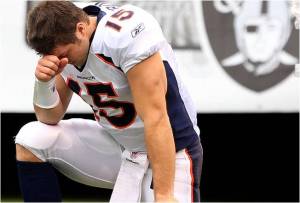
Tim Tebow Hatred and the Rabbi’s Fears

How dare he?

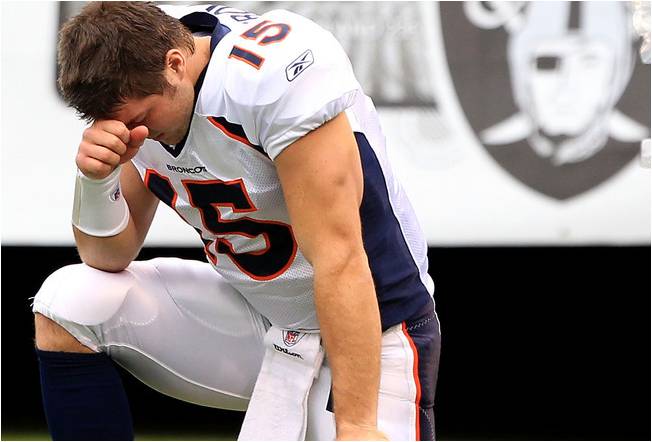
I have avoided weighing into the controversy over Tim Tebow, the Denver Bronco quarterback whose very public Christianity, combined with his penchant for leading miracle comeback victories for his team, has made him the most polarizing figure in sports today, and one of the most polarizing people in the culture as a whole. I have avoided commenting because I think the ethics of the controversy are obvious. Tebow is a decent, law-abiding, well-bred young man in a sector of our culture that produces profane, semi-literate, violent, or arrogant  jerks, fools, cheats and felons, not to mention arrested adolescents, by the hundreds, who are cheered, worshipped and enriched based solely on their talent to excel in stadiums and arenas. Anyone who chooses Tim Tebow, out of all these travesties of sports celebrity, to deride solely because he is vocal about his religious beliefs isn’t worth arguing about, because the verdict’s in: that critic’s priorities are backwards, inside out and warped. Tebow, unlike the NFL’s assorted felons, the NBA’s many dead-beat dads, and baseball’s steroid cheats, is a worthy role model for kids. He is humble, respectful, does his job and plays by the rules. What’s not to like?

Well, we know the answer to that question. He prays on the field, thanks God after every touchdown pass, and is prone to saying things like, “First and foremost I gotta thank my lord and savior Jesus Christ”  to reporters. Is it annoying? Oh, sure it is. This stuff is annoying from any athlete. To begin with, it is silly—the very idea that a Supreme Being gives a hoot which wins a football game is infantile—and it comes off as a commercial, like an athlete who makes sure that he says, “Well, first and foremost I have to thank the General Mills  people, because Wheaties, “The Breakfast of Champions,” has made me who I am today!”  in every interview. But Tebow’s statements aren’t  commercials, though, and anyone inclined to be fair knows it. This is a man with a deep religious faith who really believes that God guides his every move, and that it is right and responsible to thank Him when  the quarterback  is being celebrated for athletic exploits that in Tebow’s belief system are the product of his relationship with his deity. The sentiment is sincere and the motivation is virtuous. For Tebow’s displays of faith to incur hatred is an indictment of the haters. If he annoys you, don’t listen to him. If you do, the annoyance is your fault, not Tebow’s. Continue reading

The Twin Cities, Cheating CitizensTo Balance Their Budgets

I'm confused...I thought the police were supposed to arrest con artists, not be con artists!

Municipal governments are having a difficult time balancing budgets in these challenging economic conditions, but the twin cities of Minneapolis and St. Paul, Minnesota have devised a surprisingly effective way to pick up oodles of extra cash.

Steal it.
From its citizens.

I’m not kidding. City records show that St. Paul, for example, has kept nearly a quarter-million dollars from impound lot auctions this year that should have properly gone to vehicle owners. But the law requires the car owners to ask for their money, and both St. Paul and Minneapolis do their level best to keep that information from trickling through all the documentation and red tape. The St. Paul Police Department, which runs the St. Paul impound lot, sends owners of impounded vehicles a certified letter shortly after their car is towed. The letter includes citations to one city ordinance and five state laws that govern the towing, impoundment and auction of vehicles. Car owners  have to look up the fifth state law cited and read that law’s fourth paragraph before learning of the right to a refund. And to do that, they have to know what they should be looking for—which the letter doesn’t tell them.

Cute, eh? Continue reading

Gallup’s Trust Survey: Congress in Freefall

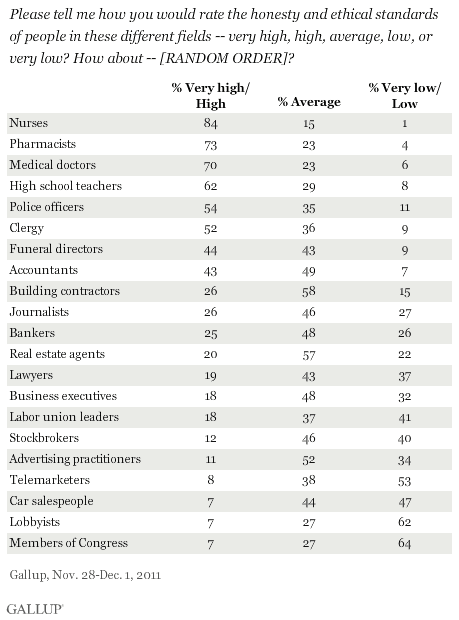
Gallup’s just released annual survey of public attitudes toward various professions held few surprises this year. As has been the case for over a decade,nurses and pharmacists topped the list as the  professions regarded as the most honest and ethical. I find the presence of high school teachers fourth (ahead of police officers)  a triumph of public relations, nostalgia and wishful thinking, but the other top rated professions were predictable. In general, the professions we are forced to depend upon the most are the ones we trust the most—because we have little choice. The ones we trust the least tend to be those with whom we can be in conflict with or see as having differing interests from our own. Doctors are always going to rank higher than lawyers, for example, because there are no doctors trying to make us sick.

Of the 21 professions in the survey, only seven—including funeral directors!—had positive numbers, meaning that more people regarded them as ethical than unethical. The seriously distrusted professions, with a percentage of very low ratings significantly higher than the proportion of very high ratings, begins with lawyers, business executives, union leaders, stock brokers, and advertising execs in order of trustworthiness; bankers, interestingly, avoided this group and had about as many supporters as detractors. But the bottom four is where the really dishonest professionals dwell, according to the poll. With single digit positive ratings compared to negative ratings of  more than 50% are telemarketers, car salesmen, lobbyists, and at the very bottom, Congress, with 64% of the public regarding the institution as dishonest and unethical. That, Gallup says, is not only the lowest rating for Congress since the survey has been taken; it is the worst rating for any profession.

That Congress has sunk so far is not a surprise. It is just depressing.

Here are the results: