Ethics Heroes: Davisville (RI) Middle School 7th Graders

This story is simultaneously inspiring and horrifying.

A sixth-grade class in the Davisville Middle School in the North Kingstown School District in Rhode Island was being subjected to a teacher (so far, unnamed) who was cruel to the boys and sexually harassed the girls, leering at them, giving them pet names, and asking them to dance. The teacher was also a coach, and reportedly told the class that he had received complaints from parents in the past without any consequences. The continuing flirting and sexual innuendos made the girls in the class uncomfortable, so the next year, as seventh graders, some of the boys reported the teacher’s conduct to their parents and adminsitrator at the school. All the adults shrugged the complaints off, the boys say. Continue reading

Observations On “Flight/Risk”…And Related Matters

“Flight/Risk,” an Amazon production, was released on the streaming service today. The documentary is the most recent examination of the tragedy and scandals surrounding the crashes of two Boeing 737 Max planes within a five month period in late 2018 and early 2019. The horrible and disturbing story  is narrated by Pulitzer-winning Seattle Times journalist Dominic Gates, and revealed from the perspective of the deceased passengers family members, their lawyers, and whistleblowers.

Amazon’s fatuous description of its own product, primarily designed to be a “trigger warning,” explains that the movie may be too traumatic to watch for “some” and says the planes crashed “without anyone really understanding why.” That is, to be blunt and vulgar, bullshit. Lots of people understood why, including Boeing engineers, Boeing executives, FAA officials, and anyone (like me) who knows why large organizations are almost always incompetent, unethical and untrustworthy. {Ethics Alarms has several posts about the 737 Max scandal.]

What is so infuriating about the story is that it is so familiar. This is the Challenger disaster all over again, even to the detail of a whistle-blowing engineer being punished for having the courage to speak up, and eventually killing himself. In other ways, it is like the recent Ernst and Young cheating scandal, which Ethics Alarms discussed here.

Continue reading

Prof. Volokh Demonstrates How University “Diversity Statements” Are Unconstitutional

They are, of course, also unethical unless you are a nascent totalitarian who believes that WrongThink should disqualify citizens for employment and influence.

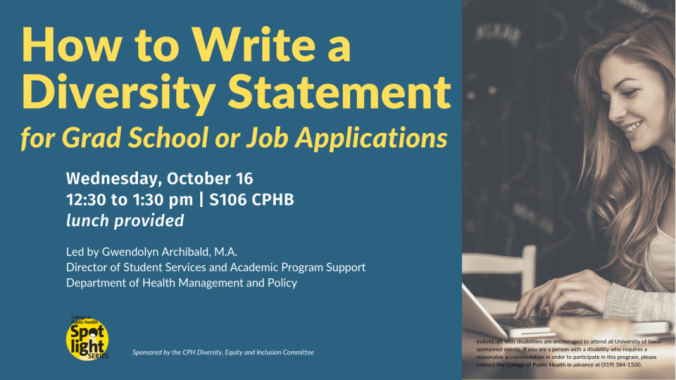
Universities are increasingly requiring so-called “diversity statements”‘ from those seeking positions on their faculty. They are particularly crucial to white scholars, since potential “faculty of color” are diversity. The statements describing the hopeful instructor’s contributions to diversity, equity, and inclusion are however, being challenged, as well they should be. Apparently having faculties that usually have 5% or fewer members who confess to being conservative isn’t enough, so the requirements of what are essentially loyalty oaths to the Great Woke are being seen for what they are: efforts to eliminate diversity of thought on campus—all the better to ensure the effective indoctrination of students whose minds are properly vulnerable. . Criticisms first made in tweets and blog posts have expanded into prominent opinion pieces and, more recently, law review articles. These attacks are having an effect. There are now faculty-wide resolutions against (and for) mandatory diversity statements. Lawyers are recruiting plaintiffs to challenge diversity statement requirements in court.

Good.

The Federalist-Society recently held a webinar on the topic. Prof. Eugene Volokh, one of the panel participants, offered a “thought experiment” to demonstrate just how noxious “diversity statements” are.

Here it is:

Continue reading

Comment Of The Day: “Verdict: ‘Quiet Quitting’ Is Unethical. Next Question?”

[The caption on perhaps my favorite Charles Addams cartoon reads, “We never could have done it without him.”]

I thought that the essay on “quiet quitting” would spark a good discussion, and when I think that, I’m usually wrong. This time I was right, and among the excellent comments was this Comment of the Day by Tim Hayes, who focuses on the crucial aspect of the issue that I barely touched on at all: the responsibilities of management.

Here is Tim’s Comment of the Day on the post, “Verdict: “Quiet Quitting” Is Unethical. Next Question?”…

***

So, full disclosure, I hate the terminology and discussions around “quiet quitting”, both as a manager, and as an employee. Part of this is because it is unethical – but also part of it is because a lot of current discussions seem to be about deflections and doublespeak, and they just frankly aren’t doing anyone any good.

Some instances of quiet quitting are simply laziness on the part of the employee – this shouldn’t surprise us (I can make a strong argument that laziness when possible is actually a biological predisposition, and furthermore beneficial to societies when channeled appropriately), and while performing excellently is a virtue, and should be a path to success, it is not a necessity in all things. The American experiment, and indeed all civilizations (Western and Eastern), have gotten along just fine with the majority of individuals being mediocre – the trick has historically lay in defining mediocre as still sufficiently productive to support a society when the majority of its members are at that level, while allowing those who wish to perform exceptionally to do so. So, in the situation where quiet quitting is about laziness, the only major question to be answered is what constitutes acceptable levels of performance in the role at hand, and have those been adequately defined and communicated to the person in that role.

This is why I hate hearing the discussions as a manager – they almost always ignore that there is a failure of leadership/management in these cases. If I have someone who is performing the job as I’ve described it to them, and is actually meeting my set standards for acceptable levels of performance, yet their performance of their responsibilities is insufficient in some way, then it is axiomatic that I have failed to define as acceptable the levels of performance that are sufficient to fulfill my need. If, conversely, I have described acceptable levels of performance and the person is not meeting them, and so my business needs are not being met, than I am failing to hold this person to the standards I have set. Continue reading

Verdict: “Quiet Quitting” Is Unethical. Next Question?

I had happily never heard of the term “quiet quitting” until last week, and now it is supposedly a hotly-debated ethics topic. There’s nothing to debate about. “Quiet quitting” is not new (the term may be new), nor is there any defense for it. It is un-American to its core. But as so many American values are being eroded by revolutionary fervor of people who simply don’t like the unique history, culture and principles that make the nation the unique entity that it is, it figures that slacking at one’s job and being self-righteous about it would be on the rise.

It is, there is little doubt about that. Ethics Alarms has mentioned the trend of increasingly poor and unaccommodating service in every sector. The usual explanation is the under-staffing that the destructive pandemic lockdown facilitated, but it’s good that focus is falling on the declining belief in seeking excellence in all one does, and putting out one’s best effort at all times. The death throes of American dedication to excellence as a cultural value is what has been newly christened “quiet quitting,” the many ways in which workers reduce the time, energy, and care they commit to their jobs.

Continue reading

Case Study In Minneapolis: The Compensatory Racial Discrimination Slippery Slope

Or perhaps they just don’t believe in the Constitution in Minneapolis—you know, like in California. The Minneapolis Federation of Teachers struck a deal last March 25 with the Minneapolis Public Schools ending a teacher strike, and among the provisions was “educators of color protections.” If a non-white teacher is first on the list to be let go for budget reasons, the school system must fire a white teacher with the “next least” seniority instead.

Got that?

The agreement reads in part,

“Starting with the Spring 2023 Budget Tie-Out Cycle, if excessing a teacher who is a member of a population underrepresented among licensed teachers in the site, the District shall excess the next least senior teacher, who is not a member of an underrepresented population.”

Continue reading

Ethics Quiz: The Secret Service Defies Orders!

As soon as I saw the headline to Prof. Turley’s latest post on his blog, “Res Ipsa Loquitur” I knew we had an ethics quiz: “Presidential Protection or Abduction: Why Secret Service Wrong for all the Right Reasons on Jan. 6.”

Turley’s article was prompted by one aspect of the Jan. 6 Commission testimony of Cassidy Hutchinson that President Trump ordered his official SUV to take him to the U.S. Capitol to be on hand with his supporters as they rallied (it turned out to be a “mostly peaceful” rally) against what Trump had told them was the stolen 2020 election. According to the witness, that she was told that T his Secret Service security team refused, causing the President to become furious.

Turley’s take, in brief:

…the Secret Service is trained to take immediate action to protect a president. On the other hand, it cannot effectively control the presidency by controlling a president like a modern Praetorian Guard. In the end, if this account is true, the security team was likely wrong in refusing the order of the President to be taken to Capitol Hill….Trump intended to do exactly what he promised and ordered the Secret Service to take him to the Capitol. But Tony Ornato, White House deputy chief of staff for operations, and Bobby Engel, who headed Trump’s security detail, reportedly refused.

…If true, the security team’s motivation certainly was commendable. It probably prevented Jan. 6 from getting much, much worse…what was the authority of the security team to refuse a direct order from a sitting president to go to Congress?

…The Secret Service has always assumed discretion in seizing a president to protect him from immediate harm [but there was no immediate harm threatened]…Trump reportedly decided he wanted to lead the protests to the Capitol and didn’t care about the security uncertainties — and he actually had a right to do so. Presidents can elect to put themselves in harm’s way… The Secret Service has no authority to put a president into effective custody against his will… In Trump’s case, he reportedly said he did not want to go back to the White House but was taken there anyway.

…This act of disobedience may have saved the country from an even greater crisis…

In the end, the security team was correct on the merits but probably wrong on the law. This was not an unlawful order, and a president must be able to control his own travel. In other words, the agents were wrong for all the right reasons.

Your Ethics Alarms Ethics Quiz of the Day is: Continue reading

If The Last Post (About Emerson College Promoting Anti-White Racism) Bothered You, Samuel L. Jackson Has A Suggestion Before You Read This One…[UPDATED!]

In Illinois, Oak Park and River Forest High School administrators will now require teachers to adjust their classroom grading scales to account for the skin color or ethnicity of its students. Let me repeat that…

Oak Park and River Forest High School administrators will now require teachers to adjust their classroom grading scales to account for the skin color or ethnicity of its students.

This is called “Transformative Education Professional Development & Grading.” It’s transformative, all right. It is a great way to transform black students into societal cripples who cannot master what many behavioral scientists believe are the most crucial skills for life success, because they are given an institutional pass.

This ridiculous and divisive concept is, of course, yet another effort to eliminate persistent discrepancies between racial groups by pretending that they are caused by racism, and lowering standards so everyone has an equally low bar to clear.  OPRF will order its teachers to exclude from their grading assessments variables it says disproportionately hurt the grades of black students, like for missing class, misbehaving in school or failing to turn in  assignments. This will, you know—don’t they know?—set up black students to skip work, misbehave in other settings, and fail to complete their assigned jobs and tasks. Continue reading

So You’re A Bigot, Then, And Discard Fairness And Reciprocity As Guiding Values! Thanks, Malcolm Gladwell! Good To Know…

I was once a big Malcolm Gladwell (“The Tipping Point”) fan before I figured out the pop psychology and “airplane book” author’s shtick. This latest revelation completes my disenchantment. On his website, Gladwell, discussing interview questions, wrote that he never hired any job applicants who answered in the negative when asked whether they could drive a manual transmission automobile. Those who have mastered a shift and clutch, Gladwell says,realize that the most fun cars in the world to drive are sports cars with manual transmission, and they like the idea of being able to turn a rote activity (driving) into an enjoyable activity. That, and his belief that people who drive a shift like “knowing how to do things that most people do not,” causes him to conclude that these are the only people he wants to work with

Got it. He’s a bigot and an asshole. If I were asked that question and I wasn’t interviewing for a chauffeur, I would ask, “What does that have to do with anything?” The question is really no different from asking one’s religion or party affiliation, ethnic background or position on abortion. It’s a justification for bigotry. The question would be enough for me to terminate the interview, and walk out. I don’t want to work with unfair people.

Continue reading

On “Correct Pronouns,” Part 2

I began this inquiry two days ago, intending to complete it forthwith, but then a sick, broken, psychopathic teen in Texas murdered his grandmother, children and teachers with an AR-15 with the predictable Ethics Train Wreck gathering steam once again. Let’s finish up before something else goes wrong.

Ann Althouse is at fault: she flagged Roxane Gay’s New York Times advice column “Work Friend,” focusing on this question from the ubiquitous “Anonymous”:

In the past six months, my organization approved the optional inclusion of pronouns in email signatures. I learned that one of my team members uses nonbinary pronouns. In my written communication and conversation about that team member, I now use those pronouns, but I notice that no one else has made the adjustment. As the supervisor of this team, how can I fix this situation?I feel like the longer I wait to address it, the more disrespectful and complicit I’m being. I can’t police people’s language, but I would call someone out for other kinds of behavior I interpreted as disrespectful. (For what it’s worth, I don’t suspect anyone of being intentionally disrespectful by not using their colleague’s preferred pronouns.) The nonbinary colleague has not said anything to me about this being a problem, but I have to assume it feels dismissive. I feel I owe them an apology, but what I really owe them is better leadership. What would you do?

The advice columnist whose record of often obnoxious woke certitude ended up eating the issue sufficiently to require two parts to the intended post, responded,

“Thank you for asking this question. Everyone deserves to be treated with respect and part of that is using people’s correct pronouns.”

“Correct pronouns?” Doesn’t correct mean “factual and true”? The requirement that individuals and groups get to demand and enforce what is correct is, I think, one more manifestation of the Left’s slide into a totalitarian mindset, and the tendency of the easily subjugated, weenies and the “oh. well, if they care so much, why fight it?” crowd to let societal freedom die a death of a thousand cuts. Ann quoted one of Gay’s commenters, who wrote,

I am really curious about this pronoun business in business communication. Who decided that the new law of the land is that everybody gets to pick their pronouns however misaligned they may be to their publicly visibly persona, and everybody else needs to learn this and memorize? Who has time for this?

Of course, it is not a matter of time, but a matter of ethics. It is an ethics conflict, in fact, one that involves a clash of manners, consideration, principles, respect, fairness, responsibility, and the abuse of power. It is ethical—fair, respectful, caring—to agree to call a friend, colleague or acquaintance by whatever name they wish to be called, within reason. Not all names are appropriate in all settings, however: a boss that asked to be called “Love Bug” or “Sex Machine” in the workplace is engaging in sexual harassment. Unethical. Would one have to call someone by her “correct” name if she insisted on the title, “Your Majesty”? That’s getting closer to the issue here. Such demands (a request is a demand if one will encounter negative consequences for rejecting it) are a power play; one relevant ethics question is whether the conduct is justifiable. I object to jumping through hoops on command: Ethics Alarms will capitalize the “b” in Black when the stars turn cold, just as I rejected the abomination “of color” the first time it raised its colorful head.

Writing about the pronouns issue a year ago, Althouse, who has raised the question a lot, ended one post, “Personally, I feel that anyone who feels the need to announce their pronouns is childish and rude, and I treat them as such.” That discussion covered whether requiring/demanding/requesting that someone adopt one’s counter-factual, eccentric or debatable choice of pronouns is forcing others to adopt an ideology they do not share.

Of course it is. That’s the whole point. Continue reading