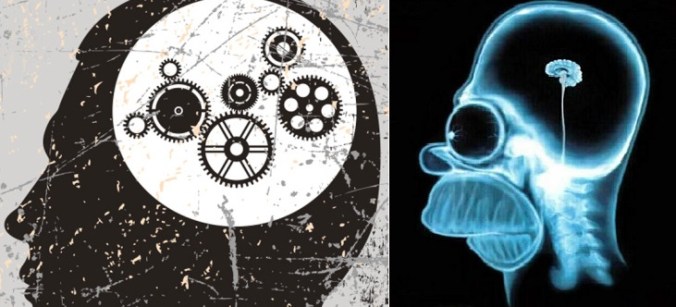
Morning Ethics Warm-Up, 12/31/2017: The Too Many Year Ending Ethics Issues To Handle In One Day Edition

Happy New Year!

1 Arrgh! In an op-ed called “Higher Ed’s Low Moment, Farnk Bruni bemoans the fact that colleges “found themselves on the defensive.” Citing the Pew Center’s findings that I discussed here, he writes of declining opinions about the value of college,

“That’s not so surprising, given Americans’ intensifying resentment of anything that smacks of elitism and given Republicans’ attacks on science and intellectuals. As Ron Daniels, the president of Johns Hopkins University, recently told me, “Even if we were completely unblemished in the way in which we pursued our mission, it would be hard to imagine that in Trump’s America, we wouldn’t be targets for scorn.”

Incredible. (Or, as my late, schizophrenic cousin Trefon would say, “Umba!“, as in “Umbelieveable!” I always found that funny, and I would love to see his slang word enter the popular lexicon. Trefon was a great kid who had a short, empty life, and ended it by jumping off an overpass into an oncoming truck. It would be nice if he left some enduring contribution to the culture, even if it was a silly one.) No, the reason so many Americans no longer think college is a wonderful thing is that they can see and hear. Students aren’t being educated. Graduates have minimal knowledge of history, literature, government and culture. They can’t write, and they can’t argue. Their professors get on social media and issue things that would destroy trust in any institution that employed them.

The campuses are increasingly hostile to free speech, free thought, democracy, capitalism and the United States of America. None of these factors penetrate Bruni’s biases and conventional wisdom. He keeps repeating the mantra that caused me to resign from an education board many years ago: ” a college degree is one of the surest harbingers of higher earnings and better economic security.” That’s how college has been regarded as a reflex for a century now, and the policies that followed that starting point–a degree,  means jobs and money—have created the sick system in which students who are not qualified to attend college are accepted anyway, and tuition has soared to obscene level., all while the actual content of the curriculum and teaching have become an afterthought. It’s the diploma that matters!

No, it’s the education. Bruni says, ” [T]he continued competitiveness of the American economy depends on the skills of our work force, the intellectual nimbleness of our citizens, the boldness of our scientific research and the genius of our inventions. Our colleges and universities are central to that.”  If getting as many people diplomas as possible is the mission, however, seeking “intellectual nimbleness” is obviously an afterthought.

This emperor has no clothes, and hasn’t had for a long time. The disturbing development isn’t that so many conservatives have finally realized that the golden ideal of an American college education no longer comports with reality. It is that so many opinion makers and policy makers hold on to that ideal when it is so evidently false. If college degrees don’t prove that  graduates have core knowledge, writing and critical thinking skills, then they are  just high-priced tickets to be incompetent.

And they don’t. Continue reading

Ethics Observations On Pew’s “17 Striking Findings From 2017”

#1Partisan divides dwarf demographic differences on key political values. The average gap between the views of Republicans and Republican-leaning independents and Democrats and Democratic-leaning independents across 10 political values has increased from 15 percentage points in 1994 to 36 points today. Two decades ago, the average partisan differences on these items were only slightly wider than differences by religious attendance or educational attainment, and about as wide as differences across racial lines. Today, the partisan gaps far exceed differences across other key demographics.

I attribute this ominous development to both parties crossing previously observed lines of appropriate political tactics and rhetoric, picking at the seams that hold our society and democracy together. The GOP-advanced Whitewater investigation of the Clintons’ financial shenanigans began the criminalization of politics. President Clinton’s arrogance and recklessness as a sexual predator placed Democrats in the position of defending unethical conduct especially repugnant to conservatives, and the furious (and dishonest) efforts of both Clinton and Democrats to deny the legitimacy of his impeachment drove the parties further apart.

The essentially tied election of 2000 came at the worst possible time, but Democrats made its wounds to public comity worse that they had to be by using the false claim that the election was “stolen” to energize its base for years. The rise of hyper-partisan leaders in the House and Senate—Gingrich, Pelosi, McConnell, and worst of all, Harry Reid—continued to poison discourse.  The Iraq War fiasco, a Republican mistake, and the false Democratic mantra “Bush lied…” in response to it exacerbated the divide. Then the bi-partisan botches that led to the 2008 crash were widely attributed only to Republicans. Spurred by the prospect of a black President, the news media, always heavily tilted leftward, abandoned large portions of its ethical values to be an unapologetic cheerleader for the Democratic candidate, because having a black President elected would be so darn wonderful for everybody. Thus did the media fully embrace “the ends justifies the means” as an operating principle/

The inevitable racist response of a minority—but a vocal one—in conservative and Republican circles to the prospect of a black President caused further division, and Obama’s alliance with an openly racist Reverend Wright caused more racial polarization. Once elected, President Obama could have healed much of the damage since 1994 (as he promised to do) , but instead he chose to leverage divisions among races, genders, ages, classes, gays and straights, and legal and illegal immigrants for political advantage. His supporters, meanwhile, including those in the news media, began using accusations of racism to smother and inhibit legitimate criticism. Obama broke with Presidential tradition by repeatedly blaming his predecessor for problems he proved unable to solve, keeping partisan resentment hot.

Even with all of this, Obama could have healed much of the accumulated partisan antipathy if he had been an effective leader. He wasn’t. In contrast to his predecessor he was an effective (though over-praised) communicator,and in marked contrast to the current POTUS, he played the part beautifully, and that’s not inconsequential. The rest, however, was an ugly combination of misplaced priorities, incompetence, laziness, racial bias and posturing, with awful results. This hastened the divide, because Obama’s core base, the African American community, was inclined to view him uncritically no matter what he did. As other groups called out the President on his failings, that group’s loyalty and bias drove it, and allied groups, into defensive, knee-jerk ideological opposition, as the growing power of social media exacerbated hostility between the ideological polls.

Obama’s divisive administration, rhetoric and poor governing habits begat Donald Trump.

And here we are. Continue reading

5 Signs That Your Organization Has An Unethical Culture Brewing…

The Harvard Business Review has published an article describing what it learned from a survey of experts asked to describe the conditions they have observed in organizations later revealed to have serious ethics problems—the symptoms of an unethical organization ethics culture. Here are the five top signs, with the corresponding rationalizations from the Ethics Alarms list where appropriate, as well as related unethical patterns of thinking and relevant organizational ethics principles that are repeated constantly in training sessions by people like me, yet routinely ignored. The news media, meanwhile, often covers the incidents as if journalist have never heard of those principles.

I. Urgency and fear: Following corruption scandals, leaders tend to describe events in terms of pressure, necessity, and what the company needed to do to ”survive.” This perception of existential competitive threats can be used to justify the creation and maintenance of toxic incentives, and it will undermine any efforts to raise concerns.

Rationalization 28. The Revolutionary’s Excuse: “These are not ordinary times.”

An argument for those who embrace “the ends justify the means”—but only temporarily, mind you!—the Revolutionary’s excuse has as long and frightening a pedigree as any of the rationalizations here. Of course, there is no such thing as “ordinary times.” This rationalization suggests that standards of right and wrong can and should be suspended under “special” circumstances, always defined, naturally, by those who defy laws, rules, and societal values. Their circular logic results in their adversaries feeling justified in being equally unethical, since times in which the other side engages in dishonesty, cheating, cruelty, and more is, by definition, extraordinary.

The inevitable result is a downward spiral of conduct, until unethical behavior is the norm. Ironically, the rationalization that “these are not ordinary times” no longer is necessary at that point. Unethical conduct has become ordinary, the new normal. This is, it is fair to say, the current state of American politics.

and…

Rationalization 31. The Troublesome Luxury: “Ethics is a luxury we can’t afford right now”

Ethics is never “a luxury.” It is slyly effective to describe it as such, however, and those who do so usually believe it—which means you should sleep with one eye open when they are around, watch your wallet, and never turn your back. Saying ethics is a luxury simply means that the speaker believes that one should be good and fair when it is easy and benefits him or her, but when problems loom and crises have to be faced, ethics are optional. This attitude is another calling card of Oliver Wendell Holmes’ “Bad Man,” the law abiding citizen who will cut your throat for his own benefit if he finds a legal loophole. In a true crisis, ethical values are often the only thing standing between us and catastrophic misconduct in the throes of desperation and panic; they aren’t luxuries, they are life-lines. When you hear yourself saying, “I’ll do anything to fix this! Anything!” it is a warning, and the ethics alarm needs to start ringing hard. Grab those ethical values, and hold on to them. They are the last thing you can afford to be without at such times.

***

II. Isolation: Groups and teams that are far from headquarters—either in geography, access to information, or both—are vulnerable. When a team that is isolated (by accident or design) comes under the direction of an authoritarian, competitive leader, an enterprise has created the baseline conditions for corruption. People are far more influenced by their immediate surroundings than by a code of conduct set at the top.

This is group-think, ignoring the tenets of Professor Zimbardo’s rules that he recommends to avoid the phenomenon:

“Avoid situations where you lose contact with your social support and informational networks, for the most powerful forces of social influence thrive then. You do not want all your reinforces to come from these new sources….Never allow yourself to be cut off emotionally from your familiar and trusted reference groups of family, friends, neighbors, co-workers…

***

Continue reading

Morning Ethics Warm-Up, 11/3/17: Democracy Dies In Darkness Edition

GOOD MORNING!

1 Related to the previous post is the fact that the President of the United States should not be recommending the death penalty for anyone before they are tried and fund guilty beyond a reasonable doubt, even vile terrorists who attack and kill children. Yet President Trump did this in his usual impulsive, infuriating fashion. It is not the first time he’s crossed this separation of powers line, either: his comments also caused problems in the prosecution of deserter Bowe Bergdahl,

The gratuitous interference with the justice system by premature pronouncements of guilt and deserved execution serve no purpose; the President is just grandstanding. President Obama made premature  comments on unresolved legal matters several times too; he did it more articulately, of course, but he still did it, and he’s a lawyer. Is this particularly stupid conduct “Presidential” now?

2. Speaking of the concept of presumed innocent until proven guilty: I wonder if there has ever been anything in U.S. history as widespread, unfair, and vicious as the assumption by so many in the public and the news media that the President of the United States engaged in criminal acts to steal an election—without any evidence whatsoever. It is like a mass delusion, and all, as far as I can see, because of three factors: past business dealings with Russian entities (which is not illegal) by many of Trump’s associates; Trump’s Trumpish and obviously facetious call on the campaign trail for Russia to reveal Hillary’s (illegally) spoliated emails, and the accusation from Clinton and others that Russia’s interference—you know, with brilliant, persuasive internet ads—explained Hillary Clinton’s loss and made Trump’s election “illegitimate.”

I had another conversation with a friend about this yesterday. He’s just certain that Trump did something illegal. What? He doesn’t know, but he’s sure. Why is he sure? because it’s Trump, that’s why, and because my friend still can’t believe that the man could have been elected without some kind of conspiracy. It’s stunning, and the news media is fanning these flames of delusion. Here’s a post on the Daily Beast; the title: “The Rise of George Papadopoulos, a Trump Adviser Who May Kill Trump’s Presidency.”

The title is blatantly dishonest ckickbait: I clicked. It’s out there for people like my Trump-Hating, Trump-Fearing friend, who reads this and thinks, “Yippee! My wait will soon be over!” Would you like to guess at how much factual support is revealed for the conclusion that Papadopoulos “may kill Trump’s Presidency’? None. Absolutely none. An equally accurate headline would have been, “The Rise of George Papadopoulos, a Trump Adviser Who May Eat a Honda,” or “The Rise of George Papadopoulos, a Trump Adviser Who Could Be  A Concert Cellist If He Practiced Really Hard.”

This is unethical, but it’s also nuts.

3. According to Newsbusters, who obsesses over such things,  neither ABC, CBS, nor NBC covered Donna Brazile’s explosive accusation yesterday that Hillary Clinton and her campaign bought the Democratic National Committee and rigged the nomination process. There is no excuse for this; it is a dereliction of journalism ethics and the profession’s duty to the public. There is also no benign explanation for it. It was obviously the top story of the day, and one with great national and civic significance. Newsbuster’s typical assessment:

“The reason the networks wanted to keep Brazile’s findings secret was simple: They didn’t want to ruin their narrative that Clinton was a pure angel who was a victim of Donald Trump and Russian collusion”

That seems harsh, but it’s not unfair. What other explanation is there? They just somehow never got the memo? They really believed that more coverage about how three Mueller indictments unrelated to illegal Russian contacts by the Trump campaign mean there were illegal contacts with Russia by the Trump campaign?  They have decided to prove, once and for all, that the news media is totally corrupt and biased? Hillary Clinton has bought the networks too?  What then?

4. I have to admit: this makes me angry, and it’s pretty unusual for ethics stories to make me angry. I’m not angry at the networks—disgusted, yes; saddened that our democracy, which can only be healthy with objective, competent journalism informing the public, is endangered, but not angry. Not after all this time: it was clear beyond debate that journalism had become largely partisan Democratic Party and progressive propaganda at least by the 2008 election. I’ve been documenting it, as have others. It’s not my imagination. Yet regular commenters on this blog, people of intelligence and (usually) honesty and perception, have protested that this just isn’t true, that the problem is MY bias.

There have been so many smoking guns that show the news media’s flagrant bias and news manipulation that if you gathered them all you could film Stephen King’s “The Mist” without any dry ice, but these people keep denying it.  PBS allowing Gwen Ifill to moderate the 2008 VP debate while she had a book at the publishers celebrating the election of Barack Obama?  Conflict of interest? What conflict of interest? CNBC’s prosecutorial GOP debate moderation? Eh, it wasn’t so bad, and besides, those bastards deserved it. Blaming the Tuscon shootings on Sarah Palin and Rush Limbaugh? OK, the media got carried away, and what about all those guns? The Boston Globe’s fake news front page about the dystopian hell of a Trump Presidency? Oh, it was just a joke! Newsweek sending out an edition announcing that Hillary was elected? Anyone can make a mistake! The New York Times announcing that it was now its duty to defeat Donald Trump? Well, he’s a special case! News anchors looking, sounding and acting as if their parents had just died of Ebola while announcing the 2016 election results? Come on! They’re only human!

CNN’s April Ryan screaming, “Is slavery wrong? Sarah, is slavery wrong? Does this administration think that slavery was wrong?” at Sarah Huckabee Sanders on live TV…the nearly total embargo on the Madeleine Leader story–still!—in the non-conservative media…there are hundreds and hundreds—thousands—of equally damning examples, and yet progressives and Democrats who I—we, all of us— should be able to trust as responsible citizens, Americans and ethical human beings  continue to refuse to say, “OK, I agree, this is a catastrophe, and we have to do something about it.”  And because they won’t, and don’t have the integrity to do it, the news media feels vindicated and empowered to continue spinning, lying, manipulating and refusing to practice honest journalism, as responsible citizen civic participation becomes literally impossible.

Yes. It ticks me off, and it ought to tick off everyone. And the fact that it doesn’t also ticks me off.

5. I’m going to say it: every American, liberal, conservative, moderate, should fall on their knees and thank the ghost of that creep Roger Ailes for Fox News.

Yes, it’s a sexist, misogynist, sloppy news network, and yes it employs shameless hacks like Sean Hannity, and yes “Fox and Friends’ is the worst TV abomination since “My Mother The Car,” and yes yes yes its Republican bias is persistent and palpable, and yes I’m still boycotting it as I have for almost two years. Nevertheless, if it were not for Fox, many genuine, imprortant stories the rest of the news media didn’t want the public to know about would have been successfully buried. That was the original justification for the establishment of Fox News, and it outweighs all the other flaws and garbage. Democracy DOES die in darkness, as the Washington Post, so often a purveyor of darkness in recent years, has the chutzpah to say, and without Fox it would be a whole lot darker than it is.

Further Ethics Observations On The Kevin Spacey Scandal [Part 2]

[Continuing the reflections on the accusation against Kevin Spacey and its aftermath…Part One is here.]

I have always assumed that Spacey had endured some kind of serious trauma that explained his aversion to confirming that he was gay, since, really, it was so, so obvious. Many actors become actors because of familial abuse and self-loathing: if you think about it, it makes sense. They don’t like who they are and what real life has been, so they seek the fantasy life of being someone else on stage, films and TV.  Maybe Spacey’s long obsession with performer Bobby Darrin provided a clue. (Spacey eventually played Darrin in his own vanity film project. “Beyond the Sea.”) You have to be really unhappy with yourself to fantasize being in the shoes of Darrin, the talented, troubled heterosexual  actor-singer who died before he turned 40. Thus I was not surprised when Spacey’s brother Randall Fowler, 62, a limo driver and professional Rod Stewart impersonator, described the home in which he, Kevin and their sister were raised as resembling the plot a  horror movie.

  • Fowler says he and his brother were both sexually abused by their father, Thomas Geoffrey Fowler (whom the children called “The Creature”), and that their mother knew about their treatment at his hands. Their older sister, Julie, was also abused before she fled home when she was 18. In a 2004 interview, Spacey’s brother described how their ultra-right-wing father was a member of the American Nazi Party. He was so enamored with Adolf Hitler, Fowler claimed, that he trimmed his mustache to resemble Der Fuehrer’s.

“I grew up in a living hell. There was so much darkness in our home it was beyond belief. It was absolutely miserable,” Spacey’s brother said then. “Years later, our mother actually wrote a letter to all three of us, trying to justify what had gone on by saying she was abused as a child and so was our father. Kevin tried to avoid what was going on by wrapping himself in an emotional bubble….He was so determined to try to avoid the whippings that he just minded his Ps and Qs until there was nothing inside. He had no feelings.”

Fowler described his younger brother was an “empty vessel” who had never been in a real relationship with anyone. “Neither of us had a chance growing up with two such damaged parents, ” he concluded.

No, I don’t know that what a Rod Stewart imitator and publicity-seeking sibling of a famous actor says is completely true, exaggerated, or a fabrication.  But it fits. Spacey should be given the benefit of the doubt, and accorded some compassion. We all deserve that. Continue reading

Further Ethics Observations On The Kevin Spacey Scandal [Part 1 of 2]

The comments regarding yesterday’s ethics quiz have been varied and vigorous. As to the quiz question itself,

Is [Anthony] Rapp’s public accusation [against actor Kevin Spacey alleging that Spacey sexually assaulted him 30 years ago when Rapp was only 14] fair, responsible, and ethical?

I have arrived at my answer, and am abashed that I didn’t see it immediately.

No, the accusation was not fair, and it was unethical. It fails all ethical systems. It is a Golden Rule breach: What Rapp did to Spacey is not how he, or anyone would want to be treated. The fair and decent thing would have been to confront Spacey privately.  Maybe Rapp has distorted the incident over time; maybe Spacey is as remorseful and embarrassed by the incident as Rapp has been traumatized by it. All of us would want at least a chance to explain or make amends before being exposed…in Buzzfeed(!?).

Other observations, as Spacey is being metaphorically disemboweled by an angry mob…

  • Rapp also stomped on Kantian ethics, which forbids using human beings as a means to an end. Rapp says his goal was “to try to shine another light on the decades of behavior that have been allowed to continue because many people, including myself, being silent.” Wait: is there a shred of evidence that Spacey engaged in such conduct over “decades”? Is there any indication that Rapp is protecting future teens from his assaults? No, he’s just jumping on a train, joining a virtue-signalling mob engaged on what appears to be a scalp-hunting expedition. His late hit on Spacey didn’t stop a predator (as with Weinstein), didn’t report a crime to authorities (the statute of limitations is long past), didn’t accomplish anything postive and productive involing Spacey at all. I was just symbolic, and Kant, correctly, holds that it is unethical to destroy real human beings to make a political, social or culotural point, in this case the point being, “Don’t stay silent for 30 years if you have been abused, harassed or molested!”

This also fails any Millsian or Benthamist test of utilitarianism. The ends accomplished by Rapp’s accusation consist almost entirely of destroying Kevin Spacey. What else? I suppose its a warning too: anything you did that society will regard as worthy of making you a pariah can be revealed by an angry, vindictive or politically motivated alleged victim at any time, and you will have no recourse. Call it the Anita Hill Principle. That’s not enough of a “benefit” to society to destroy someone’s life. We have the Weinstein example, and the Bill Cosby saga. They were–are?—both serial offenders. Taking out Kevin Spacey based on one very old incident is not a means justified by any end.

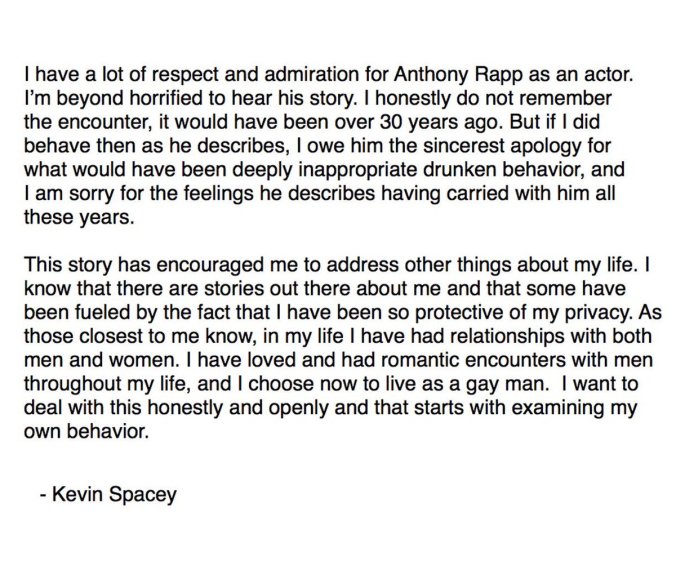
  • Upon examination, Spacey’s response was a mistake and an ethics botch on multiple levels. Here it is again:

First, here we have another example of why Twitter is dangerous. Spacey is a smart guy, yet he foolishly, in his rush to deal with this crisis, authored his own rapid response on social media. In the old days, as my late friend Bob McElwaine, Hollywood publicist for Danny Kaye, Dean Martin, Robert Mitchum and many other stars, told me, he job was to make sure nothing attributed to his Hollywood clients was authored by them. Continue reading

Ethics Hero: Jimmy Carter

Say what you will about former President Jimmy Carter, he has never shied away from confronting what he believes are unpleasant truths. Thus he earns an Ethics Hero designation by telling New York Times columnist Maureen Dowd;

“I think the media have been harder on Trump than any other president certainly that I’ve known about. I think they feel free to claim that Trump is mentally deranged and everything else without hesitation.”

Hilariously, USA Today immediately proved Carter’s point by writing, in its naturally objective and fair story on the quote,

“Perhaps Carter is seeking to placate Trump as part of a job interview: The 93-year-old former president said he is willing to undertake a diplomatic mission to North Korea to discuss its nuclear weapons program.”

In a related and illuminating story, former NPR CEO Ken Stern, nine years after he left the taxpayer- funded radio news network, has suddenly realized that there may be some liberal bias in the news media! His op-ed for the New York Post begins,

“Most reporters and editors are liberal — a now dated Pew Research Center poll found that liberals outnumber conservatives in the media by some 5 to 1, and that comports with my own anecdotal experience at National Public Radio. When you are liberal, and everyone else around you is as well, it is easy to fall into groupthink on what stories are important, what sources are legitimate and what the narrative of the day will be.”

Gee, that’s kind of nice. What we usually hear from reporters, editors and media management is that the accusation of partisan bias, based on such overwhelming evidence that it makes a “beyond a reasonable doubt” standard look like a breeze, is just a Fox News myth, a conservative concoction and a false talking point. It would have been more nice, of course, if Ken Stern had come to this obvious conclusion and used his position to do something, rather than wait nine years and speak up when the average informed person reads his name on an article and thinks, “Who the hell is Ken Stern”?

I confess, I detest these too little, too late confessions of enlightenment, which are usually self-serving. I smell a book and an interview tour, don’t you?

Well, I won’t be reading it. Later in his conveniently tardy piece, Stern writes, Continue reading

Unethical Quote Of The Month: An NFL Wife, On The Private Facebook Fearful Spouses Of Future CTE Victims Support Group Page

“It’s scary to think about the future and the ‘what ifs’ … if it’s what he loves, I have to support it.”

What? No, you don’t!

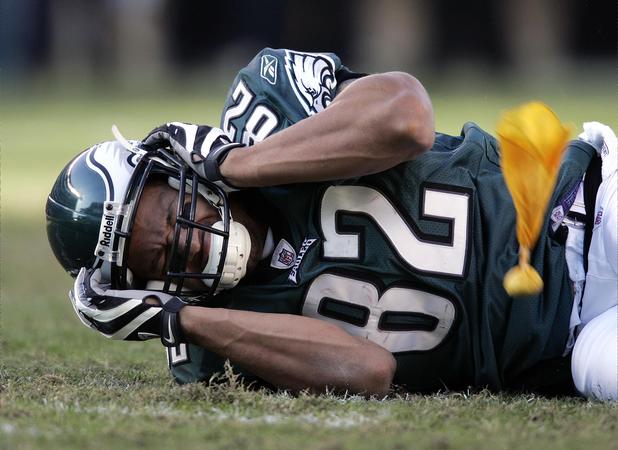
The above anonymous quote from a feature about how 2,000 wives of past and current NFL players share their fears and console each other as the evidence mounts that their husbands are likely to spend their final years as tortured, brain-damaged victims of their sport and burdens on their families illustrates how delusional supporters of the NFL money machine have become.

It also shows, to depressing degree, how people will rationalize and justify conduct that cannot be rationally defended.

If an unmarried NFL player without family responsibilities chooses to shorten his life and cripple himself in exchange for a brief career in the limelight and a lot of money, that’s his stupid choice to make. Then the only other responsible parties are the cynical and corrupt sport that knowingly pays him to make that choice, the amoral and greedy corporations that make such cruelty worth the NFL’s while, and the ethics alarms deficient football fans who get their Sunday thrills watching young men slowly disable themselves. Continue reading

The New York Times’ Smoking Gun Op-Ed

Robert Leonard is the news director for the radio stations KNIA/KRLS. He wrote a jaw-dropping op-ed yesterday, one that only could be written and voluntarily made public by someone completely committed to the idea that the news media should decide what the public thinks, and who should run the government. That the New York Times would publish this unethical, biased and anti-democratic screed is signature significance. If the Times editors had any respect for the nation’s democratic processes or the proper boundaries of journalism, it would have regarded the column as risible and an embarrassment to its profession. Instead, the Times published Leonard’s piece in the prime left-hand column of its op-ed page.

Let’s begin with the creepy headline: “Want to Get Rid of Trump? Only Fox News Can Do It.”

No, you arrogant jerk, only democratic elections can “do it.” The entire premise of Leonard’s essay, and it is the premise that the mainstream media now believes, though won’t admit, is that journalists have the power and the obligation to take down a government they don’t approve of. That is what it is trying to do, and that is what the Times is trying to do in concert with the rest. If this was not the case, the Times would not allow such an incendiary headline in its paper.

The op-ed begins with a lie, at least a lie by the kinds of standards applied by the Times in assessing what constitutes “lying” by the President:

“President Trump’s administration is in crisis, consumed by fears of what Robert Mueller, the special counsel investigating Russia’s meddling in the election, might find. Everyone’s lawyering up — even the lawyers have lawyers.”

The Trump Administration isn’t in a crisis according to any facts in evidence. It’s a crisis because the news media wants it to be in crisis, and keeps publishing whispers from leakers  trying to undermine the administration as it says so. Everyone is “lawyering up” is a pejorative phrase intended to imply guilt: in a government investigation, anyone likely to be questioned or come under scrutiny gets legal representation, and this partisan hack knows it. Nevertheless, he is making an innuendo suggesting guilt. Nor does he have any justification that the Trump administration is “consumed by fears of what Robert Mueller might find.” That assumes there is something incriminating to find,  a false assumption, and thus a false statement.

Normally, I would stop reading at that point. This is an incompetently cooked stew of partisan, anti-Trump propaganda, not worth my time, written to appeal to the Times’ “resistance” subscribers. I continued however, because I sensed a vivid illustration of how estranged from objectivity, moderation and responsible writing the Times has become.

The op-ed continues… Continue reading

The Ethics Of Responding To Inconvenient Truths: Colleges Aren’t Working…Now What?

From the Wall Street Journal:

Freshmen and seniors at about 200 colleges across the U.S. take a little-known test every year to measure how much better they get at learning to think. The results are discouraging.

At more than half of schools, at least a third of seniors were unable to make a cohesive argument, assess the quality of evidence in a document or interpret data in a table, The Wall Street Journal found after reviewing the latest results from dozens of public colleges and universities that gave the exam between 2013 and 2016. …At some of the most prestigious flagship universities, test results indicate the average graduate shows little or no improvement in critical thinking over four years. . . .

Some academic experts, education researchers and employers say the Journal’s findings are a sign of the failure of America’s higher-education system to arm graduates with analytical reasoning and problem-solving skills needed to thrive in a fast-changing, increasingly global job market. In addition, rising tuition, student debt and loan defaults are putting colleges and universities under pressure to prove their value.

Some?

What’s the other side saying, that the results are cooked? That critical thinking is over-rated or a sexist, racist, xenophobic construct? How can any objective individual who has followed the news, listened to activists babble incoherently on  campuses like Dartmouth, Yale, Columbia, University of Missouri and hundreds of others, been aware of higher ed apocalypse stories like this one , or notice that the overwhelming majority of college students enthusiastically supported the fact-, math-, economics-, foreign policy-, history-and Constitution- challenged candidacy of Bernie Sanders  be surprised at these findings? They aren’t even new.

The scam that is U.S. higher education poisons the American dream in too many ways to count.  50% of employers say that college graduates they hire aren’t ready for the workplace because of inadequate critical-reasoning skills.  Yet virtually every institution cites this as the prime benefit of paying it a king’s ransom for four years, with brochure proclamations like…

“The university seeks to foster in all its students lifelong habits of careful observation, critical thinking, creativity, moral reflection and articulate expression.”

and

“… University fosters intellectual inquiry and critical thinking, preparing graduates who will serve as effective, ethical leaders and engaged citizens.”

and

“The college provides students with the knowledge, critical-thinking skills and creative experience they need to navigate in a complex global environment.”

“At most schools in this country, students basically spend four years in college, and they don’t necessarily become better thinkers and problem solvers,” said Josipa Roksa, a University of Virginia sociology professor who co-wrote a book in 2011 about the CLA+ test, that littel-known test the Wall street Journal referred to. . “Employers are going to hire the best they can get, and if we don’t have that, then what is at stake in the long run is our ability to compete.”

Even the arguments used to defend college lack evidence of critical thinking. Today’s New York Times special Higher Ed section highlights this quote: Continue reading