Of The Great Noodle Ordeal, Sweeney Todd, Stressors, and The Importance Of Ethics In Stopping Mass Killings

I have a theory about mass killings, and it is neither original nor exclusive: in fact, it has been proposed in various forms for at least a  century But I think it is worth considering.

I think that the smart, creative, intense, ambitious, restless and entrepreneurial people in this country keep designing an environment, and forcing it on us whether we like or need it or not,  that is increasingly, and ultimately unbearably, hostile to those who are not smart, creative, intense, ambitious, restless and entrepreneurial. I think that as life becomes increasingly stressful and confusing for average people—remember, about half of the public is below average intelligence, and even average intelligence is nothing to jump up and down over—they are more likely to reach what the serial killer profilers on “Criminal Minds” call “stressors”—the final straw, the moment when they see red, and deadly fury takes over. On the TV show, of course, the stressor is the death of a child, or a firing, or the onset of an illness, or financial setbacks. But I can see it simply being the realization that life is hopeless…that it is always going to be a miserable, frustrating struggle, and that powerful, rich, meddling people are at work always finding ways to make sure it gets harder and harder, and ultimately futile, for normal human beings to get through the day.

I entertain delusions that I am smarter than the average bear, and I can barely stand it myself. Yesterday, stuck at La Guardia, I wanted to get some food in the a terminal’s food court. The place I chose had just added computerized self-ordering on iPads. I’m not intimidated by iPads; I use one. The woman in front of me, however, stared at the device—there were no readily available employees to guide her through it—as if it were a space alien. She pushed some buttons, sighed, and gave up. Continue reading →

Ethical Conflict: The Case Of The Confused Cabbie

taxi1Heading to downtown Washington D.C. for an early morning ethics presentation for the Federal Bar (at the GAO building), I encountered an ethical dilemma that got the day off to a challenging start.

Traffic in D.C. is ridiculous, so I arranged to have an Alexandria cab pick me up at 8:15 AM for a 9:30 AM presentation, assuming that I would arrive close to 9:00. I would have too, except that my young, African-accented cab driver had no idea where he, or I was going. I should have foreseen the problem when the cab was ten minutes late (this company knows my address and typically arrives early), but it came into sharp focus when the driver asked “So you know how to get there, right?” (No, I don’t know how to get anywhere, which is why you are the cab  driver, and I’m not) and made it startlingly clear that he didn’t know how to read his GPS. As a result, he made multiple wrong turns, even though the screen in front of him was showing him the way, and I ultimately had to interpret the GPS directions for him. I barely arrived on time, and felt like I had done the driving.

My initial instinct was to call the company and complain. I even took down the cab number.

And my thinking went like this: Continue reading →

No, There Is No “Absurdly Bearded Sociology Professor On A Beer Can Principle”

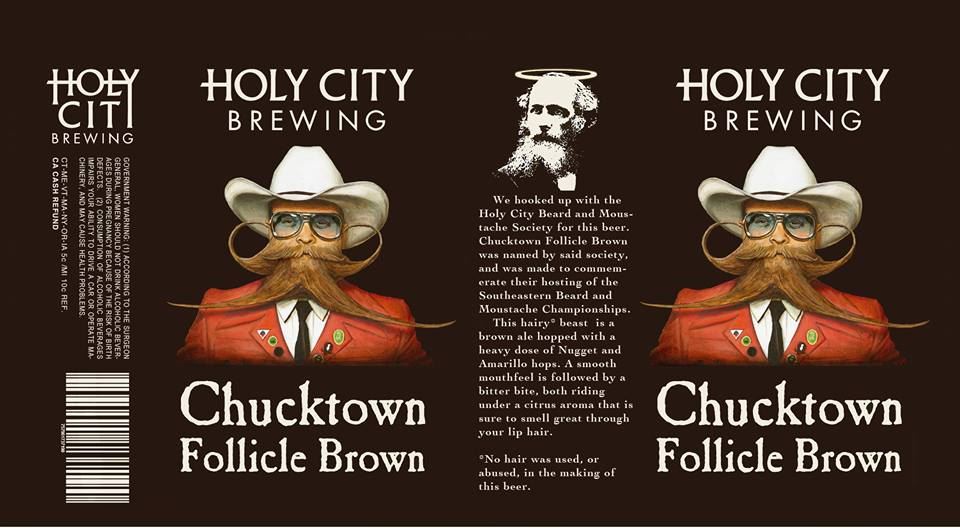
follicle beer

This is just unfair, that’s all.

 Paul Roof, a professor of sociology at Charleston Southern University, a Christian school, learned that a photo of him taken by a professional photographer at a beard contest was about to appear on “Chucktown Follicle Brown” beer cans.  “I’m not compensated for the image, I don’t own the image, and the use of the image was a surprise to me,” the Roof told the media. His (amazing/ outrageous/ ridiculous—choose one) four-section beard has been used for other promotions, including for Christian services. Charleston Southern University never expressed any objection to its employee looking like an escapee from “Ripley’s Believe It or Not!” Nevertheless, the school fired him, saying that a professor having his image on a beer can “was not representative of a Christian environment.” Continue reading →

Child Care Ethics And Leashes For Toddlers: CNN and Its Viewers Flunk An Ethics Alarm Test

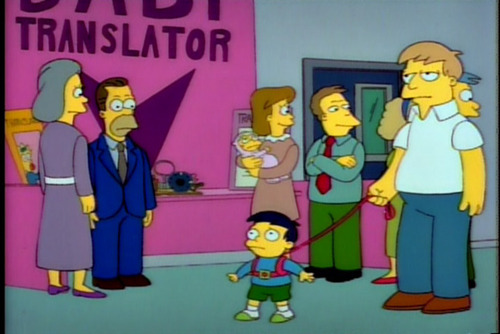
Kids on leashes

It is constantly amazing to me that journalists so seldom identify obvious and critical ethics issues in the topics and events they cover. The rest is mixed emotions: this absence of ethics awareness is a serious culture-wide problem; then again, were this not so, I’d probably be in a different, and less stimulating profession.

Today I sat down to lunch as CNN engaged in a breathless discussion of whether using leashes on toddlers and even older children was a good idea, as it is either a growing trend among parents, or CNN was having a slow news day. The phone lines were open, and many viewers weighed in, with the primary camps expressing the following positions:

1. “If it makes children safer, then there is no reason not to do it. Safety is everything. Kids have been killed running into the street.  A leash will prevent that.”

2. “This shows the decline of child-rearing skills in the United States. If you can’t control your kid better than this, you are the problem.”

If the question of whether it was fair, kind, respectful or right to treat  your child like a cocker spaniel occurred to anybody in this discussion (I know the CNN staff never considered it), I saw and heard no evidence of this. Yet that is the central question, and it is an interesting one to consider. The fact that matters of human dignity, responsibility, respect, fairness, autonomy, kindness, proportion and prudence need to be balanced to answer the question at hand never came into the discussion, and those debating the issue demonstrated neither awareness of the competing ethical values, nor the ability to know how to employ them. Continue reading →

Ethics Hero: Pasco High School (Dade City, Fla.)

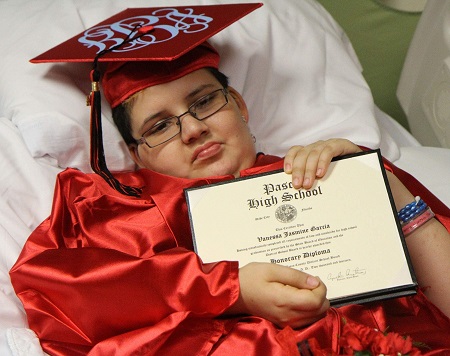
Graduate

I need this story to get the previous post out of my head.

In Mark Harris’s novel “Bang The Drum Slowly,” best known as the inspiration for the film that introduced Robert DeNiro to the movie-going public, a major league baseball team exhibits uncharacteristic kindness toward a third-string catcher who is dying of Hodgkin’s Disease. The book, like the film and the stage adaptation, is about kindness and the Golden Rule, an ethical value that seldom inspires literature or art. Kindness is not particularly exciting, but it may be the most ethical of all ethical virtues. The serious illness and impending death of someone in our life often brings the importance of kindness into sharp focus. “Everybody’d be nice to you if they knew you were dying,” says the doomed catcher, Bruce Pearson, to his room mate and champion, star pitcher Henry Wiggen.  “Everybody knows everybody is dying,” Wiggen replies. “That’s why people are as good as they are.”

Pasco High School student Vanessa Garcia  learned that she had an inoperable brain tumor when she was in elementary school. Until two years ago, treatment had kept the tumor  in remission, but the mass began growing again when she was 15. Undaunted, Garcia continued to go to school, work diligently, and keep a positive and uncomplaining outlook, earning the admiration of her classmates, teachers and school officials. Continue reading →

Ethics Quote Of The Week: Kareem Abdul-Jabbar.

“Shouldn’t we be equally angered by the fact that his private, intimate conversation was taped and then leaked to the media? Didn’t we just call to task the NSA for intruding into American citizen’s privacy in such an un-American way? Although the impact is similar to Mitt Romney’s comments that were secretly taped, the difference is that Romney was giving a public speech. The making and release of this tape is so sleazy that just listening to it makes me feel like an accomplice to the crime. We didn’t steal the cake but we’re all gorging ourselves on it. So, if we’re all going to be outraged…Let’s be outraged that private conversations between people in an intimate relationship are recorded and publicly played. Let’s be outraged that whoever did the betraying will probably get a book deal, a sitcom, trade recipes with Hoda and Kathie Lee, and soon appear on “Celebrity Apprentice” and “Dancing with the Stars.”‘

–—Basketball legend Kareem Abdul-Jabbar, in an essay pointing out some of  hypocrisies and excesses in the reactions to the Donald Sterling saga.

"Gotcha! He's screwed now...but he's a racist scumbag, so it's perfectly OK."

“Gotcha! He’s screwed now…but he’s a racist scumbag, so it’s perfectly OK.”

Good for Kareem. I was just about to make this point myself, and preparing to be pilloried for making excuses for a racist. Kareem is a lot bigger than I am, and I’m happy to stand behind him.

I watched two African-American lawyers on CNN today erupt in over-the-top outrage that has become the norm in the “finger-wagging Olympics” that Abdul-Jabbar decries in the rest of his article. One of the lawyers called Sterling’s remarks defamatory—“defamatory?” Sterling didn’t say a word that was negative about blacks; he just said he didn’t want his girl friend taking photos with them. His comments constitute smoking gun proof of racial bias, sure, but they aren’t “defamatory.” The other lawyer called them “the most vile, disgusting...” on and on and on, comments that he had ever heard.  Really? I doubt that. You know, once you award the prize to Sterling’s racist comments, you have no more superlatives left  for really horrible racist remarks. The two sportswriters, Christine Brennan and Bill Rhoden, who preceded my commentary on NPR today, did the same thing. It was a contest over who could express the most outrage.

It is a small surprise, then, in this hyper-charged atmosphere, that the conduct of V. Stiviano is getting an ethics pass, as if betrayal doesn’t matter as long as the betrayed party is despicable, and what she did was justified because she exposed a racist to the world. It’s not justified. The ends don’t justify the means, when the means are betrayal and mean-spirited vengeance, and when the methods used threaten to become a social norm, turning American homes and bedrooms into Stalinesque trap where no secret is safe. We’ve seen this practice before and I’ve condemned it before: the Harvard Law student turned into a campus pariah by a jealous rival circulating a private e-mail to the people most likely to be offended by it; Alec Baldwin’s daughter releasing private communications with her intemperate father to harm his reputation; Mel Gibson’s girlfriend doing the same; e-mail jokes being intercepted and sent to political enemies as a tool of personal destruction; clumsy suitors having their fumbles turned into national ridicule by the objects of their affection. Continue reading →

Noted: A Familiar Debate Over At Slate

battle-marvel

Those who participated in the epic, star-studded battle in February here, led by the departed Bruce Bartup, over what are acceptable levels of intensity and personal attack on Ethics Alarms, will experience some nostalgia reading this debate on Slate about the website’s policies. My favorite line: “…if someone is a dick, and we’ve explained that he’s a dick, why shouldn’t we also call him a dick? He’s earned it!”

If you missed Bruce’s Lament and the terrific donnybrook it generated (sadly, Bruce took his bruised feelings and went home to the British Isles, though I urged him to persevere) can read his Comment of the Day and the responses to it here.

___________________________

Graphic: kiss my wonder woman

50 Years After Kitty Genovese, Inhumans On A Bus

The title describes the public transit riders who watched this disturbing scene unfold on a Philadelphia bus, and did nothing:

2014 is the 50th anniversary of the infamous Kitty Genovese case, and dueling books on the incident either recount the accepted version that 38 people in an apartment building heard the 28 year-old woman’s screams as she was being stabbed to death but “didn’t want to be involved” and let her die, or adopt the revisionist theory that the apathy of bystanders was unfairly and inaccurately hyped by the news media. The incident on the Philadelphia bus tells me that the revisionists have a burden of proof that will be hard to meet. There was plenty of evidence already, like here, or here, or here, or here, or more recently here, that Kitty Genovese might not fare any better today. Continue reading →

Gift Horse Ethics: The Babe, The Splendid Splinter, and The Ethics Of Self-Promoting Virtue

sick child and-babe-jpgBaseball slugger Babe Ruth was famous for visiting hospitals and orphanages to give kids a thrill. Babe always had reporters in too to record his noblesse oblige , of course. He was an orphan himself, and nobody should doubt the Bambino’s genuine dedication and generosity when it came to kids. He just wasn’t going to let his good deeds go unnoticed.

Other baseball greats, notably Ted Williams, made most of his visits without fanfare or publicity, and he didn’t tip off the press. “The Splendid Splinter” wasn’t visiting kids in cancer wards because he wanted his fans to know what a good guy he was. He did it because he wanted to make sick children feel better.

Was the Babe less ethical than Williams? Did his self=promotion take the ethical sheen off of his good deeds? This is the issue raised by the activities  of the  “Magician Prankster” who calls himself “Magic of Rahat” on YouTube and Twitter. He recently posted a video called “Homeless Lottery Winner” showing him playing  a prank on a homeless man, who ends up with $1,000. He is understandably grateful:

Slade Sohmer however, on HyperVocal, is hearing ethics alarms: Continue reading →

More “Is We Getting Dummer?” Horrors

dictionary

I was having a quick sandwich before my flight at Reagan Airport and could not avoid hearing in excruciating detail the conversation next to me. It appeared to be some kind of staff meeting among business colleagues traveling to a common destination. One of the young professionals, a man in his early 30s, must have said “That’s incredulous” or “I find that incredulous” four or five times. Nobody corrected him; maybe none of the other four mature, supposedly educated people at the table knew that he was misusing a high school vocabulary word, though that’s a horrible thought.

For a moment I entertained thoughts of pulling him aside, like old Biff in “Back to the Future 2” encountering his younger self, whom he told “It’s ‘make like a tree and leave,’ not ‘make like a tree and get out of here’—you sound like an idiot when you say that!” Except that I would have said, “It’s incredible, not incredulous! People will lower their opinion of you when you misuse words. Pay attention! Read! Learn to speak properly!”

If schools won’t or can’t educate competently any more, and the culture is determined to make us dumber by the day, then it is up to us to help each other out. Continue reading →