Suspend Sunny Hostin’s Law License

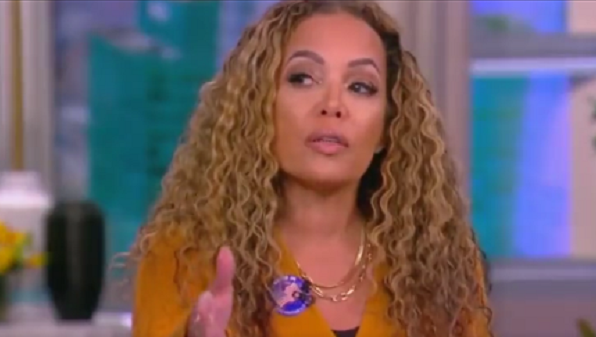
A mere Ethics Dunce designation for The View’s Sunny Hostin isn’t sufficient, because she’s a regular co-host on ABC’s daily cultural offal pile where all of the women are ethics dunces at best. Hostin’s one of the worst, which is quite an achievement, but she’s also a lawyer, making her admission yesterday especially despicable.

I’ve seen the video several times but can’t find a way on Word Press to embed it. Sorry: you can view the evidence on Twitter here. Babbling on about voting with the ladies, Sunny expressed suspicions regarding how absentee ballots were being handled, because, she explained, she had an odd experience while dropping off her son’s absentee ballot which she had filled out for him.

Hostin is a different kind of idiot than the other idiots on the panel: she’s an arrogant, cocky idiot who thinks her law degree means that her idiotic opinions aren’t idiotic. Thus she admitted committing a federal crime on national TV and didn’t even realize it. I’d guess the average first year law student could figure out that this is a serious violation of the Rules of Professional Conduct in every U.S. jurisdiction. Not Sunny, though.

It isn’t a technical violation either; it’s serious. Usually unethical conduct by lawyers when they aren’t practicing law are ignored by bar disciplinary committees, but Rule 8.4, Misconduct, holds that “It is professional misconduct for a lawyer to:

Continue reading →

It Looks Like Donald Trump Was Betrayed By Another One Of His Lawyers, Someone Else…Or Himself

Just because Trump is paranoid doesn’t mean almost everyone around him isn’t trying to stab him in the back.

From the New York Times:

Shortly after turning over 15 boxes of government material to the National Archives in January, former President Donald J. Trump directed a lawyer working for him to tell the archives that he had returned all the documents he had taken from the White House at the end of his presidency, according to two people familiar with the discussion.

The lawyer, Alex Cannon, had become a point of contact for officials with the National Archives, who had tried for months to get Mr. Trump to return presidential records that he failed to turn over upon leaving office. Mr. Cannon declined to convey Mr. Trump’s message to the archives because he was not sure if it was true, the people said.

The story was leaked to, naturally, Maggie Haberman, the full-time Trump Fury on the Times staff. She’s currently peddling a book full of anti-Trump tales, gossip and embarrassments. A lot of her stories over the last six years have been about what the President supposedly said behind closed door, or suggested, or asked others to do, none of which actually came to anything but the point is to make Trump look bad, dangerous or stupid. Of course, ethical aides, associates and lawyer don’t tell hostile reporters (or anyone at all) about such conversations because they are in the positions they are because the President trusts them. Donald Trump has been betrayed by such people more times, I would estimate, than all of the last six Presidents combined. Continue reading →

“Salt And Seltzer,” A True Life Ethics Spectacular!

I can’t believe I am just writing about this wonderful ethics saga from 2005 now, after it had been sitting in my files for all this time. The story has everything: fine art, cowboys, nasty tycoons, fraud, irony, lawsuits, unethical lawyers and condign justice.

In 1972, Steve Morton, heir to the Morton Salt fortune and a noted California art collector, bought the 21-by-27-inch watercolor above, “”Lassoing a Longhorn,”  from the Kennedy Galleries in New York for $38,000. The Kennedy Galleries had purchased it from the Amon Carter Museum of Fort Worth, Texas, which had acquired it from its founder, Amon Carter, a collector of western art. The painting was signed by Charles Russell, along with Frederic Remington recognized as the master of Wild West fine art.  Morton decided to sell the painting in 2001, as the value of Russell painting had ballooned.He arranged to have the Coeur d’Alene Art Auction in Reno, Nevada handle the sale, and as was their practice, the auction house had the painting appraised.

Before agreeing to sell the painting, the auction house contacted Western art expert Steve Seltzer to examine the work, and he announced that it wasn’t a genuine Russell at all. He concluded that it was forgery by a a lesser-known western artist who forged Russell’s signature on the painting. If anyone would know, Seltzer would: the forger was his own grandfather, O.C. Seltzer. Continue reading →

Ethics News Flash: There Is Admirable Ethics News From New York!

New York is the East Coast dead ethics twin of California, one of the most damaging ethics corrupters among the states, and a constant anchor on any efforts to keep the culture from rotting. With one unethical mayor elected in New York City after another, the depressing Andrew Cuomo to Kathy Hochul hand-off in the State House, the corrupt and irresponsible state legislature, two habitually unethical U.S. Senators and the state’s determination to defy U.S. immigration law and the U.S. Constitution (I don’t have time to get into the rest, like the New York Times, Broadway and the Yankees), the entire Empire State has become on ongoing bad ethics pageant. Thus it is a shock, a relief, and a glimmer of hope that the it finally has generated a significant positive ethics development that should prompt the rest of the country to follow its lead.

Continue reading →

Ethics Dunce (And Partisan Hack): Former Assistant U.S. Attorney Daniel Goldman

Daniel Goldman earns the Ethics Alarms clip with Sir Thomas More’s scalding indictment of the character of “A Man For All Seasons” villain Richard Rich, “Why Richard, it profit a man nothing to give his soul for the whole world. . . but for Wales?”

Donald Trump, fighting a coordinated (I believe) Democratic assault from all sides in a desperate effort to neutralize him (an effort than has continued unsuccessfully for a ludicrous six years!) invoked his Fifth Amendment rights against self-incrimination at a deposition for New York Attorney General Letitia James (D). While the ongoing January 6 kangaroo court in the House seeks to prove that Trump planned an “insurrection,” and the Justice Department raided his home ostensibly to find sufficient evidence to prosecute him for mishandling of classified documents, James is continuing her state’s long-running attempts to prove Trump engaged in illegal financial activity and/or corrupt business practices

After Trump’s non-response was reported, Goldman, who was an assistant U.S. attorney in the Southern District of New York for 10 years, tweeted,

“The Fifth Amendment ensures that people are not forced to incriminate themselves. But you don’t take the Fifth if you didn’t do anything wrong.”

Continue reading →

Now THIS Is An Unethical Lawyer…

And yet he’s running to be elected judge!

No, I don’t understand this at all.

Matthew Leveridge, the commonwealth’s attorney for Russell and Wayne counties in Kentucky, should have been disbarred.  He admitted to impregnating a criminal defendant, Latisha Sartain, whom he prosecuted for drug trafficking in 2011. A motion filed on Sartain’s behalf in 2014 alleged that Leveridge filed a motion to revoke her five-year pretrial diversion agreement after she ended their relationship and revealed her pregnancy to Leveridge’s wife. For some reason, this didn’t result in any bar discipline, or an episode of “Law and Order.”  But wait! There’s more! Continue reading →

Ethics Alarms Encore: “Possessed Lawyer Ethics”

The best legal ethics story I have ever heard and probably ever will hear arose in Arizona in 2010. I have regaled CLE seminars with it many times since, and it is ever green. After I mentioned the case again today at a Federal Bar convention program, I found myself wondering if I had ever posted about the weird episode on Ethics Alarms. Indeed I had, but it was way back in September of 2010.Here’s how long ago that was: Instagram didn’t yet exist, the statement that Donald Trump would be the next President might get you committed, and the only commenter on the post was “JJ,” whom I have completely forgotten.

Clearly, it’s time for an encore, so here it is, slightly expanded.

***

Is it unethical for a lawyer to claim she is possessed by a client’s dead wife?

This  question has been puzzling professional responsibility experts for decades. Okay, not really. In fact, surprisingly, it just doesn’t happen all that often. But in Arizona, a lawyer is now facing suspension for claiming that she was possessed by the spirit of a client’s dead wife, then lying about it under oath. The dead wife is being accused of illegal immigration.

OK, I made up that part, too.

Sorry.

The ABA Journal reports that the lawyer, Charna Johnson, began representing a client during his divorce proceedings. While the divorce was in process,  the client’s wife, who was fighting many demons even before she got in the possession business, committed suicide. Johnson then represented the husband in probate proceedings, but one day became convinced, according to her sworn testimony and that of two witnesses, that the client’s wife had possessed her, like that real demon, Pazuzu. Continue reading →

The Road To Totalitarianism: California Shows, Once Again, Which Party Is Driving

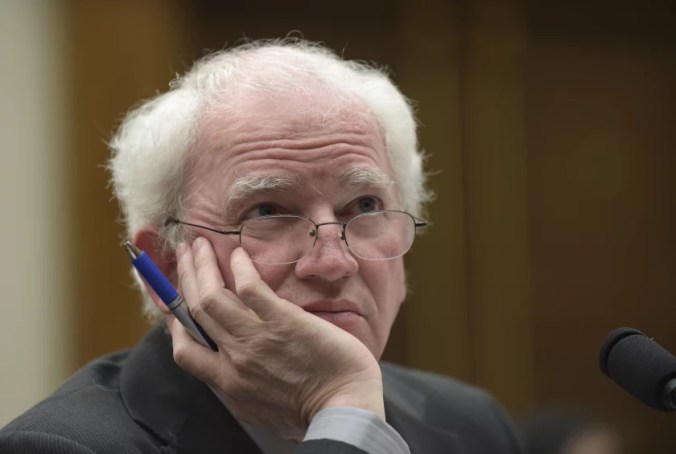
Late yesterday, the State Bar of California  announced that Orange County attorney John Eastman (above), a former law school dean, law professor, and a long-time respected member of the bar, is the target of a disciplinary investigation into whether he violated laws while advising President Trump on options available to him in the wake of his election defeat in 2020. Eastman wrote two legal memos that advised Vice President Mike Pence that he could declare that the results in several states were disputed and therefore their electoral votes would go uncounted.  The State Bar’s chief trial counsel, George Cardona, announced  that Eastman has been the center of an investigation since September, saying in part,  “A number of individuals and entities have brought to the State Bar’s attention press reports, court filings, and other public documents detailing Mr. Eastman’s conduct.”

That’s odd: bar investigations of ethics complaints are supposed to be confidential, so complaints can’t be used as political weapons or to impugn lawyers’ reputations. Why is Eastman being treated this way? Oh, I’m sure there is some fine print exception somewhere, but the real reason is obvious from the LA Times story headline yesterday: “Breaking News: Trump-connected lawyer John Eastman under investigation.” Eastman is “Trump-connected,” so it’s guilt by association, a Joe McCarthy specialty and a favorite tool of despots for centuries.  Beware, any lawyers out there prepared to give counsel, representation and legal assistance to He Whom Progressives Hate and Fear! There will be consequences. Continue reading →

Ethics Villain: Garrett Epps

The mail has been favoring “Ethics Villain,” which I have used before, as the proper designation when Ethics Dunce is too mild, and luckily the opportunity has arisen to try it out.

Garrett Epps, a legal scholar of note who has taught at several major law schools, authored a piece for The Washington Monthly with the headline, “Donald Trump Promised He Wouldn’t Nominate a Black Woman to the Supreme Court.” No, this isn’t one of those too-common examples of a publication placing a click-bait headline on an article that doesn’t fit it. Epps himself writes, right up front, “On May 18, 2016—and again in September of that year—Trump promised his supporters explicitly that, if elected, he would not appoint a Black woman to the U.S. Supreme Court.”

That is a lie. Flat out, straight up. And Epps, a lawyer and law professor, unquestionably knows it’s a lie. Later in the same article, he even contradicts his own statement, writing, “Trump said nothing about excluding Black female judges. He just did it.”

Continue reading →

Catching Up: Professional Ethics And The Challenger Disaster

Because of non-ethical matters in the Marshall household, I missed posting about the January 28 anniversary of the Challenger disaster, as it is labeled among the thousands of Ethics Alarms tags. I have written about and alluded to the completely avoidable explosion of the Space Shuttle in 1986 many times (you can check here), and there may be no other incident that so perfectly encapsulates the complexities of professional ethics, especially in a bureaucracy. In 2016, I offered an ethics quiz on the topic.

In 2020, Netflix presented an excellent, if extremely upsetting, docudrama on how the fiasco unfolded, “The Challenger Disaster.”

I have used the tragedy in my legal ethics continuing legal education courses to force attendees to consider what might make them decide to breach legal ethics and place their careers at risk when an organizational client is hell-bent on what the lawyer knows, or thinks he or she knows, will be disastrous. Legal ethics rules are different from engineering ethics, though the latter has caught up considerably since the Space Shuttle explosion, and in part because of it. However, I view the ethics conflict in parallel situations in both professions the same, as well as situations in medicine, organized religion, the military, and government. When would, and should, professionals decide to do everything in their power to stop the consequences of a terrible decision when it is outside their role and authority to do so?

In my legal ethics seminars, a majority of lawyers ultimately say they would have done “whatever it took” to stop the Challenger’s launch, whatever the consequences, if they knew what the engineers knew. They said they would go to the news media, or chain themselves to the rocket if necessary. Of course, saying it and doing it are very different things.

Here is the most recent incarnation of my Challenger disaster legal ethics question, which I presented to government lawyers a year ago. What would you answer? It is called “The Launch.”

***

In 1986, Roger Boisjoly was a booster rocket engineer at Morton Thiokol, the NASA contractor that, infamously, manufactured the faulty O-ring that was installed in the Space Shuttle Challenger, and that caused it to explode. Six months before the Challenger disaster, he wrote a memo to his bosses at Thiokol predicting “a catastrophe of the highest order” involving “loss of human life.” He had identified a flaw in the elastic seals at the joints of the multi-stage booster rockets: they tended to stiffen and unseal in cold weather.  NASA’s shuttle launch schedule included winter lift-offs, and Boisjoly warned his company that sending the Shuttle into space at low temperatures was too risky. On January 27, 1986, the day before the scheduled launch of the Challenger, Boisjoly argued for hours with NASA officials to persuade NASA to delay the launch, only to be over-ruled, first by NASA, then by Thiokol, which deferred to its client. Another engineer, Bob Ebeling, joined Boisjoly and begged for the launch to be postponed, only to be overruled.

That night, Ebeling told his wife, Darlene, “It’s going to blow up.”

Question 1:  Should one or both of the engineers have “blown the whistle”?

  1. They did.
  2. Only the engineer who was sure that it would be a disaster.
  3. No, that’s not their role, their decision, or their call.
  4. After the explosion, but not before.
  5. I have another answer.

 Question 2: How are the ethical obligations in such a situation different for government lawyers than engineers?

  1. Government lawyers have to disclose when human life is threatened, engineers don’t.
  2. Engineers have to disclose when human life is involved, government lawyers don’t.
  3. Lawyers get kicked out of their profession for blowing whistles, engineers just get blackballed.
  4. There is no difference.
  5. I have another answer.