Now THIS Is An Unethical Lawyer…

And yet he’s running to be elected judge!

No, I don’t understand this at all.

Matthew Leveridge, the commonwealth’s attorney for Russell and Wayne counties in Kentucky, should have been disbarred.  He admitted to impregnating a criminal defendant, Latisha Sartain, whom he prosecuted for drug trafficking in 2011. A motion filed on Sartain’s behalf in 2014 alleged that Leveridge filed a motion to revoke her five-year pretrial diversion agreement after she ended their relationship and revealed her pregnancy to Leveridge’s wife. For some reason, this didn’t result in any bar discipline, or an episode of “Law and Order.”  But wait! There’s more! Continue reading

Ethics Alarms Encore: “Possessed Lawyer Ethics”

The best legal ethics story I have ever heard and probably ever will hear arose in Arizona in 2010. I have regaled CLE seminars with it many times since, and it is ever green. After I mentioned the case again today at a Federal Bar convention program, I found myself wondering if I had ever posted about the weird episode on Ethics Alarms. Indeed I had, but it was way back in September of 2010.Here’s how long ago that was: Instagram didn’t yet exist, the statement that Donald Trump would be the next President might get you committed, and the only commenter on the post was “JJ,” whom I have completely forgotten.

Clearly, it’s time for an encore, so here it is, slightly expanded.

***

Is it unethical for a lawyer to claim she is possessed by a client’s dead wife?

This  question has been puzzling professional responsibility experts for decades. Okay, not really. In fact, surprisingly, it just doesn’t happen all that often. But in Arizona, a lawyer is now facing suspension for claiming that she was possessed by the spirit of a client’s dead wife, then lying about it under oath. The dead wife is being accused of illegal immigration.

OK, I made up that part, too.

Sorry.

The ABA Journal reports that the lawyer, Charna Johnson, began representing a client during his divorce proceedings. While the divorce was in process,  the client’s wife, who was fighting many demons even before she got in the possession business, committed suicide. Johnson then represented the husband in probate proceedings, but one day became convinced, according to her sworn testimony and that of two witnesses, that the client’s wife had possessed her, like that real demon, Pazuzu. Continue reading

The Road To Totalitarianism: California Shows, Once Again, Which Party Is Driving

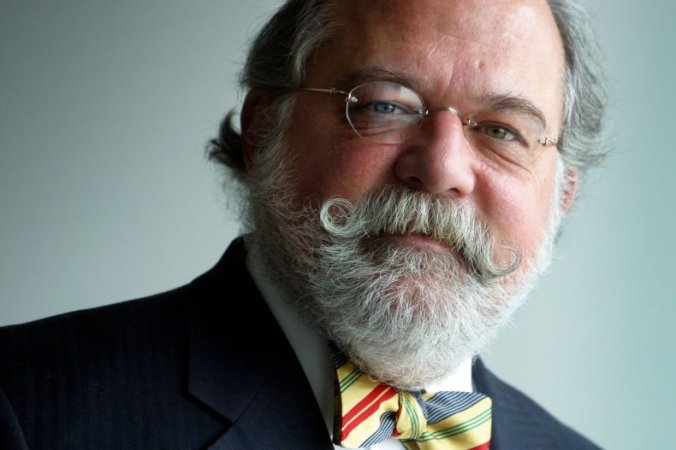
Late yesterday, the State Bar of California  announced that Orange County attorney John Eastman (above), a former law school dean, law professor, and a long-time respected member of the bar, is the target of a disciplinary investigation into whether he violated laws while advising President Trump on options available to him in the wake of his election defeat in 2020. Eastman wrote two legal memos that advised Vice President Mike Pence that he could declare that the results in several states were disputed and therefore their electoral votes would go uncounted.  The State Bar’s chief trial counsel, George Cardona, announced  that Eastman has been the center of an investigation since September, saying in part,  “A number of individuals and entities have brought to the State Bar’s attention press reports, court filings, and other public documents detailing Mr. Eastman’s conduct.”

That’s odd: bar investigations of ethics complaints are supposed to be confidential, so complaints can’t be used as political weapons or to impugn lawyers’ reputations. Why is Eastman being treated this way? Oh, I’m sure there is some fine print exception somewhere, but the real reason is obvious from the LA Times story headline yesterday: Breaking News: Trump-connected lawyer John Eastman under investigation.” Eastman is “Trump-connected,” so it’s guilt by association, a Joe McCarthy specialty and a favorite tool of despots for centuries.  Beware, any lawyers out there prepared to give counsel, representation and legal assistance to He Whom Progressives Hate and Fear! There will be consequences. Continue reading

Ethics Villain: Garrett Epps

The mail has been favoring “Ethics Villain,” which I have used before, as the proper designation when Ethics Dunce is too mild, and luckily the opportunity has arisen to try it out.

Garrett Epps, a legal scholar of note who has taught at several major law schools, authored a piece for The Washington Monthly with the headline, “Donald Trump Promised He Wouldn’t Nominate a Black Woman to the Supreme Court.” No, this isn’t one of those too-common examples of a publication placing a click-bait headline on an article that doesn’t fit it. Epps himself writes, right up front, “On May 18, 2016—and again in September of that year—Trump promised his supporters explicitly that, if elected, he would not appoint a Black woman to the U.S. Supreme Court.”

That is a lie. Flat out, straight up. And Epps, a lawyer and law professor, unquestionably knows it’s a lie. Later in the same article, he even contradicts his own statement, writing, “Trump said nothing about excluding Black female judges. He just did it.”

Continue reading

Catching Up: Professional Ethics And The Challenger Disaster

Because of non-ethical matters in the Marshall household, I missed posting about the January 28 anniversary of the Challenger disaster, as it is labeled among the thousands of Ethics Alarms tags. I have written about and alluded to the completely avoidable explosion of the Space Shuttle in 1986 many times (you can check here), and there may be no other incident that so perfectly encapsulates the complexities of professional ethics, especially in a bureaucracy. In 2016, I offered an ethics quiz on the topic.

In 2020, Netflix presented an excellent, if extremely upsetting, docudrama on how the fiasco unfolded, “The Challenger Disaster.”

I have used the tragedy in my legal ethics continuing legal education courses to force attendees to consider what might make them decide to breach legal ethics and place their careers at risk when an organizational client is hell-bent on what the lawyer knows, or thinks he or she knows, will be disastrous. Legal ethics rules are different from engineering ethics, though the latter has caught up considerably since the Space Shuttle explosion, and in part because of it. However, I view the ethics conflict in parallel situations in both professions the same, as well as situations in medicine, organized religion, the military, and government. When would, and should, professionals decide to do everything in their power to stop the consequences of a terrible decision when it is outside their role and authority to do so?

In my legal ethics seminars, a majority of lawyers ultimately say they would have done “whatever it took” to stop the Challenger’s launch, whatever the consequences, if they knew what the engineers knew. They said they would go to the news media, or chain themselves to the rocket if necessary. Of course, saying it and doing it are very different things.

Here is the most recent incarnation of my Challenger disaster legal ethics question, which I presented to government lawyers a year ago. What would you answer? It is called “The Launch.”

***

In 1986, Roger Boisjoly was a booster rocket engineer at Morton Thiokol, the NASA contractor that, infamously, manufactured the faulty O-ring that was installed in the Space Shuttle Challenger, and that caused it to explode. Six months before the Challenger disaster, he wrote a memo to his bosses at Thiokol predicting “a catastrophe of the highest order” involving “loss of human life.” He had identified a flaw in the elastic seals at the joints of the multi-stage booster rockets: they tended to stiffen and unseal in cold weather.  NASA’s shuttle launch schedule included winter lift-offs, and Boisjoly warned his company that sending the Shuttle into space at low temperatures was too risky. On January 27, 1986, the day before the scheduled launch of the Challenger, Boisjoly argued for hours with NASA officials to persuade NASA to delay the launch, only to be over-ruled, first by NASA, then by Thiokol, which deferred to its client. Another engineer, Bob Ebeling, joined Boisjoly and begged for the launch to be postponed, only to be overruled.

That night, Ebeling told his wife, Darlene, “It’s going to blow up.”

Question 1Should one or both of the engineers have “blown the whistle”?

  1. They did.
  2. Only the engineer who was sure that it would be a disaster.
  3. No, that’s not their role, their decision, or their call.
  4. After the explosion, but not before.
  5. I have another answer.

 Question 2: How are the ethical obligations in such a situation different for government lawyers than engineers?

  1. Government lawyers have to disclose when human life is threatened, engineers don’t.
  2. Engineers have to disclose when human life is involved, government lawyers don’t.
  3. Lawyers get kicked out of their profession for blowing whistles, engineers just get blackballed.
  4. There is no difference.
  5. I have another answer.

Elon Musk Is Not A Nice Guy, And A Legal Ethics Controversy Proves It

The legal ethics world is all in a fluster over a recent controversy involving Elon Musk, the world’s richest man. This means that readers at Ethics Alarms should be flustering too.

This is the story: An SEC  attorney had interviewed  Musk during the agency’s investigation of the Tesla CEO’s 2018 tweet claiming to have secured funding to potentially take the electric-vehicle maker private. The claim proved to be false, resulting in a settlement that required Musk to resign and also to pay 20 million dollars in fines. In 2019, Musk’s personal lawyer called the managing partner at Cooley, LLP, and demanded that the firm fire the SEC lawyer, who had left the agency to become as associate at the large firm that handles Tesla’s business. The targeted lawyer had no connection to Tesla’s legal work at the firm; the sole reason for the demand was revenge. Musk wanted him to lose his job because he was angry about their interaction at the SEC. Continue reading

From The “I Don’t Understand This At All” Files

Slap

Kevin Clinesmith, a former senior FBI lawyer who was sentenced to 12 months probation last January after pleading guilty to a felony in connection with the falsified information used to acquire the FISA warrant used to surveil marginal Trump campaign figure Carter Paige in relation to the Trump-Russia investigation, was restored as a member in “good standing” by the District of Columbia Bar Association’s discipline committee.

Maybe there is a a good reason for this, but it seems very strange.

The Bar did not seek Clinesmith’s disbarment which lawyers convicted of felonies involving the justice system typically face. He has not even finished serving out his probation as a convicted felon. After the negative publicity about the apparently rigged FISA process (the objective was to “get Trum”), the bar temporarily suspended Clinesmith pending a review and hearing. In September, Clinesmith’s suspension was ended with time served and his status to “active member in good standing.”

Continue reading

A Brain-Blowing Ethics Quiz To Enliven Sunday: Joseph Gordon’s Parole

Joseph Gordon

In the midst of a flurry of wrongfully convicted black men finally given their freedom comes the perplexing saga of 78-year old Joseph Gorden, locked up in New York’s Fishkill Correctional Facility since 1993 for a murder he says he didn’t commit. But that, as they say, isn’t the half of it.

Last March, Gordon was denied his fifth application since since 2017, when he had served the minimum term of his sentence of 25 years to life in prison. The reason he is still incarcerated is simple: he refuses to express remorse for the 1991 murder of a white Westchester County doctor, because Gordon insists that he is innocent. Usually a parole board will not waive the remorse requirement, which—and this is not the ethics quiz!– presents a classic ethical conflict for defense lawyers.

A lawyer cannot advise a client to lie. That is a bright-line professional ethics edict of long-standing. A lawyer is also required to defend a client’s rights and fight for his or her interests as zealously as possible. Would you, as a lawyer, convinced of your client Joseph Gordon’s innocence, advise him to express remorse to the parole board, which would require a false acceptance of the jury’s verdict? Many lawyers have done exactly this, and would argue that they did the right thing. Their bar associations and courts would almost certainly disagree.

I digress, however; sorry. That problem has always fascinated me. My favorite version is when the lawyer knows the convicted client is not guilty because another one of his clients has confessed to the murder, a confidence that the lawyer cannot ethically reveal.

Continue reading

The Complete, Updated Ethics Companion To “Miracle On 34th Street”!

Introduction

The holiday season traditionally kicks off with Macy’s Thanksgiving Day Parade, and so does this iconic holiday movie. As with most holiday movies, but perhaps more than most, the entire concept of digging into the ethics of the plot of “Miracle on 34th Street”  can be criticized as beside the point. Indeed, this ethics analysis of a classic Chritsmas movie received more flack than the previous two (“White Christmas” and “It’s a Wonderful Life” ) combined. The movie, at least the 1947 original, is a classic; I don’t dispute it. It works dramatically and emotionally, it makes people feel good, and it has held up over time. That’s all a Christmas movie is supposed to do, and if it does it without really making sense or avoiding ethics potholes along the way, so what?

I sympathize with this view. However, our ethical standards and ethics alarms are affected by what we see, hear, like and respond to. If popular holiday movies inject bad ethics habits and rationalizations into our character, especially at a young age, that is something we should at least be aware of by the tenth or eleventh time we watch one of them.

One ethical aspect of “Miracle on 34th Street” that must be flagged at the outset is competence. The film is so effortlessly engrossing and convincing that it is easy to forget how easily it could have failed miserably. Actually, it is also easy to remind oneself: just watch any of the attempts to remake the film. There have been four of these, starring, as Kris Kringle, Thomas Mitchell, Ed Wynn, Sebastian Cabot, and Richard Attenborough. That’s a distinguished crew, to be sure. Mitchell was one of the greatest character actors in Hollywood history. Wynn was nominated for an Academy Award (for “The Diary of Ann Frank”) and Attenborough won one, Best Supporting Actor Award in 1967 for “The Sand Pebbles.” Cabot wasn’t quite in their class, but he was a solid pro, and looked more like Santa Clause than Mitchell,  Wynn, or Richard Attenborough.

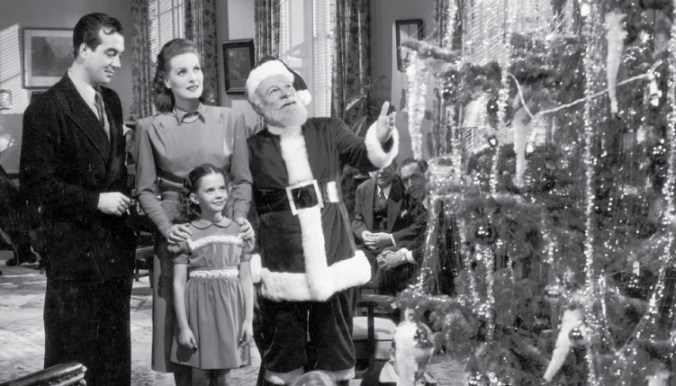
None of them, however, were as convincing as Edmund Gwenn. He made many movies—all without a white beard— and had a distinguished career in films and on stage, but even audience members who knew his work had a hard time reminding themselves that he wasn’t Kris Kringle while they watched the movie. I still have a hard time.

The rest of the cast is almost as perfect.  The film is one more example of the special, unappreciated talent of Maureen O’Hara, who never seemed like a movie star, as lovely and strong an on-screen presence as she was. Her ability to anchor great movies while never dominating them is the epitome of the “collaborative art” they always blather about during the Oscars, but which is seldom truly honored. There were Katherine Hepburn movies and Bette Davis movies; there are Meryl Streep movies. Nobody ever talked about Maureen O’Hara movies, just great movies that had Maureen O’Hara essential to making them great. O’Hara was the female lead in four genuine classics: “The Hunchback of Notre Dame,” “The Quite Man,” “How Green Was My Valley,” and “Miracle on 34th Street.” She never won any Academy Awards, nor is she ever named when the greatest Hollywood actresses are named, but how many actresses delivered four classics—not classic performances, but classic films?  Hepburn ties Maureen with four: The Philadelphia Story,” “Bringing Up Baby,” “Adams’s Rib” and “The African Queen.”  Streep maaay be credited with one, if you count “Sophie’s Choice”; personally, I wouldn’t.

“Miracle on 34th Street” is an ethics movie in part because its artists committed to telling a magical story and charming audiences by working as an ensemble selflessly and  efficiently. John Payne, as the idealistic lawyer in love with Maureen, is never flashy, just completely convincing. One reason may be that, as he told an interviewer once, the role of Fred Gaily perfectly matched his own ideals and beliefs. Payne never made another memorable movie in his long career; he was the classic bland, B movie leading man. He made Glenn Ford seem exciting. But he was the perfect choice for this story.  Similarly, there have been more impressive child actresses than young Natalie Wood—Margaret O’Brien, to name one; Dakota Fanning, to name another—but none who was better at simultaneously nailing her scenes while never taking a viewer out of the film by making him think, “Wow, she’s so precocious! I wonder if she’s a midget?”

This is the magic of performing talent: they make audiences suspend disbelief because they seem to believe in the story and characters too. The director,  George Seaton (who also directed “Airport”), not only wrote the script (that won him an Oscar, and deservedly so)  and cast his movie brilliantly, he also made the correct decision to stick with a matter-of-fact, realistic, unadorned style that keeps the story grounded. There are none of the features and gaffes in this film that make other holiday-themed movies inherently unbelievable, like the cheesy battlefield sets in “White Christmas” or the heavenly dialogues in “It’s a Wonderful Life.”

This is why the awful colorized version that Ted Turner inflicted on the world—this was one of the first movies to be subjected to Ted’s “improvement”—was such a disaster. The colored version looks fake, because it is. The original black and white version is set in a mundane, grey world like Doris’s—Maureen’s–view of life itself: no excitement, no romance, no fantasy, just cold, unadorned reality. No heaven, no magic, ghosts, nobody breaking into song and sounding like Bing Crosby. There’s no child’s point of view, like in “A Christmas Story.” No, all of us live in the world we are shown in “Miracle on 34th Street.” We would love the magic to be real, but we don’t believe in it any more.

We want it to be, though—and that’s why this movie works.

Chapter 1.

Meet Kris Kringle

The movie tells us right at the start that 1) the charming old man in the white beard can’t possibly be Santa Claus, and 2) that he’s nuts. That is, he tells adults who are paying attention this as soon as he starts complaining to a New York City storekeeper that his window display has the reindeer mixed up: “You’ve got Cupid where Blitzen should be. And Dasher should be on my right-hand side. And another thing…Donner’s antlers have got four points instead of three!”

Let’s see:

  • No Christmas display has ever distinguished between Santa’s reindeer (except for Rudolph), because the individual reindeer have never had any identifying characteristics in reality or myth. Are we to assume that there are name-tags on the models? If so, why wouldn’t Kris be complaining about the features of all of them, not just “Donner’s” antlers?
  • The names of the reindeer, even if there are flying reindeer, were 100% the invention of the poem “A Visit from St. Nicholas,” or “The Night Before Christmas,” originally published in 1823.  No one has ever claimed that the author had some kind of special info on the actual names of the reindeer when he wrote,

    More rapid than eagles his coursers they came,
    And he whistled, and shouted, and called them by name;

    “Now, DASHER! now, DANCER! now, PRANCER and VIXEN!
    On, COMET! on CUPID! on, DUNDER and BLIXEN!

    …and anyway, if he did, those were their names 120 years before the movie takes place. Nobody has ever claimed the reindeer were immortal, either. I suppose Santa Claus, in a nod to the poem’s popularity (it has been called the most famous poem of all time), could have adopted the practice of always having the reindeer named after the poem’s versions, and when one Vixen dropped of old age, the young reindeer that took her place became the new Vixen.

I suppose.

  • A bigger problem is that the movie’s alleged “St. Nicholas” calls the seventh reindeer “Donner.” It gets confusing here. The original St. Nicholas was Greek, the Christian bishop of Myra, now Demre, in Lycia.  Nicholas gave gifts to the poor, in particular presenting three impoverished daughters of a pious Christian with dowries so that they would not have to become prostitutes.  THAT would be neat poem! Saint Nicholas is buried in Italy. He was later claimed as a patron saint of children (also archers, sailors,  pawnbrokers, and the cities of Amsterdam and Moscow). The name “Santa Claus” is derived from the Netherlands version of St. Nick called Sinterklaas,  or “the Christmas man,” de Kerstman in Dutch. This explains “Dunder and Blixen,” meaning thunder and lightning in Dutch, and the movie later confirms Kris’s Dutch origins. (But why does he speak in a British accent?)

Never mind that: why would he call Dunder “Donner”? The “real” Santa wouldn’t. Though the original version of the poem got the names right (we know it’s Blixen and not “Blitzen” because it rhymes with Vixen), various editors, transcribers and  the author himself kept changing the names in subsequent printings. Dunder became “Donder” and eventually “Donner,” which is a meaningless Anglicizing of “Dunder.”

Santa Clause, aka Sinterklaas,wouldn’t be confused: he named the beasts. He’s correcting the shop-keeper while passing along a misnomer?

Baloney.

Well, enough of that. The next scene shows Kris encountering the Macy’s Thanksgiving Day Parade Santa pre-parade. He instructs him in the use of his whip on the reindeer! In the German Santa mythology, the jolly old elf used the whip on naughty children, but nowadays, using a whip on either kids or reindeer is pretty much excised from Santa’s methods, and should have been in 1947. It’s an unethical image…

…even though artists have worked hard to confuse us….
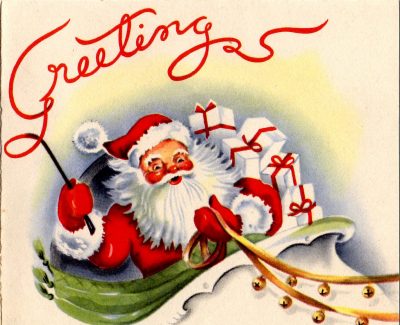
No, an ethical Santa Claus wouldn’t use a whip. He also wouldn’t put a poor old guy with a drinking problem out of work during the holidays, but that’s what Kris does next. He smells liquor on the costumed Santa, and shows no mercy:

“Don’t you realize there are thousands of children… lining the streets waiting to see you… children who have been dreaming of this moment for weeks? You’re a disgrace to the tradition of Christmas… and I refuse to have you malign me in this fashion. Disgusting!”

Then he tracks down Doris Walker, who is in charge of the parade, and gets the man fired. That’s just mean; there’s no way around it. I bet a lot of Macy Santas have had a few nips before and during the parade, and so what? How hard is it to say “Ho Ho Ho”?

Kris manages to get Drunk Santa’s job, having single-handedly gotten him sacked, no pun intended.

Why is Kris, if he’s the real Santa Claus, hanging around New York City and moonlighting in the Macy’s parade when the big night is just around the corner? This is no time for a vacation or boondoggles. If he’s really Santa, he’s goofing off, and he has the gall to tell a temporary parade Santa that he’s risking disappointing children!

Kris is not off to a good start. Continue reading

An Important Clarification Regarding The Rittenhouse Trial

Closing Rittenhouse

In yesterday’s post, And The Trayvon Martin-George Zimmerman/ George Floyd/ Kyle Rittenhouse Ethics Train Wreck Rolls On….., I wrote in reference to the certifiably terrible closing arguments by both sides in the Rittenhouse trial,

“It looks to me as if Judge Schroeder has stacked the deck: he allowed enough improper summation conduct from the State to ensure a reversal if Rittenhouse is convicted, and also allowed sufficient cheats by the defense to make an acquittal more likely.”

That statement is still accurate as far as it goes, but a friend, colleague and experienced trial lawyer just called to remind me that improper statements or actions in summary arguments in civil and criminal cases that would otherwise justify a mistrial are considered waived if opposing counsel doesn’t make a timely objection.

The judge can (and should) also intervene if an attorney crosses the ethical and legal lines in closing, but my friend emphasizes that most judges won’t, preferring to leave that task to the lawyers. Attorneys, meanwhile, are very reluctant to interrupt an opponent’s closing argument to object. If they do and are over-ruled, they lose credibility with the jury. Mid-closing interruptions are also seen as Golden Rule breaches, though that should not matter: the lawyer’s duty to the client surpasses any obligations to opponents.

Continue reading